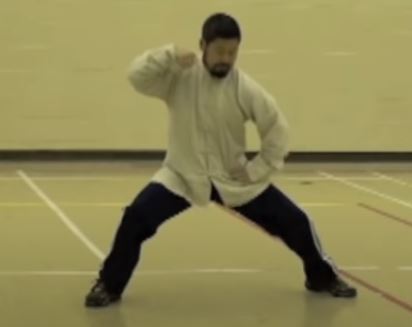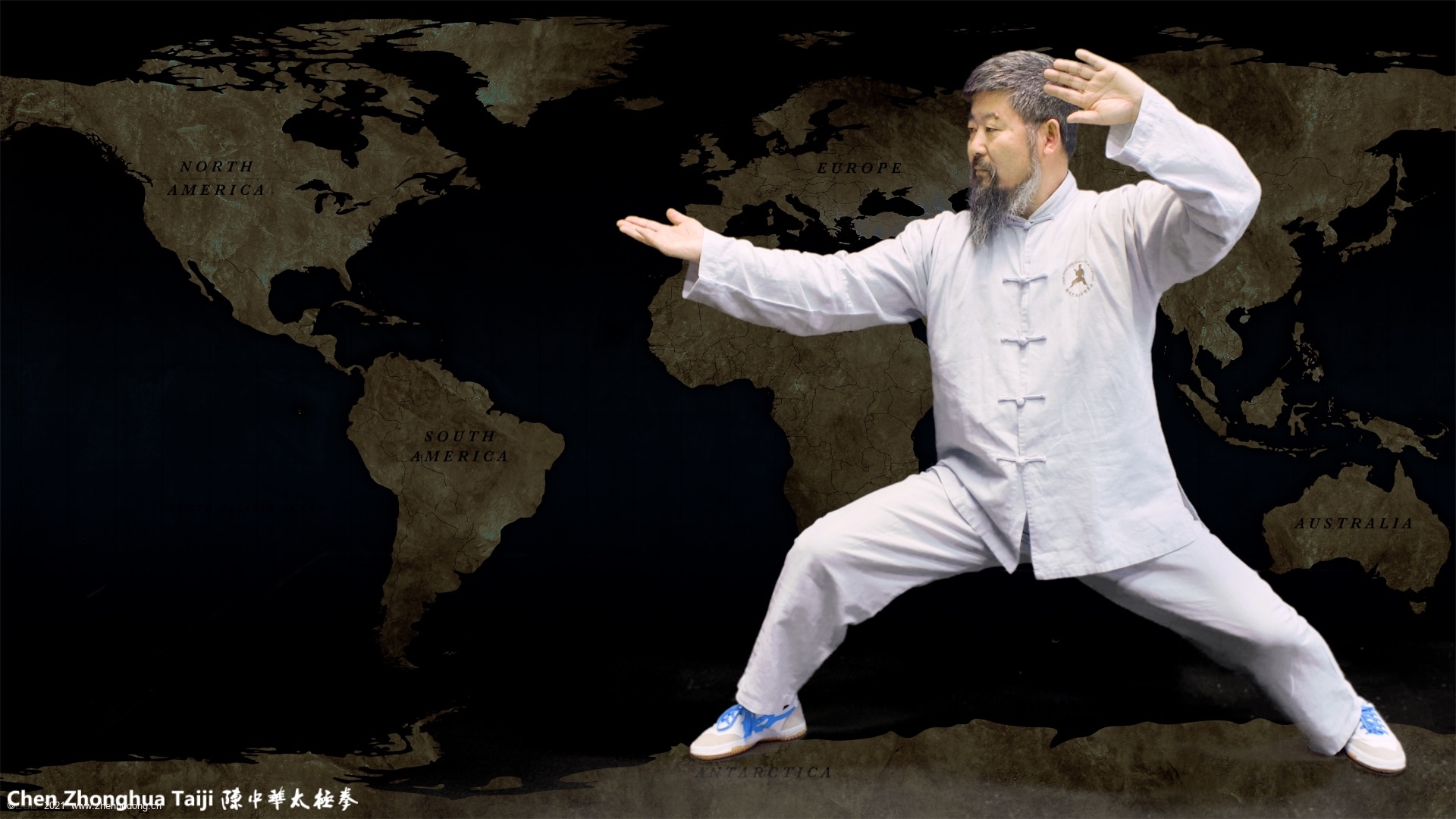
Taken in June 2019
Knowledge
View posts in sub-category:
Application Articles Body and Posture Class (Workshop) Notes Common Errors Glossary and terms Hunyuan Knowledge-Movement Explanations Learning Method Principle-Concept Principle-List Principle-Rule Principle-Technical Push Hands Quotations Routine Names Routines Videos Stories Student Evaluations (Private) Taiji Apparatus Taiji FAQ Taiji Sword Thoughts and Understanding Workshop and Class Notes
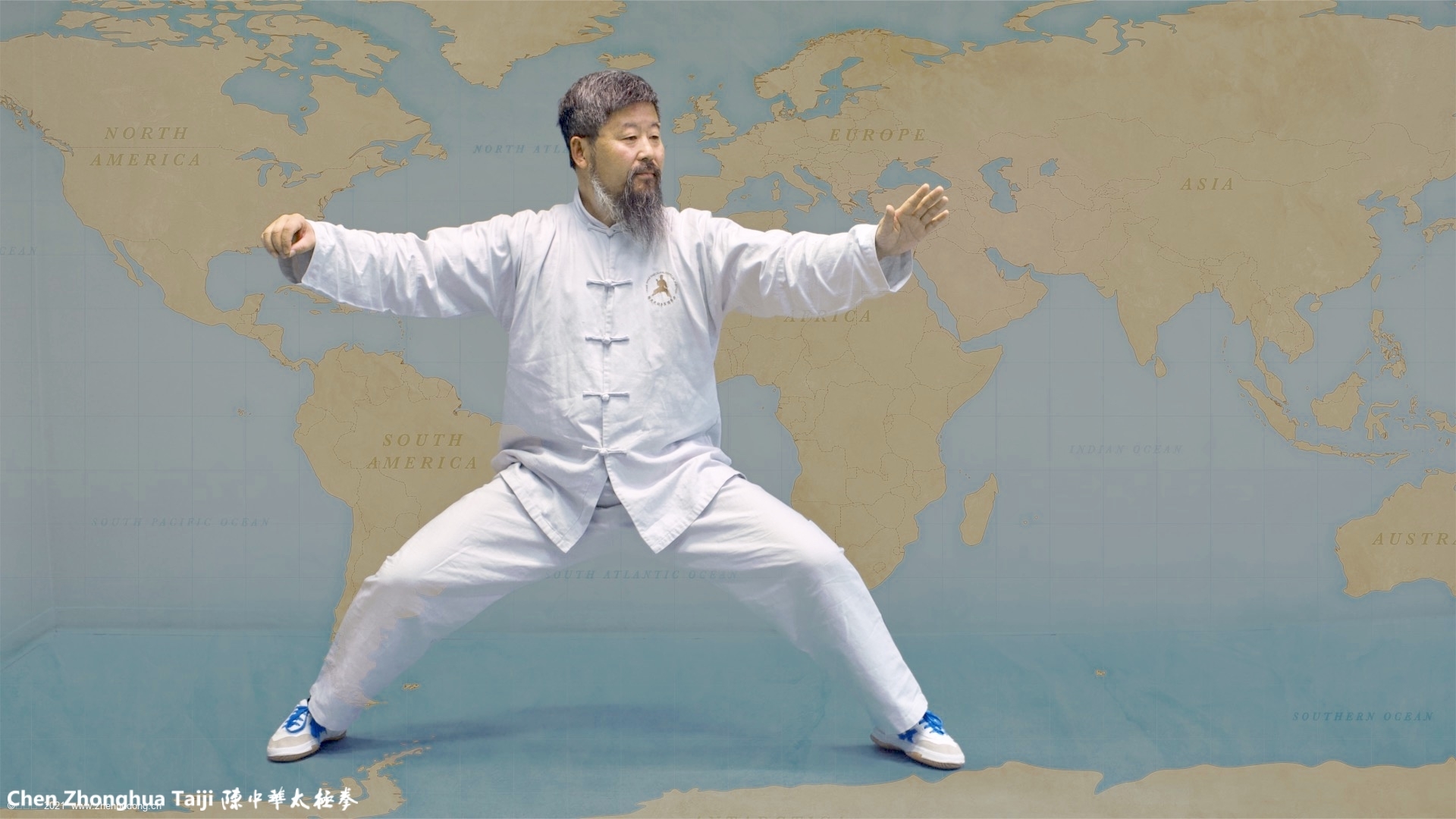
Taken in June, 2019
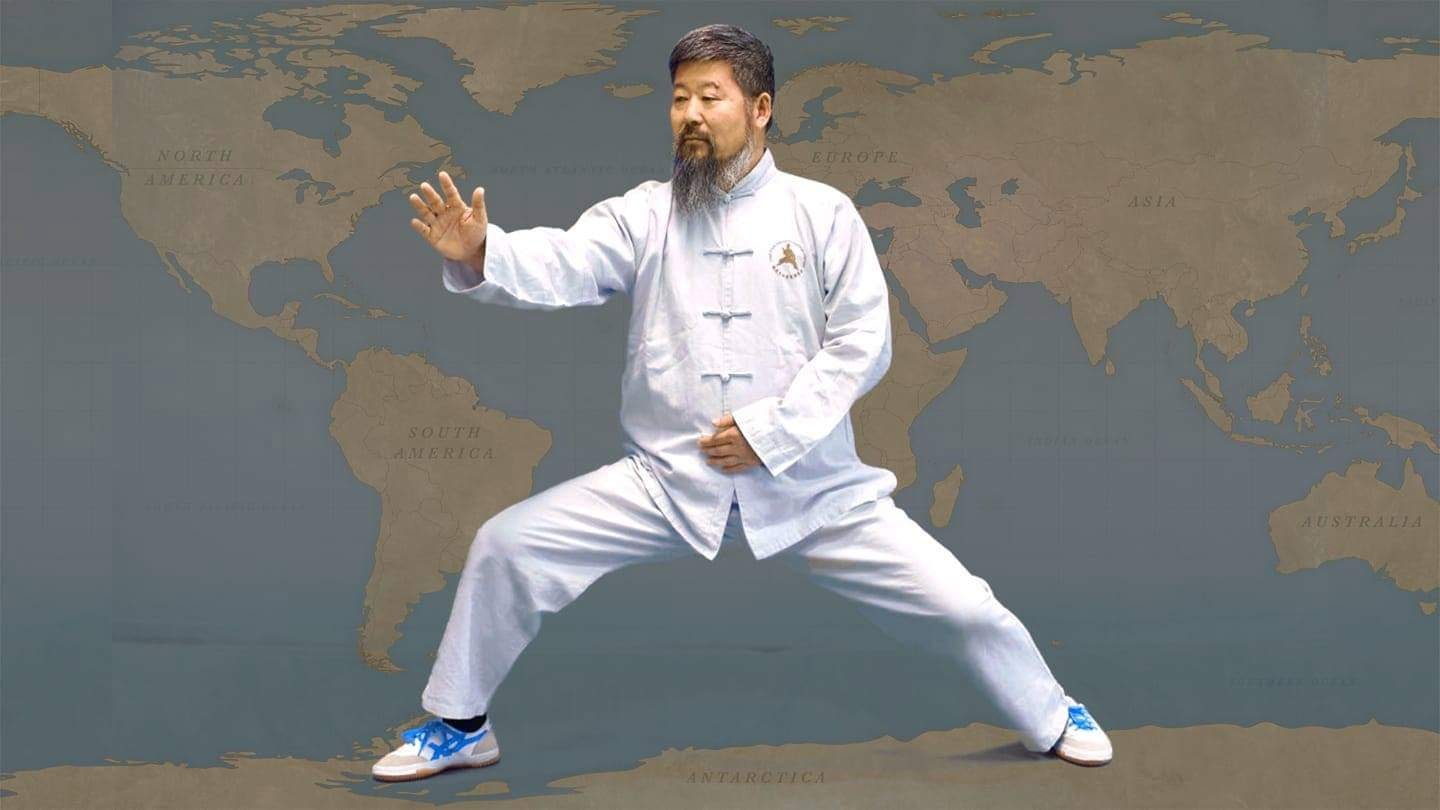
Taken in June 2019

I am 64 years old and have been on long-term disability for over 10 years due to a form of arthritis called Ankylosing Spondylitis (AS). I previously studied and practiced several external martial arts and they all eventually made my AS symptoms worse. I have had the disease my whole life but only diagnosed in the ’80’s. It became so bad at one point I was bed ridden for almost 2 years. It causes difficult symptoms in multiple body systems. I have had to get steroids injected into my eyes a few times to bring down inflammation. The disease primarily fuses the spinal vertebrae together, which of course reduces, restricts and eventually collapses the vertebral separations so they cannot move normally, or at all. I have tried physio, multiple drug therapies, meditation and exercise all with no or next to no improvement in my symptoms.
Read more
For this year’s Edmonton workshop we worked a lot on positive circle concepts and stretching.
Read more
Yilu Performance at 2019 Canadian Cultural and Martial Arts Festival
Kelvin Ho performed Taiji sword at 2019 Canadian Cultural and Martial Arts Festival on June 8, 2019.
While I was still living in Hong Kong, I have started with 300 a day. John Upshaw and I have been exchanging and we decided 3 months ago to increase it to 600 a day – 3oo per leg, and log our sets on Facebook. We promised to do this until July 24. This is when Master Chen will visit Iowa for their workshop. Since then, the likes of Kelvin Ho, Tinh Thai, and Winston Wang have joined. Even my student Simon Yau has jumped in on the action! Every day, I look forward to my brothers giving me the thumbs up next to my “done”.
Read more
 This week, I found myself able to drill the opponent down causing him to eventually fall vertically to the ground. Read more
The use of rubber cords for Practical Method training at the 2019 Italian Practical Method Seminar on March 31, 2019. Read more
The Zurich workshop is for Tuesday and Wednesday evening only as there aren’t enough weekend on my European tour this year. 13 people came to the workshop of which 7 came from Germany. This is expected for a first workshop. Read more
Italy Practical Method Seminar on March 29, 2019. Chen Xu and Sun Yang arrived on March 28, 2019. There was a brief tour of Venice and then training. Read more
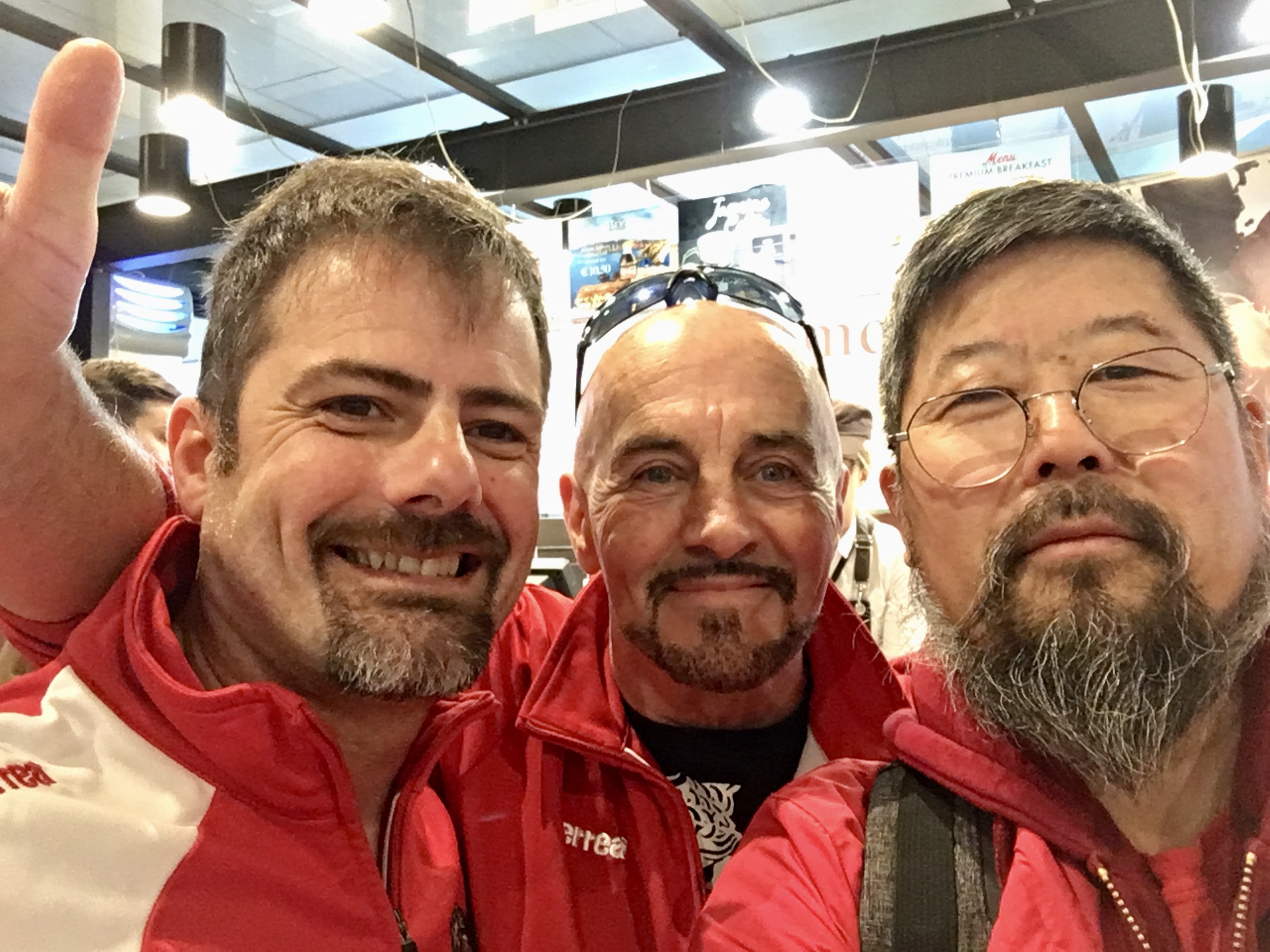
Michael Angelo, Jiuseppe Bon, Chen Zhonghua at the airport in Treviso.
The following are highlights of my workshop notes workshop March 2 to 5th. I have tried to organize them into categories so I could better relate them. I did not capture everything
Workshop notes:
All Questions Should be asked in order to bring clarity: Hear It , See it, Feel It – the 3 questions you want answered
Principle – Yin and Yang separation life – I want to be good
Concept – all moves are indirect education
Action – convert into action use
Read more
We are here because we’re humans, not animals.
Everything is like loose sand. Among the sand, some things might have a spark. There’s nothing wrong with sand, and nothing wrong with other ways of moving, such as other forms of martial arts or football. It just depends on what you want. Master Chen is looking for the sparks in the sand.
Read more
My attempt to recount what Master Chen said the morning of 3/2/2019 at the Toronto workshop
Read more
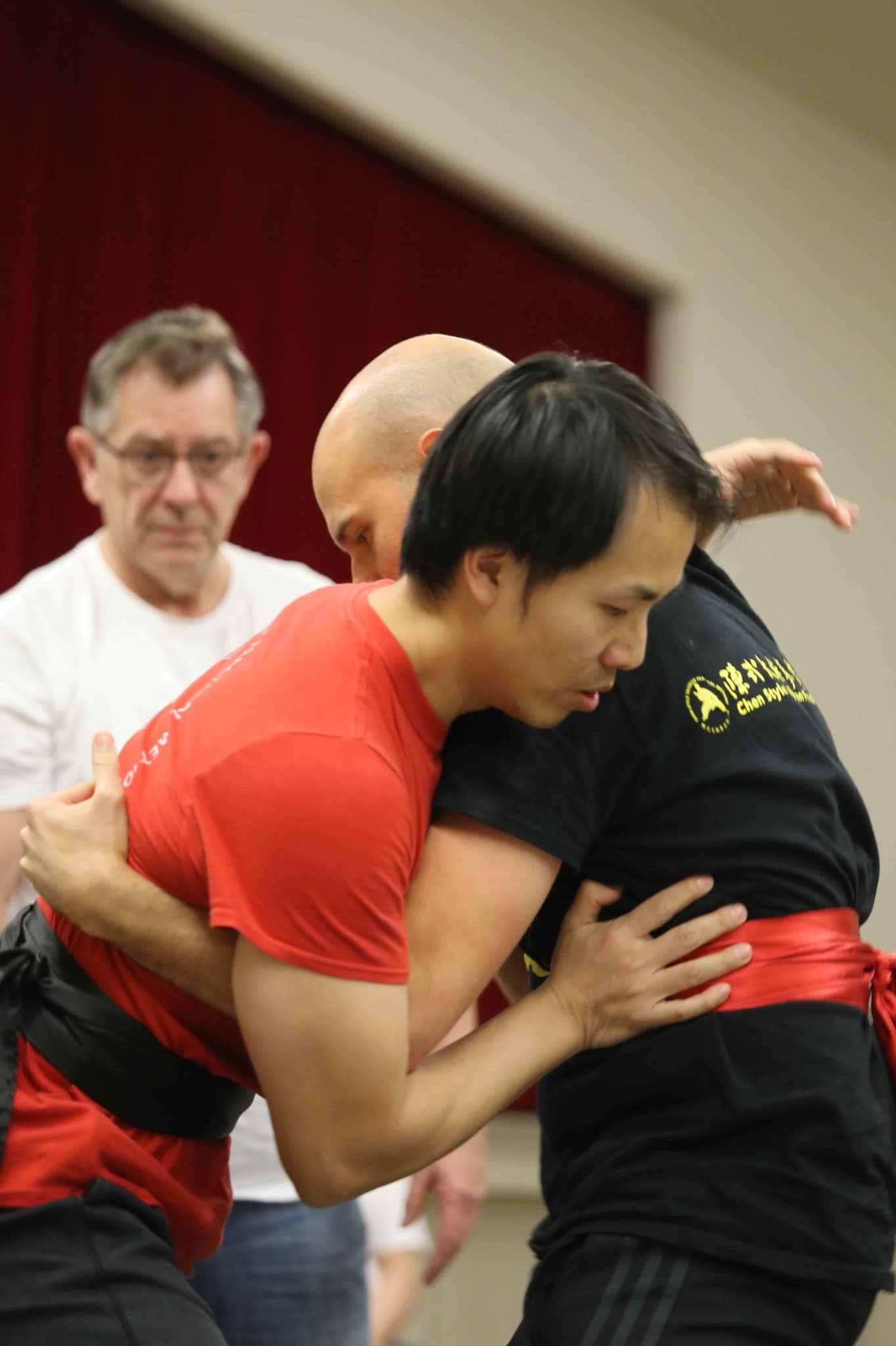
Day 0
Fetch Water
- Put my front knee against the bench.
- My front knee should be on top of my front heel.
- Make my fetch water action much, much, much bigger. Only when there is size, it becomes useful. My action is way too small, Master Chen told me the same at the last workshop as well. I have not changed yet.
- Once I am done with stretching the top, while not moving the front kua, knee, foot, move the rear foot to increase size.
- Whatever I do, the front knee is not moving.
- Train the whole yilu with one specific part not moving.
Foundations corrections
Positive circle correction (3-count):
- Before I start the first positive circle the middle finger of the front hand must concentrate on a dot. The front middle finger is no higher than the eyebrow. The elbow and palm of the front hand are directed towards the floor. There is a stretch from the front middle finger to the rear foot. The front forearm is stretched and the front shoulder is pinned down (it does not move).
- Keep wrists straight throughout. Read more
Sun Yang wins Muay Thai Gold Belt 20190222
Top New:News just came from Thailand that Sun Yang has won the 67 kg Golden Belt after many rounds of hard fights at the Golden Belt Finals under the auspice of the Thailand Muay Thai Federation. Sun Yang is a disciple of Master Chen Zhonghua, International Standard Bearer of the Chen Style Taijiquan Practical Method system and Dean of the Qingshan Taijiquan and Cultural Research Institute of the Rizhao Politechnic. Read more
Kelvin Ho was invited to perform at Yee Hong Chinese New Year Celebration on Feb. 12, 2019.
At the Phoenix workshop Master Chen had someone place a pole from his hand to the arch of his back foot. In w/ elbow his and and forearm slid along the pole. He has a shorter pole placed by his front kua a slightly upward angle. His elbow followed the 2nd pole while the hand stayed on the 1st pole. He then said, it’s actually “out w/ foot” as the hand only guides the direction.
Read more
- Reference points: counting is to establish a standard for us to be able to teach and communicate
- Direction: must not lose the aim. Don’t lose the 45 degree facing when practicing the foundational exercises
- Positive circle 3 count: 1. in elbow; back shoulder to forward foot is the axis. 2. rotate waist don’t involve spine and don’t lose previous axis. 3. push foot, aim at hand. There is a split in the middle. Again don’t lose previous two axes
陈中华老师曰:《手上要松,脚下要攻。》
Master Chen Zhonghua said, “Don’t power up the top, attack from the bottom.”
It is not opening/closing but rather coiling/uncoiling and compressing/releasing.
It is not about using no force but using enormous amount of forces to maintain the rigidity of the structure, the integrity of the core and the efficiency of the move.
It is not about balance but balanced forces.
It is not about flexibility but the ability to stretch to produce a split or separation
Hi,
I wonder if someone can help me out: all the videos carry a classification “x/5”
what exactly does “level x” mean?
I asked once but I forgot all except the first … grumble.
level 1 = structure (meaning the clip is mostly about structural issues)
Thanks in advance!
 Back in 2011, I wrote about how my taiji journey got started: http://practicalmethod.com/2011/10/how-did-my-taiji-journey-get-started/. 7 more years passed by quickly on this journey, and it is now 2018. Much of the time was spent learning how to learn. In this article, rather than talking about taiji principles or concepts, let me share Master Chen Zhonghua’s teachings on learning.
Read more
 Today, I trained with John Dahms. We discussed about creating a shell around ourselves to prevent ourselves from moving. Creating such a shell is only half of the equation, the other half is that we must stretch/expand the inside as much as possible. This is like a fight between containment and breakout. It is a conflict that we must find a resolution. I think of it as building up a bomb, and then doing a controlled release of the energy through a narrow tube aimed at the target. For this to work, the person doing the containment should be different from the person trying to break out, so that each person is not affected by the other person when performing the desired function. The difficulty comes when in reality there are no two people, but just myself. Ideally, I would be required to split myself into two. In actual practice, we need to use different body parts to perform these separate functions, so they don’t interfere with each other. These actions must be clear. Read more
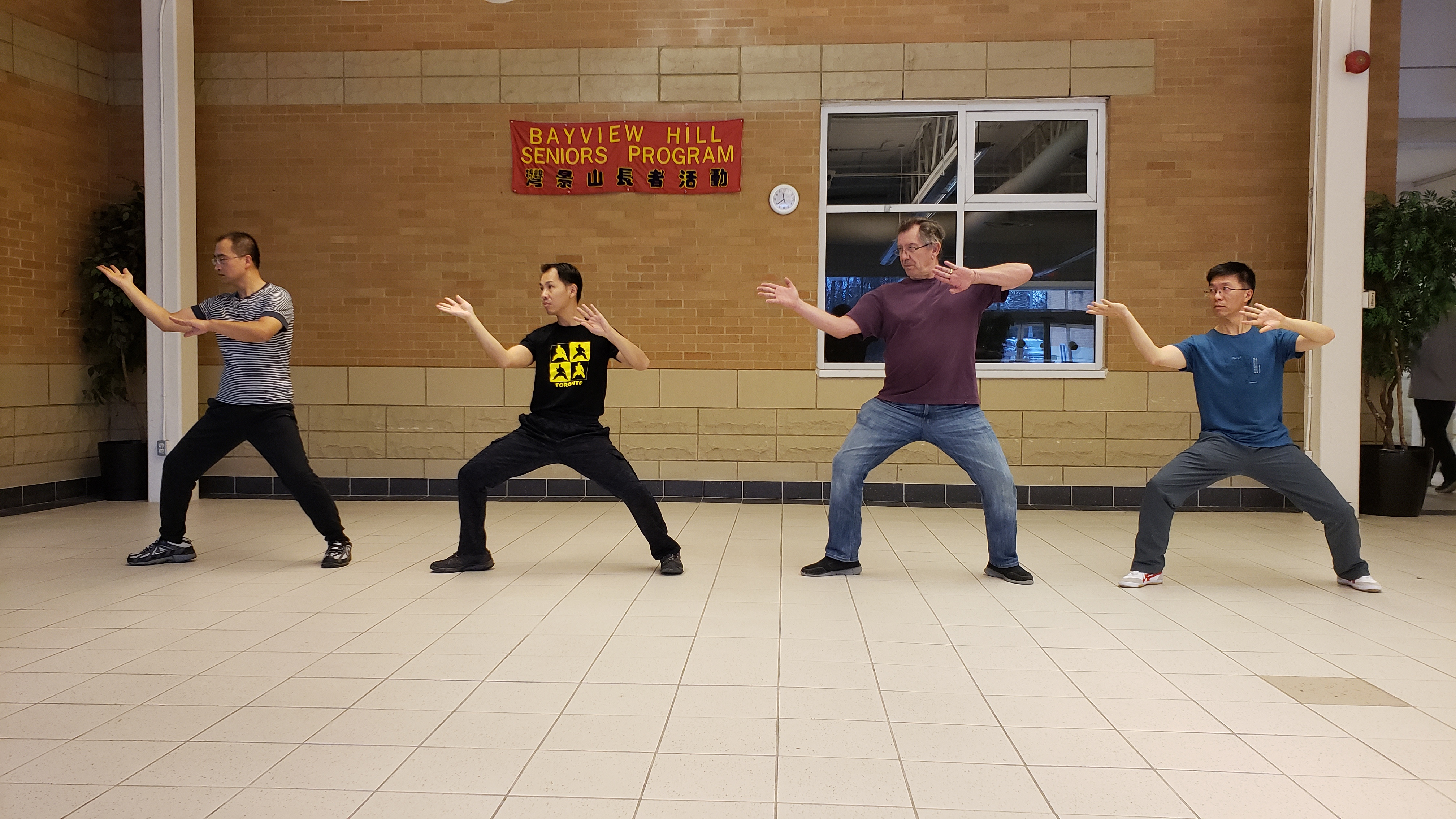 During practice on Dec. 23, 2018, we were practicing how to move in after making contact with the opponent. The particular exercise involved the two right forearms touching at one point. One person attempted his best to prevent the opponent from coming in, including moving his arm around. Everyone did this exercise against the others one by one. One student observed that when I showed how to move in, the opponent always appeared to have stopped his arm movement as soon as I started to move in. Others would struggle to fight at the upper body or the arm with the opponent. I found that being an interesting observation. Another student commented that he didn’t react or do any subsequent action when I moved in because there was no feedback/trigger to tell him to do anything, and he would just “watch” me coming in. I further demonstrated what they tended to do, which was to push his hand/arm forwarded as they moved the body forward, in which case, the opponent would respond immediately and stop me from coming in possibly using different methods. There should be no push at any time. Read more
About learning
1. “The teacher teaches the principle. You go home and practice.”
2. Follow the principle. Don’t deviate.
Read more
2018.12.16 Sydney Workshop Day Two Notes – Brian Chung Read more
2018.12.15 Sydney Workshop Day One Notes – Brian Chung Read more

Recently, I had a dream where I used my thigh to push down the opponent at his thigh. Shifu came over and mentioned something that I didn’t quite understand. I then practiced that move with another student named Benz, and I got that move in the dream. When I woke up, I realized that I learned something.
Read more
Attendees: Alex, OngWM, Flo, Chandra, Jojo
1. Twisting Towel train the Elbow to be in the Middle
2. Six Sealing 4 Closing train the Shoulder to
be in the Middle
3. Fetch Water train the Kua to be in the Middle
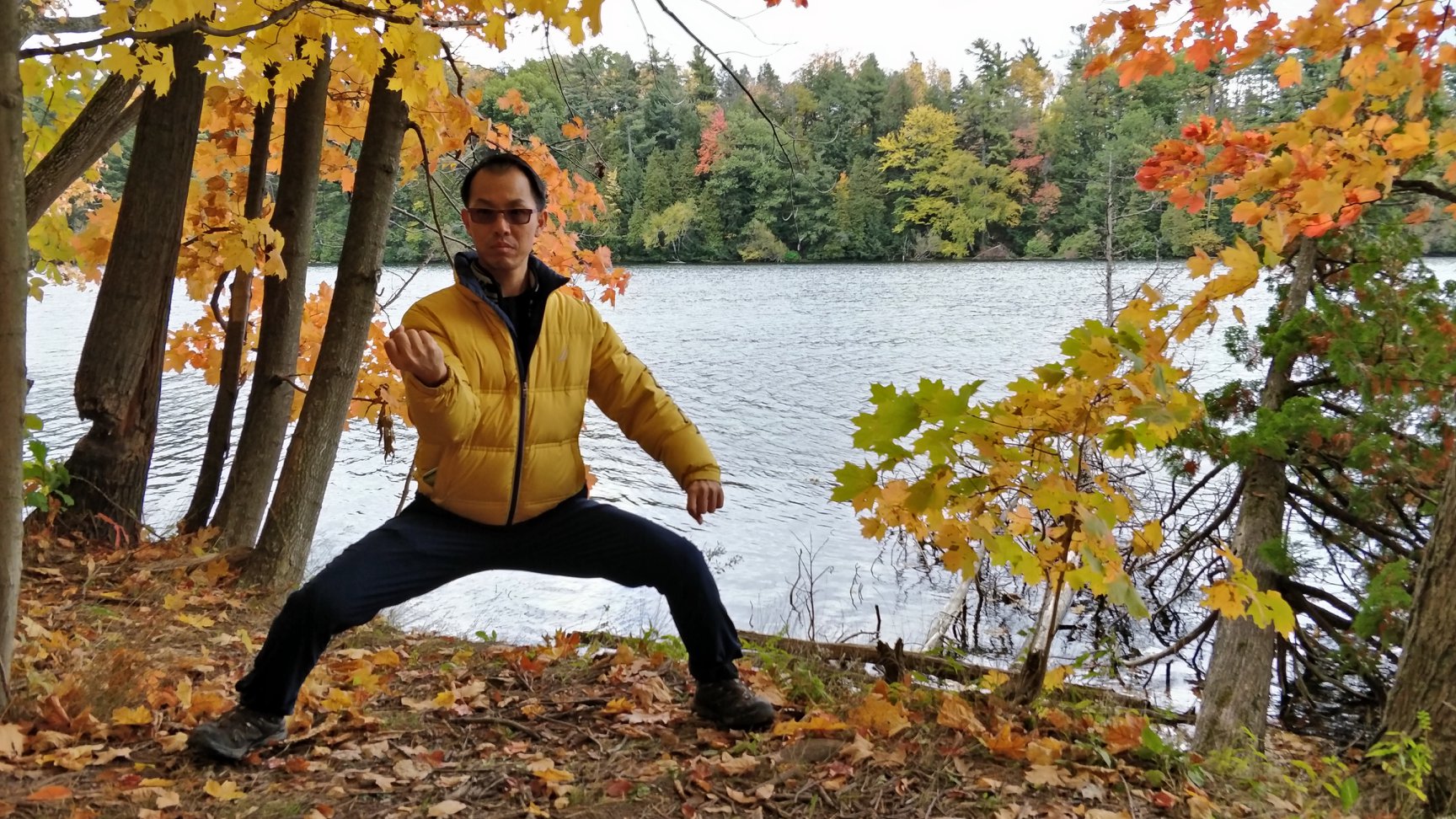
Toronto Oct 13, 2018
Master Chen has stated before fajin is everything is in the correct place, add speed. How do we add speed?
Read more