 |
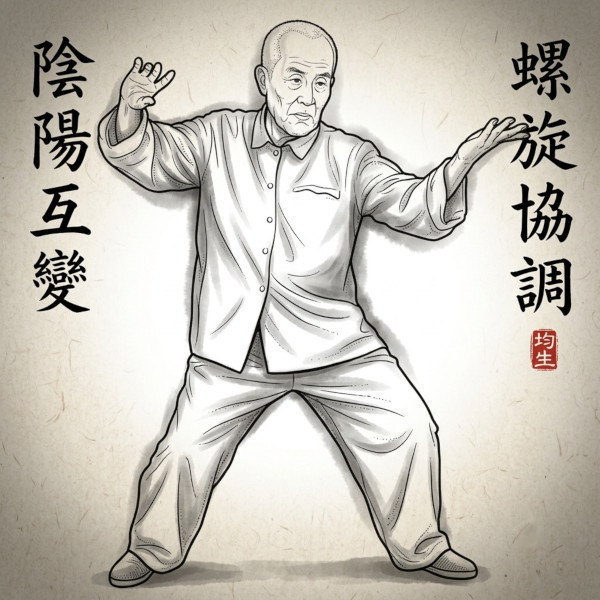
Master Hong Junsheng transformed Chen Style Taijiquan by grounding esoteric martial concepts into direct, testable reality. A lineage heir to the legendary Chen Fake, Hong demystified the art through clear, everyday language, as detailed in his landmark work, Chen Style Taijiquan Practical Method. |
| At the core of Hong’s teaching is precision over brute strength. Beginners must construct a rock-solid foundation through basic forms before chasing elusive concepts like internal energy. True relaxation isn’t collapsing into limpness, just as true strength isn’t rigidity; it is maintaining active, living tension (Peng) while remaining fluidly connected to an opponent. All motion relies on spiral mechanics, combining body rotation with limb revolution, demanding an upright, centered posture. By mastering dynamic balance (continually alternating empty and substantial weight), practitioners transition from reactive defense to effortless, proactive control.
Ultimately, Hong demonstrated that Taijiquan extends far beyond martial application or physical exercise. It is a holistic system of self-cultivation rooted in Taoist philosophy. By replacing raw power with unified mind-body intention, the art unlocks mental clarity, emotional composure, and sharp adaptive intelligence. Authored by disciple Zhang Shengjian, this reflection emphasizes that true mastery requires disciplined practice, authentic mentorship, and profound engagement with the art’s philosophical roots. Strip away the mysticism, master the mechanics, and Taijiquan becomes an inexhaustible blueprint for lifelong resilience. |
|
|
Adapted from a post by Kelvin Ho:
“Conversations with Grandmaster Hong Junsheng on Taiji” based on a Chinese article by Zhang Shengjian (張生健) September, 2003 |
|
People
People in Taijiquan in the past and present: masters, teachers and students.
View posts in sub-category:
Authorized Instructors Chen Fake Chen Zhonghua Disciple List Feng Zhiqiang Hong Junsheng Masters List Resume
Brian https://youtu.be/ryO4MQxaeMs
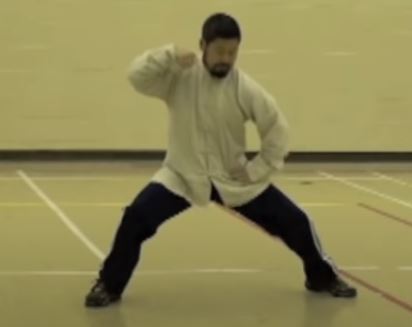
- #1 Buddha’s Warrior Attendant Pounds Mortar. R shoulder is raised causing a corner. Adjust R elbow and stretch armpit open.
- #4 Single Whip. Bend the elbows more, open the armpits. R hand hold a firm hook.
- #5 Turn Left and Buddha’s Warrior Attendant Pounds Mortar. R shoulder was raised. Adjust R elbow and stretch armpit open.
- #9 Walk Obliquely in Twist Steps. Lost the stretch while turning.
- #11 Wade Forward in Twist Steps. Rear shoulder was raised.
- #12 The Fist of Covering Hand. R elbow points to the floor.
Bethany https://youtu.be/Nvz9NmKWbtE
- #1 Buddha’s Warrior Attendant Pounds Mortar. Shovel out step sequence not clear.
- #3 Six Sealing Four Closing. Direction of feet is at 45 degrees. Left foot is on the toes, heel up.
- #4 Single Whip. Review sequence of moves.
- #9 Walk Obliquely in Twist Steps. Fetch Water stretch from front hand to rear shoulder, do not lose it.
- #10 Second Closing. Review sequence, elbow in was missed.
- #12 The Fist of Covering Hand. R elbow points to the floor, R fist is horizontal, L hand & elbow pulls back.
- #13 Buddha’s Warrior Attendant Pounds Mortar. Review sequence.
Brian’s Comment: Overall very good. Most moves are clear. Focus on the (1) sequence of moves (2) elbow in, hand out (3)clarity of stepping.
James https://youtu.be/UnXgHoV9G-U
- #1 Buddha’s Warrior Attendant Pounds Mortar. Clarity of shovel out stepping. Sequence, missed a move when stepping R forwards, there must be a stop. Elbow in to 合住, do not disperse.
- #3 Six Sealing Four Closing. Direction of feet is at 45 degrees. Left foot is on the toes, heel up.
- #5 Turn Left and Buddha’s Warrior Attendant Pounds Mortar. Sequence, missed a move when stepping R forwards, there must be a stop. Elbow in to 合住, do not disperse.
- #8 First Closing. L hand, L elbow, R hand, R elbow must be on a line.
- #10 Second Closing. Do not withdraw the L hand off the line.
- #11 Wade Forward in Twist Steps. Make a pause when you pull both elbows and feet in. 合住, do not disperse.
- #12 The Fist of Covering Hand. Review sequence, missed double push down.
Brian’s Comment: Good progress. Slow down a little to get each move sequentially clear. Focus on size (so big there is nothing outside of it, so small there is nothing inside of it) and clarity of stepping.
Paul https://youtu.be/7ptVlrkyfD8
- #2 Block Touching the Coat. When stretching the two hands out, do not allow your shoulder to raise. Sink the chest down.
- #3 Six Sealing Four Closing. In positive circle out with hand, do not stand up, and do not allow your shoulder to raise.
- #7 Brush The Knee. Review elbow positions.
- #10 Second Closing. Throughout all stepping, do not change level. The body must not go up and down.
Brian’s Comment: Very good. You must put a lid on your shoulders. This will force your body to compress and stretch. Do not go up and down when stepping.
Francis https://youtu.be/f6xb7KMUXik
- #1 Buddha’s Warrior Attendant Pounds Mortar. Pull in with L elbow, do not flip your L hand. Do not stand up when R knee comes up.
- #3 Six Sealing Four Closing. Maintain Tile Hand when going into Single Whip. L hand must point away from yourself.
- #5 Turn Left and Buddha’s Warrior Attendant Pounds Mortar. Do not stand up when R knee comes up.
- #10 Second Closing. Do not fully straighten the L elbow, always have a bend.
- #11 Wade Forward in Twist Steps. Do not withdraw L hand when stepping forwards.
Brian’s Comment: Overall good sequence and clarity. Focus on becoming smaller and holding it (合住) by elbow in, chest down. Maintain a bend in the elbow (never straighten) will allow you to help open the shoulder.
John https://youtu.be/EP1Lnczp-ZU
- #1 Buddha’s Warrior Attendant Pounds Mortar. Stepping of L foot must follow 1-2-3 sequence. Front heel out, shift forward, rear foot pull in.
- #2 Block Touching the Coat. Stepping of R foot must follow 1-2-3 sequence.
- #7 Brush the Knee in Oblique Stance. Review sequence.
- #9 Walk Obliquely in Twist Steps. Fetch Water, maintain the stretch from front hand to rear shoulder.
- #10 Second Closing. As L hand grinds out, the chest must sink down to get out of the way. Connection is L hand to rear foot.
- #11 Wade Forward in Twist Steps. Review sequence. Pull both elbows and foot in.
Brian’s Comment: Overall very good balance and harmony of the body. Fixing the hand, pulling the elbow and opening the armpit will help open your shoulder.

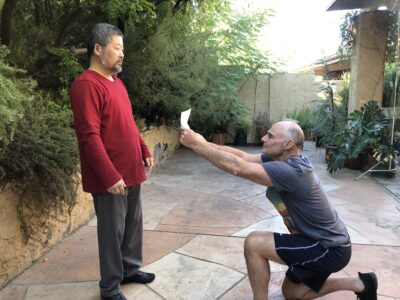
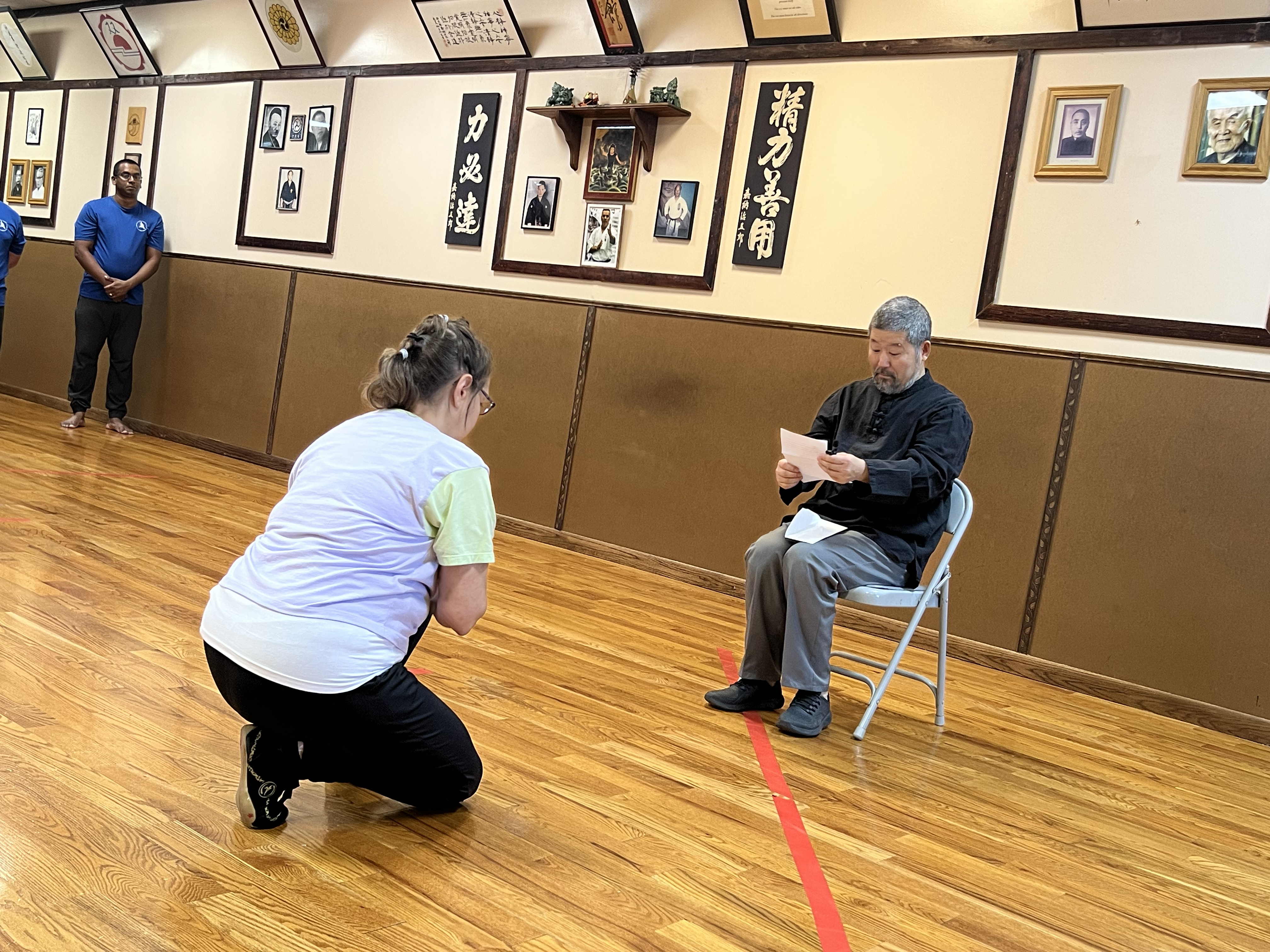
Chandramohan and Martini became Chen Zhonghua’s new disciples 20221015.
In a brief ceremony MCed by Michael Calandra, during the 2022 New York Practical Method Seminar, Chabar Chandramohan and Ed Martini became master Chen Zhonghua’s disciples in the Practical Method lineage of GM Hong Junsheng. They are disciples number 380 and 381, respectively.
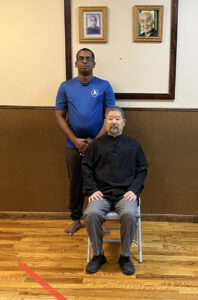
Chabar Chandramohan
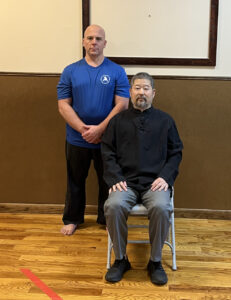
Ed Martini
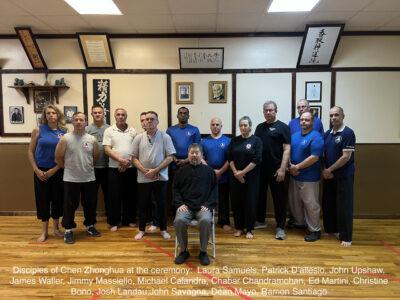
Disciples Groups Photo 20221015
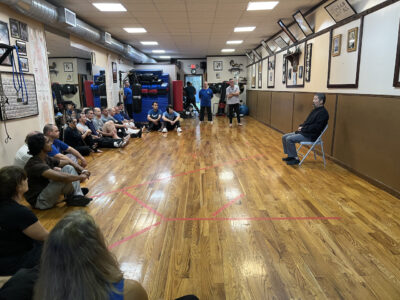
Chandramohan and Martini discipleship ceremony 20221015
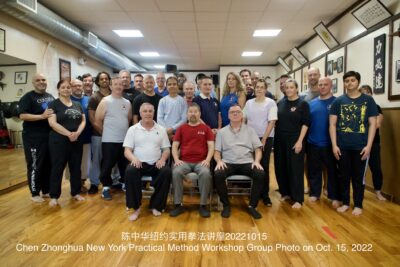
New York Practical Method workshop group photo 20221015
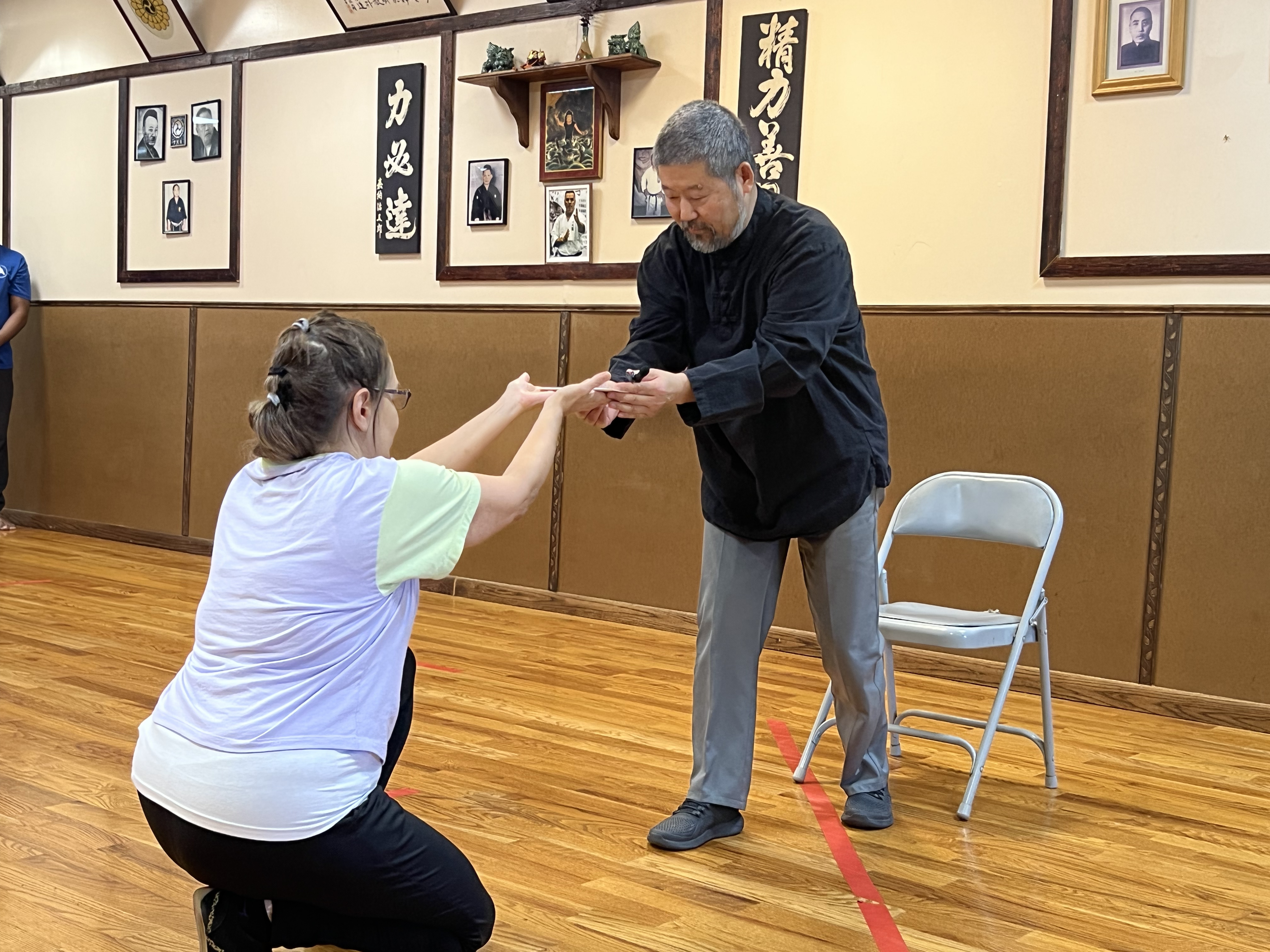
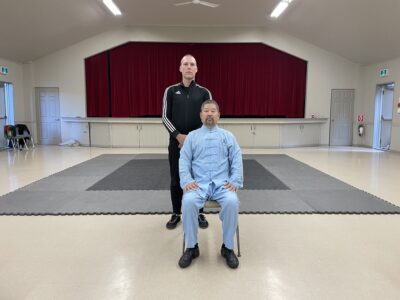
Ben Phillips Discipleship Ceremony 20221010
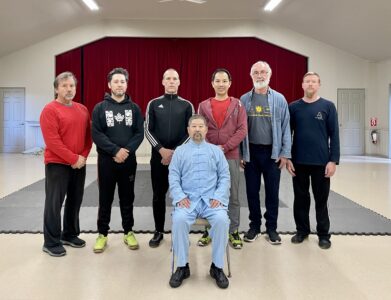
Group Photo of all disciples at the ceremony!
Ben Phillips of Toronto became Chen Zhonghua’s 379th disciple in a brief ceremony at the Annual Toronto Practical Method Seminar
Momentum force: A force with inertia. Momentum force is simply the force generated by movement. It is an active power. Sometimes this force is unstoppable. What we usually hear is “it’s hard to gather overwhelmed water”, and “the arrow sent out” is this kind of force. In the simplest terms, we throw a stone out, and once it’s out, although in the air, we are no longer able to change its direction or force. Synonyms: active force, dynamic force. Read more
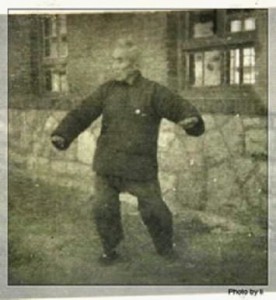
Being soft inside and hard outside is a movement principle and concept of Chen Style Taijiquan Practical Method. Intuitively, the inside is soft, movable and active. The outside must be harder than the inside so that it can wrap things inside. Thus, the outside is fixed, passive, and a manifestation of the inside.
This feature is the opposite of the common sense of softness with rigidity, and needles hidden in cotton. The normal understanding of Taijiquan is that it looks soft like cotton, but there is hard steel hidden inside.
The “softness” of Chen Style Taijiquan Practical Method is hardness to the extreme is softness, not softness in the ordinary sense. At this point, it is likely to be different from other Taijiquan cognition. This is also a major feature of Practical Method. Read more
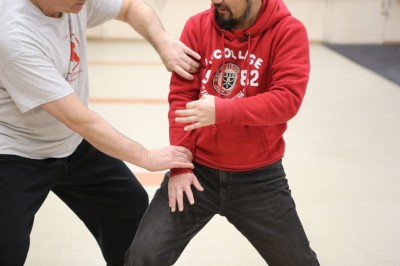
Hardness to the extreme is softness. Once it reaches the end, cannot be any harder, but soft.
This softness is actually very hard, fine and smooth, such as polished jade, polished stone, stainless steel surface, glass screen of mobile phone, etc.
From these examples, it can be seen that the softness of Taiji is not true softness, but an appearance of softness on the outside, it is actually hard and rigid. Read more
A General Discussion on Taiji Inner Strength Hardness and Softness Song (seven words and ten sentences) – Chen Xin i
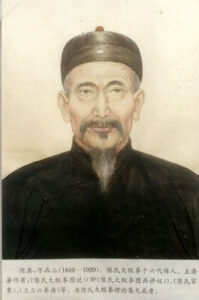
Chen Xin (1849-1929)The 16th generation of Chen Style Taijiquan, author of “Illustration of Chen Style Taijiquan”
Pure yin without yang is soft hand, pure yang without yin is hard hand;
One yin and nine yang is a stick, two yin and eight yang is Sanshou;
Three yin and seven yang still feels hard, four yin and six yang shows a good hand; Read more
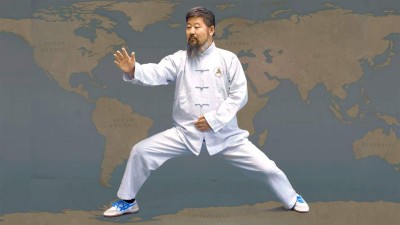
Chen Zhonghua Zhuanyong-Chen Zhonghua Block Touching Coat
Taijiquan has the saying that “yin and yang are mutually rooted”.
Wang Zongyue said, “Yin does not depart from yang, yang does not depart from yin. Yin and yang benefit mutually and this is the comprehension of energy”.
Zhou Dunyi of the Song Dynasty said in Taiji Illustration, “Wuji then taiji. Taiji moves and produces yang. Move to the extreme generates stillness, stillness produces yin, and stillness to the extreme generates moves again. Movement and stillness are the roots of each other. Once yin and yang are split, then there are two elementary parts.” Read more
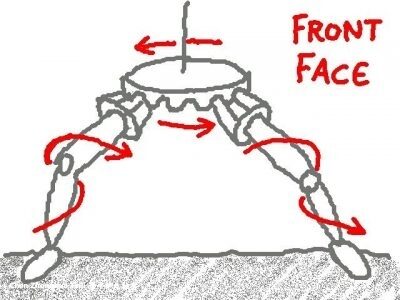
John Hudson-Silk reeling。
Structural force and indirect power are two different things, and at the same time two things that are not in one [dimension]. Read more
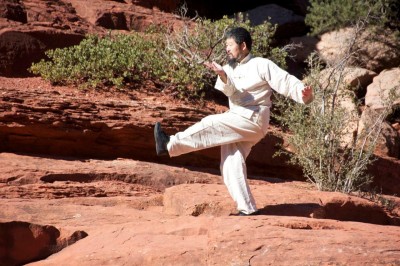
In push hands, the first thing we need to do is to have peng energy. What does this mean? It requires us to be able to lock the opponent on the touch, confront him, without showing any disadvantages. We mustn’t show any weakness at the first place. Only like this, we will have the confidence to win.
What is confidence? Confidence is real gong fu. Without it, there is no use if you just feel good about yourself. How to gain real gong fu? Of course it is through years of training.
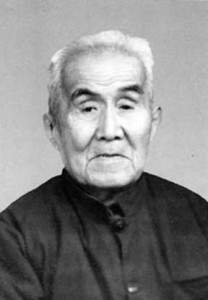
Read more
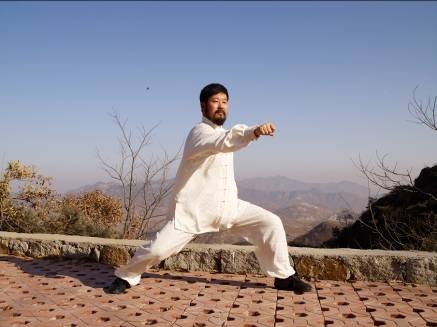
This is a personal video from one of his students. Taken on a street at an impromptu demonstration in the early 1980s.
Grandmaster Feng Zhiqiang Push Hands Instructions. This is part of an instructional video made in the Tiantan Park in Beijing with the assistance of Wang Fengming. It was made in the 1980s.
Grandmaster Feng Zhiqiang Hunyuan Applications at Tiantan Park. This is an earlier video of his teaching.

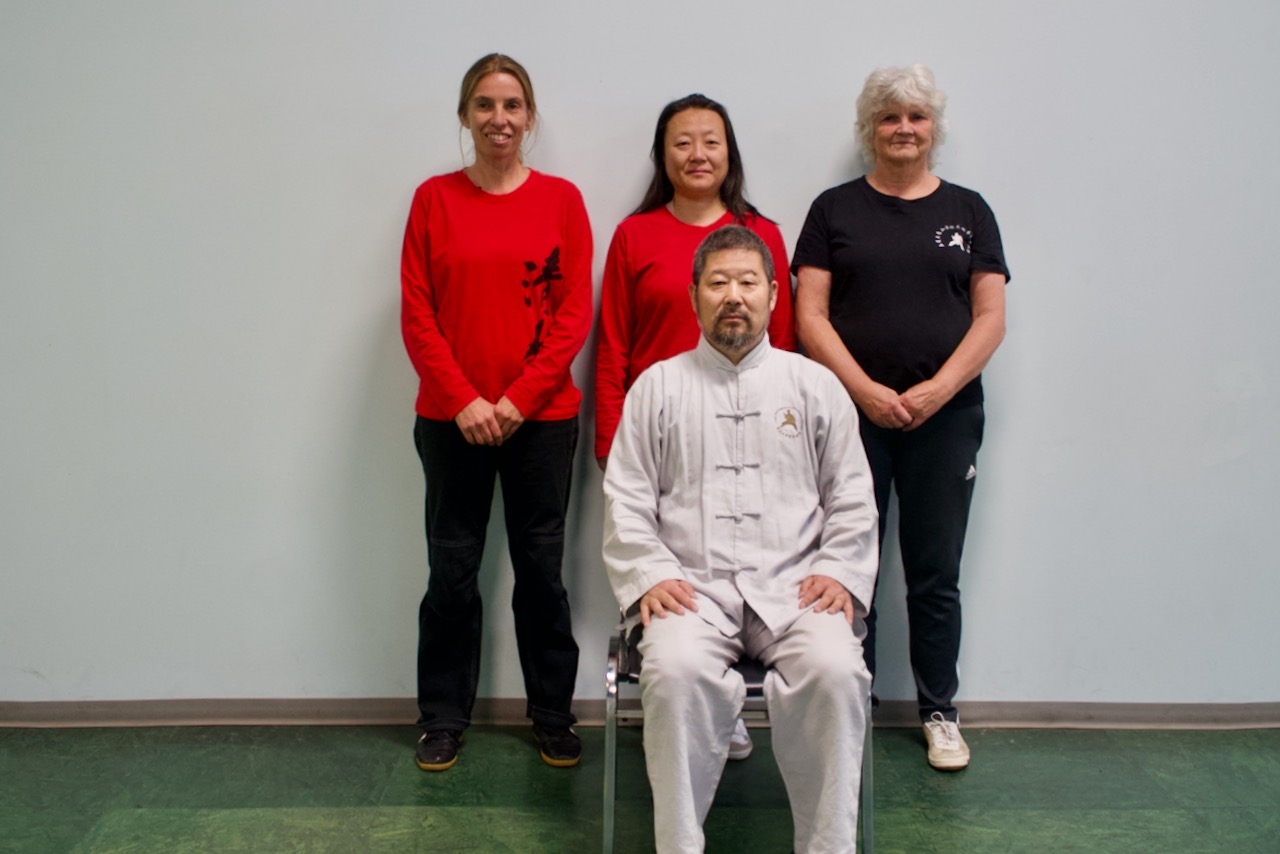
Sooyeon Zachrias discipleship Group 2020.09.13
On Sept. 13, 2020, Sooyeon Zacharias became Master Chen Zhonghua’s 372nd disciple in the Chen Style Taijiquan Practical Method lineage..
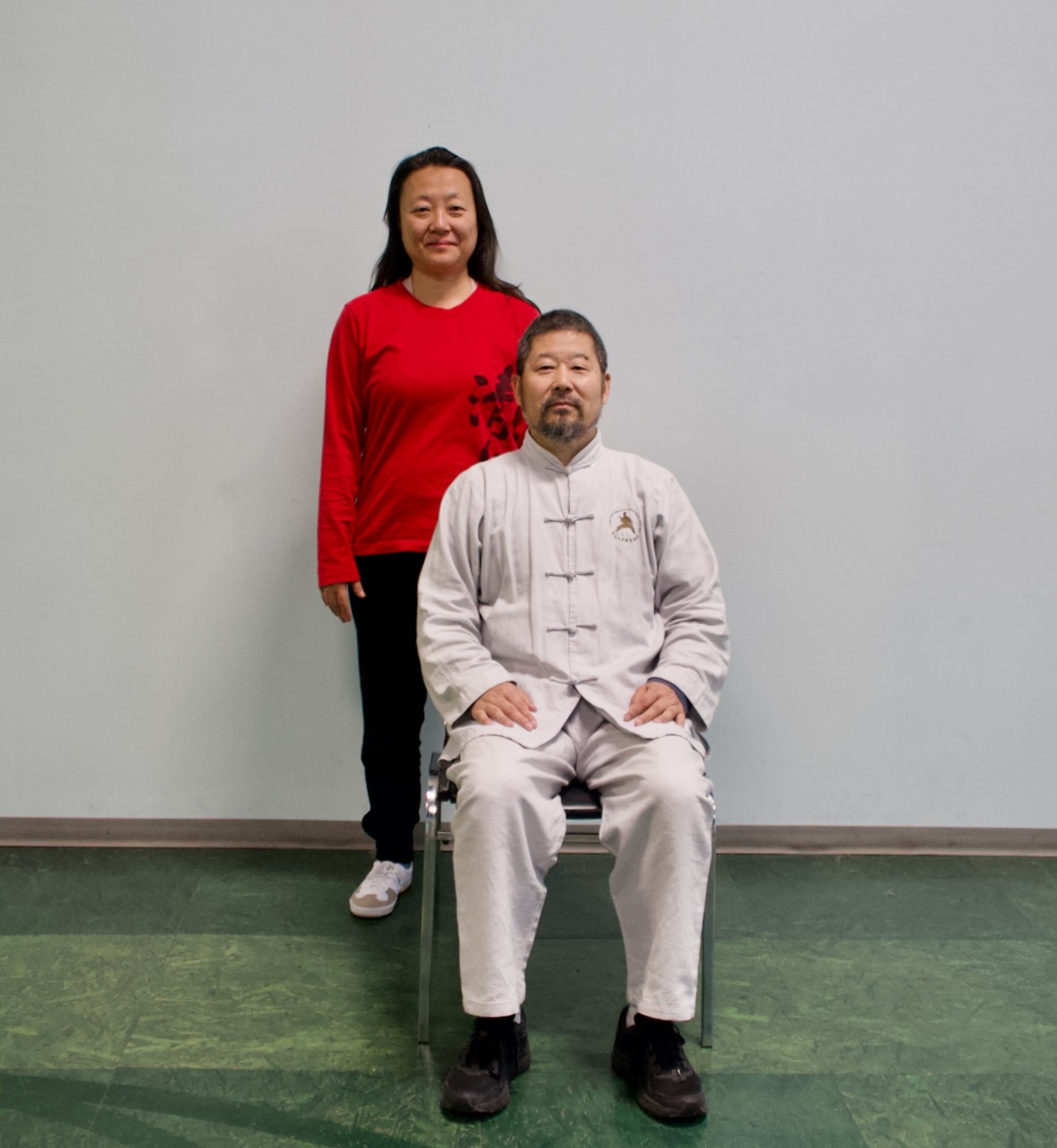
Sooyeon Zachrias discipleship Sitting 2020.09.13
Because of various reason including Covid-19, her discipleship ceremony was postponed several times. Finally on Sept. 12, she drove 14 hours from Litton, BC. to Edmonton, Alberta. The next day, she was inducted as Master Chen Zhonghua’s 372nd disciple in a simple ceremony in Master Chen Zhonghua’s Headquater in Edmonton.
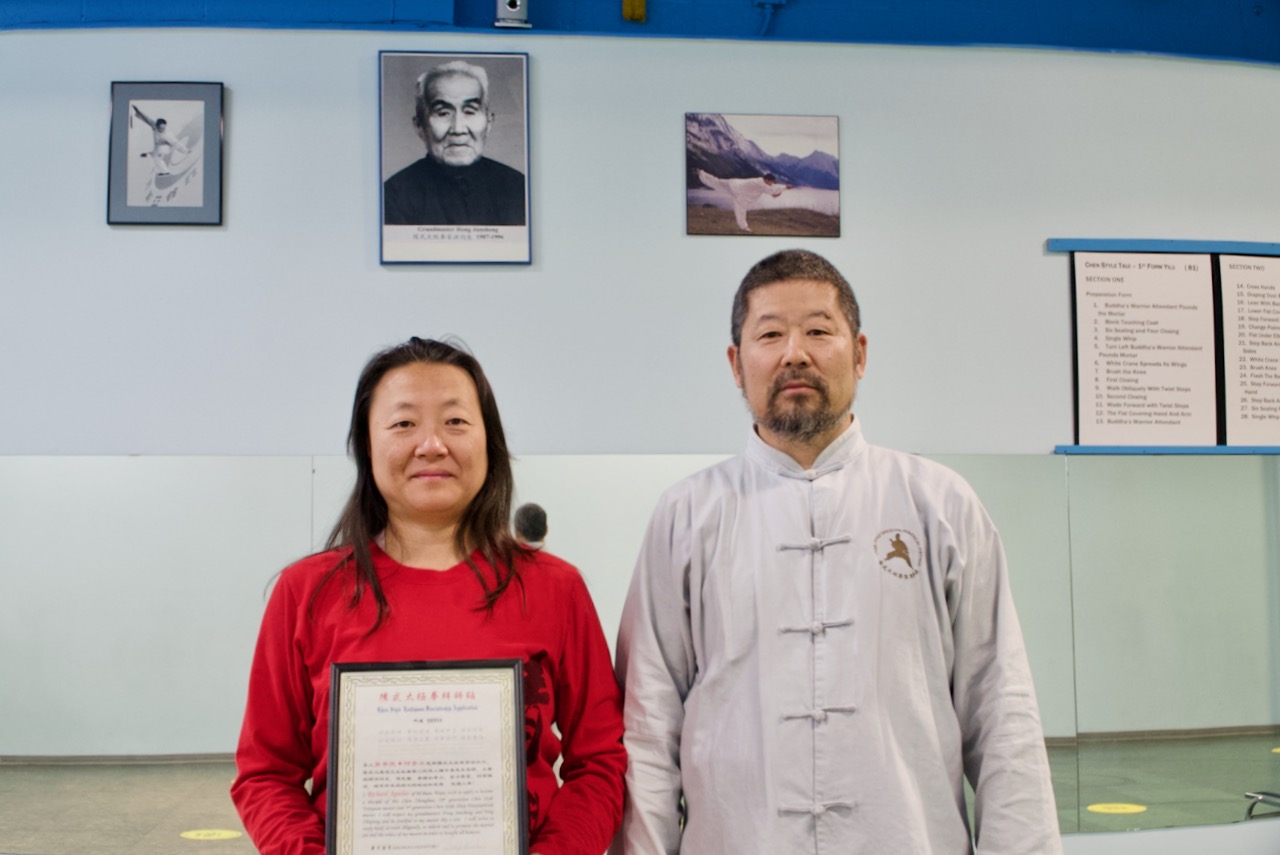
Sooyeon Zachrias discipleship Certificate 2020.09.13
Sooyeon started learning the Chen Style Taijiquan Practical Method system in 2018, joining the Maple Ridge practice group. She has not missed one single workshop since then. In 2019, she participated at the 7th Annual Daqingshan International Taiji Competition.
Start learning first Practical Method form in Jan 2020.(Foundations from October 2019)
47 years old, Japanese, Living with Kiwi husband and 2 kids in Arrowtown New Zealand last 20 years.
4 years ago I started learning Yang style Tai Chi at local class, as I felt a Qi strongly and looking for the way to introduce it to my family.
I like been in the high alpine in 4 season, surfing and sailing in the sea with the family.
Sandy Kong
Age 49
Queenstown
Started Practical Method 11 months ago
Tai Chi for 10 months before that
And chi gong for 1 year when I was 36
Michael Roger Menzies. Age 76. Queenstown. Have practiced Practical Method for 9 months. Before Practical Method practiced Yang Style for 10 months. Total Tai Chi experience 19 months starting January 2019.
My name is Mary Jowett. I’m in my early 50’s and I live in Queenstown, New Zealand. I’ve been practicing Practical Method for 4 months with no previous Taiji experience.
Born in Lower Hutt, Wellington. Currently living in Queenstown. Age range:45-50.
Started Practical Method October 2019, love it (but not good at it! find it challenging for my brain and body -which is awesome!) have never done any martial arts or Taiji before (wish i had tho!) I do a bit of skiing, mountain biking, swimming, the odd jog like to be active (when i get round to it!)
Bhargav Khaund

I am an engineer by training, and I work in an energy and chemical company in a senior managerial role within the Supply Chain and business development function covering the Asian region.
Read more
Master Chen Zhonghua always amazes me, whether it is at the next workshop (there is always something new and amazing) or looking back — such as in this video captured during a workshop in Ottawa ten years ago… an easy, seemingly simple, and clean bounce:
What do you see in the video?
John Upshaw: Everything is on a line. He added the right leg to the line…left arm to right leg…
Lou Sacharske: Watch his right shoulder, as he adds the right leg, there is zero deviation to telegraph the execution.
James Tam: I believe the rotation axis is the one joining Shifu’s left shoulder and front foot. And, the stick (effective energy pathway) is from his back foot to Steve’s upper back.
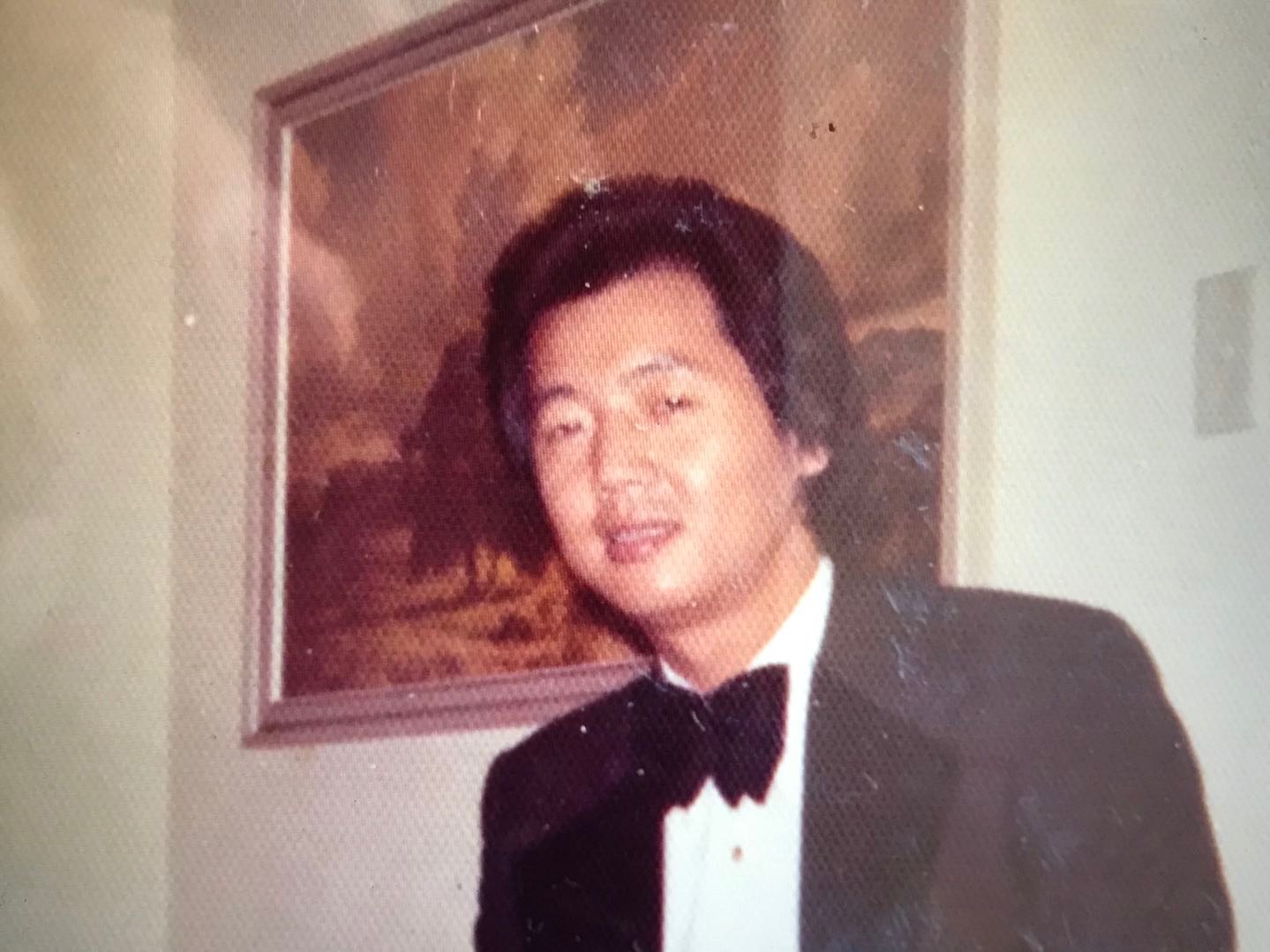
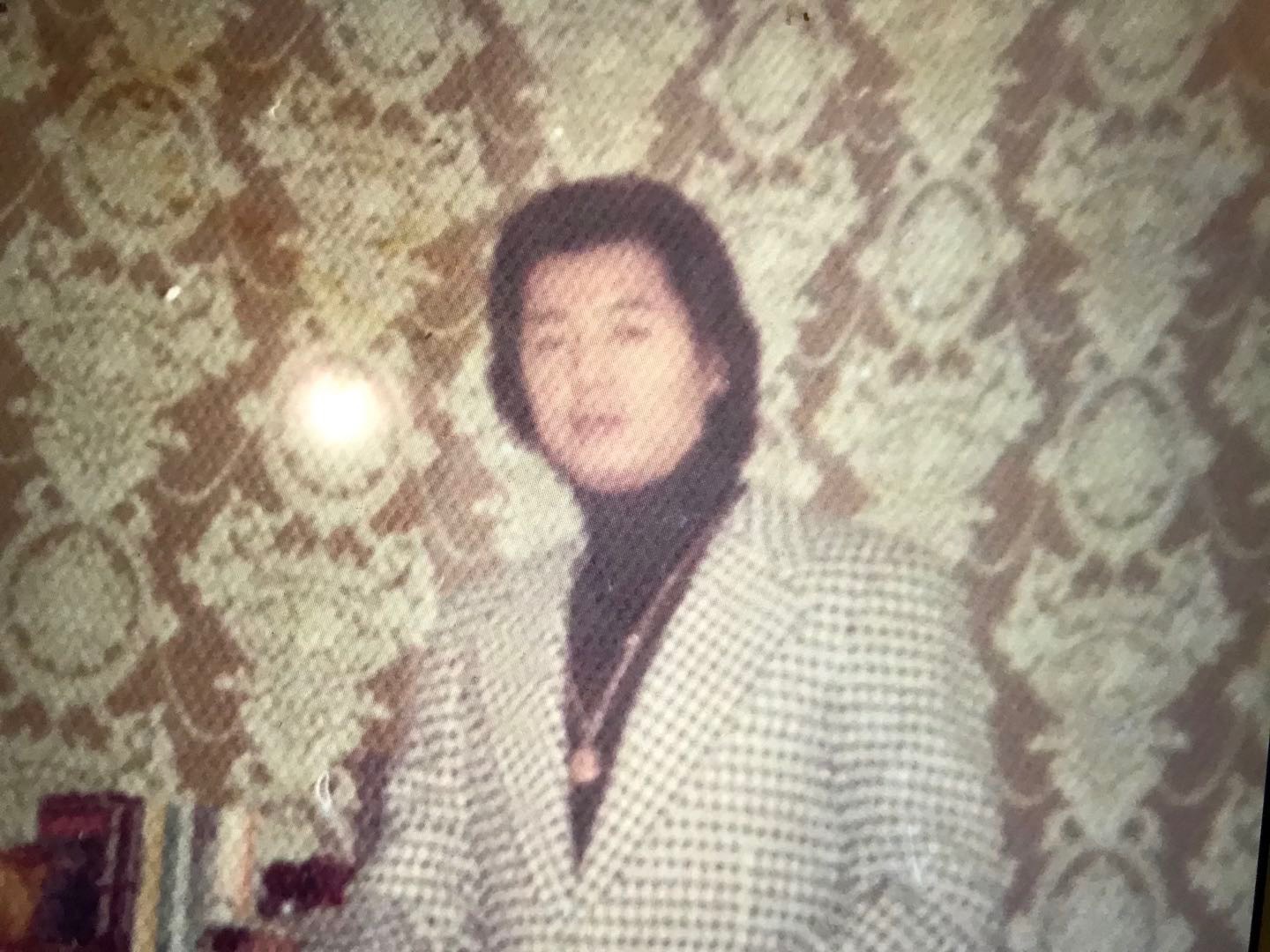
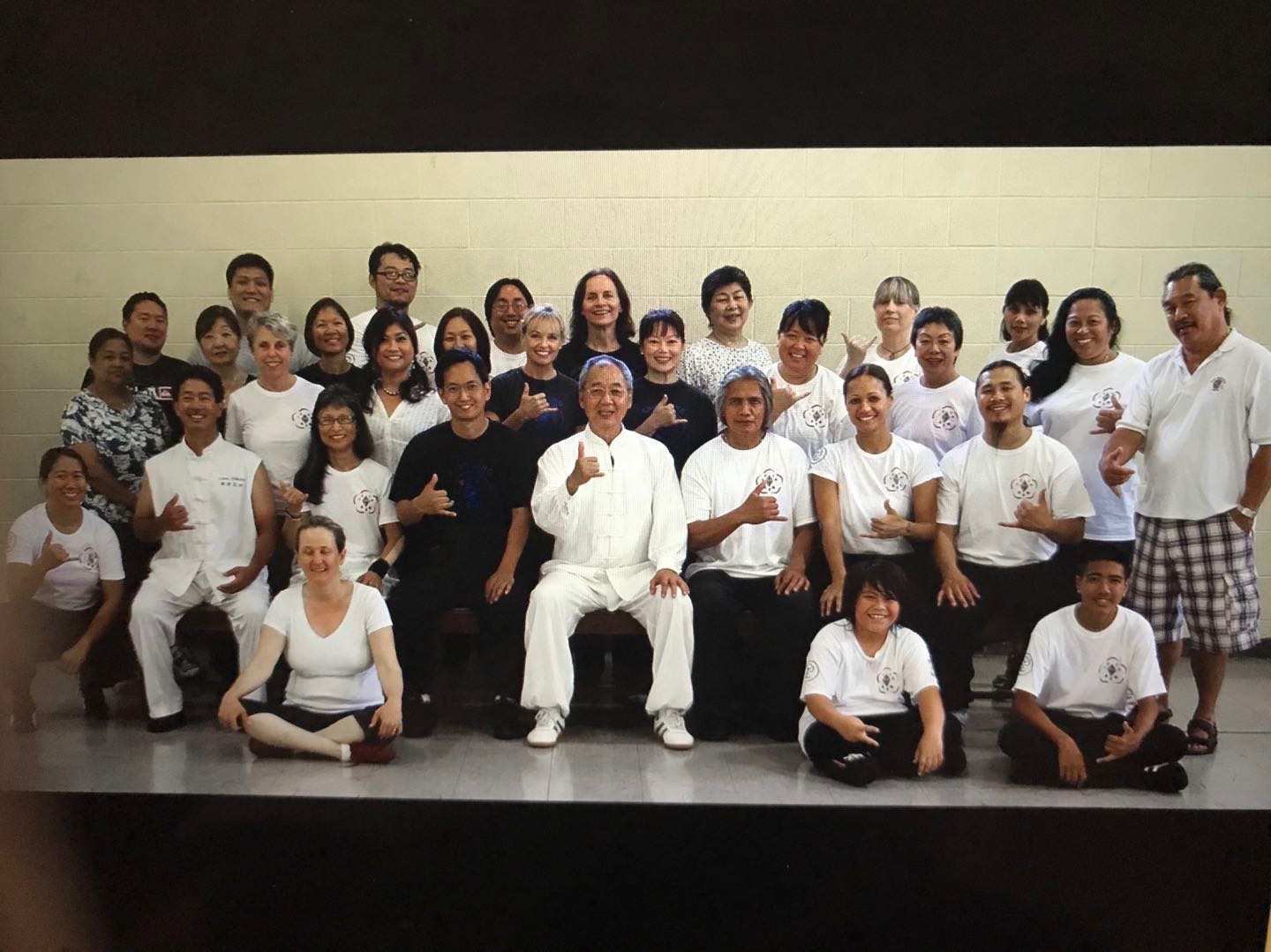
John Saw – My journey from a hotelier, gambler and Qigong Master to a faithful and loyal disciple of Master Chen Zhonghua 6
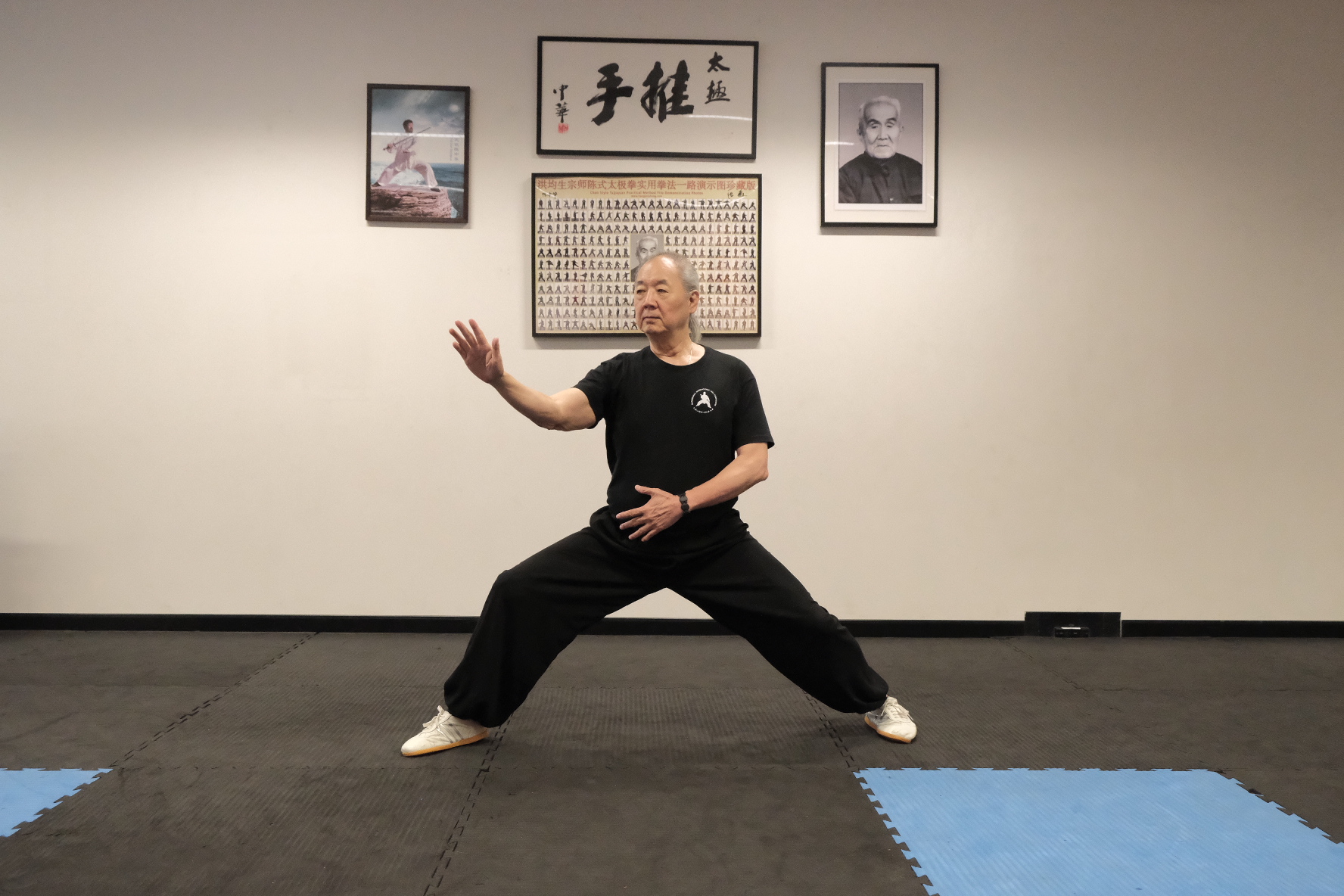
John Saw at Sydney Chen Zhonghua Taiji Academy – 8 March 2020
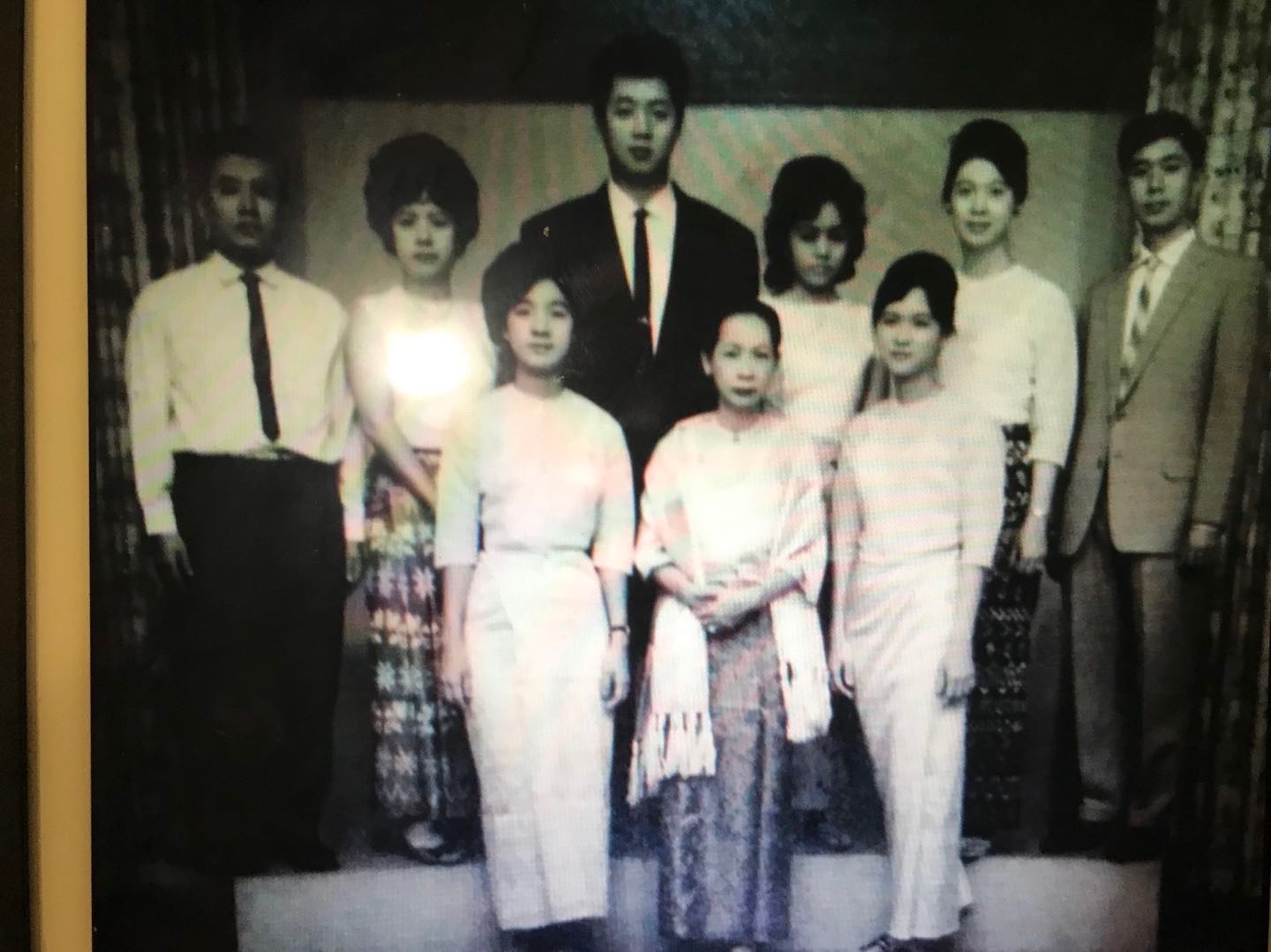
John Saw – Burma Days
John Saw – Burma Days
John Saw – Gambling Days
John Saw – Qigong Days
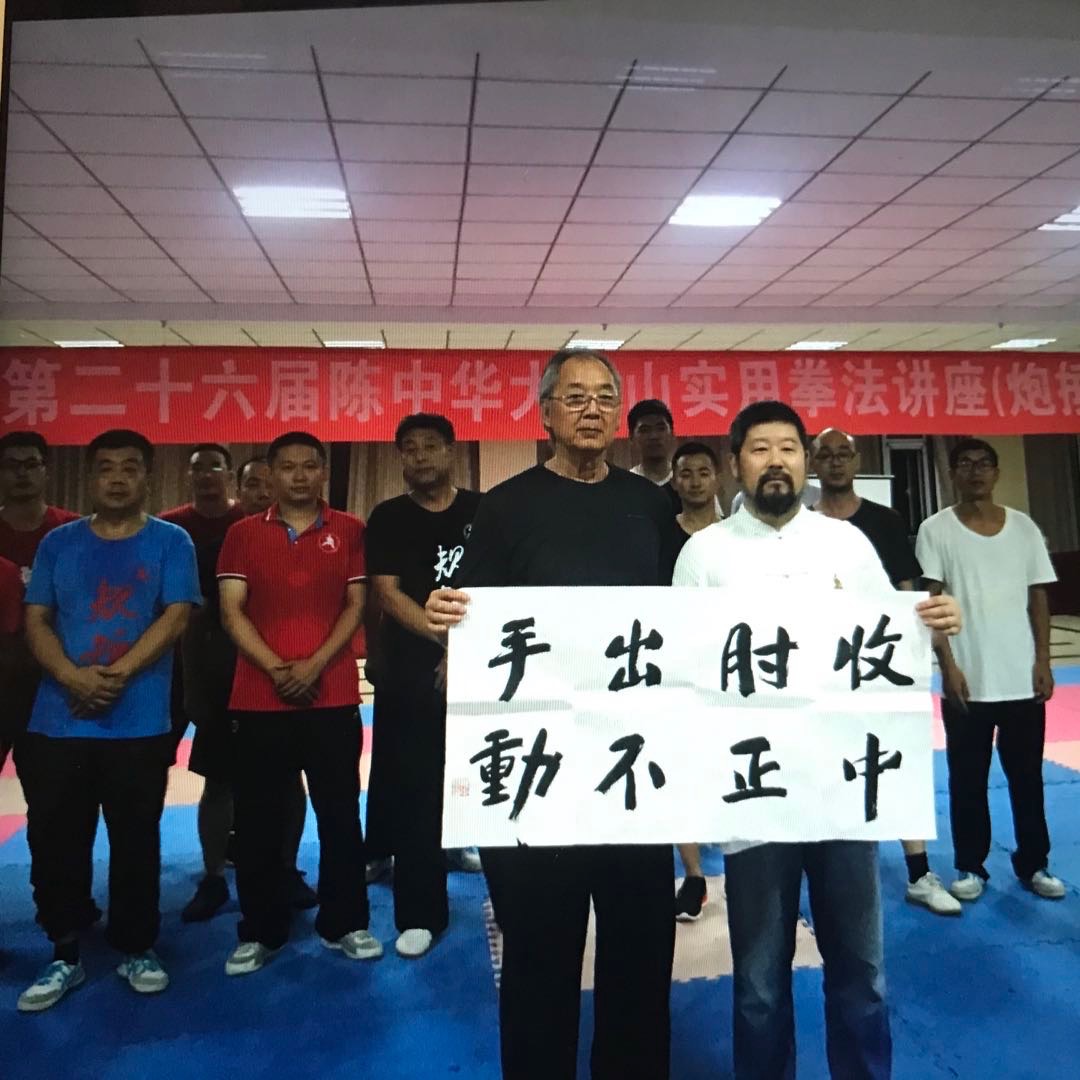
John Saw with Master Chen Zhonghua at Daqingshan
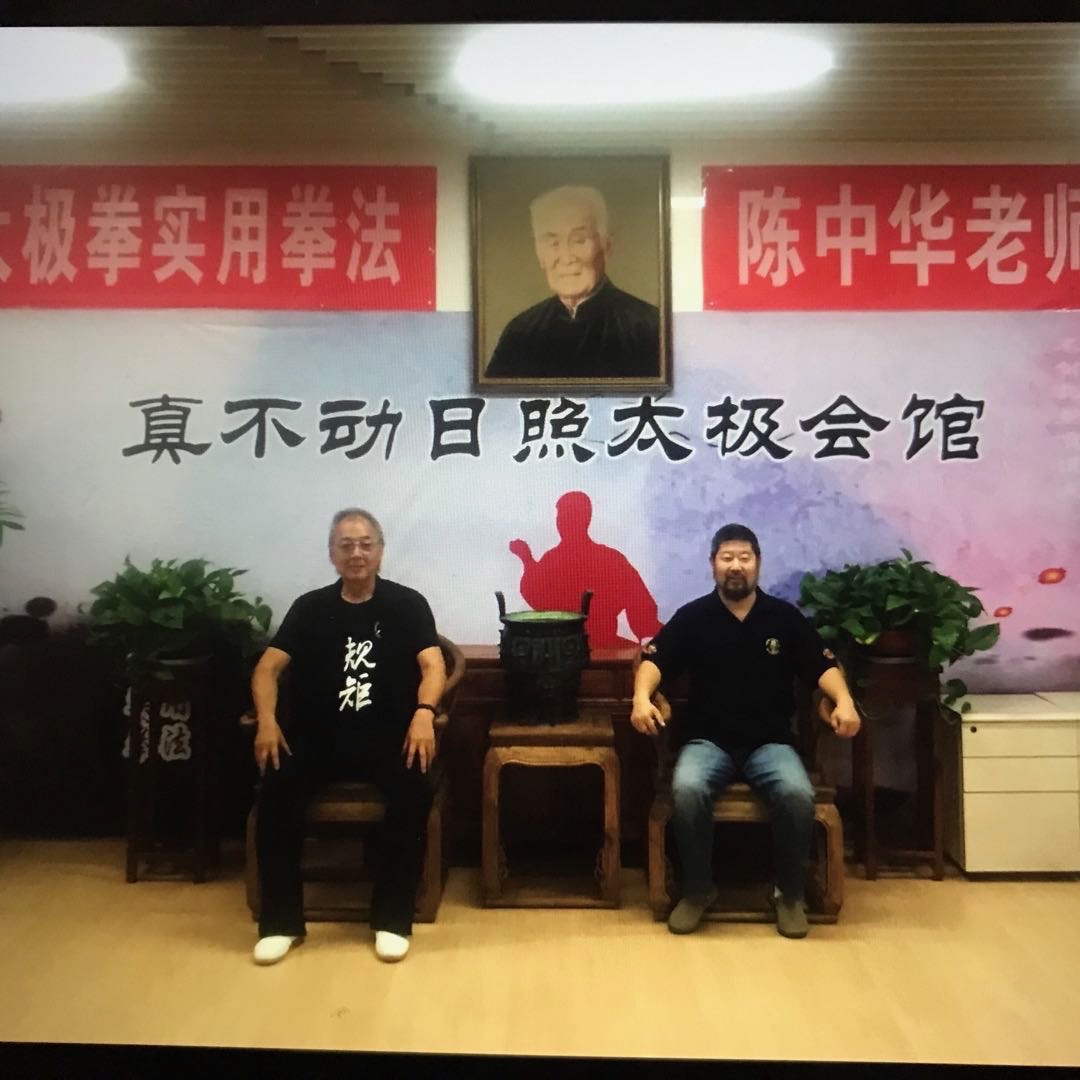
John Saw with Master Chen Zhonghua at Zhenbudong Rizhao Taiji Acacdemy
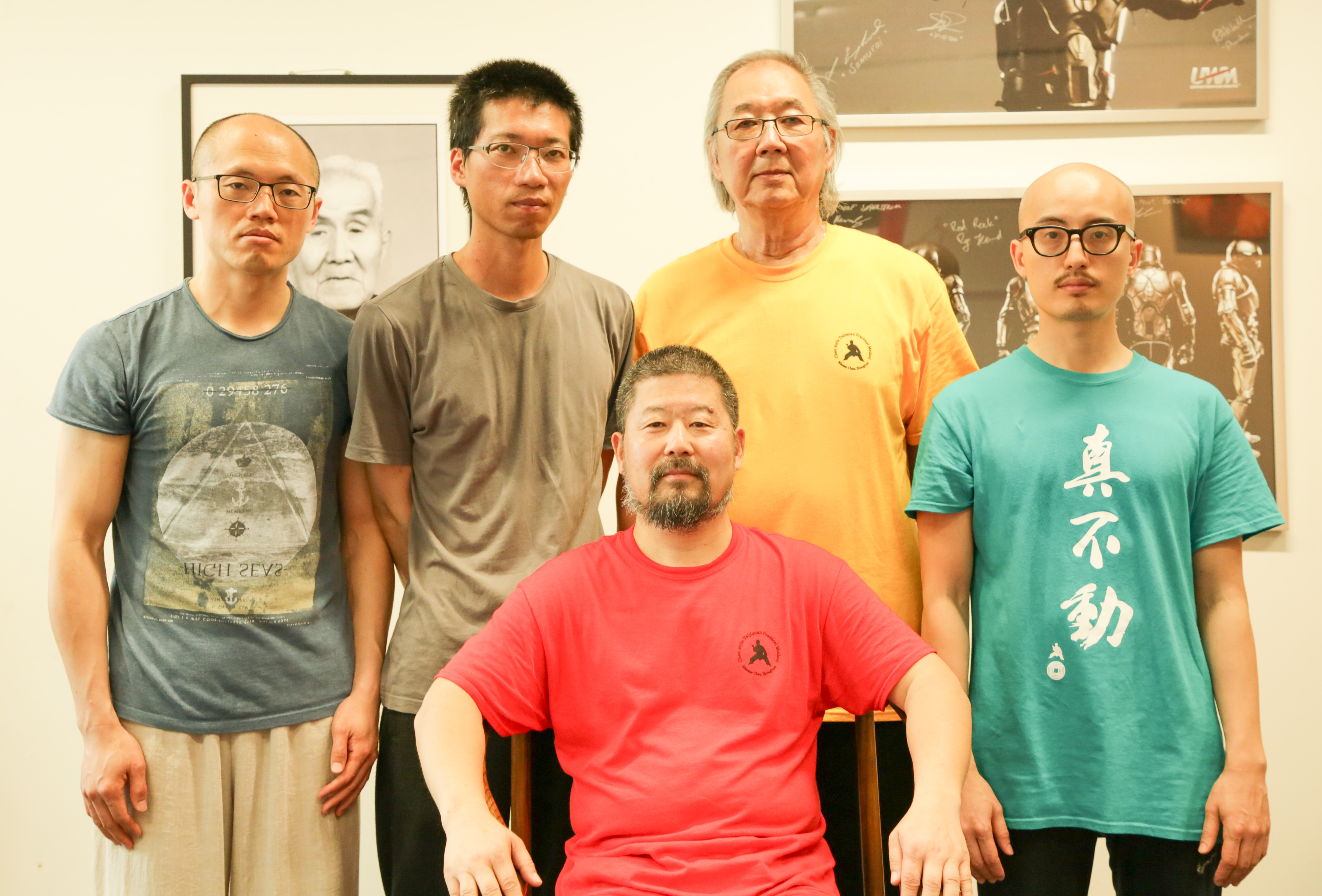
John Saw Discipleship Photo in Sydney with Master Chen Zhonghua
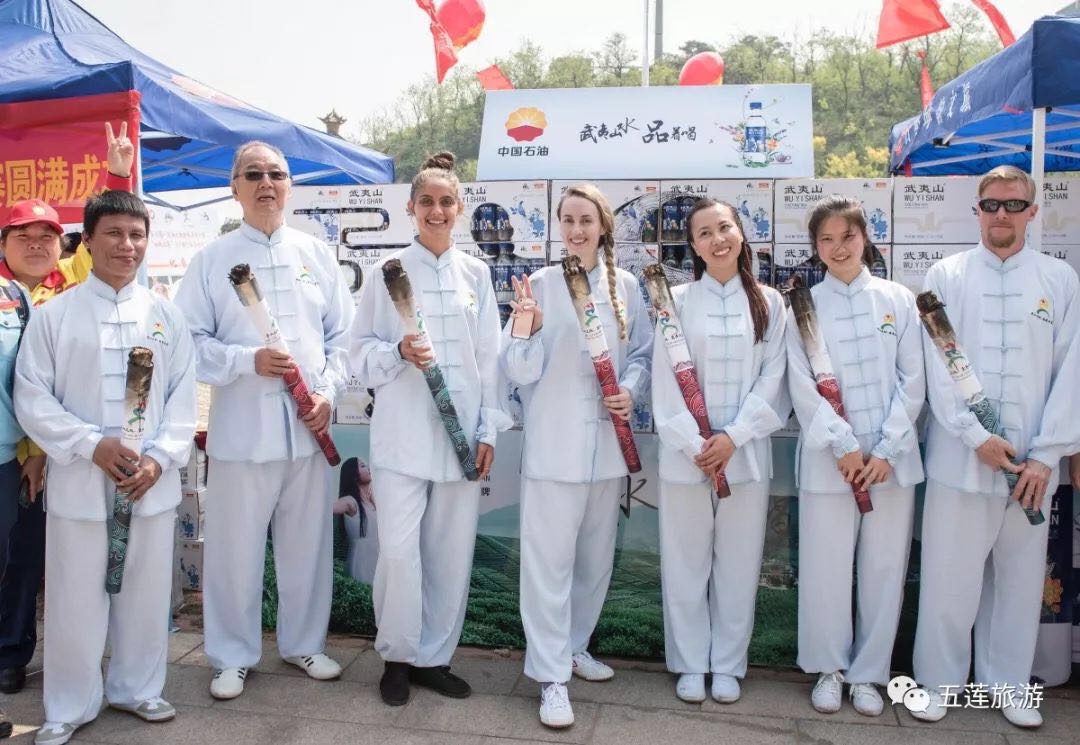
Daqingshan Taiji Flame Torch Bearer 2018
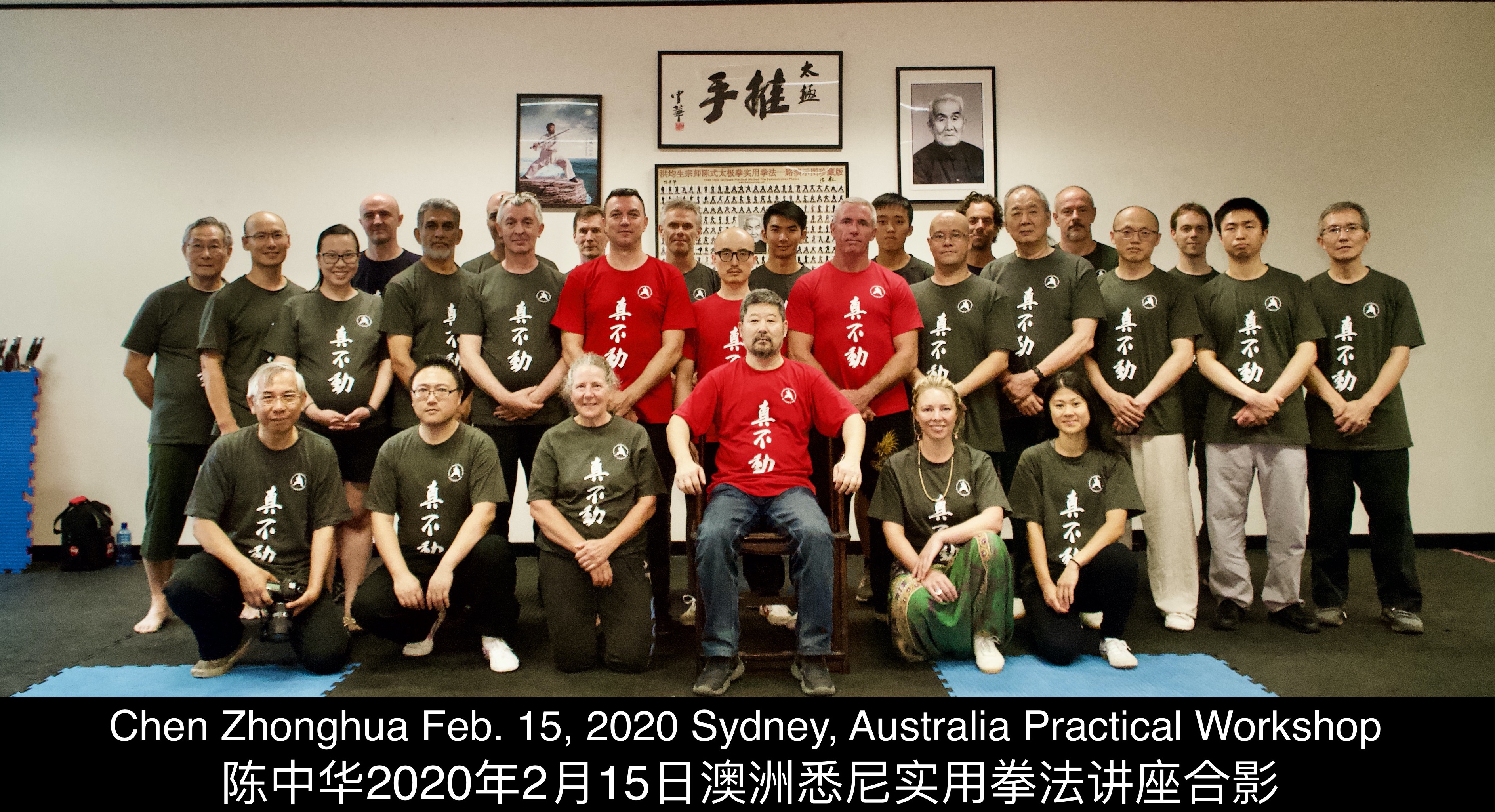
Chen Zhonghua Practical Method Workshop Sydney 2020 February
Sun Yang wins Muay Thai Gold Belt 20190222
Top New:News just came from Thailand that Sun Yang has won the 67 kg Golden Belt after many rounds of hard fights at the Golden Belt Finals under the auspice of the Thailand Muay Thai Federation. Sun Yang is a disciple of Master Chen Zhonghua, International Standard Bearer of the Chen Style Taijiquan Practical Method system and Dean of the Qingshan Taijiquan and Cultural Research Institute of the Rizhao Politechnic. Read more
|
|
Practical Method Sydney 澳洲悉尼實用拳法Chen Style Taijiquan Practical Method 陈氏太极拳实用拳法 |
|
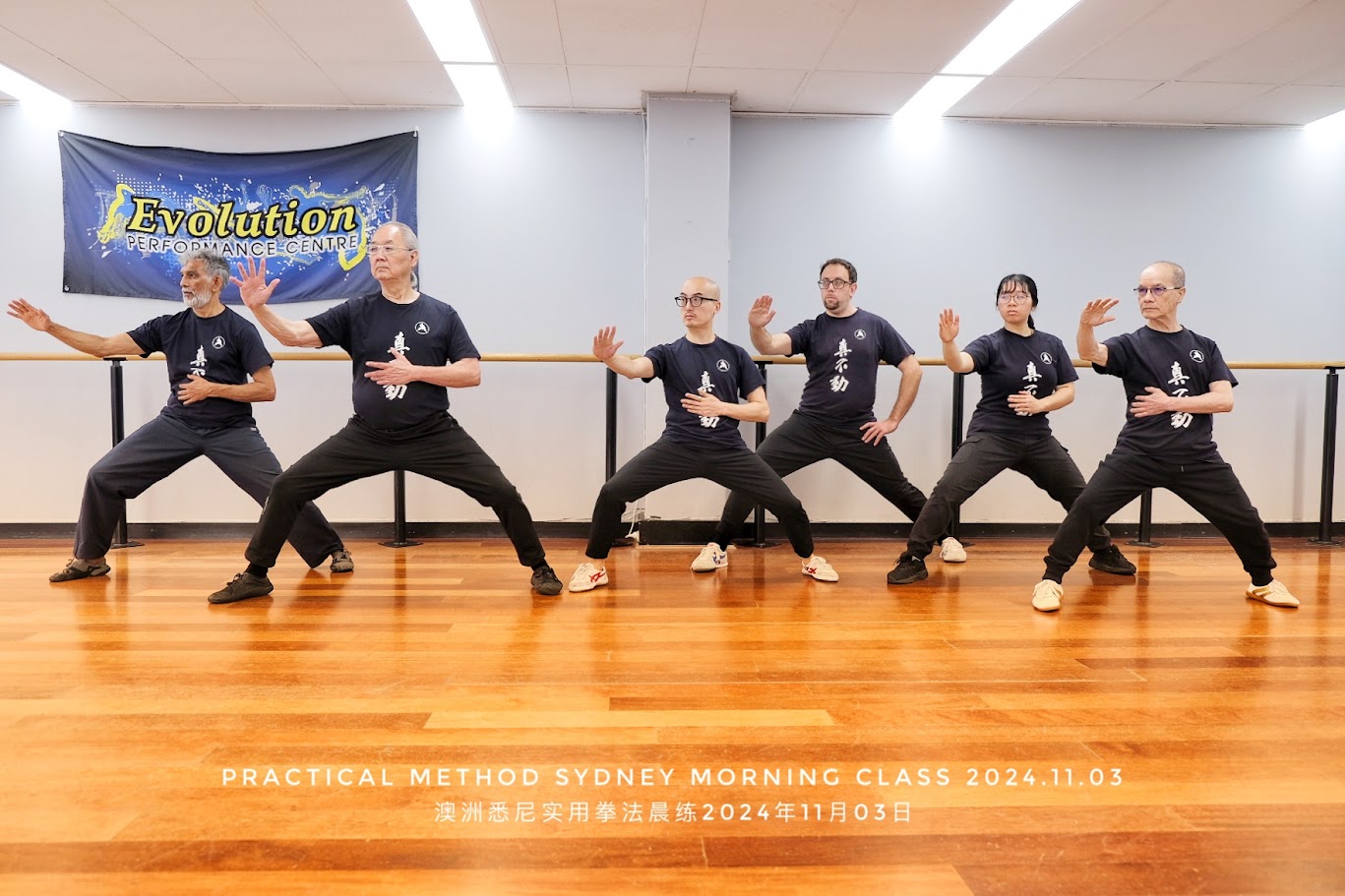
Practical Method Sydney classes are held every Sunday morning in Kirribilli. Training includes foundations, Yilu, theory, applications and push hands, with instruction adapted to your level of experience. Time: Sunday 8:00–9:30am |
|
| Regular Class Information
2026 Term Fee: $310 per term Current Students: Pay term fees 2026 Schedule:
Location: Bradfield Plaza, Broughton St at Pitt St, Kirribilli NSW 2061 Australia What we train |
|
| Contact: | For more information and registration, please contact: Brian Chung 鍾百豪 hello@practicalmethod.au Website: https://practicalmethod.au/ |
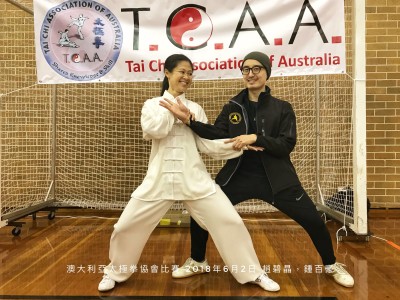
Tinh Thai and disciple Brian Chung (June 2018)
Isn’t it incredible how life gives you the things that you need when you need it?
I wanted to learn Chinese martial arts since I was a little girl. Read more
While tumbling to the ground, I have made up my mind to study from Master Chen.
Back in 2003, after watching Master Chen’s Youtube videos, I sent him an email asking if I could observe his class. Among the videos, his demonstration with Michael sticks out. Despite a much more petite statue, tossing Michael around seemed effortless for Master. Later on, I found out that Michael isn’t only a 9th-degree black belt, but he is also a cop who has caught over 200 thieves. Simply put, he is no slouch.

My name is Edward Liaw; I currently reside in San Diego, California. I was accepted as Master Chen’s 283rd disciple during the 2018 North American Practical Method Training Camp in Cedar Rapids, Iowa, alongside Nathan Heintz and Spencer Jones. Every day, I am grateful for being a part of a passionate and supportive community of practitioners, students, and teachers. Read more
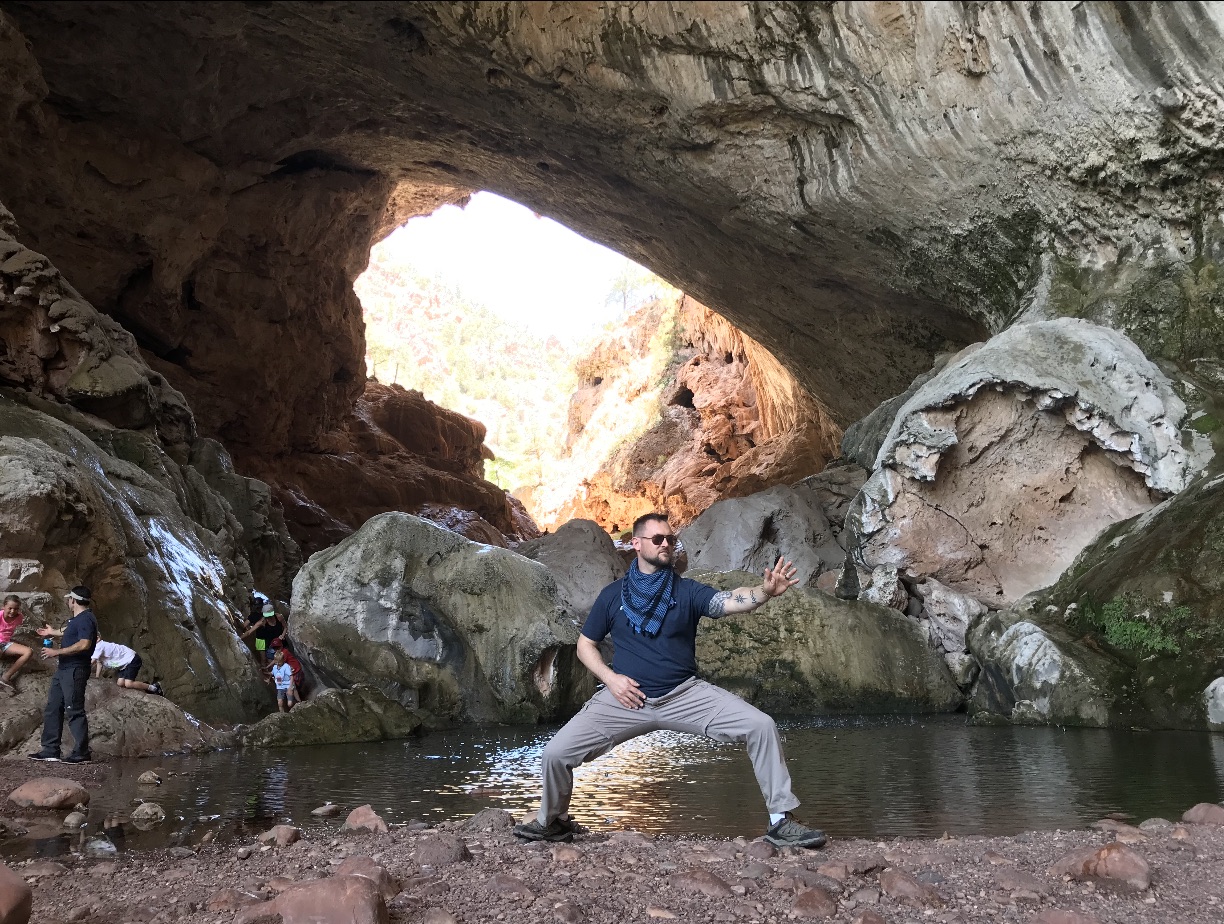 My name is Benjamin Benefiel and I live in Phoenix, Arizona, USA with my wife and two young daughters. On January 21, 2018, I became Master Chen Zhonghua’s 259th disciple along with taiji brother Winston Wang. I grew up near Chicago, Illinois before moving to Phoenix area for graduate school in 1999. My appreciation of martial arts began as a child with karate lessons and a love of ‘kung fu cinema’. During my 20s and early 30s, I studied various styles of martial arts intermittently (including Baguazhang, Xingyiquan, and Deng family Sengmenquan, as well as a very small amount of experience with Yang style Taiji which was taught only as a health exercise). Chen style Taijiquan always held a strong fascination for me, but I was never fortunate enough to find a teacher. Read more