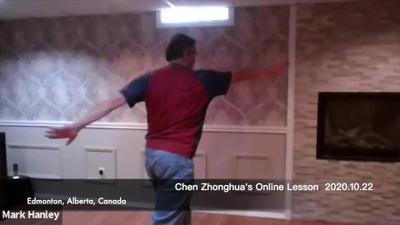
Chen Zhonghua’s Online Lesson on Oct. 22, 2020. This is a session on Yilu corrections.
Presenter: Chen Zhonghua Length: 67 min. In: English Year: 2020 Difficulty:2/5 At:Edmonton Chen Zhonghua Taiji Academy
Chen Style Taijiquan and Hunyuan Taiji email: practicalmethod@qq.com
View posts in sub-category:
Application Articles Body and Posture Class (Workshop) Notes Common Errors Glossary and terms Hunyuan Knowledge-Movement Explanations Learning Method Principle-Concept Principle-List Principle-Rule Principle-Technical Push Hands Quotations Routine Names Routines Videos Stories Student Evaluations (Private) Taiji Apparatus Taiji FAQ Taiji Sword Thoughts and Understanding Workshop and Class Notes
Chen Zhonghua’s Online Lesson on Oct. 22, 2020. This is a session on Yilu corrections.
Presenter: Chen Zhonghua Length: 67 min. In: English Year: 2020 Difficulty:2/5 At:Edmonton Chen Zhonghua Taiji Academy
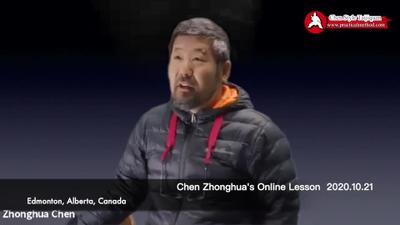
Master Chen Zhonghua’s online lesson on Oct. 21, 2020. This is a lesson on Yilu corrections. At the beginning of the hour, there was some information on the theory of Chen Style Taijiquan Practical Method. The general theory of Yin Yang separation.
Presenter: Chen Zhonghua Length: 67 min. In: English Year: 2020 Difficulty:3/5 At:Edmonton Chen Zhonghua Taiji Academy
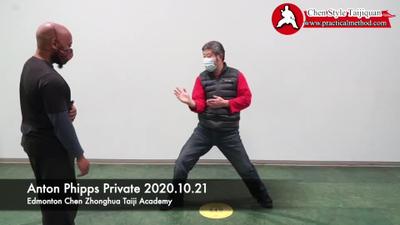
Positive circle and beyond. Sound was captured by camera, not wireless mic. Presenter: Chen Zhonghua Length: 64 min. In: English Year: 2020 Difficulty:3/5 At:Edmonton Chen Zhonghua Taiji Academy
Read more
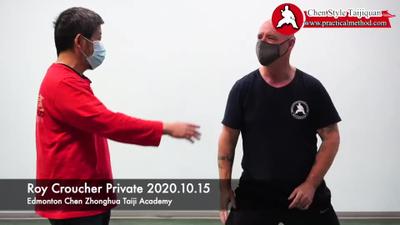
Chen Zhonghua’s Private Lesson for Roy Croucher on Oct. 21, 2020. Presenter: Chen Zhonghua Length: 43 min. In: English Year: 2020 Difficulty:2/5 At:Edmonton Chen Zhonghua Taiji Academy
Read moreNegative Circle
Rotation is when there is movement without displacement.
Read more
Master Chen Zhonghua’s Private Lesson for Anton Phipps on Oct. 19, 2020. Presenter: Chen Zhonghua Length: 47 min. In: English Year: 2020 Difficulty:3/5 At:Edmonton Chen Zhonghua Taiji Academy
Read moreFF47089F-F20D-4BEB-8997-473ECAE8233B
Master Chen Zhonghua’s Private Lesson for Anton Phipps on Oct. 20, 2020. This is the last (6) section of the Yilu.
58DF5DEC-E5AF-473E-9AD4-206F9EA8BF23
Presenter: Chen Zhonghua Length: 40 min. In: English Year: 2020 Difficulty:3/5 At:Edmonton Chen Zhonghua Taiji Academy
Master Chen Zhonghu’s Private lesson for Roy Croucher on Oct. 20, 2020. Presenter: Chen Zhonghua Length: 56 min. In: English Year: 2020 Difficulty:3/5 At:Edmonton Chen Zhonghua Taiji Academy
Read more
Master Chen Zhonghua’s online lesson on Chen Style Taijiquan Practical Method on Oct. 20, 2020. Today’s lesson is on foundations. Master Chen Zhonghua corrected many students on typical errors while Kelvin Ho is leading the training.
Presenter: Chen Zhonghua Length: 67 min. In: English Year: 2020 Difficulty:2/5 At:Edmonton Chen Zhonghua Taiji Academy
Remember to lock one body part to do stretching. Find one thing and do it right. Once you have the method, you can repeat it until it exhausts you. Read more
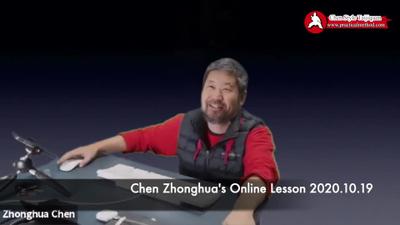
Chen Zhonghua’s Online Lesson on Practical Method on Oct. 19, 2020. Presenter: Chen Zhonghua Length: 66 min. In: English Year: 2020 Difficulty:2/5 At:Edmonton Chen Zhonghua Taiji Academy
Read more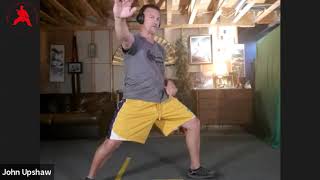
Presenter: Kelvin Ho Length: 19 min. In: English Year: 2020 Difficulty:3/5 At: Toronto and Iowa
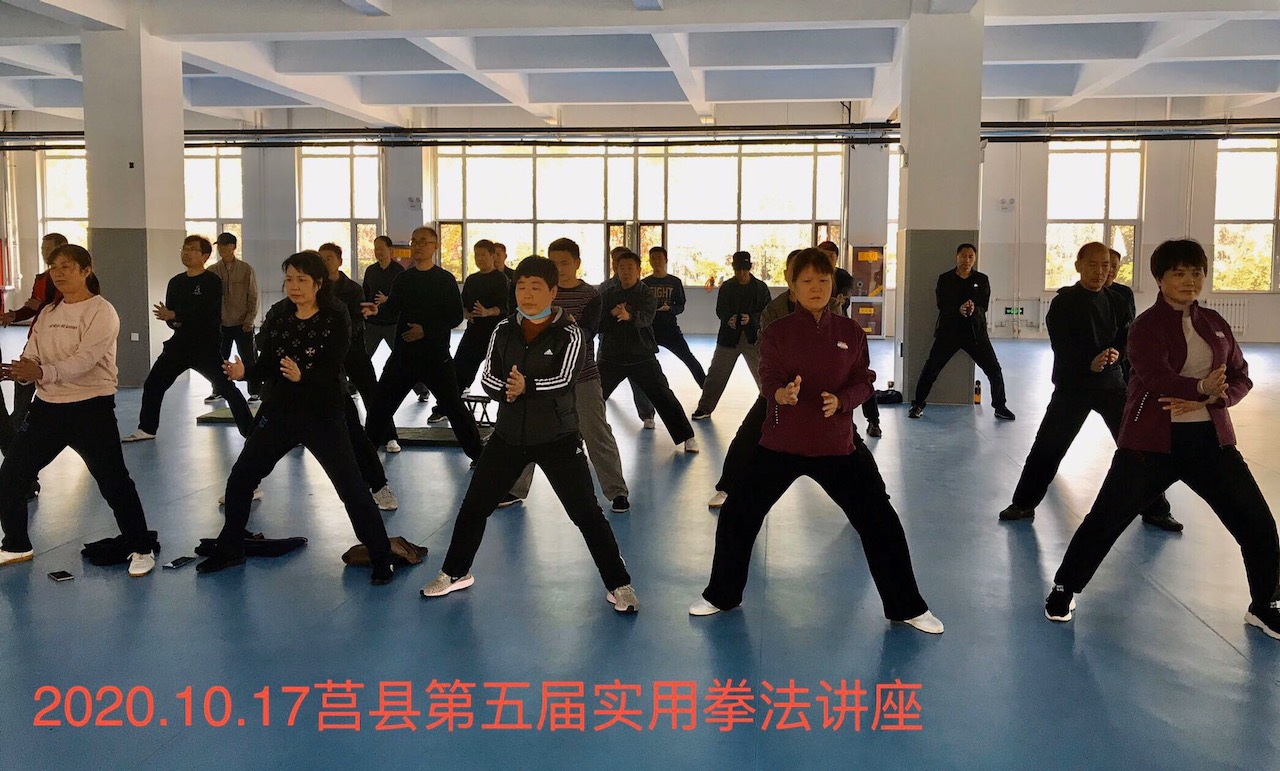 5th Juxian Practical Method Seminar from Oct. 17th to 18th, 2020.
Instructor: Chen Xu.
Wang Kai, Qiu Yingdong. Read more
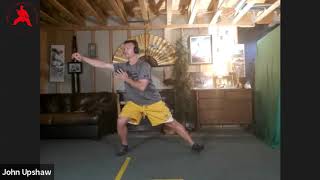
Presenter: Kelvin Ho Length: 10 min. In: English Year: 2020 Difficulty:3/5 At: Toronto and Iowa
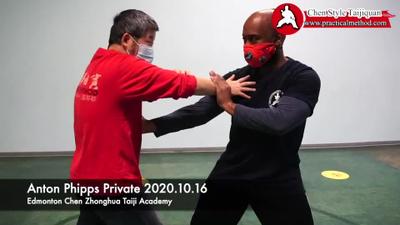
Please note: The video was recorded without external microphone. The sound was from normal camera sound capture. It is audible. This is Master Chen Zhonghua’s correction for Anton Phipps for section four of the Chen Style Taijiquan Practical Method Yilu.
At the end of the correction, Master taught a method/concept of how to create a line with elbow/shoulder, and knee/kua. This is a fundamental aspect of the way Chen Style Taijiquan Practical Method uses the body.
Presenter: Chen Zhonghua Length: 50 min. In: English Year: 2020 Difficulty:2/5 At:Edmonton Chen Zhonghua Taiji Academy 埃德蒙顿陈中华太极馆
Read more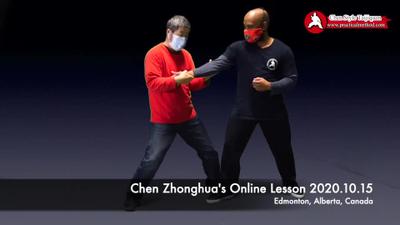
A few simple “in with elbow” applications. Presenter: Chen Zhonghua Length: 1 min. In: English Year: 2020 Difficulty:1/5 At:Edmonton Chen Zhonghua Taiji Academy 埃德蒙顿陈中华太极馆
Read more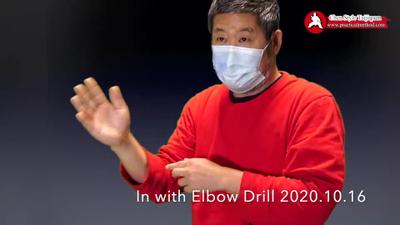
A simple drill to train “In with Elbow”. Presenter: Chen Zhonghua Length: 2 min. In: English Year: 2020 Difficulty:3/5 At:Edmonton Chen Zhonghua Taiji Academy 埃德蒙顿陈中华太极馆
Read moreOur movements must have a horizontal one and a vertical one intersecting/interacting at the same time.
Three parallel planes
The integrity of each plane must be maintained. There is a vertical rod that goes through the middle to connect all three planes to fix them in a particular way, but yet they are free to move any other way. Each plane is like a trampoline. This is how we convert opponent’s incoming kinetic energy into potential energy stored in the trampoline, and eventually back to kinetic energy aimed at the opponent. You can also lock any of the planes, and move a different one to create a vertical stretch. With these 3 planes, you can create a lot of variations and configurations.
Read more
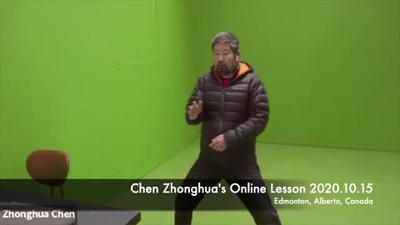
Master Chen Zhonghua’s online lesson on Chen Style Taijiquan Practical Method on Oct. 15, 2020.
Presenter: Chen Zhonghua Length: 77 min. In: English Year: 2020 Difficulty:2/5 At:Edmonton Chen Zhonghua Taiji Academy 埃德蒙顿陈中华太极馆
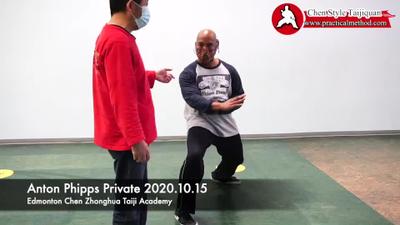
This is the section 3 of the Yilu corrections for Anton Phipps by Master Chen Zhonghua.
Presenter: Chen Zhonghua Length: 38 min. In: English Year: 2020 Difficulty:3/5 At:Edmonton Chen Zhonghua Taiji Academy 埃德蒙顿陈中华太极馆
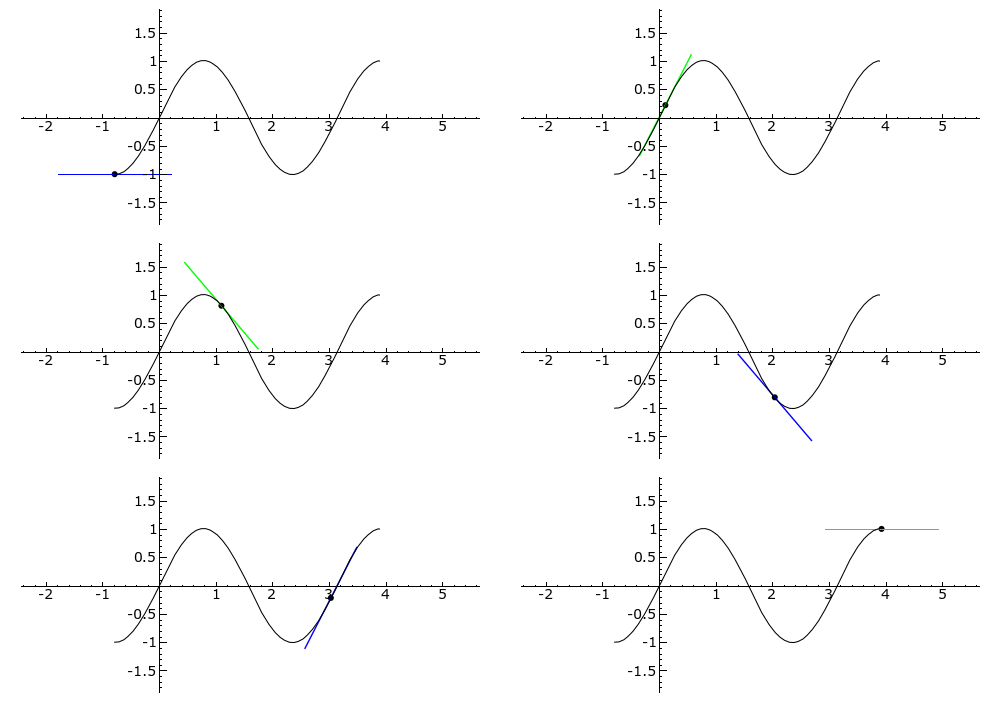
Inflection points in differential geometry are the points of the curve where the curvature changes its sign. In the illustration below, it is when the tangent turns red or when the curve intersects with the X axis in this case.
Whatever it is that you know, the truth is not like that. Whatever you don’t realize, accidentally it is the correct thing.
Read more
Presenter: Kelvin Ho Length: 17 min. In: English Year: 2020 Difficulty:3/5 At: Toronto and Iowa
Positive Circle
Chen Zhonghua’s Online Lesson on 20201014. Presenter: Chen Zhonghua Length: 85 min. In: English Year: 2020 Difficulty:3/5 At:Edmonton Chen Zhonghua Taiji Academy 埃德蒙顿陈中华太极馆
Read more“Rotation is changing direction without changing direction”
What kind of confusing statement is that?
Learning taijiquan is a feat in resolving conflicts.
Read more
Foundations on line notes ~ October 13th 2020 by John Upshaw
Kelvin Ho lead us through a positive circle stepping back drill. With our front hand out, we would step back with a rear foot causing us to go lower, we rotated/shifted from our front kua to our rear kua, rotating the elbow in on the same line with hand staying fixed on that same line…like a spear, tip pointed at the opponent. By using my kuas in this manner, my range increased.
Master Chen Zhonghua’s online lesson on 2020.10.13. This lesson is on foundations. Master Chen taught how to focus on the kua while doing the positive circle. Presenter: Chen Zhonghua Length: 63 min. In: English Year: 2020 Difficulty:1/5 At:Edmonton Chen Zhonghua Taiji Academy 埃德蒙顿陈中华太极馆
Read moreMaster Chen Zhon ghua’s Oct. 13, 2020 private lesson for Anton Phipps. This lesson used the applications of the first 13 moves of the Practical Method to illustrate how the moves are to be done.
Presenter: Chen Zhonghua Length: 58 min. In: English Year: 2020 Difficulty:3/5 At:Edmonton Chen Zhonghua Taiji Academy 埃德蒙顿陈中华太极馆
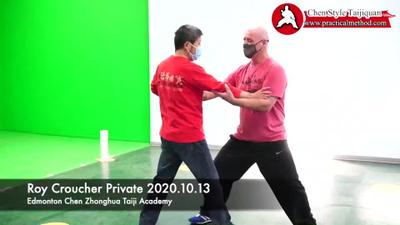
Master Chen Zhonghua’s Private lesson for Roy Croucher on Oct. 13, 2020. Presenter: Chen Zhonghua Length: 47 min. In: English Year: 2020 Difficulty:1/5 At:Edmonton Chen Zhonghua Taiji Academy 埃德蒙顿陈中华太极馆
Read moreThe subject of the lesson was foundations/positive circle.
Master Chen provided some history of China and the development of taijiquan. He also related a story about how the Practical Method foundations were developed. Read more
Master Chen Zhonghua started with a story about the history of China and Chen Style Taijiquan. Before the first Qin emperor defeated 6 other kings and united China, there was the period of Spring and Autumn 春秋 (which has nothing to do with the two seasons). Back then, there were 800 states, each had their own cultures, and they all flourished. Today, there are different levels of governments in China: Federal, Provincial, and County. The Chinese government wanted to get rid of the county level government, but they couldn’t done. Each county turned out to map back to the old states. The Chinese government had full election for village officials, but there are large families at the county levels, with full election, these large families will gain control at the county level goverments. These families managed to get around the one-child policy themselves.
Read more
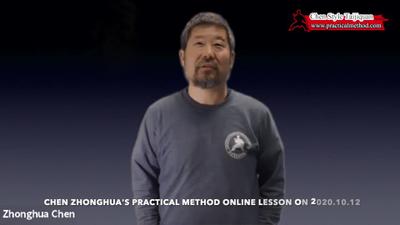
Master Chen Zhonghua’s online lesson on Chen Style Taijiquan Practical Method on Oct. 12, 2020. This lesson was on how to use large moves of the kua to create a positive circle. Presenter: Chen Zhonghua Length: 48 min. In: English Year: 2020 Difficulty:1/5 At:Edmonton Chen Zhonghua Taiji Academy
Read more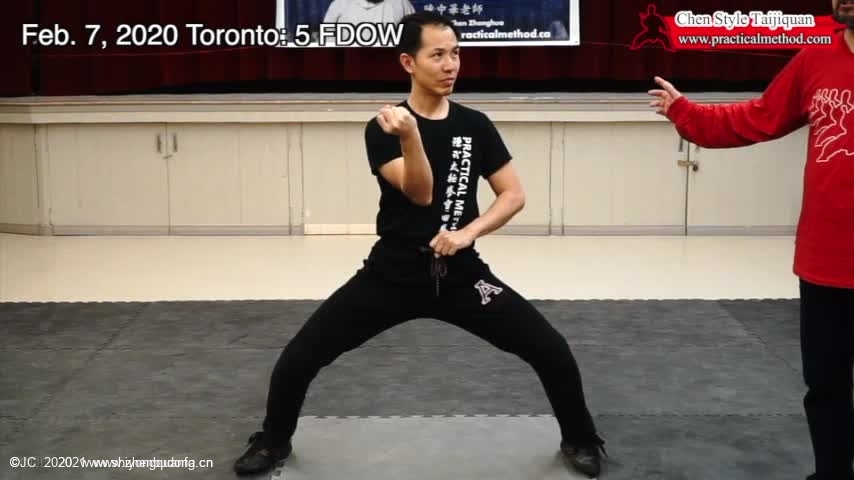
Master Chen Zhonghua’s Toronto Workshop March 2020-5
Presenter: Chen Zhonghua Length: 9 min. In: English Year: 2020 Difficulty:4/5 At: Toronto, Canada
Master Chen Zhonghua explans the Practical Method signature move: Fist Drape Over Body. This move requies coordination of the entire body. Master Chen gave Kelvin Ho a lot of detailed corrections.