Robot Taiji i

by admin2 on 2020/12/06

Fetch water with the rubber cord

  • Step on one end of the cord to lock it on the ground, pull it with the rear hand.
  • Train opening of the front kua.
  • Find the appropriate strength in the rubber cord to be strong enough that we cannot use the hands/arms to stretch it, but weak enough that we can use the kua to stretch it. Read more

We hear those things often. In this article I‘ll give an overview of what that means and also write a little bit of how to implement it into your body.

The concepts are very easy to explain. So here we go: Read more

Head and kua are locked like a triangle.
Separate the top from the bottom.
Kua is the demarcation line. Read more

Prague Open House 17 i

by admin2 on 2020/12/02

Read more

Iowa Workshop 2017 i

by admin2 on 2020/12/02

The Berlin/German branch of Practical Method would like to announce a free online workshop via Zoom, in german language.

For sign up, please go here:
https://practicalmethod.de/online-sessions/

NikolausPM
and see this clip to get an idea:

Thanks for sharing to anyone who might be interested, and thanks to Master Chen for inspiration!

Practice Yi Lu segmented for 10 years. If not, you are moving all over. That is wrong. Every move must show exactly what you are doing. If you don’t finish the moves, you will not synchronize and it is as if you are speaking a different language from Practical Method Chen Taiji. Read more

In today’s class the following students received partial Yilu corrections:
  • Spencer Jones
  • Xavier Santiago
  • Winston Wang
  • Josh Landau
  • Jody Hall
  • Paul Pryce
  • Liu Yuxin
  • Ong Wenming
  • Sven Gusowski
  • Rick Pietila
In today’s class, the following students received partial Yilu corrections.
  • Sergey Schepin
  • Paul Carson
  • Carlotta Viviani
  • Paddy Hanratty
  • James Tam
  • Vincent den Hengst
  • Lutz Liese
  • Dina Kerr
  • Ardarsh Khalsa
Day one group photo of the first Zhu Ma Dian Practical Method Seminar on Nov. 28, 2020.

Day one group photo of the first Zhu Ma Dian Practical Method Seminar on Nov. 28, 2020.

Read more

I started learning Chen Style Taijiquan Practical Method in 2005. I learned a rough version of the yilu within nine months. I am a persistent person that continuously seeks progress. As the years have gone by I have missed essential details that are in the form, even though many people would not recognize those missing pieces. Let face it, a form with 81 postures in which each posture has several movements/stretches/rotations in it is a huge undertaking!

Read more

 Fetch Water

  • Lock the front knee
  • Lock the rear shoulder
  • Push the front kua into the line between the front knee and rear shoulder
  • Make sure that train the full range of motion
  • At the tail end, nudge a little attempting to go beyond the current maximum Read more

Three examples of  Master Chen`s clarity of hands on explanation of certain types of dealing with energy taught me invaluable lessons. If the students follow instructions then all will be able to do things that will be amazing to themselves. By practice you build up not only martial skill but also health. From the beginning when we start to learn Practical Method we are trying to apply the most fundamental principle of taiji  in partner exercises and push hands: the separation of yin and yang. Taijiquan is in my words in this context an effect on the opponent or partner by using taiji principles that spring from our understanding of the exact teachings of Master Chen Zhonghua and is defined by the stage of our practice.

Read more

What is the seam (缝 feng)?

  • The place between two actions where it needs to change direction (such as, go back).
  • Grandmaster Hong said that we needed to get to 天衣无缝 tian yi wu feng. Heavenly clothes have no seam.
  • However, we can’t pretend that there is no seam in the first place, and hide it.

Read more

Positive circle – must stretch from rear side.  Must open the inside. Has to be from crotch and back leg.

Feet look like tip-toe, but actually power is going down.  This is the strongest.

3-part circle: 3 body parts: arm, torso (rotate from kua), foot (kua to rear foot)

The movement comes from 3 different sections – the opponent cannot catch or stop you. Read more

Through the years, in Practical Method I‘ve heard the word power associated, as different aspects of the same power, to words like: Structure, length, space, accuracy, rhythm.

The Lesson today was about Rhythm or Sequence of movements: there are very few people who cannot remember the choreography. But we all are at different levels of managing the rhythm. When your movement are totally disconnected, you will be very efficient in applications and push hands Read more

Taiji is 3 i

by Kelvin Ho on 2020/11/24

WaterPuzzle

Suppose you have only a 4 liter container and a 9 liter container. The containers have no measurement lines on either of them. How could you measure exactly 6 liters of water using only those containers assuming you can have as much extra water as you need?

After I solved the above puzzle, I had a realization on the statement “taiji is 3”.
Read more

Rhythm

Shifu: You need to get the rhythm/counting of the form.

After you learn it, then it becomes music. But this cannot be thought. Everyone „hears“ his/her own music. And this is only after a long time of learning the correct rhythm. Read more

John Upshaw

  • Fist Protecting Heart to Tornado Kick. Too big. Before the turn, you have to come back into the core
  • Small Catching and Hitting. Rotating from the core (in and out)
  • Drop the Hands (before Embrace the Head to push the Mountain). This move is a cross between Six Sealing and Four Closing and Punch Covering Hand Read more

大青山推手训练2013 - 38

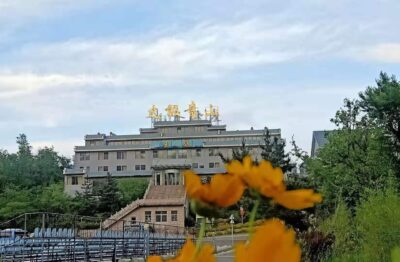
The Daqingshan Chen Zhonghua Taiji Academy teaches Chen Style Taijiquan Practical Method of GM Hong Junsheng and Hunyuan Taiji of GM Feng Zhiqiang. The Academy was original established in 2006 as Daqingshan International Taiji Training Center. In 2017 it was re-named Daqingshan Chen Zhonghua Taiji Academy (DCTA). Read more

We covered the following tonight:

Negative circle

  1. Do it in a way that the arm triangle does not change shape externally.
  2. Focus on the opening of the shoulder and the elbow
  3. Think of the forearm and the upperarm rotating longitudinally and independently.
  4. When doing elbow in, make sure that the shoulder is down. This is like instead of getting the elbow to go over on its own, make the shoulder contribute half the effort by going down, so that the elbow can go over by completing the other half. Read more

大青山推手训练2013 - 32

Daqingshan 2013 Push Hands Training Photos 2。

The Daqingshan Chen Zhonghua Taiji Academy teaches Chen Style Taijiquan Practical Method of GM Hong Junsheng and Hunyuan Taiji of GM Feng Zhiqiang. The Academy was original established in 2006 as Daqingshan International Taiji Training Center. In 2017 it was re-named Daqingshan Chen Zhonghua Taiji Academy (DCTA). Read more

大青山推手训练2013 - 1

Chen Xu

Read more

Flash the back- the left hand cannot move.
Once you know the choreography, you will be corrected in terms of applications. The applications will help you with the choreography.

Step forward to hand covering punch – imagine as if your hands while you are punching are tearing something. The left hand holds hard and the right hand tears it. It is not like what we normally understand as a punch.

Read more

KelvinHoWeapons20201110 - 2

These are some photos of Kelvin Ho performing the Chen Style Taijiquan Practical Method Sword and Broadsword form in Marham, Ontario, Canada in Nov. 2020. Read more

Being asked a question during this class, Master Chen pointed out that he seems to be giving contradictive information from time to time, e.g. to inviting us to ask questions and then saying: ‘You shouldn’t ask that kind of question’.

Read more

  • Missing one step. Do not miss any step: 1) in with elbow, 2) turn with the waist. Do not combine. Follow the steps. Follow the procedure. Follow the instruction

Today several students received partial Yilu corrections. Form corrections are always foundational.

Jacek Wolochowski

Presenter: Chen Zhonghua   Length: 58 min.   In: English   Year: 2020  Difficulty:1/5  At:Edmonton Chen Zhonghua Taiji Academy

Chen Zhonghua's Online Lesson 2020-1117
Access is keyed to your user account. You need to be logged in to buy access.
Please register or log in.
In today’s class, the following students received partial form corrections. Form corrections are always foundational.

How Question Mark Shows Not Sure And Asking

Master Chen Zhonghua always talks about the method of learning.  The interaction of us asking and him answering is part of it. You have probably heard him say before, “Don’t ask that question”, but yet at a different time, he would ask students to ask questions. Read more

Elbow and hand relation must be there. Your elbow twists without moving your hand. You can exercise this by having one person hold your hand and you twist your elbow. Hand don’t move, shoulder don’t move and only rotate the elbow. Once you have a stretch in it, you have Taiji. You pull in with the elbow and your hand simultaneously pushes. To withdraw is to issue. When you are physically able to do this, you have Peng energy. Add this to the form. Once you understand this, you realize that there is a stretch. Read more

This is the first recording of Wang Kai’s routine practice in this manner. This video showed the second phase of the Chen Style Taijiquan Practical Method training. The first phase moves the outside (two hands, two feet and center/head). This is done by locked int inside centerline (with head on top). The first phase makes the movements look open and big. Every part of the body is stretched. The second phase locks the stretched out outside and only moves the inside.

王凯13式20201114

English site: www.practicalmethod.com

Chinese site: www.shiyongquanfa.cn

On line Yilu class November 12th 2020 by Johnny Upshaw

• When going down on the left side and brush the knee, the shape/ structure does not change.
• Going down while retaining our structure creates vertical Peng, which we try to train.
• Keep the structure is not to lose the Peng. Don’t retreat and don’t drop.

Read more

Vertical Peng

  • Going down without doing down.
  • It’s like a telescoping stick becoming smaller.
  • There is no bending at the waist.
  • The peng must be maintained.

Hands always go out (Nothing is outside of being big).
Elbows always go in (Nothing is inside of being small).
Read more