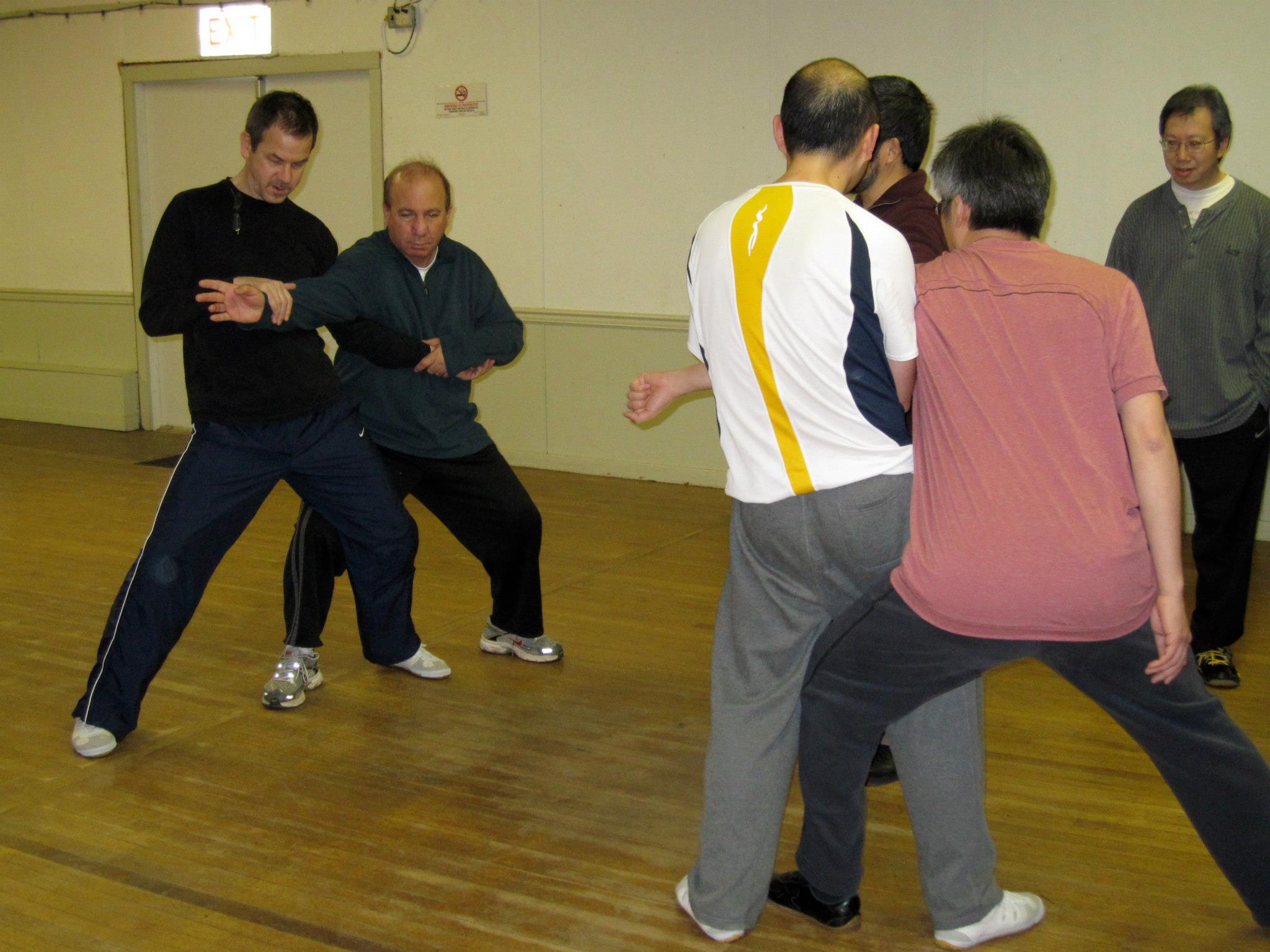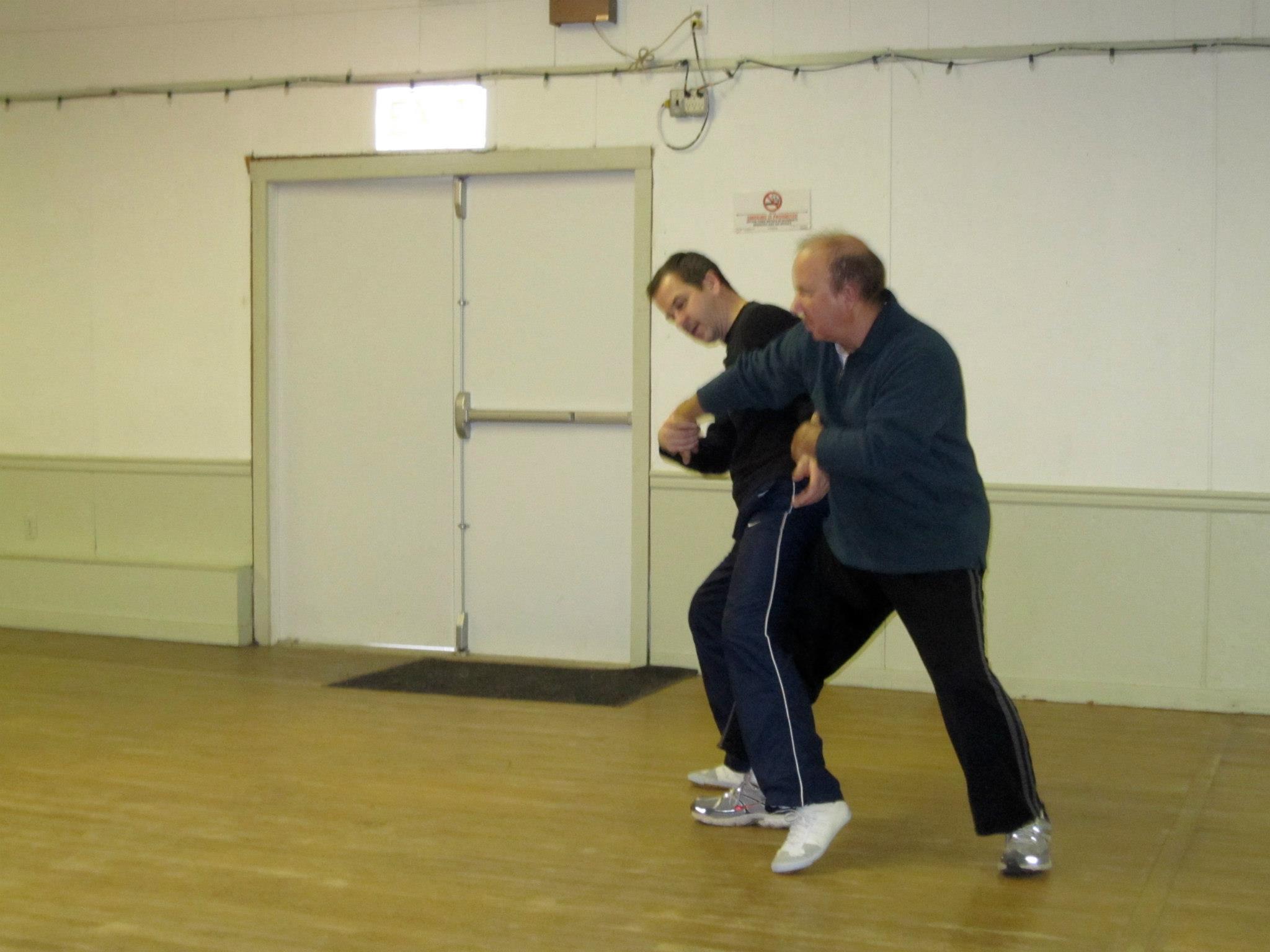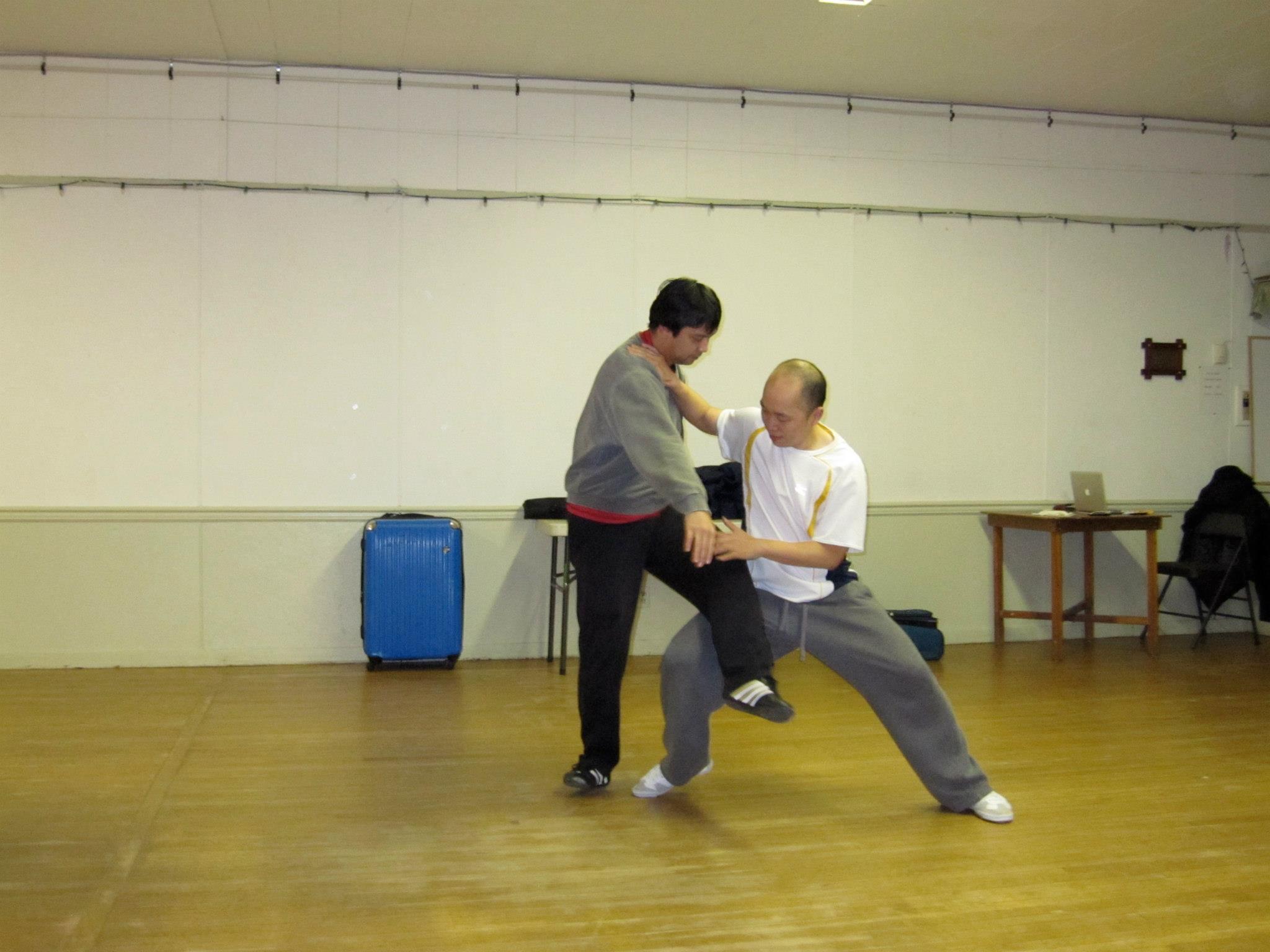
To withdraw is to issue 3

by admin on 2011/12/07

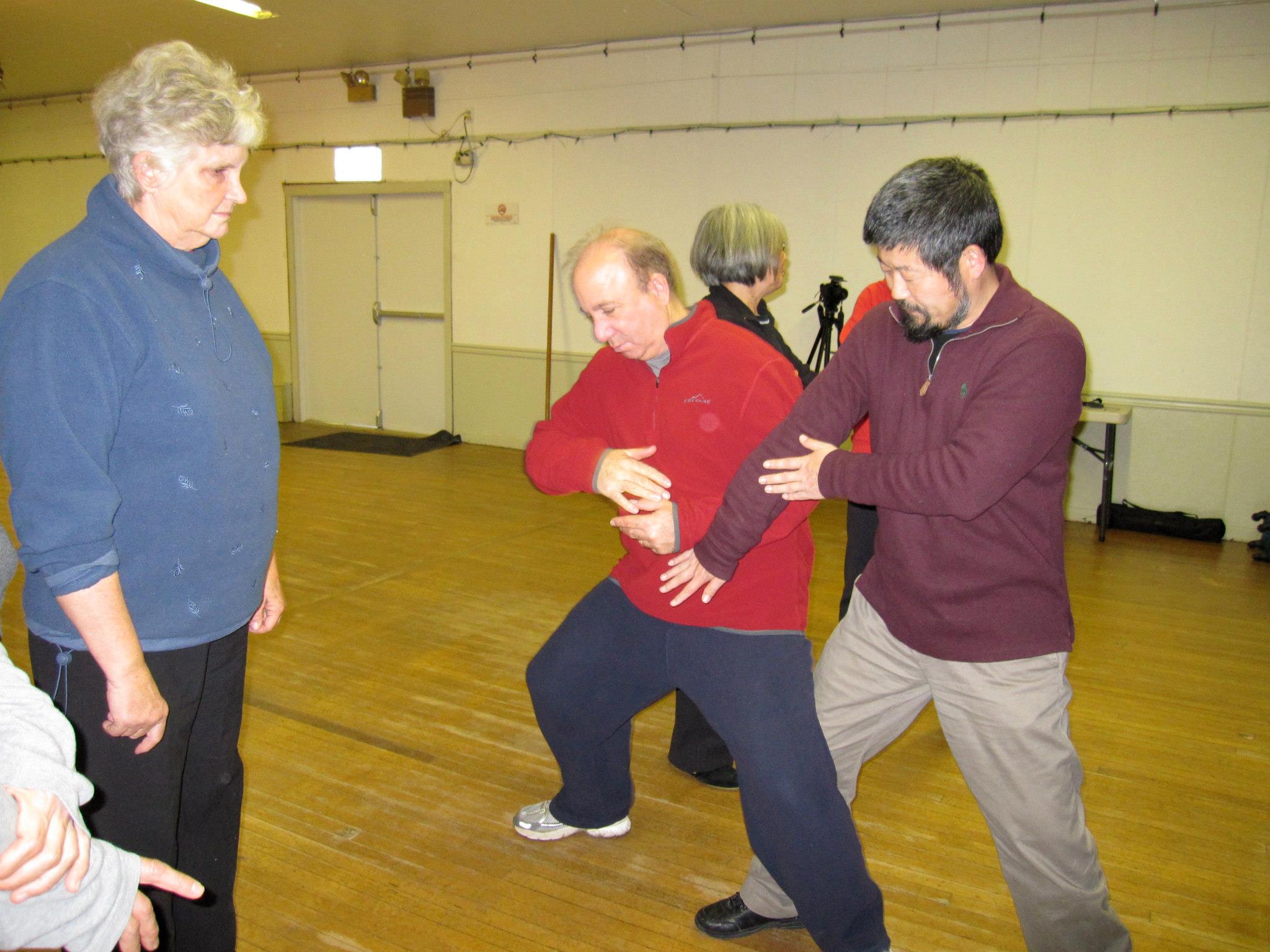
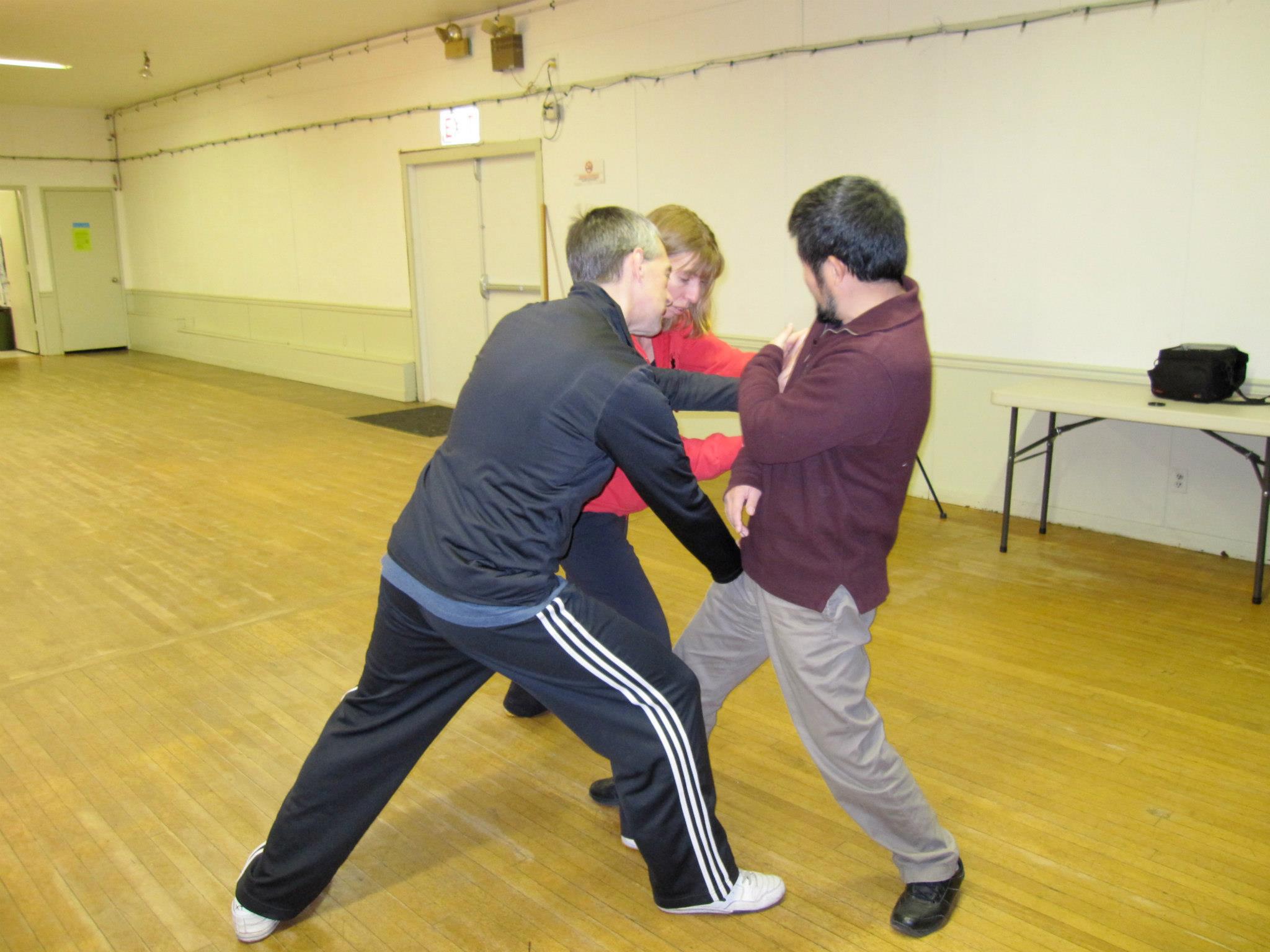
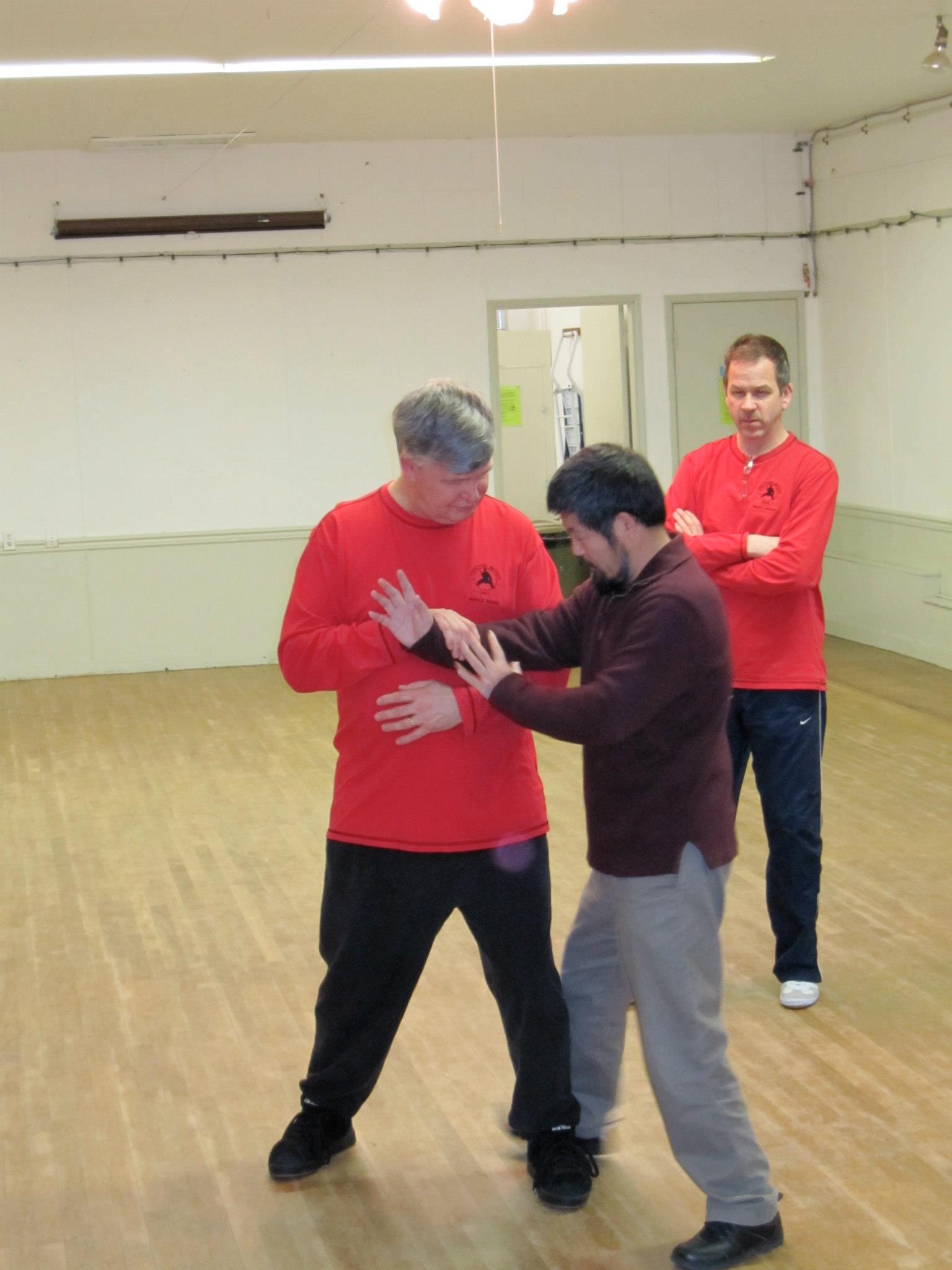
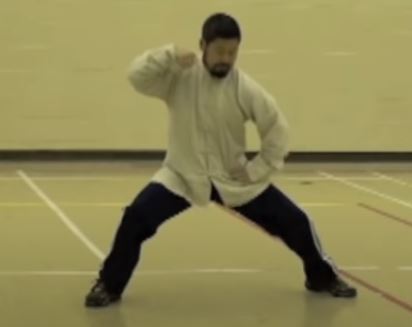
“To withdraw is to issue” is a taiji concept. To train the body to utilize levers is a method to incorporate this concept into taiji practice. In Chen Style Taijiquan Practical Method system, Hong Junsheng’s aphorism “Hand out elbow in” (In with elbow without the hand; out with hand without the elbow) is the realization of this concept on the upper body; while “Sink down to grind out” is the realization of the same concept on the lower body.

Master,

How are you? It’s been several months since I saw you last. I am looking forward to seeing you again to listen to your teachings. I have been training daily without skipping. Read more

Here are my thoughts on this question. There are two parts to the answer:

Read more

The original verse is “That with shape and odor is an illusion; that without is the real thing.” I intentionally changed it to: “That with shape and odor is an illusion; that without could be real.” to:

  1. To see if people notice the change.
  2. To see if people notice the difference between the logic of the two different verses.

In our daily taiji life, we are often told, “It is not this, it is THAT!” This has been used to cover up for many of the problems in taijiquan such as in the case when the form is very bad the person will say “It is the internal aspect, not the form that matters,” “Taiji has no forms, if there is, it is empty.”

In serious taiji learning, one must first of all make sure that the form is present and is done according to the rules. Only after that one can talk about the internal aspect of the form.

This is very important in our taiji learning. When we are told to do something, it does not automatically mean something else that is similar and vice versa.

This is one of Grandmaster Hong Junsheng’s favorite sayings. It is a technical principle of his Chen Style Taijiquan Practical Method system. By following this principle, many other important theoretical principles will start to manifest themselves eventually. This is the foundation of foundations in this system.

Master Chen Zhonghua’s 2010 Puerto Rico Workshop on Chen Style Taijiquan Practical Method. Basic foundations and push hands techniques.  Presenter: Chen Zhonghua   Length: 82 min.   In: English   Year: 2010  Difficulty:2/5  At:San Juan, Puerto Rico

Puerto Rico Workshop 3
Access is keyed to your user account. You need to be logged in to buy access.
Please register or log in.

After watching this video, not only you will have an idea what kua opening and dantian rotation is about, you will also be able to train both in the comfort of your office or while driving.

• 注册登录后可以继续看下面的内容

bs-2Custom Hand forged Damascus Oxtail Broadsword from the famous Longquan forge of Shen Guan Long. Reserve yours now. Shipping will resume after May, 2012.

Personalized Chen Zhonghua Broadsword: $ 1,000.00

Read more

Principle in Stepping i

by admin2 on 2011/11/19

Proper sequence for stepping in Yilu and push hand. Step need to be broken into three moves in order to have separation power.


Read more

Raw notes and review by Calvin Chow

1. Foundation

A. Posture Training

Static posture of first form in Positive Circle.  Horse stance – about 2 shoulder wide, rear foot point straight to the front. Front foot pointing 45 degree out and front foot heel is on the horizontal line of the rear foot toes. Rear hand rests on waist. Keep both kuas open, front hand stretches out with elbow vertical line not exceeding the top of  thigh. Elbows always kept inside between thighs.  Only hands can reach outside. Read more

Silver Medal Performance at 2011 Canadian Taiji Open Championships.

Bronze Medal Performance at 2011 Canadian Taiji Open Championships.

Master Chen showed the proper way to respond when being pulled by opponent.

I saw Grace made rapid improvement in a month since she started taiji. The secret? Fulltime stay at Daqingshan.

9 joints in the body 3

by admin on 2011/11/09

The body has 18 joints, nine on each side. They are: Read more

In addition to all the different types of external energy, based on my experiences with grandmasters Hong Junsheng and Feng Zhiqiang, I believe the following four types of energy are typically taiji. Grandmaster Hong Junsheng often used the spinning wheel analogy. Read more

There is a lesser known important principle in this clip. Please leave a comment to start a discussion. It is always like this with Master Chen workshop, everything is openly explained and demonstrated. But it is up to the students to pay attention and digest on what is being shown.

来源:全球创业网 杨艳芳 时间:2011年10月30日 点击次数:1028986

导读:2011年10月30日晚上7:30分,第三届国际混元太极拳交流大会推手交流比赛初赛在北京九华山庄隆重开赛。来自国内外的87支代表队齐聚一堂,切磋技艺。 Read more

[nggallery id=142]

One part of the body can only perform one function. This is an important rule in taijiquan. If followed, the separation of yin and yang will be made possible. Otherwise, all movements are actually one or the same regardless what the practitioner feels, thinks or believes. Read more

第一勢   金剛搗碓(1)  只一勢言太極蔭陽之理皆具 Read more

I have been wanting to write about how I started learning taiji for a while. I guess everyone has his/her own story, and I will share mine here. When I looked back at it, I always felt that it was fate and luck with all the stars aligned to be learning from Master Chen.

Read more

Part Three of Chen Zhonghua’s 2011 4-day Toronto Workshop on Chen Style Taijiquan Practical Method. This  instalment is the open house portion of the recordings. Voice is slightly low on these videos. Presenter: Chen Zhonghua   Length: 70 min.   In: English & Chinese   Year: 2011  Difficulty:1/5  At: Toronto

Toronto Workshop 11-09-26-3
Access is keyed to your user account. You need to be logged in to buy access.
Please register or log in.
Any inaccuracies and creations herein are on my behalf. Italics are my best attempt at recording verbatim Master Chen’s teachings, everything else is my best attempt at describing them. Read more

The appearance of being vulnerable is one of the special characteristics of taijiquan practice. It is one of the distinguishing features of taijiquan.

The direction of the knees is one is up and the other is down. This does not mean that knee moves up and down. It means the energy of the knees must move vertically in order to have root on the foot. Moving the knees up and down is a flaw.

Leverage 9

by Richard van Berkum on 2011/10/17

In a video I’ve seen Master Chen says “Lever has to come out.” I have a few questions about that:

Read more

Read more


Part Two of Chen Zhonghua’s 2011 4-day Toronto Workshop on Chen Style Taijiquan Practical Method. This is the first installment of the recordings. Voice is slightly low on these videos.  Presenter: Chen Zhonghua   Length: 54 min.   In: English   Year: 2011  Difficulty:3/5  At:Toronto

Toronto Workshop 11-09-26-2
Access is keyed to your user account. You need to be logged in to buy access.
Please register or log in.

太極拳,纏法也。纏法如螺絲形運於肌膚之上, Read more

Read more

This is a very important question for all taiji practitioners. There is no simple answer for this question. However, there are some basic things we can follow in order for us to be on the right path.

  • Understanding and creating the first pair of splits in your movements.
  • Follow the principles in your taiji. Don’t just pay lip service. For example, if you believe your action has yin and yang, then you need to find out which part is yin and which part is yang. You need to specify exactly what yin and yang are in each case. For example, yin and yang can be movement vs. no movement.

“虛領頂勁“ is one of many Tai Chi principles. 虛 means void, which really has misled many people.

Read more

A spiral in the taiji sense is not a physical spiral object, or a shape you draw with your body when doing taiji. A spiral requires two actions simultaneously. A rotation on the body while another part of the body stretches it.

Interview with Chen Stylist Chen Zhonghua Read more