Locations
Class information of Chen Style Taijiquan Practical Method. More details at chinese site
View posts in sub-category:
Athens, GA Australia Beaverton, OR Bentonville, AR Berlin Brazil Calgary Chicago Daqingshan, China Edmonton Florida Fredericton Greater Vancouver Guelph Hong Kong India Iowa (Midwest) Jakarta, Indonesia Linyi, China Milwaukee Montreal New Hampshire New York Ottawa Phoenix Poland Prague Rizhao Seattle Singapore Toronto Vienna Weifang, China Winnipeg Yantai, China
Like one drink sets an alcoholic back after 50 years of abstaining – so it is if we add a move (like move the hand)
Bigger from the kua
If you need to move the knee, fix the hip. If you need to move the hip, fix the knee.
Read more
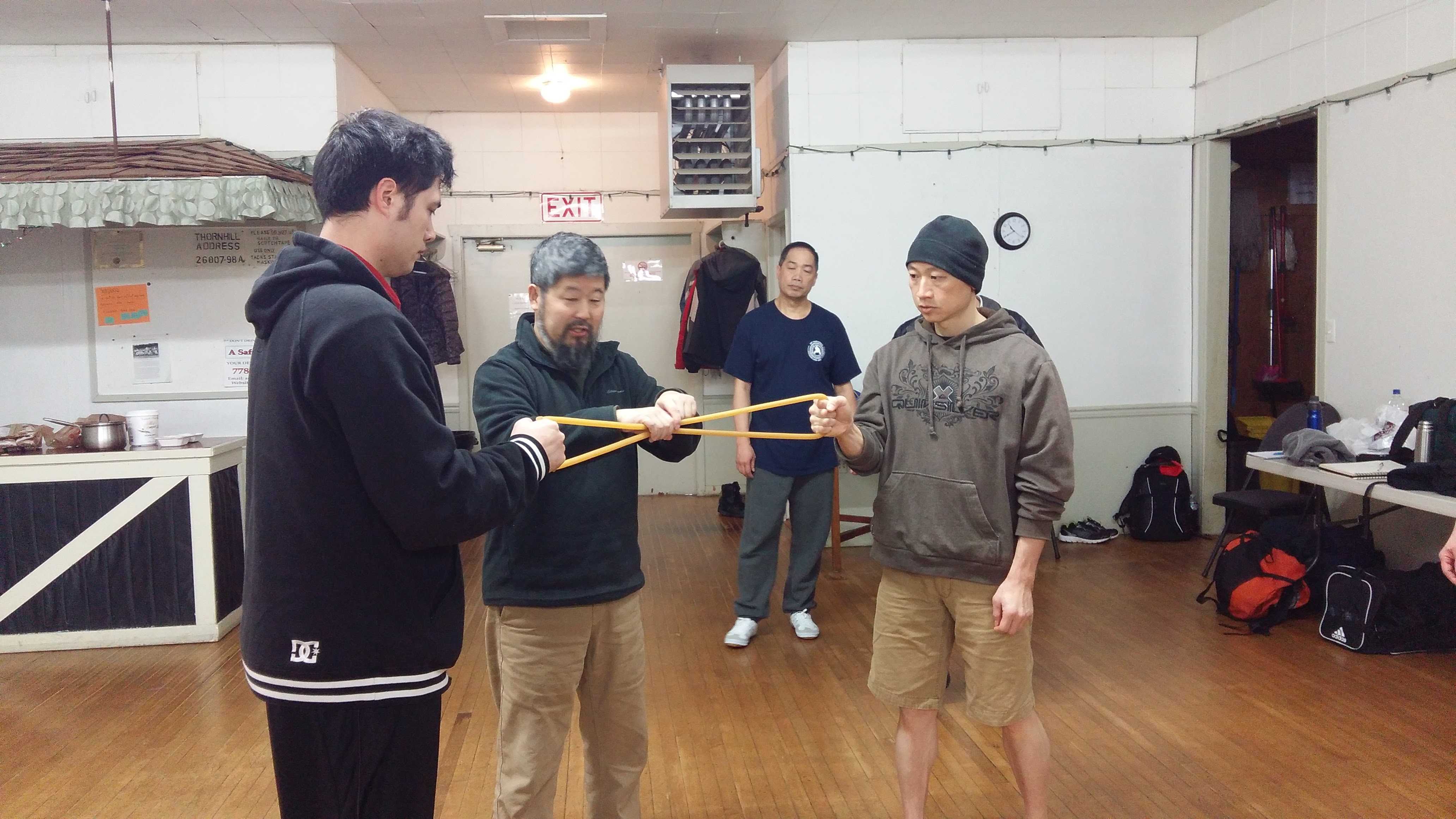
Two ends fixed, move the middle
Last week Kelvin Ho review turning flower out at bottom of sea. he posted a video and the following points
1) Maintain a non-moving vertical rod from head to left heel throughout the action.
2) Hold the right forearm in front of the chest with a fist, while the left fist is on the side of the body.
3) Throw the right fist down to the right side as hard as possible with a raising right knee to create a scissoring effect, while throwing the left fist up to the left ear.
4) There should be no tossing or turning of the body, but there is a spiral stretch along the vertical rod Read more

Practical Method Meetup in Vienna, Europe
17th – 19th February 2017
What a cool experience! On 17th of February 2017 we had the first PM Meetup in Europe. A meetup which was dedicated to meet other groups practicing our art. It was no workshop in that sense, but we were lucky, that Rick Pietila, a disciple of Master Chen was still in Vienna at that time and was leading most of the training. He prepared a training schedule which build up over the course of the meetup. Everybody was exhausted afterwards, but happy to meet other peers and to have learned so much from Rick.
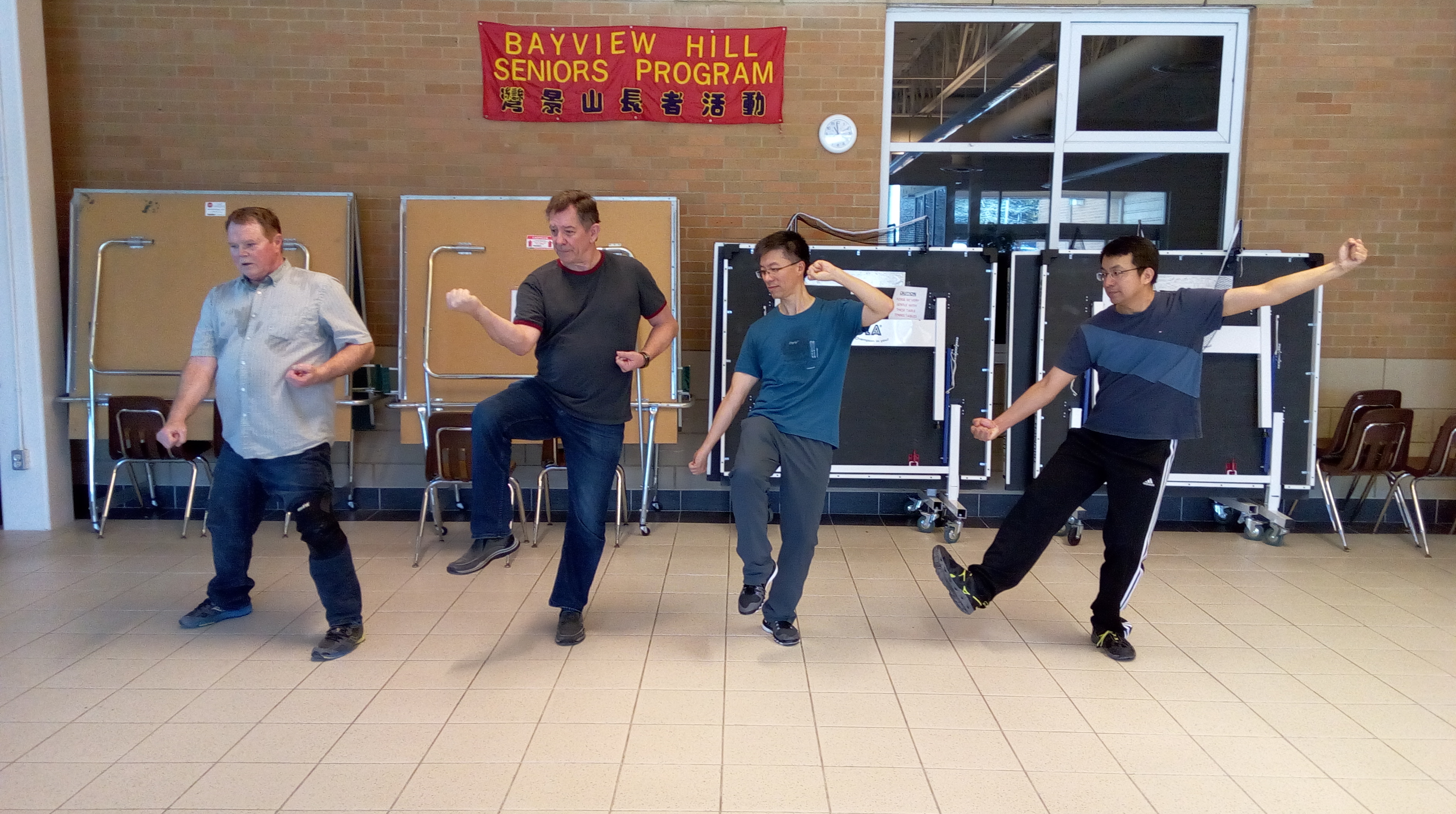
We worked on a few different moves in the form today. The first 3 moves required standing on one leg.
- White Ape Presents Fruit (Drilled 50 times on each side)
- Kick with Right/Left Heel
- Turning Flower out of the Bottom of the Sea
- Punch to the Groin
- Punch to the Ground
- Turn Over Body and Double Kick
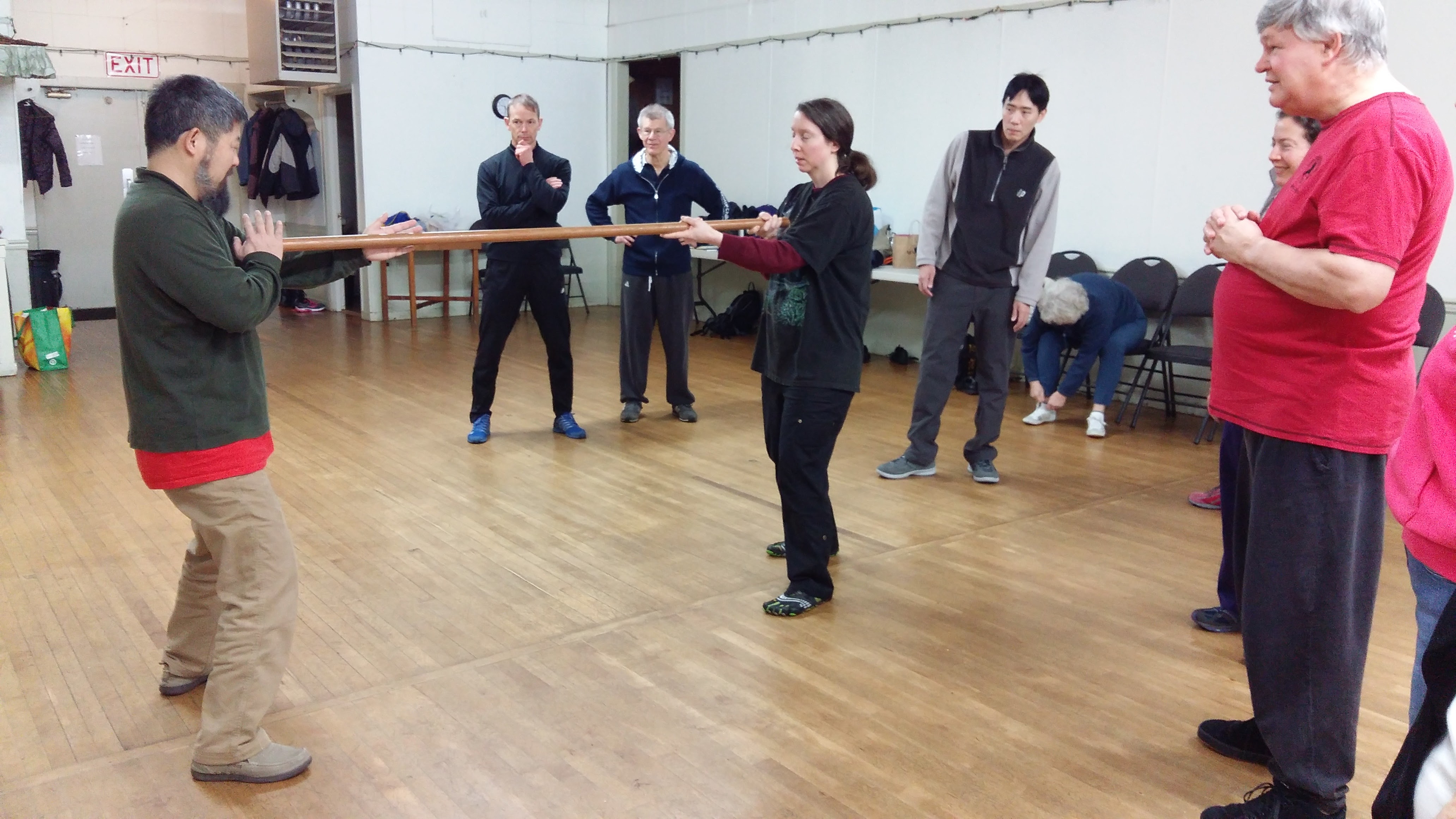
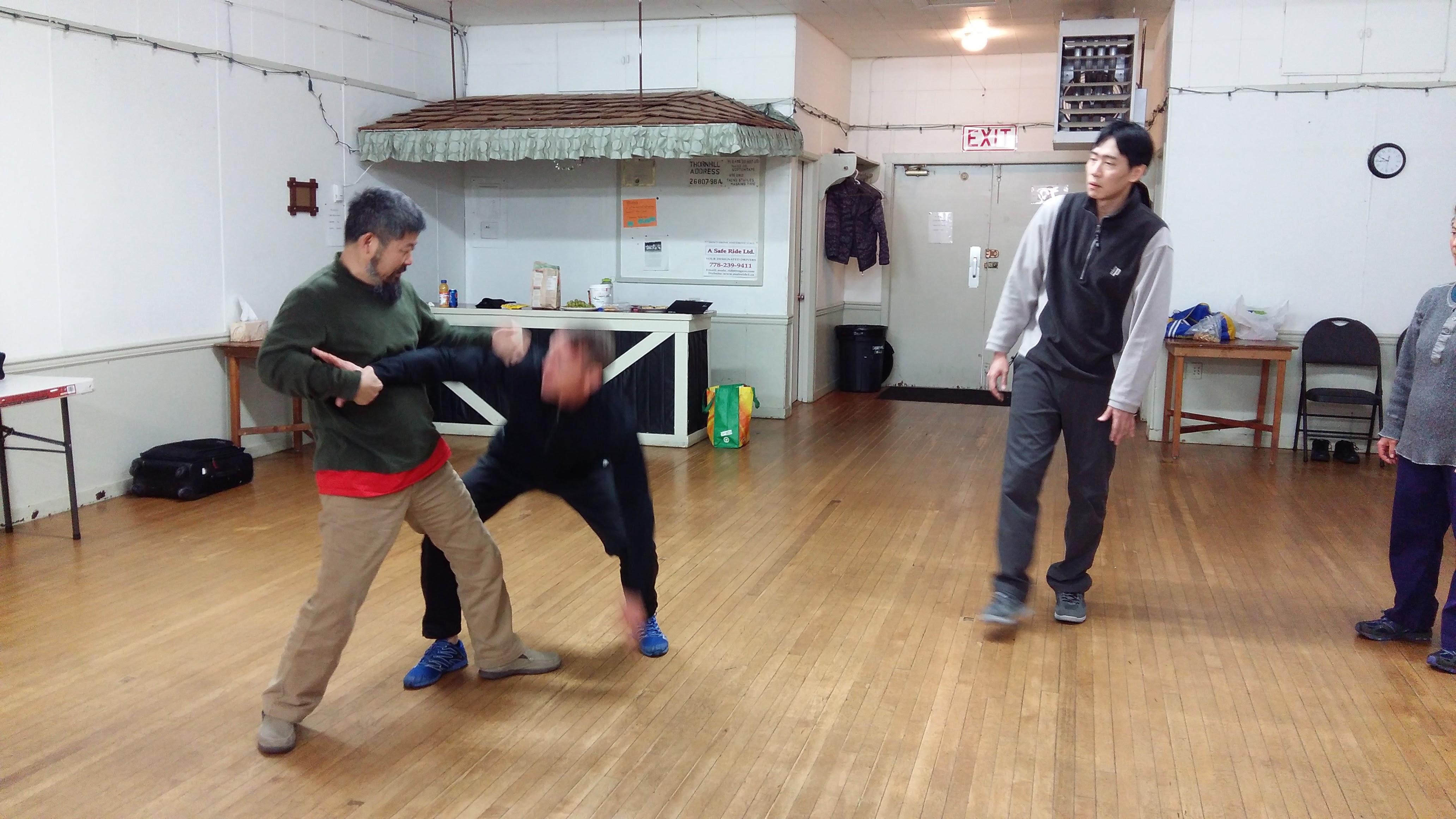
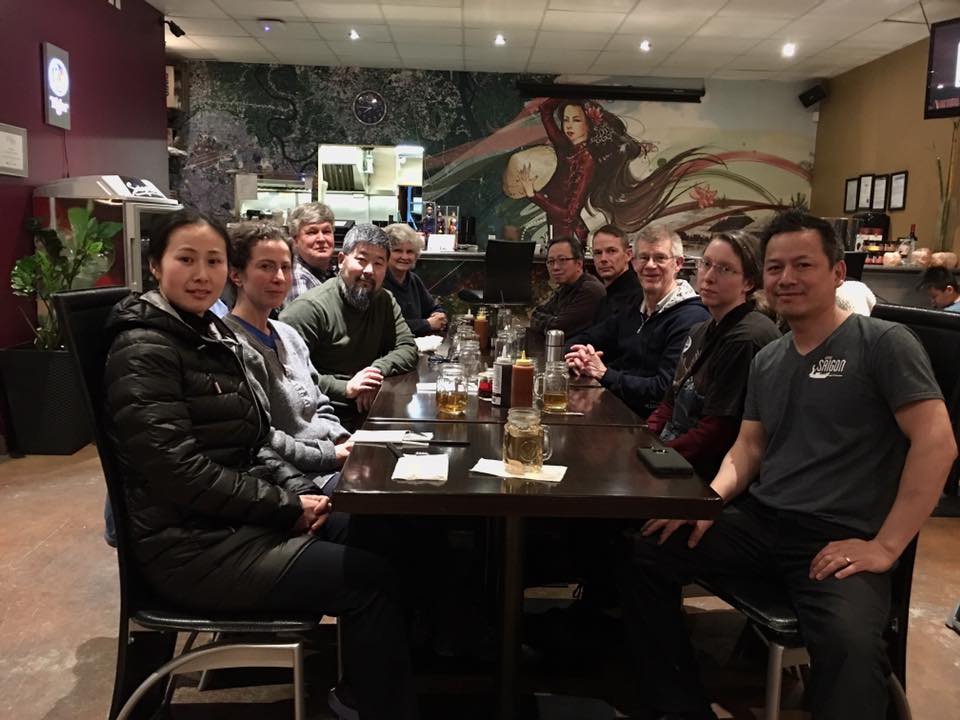
Dinner at Mike’s (Disciple #3) in Abbotsford with Zhang YanPing who moved to Abbotsford from Jinan.
Three new student attended, so Master Chen went over foundation and application of Yilu first move.
Fetch water application is getting in for a strike with shoulder, that’s the purpose of moving the arm down.
After many corrections, I am starting to understand that power should not come from the shoulder, but treat shoulder as a pivot

1) Maintain a non-moving vertical rod from head to left heel throughout the action.
2) Hold the right forearm in front of the chest with a fist, while the left fist is on the side of the body.
3) Throw the right fist down to the right side as hard as possible with a raising right knee to create a scissoring effect, while throwing the left fist up to the left ear.
4) There should be no tossing or turning of the body, but there is a spiral stretch along the vertical rod.
Twisting towel – Ning maogin
Straight torso – spine stretched – legs apart –bend knees a bit just to make upside down U shape … Imagine there is a horizontal bar just below navel area, stretched forward and vertical rod from head to ground
Fingers always stretched and slightly open, except the thumb, thumb touching forefinger. Arms at navel level, stretch forward tucking elbow towards the center of your body- keeping wrist locked (wrist doesn’t movie) elbow straight – shoulders locked (moving only within its socket)
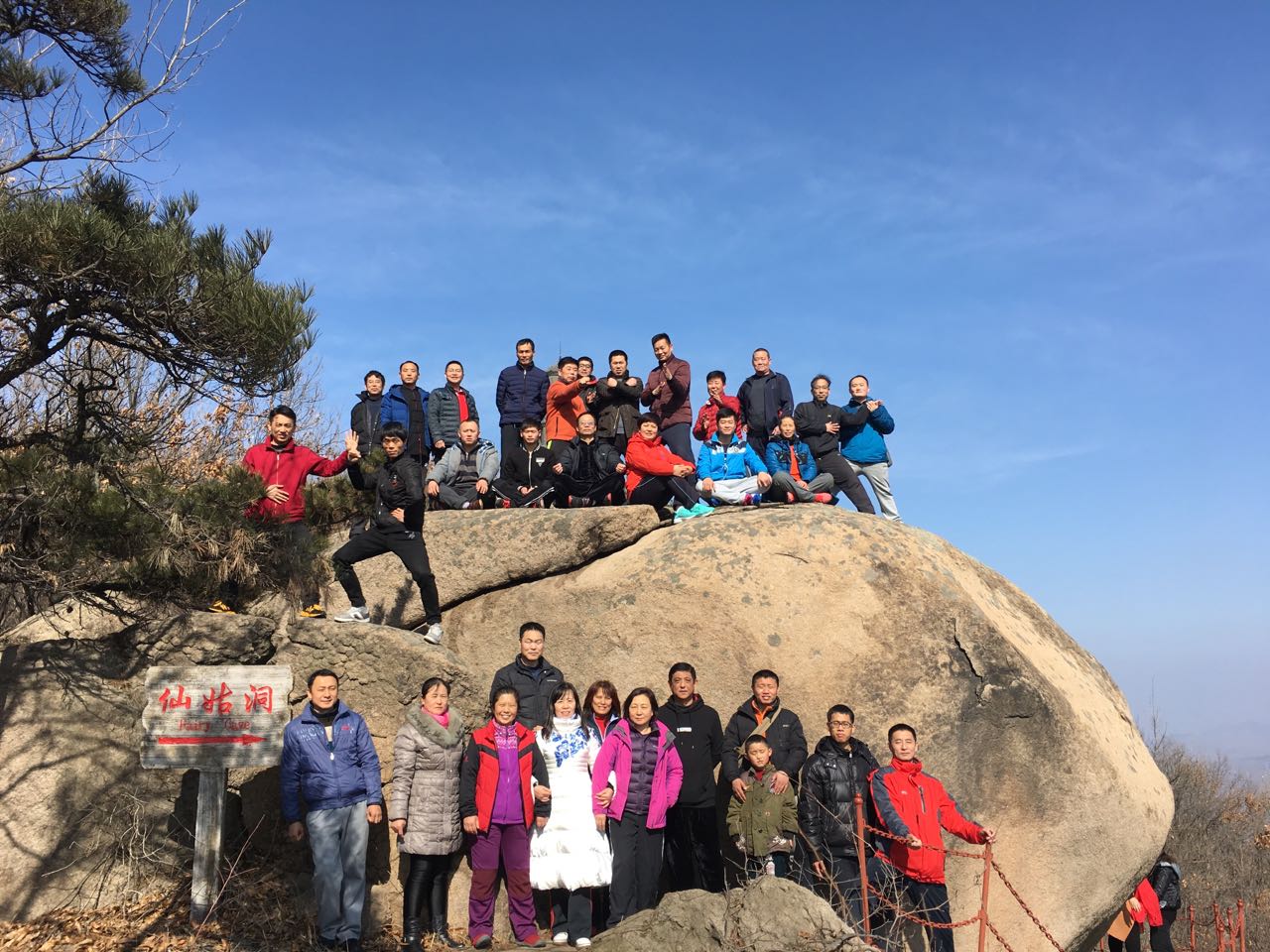
At the moment Master Chen is giving the 21th Practical Method Seminar on Daqinshan. More then 80 peoples are participating and there are both advanced (beneath them many disciples) and beginners.
I want to give you a brief insight of this event.
Position of elbow in positive circle: After warming up with what we learned the last 2 weeks, we reviewed the line that the elbow follows in first move of Positive Circle. It should follow a straight line as if it’s in a track. Fingers should still point at same spot. We tried looking at the line the forearm was making in mirror.
To finish positive circle after turning at waist, lead with hand as if forearm is in a tube and sliding out sequentially. Don’t let forearm deviate outwards as it wants to.
Buddha’s Warrior Pounds Mortar:
Read more
Short lesson by Master Chen Zhonghua:

By Patrick Hanratty
**Due to my computer crashing these notes have been recompiled using my original written notes, which are somewhat incomplete. As such there are some blank spaces, which I’ve indicated with an asterisk. I would very much appreciate anyone filling in those blanks, as I don’t feel confident enough to do so myself.
Taking notes at workshops is a useful tool for making progress, and going over them as soon as possible (at the end of the day and after the workshop) helps to internalize the most salient points. Furthermore, sharing notes, as well as potentially helping other students in their practice, can also engender a need for the note taker to test the accuracy of their personal understanding of Master Chen’s teaching. A testing strategy that I have recently adopted is to imagine that I have to explain my understanding to other students through practical demonstration. Read more
Hand starts and 45 degrees and ends at 45 degrees, s the elbow comes to centerline. The energy must come from the foot to the hand. This Is much more difficult then it seems. The tendency for me was to bend the wrist independent from the arm and to move the arm out with no regard for the line. I found it very helpful to stand on a tiled floor which allowed me to better concentrate on the line. By doing this I found that the line allowed me to better keep arm on the line and my wrist better alignment with the rest of the arm.
start in front bow stance , back arm bent palm up front arm bent also palm up, this creates a line, bring hip and shoulder to hand line, be sure hip is up and out, shoulder is down and out, front elbow twists in as action performed. Back also straitens and ass is not out. Do not move wrist independently. I found that I could better concentrate and get more consistent results by starting with the front elbow touching my side. Taking pictures of yourself is also good idea because you see what you do wrong I have started to practise in the mirror so I can see and correct things like raising my back shoulder
IN fetching water, you must be in front bow stance. back arm bent palm up front arm down front kwa hand open, First internally connect front hip to back shoulder around and down to back hip somewhat like suspenders. This little effort to start really helps. Then open front hip moving it to the line. As that happens notice front shoulder goes down twist in the front elbow.
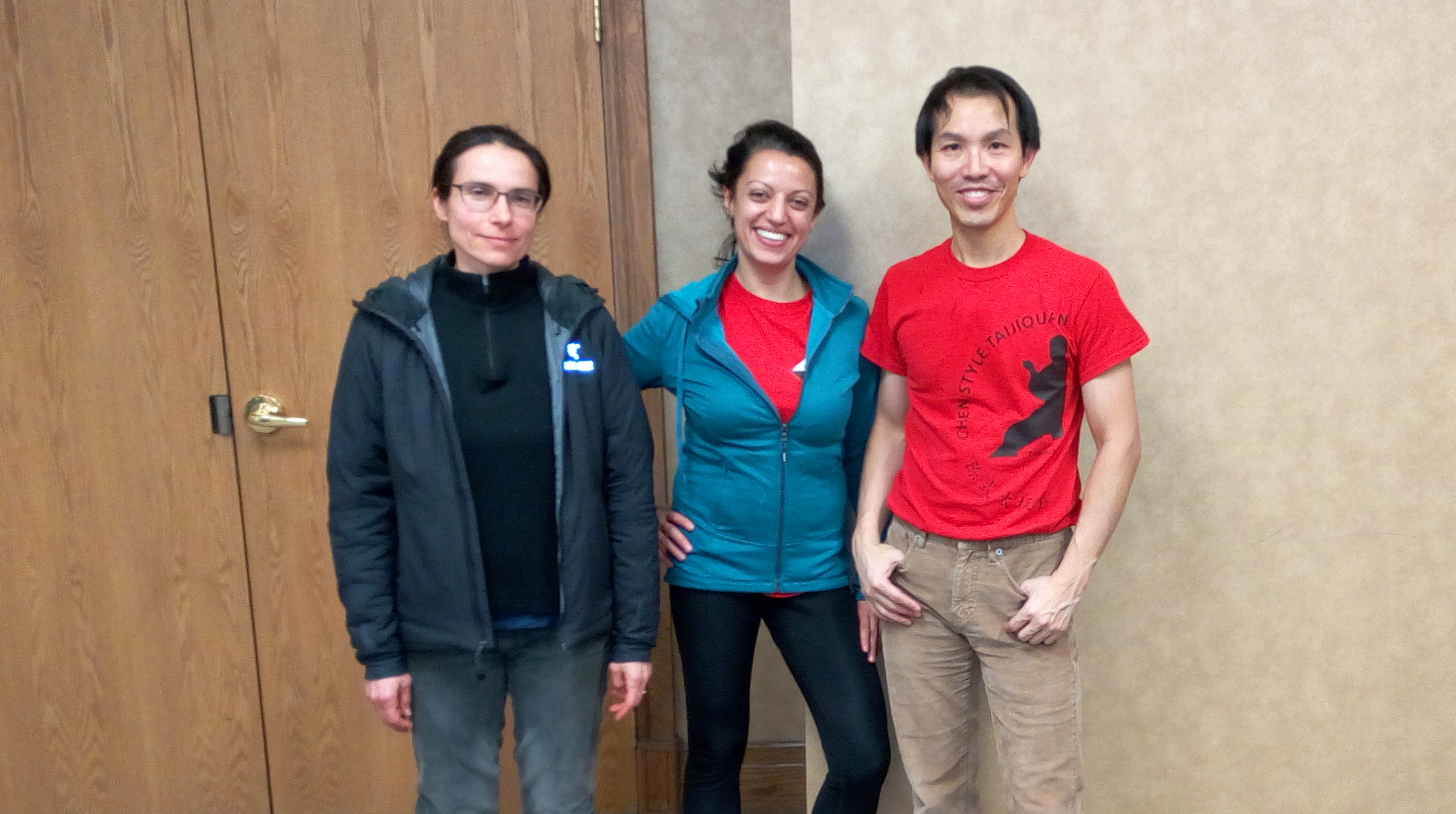
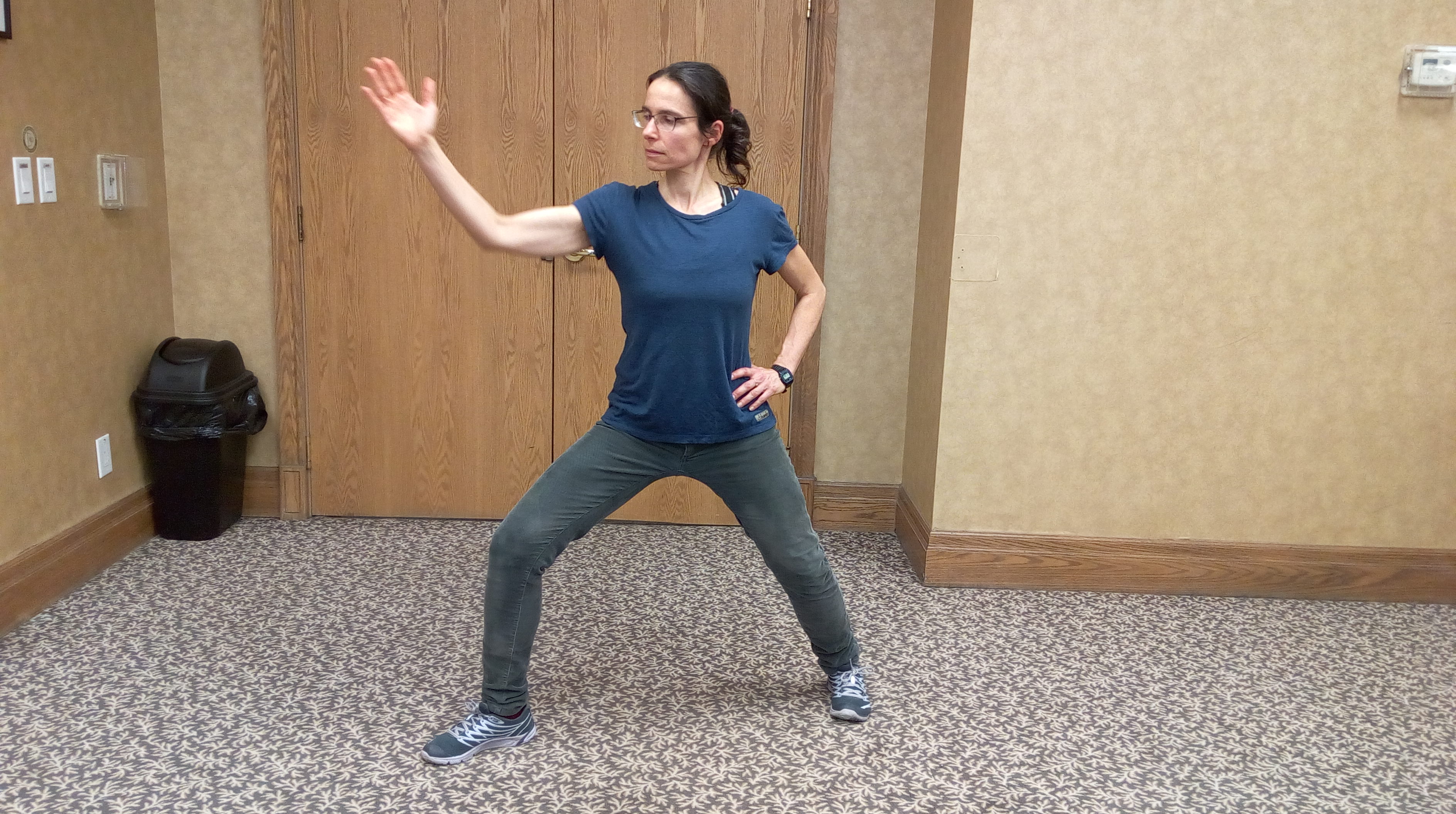
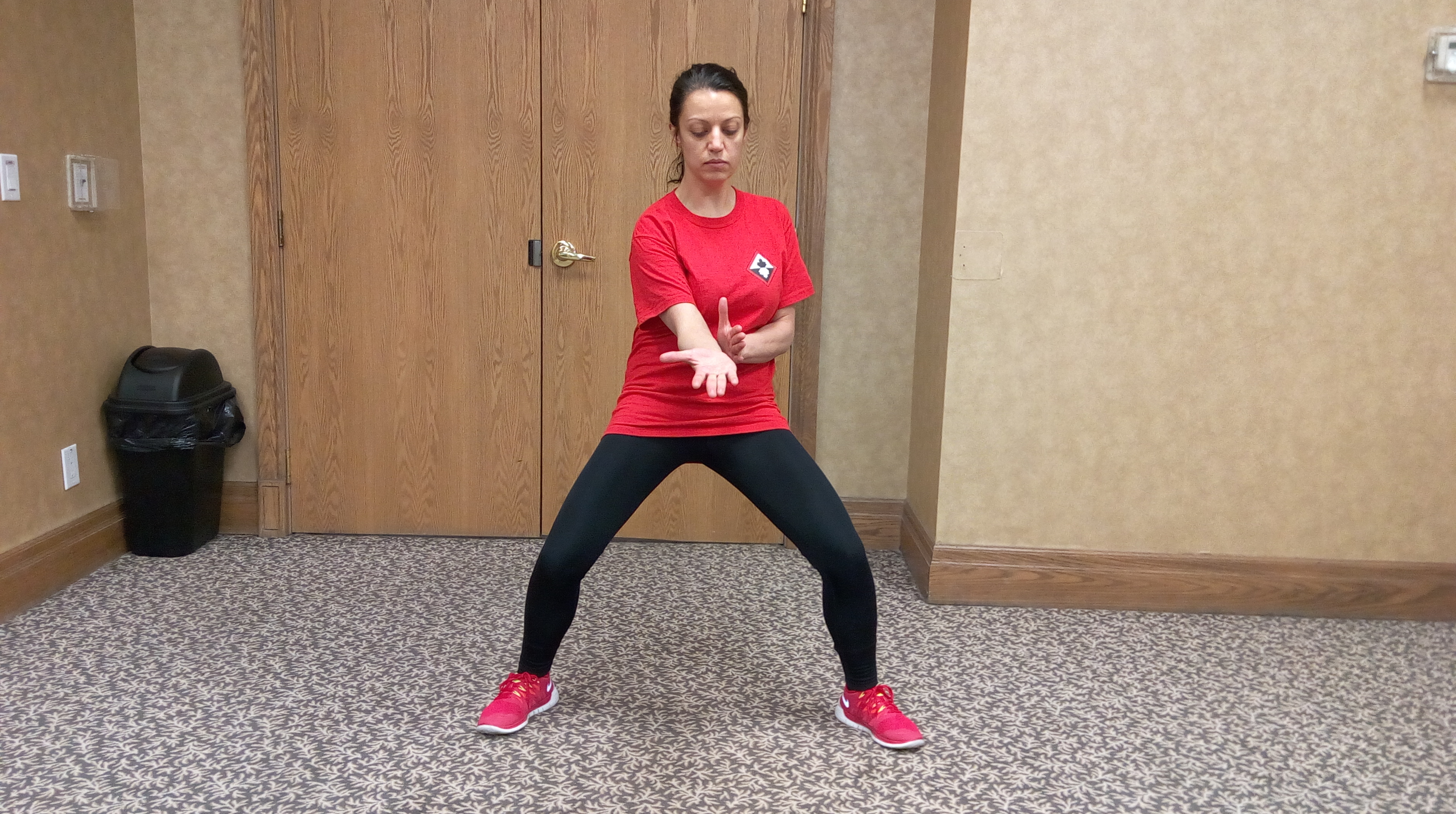
Kelvin Ho went over the 3 of the main foundation exercise movements today, twisting the towel, Fetch Water & Six Sealing four Closing
Twisting the Towel:
- Horse Stance, Straight Back, & Head Pulling Up
- Palm & Wrists streched out and wrists are never to bend in any of the moves including this move of twisting the towel Read more
New 10-week course by Jean-Philippe Ranger
Starting February 2, 2017
Thursdays 5-6:30 pm
J.B. O’Keefe Centre
St. Thomas University
(Register on site)
Learn the fundamentals (jibengong), the first form ( Yilu ) and push hands (tuishou).
For more information, email: jphranger@gmail.com
“大個子,肥就是我,呀胡。
雖然之前有學習過幾年太極拳並自我感覺良好,也覺得所付出的也有收獲;
但因为Sammy的介绍而認識了實用太極拳,卻使我覺得问题出现了….
今天是上了馮教練的第四堂,所看的,聽的 ,練的,馬步,胯,肩,肘練法,全跟以前所學,所知不同,但道理卻環環相扣,相互支持。
每一個動作,對我,都是困難的,幸得同學(師兄)John and Pascal 所助,馮教練細心講解,鼓勵及紏正,使我能輕嘗到正確學習之趣,每一個
Today, we focused on the details of 3 foundation exercises:
- Twisting the Towel
- Fetch Water
- Six Sealing Four Closing
Positive circle
Lower body
Legs apart – toes aligned with the other foot heel – foot open 45% outward and the other feet, toes close inward a bit – leaning closer to the front foot – Knee 90% measured at the ankle
Eyes
Choose a focus point and keep your eyes pinned to the focus point always
Upper body and movement
Shoulder and wrist locked- fingers stretched – index finger pointing towards your focus point and not above your eyebrow – start with palm down pointing towards the ground- bring elbow to right ribcage from waist twist all the way inside without losing your focus point.
Repeat- in with elbow – turn with waist – out with hand. Keep elbow bend all the time. Torso straight- knees turn up and down but not up and down.
45% in and out finger always pointing
Power comes from the heel
- Ken Lang joined the class for the first time. He started learning about twisting the towel. He has been doing taiji for 10 years, and went to study at Chen Village for 6 weeks. His initial impression was that the Practical Method elbow-in was similar to what he learned in Chen Village. His teacher there was Master Chen Zhaosen.
- We reviewed twisting the towel, and how the hand is to be connected to the foot, and how to push the foot against the ground to squeeze out the hand.
- We did an exercise with one person pushing the other person’s hand up the arm, and how to prevent the shoulder being popped up, and how to stretch through the back to the rear foot to find the connection.
- We practiced taking out the space.
- I told Bruce during push hands, at this point, make it a focus to simply maintain the desired posture regardless of what the opponents does to him.
Kelvin Ho gave us feedback on the first 7 moves of Yilu today. some examples to remember
Buddha’s warrior attendant pounds the mortar – in first move both arms move from the elbow. The right arm is a negative circle. Elbow is down and palm faces floor when you stretch out after grind out. To lift foot twist right elbow even more to connect and lift foot.
Block touching coat. – in step out adjust weight to front foot before arm moves and positive circle starts
Single whip – hands start at 45 degrees and end at 45 degrees as the elbow comes to centerline and fingers and forearm follow the same strait line rubbing against an imaginary vertical finger. The end of single whip the left hand out is a positive circle.
Brush knee – the left open hand drops down crossing knee. The end of brush knee when both arms are extended squeeze in on chest and down back as to not cause a rise in the chest. I found this very significant feedback because this is true in so many of the moves. It also seemed to have an impact on my next move to keep my back steady in initial closing.
Today I realized how significant independent practice is in this practical method. Your body needs time to adjust to perform proper alignment and stretches. If your elbow has limited mobility or you cannot convert the squeeze in the chest to the back and downward, you need practise before you can move forward with more constructive feedback.
Instructor Kelvin Ho worked through a number of items in today’s class today with me and Bruce Robinson.
All Movement – keep elbows pointed to the ground, open hand position and stretch through to fingers
Buddha’s warrior attendant pounds the mortar – start with right hand against chest as you turn hand releases from chest, front hand does not retreat. after ground out completes keep elbow pointing down as you stretch to fingers at end of stretch right elbow in.
Block touching coat – left hand is negative circle , right is positive circle. adjust lower body outward before starting positive circle.
White crane spread it’s wings – As part of stepping back adjust your back so that it is solid before moving the left leg back and raising and stretching the arms from the back outward to the finger tips. Easier said than done the idea of fixing the back against an imagery wall so that it does not move is very difficult. However by working with Kelvin today I can see what I am working toward.
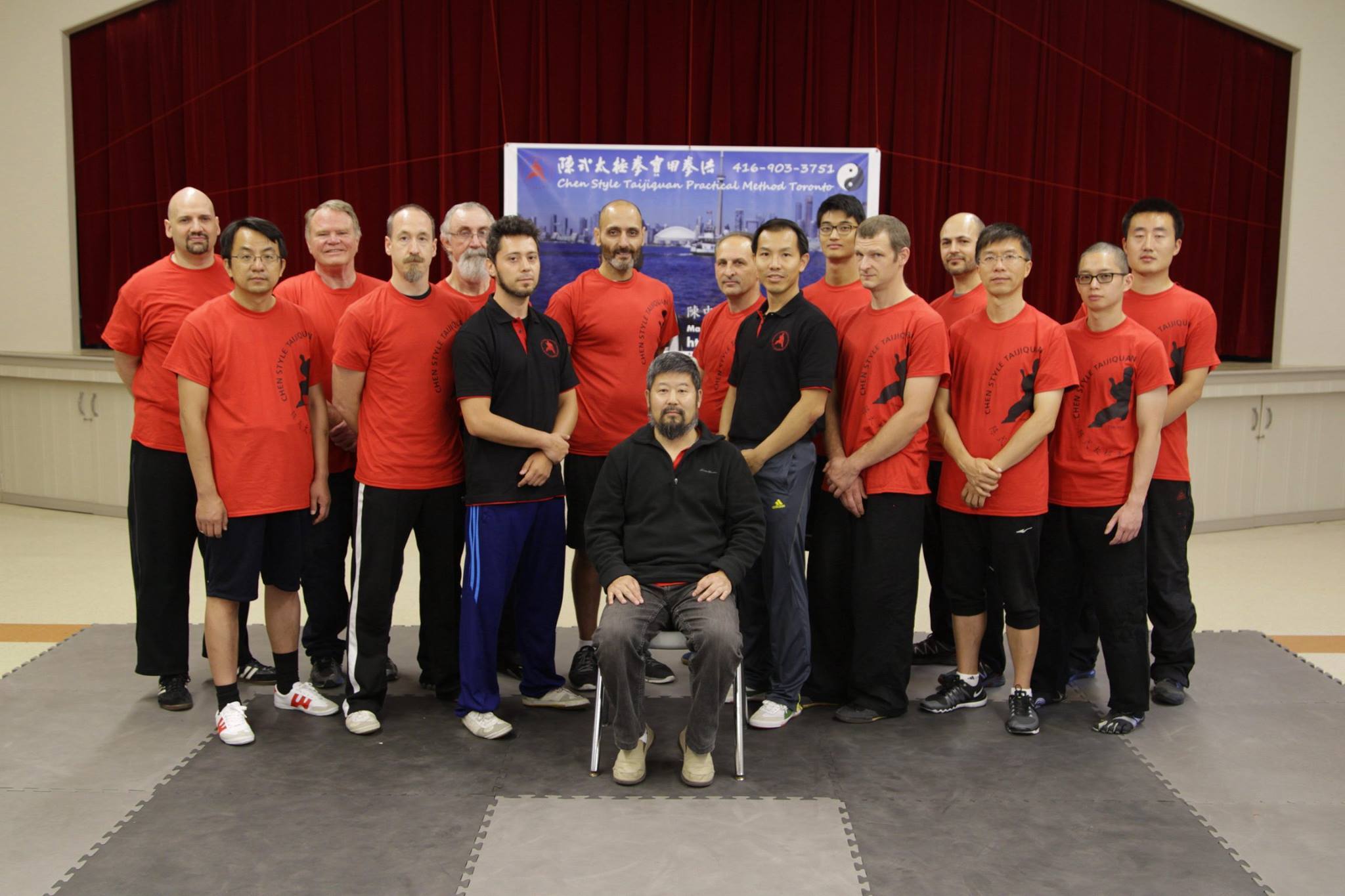
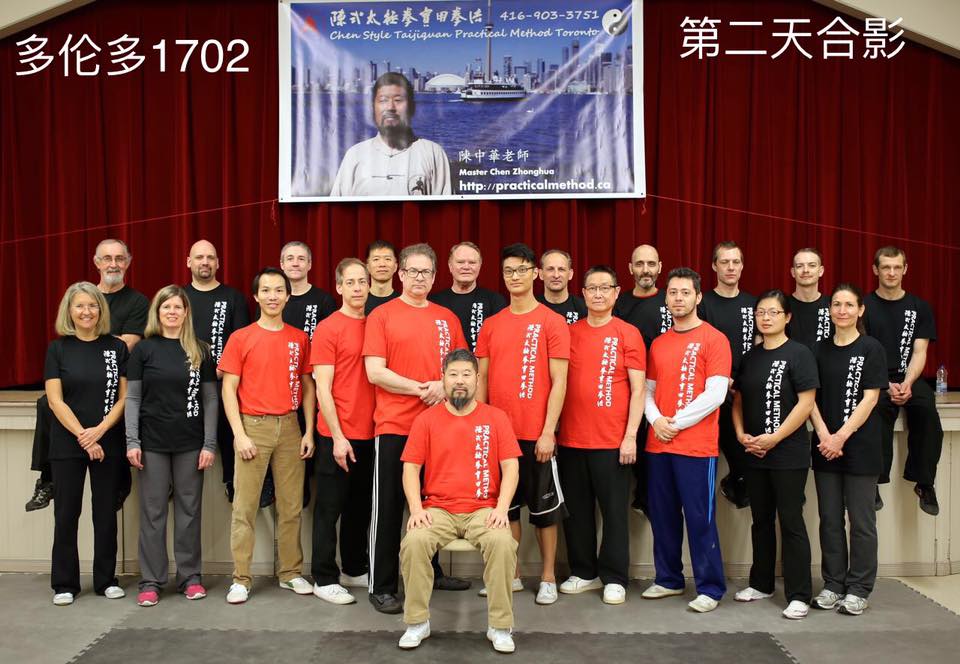
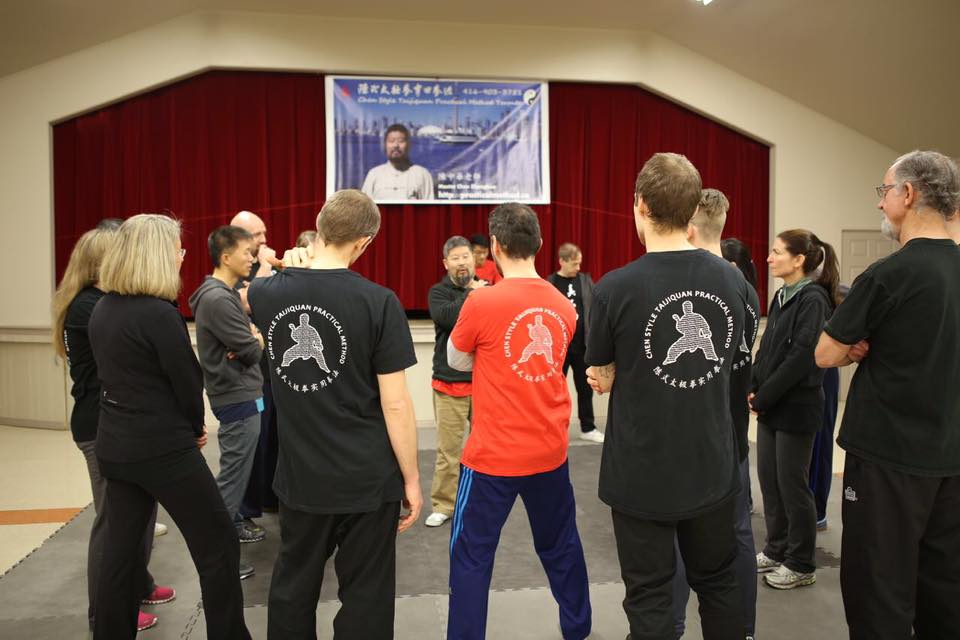
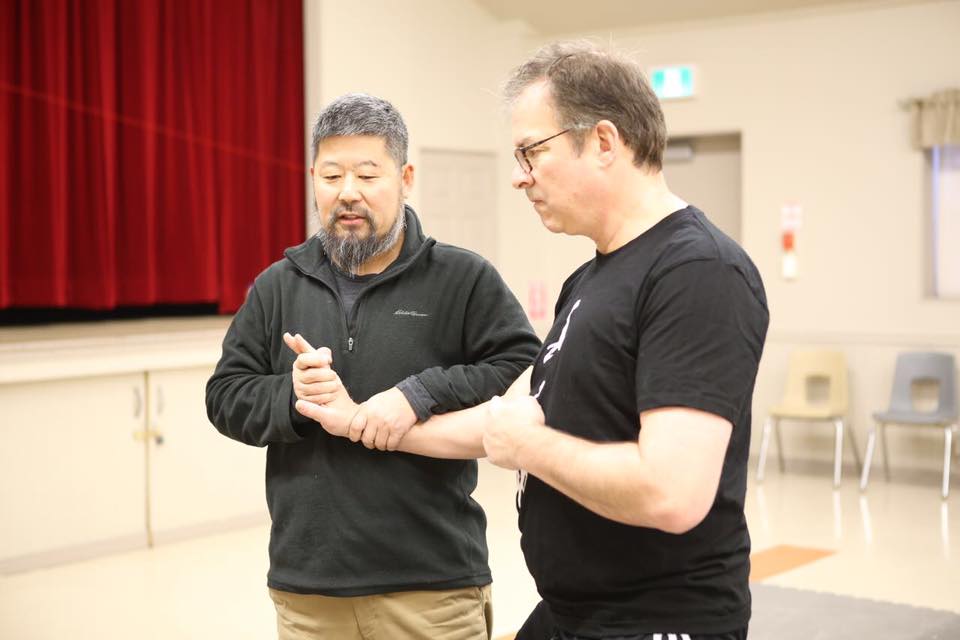
In 2016, two Practical Method workshops were held in Toronto in January and September, with over 20 participants coming from Toronto and its surrounding cities, Ottawa, Montreal, New York, Michigan and as far away as California.