 |
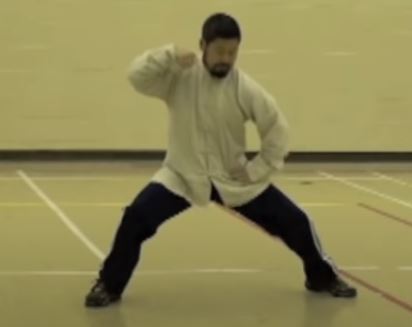
In the intricate mechanics of Taiji, Indirect Power is not about conflict at the point of contact, but a chain of structural alignments that transforms the body into a high-leverage machine. By establishing a “Handle” on an opponent—a fixed point of contact that remains unchanged—the practitioner shifts the source of movement away from the limbs and into the kua, waist, and heels. This method relies on the “Analogy of the Train,” where each additional joint engaged adds a new carriage of force to the engine, resulting in a cumulative pressure that overwhelms linear resistance without a corresponding increase in effort. |
| Central to this mastery is the distinction between Positive and Negative strategies, governed by the geometry of contact. Through Positive Indirect Power, the practitioner maintains a steady point of contact while expanding the internal distance from their anchor to create a mechanical advantage. This expansion effectively increases the “lever arm” of the body, applying the physics of torque to multiply “four ounces into a thousand pounds of force“. By ensuring that power is added sequentially and locked into a single unit, the Taiji practitioner moves from the struggle of “one-on-one” direct power into a sophisticated system of indirect transmission where structure trumps raw power. | |
| (This is is an articles is based on the Theory and demonstration of “Indirect Power” filmed in Ottawa, Canada Dec 3, 2014.) |
|
Locations : Ottawa
Taiji Workshop conducted at Ottawa
 |
There is a long-standing wisdom that “To give a man a fish is not as good as teaching a man to fish” (授人以魚,不如授人以漁; Shòu rén yǐ yú, bùrú shòu rén yǐ yú). In the internal martial arts, we follow this same logic: “To teach a man to punch is not as good as teaching a man the Principles” (授人以拳,不如授人以理。; Shòu rén yǐ quán, bùrú shòu rén yǐ lǐ). This dual focus on theory and application reveals that Master Chen Zhonghua’s theory of Indirect Power is not merely a collection of techniques, but a sophisticated mechanical system of action transmitted through a specialized structure. At the heart of this principle is the Anchor—a stable, consistent point of contact that functions as either a handle for pushing or a hook for pulling. |
| Unlike instinctive direct power, which reacts to an opponent’s force by tensing at the point of contact, Indirect Power requires the practitioner to keep the contact point stationary and “tight,” similar to a secure screw in a well-engineered machine.By maintaining this structural integrity, the practitioner can bypass resistance and generate power from distant sources creating an Indirect Energy Path that processes external force through the body as a singular, integrated unit. The depth of a practitioner’s skill is measured by their ability to coordinate the body’s nine major levels, where the first level is the direct contact point and the remaining eight represent escalating classes of indirect power. This hierarchy allows for the sequential neutralization of force; if an opponent pulls, the practitioner does not resist at the hand but instead moves the waist or elbow to follow and redirect that energy. Master Chen emphasizes that this discipline requires overcoming biological programming to move past direct conflict. Ultimately, by utilizing the body’s internal geometry and maintaining a secure frame, the Taiji practitioner ensures that every contact point becomes a pivot for control, effectively dampening shocks and redirecting momentum without relying on brute strength. | |
| (This is is an articles is based on the Theory and demonstration of “Indirect Power” filmed in Ottawa, Canada Dec 3, 2014.) |
|
Master Chen Zhonghua always amazes me, whether it is at the next workshop (there is always something new and amazing) or looking back — such as in this video captured during a workshop in Ottawa ten years ago… an easy, seemingly simple, and clean bounce:
What do you see in the video?
John Upshaw: Everything is on a line. He added the right leg to the line…left arm to right leg…
Lou Sacharske: Watch his right shoulder, as he adds the right leg, there is zero deviation to telegraph the execution.
James Tam: I believe the rotation axis is the one joining Shifu’s left shoulder and front foot. And, the stick (effective energy pathway) is from his back foot to Steve’s upper back.
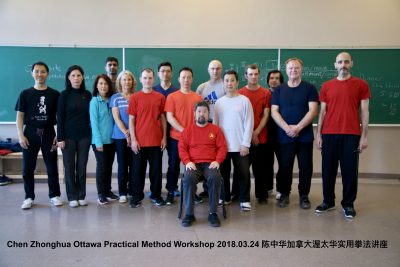
加拿大渥太华实用拳法讲座2018.03.24
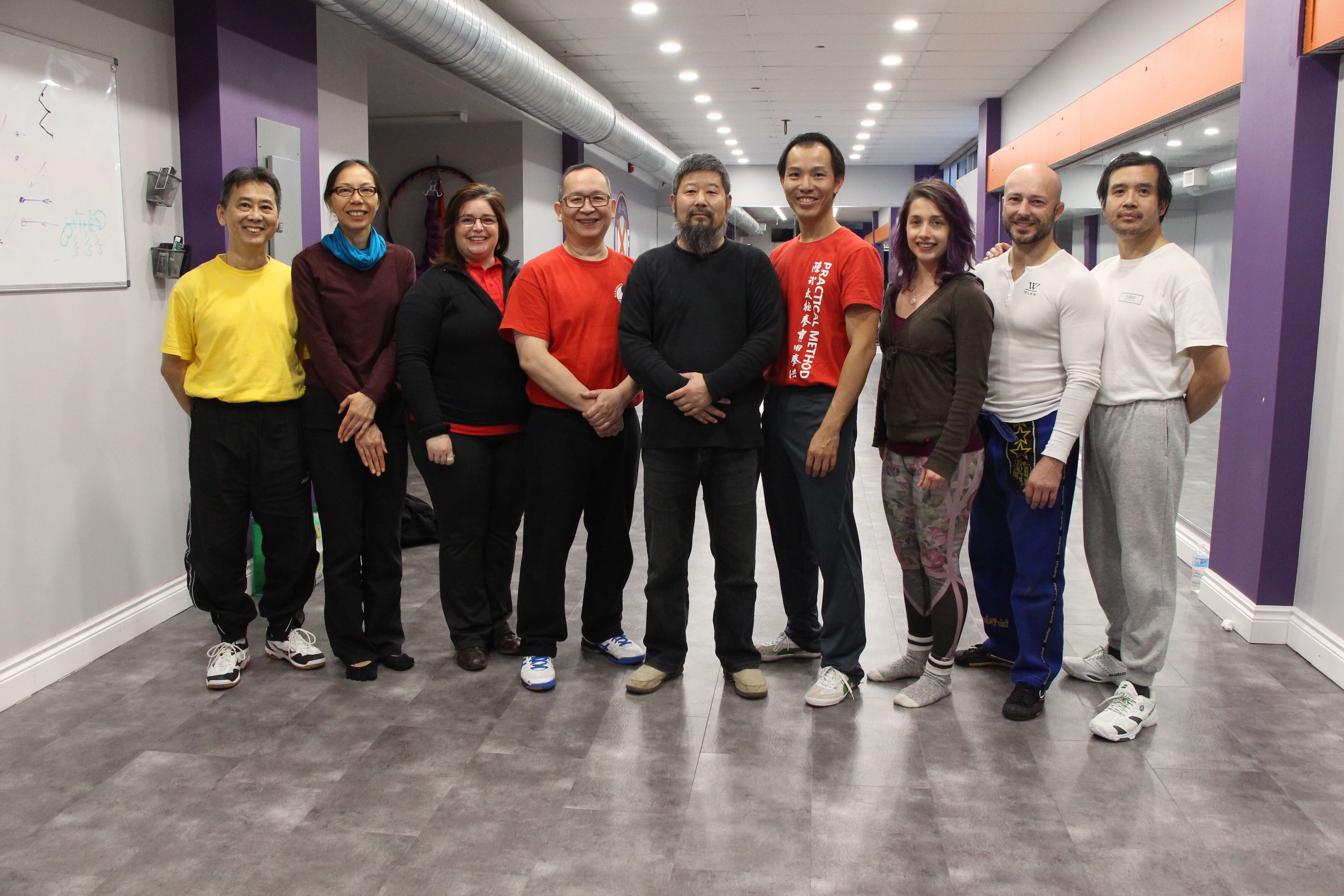
Thank you for Rachelle Bergeron and James Tam for organizing the Ottawa workshop and their hospitality. It was always great fun to attend the Ottawa workshop. A lot of important aspects of Practical Method was shown and covered by Master Chen Zhonghua.
What is Practical Method about?
Practical Method was based on a fight system from long time again. It is an exercise we do to pass along the tradition.
What is a Practical Method stretch?
It is something with a moving and non-moving part.
Read more
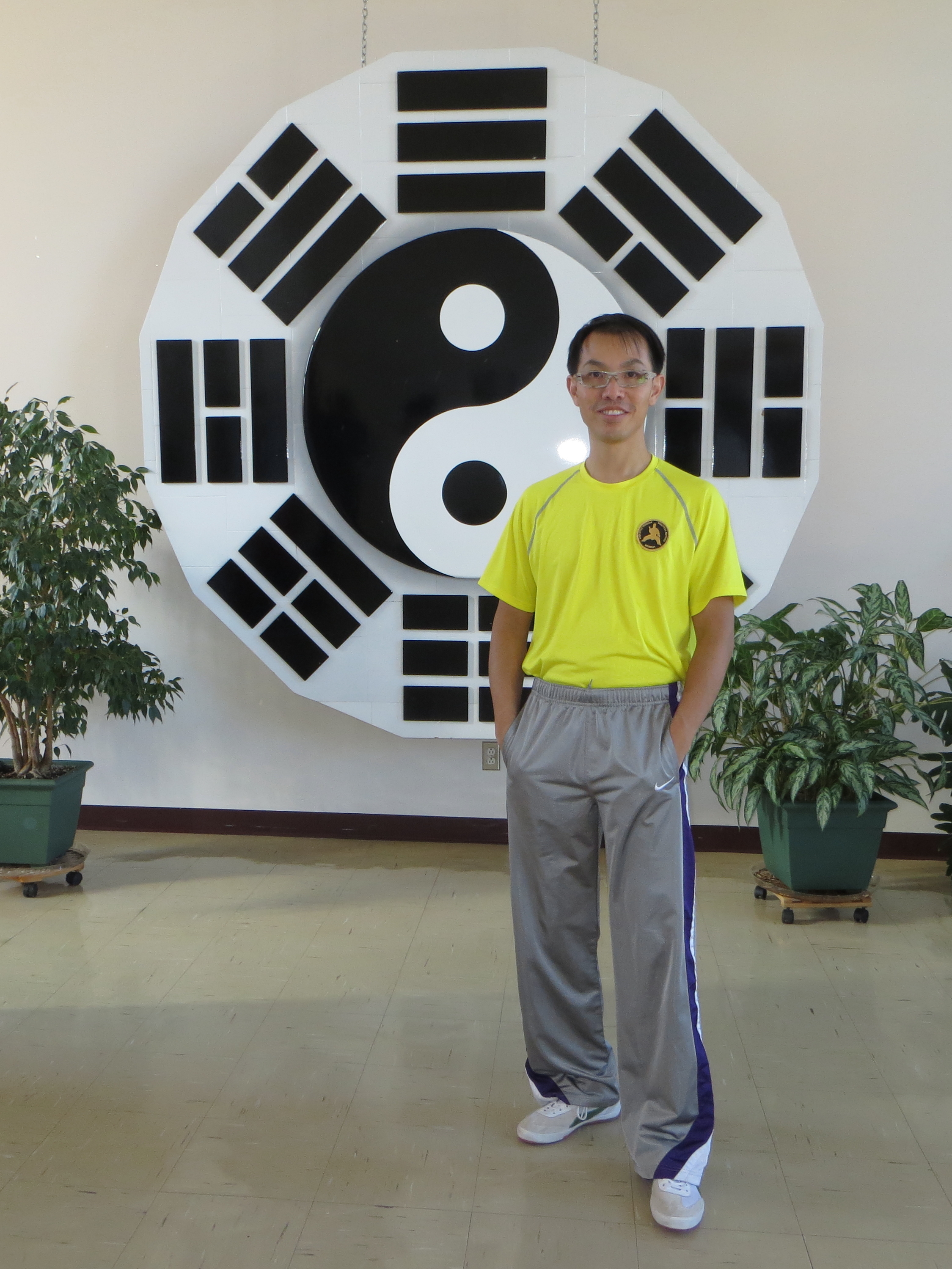
This is the first time I attended the Ottawa Workshop. Great group! Thanks Rachelle, James, and Daniel for organizing the workshop, and Rachelle for my stay at her place. Here are my notes:
- Move the feet. When we train, we fix the feet. When you push hands, we move the feet. Our feet are often not mobile enough, we must force ourselves to move them, e.g. getting in changes the pivot.
- The only way to connect is not to connect. Connection means moving and non-moving parts have a relationship. Read more
 Do the form. A lot. Do it so much you never have to think about the next move, until all the movements and transitions are fluent. Only then can you work on a specific principle comfortably enough to improve.
- Finish each move (in the form) and keep going. Keep going into the next one.
- We have to be capable of anchoring power on the outside, just as we have to be capable of anchoring power on the inside. IE: body movement that anchors on the hand (hand doesn’t move), and hand movement that anchors on the body (centre line doesn’t move). Maintain consistent power on the outside while the inside stays mobile.
Read more
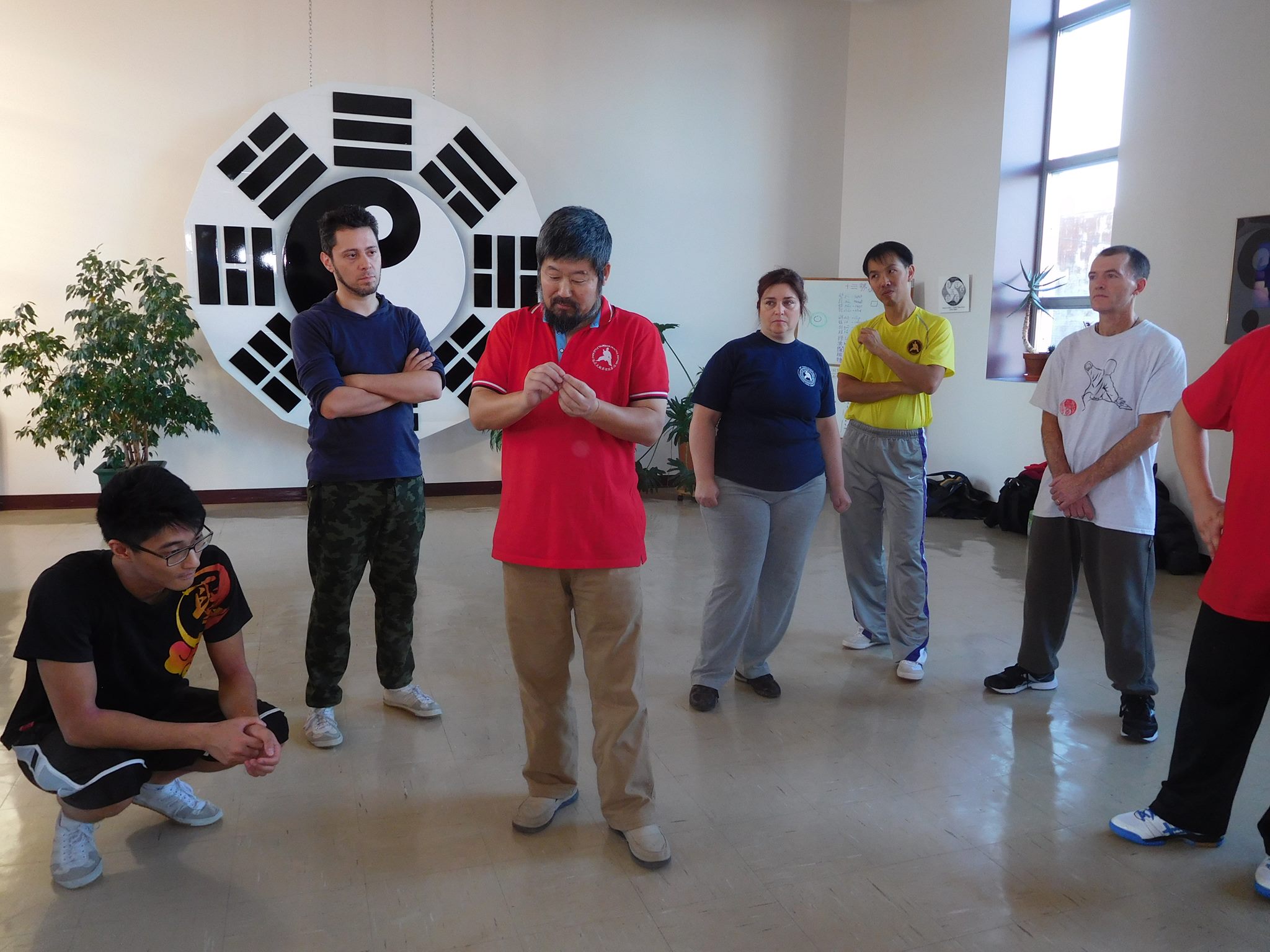
Notes:
• Taiji works in 3’s, and power, structure, and aim all have to be independent. Read more
More videos from Brennan Youtube channel
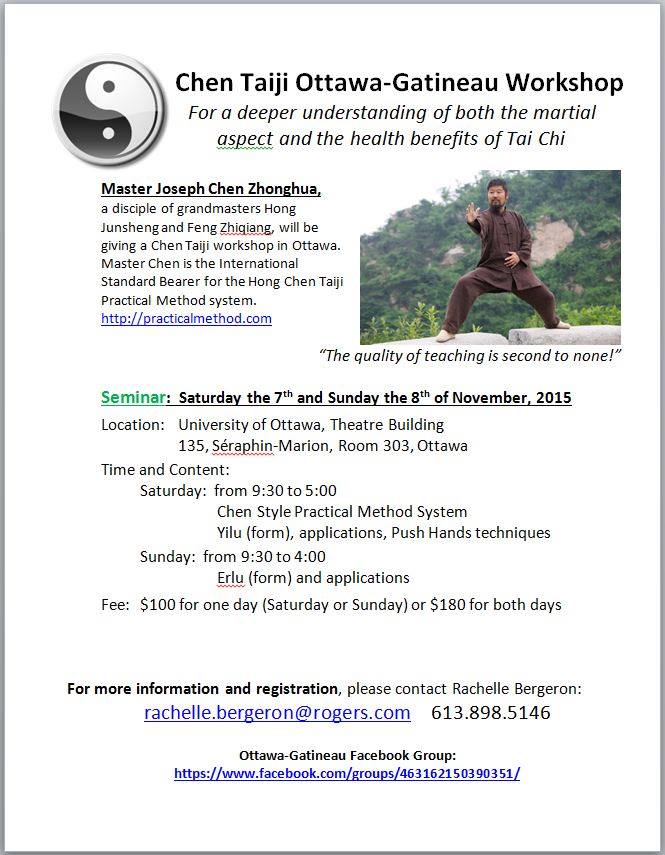
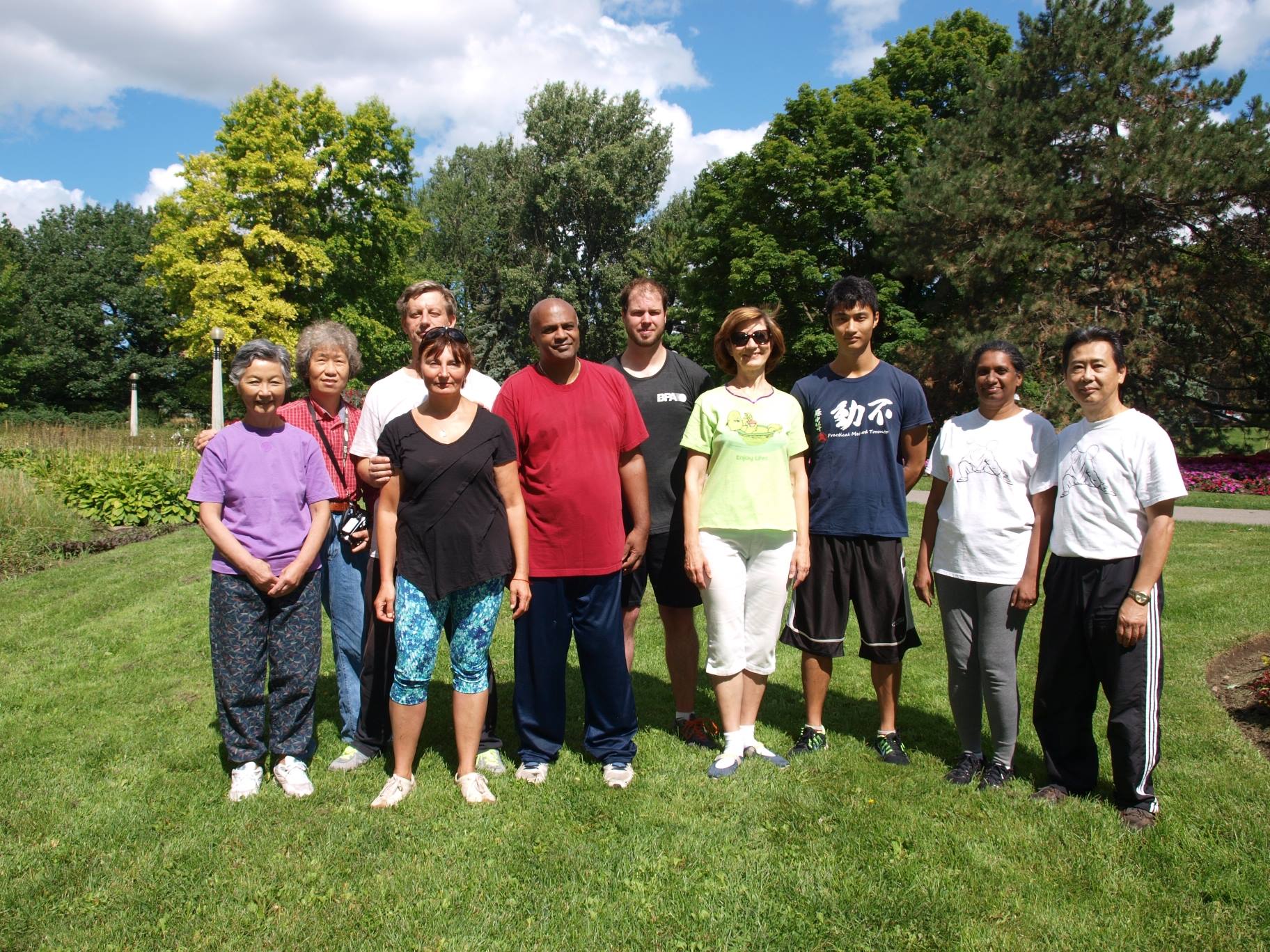
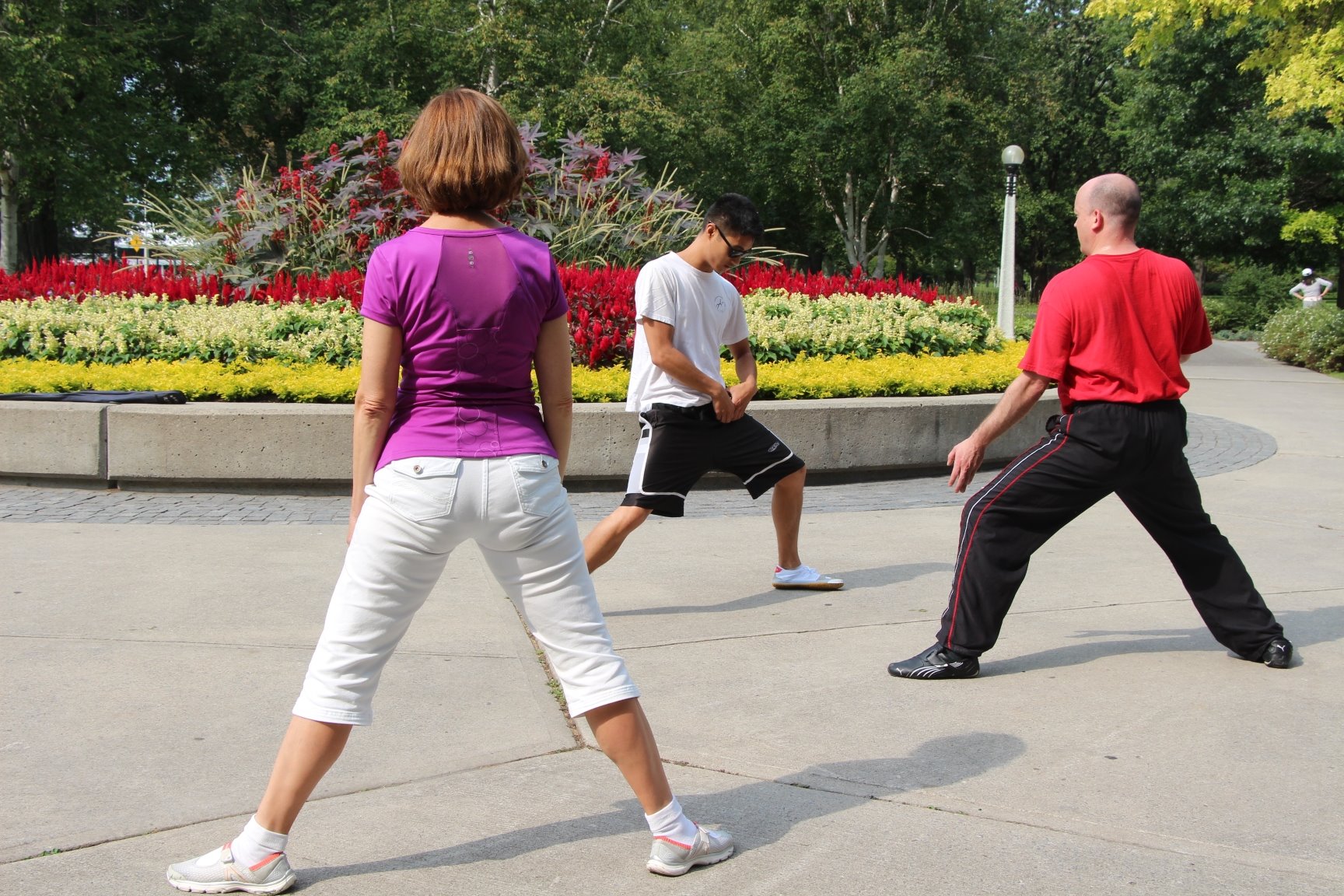
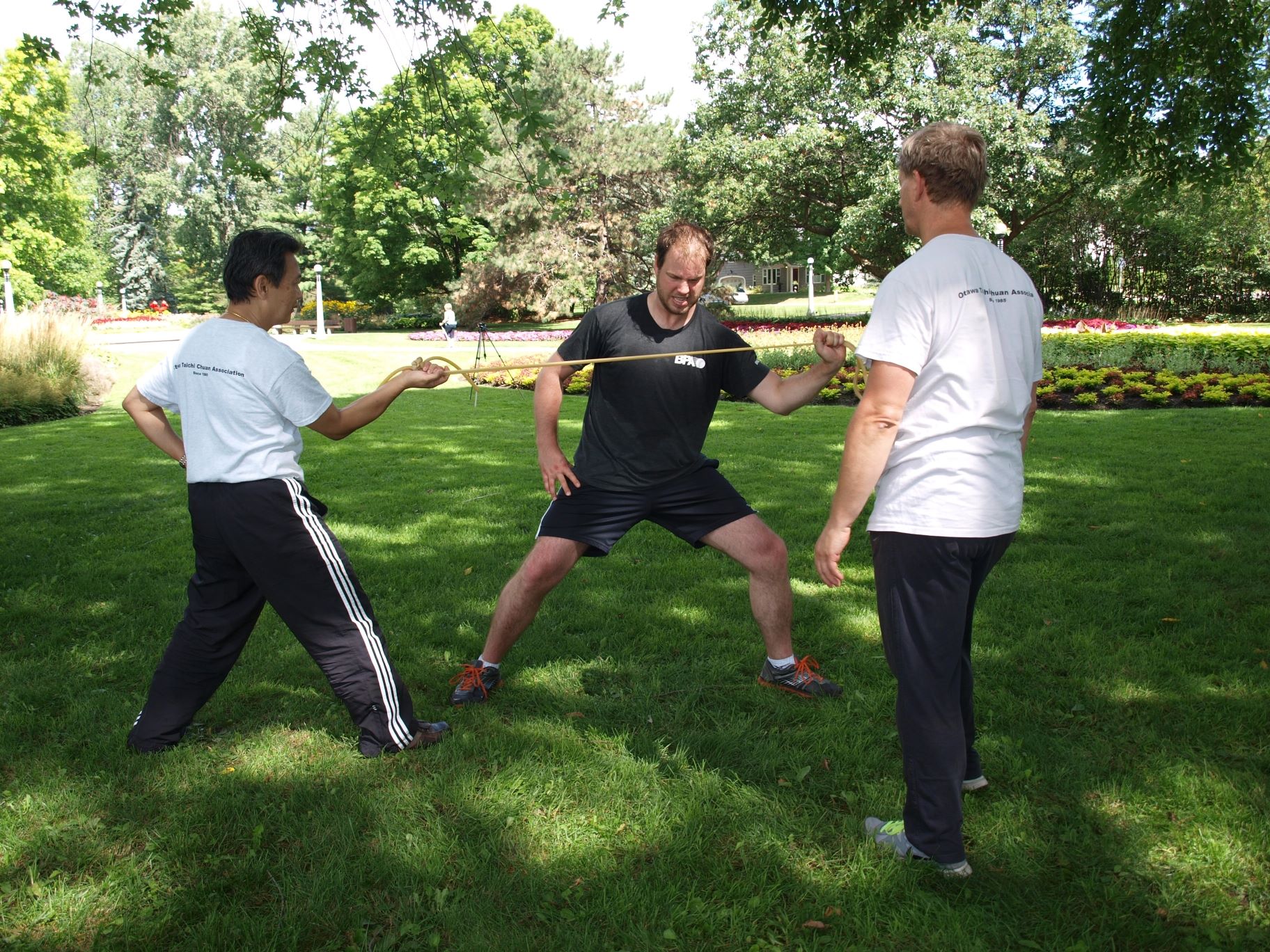
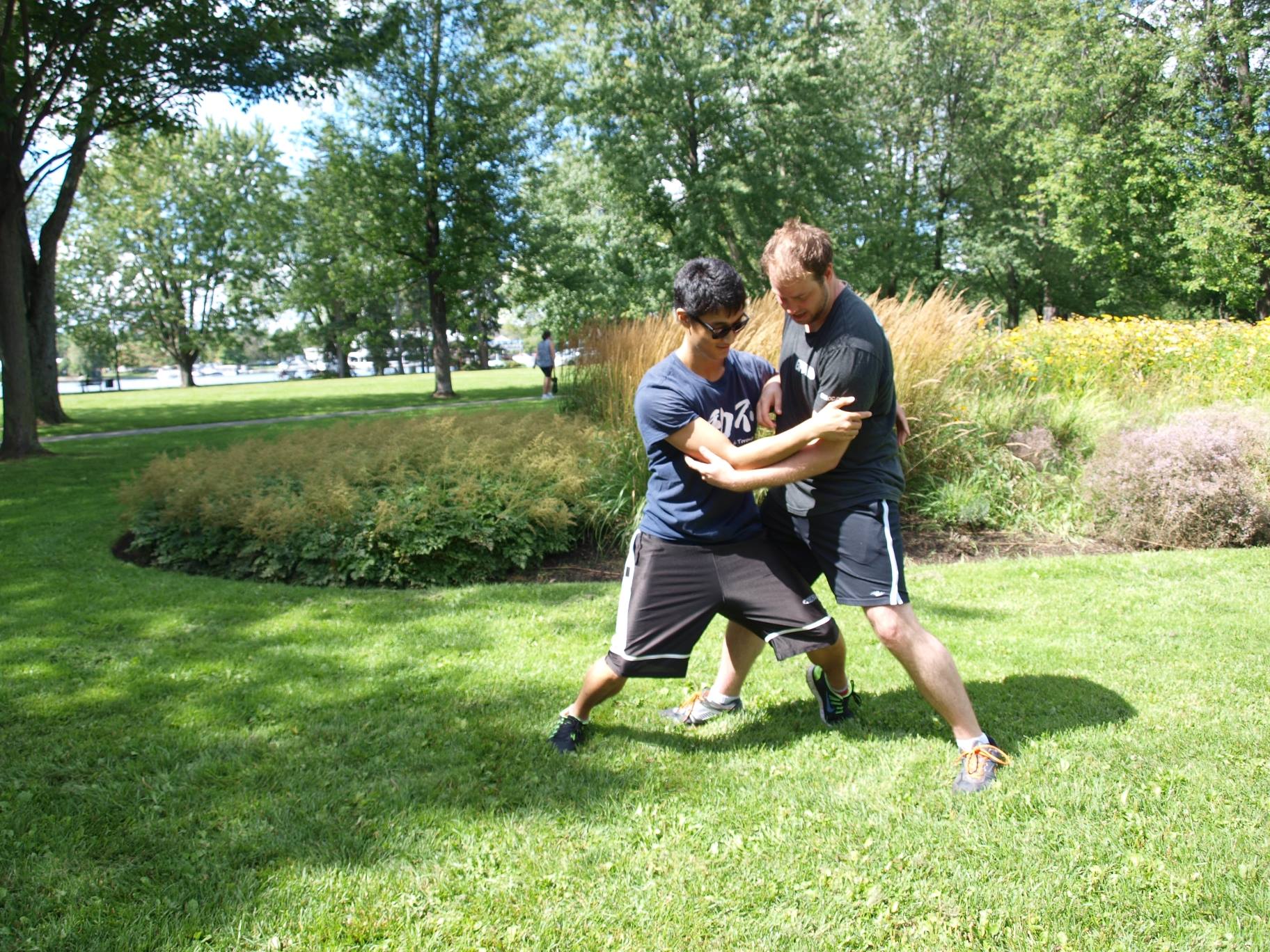
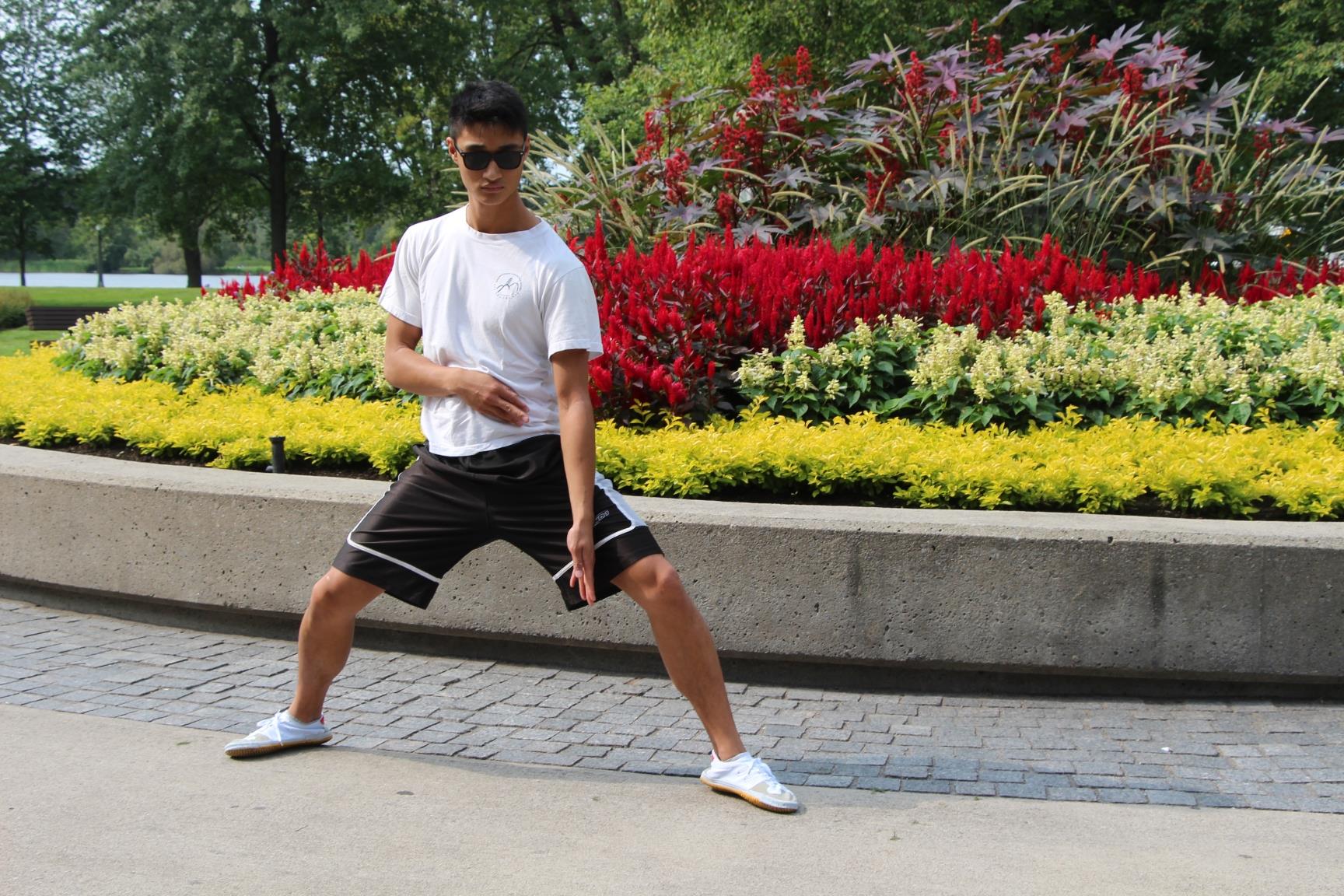

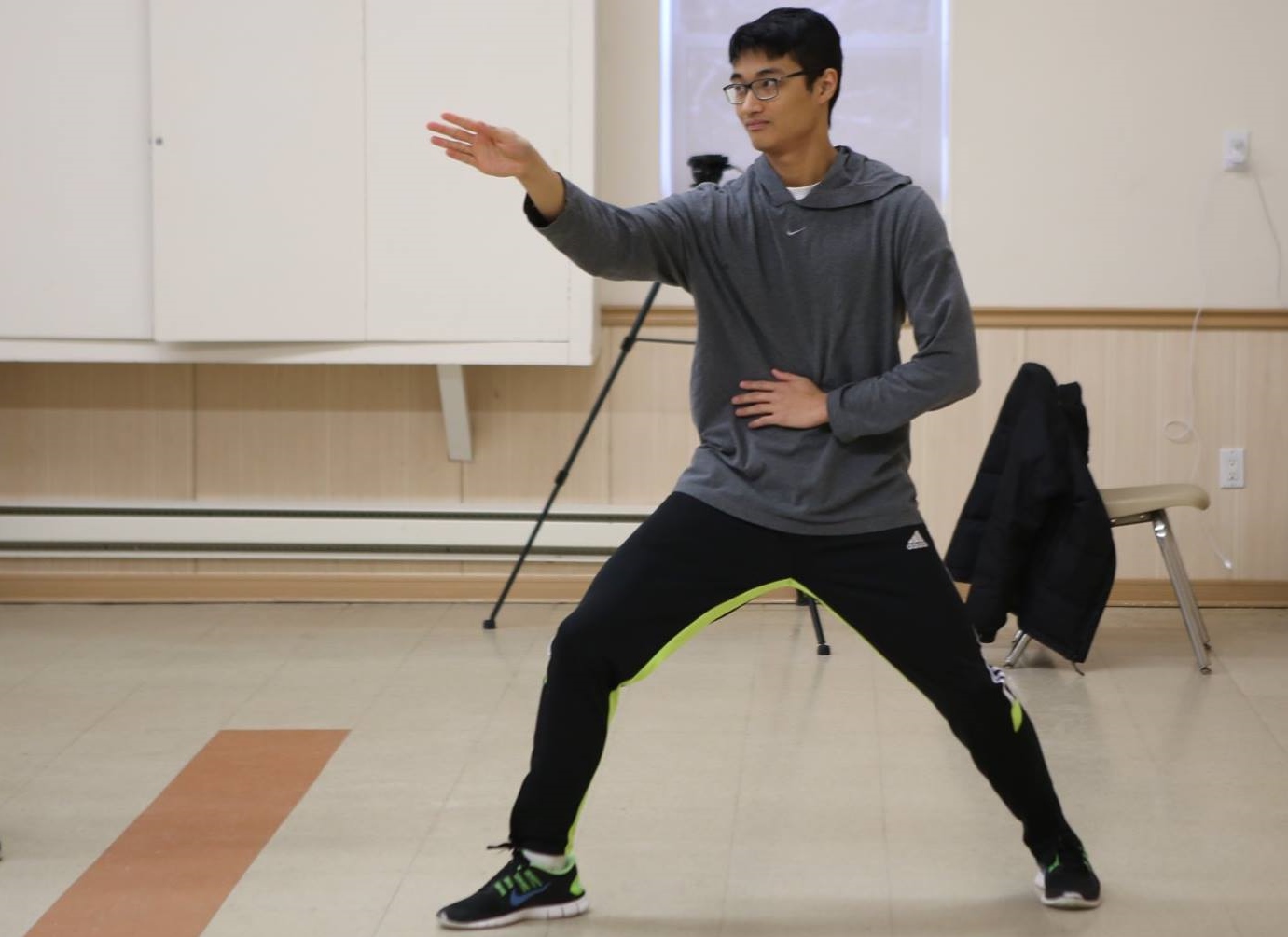 John Dahms and I will be opening a studio beginning September 1, 2015. We are located on the 3rd floor at 111A Rideau Street in Centretown by the Rideau Centre. Class schedules and pricing are to be determined. Let us know if you have an interest in participating in the classes either here, or through private messages. Look forward to seeing you all later!
Contact info: we can be reached at johndahms2@gmail.com or brennan.toh@gmail.com.
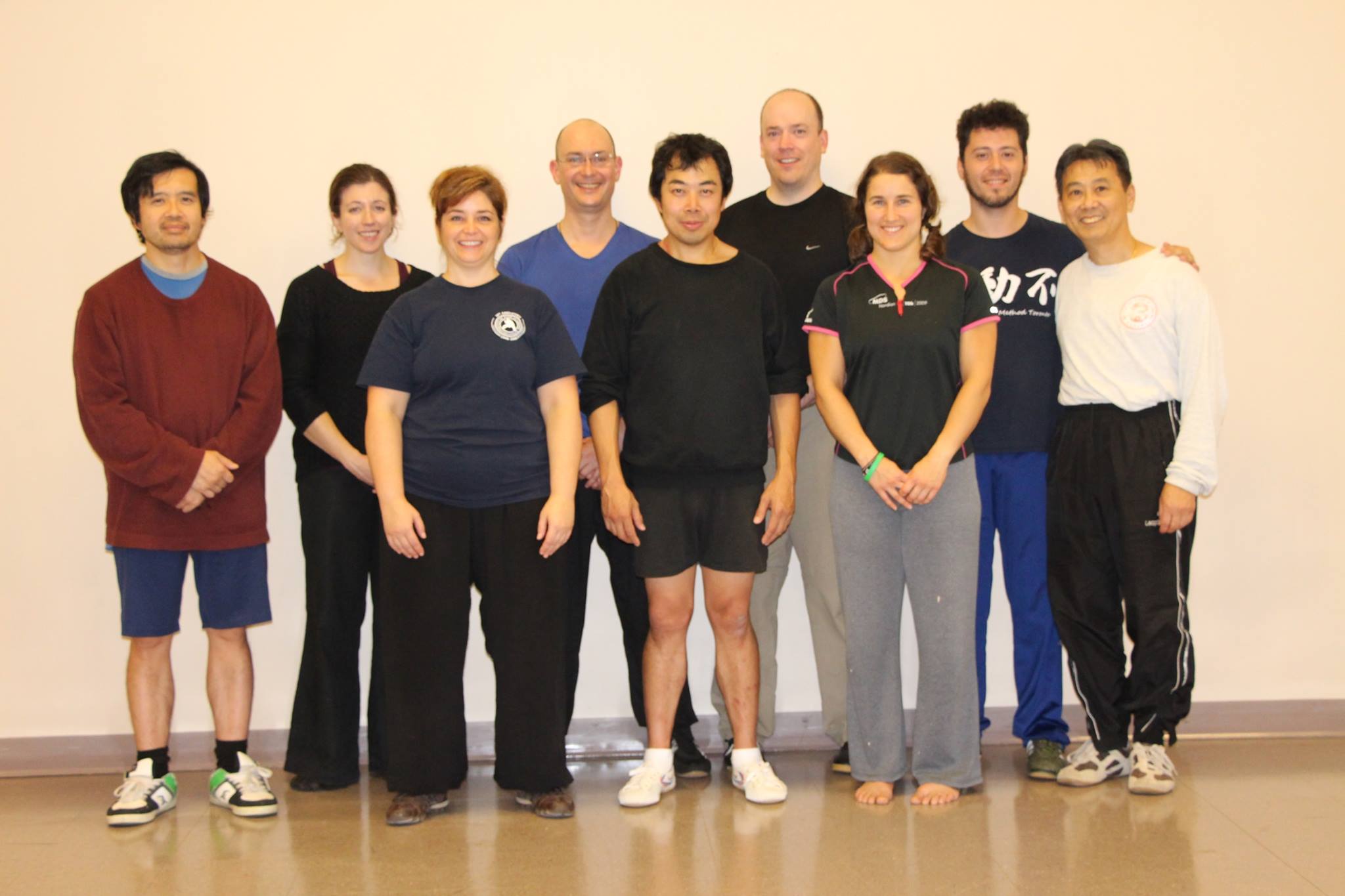
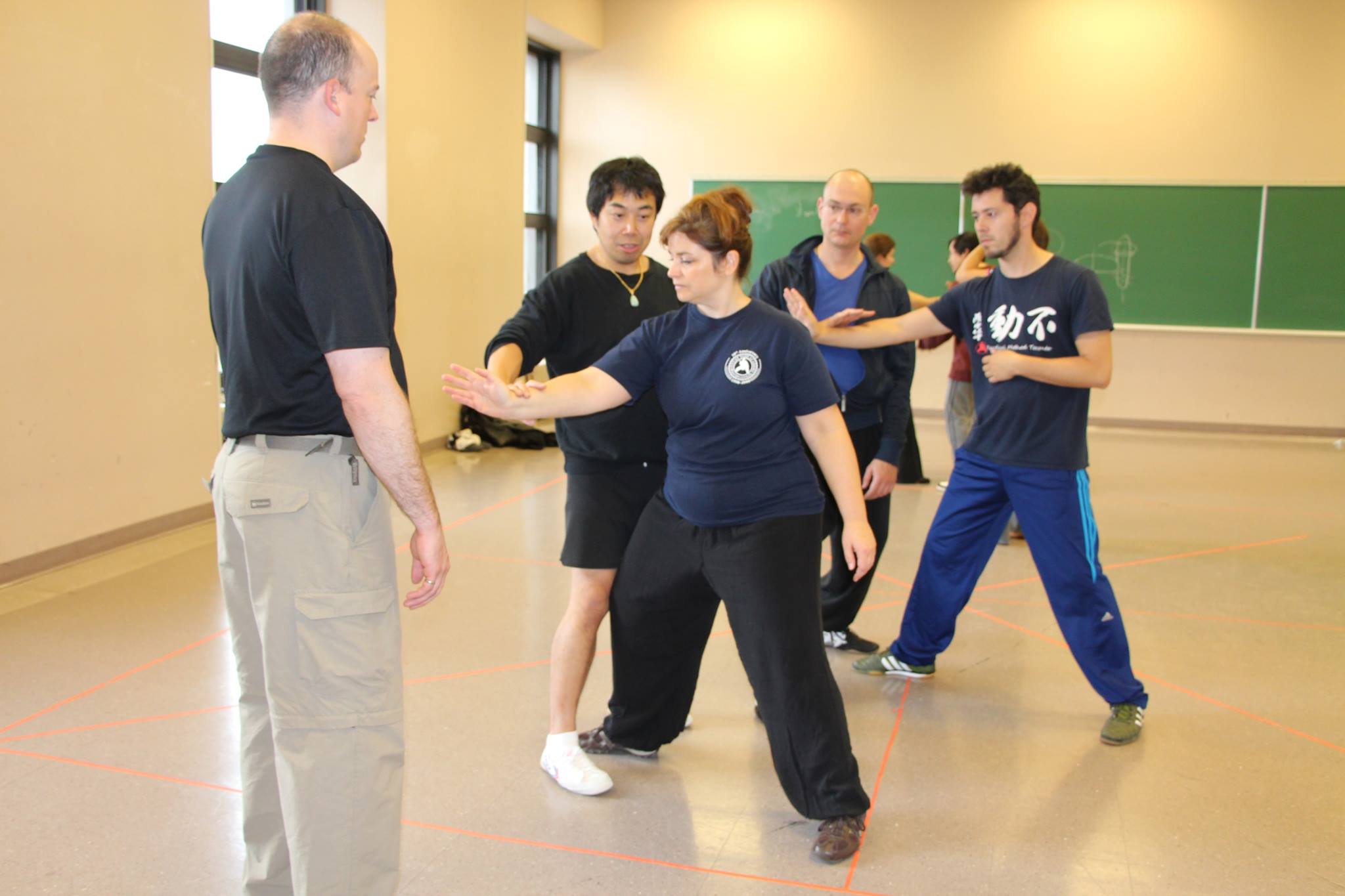
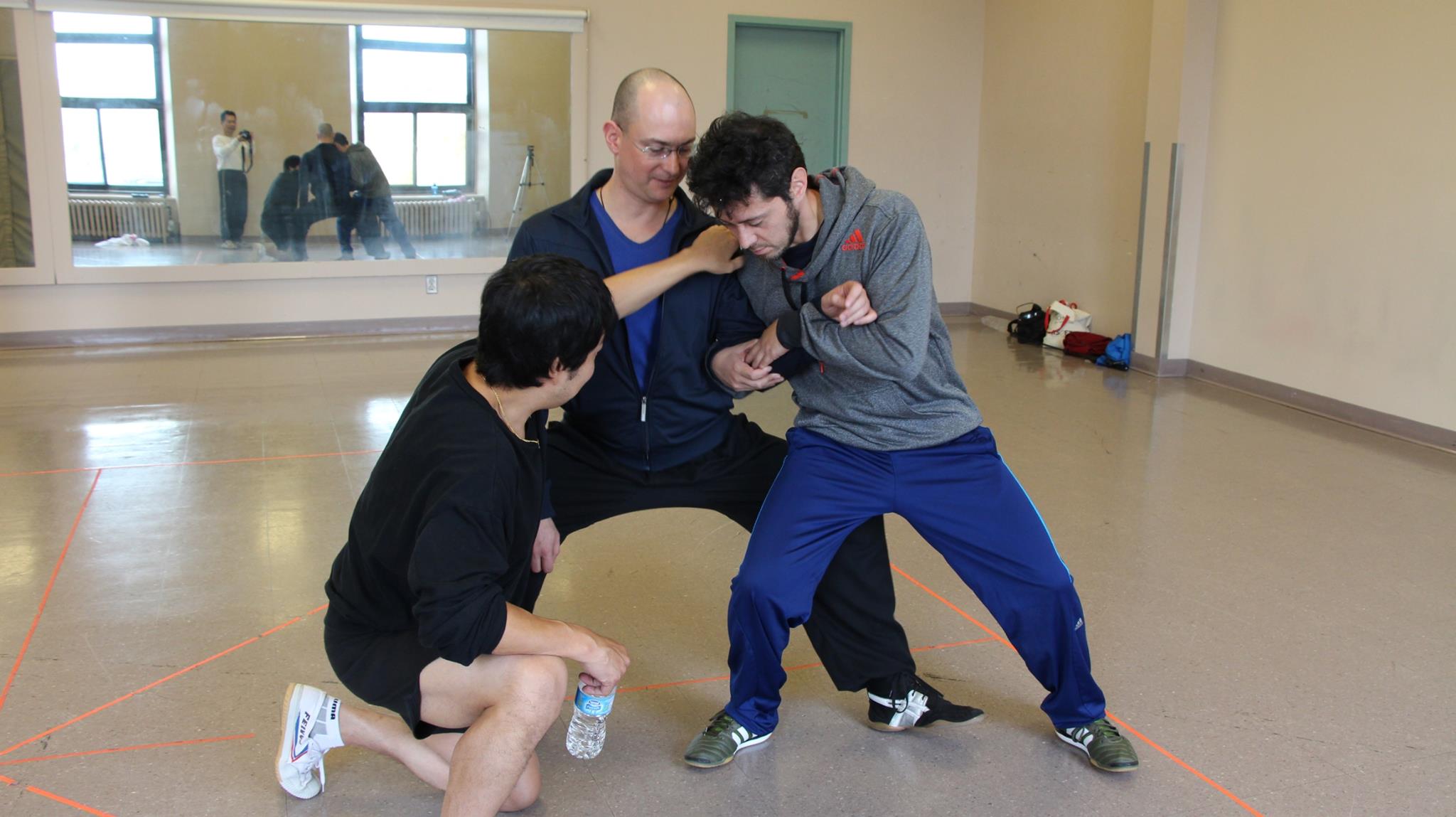
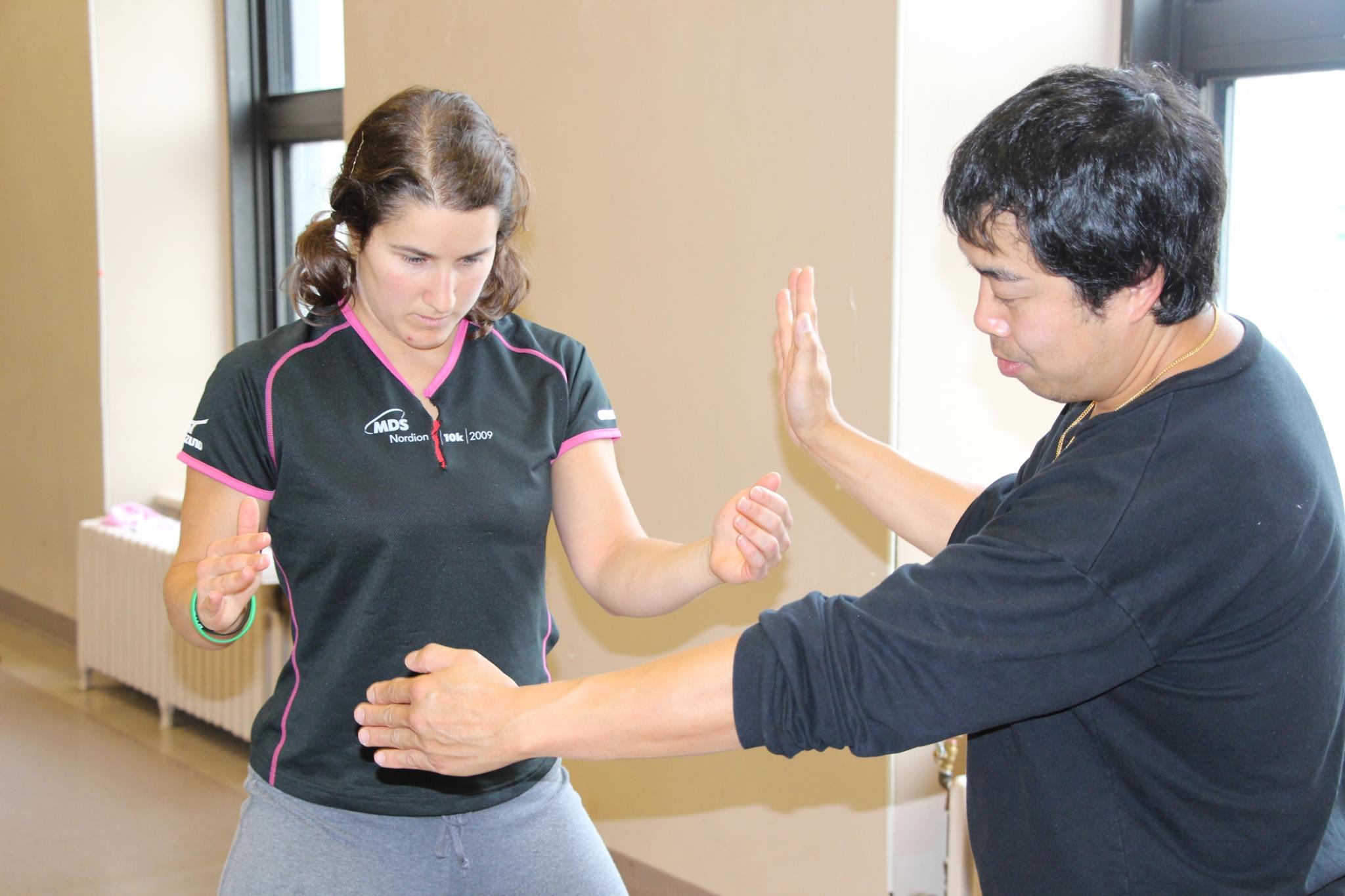

 |
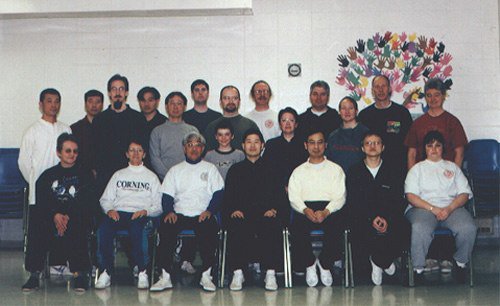
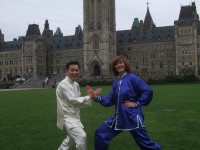
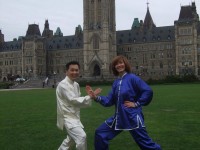
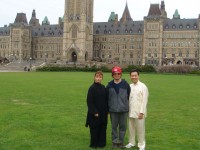
Rachel, Daniel, and James did an excellent job organizing an Open House and Workshop for the Weekend of April 05-06, 2014. On a beautiful spring morning, more than 50 people gathered to learn about the Chen Style Practical Method and to meet one of its distinguished proponents, Master Joseph Chen Zhonghua. |

[wowslider id=”3″]
As some of you know, I’ve been researching the use of taijiquan and qigong in the training of actors and dancers. I’ve recently put up a website to document this work, www.dancingword.org Read more
|
Daniel and Rachelle once again hosted an outstanding seminar weekend with Master Chen, bringing together Ottawa Chen-style Taiji practitioners and special guests from Toronto and New Hampshire. Over three enriching days, attendees had the invaluable opportunity to deepen their practice under the expert guidance and profound knowledge of Master Chen. |
Master Chen Zhonghua will conduct a Chen Style Taijiquan Practical Method workshop in Ottawa, Canada from March 11-13, 2011. Read more
This seminar gave many students an opportunity to work closely with Master Chen on movement relationships: hand to foot, elbow to knee, and shoulder to waist. Qua exercises and coordination exercises were used as part of the learning of relationships.
Daniel Mroz is an associate professor of theatre arts at the University of Ottawa where he has been employed since July 1st, 2005. Read more
Dave Dahms is currently a business student at Carleton University. Read more
 |
Preface I would like to express my sincere gratitude to Master Chen Zhonghua for his dedication to promoting Chen Taiji in the Ottawa (渥太华) area. For more than a decade, Master Chen has made regular visits to Canada’s capital, ensuring that his disciples, students, and other Taiji enthusiasts receive proper training, grasp the principles of the Practical Method, and deepen their understanding of Taoist philosophy and Chinese culture. |
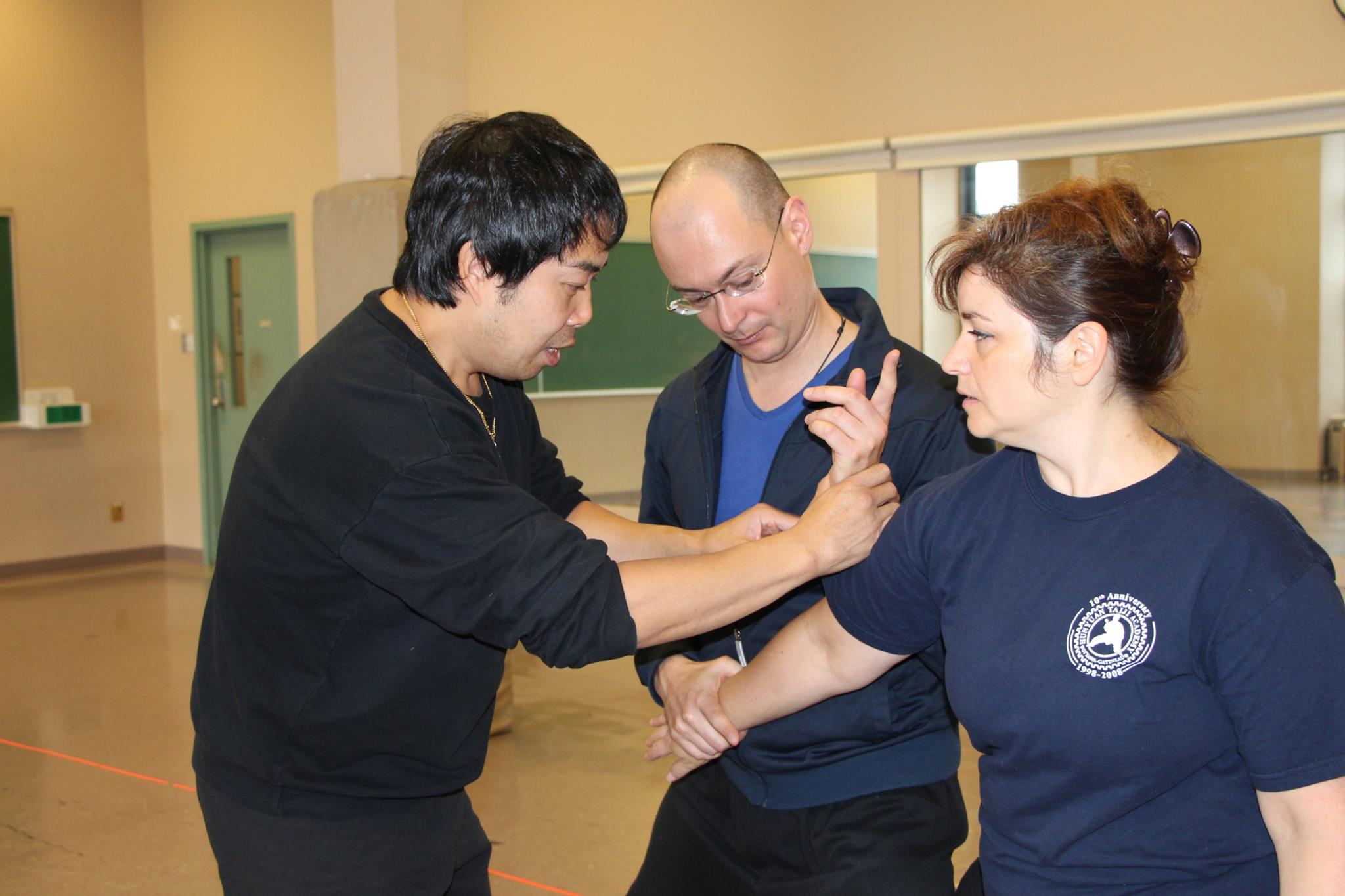
Master Chen’s workshop this Saturday focused on the theme of ‘division of labour’ amongst the different parts of the body; he emphasized yet again that in order for movements to become functional under pressure, one part of the body must be perfectly still while the other part rotates. We looked at this rule through a variety of examples. Read more

3 times a year taught by Master Chen Zhonghua on Hunyuan Qigong, Silk Reeling and Foundations.
Edifice Jules-Desbiens
109, rue Wright – local 002 Gatineau (secteur Hull) – Quebec
When Master Chen was at my school in April he had us explore emptiness. Emptiness in the leg from the knee downward. Emptiness in the spine from the head down through to the coccyx. It was a challenging process.
He told us that, as human beings, we do all we can not to go there as we experience this as death. This emptiness is a space before muscles get involved.
To help my students move closer to this state as best as possible I spent one evening doing Mentastics. Mentastics means mental gymnastics. It was developed by Dr. Milton Trager, a former American professional acrobatic dancer, boxer, and physician. It is a companion method to the form of massage he also created and that bears his name. To find more about him just google his name. He had a beautiful book that is only available on e-Bay or Amazon as used copies, as far as I could find out. The title is: “Movement As a Way to Agelessness: A Guide to Trager Mentastics,” 1995, 176 pp., Station Hill Press, Barrytown, N.Y., ISBN 0-88268-167-2.
With Mentastics one wants to do as little as possible. Movement is minimal and pleasant. Each time one does a movement, the goal is to do 50% less the next time around, always asking the mind to answer a question that only it would answer in its own way without any need to bring the answer to consciousness.
It goes like this: How could this be free? How could this be freer? How could this be even freer? And even freer than this freer?
Mentastics is an approach. Not a goal. A way towards a state of freedom, wellness, happiness. Towards Oneness.
We explored breathing this way, walking this way, moving our arms this way, shifting from one leg to the other, and then front and back. (In our leg shifting we wanted to stop moving just before our small tight muscles in our spines would engage, relaxing them with the help from our sensors under the soles of our feet.)
We reached a state of “hook-up,” as Trager called it. We were in the zone as others would say. Or as the calligraphy that taiji master Al Chung-liang Huang designed for The Trager Institute says in Chinese, we were a “Dancing Cloud.”
So we danced for an evening. It helped moving closer to where we do not move anymore, yet are more alive than ever. More present than presence itself. Have overcome the fear of death that stops us from being before muscles move.
We have not reached that stage yet. We have just moved closer to not moving. We now have one more tool to help us along. It worked. It laid the ground for the next step that was taken on the first Monday in June. More about this in the next issue.
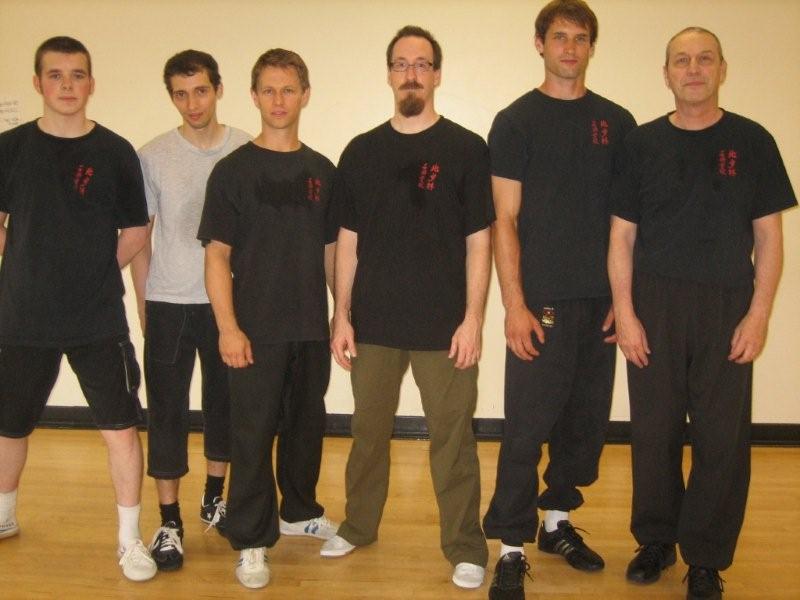
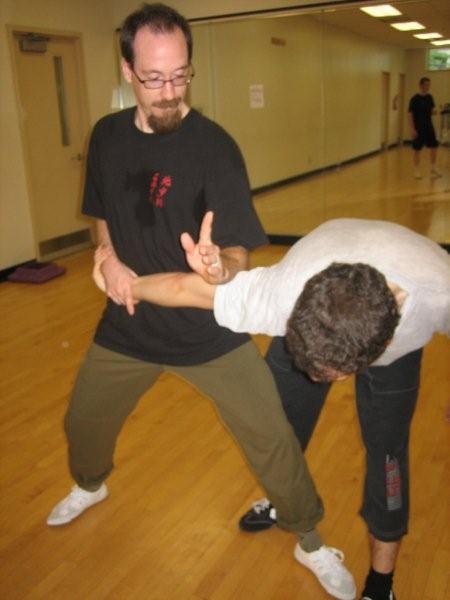
Here are a few photos of the group of Stonelion Shaolin students who participated in the Introduction to Chen Taiji class on July 12 2008.
Reviewed by Daniel Mroz
On November 26 and 27, 2005, I took part in a two-day workshop on Hong Junsheng’s Practical Method of Chen style taijiquan, offered by Mr. Chen Zhong Hua in Ottawa, Canada. The workshop was arranged by Mr. Chen’s students and attracted about a dozen participants. Read more