There are two types of movements in Chen Style Taijiquan Practical Method.
- Primary movements.
- Secondary movements. Read more
Chen Style Taijiquan and Hunyuan Taiji email: practicalmethod@qq.com
View posts in sub-category:
Application Articles Body and Posture Class (Workshop) Notes Common Errors Glossary and terms Hunyuan Knowledge-Movement Explanations Learning Method Principle-Concept Principle-List Principle-Rule Principle-Technical Push Hands Quotations Routine Names Routines Videos Stories Student Evaluations (Private) Taiji Apparatus Taiji FAQ Taiji Sword Thoughts and Understanding Workshop and Class Notes
There are two types of movements in Chen Style Taijiquan Practical Method.
The kua must be higher than the knee. This ensures that the lower body stance remains an bridge arch. If the kua is lower than the knee, then this arch is reversed.
In transitional and extreme cases, this principle is temporarily violated.
Zhou Bu Li Lei. 肘不离肋。
The elbow can move past the centerline of the body. It can also go down and go inwards. It cannot move upwards or outwards.
This means that the left hand must only be allowed to move in the left side of the torso. The right hand is only allowed to move in the right side of the torso. The demarcation line is the centerline of the chest.
Hunyuantaiji Academy in Edmonton is closed from December 21 to January 5. New classes
start on January 6, 2114. The schedule will be revised for the first two weeks we are open, on
Monday, Jan. 6 and 13 and Tuesday Jan. 7 and 14 classes will start at 7 pm.All other classes
remain as usual, except there will be no Wednesday morning class until Jan. 22.
Best wishes for the holidays and hoping to see you in the New Year!
This video describes the different energies that are applied in one move and how they work together to attack an opponent’s structure. If done properly, no muscle power or energy is used or wasted. This can only happen if the body is connected through correct stretching and rotations.
By John Upshaw and Levi Sowers
The interaction occurring amongst the various elements of our body are numerous and complex. This is especially true when applied to the movements, and thereof lack of movements, in Chen Style Taijiquan Practical Method. The purpose of this article is to provide a framework that will allow the reader to conceptualize the necessary movements that are congruent with the taiji principals, and inherent to the Practical Method system. The 1, 2, 3 theory of taiji movements will be the framework for describing these internal relationships. We hope that readers will be able to distinguish between what parts of the body moves from what does not move. When that is identified, then a clearer understanding of the lines that are stretched upon within oneself becomes more recognizable. Read more
[wowslider id=”42″]
 After almost two weeks since attending the Sydney Practical Method workshop. I cannot retain all the information I heard in my head. It’s just going to give me a headache. I’m going to empty out all of my thoughts and experiences on what I remember from the Workshop, not to be excited on how many comments I’ll get but for my benefit to continue training unimpeded, because if I don’t, then my energy will be wasted in thinking rather than practicing. Read more
We all understand the importance of “don’t move” in Practical Method. To achieve “don’t move”, there’s a pitfall need to be aware. Read more
Michael Calandra will be teaching a workshop on Practical Method in London on the 21-22 of November. Anyone interested can contact Asad Habib via facebook , or email Michael Calandra at oikddojo@aol.com.
http://www.seishinkanonline.com/
These are considered the five points of the outside of the body. Everything else is considered the inside of the body.
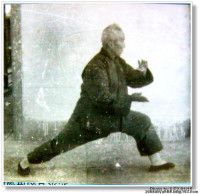 It is considered a good thing to hurt the muscles. Muscles are not afraid of pain. In the Practical Method system, we do not train the muscles. Train muscles means to bulk up the muscles to make them strong. We elongate muscles. This requires a different method of training.
It is a bad thing to hurt ligaments and bones. Ligaments and bones are afraid of being shortened, not elongated. Postures should be large and low so as to allow the elongation of ligaments and the skeletal structure.
 I believe that what happens to a connected person’s body when being pushed can be understood by understanding how a trampoline works. Read more
Iowa Workshop on October 12, 2013.
Performed for students in New Hampshire with emphasis (slow down and stopping) in places where students frequently make mistakes.
[wowslider id=”32″]
Any serious Taijiquan practitioner should develop the ability to listen and observe. Read more
In order to reach the level of taiji practice that integrates body and mind connection, you need to declare war against your own body. A dialogue between the mind and your own body must be initiated. After that, most of the work must be done by the body, not the mind.
—Master Chen Zhonghua at the New Hampshire workshop in Sept. 2013.
Do not believe your body does what you think it is doing! Your body has a mind of its own and is quite independent of you. It does what it wants and what it is used to.

The following are my raw notes from the workshop:
Bruce Schaub Push Hands Learning with Chen Zhonghua 2013 in Toronto, Canada.
[wowslider id=”28″]
Name: Don’t Move The Original

The front graphic features Master Chen’s own calligraphy of 不動 meaning “Don’t Move”.
Read more
If I were asked what I thought the key to learning Taijiquan was, I would have to say that it is the ability to break and change old habits, both physical and mental. Because habits are usually formed at a very young age and have gone unnoticed for so many years, most people are slaves to their habits. Bad habits are usually very difficult to identify and in most cases, nearly impossible to break. Like everything else, I feel that in order to be able to understand and deal with a certain issue, one needs to go deep into the mind and explore its roots and how it actually functions in the human psyche. Read more
Once the student is more advanced and the process of opening up the body is well under way, the body will naturally start adopting many of the fundamental principles of Taijiquan. When the practitioner is able to demonstrate that his mind and body both have a good grasp of such things as connectivity, separation, differential in movement and spiraling, the body will be able to move in such a way that the limbs will be powered by rotations occurring in different parts of the body, much like a gearbox. Once this has been achieved, the next step is for the student to meticulously go through each move in the form and learn its applications. In this step of the systematic process, the student will be required to experiment with and refine all of his knowledge and understanding and start applying it to real situations. This will help consolidate and solidify the practitioner’s overall understanding of the different movements of the form as their function and purpose will progressively become clearer. This is the point where everything starts to finally make sense. Read more
this is the first 13 movements of the yilu I performed
on 8-12-13…..
Hi guys, after the workshop with Chen Zhonghua in Berlin – which was fantastic – I`m planning my training schedule. A minimum to do every – EVERY – day! Read more
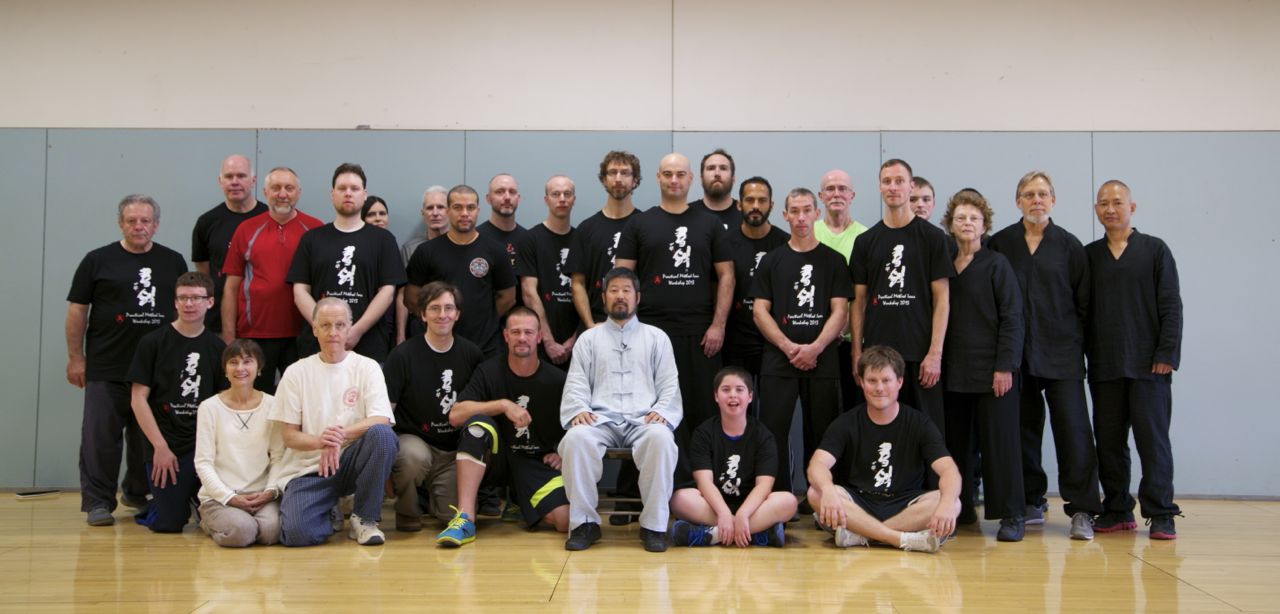 We are pleased to announce the return of Master Chen Zhonghua to the Upper Midwest, specifically Iowa, for a weekend workshop. We will cover foundations, form corrections, applications and push hands. These workshops are for everyone interested in learning taijiquan. No experience is necessary, just a willingness to learn. Hope to see you there.
Iowa Pratical Method Poster 2013.ai
This is Sandeep second time on the mountain, coming from Mumbay India
My question is assuming that the kua(s) are opened does that result in neutral equalibrium because the center of gravity is neither raised or lowered, basically by allowing those to be at the same level at the same time then potential energy, rotation, and reveloution are possible because if something with neutral equilibrium moves those around with follow, and then using joint rotation, you are using angular velocity which then turns into linear velocity, almost like a series of rotations(angular velocity occur) starting from the bottom up then transmitted to linear velocity, therefore if you have these continous angular velocity it is like a wheel continuously spinning around the axis while taiji has numerous axis points that are rotating.
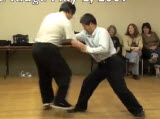
Push Hand demonstration and instruction. ‘ front hand and rear foot line up’ , ‘Linking and sinking power” principles in action.
Presenter: Chen Zhonghua Length: 5:34 min. In: English Year: 2009 Difficulty:3/5 At:Maple Ridge
 Han Yue multiple ShanDong Province champion conducting push hand practice with full time students 2011. Presenter: Han Yue Length: 9 min. In: Chinese & English Year: 2011 Difficulty:4/5 At:Daqingshan