2017.12.16 Sydney Workshop Day One Notes by Brian Chung

  1. The two buttocks and tailbone splits into a tripod. It will take sixty years to train. Do not believe you can do it.
  2. Alignment is everything goes through a bottleneck.
  3. When the Horizontal and Vertical dot meets, it becomes a three dimensional force field.
  4. Peng Energy.
  5. From nothing, to form. Once the energy is there, we do not need the form.
  6. Gong Fa. Quan Fa. Tui Shou (push hand). San Shou (free, loose). Duan Shou (broken).
  7. Foundations. Twisting the Towel. Fetch Water. Six Sealing Four Closing. Positive Circle. Negative Circle.
  8. Seven Inch Knife.
  9. Master corrected my Six Sealing Four Closing. He adjusted the orientation of my front kua and the direction of the front hand. He then emphasised the front kua / front shoulder rod.
  10. Master corrected my large Six Sealing Four Closing. The rear hand must be bigger.
  11. Your door can never be open.
  12. Master Chen demonstrated using a spear. The front hand is always pointing at your opponent.
  13. Double Positive Circle.
  14. Double Negative Circle.
  15. Movement must come from the line. The line cannot be part of the move.
  16. Twilight is at 12:00 and 6:00. Find these two dots and amplify them.
  17. Full. Cannot add, cannot take away.
  18. Essence, Qi, Spirit.
  19. We are doing a series of mechanical movements.
  20. Perceived power. It does not exist. But it does.
Exercises: Moving Step
  1. Stepping side to side. The left foot, dantian, and right foot are three dots. Lock two dots, and move one.
    1. Horse stance.
    2. Lock dantian and R foot. Suck L foot in.
    3. Shovel out.
  2. Double Negative stepping out on a straight line.
    1. Double push down.
    2. Adjust front foot.
    3. Elbow in while turning 180 degrees.
  3. Shovel Out with hands on knees.
    1. Press on your rear knee, shovel out at 45 degrees.
    2. Shift to the middle.
    3. Press on your front knee, suck the rear leg in.
  1. So small there is nothing inside of it. So large there is nothing outside of it.
  2. Upper Dantian is also called the Ancestry Cavity. Zu Qiao. Middle Dantian is at the solar plexus. Lower Dantian is three fingers below the navel, three inches in.
  3. What is real cannot be named.
  4. Behind is ability, in front is function.
  5. If we have a question, write it down, then ask it after we are training. While we are training we must focus.
  6. Push hands about (1) how quickly you adapt to your opponent (2) how fast you make a decision.
  7. Experience cannot be replaced by theory.
  8. Entice into Emptiness.
  9. Story about Master Watermelon Peel.
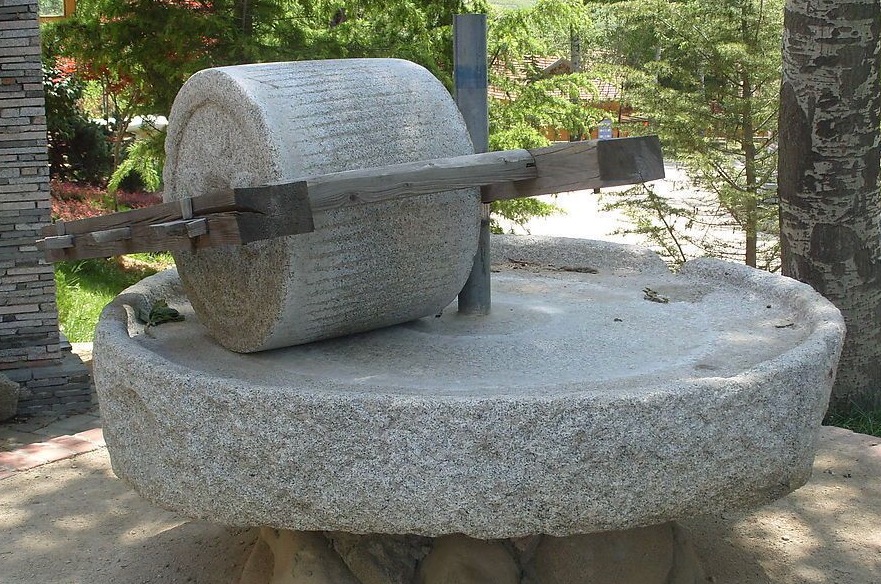
  10. Story about Grandmaster Hong and moving the rock.
  11. Energy Training Exercise (Da Li Gong).


Read more

Your Next Step After A Workshop
P1020551HONG KONG CHEN STYLE TAIJI PRACTICAL METHOD 香港陳式太極實用拳法·WEDNESDAY, DECEMBER 6, 2017
I watched master’s videos; it was the one where he demonstrated with Master Michael Calandra to be exact that got me curious. I thought, gosh, there is something very different here. He bounced and dropped people with what seemed to be minimal effort. I sent Master Chen an email asking if I could have a look at his next workshop and he gladly invited me. After driving about forty-five minutes to Langley, I sat and watched, and sure enough, it was the same as what I saw in the videos. The only remaining thing to do is to have a try. I walked up and asked Master Chen if I could push him (in hindsight, that was pretty stupid – the right kind of stupid for learning Practical Method). Read more

MarkHanley

I have fascia problems that limit and sometimes interfere with certain movements originating from a car accident and then being pushed on my tailbone 15 years ago. In October, my physio-therapist told me that my hips are opening and to continue with whatever exercises I was doing. I simply said that I am doing a Tai chi form that emphasizes stretching. She indicated that the stretching was breaking up the fascia. Read more

Don't Move the Hand

We have always been told by Master Chen not to push, not to move the hand. If that is the case, what can we do?
Read more

OttawaWorkshop_20171119
Thank you for Rachelle Bergeron and James Tam for organizing the Ottawa workshop and their hospitality. It was always great fun to attend the Ottawa workshop. A lot of important aspects of Practical Method was shown and covered by Master Chen Zhonghua.

What is Practical Method about?
Practical Method was based on a fight system from long time again. It is an exercise we do to pass along the tradition.

What is a Practical Method stretch?
It is something with a moving and non-moving part.
Read more

Rotation is the result of linear movements v2

Recently, I understand more about the statement:

“Rotation is the result of linear movements.”

Our actions are like on the tangent of a circle. The non-moving dot is the centre of the circle. Every linear action is very small. The direction changes all the time. The sequence of such actions along with non-moving dot cause the rotation. The actions are continued on top of each other, and they have a relationship with the non-moving dot. In the form, it is like dragging the flesh around some non-moving rod or dot. It is almost like someone pushes the arm on one side for elbow in, and someone else pushes the other side of the arm for hand out. This is related to the stretch that Master Chen Zhonghua showed on the inside or outside of the forearm. Another example is that if someone touches me in the front, I don’t move the front, but I stretch the back over or around that non-moving front.
Read more

KelvinHoProfile1Yi (intent) is not just a thought. In my current understanding, yi describes an ability for your body to do a precise action as you command it to do. In other words, your body listens to your brain. It takes training to get to that state. Master Chen Zhonghua has said before, “the real intent is no intent”. Think about riding a bike as an example. After you have learned how to ride a bike, you don’t think about how to coordinate your hands and feet, how to balance, you only think about where to want to go. You appear to be able to do it with ease. For taijiquan, we need to train long enough to make an action habitual, so that we don’t think about it when we need it, and it just comes out.
Read more

Related Article: http://practicalmethod.com/2014/07/triangle_double_lock_single_lock/

In the late afternoon of the first day of my first workshop with Master Chen, a wave of remorse and sadness swelled up in me, seemingly out of nowhere. Earlier in the day, two other workshop participants talked to me about decisions they were faced with that reminded me of a difficult period in my life, but there were no other obvious reasons why these emotions would well up.

I was not exerting myself in that moment, most of us were standing in a circle watching Master Chen demonstrate something on one of the other participants. The feelings were intense, but not overwhelming. I continued to pay attention, participate, and enjoy the workshop. There was also a degree of detachment from the feelings, a sense that they were somehow taiji-related and would pass. The feelings moved from foreground to background after a few minutes, but became strong again after the workshop had ended for the day and I was on the subway alone.

They faded for good the next morning after a restful sleep. I have since been told that Master Chen recommends being unmoved by feelings that occur during training or that take us away from training. I feel I did a reasonably good job of this at the time. I find it encouraging that training remained my priority in the midst of a potentially powerful distraction.

A potential participant of our upcoming November 28th, 29th, 30th Hong Kong workshop posed the following questions. Sifu suggested that I pose the answers here so that everyone, especially newcomers, would benefit: Read more

Equal and Opposite 2

by Kelvin Ho on 2017/09/17


This video describes in taiji what we do is equal and opposite to the result we desire.
Read more

Sydney 2016 Hunyuan 3/4/5
Access is keyed to your user account. You need to be logged in to buy access.
Please register or log in.

First five videos from Sydney 2016 series are teaching Hunyuan qigong
Presenter: Chen Zhonghua   Length: 27 min.   In: English   Year: 2016  Difficulty:1/5

Sydney 2016 Hunyuan 1
Access is keyed to your user account. You need to be logged in to buy access.
Please register or log in.

First five videos from Sydney 2016 series are teaching Hunyuan qigong
Presenter: Chen Zhonghua   Length: 20 min.   In: English   Year: 2016  Difficulty:1/5

20413992_10154909581610369_1948300181708794929_oDates:

July 28th – July 31st

Hiawatha Iowa

Hosts:

John Upshaw and Levi Sowers Read more

PMNATC2017_1 Read more

True Disciple 1

by Kelvin Ho on 2017/08/04

Who is a true disciple?

A true disciple is someone who follows the teacher based on the principles of the teachings. When the teacher evolves in his understanding, a true disciple will do the same. Even if the teacher and the true disciple don’t see each other for an extended period of time, their evolutions will still head in the same direction.

Taiji Trinity i

by Kelvin Ho on 2017/08/04

Principle: Separation of Yin and Yang
Concept: Indirect Power
Action: In with elbow no hand, out with hand no elbow.

These are three ways of describing taiji. They are one and the same.

Master Chen Zhonghua discussed the above during a Q&A session at the North American Practical Method Training Camp from Jul 29 to Aug 2, 2017.

Master Chen teaching in Jimo, Shandong

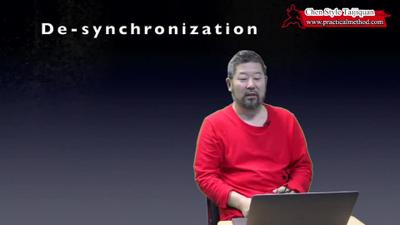
To link movements together is to become double heavy.  Instead of moving together, each body part must complete its’ designated role to complete a function.  Desynchronized synchronization – first we must learn how to take our body apart before we can put it back together.  Like a machine, the power only comes from every piece doing it’s job.  One thing can only do one thing.  The piston in an engine only moves up and down; it does not try to turn the wheel or to move the car forward.  Within taijiquan, the machine does not fight.  None of the actions of the body relate to fighting the opponent, only completing its’ designated job.

Within a one dimensional movement everything is connected.  For example, as the hand moves forward in a push, the torso also moves forward, typically followed by the rear knee.  In this way, everything moves together in order to generate power, this power is generated by strength and expressed through speed.

A two dimensional movement compounds the power of each body part by creating a non-moving piece. Each piece is able to successively ground off the last piece by creating a ‘wall’ to push off of. To create fewer or an unstable wall is to merge pieces together, resulting in power leaking out of the body or rebounding back. Power is dependent on the stability of the last piece. While we are learning to create this separation, our power is often not consistent enough to maintain the stretch. As we encounter power we revert back to a single dimensional push.  A true two dimensional stretch is to maintain the separation despite obstacles.

IMG_7305

The creation of the non-moving part is a stretch by definition.  Power is a differential; most commonly it is a differential of space by using speed.  Within taiji we are creating a differential using stability, with each piece not merging.  To merge powers is to create an unstable wall

In the previous example of a push, a two dimensional movement would separate the arm from the body.   As the arm pulls or pushes, the torso remains unaffected.  The torso not moving creates a ‘wall’ that the arm is able to push off of.

To be able to move in this manner is to move like a rotary saw.  With a rotary saw the blade does not move on its’ own.  The blade only rotates and spins, while the saw is pushed onto the wood.  The cutting of the wood does not have to do with the blade rotating, it has to do with the wood being pushed onto the blade, or the saw being pushed onto the wood.  The saw must move independent of the blade rotation – if the blade moves forward it is unable to rotate. Similarly, the torso does not move, only remains upright and rotates.  The legs move the body forward/backwards, while the arms cut.

Therefore we must find a method to define the separation of our movements.  Separation of the body applies on both a macro and micro scale.  Not only must we separate in the cardinal directions (top/bottom, left/right, front/back), but also differentiate the role of the hand from the role of the elbow; what the purpose of the front shoulder is vs. the rear shoulder, etc.

Relevant videos:

http://practicalmethod.com/2015/01/no-tossing-separated-movements-online-video-trailer/

http://practicalmethod.com/2014/06/dimensions-5-points-online-video-trailer/

Hello Master Chen

I have a question about kua, shoulder and shun/ni.

My question is when you are doing say, cloud hands. You show this on one of your videos here called How To Keep The Center from 3.25. You are on left leg and kua opens on left side and the left hand looks like Ni. Does this mean that the kua opening always coincides with Ni chan and closing of kua is shun chan.

Also in one of your videos I remember you say that when hip opens then same side shoulder kua closes and vice versa. What does this mean exactly with the shoulder kua closing or opening. Does opening of shouldre kua mean that shoulder is not sunk and closed shoulder kua means shoulder is not sunk?

Thanks
Becka


Read more

Brennan Toh at the Vienna Workshop 2017

Brennan Toh at the Vienna Workshop 2017

Within Chen Style Taijiquan, an important aspect is that all our movements must be our own movements.  We never move as a result of an external stimuli.  This requires we bring extreme awareness to every body part – those which are moving and especially those which are non-moving.  When we go out with the hand, we must not forget about the elbow; as the torso closes the distance, the hands can’t also be moving forward, etc.  As soon as we engage with our opponent, we naturally want to fight power with power.  This immediate response is something we must eliminate through our training.  Learning to create a stretch within our body in the form and foundations, is to learn how to move past the point of contact.

To never lose control of our body, even when engaging with an opponent, is to change our responses from a reactionary response to an active response.

A reactionary response is to retreat back, and then move in; or to match their push directly with your own push.  A push from the opponent does not result in a fight, or a retreat backwards.  An active response it to decide where to move, and to go their of your own choice – not from the initiation of the opponent.  If we are pushed and the shoulder moves back, we move not because we are pushed, but because we decide to move there.

IMG_5327

Brennan Toh with Shawn Lee

We must change from following the pace of the opponent, to leading our own movements.  Within the rhythm of a fight, when you are able to dictate  your own moves, the opponent will then follow (fall into rhythm).  Movement is not a non-pressured release, but a pressured release like a hydraulic press where it must be evenly matched and paced (led).  The intent of the movement is therefore only indirectly related to the opponent, and the decided movement is not at all resultant from what the opponent chooses to do – they are only an obstacle in place to overcome.  This is a change from passive control over our body to active movement.

To train this, we must train to never close, and to continue to stretch and expand in every movement of the form.  As our understanding of Yilu deepens, body mechanics and details that we were previously unaware of become more and more important.  But before we can focus on the small details, our understanding of positioning of the ‘big pieces’ must be precise – which is why consistent training of the full form is required.  As we continue to train to open our joints, positions and movements that we were previously incapable of will allow us to improve our structure and power.

Video references:

http://practicalmethod.com/2011/07/shoulder-movements-in-positive-circle-online-video-trailer/

http://practicalmethod.com/2014/11/pressure-and-release-indirect-power-online-video-trailer/

Vienna Workshop Group Photo 2017 Day One

Vienna Workshop Group Photo 2017 Day One

Vienna, June 3-4, 2017

   Host: Pawel Muller.
Assistant: Brennan Toh Read more

Basic Foundations 6

by Kelvin Ho on 2017/03/27

  1. Twisting the towel
  2. Fetch Water
  3. Six Sealing Four Closing
  4. Positive Circle
  5. Negative Circle
  6. Double Positive Circle
  7. Double Negative Circle (together)
  8. Double Negative Circle (alternate)
  9. Positive-Negative Circle (Pole shaking)
  10. Positive Circle – Moving Step
  11. Negative Circle – Moving Step
  12. Six Sealing Four Closing – Moving Step
  13. Double Positive Circle – Moving Step
  14. Double Negative Circle (alternate) – Moving Step
  15. Positive-Negative Circle – Moving Step

I had an interesting experience lately. I took singing classes with a professional classical singer. It was only one single event, but I learned two important things in those one and a half hours which are not only reflecting back on my Taijiquan but also on my life in general.

Western Learning Methods
Everything is about intellectually understanding things. After listening to my singing for a short time and before the teaching started I got two or three pages of text describing how the breathing organs work and how those relate to singing. Doing Practical Method for a while now and being in contact with eastern learning methods I just skipped through the pages to see if there’s something useful. I asked the teacher whether knowing this stuff is of any importance, especially in the beginning. She said, being a little puzzled, that most people want to know what they are doing, first. Intellectually. I explained, that I do PM and I trust her as a teacher to lead me through exercises which she figures are important for me at my current state. She started teaching me.

Feeling Awkward
With different exercises she tried to get me in a mode where the voice was full. She put me on a stepper on which I had to walk while singing. At some point I had to lean forward in a shoulder wide stance. Singing “dui dui dui” up and down the scale in this position felt strange and she directed me saying “try this” or “try that”. At some point my voice felt awkward. The setting of my muscles in my vocal tract was so wrong. I even got a little scared somehow. I stopped after being in this state for not even a second. Suddenly the teacher almost shouted at me: “why did you stop?! That was wonderful! Do it again!”
Unfortunately, I couldn’t find that setting during the remaining 15 minutes of the lesson.

This moment, when the awkwardness was on its peek was the moment when the door opened. I didn’t step through it, but now I know it’s there, at least. Even if I would have find this door without the teacher, I would be convinced that it’s the wrong door.

IMG_20170304_Bruce_Mark_Lucas_Kewei

We worked on a few different moves in the form today. The first 3 moves required standing on one leg.

  1. White Ape Presents Fruit (Drilled 50 times on each side)
  2. Kick with Right/Left Heel
  3. Turning Flower out of the Bottom of the Sea
  4. Punch to the Groin
  5. Punch to the Ground
  6. Turn Over Body and Double Kick

Read more


Read more


1) Maintain a non-moving vertical rod from head to left heel throughout the action.
2) Hold the right forearm in front of the chest with a fist, while the left fist is on the side of the body.
3) Throw the right fist down to the right side as hard as possible with a raising right knee to create a scissoring effect, while throwing the left fist up to the left ear.
4) There should be no tossing or turning of the body, but there is a spiral stretch along the vertical rod.

Yesterday I could attend the class of Nicholas Fung, situated in the middle of Hong Kong. We have been five students and trained for two hours, which passed by surprisingly quickly.

1) Content

– First we did fetch water with yoga blocks. We did fifty each side, break and another fifty.

– Then we focused on elbow in and used rubber cords for the feedback. We did again fifty each side, break and another fifty.
Read more

ebook-image1This is a book on Hunyuan Qigong and Hunyuan Taiji by Master Chen Zhonghua. It is an essential book for anyone practicing Qigong.

Its contents are mainly based on the Hunyuan Qigong of Grandmaster Feng Zhiqiang and the personal experiences and explorations of Master Chen Zhonghua.

Way Of Hunyuan Ebook
Access is keyed to your user account. You need to be logged in to buy access.
Please register or log in.

Read more

One of my corrections from Sifu during a private lesson in 2015 was on separation of hand from my head. For instance, when out with hand in Single Whip, as I placed emphasis on the stretches when my hand went out, my head would follow…this would occur at varying degrees, yet that isn’t relevant because any deviation of the head changes everything as I will get to soon.

Read more