Knowledge
View posts in sub-category:
Application Articles Body and Posture Class (Workshop) Notes Common Errors Glossary and terms Hunyuan Knowledge-Movement Explanations Learning Method Principle-Concept Principle-List Principle-Rule Principle-Technical Push Hands Quotations Routine Names Routines Videos Stories Student Evaluations (Private) Taiji Apparatus Taiji FAQ Taiji Sword Thoughts and Understanding Workshop and Class Notes
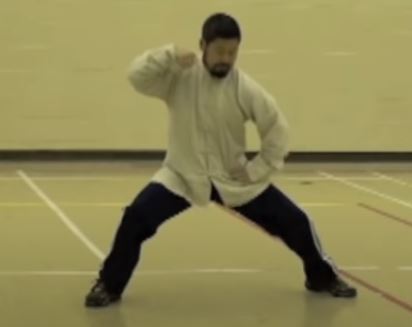
In today’s Practical Method practice in Toronto, we focused on Step Back to Double Shake Feet, and broke it down to 9 steps as seen in this video:
Here are some points to remember:
- Right hand does positive circle, while left hand does negative circle as one steps backwards.
- Don’t let the right elbow come out first, and the right hand leads the stretch.
- The left hand stretches to the back, and the left elbow pulls the hand over the left shoulder to bring it to the front.
- Just before the jump, convert the horizontal force to vertical force. Line up the left kua on top of the left heel, like you are sitting on it. The left kua, left knee, and left heel form a triangle. There is an invisible line between the left kua and left heel, and it is the rod/stick.
In today’s Practical Method practice in Toronto, we covered the triangle, double lock and single lock. Ketong Lin wrote an excellent article on this topic: http://dqstaiji.cn/archives/11907. Read more
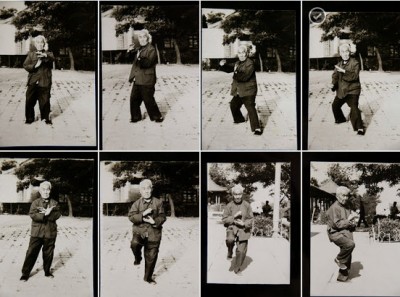 Master Chen has a google+ account with old photos Click thumbnail to go to album. Google+
Sean Lowry has been training in Practical Method since Dec. 2012.
Dominic Lo has been training in Practical Method since Feb. 2012.
The answer is NO!
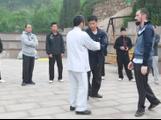 This is a short lesson Master Chen Zhonghua taught to Todd Elihu and Wu Shaozhi. Both students are advanced learners of the Chen Style Taijiquan Practical Method system.
Presenter: Chen Zhonghua, Todd Elihu and Wu Shaozhi Length: 5 min. In: English Year: 2014 Difficulty:4/5 At:Daqingshan International Taiji Training Center
 In Vancouver June 2014 workshop, Master Chen explained a common error when students doing circle. During elbow in the elbow, shoulder, front kua have to come close together. During hand out hand and rear kua have to move apart.
The torso/leg has to facilitate a lever during a circle, it doesn’t reverse in the middle of the move. Common error is for the kuas to reverse then this is doing a circle only on the same side of the body.
Photos by Jay Smith
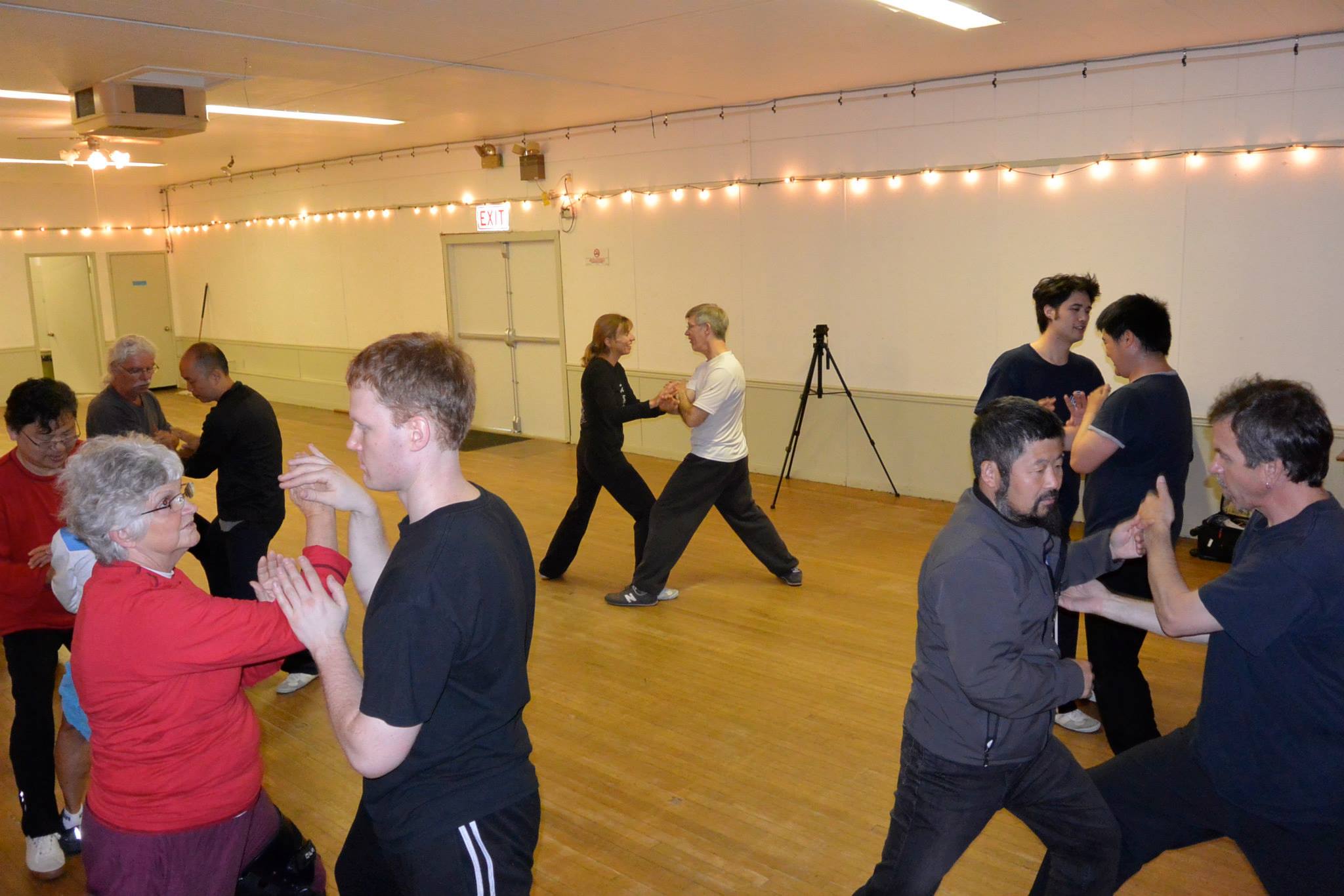
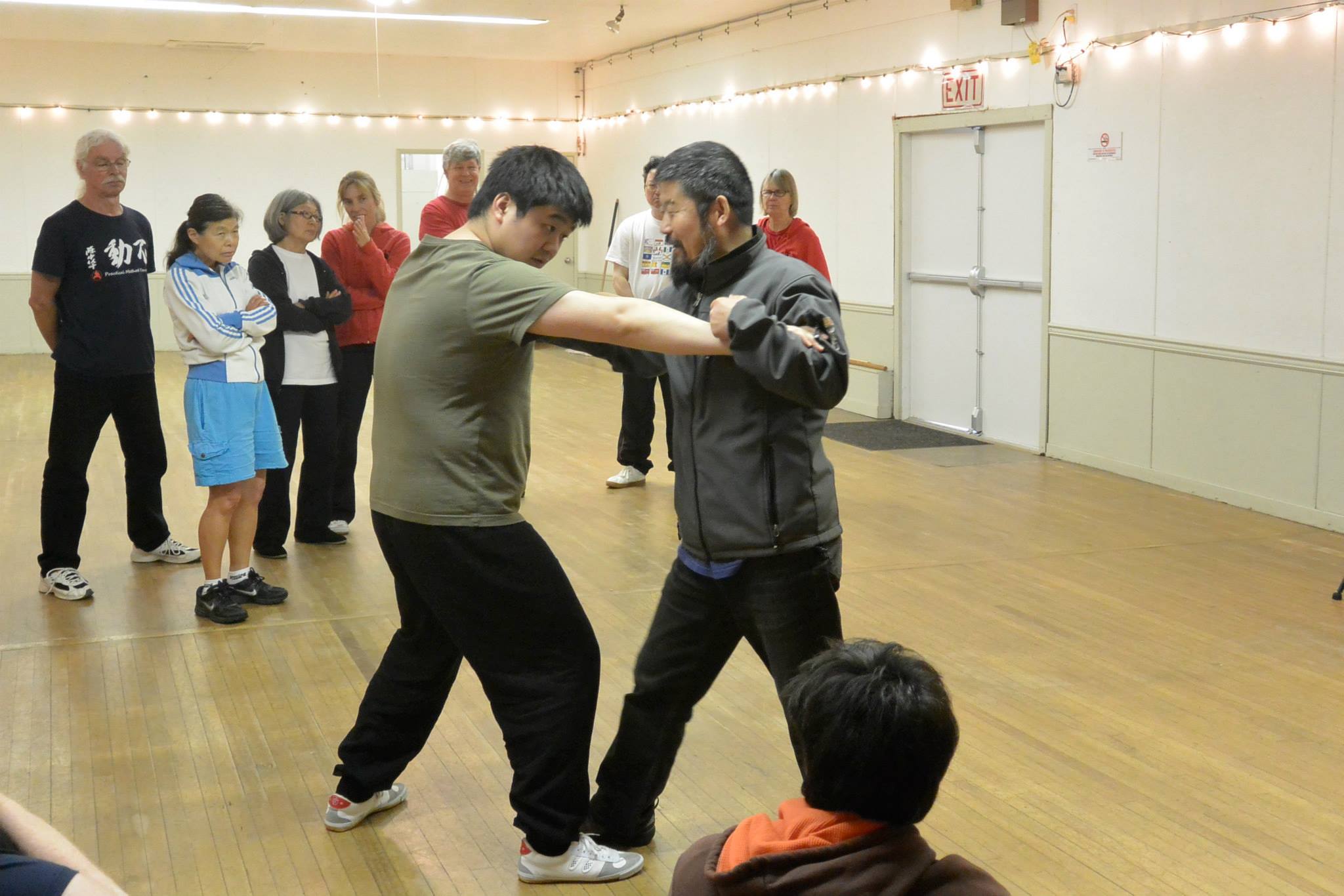
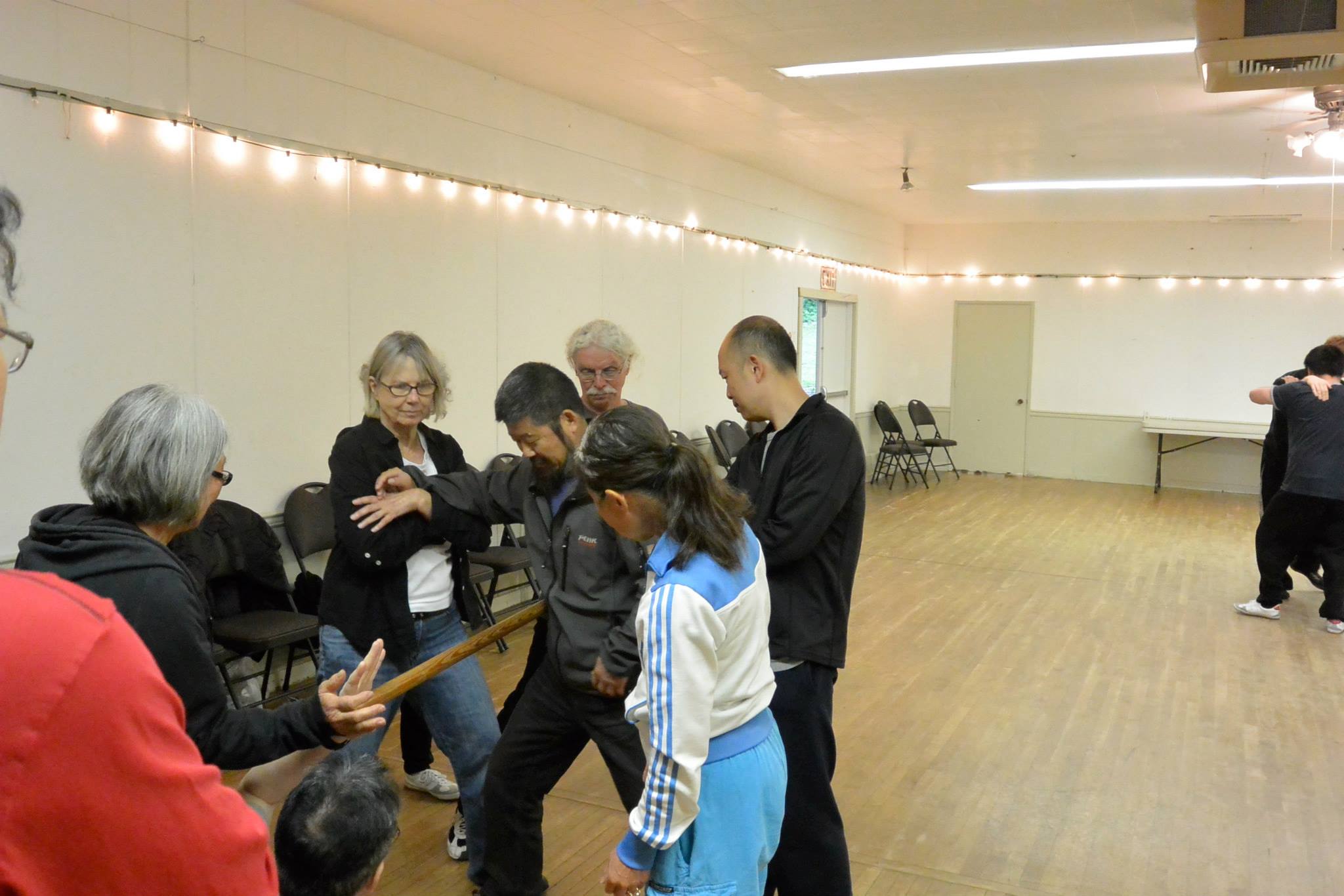
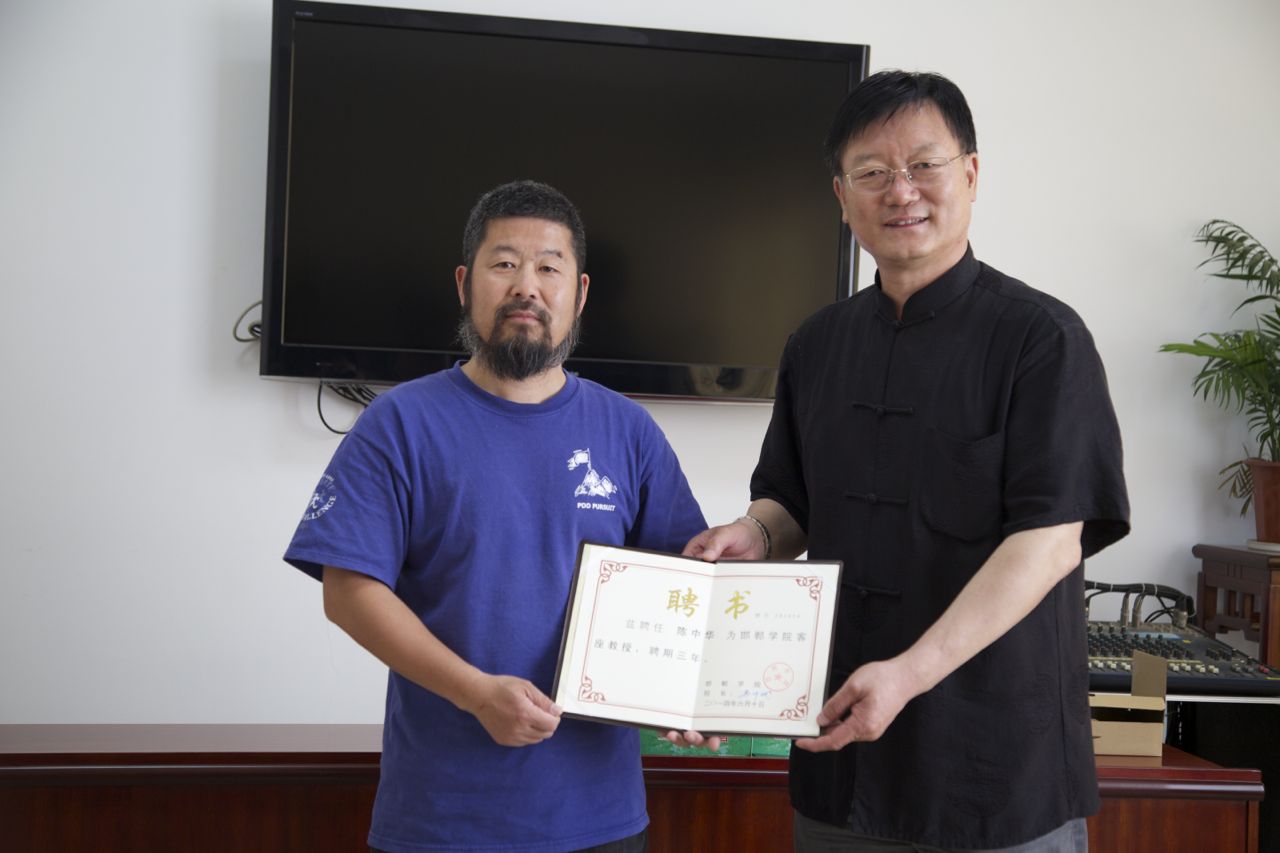 On the 10th of June, 2014, Master Chen Zhonghua became visiting professor of Taiji at the Handan Colledge in Handan, Hebei Province in China at a simple ceremony held by Prof. Ma Jibin, president of the College. He was also named the official representative of the college for Canada and the United State. Read more
In the first form, all moves is done by internal/tendon stretches
Full time twin boys who trained for a month in 2013
It was cold and raining on Tai Chi Day in New Hampshire, we celebrated inside a ice rink, and have a lot of fun……
 Attend Hunyuantaiji Academy’s International Tai Chi Qigong Day Showcase Saturday April 26, from 1 to 3 pm
and participate in our Demos of Chen Taiji, Hunyuan Taiji, Qigong, Weapons and Foundations for FREE.
Sunday April 27 will be a short Seminar Introduction to Silk Reeling and Detailed Qigong for only $50. Attend from 9 am to noon to become involved in this exciting exploration and introduction.
5222- 86 street NW, Edmonton AB. Phone 780-413-0454 (Leave message) or cell: 780-964-2434
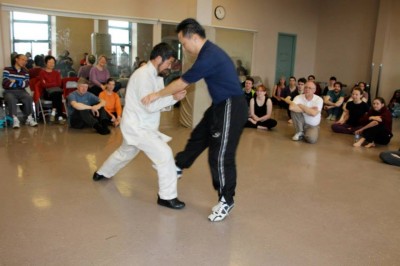 |
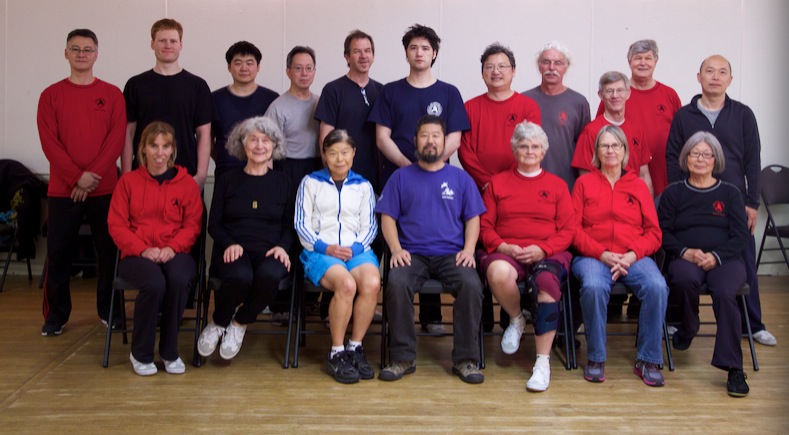
Rachel, Daniel, and James did an excellent job organizing an Open House and Workshop for the Weekend of April 05-06, 2014. On a beautiful spring morning, more than 50 people gathered to learn about the Chen Style Practical Method and to meet one of its distinguished proponents, Master Joseph Chen Zhonghua. |

Video by Michael Winkler. New stabilized re render from Youtube
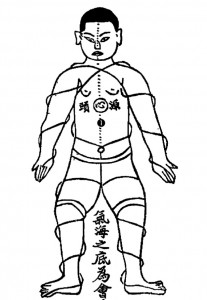
I came upon this picture from Chen Xin book 陈氏太极拳图说 Illustrated Canon of Chen Taijiquan. It strikes me that the spiral lines is drawn carefully to go through the major joints.
Spiral is the structure that allow to return incoming force outward, think of drill bits that extract material upward as it drill inward. Master Chen also explain the spiral mechanic in this video Read more
“Principles are the overall guidelines” “whenever I ran into difficulties I must rely on the principles” i
“Principles are the overall guidelines” “whenever I ran into difficulties I must rely on the principles” Read more

All taiji techniques must be from the 13 postures. All 13 postures must be from the separation of yin and yang. Read more
Presenter: Chen Zhonghua Length: 47 mins Difficulty: 1/5 Language: English
Year: 2013 Location: Australia
1. Beginning
2. Positive circle part one
3. Positive circle part two
4. Positive circle part three
5. Positive circle part four
6. Double positive circle
7. Double positive circle moving step (Big Red Fist)
8. Negative circle
9. Double negative circle
10. Positive-negative circle (Pole shaking)
11. Fetch water
12. Six sealing and four closing
13. Full Yilu demonstration in Perth.
Basic Foundation Video 2009 can be found here.
If you like this video, there is an even greater value in purchasing one of the packages below.
Purchase Chen Zhonghua Taiji Academy Trailers Video Package 2
NOTE:
- Video packages are designed for the convenience of students.
- Some packages are in fact classifications of videos.
- Some videos in packages might have been published and purchased by you individually.
- Average prices of videos in packages are considerably lower than individual videos. The number of videos in the package will increase until the sum of all individual video prices equal to two times or more of the package price.
- In view of this, if you have purchased a video that are also included in a package your have purchased, or vice versa, we will not give refunds or equivalents.
- All videos in packages are paid videos. They are restricted to your personal viewing and other usage. You do not have copyright of the videos and therefore you do not have permission to give/share with others.
- Please note that as a customer/user of the website and/or student of Chen Zhonghua, you have given him and the companies/organizations he represents permission to use videos or photos with you, both personally and commercially.
- Making a paid purchase constitutes agreement to the above terms.
Chen Style Taijiquan Practical Method system produces power through many ways such as structure, angles and adherence. The result is that this type of power is perceived as real in the eyes of the opponent but not such in the eyes of the practitioner himself/herself. This type of power is called perceived power. Read more