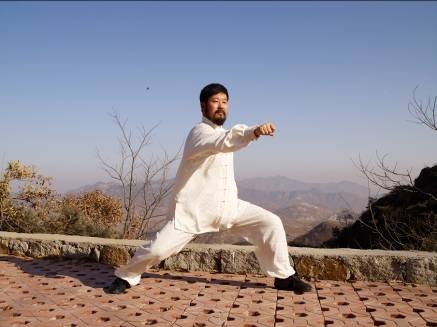
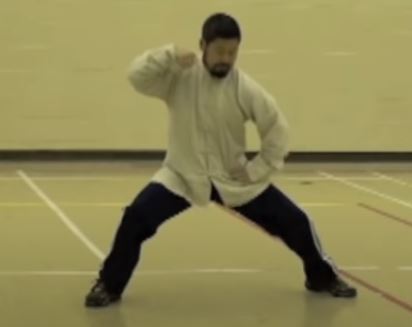
First step in the first move:
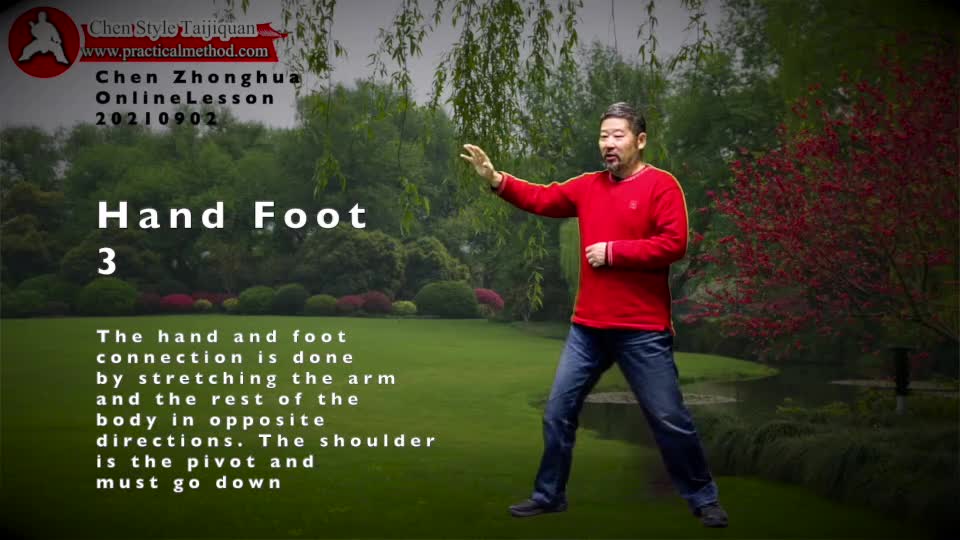
After the right turn, my left hand is on the opponent’s elbow not moving, while my right hand holds the opponent’s wrist. Lock my outside, shrink the distance between my right elbow and right kua. This is to fali 发力.
3-count positive circle:
Imagine a fixed point beyond the right hand on the straight line between the right hand and right elbow. Pull in the elbow along this line.
Imagine a fixed point behind the right kua on the straight line between the right kua and right elbow. Open the kua to stretch and extend the distance along this line.
Imagine a fixed point behind the right elbow on the straight line between the right elbow and the right hand. Stretch the right hand out along this line.
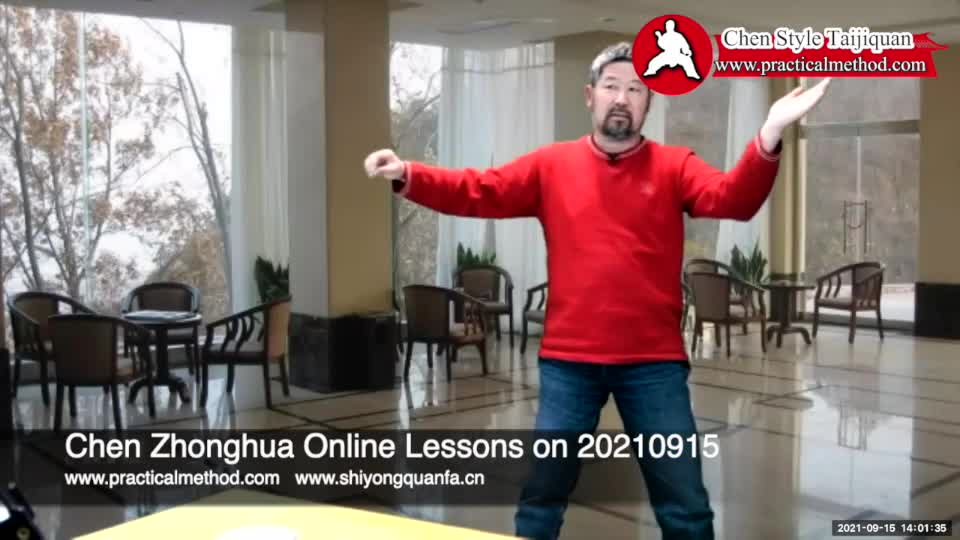
Presenter: Chen Zhonghua Length: 5 mins Difficulty: 3/5 Language: English Year: 2021 Location: Edmonton, Canada
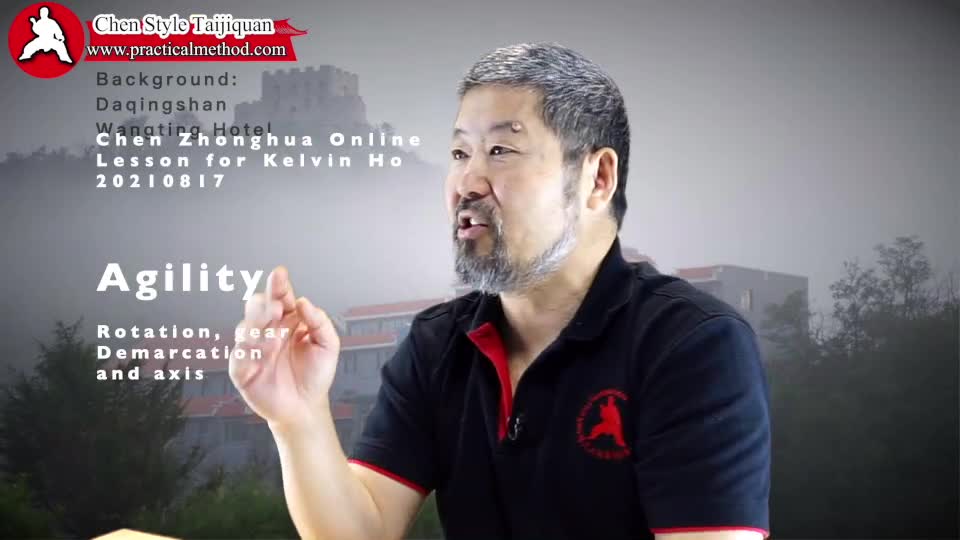
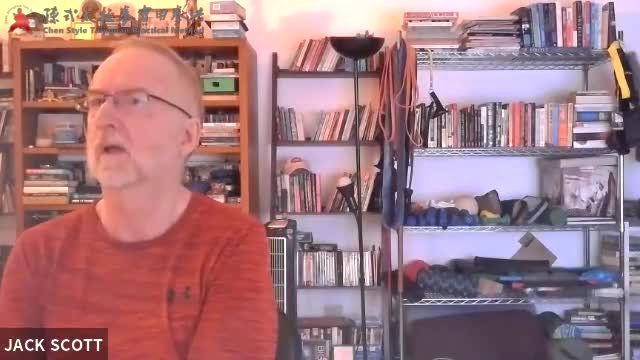
Agility is a special taiji quality that one must possess in order to make taiji push hands work. This quality involves ability to bear heavy weight while being totally mobile. An object that shows this quality is a ball-bearing. This is a clip of Master Chen Zhonghua's online class covering for Kelvin Ho.
One of the actions of taiji is to scoop/carve. It is like when you use a spoon to pick up soft/jello-like yogurt. You can put the spoon on the surface and rotate under it to pick up what the spoon can hold. By tossing it in the yogurt will on disturb and destroy the yogurt.
A static version of this is a half-pipe/concave circle. When an object hits it, the object will travel on it and return.
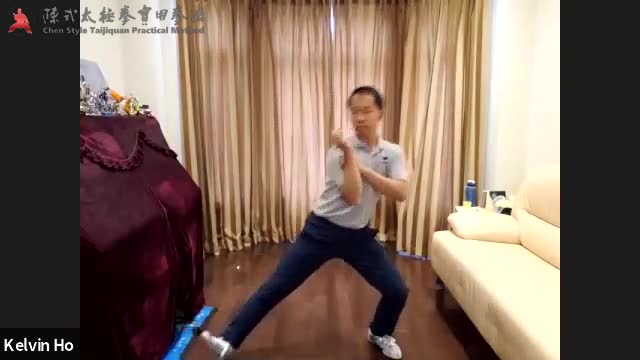
In this video clip, Master Chen Zhonghua shows how to lock the rear kua as the stable support while moving the front kua. This will create a trajectory that will return the opponent’s oncoming force.
Presenter: Chen Zhonghua Length: 1 mins Difficulty: 3/5 Language: English Year: 2021 Location: Edmonton, Canada
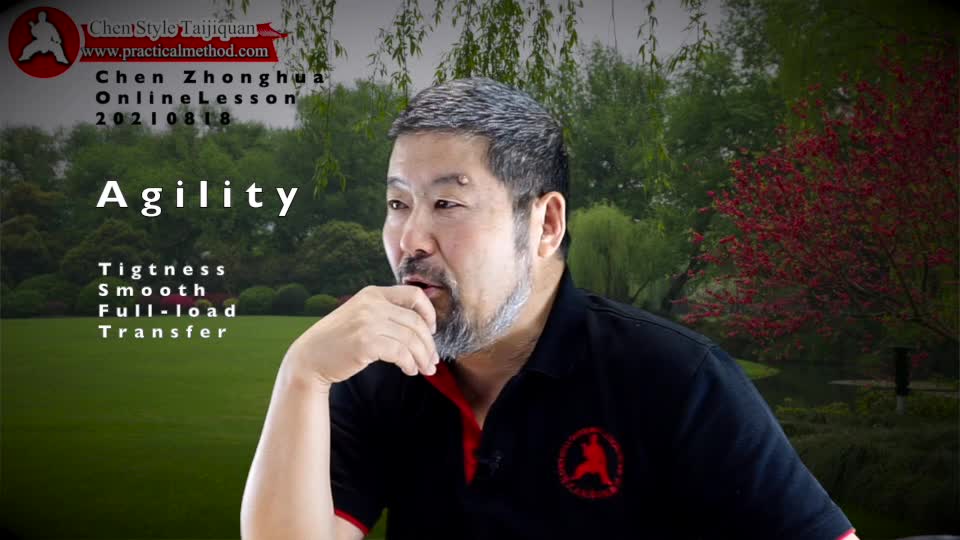
Agility is a special taiji quality that one must possess in order to make taiji push hands work. This quality involves ability to bear heavy weight while being totally mobile. An object that shows this quality is a ball-bearing.
Presenter: Chen Zhonghua Length: 3 mins Difficulty: 3/5 Language: English Year: 2021 Location: Edmonton, Canada
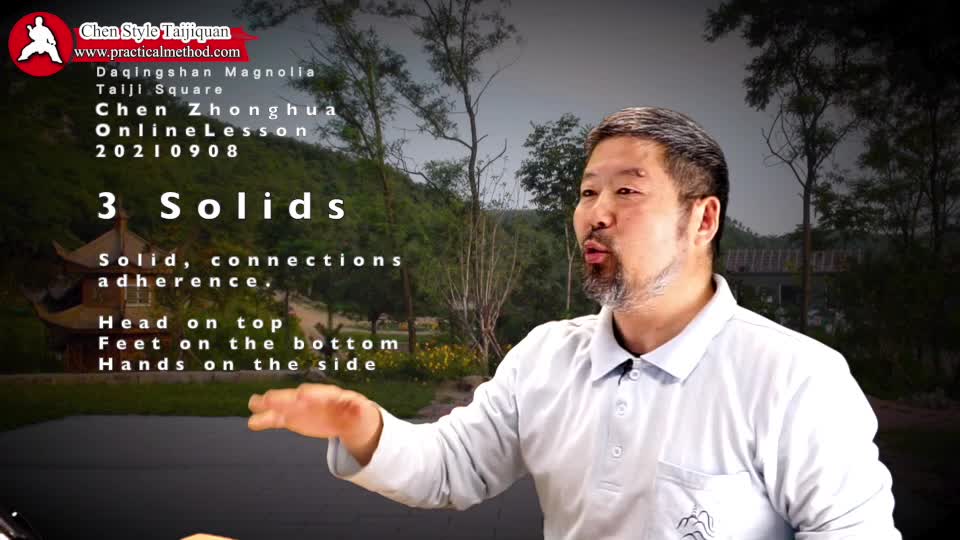
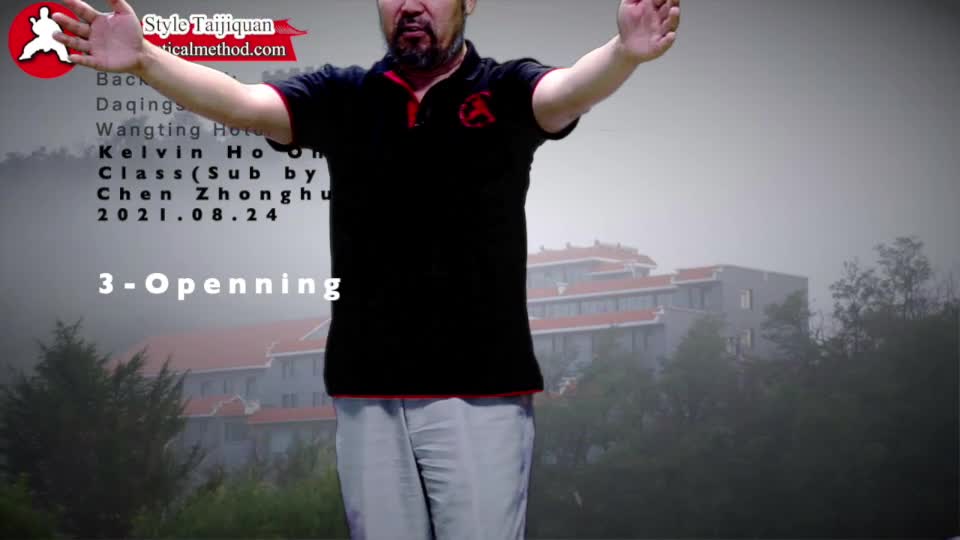
Master Chen Zhonghua shows 3 Solids contacts: feet must be solid on the ground; head must be solid in the air (as if pushed solid against the ceiling); and the hand (or any other part that catches the opponent) must be solid against the opponent. When this is done, make sure all three remain solid while make a move of pull or push with joints against the opponent.
GM Hong Junsheng clearly stated that the body height is adjusted by the knee moving up and down. However, this has been very difficult to understand, to do and to use in applications.
In this short video clip, Master Chen Zhonghua shows how it is achieved.
Presenter: Chen Zhonghua Length: 62 mins Difficulty: 3/5 Language: English Year: 2021 Location: Edmonton, Canada
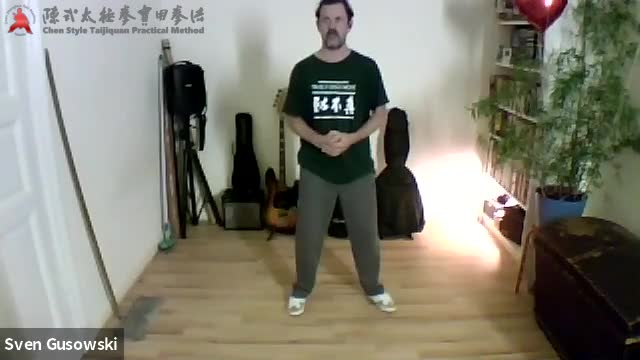
In and out movements come from the elbow; left/right rotations come from the waist/kua; and up and down movements come from the knees. These are the three types of moves and body part locations in Chen Style Taijiquan Practical Method.
Also in this video, Master Chen Zhonghua give details on the Magic of 3 of this special system. Everything requires 3 to function but we only have two, such as two hands.
9th
Exercise: open triangle model with head, buttock and knee. Head and knees have to be in the same vertical line, can place on the wall as reference, and only pull the buttock back. The whole back has to be straight like one line of the triangle, mingmen is pulled out. Chest, torso and thigh have to stretch to go over a threshold. Common mistake, sway back, head leaves the line. Read more
Master Chen Zhonghua demonstrates Punch Covering Hand in front of Yulan Pavilion. Observe again and again the relationship between the fist, kua, knees, head, shoulders etc. and dantian shown in the picture. Read more
Fixed two dots are static power. Add one more dot between the two is dynamic power. As long as you can stretch this third dot against the fixed two dots, you have power, e.g.
Lock the back of the head and the front shoulder, push the bottom of the neck close to the front shoulder out.
The wrist should be stretch on the same line. The ankle should be stretched at the right angle.
Master Chen explained the difference in the following: 开步、合步、跟步、开脚。
Size of the two gears determines the direction of the resulting power.
Dao – Everything exists as it is. There is no right or wrong. The sequence matters. An individual piece is fine as it is. If you disrupt the flow (the sequence), it becomes problematic.
Elbow (in), Kua (rotate), Hand,(out). It is wrong when the sequence is messed up.
Presenter: Chen Zhonghua Length: 3 mins Difficulty: 3/5 Language: English Year: 2021 Location: Edmonton, Canada
By this time, we assume that stretching is achieved by the student. Now what is needed is while stretching, the two ends of the line must have a flat surface and they must parallel each other.
Presenter: Chen Zhonghua Length: 3 mins Difficulty: 3/5 Language: English Year: 2021 Location: Edmonton, Canada
The hand/foot stretch creates the longest line that is useful as taiji power. When doing so, we must lock the middle and create a two-way split from there.

_2021-09-19.jpg)
_2021-09-18.jpg)
_2021-09-17.jpg)
_2021-09-16.jpg)
_2021-09-14.jpg)
_2021-09-13.jpg)
_2021-09-12.jpg)
_2021-09-11.jpg)
_2021-09-10.jpg)
_2021-09-09.jpg)
_2021-09-08.jpg)
_2021-09-07.jpg)