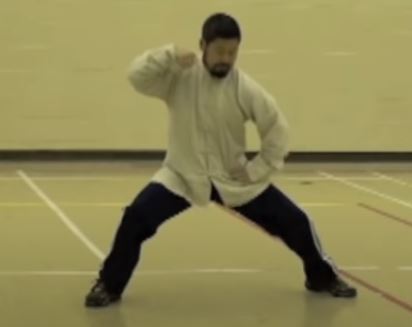
-two things I have been thinking about my practice in the past couple of days: 1. the new task of ‘resetting’ my body, given me by GM, is more profound than it seems, 2. the process of how you learn is as at least as important as what you learn
1.
-the task GM has given me may be the most difficult one I’ve ever been given
-not only does it encompass a complete re-working, re-tooling, re-creation of my entire physical self it implicitly tasks me to begin to practice PM all-day long, not jibengong all day long, but finding ways to subtly inject elements of training into every action
-my body awareness and sensitivity will have to go up more than a notch, a quantum leap would be more descriptive, and my ability to accept and work with my cognitive-emotional states will have to ratchet up a notch also
-the task is to ‘re-set’ my body so that it produces expanding Peng (redundant?) energy without any observable or perhaps measurable tension in any body tissues, esp. the contractile muscles, ligaments and tendons
-this is proving to be extremely challenging and is of course affected by my psycho-emotional states, try relaxing contractile tissues while in pain (emotional or physical)
2.
-in keeping with working on my assigned task I noticed that the class last night at the Edmonton studio was remarkable in a couple of ways
-firstly, we had a visitor, GM’s newest disciple Sooyeon Zachrias, who was a most delightful addition to our practice group
-secondly, I found myself fondly remembering my experiences at TigerClaw Gung Fu School in the ’70’s when I trained & and competed in kickboxing, we had a pretty informal competition class atmosphere and we regularly teased and joked with each other and the teachers/coaches
-our group last night was ‘playing’ with each other, there was joking, and teasing and relaxed informality
– we were all laughing out loud, but respectful, nothing out of line or intended to be anything but supportive
– Sooyeon Zachrias mentioned how she was enjoying the training experience with others as mostly she only attends workshops in MapleRidge, thank you Sooyeon for reminding me that the time I share with my brothers and sisters in this art gives me something different from the hrs and hrs I spend working on PM alone
-not saying every class has to be a stand up session or that no laughter means its not a good class, I am trying to say that the moments we share in class are precious
– we all have the physical pains of trying to grind away the rough parts of our joints and the psychological pain of removing from our souls anything that fails to make room for Peng
-hope this is an okay subject to post on PM website
-learning to live a breath at a time
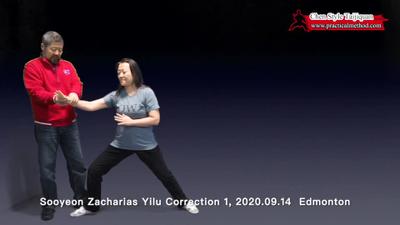
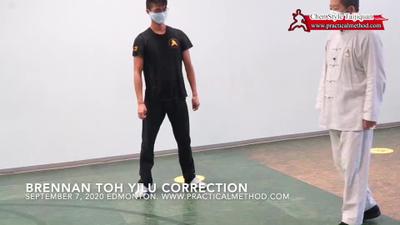
Sooyeon Zacharias Yilu corrections part 1.
Presenter: Chen Zhonghua Length: 16 min. In: English Year: 2020 Difficulty:3/5 At:Edmonton Chen Zhonghua Taiji Academy
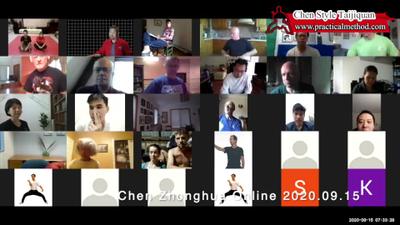
Chen Zhonghua’s Sept. 15, 2020. Presenter: Chen Zhonghua Length: 63 min. In: English Year: 2020 Difficulty:2/5 At:Edmonton Chen Zhonghua Taiji Academy

Today, Master Chen covered Foundations and provided corrections on Twisting the Towel.
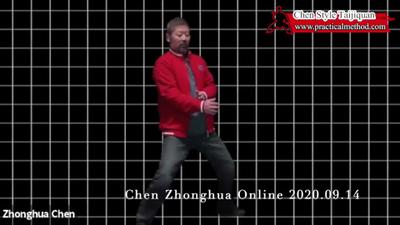
This the video for Master Chen Zhonghua’s Sept. 14, 2020 Online Lesson in English.
Presenter: Chen Zhonghua Length: 66 min. In: English Year: 2020 Difficulty:2/5 At:Edmonton Chen Zhonghua Taiji Academy
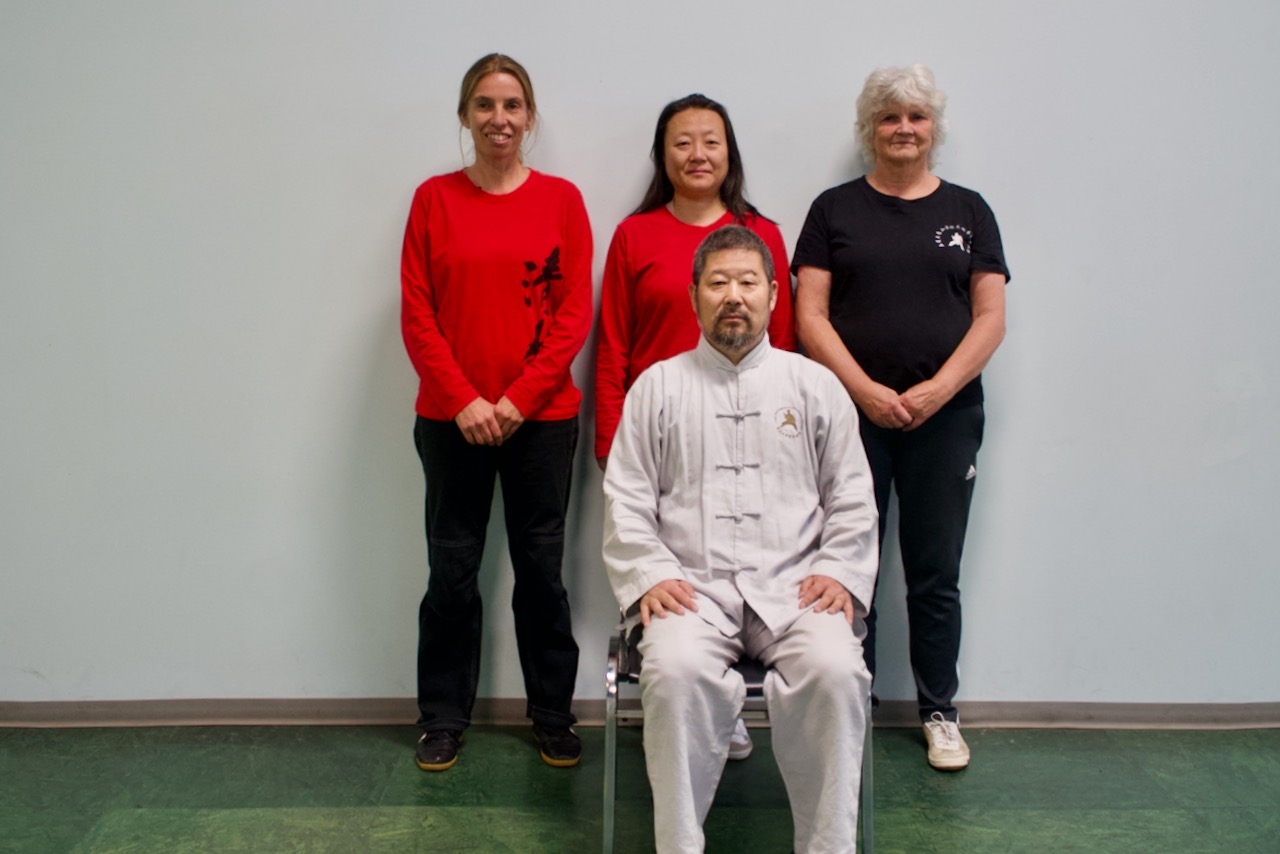
Sooyeon Zachrias discipleship Group 2020.09.13
On Sept. 13, 2020, Sooyeon Zacharias became Master Chen Zhonghua’s 372nd disciple in the Chen Style Taijiquan Practical Method lineage..
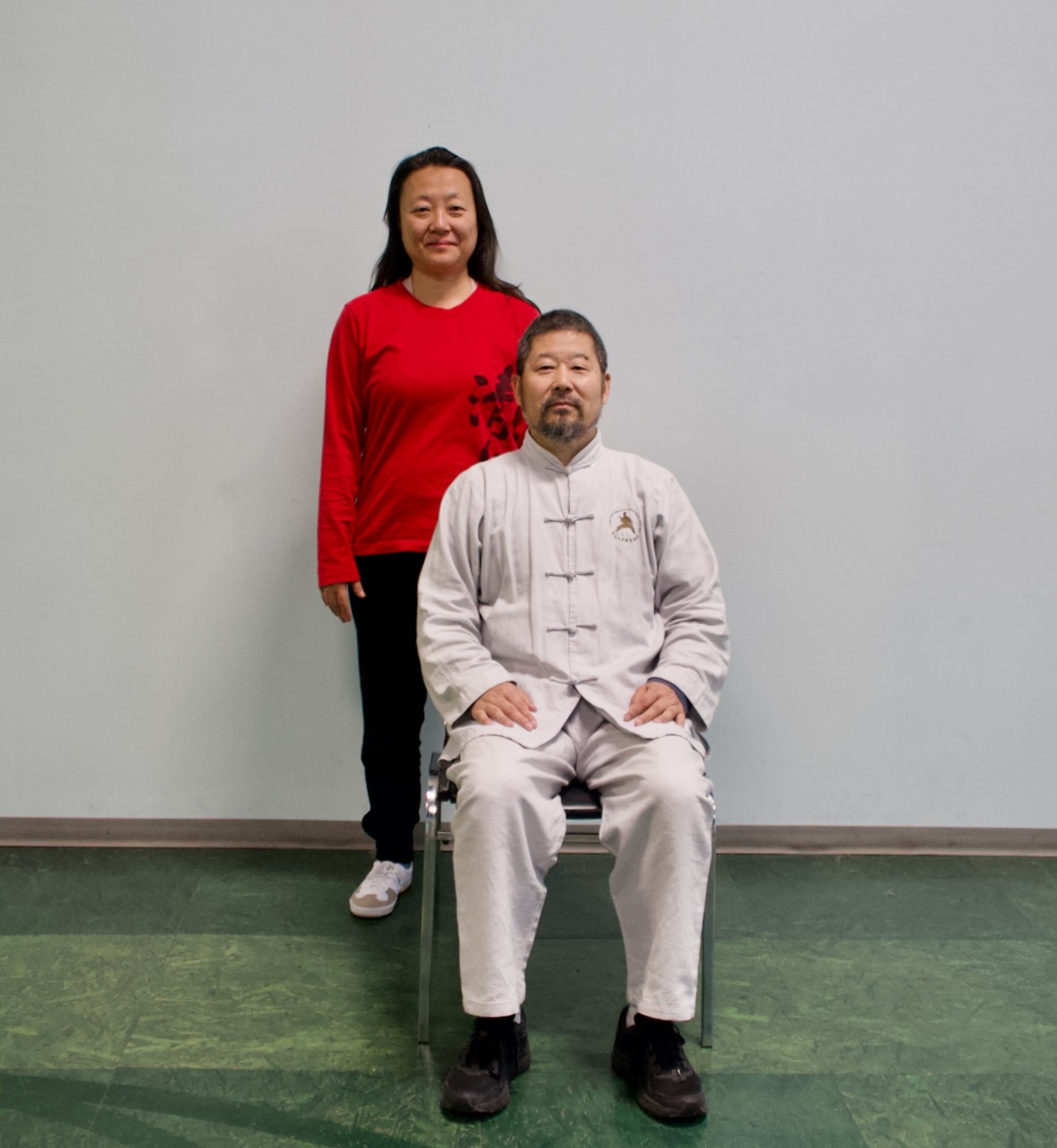
Sooyeon Zachrias discipleship Sitting 2020.09.13
Because of various reason including Covid-19, her discipleship ceremony was postponed several times. Finally on Sept. 12, she drove 14 hours from Litton, BC. to Edmonton, Alberta. The next day, she was inducted as Master Chen Zhonghua’s 372nd disciple in a simple ceremony in Master Chen Zhonghua’s Headquater in Edmonton.
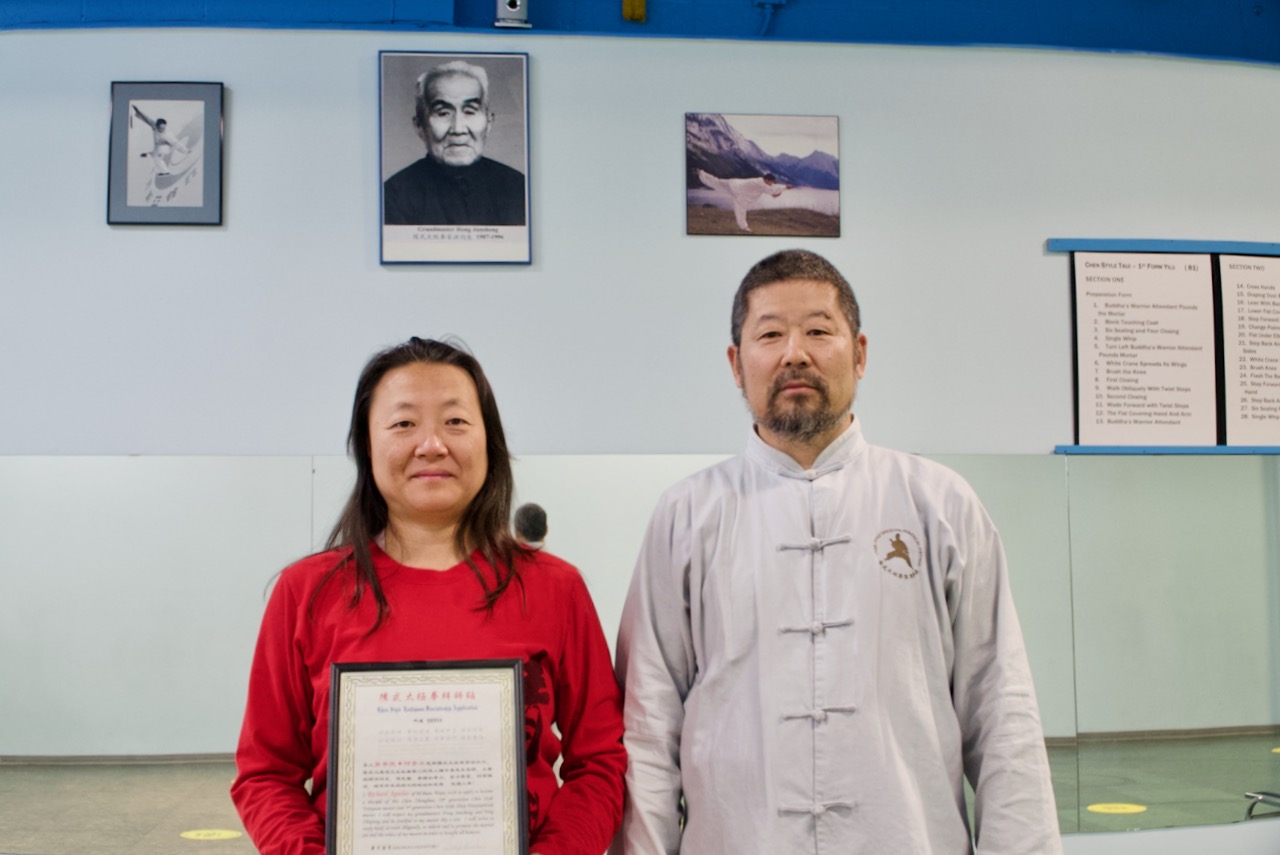
Sooyeon Zachrias discipleship Certificate 2020.09.13
Sooyeon started learning the Chen Style Taijiquan Practical Method system in 2018, joining the Maple Ridge practice group. She has not missed one single workshop since then. In 2019, she participated at the 7th Annual Daqingshan International Taiji Competition.
This is the most basic three count of the Practical Method positive circle.
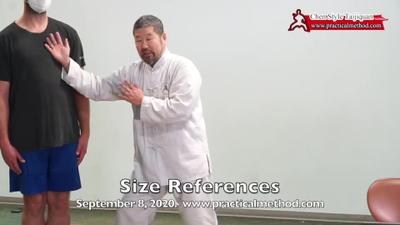
In this mini video, Master Chen Zhonghua explains how to judge the size of movements by using a point of reference.
This is part of the Sept. 8, 2020 online video of Master Chen Zhonghua
Presenter: Chen Zhonghua Length: 1 min. In: English Year: 2020 Difficulty:1/5 At:Edmonton Chen Zhonghua Taiji Academy

Presenter: Chen Zhonghua Length: 4 min. In: English Year: 2020 Difficulty:1/5 At:Edmonton Chen Zhonghua Taiji Academy
– just before class began on Friday evening GM held another instructional session at the Edmonton studio
– he instructed on several topics, I am mindful of trying not to add or delete any of his words intentionally
– he observed part of my first section Yilu and commented that I was still tensing, flexing, using my deltoid muscles when I was doing the form
– he then demonstrated how he could open his hand, create Peng energy in his hand, forearm and upper arm, entire body, while not creating any tension or flexion in the internal contractile tissues; he was totally in control of what was locked and what was moving, down to the tendon & ligament level of his body
– he further demonstrated as he asked me to grasp his forearm firmly, he moved his Kua and his arm, still with no observable tension pulled me off balance, I scrambled to my notebook to begin writing
– the main message was that I need to work towards ‘re-setting’ my entire body so that I only create expansion or Peng energy in it
– he spoke about how Taoist theory holds that for Taiji to work, for our bodies to be ready to create the conditions necessary for Peng, we need to create a centre point, a still point inside our bodies like a black hole, a kind of gyro-scope that creates a centre point around which rotations, stretches, elongations, etc. can happen properly
– I think he said that each body part, joint, fascial connection, all have to have a centre point around which I can learn to open and rotate
– he said that the act of creating Peng energy in the body must become continuous while practising, eventually
– am still not sure of the exact mechanics of how to begin to try to manifest this expanding energy within my body without engaging any of the surrounding musculatures, or even ligs/tendons that are superfluous, it seems I must take what I experienced when GM demo’d on me and try to replicate this within my body as best I can at my skill & understanding level
– a big part of this, it seems, has to do with releasing my anxiety & mental tension during practice to facilitate my ‘listening’ skill, to be able to feel the body dynamics of push hands partners I need to develop sensitivity within my own body, realizing that it is not a direct correlation, my body creating tensionless Peng expansion energy will sometimes likely outstrip my ability to feel/detect movement cues from my push hands partners
– he also demonstrated the footwork skill of using the leading leg to pull your body in the desired direction, rather than pushing off the trailing leg, using the ligaments on the inside of the legs, finishing the movement by using the trailing legs recontacting the floor to create a brake for the momentum, movement
– any errors, omissions, or plain mistakes are due to me, my old man memory, and my beginners understanding of what GM was trying to teach
Part one of yilu correction.
Presenter: Chen Zhonghua Length: 17 min. In: English Year: 2020 Difficulty:3/5 At:Edmonton Chen Zhonghua Taiji Academy
Part one of the Yilu correction.
Presenter: Chen Zhonghua Length: 44 min. In: English Year: 2020 Difficulty:3/5 At:Edmonton Chen Zhonghua Taiji Academy
Chen Zhonghua’s single person push hand drills series.
Presenter: Chen Zhonghua Length: 2 min. In: English Year: 2020 Difficulty:4/5 At:Edmonton Chen Zhonghua Taiji Academy

Due to Covid-19, cities are locked down and travel is restricted. Practical Method workshops by Master Chen Zhonghua have been cancelled sihce Mar 2020. When there are new problems, there are new solutions. Master Chen Zhonghua is now offering Zoom online classes, which fill a large part of the gap when workshops are not possible. In fact, I would say that we get to interact with and learn from him more often than ever. Read more
Today, Master Chen corrected the following students’ partial yilu:
- Karen Mattox
- Gerry Gebhart
- Albert Chung
Single Whip
Master Chen used the foot shovelling out in single whip as an example to talk about the concept of using a stick to pry open something. We shove the stick into a crack, then the front end of the stick cannot move anymore and stays in the same place. We can then make the crack bigger by prying with the stick. The key is that the one of the stick is not moving. As we pry, we may meet resistence, we can add a longitudinal rotation as we pry, it will allow the stick to go over the resistence. Regarding the single whip, we want to make sure that the toes do not point up as we shovel so that we can apply the longitudinal rotation on the entire left leg. As we shovel the left foot, the weight must stay on the right foot. As we shift over to half horse stance, the longitudinal rotation on the left leg occurs at the same time. Read more
Chen Zhonghua’s Sept. 10, 2020 Online Lesson on Yilu Corrections.
Presenter: Chen Zhonghua Length: 65 min. In: English Year: 2020 Difficulty:2/5 At:Edmonton Chen Zhonghua Taiji Academy
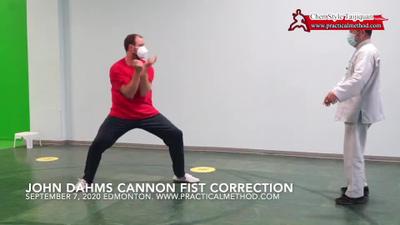
In this video, Chen Zhonghua corrected John Dahms Cannon Fist form. John Dahms is a disciple of Chen Zhonghua. He started Chen Style Taijiquan Practical Method with Chen Zhonghua in 2002 when he was 18 year old.
Presenter: Chen Zhonghua Length: 17 min. In: English Year: 2020 Difficulty:3/5 At:Edmonton Chen Zhonghua Taiji Academy
Wed Sept 9, Edmonton, Alberta; approx 8 PM local time
Impromptu training with GM…how to move…
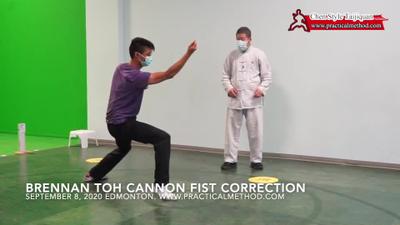
Chen Zhonghua corrected Brennan Toh’s Cannon Fist form in this video.
Presenter: Chen Zhonghua Length: 24 min. In: English Year: 2020 Difficulty:3/5 At:Edmonton Chen Zhonghua Taiji Academy
Six Sealing Four Closing 六封四闭
Grandmaster Hong Junsheng studied the names of each move. He looked into the origin of these names, and how the pronounciation might have changed when the information was passed down based on the dialect of the region. The dialects in China can be so different that people from one region might not understand people from another region at all.
Read more
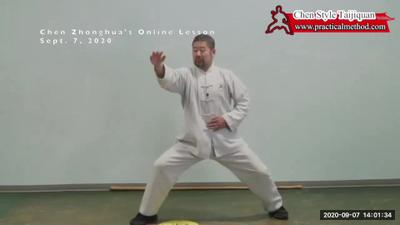
Master Chen Zhonghua’s Sept. 7th, 2020 Online Lesson on Foundations.
Presenter: Chen Zhonghua Length: 73 min. In: English Year: 2020 Difficulty:1/5 At:Edmonton Chen Zhonghua Taiji Academy
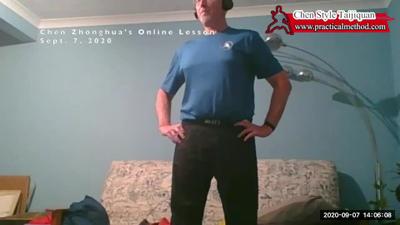
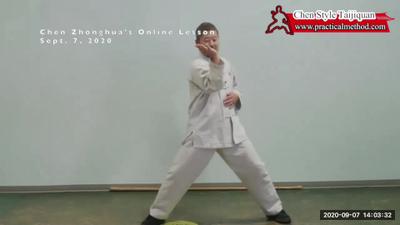
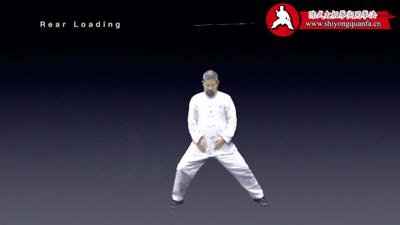
Chen Zhonghua talks and demonstrates the weight distribution of Chen Style Taijiquan Practical Method.
Presenter: Chen Zhonghua Length: 2 min. In: English Year: 2020 Difficulty:1/5 At:Edmonton Chen Zhonghua Taiji Academy
Master Chen demonstrated the Positive Circle today.

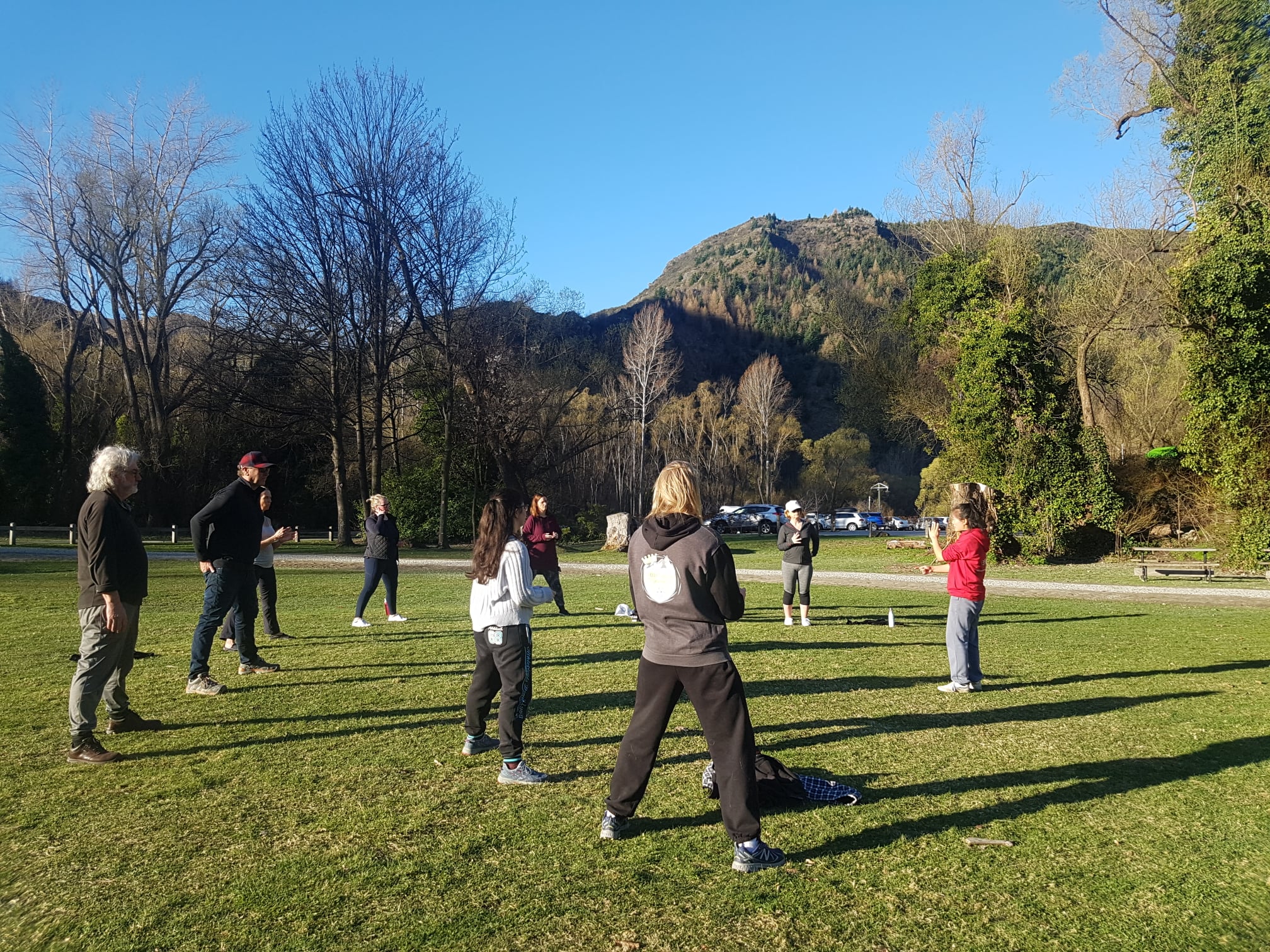
Monday Tai Chi at Roadrunner Park. Cannon Fist. Yilu warmup, then drills with jumps and first section. It’s quite a cardio workout. Read more
Chen Zhonghua’s basic single person push hand drill series.
Presenter: Chen Zhonghua Length: 2 min. In: English Year: 2020 Difficulty:4/5 At:Edmonton Chen Zhonghua Taiji Academy
Presenter: Chen Zhonghua Length: 27 min. In: English Year: 2020 Difficulty:2/5 At:Edmonton Chen Zhonghua Taiji Academy. This is the last part of Anton’s Yilu correction.
Master Chen demonstrated the foundation exercise Moving-Step Shake the pole, which is the positive and negative circle. He held a real pole to begin with to show the idea behind the foundation exercise. He locked his fron hand, which was holding the pole as a pivot. The rear hand moved the pole. Read more
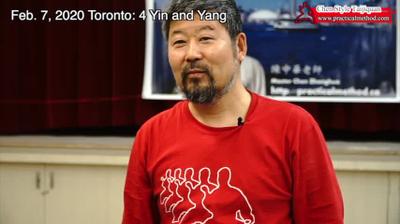
Master Chen Zhonghua’s Toronto Workshop March 2020-4
Presenter: Chen Zhonghua Length: 9 min. In: English Year: 2020 Difficulty:2/5 At: Toronto, Canada
Master Chen performed a magic trick. No one saw what he did. Once he told us, we could then see it. Would you like to see it too?
Chen Zhonghua’s online lesson on Foundations. This episode is on the Pole-shaking exercise, which is a left-hand negative circle, right hand positive circle moving step combination. The exercise is designed for training without the pole.
Presenter: Chen Zhonghua Length: 73 min. In: English Year: 2020 Difficulty:2/5 At:Edmonton Chen Zhonghua Taiji Academy