Presenter: Kelvin Ho Length: 61 mins Difficulty: 3/5 Language: English
Year: 2021 Location: Toronto, Canada
Chen Style Taijiquan and Hunyuan Taiji email: practicalmethod@qq.com
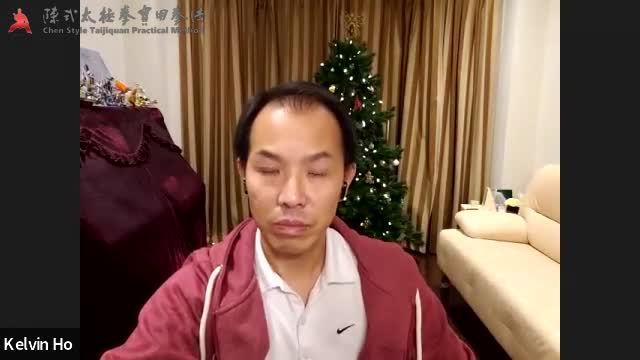
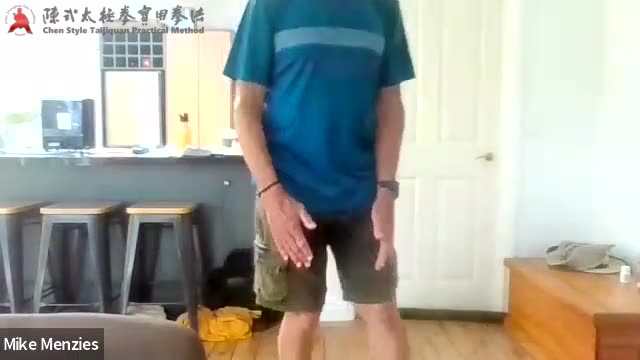
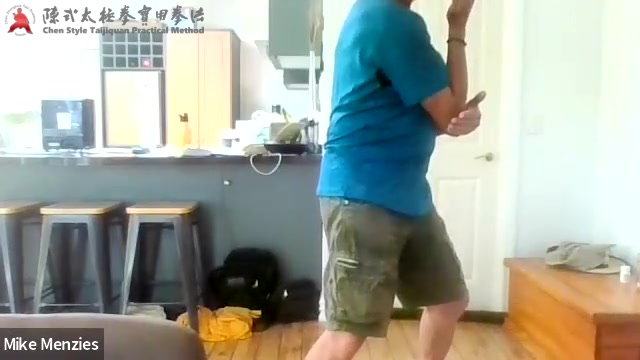
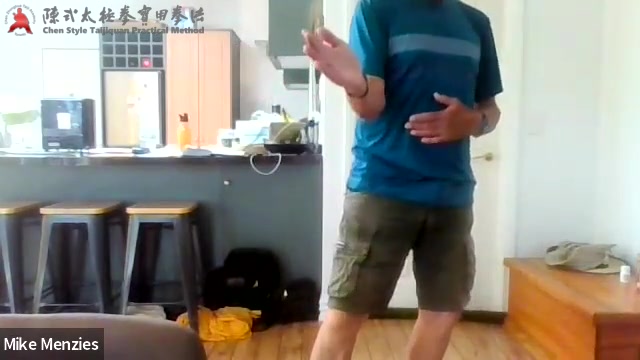

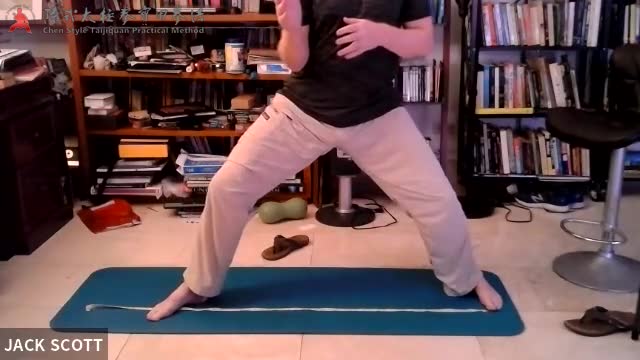
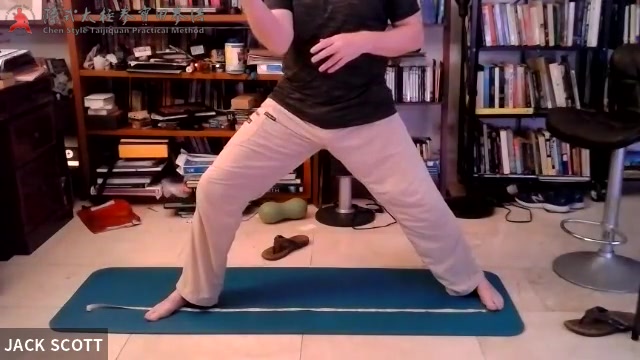
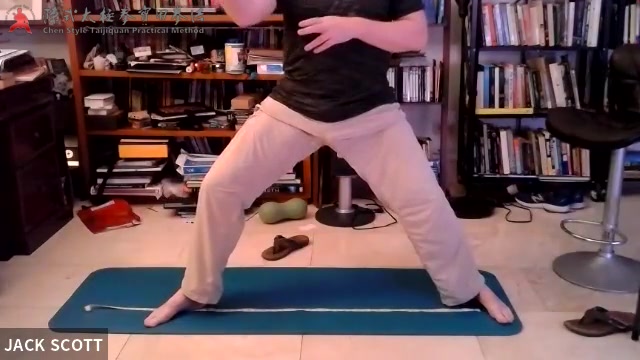
In this ATNI (Aliansi Taijiquan Nasional Indonesia) episode series #27, the Chairman (Mr Suharjono Tan 陈存统) himself did a thorough recap of the main points that Master Chen covered during the Exclusive interview (21 Nov 2021).
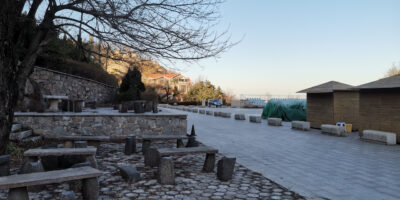
Daqingshan Photos 20211125
Breathing in Practical Method is actually no active breathing.
Read more
水功 (慢) vs 火功 (快)
20 趟拳是水功 。慢慢改变身体,不用用力太猛。
用力练一路是火功。
动肘到拳肩线,但拳肩线不能改变方向和位置,只能变长。
Water vs Fire
Read more
|
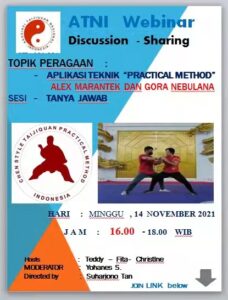
Speakers: Alex Marantek and Gora Nubulana Date: Nov 14, 2021 Time: 4 pm Indonesian Time (4 am Eastern Time) Language: Bahasa Indonesia Location: Zoom Session 1 – Technical Applications of Practical Method |
I accepted the challenge to complete 20 Yilu a day from November 1, 2021 through the end of the year. This is number 11 today.
https://www.facebook.com/100045708723702/videos/620073352470492/
Name: Jojo Juarsa 蔡学超
Location: Tangerang Warehouse, Indonesia
Date: 27 Oct 2021
Mission: Preparing for Yilu Challenge (Nov-Dec 2021)
The last move we worked on in today’s lesson was the second move in Jin Gang Dao Zhui (Buddha’s Warrior Attendant Pounds Mortar), when the dantien turns right, left elbow comes in on a positive circle and the right hand goes out in a negative circle. The arm (hand) is out of control and the dantien is in control. This means the hand is expressed yet is passively powered by the dantien.
Fajin with Six Sealing Four Closing
Exercise 1:
Rubber between the hand and the foot. Bend down first. Lock the upper body. Push the kua forward towards the rubber. The focus of this exercise is to train the kua, the use of power in the kua to extend the rubber. This is converting a horizontal movement to a vertical one. We want to train a great range of kua movement. Gradually, increase the tension of the rubber.
The above exercise trains a vertical movement. This is a precursor to the movement needed to do Six Sealing Four Closing. Read more
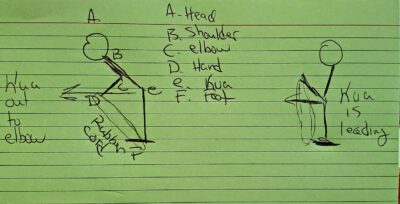
Rubber Cord Training for Kua
Lock head, shoulder and elbow into one piece. Make sure the elbow is being pushed into the palm.
Have rubber cord under lead foot and in lead hand.
Get into position (see picture). The upper body (waist up) and lower body (below waist) are solid like 2 separate pieces of wood.
Shove front kua forward into the elbow that goes into the hand holding the rubber cord. This action from the kua makes the back straighten.
The strength of the rubber cord has to be more than you can handle. Make the tension “real” and size of cord needs to be just right that the power is coming from the kua and not other body parts.
Today’s exercise is to practice 别开. Get stuck with the opponent at the top, use the kua to rotate the waist. The energy through the middle of the chest must get to the hand.
Set up my hands on something that is totally locked.
标准 is 认可。
Yilu is the first standard when we first learn taiji.
He talked about the story of the storyteller from the native people.
The story words went with the rhythm of music. If they are wrong, they can’t continue.
Form and Applications were separate before.
2nd Cloud Hand – 衬 – To bring out/support the main thing
3rd Cloud Hand – 盖 – To cover
Bie 别
Lock one side and move the other
Exercise: Put my forearm on the opponent’s chest. Lock the hand, move the elbow. The elbow needs to move along the line of the upper arm. This is the tangent to the circle. The forearm has a stretch.
Trained power moves using Yilu from first move.
Block Touch Coat: Right hand block
When the person appears to be big and strong, do a bigger circle.
When the person appears to be small and weak, do a smaller circle, more like a direct hit.
We have to train enough to put ourselves in the position of power.
肩和膝管上下。
肘管上身。
胸中间管中线。
胯管左右。
功夫 – 指哪打哪。要一个部位动,就只有这一个部位动。
功夫 – 对方预测不到的。超出了自然。
两种难:
要进步:强逼(不做就罚你)、自愿(给引诱的)、被欺骗的(自己不知道)
We need to pass it on. We can’t worry about who can really do it or not.
Passing it on means the receiver remembers what you said, and can repeat the saying.
Story Telling
We use stories to pass on information.
Plains of Abraham: This battle was won by British army. From here, Britian eventually gain control of North America when French Revolution took place, and France gave up North America.
Wuji is there is nothing within an area. You draw a circle to mark an area. Wuji is having a restriction.
1+4 = 2+3 = 5 + 0 = 1.1 + 3.9 Wuji is saything that the sum needs to be 5.
Taiji is to say from 0 to 5.
To say 10, it’s because there are 5 on each side.
Yi (intent) is based on a real experience. Yi is not plain imagination without real experience.
We want the core to control the movements, so we can see the limbs but not the dantian itself. Training: Kick with heel as an exercise.
FungChernHwei
Some facebook comments: Read more
Lever: one side goes down, but it actually needs to move, so the pivot keeps moving backward within the rod.
Book exercise: Not allowing the book to fall down with your hand and opponent’s hand on it. One person pushs and pulls, the opponent matches the action with the elbow, shoulder, kua, feet.
Leader in 3-count circle
Six Sealing Four Closing: While the two knees are going up and down, they are restricted within a cylinder.
First step in the first move:
After the right turn, my left hand is on the opponent’s elbow not moving, while my right hand holds the opponent’s wrist. Lock my outside, shrink the distance between my right elbow and right kua. This is to fali 发力.
3-count positive circle:
OneKua-CZHOnline20210915
One of the actions of taiji is to scoop/carve. It is like when you use a spoon to pick up soft/jello-like yogurt. You can put the spoon on the surface and rotate under it to pick up what the spoon can hold. By tossing it in the yogurt will on disturb and destroy the yogurt.
A static version of this is a half-pipe/concave circle. When an object hits it, the object will travel on it and return.
In this video clip, Master Chen Zhonghua shows how to lock the rear kua as the stable support while moving the front kua. This will create a trajectory that will return the opponent’s oncoming force.
Chinese version/中文版:https://www.zhenbudong.cn/archives/144877
Elbow In-Chen Zhonghua Online 20210915. This is a clip from Chen Zhonghua’s Sept. 15, 2021 online lesson. Read more
KneeUpDown-CZHOnline20210915
GM Hong Junsheng clearly stated that the body height is adjusted by the knee moving up and down. However, this has been very difficult to understand, to do and to use in applications.
In this short video clip, Master Chen Zhonghua shows how it is achieved.
Chinese version/中文版:https://www.zhenbudong.cn/archives/144946
To purchase the full video:
Fixed two dots are static power. Add one more dot between the two is dynamic power. As long as you can stretch this third dot against the fixed two dots, you have power, e.g.
Master Chen explained the difference in the following: 开步、合步、跟步、开脚。
Size of the two gears determines the direction of the resulting power.
Dao – Everything exists as it is. There is no right or wrong. The sequence matters. An individual piece is fine as it is. If you disrupt the flow (the sequence), it becomes problematic.
Elbow (in), Kua (rotate), Hand,(out). It is wrong when the sequence is messed up.
3 hats:
松沉 – Vertical plum line, the line has no power itself. The line is a relationship. Taiji needs the relationship to be virtual.
Between the sun and earth, there is gravity, which is the relationship. It is real, but you can’t touch it.
You have learning something once you can paraphrase it.
If you can see it, you have learned it.
If you can really see it, what you see does not change.
To be a student, always collect data/information. Over time, patterns will be formed from such information.
Figure 8 positive circle – A big positive circle in the front, and a small negative circle at the back
Figure 8 negative circle – A small positive circle in the front, and a big negative circle at the back
Use the kua to draw the circle.
Teaching Scene 7-Front and Back Separation-16th DQS Practical Method Seminar Trailer.
What this video clip and discuss what you see in terms of Practical Method techniques, movements and principles.
Today I heard one person repeating for three times: “When we focus on something, that something keeps expanding”.
I smiled remembering the exercise we were practising on Thursday: Make the front shoulder disappear. How do we do that? By focusing our intention on something else, exaggerating the motion of the rear shoulder (it should touch the ear).
Taking for example fetch water, by stretching the two ends – rear shoulder and front hand – , the middle – front shoulder- disappears.
When the intention is on something else, the front shoulder is relaxed.
The very same person suggested an exercise for the evening, that we thank for everything. Also for the difficulties because they let us improve. I remember what Master Chen said a couple of months ago: “Things we cannot do are the things that let us improve.” What a gift that there are so many things in Practical Method we cannot do!
Since I was not able to do the exercise on Thursday and be corrected, I put myself in front of the mirror and did the exercise trying to copy what I observed from Master Chen and some of you. If the only instructions we should follow are them that don’t make any sense to us, this is definitely the case. I’ve come to enjoy a lot the happiness of ‘being stupid’. I hope I learn to trust it more and judge myself less.
Thanks for the exercise! Buon lavoro to everybody:)
All joints between the two ends must be open. Only the hand against the opponent, and the foot against the floor compress.
At the beginning, when opening one joint, it forces a compression to the next joint. We must continue to open each of them until it reaches the end.
When doing fajin, only go to 80% extension.
The kua goes up to the inside towards the elbow.
Elbow, shoulder, kua are 1/3, 1/3, 1/3.
First half of the circle, push into the front foot, but the foot does not move.
Compass: one needle does not move at all, the 2nd needle is pinned to the paper but to the table. When moving the compass, the 2nd needle will move around the first needle dragging the paper. The 2nd needle moves on a track (specifically around the first needle).
Those are the 3 kinds of not moving:
First move of yilu: Vertical rotation inside a cylinder
This Thursday in the Zoom class, Master Chen talked about two Taoist ideas 玄关 xuan guan and 设窍 she qiao. We translated xuan guan as mysterious location, where 关 historically meant a fortress, like a strategic control point; and she qiao as an empty spot/hole/orifice.
These seem like pretty abstract ideas, so I wanted to relate these two ideas to a physical example: a torus. The hole in the middle of the torus is the she qiao. The axis of revolution (i.e. the center of the ring) is the xuan guan.
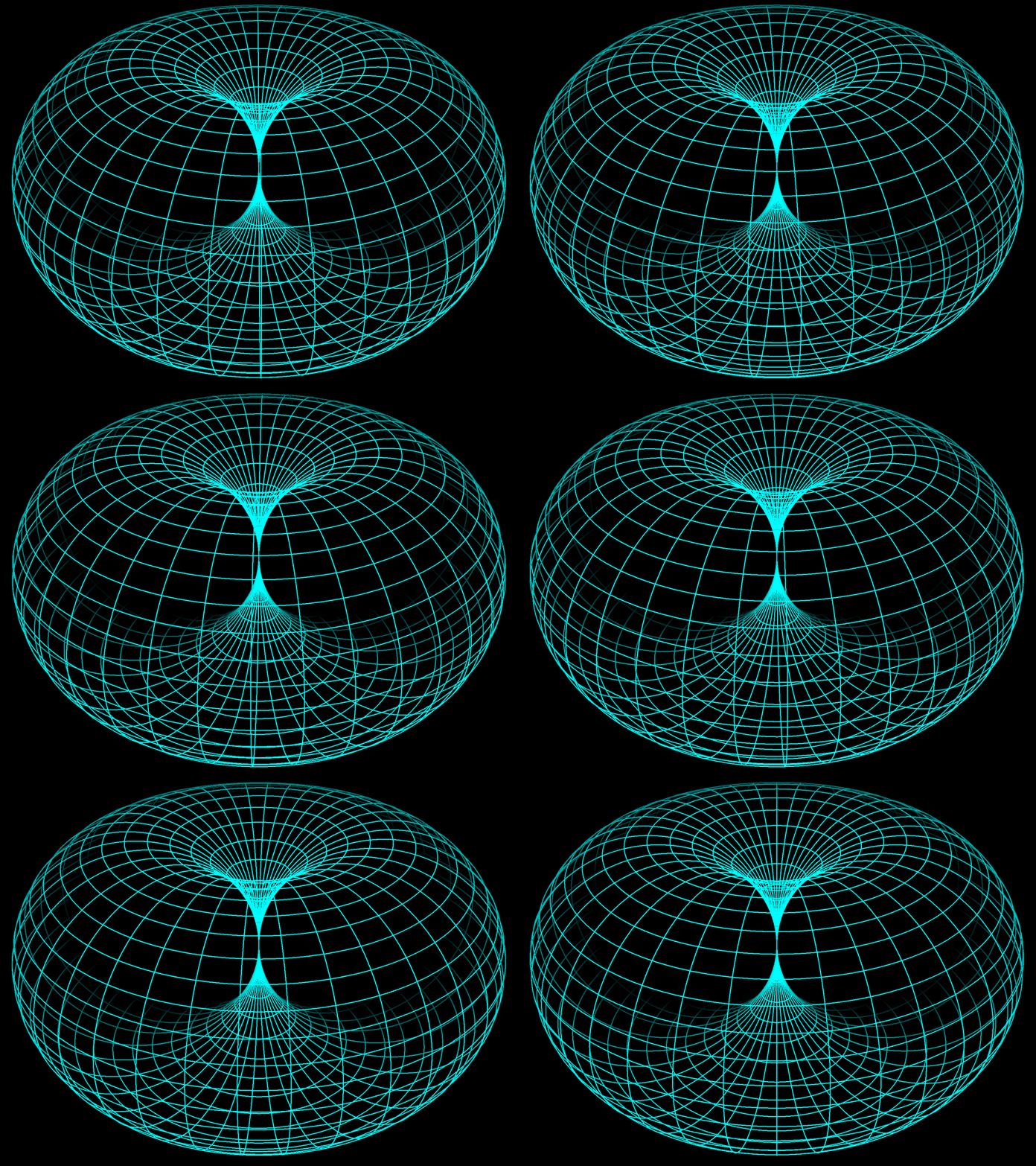 (https://www.horntorus.com/)
If you cut a cross section of it down the middle, in 2D it is indistinguishable from the cross section of two cylinders (or two of any complementary, intermeshed rotations). This might call to mind some other examples that Master Chen often uses, such as two water bottles or two meshed gears.
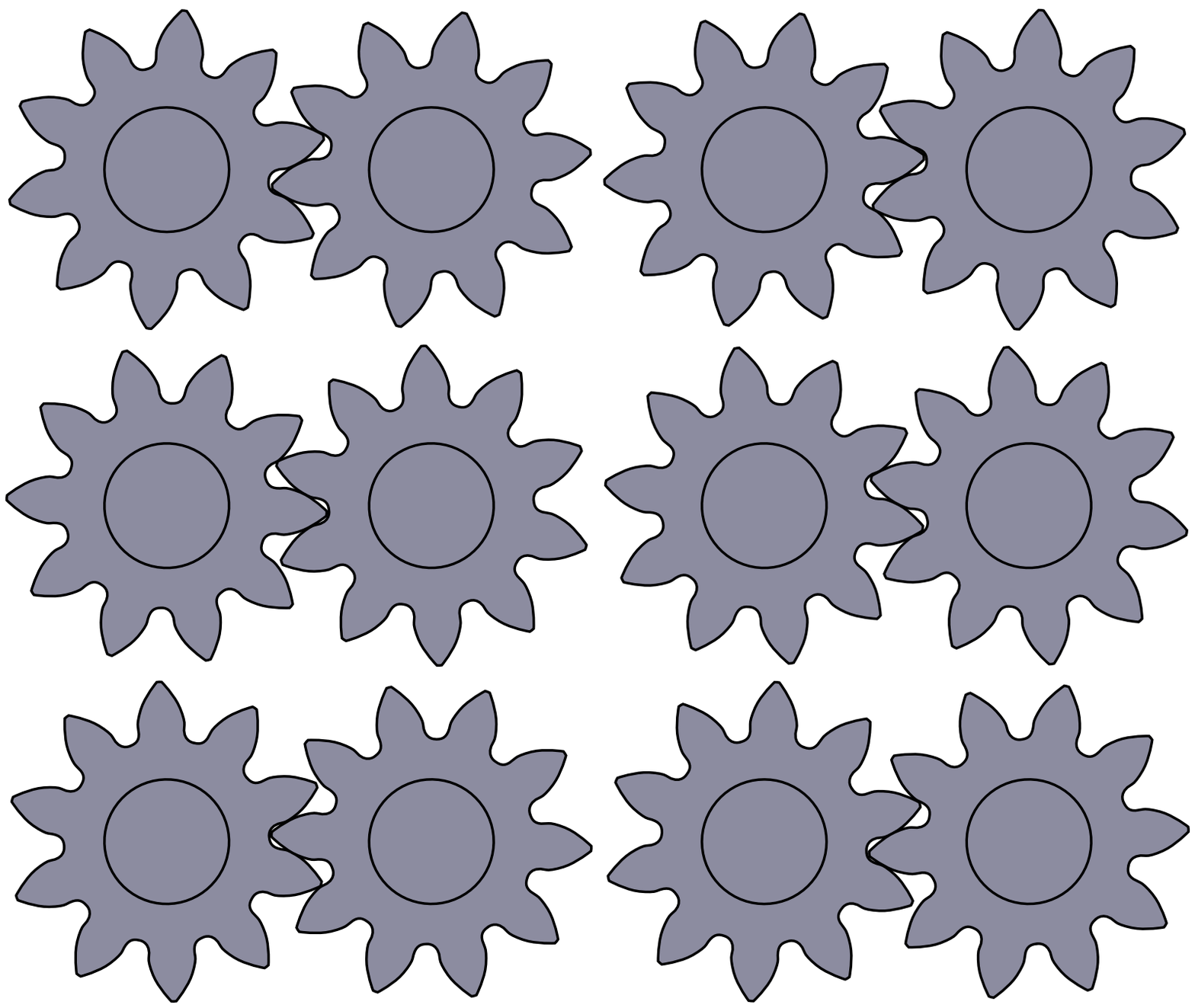
You might also notice this phenomenon in other places, such as in magnetic fields, turbulent water, hurricanes, and more!
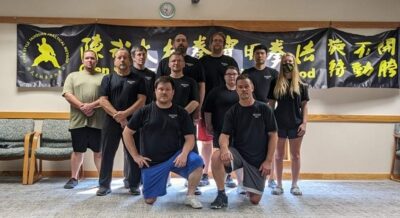
The North American Practical Method Training Camp was back on! Most people had limitedly physical contact practicing Taiji with another person for over a year due to the pandemic. In organizing this we made some adaptations and innovations as a means of overcoming the current challenges that were presented to us by the global crisis. It was phenomenal learning experience! Read more
Observation notes from part of the Iowa camp.
Theory and forms. 1.Yin yang sepatation; 2.The in and out. In with elbow(dantian), out with hand. To come in, has to be led by the inside; to go out, has to be led by the outside. Five points and dantian. 3.The middle (dantian/central axis) rotates.
Read more