
“Edmonton (Home) bound for a couple of days before tour of Europe! Good to see you all in Ottawa over the Easter weekend! Nice to see so many young students!”
From Ottawa 2010, posted by Zhonghua Chen on 4/05/2010 (14 items)

- Gatineau evening class


- Gatineau


- Ottawa


- Ottawa


- DSC04849


- DSC04850


- DSC04851


- DSC04852


- DSC04853


- DSC04854


- DSC04855


- Gatineau


- Gatineau Evening


- Ottawa Group

Generated by Facebook Photo Fetcher
Arrived on time in Ottawa. Almost 30 degrees! James Chan and Steve Chan came to the airport in their T-Shirts! It’s nice to be warm!
Stopped by for fast food on the way to Gilles-Vallant Taichi Center.
3:00 pm private with Pierre.
4:00 pm private with Daniel.
Supper with James, Daniel and Steve.
7:00-10:00 pm Qigong and push hands at Gilles-Vallant Taichi Center. Lots of pushhands exercises.
It was after 10:30 when we got home to Jame’s place. A bit snack and push hands explanations.
1:00 am now but it actually is only 11:00 pm for me. Good day today but tomorrow I will probably be tired from lack of sleep.
Part 1
Learning Tai Chi has been a process of wonder and occasional pain. My acupuncturist, Dr. Steven Aung, said that we are where we should be, even if the arrival at this point seems bewildering or difficult. Read more
There have been countless works published on the species of martial art, their variety of incarnations and attitudes. It seems pointless to tear a single page from the encyclopaedia of combatives in order to repeat what a hundred authors have repeated before. Often, a lesson hard-learned in life is that what is not the highest question, but rather, why. Why, then, study the martial arts, taijiquan specifically? Read more
To Master Chen and Daqingshan administration,
My name is Sean Moxley from Regina, Saskatchewan. I am a student of Ronnie Yee’s and have been studying Chen Style Taijiquan for about a year. Before that I studied Kung Fu for a number of years. Read more
OBJECTIVE
To embark on an enlightening career of self-discovery and spiritual healing for myself as well as my clients. Read more
Nick Mann nickmann1980@hotmail.com
PROFILE
An intelligent, hard working, University Degree holder who currently works and lives in Wulian China seeks contract work teaching English as a second language in Rizhao China. Read more
 This is a 4-DVD set. By Chen Zhonghua 陈中华. Language: English 英文 Year: 2009 年.
Trailers below
Read more
In Chen Style Taijiquan Practical Method, body functions are very important. This means that each part of the body has its own functions. It is not a case of the whole body working as ONE. That phrase might have been used but the meaning is not literal. Read more
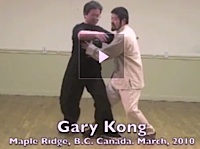
Author: Chen Zhonghua Length: 45 minutes Language: English Year: 2010 Chapters: 7
One of the unique aspects of Master Chen workshop is his hands on instructions. He will let students push hand with him in any fashion, he will give you a counter and teach you how to do it. This is my third workshops and I have started to get a feel on how to do push hands properly. Read more
- Foundations.
- Yilu and Cannon Fist
- Applications and Push Hands
- Weapons and aided drills.
Sat.
Rick Kare, Todd Turik, Jody Hall, Randy Hay (one day), Blake Caldwell (one day), Bill Vanderhall, Kay Terai, Helen Kita, Gary Kong, Wilkin Ng, Jay Smith, Dina Kerr, Bob Fell. Read more
During form training, silk reeling or standing meditation, i am really relaxed and try to go deep into myself enjoying the feelings. 3
- First of all, in Chen Style Taijiquan Practical Method, we do not use standing meditation. Read more
reminder
[nggallery id=151]
“The camp was organized by Master Gordon Muir with Master Chen Zhonghua as the head instructor. Gordon Muir, Bill Vanderhall and other disciples of Chen Zhonghua shared the teaching. There were a total of 41 attendees from as far as Italy, New York, Tampa, Phoenix, Regina, San Francisco and Seattle. Topics covered include Daoist philosophy as related to Taiji, taiji theory, Chen Style Taijiquan Practical Method Yilu form, push hands, and qigong. ” Read more
From NY 09, posted by Zhonghua Chen on 12/10/2009 (43 items)

- DSC_0104


- DSC_0105


- DSC_0107


- DSC_0116


- DSC_0123


- Chen Zhonghua New York November 2009 Workshop. Saturday morning group photo. Sorry Da…


- IMG_1256


- IMG_1261


- IMG_1289


- DSC_0130


- DSC_0134


- DSC_0136


- DSC_0137


- DSC_0138


- DSC_0141


- DSC_0142


- DSC_0143


- DSC_0146


- DSC_0148


- DSC_0149


- DSC_0158


- IMG_0207


- IMG_0214


- IMG_0215


- IMG_0222


- IMG_0226


- IMG_0227


- IMG_0229


- IMG_0230


- IMG_0231


- IMG_0232


- IMG_0233


- IMG_0234


- IMG_0236


- IMG_0239


- IMG_0240


- IMG_0243


- IMG_0251


- IMG_0254


- IMG_0255


- IMG_0257


- DSC_0107


- IMG_0207

Generated by Facebook Photo Fetcher
From PR Dec 09 Chen, posted by Zhonghua Chen on 12/14/2009 (12 items)

- DSC04712


- DSC04713


- DSC04741


- DSC04742


- DSC04745


- DSC04748


- DSC04750


- DSC04751


- DSC04752


- DSC04753


- DSC04765


- DSC04766

Generated by Facebook Photo Fetcher
“Our activities in PR”
From Last day in Puerto Rico, posted by Zhonghua Chen on 12/17/2009 (7 items)

- IMG_0610


- IMG_0607


- IMG_0609


- St. German


- IMG_0593


- IMG_0565


- IMG_0587

Generated by Facebook Photo Fetcher
“Here are some photos of Grandmaster Hong Junsheng doing Yilu. Grandmaster Hong Junsheng was a prominent of Grandmaster Chen Fake of Chen Style Taijiquan. He studied from Chen for 15 years and was the longest serving disciple of Chen. He lived from 1907 to 1996. Chen Zhonghua is a disciple of Grandmaster Hong Junsheng. The photos were provided by Master Chao Xiuzhen, approved by Master Hong Youyi, edited by Jerry Arsenault and copyrighted by Chen Zhonghua. ”
From Grandmaster Hong Junsheng Yilu photos, posted by Zhonghua Chen on 2/13/2010 (9 items)


- 03-1 First move of Liu Feng Si Bi: Six Sealing and Four Closing.


- 15-1. First move of Pi Shen Chui: Fist Draping Over Body.


- 22-2. Second move of Bai He Liang Chi: White Crane Spreads Its Wings.


- 24-1. First move of Shan Tong Bei: Flash Through the Back.


- 42-4. Fourth move of Bao Tou Tui Shan: Embrace the Head to Push the Mountain.


- 50-1a. First move of Tui Bu Shuang Zhen Jiao: Step Back to Double Shake Feet.


- 72-2a Second move of Zhi Dang Chui: Punch to the Groin.

Generated by Facebook Photo Fetcher
At the evening class tonight, I taught the use of a white waxwood staff exercise for shoulder and elbow rotational control. Please see the video here.
There couldn’t be better occasion than the one organized by Master Giuseppe Bon’s Kung Fu and Taijiquan School to make us moving to the best of our ability along the path that we began to follow last March. Read more
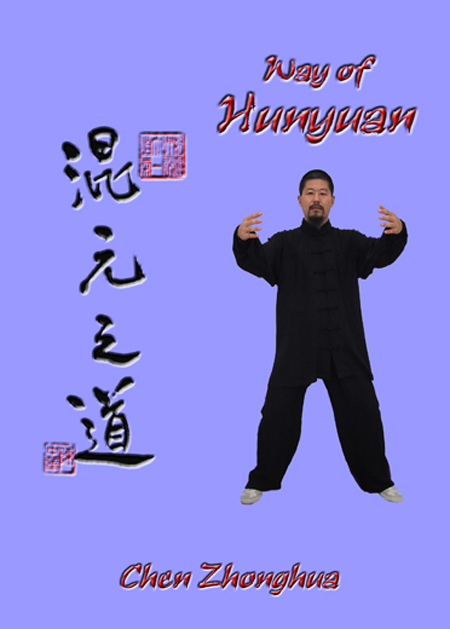 This is a book on Hunyuan Qigong and Hunyuan Taiji by Master Chen Zhonghua. It is an essential book for anyone practicing Qigong. Its contents are mainly based on the Hunyuan Qigong of Grandmaster Feng Zhiqiang and the personal experiences and explorations of Master Chen Zhonghua.
Ebook now available http://practicalmethod.com/?p=49562
Temporarily Out of Stock.
Details below
Practical Method – Prague schedule
Beginers
Monday from 18:00 till 19:00
Wednesday from 18:00 till 19:00
Read more
访陈式太极拳大师—-雷慕尼先生 – 第1页 – 陈式太极 – 太极论坛 – 太极乡音旗下网站 – Powered by bbsMax.
Chinese article on Master Lei Muni that I want to translate eventually.
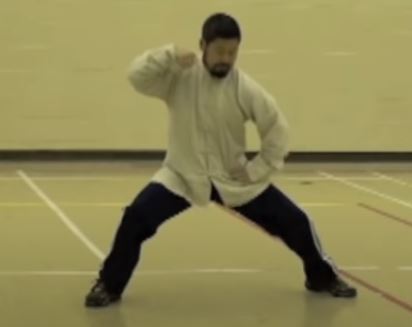
Joe Meyer’s 2009 Comments on Chen Style Taijiquan Practical Method i
by Practical Method on 2010/03/26