_2020-12-5.jpg)
Presenter: Chen Zhonghua Length: 10 min. In: English Year: 2020 Difficulty:1/5
Fetch water with the rubber cord
- Step on one end of the cord to lock it on the ground, pull it with the rear hand.
- Train opening of the front kua.
- Find the appropriate strength in the rubber cord to be strong enough that we cannot use the hands/arms to stretch it, but weak enough that we can use the kua to stretch it. Read more
We hear those things often. In this article I‘ll give an overview of what that means and also write a little bit of how to implement it into your body.
The concepts are very easy to explain. So here we go: Read more
_2020-12-4.jpg)
Presenter: Chen Zhonghua Length: 10 min. In: English Year: 2020 Difficulty:1/5
Chinese Class
Open the knee
A student asks about how to open the knee. Master Chen Zhonghua said the idea of opening was very simple. However being to able to do it requires many other simple things to be put together. There are so many that we are unable to do them, and we simply give up. Read more
A few corrections and a bit of theory on Practical Method.
Presenter: Chen Zhonghua Length: 75 min. In: English Year: 2020 Difficulty:1/5 At:Edmonton Chen Zhonghua Taiji Academy
_2020-12-3.jpg)
Presenter: Chen Zhonghua Length: 10 min. In: English Year: 2020 Difficulty:1/5
– Punch to the Ground. Before Chen Fake time, it was called 栽捶(zai chui), means plant the hammer. It was changed to hit/punch later on.
– Kick with the Heels. There are three lines. The vertical line from the head to the standing heel. The line between two hands. And the line from the two kuas to the kicking heel. All three lines need to be fully stretched out, where there is a pause and it is a fixed posture. If you cannot fully stretch, at least make a stop. For older people it is more important to train the balance and stability. Read more
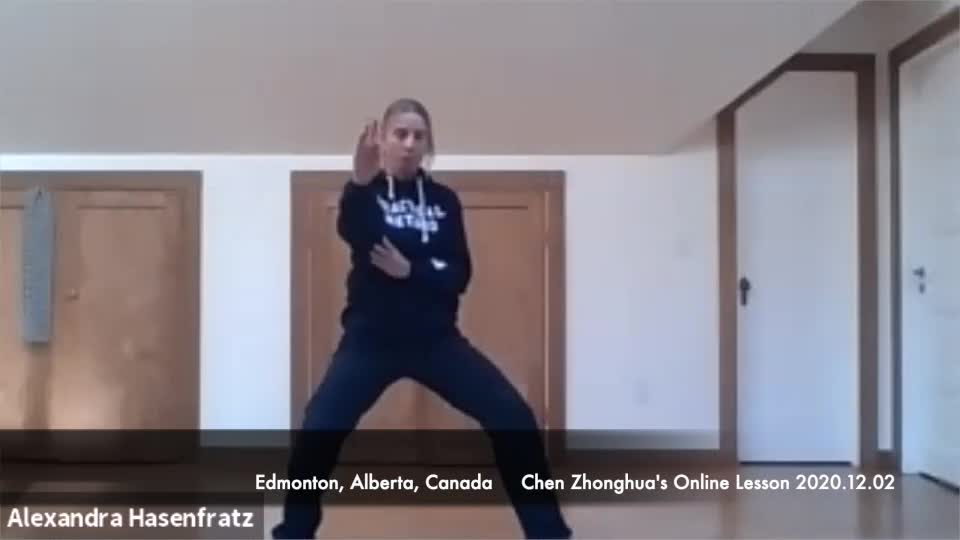
Presenter: Chen Zhonghua Length: 74 min. In: English Year: 2020 Difficulty:3/5 At:Edmonton Chen Zhonghua Taiji Academy
_2020-12-2.jpg)
Presenter: Chen Zhonghua Length: 10 min. In: English Year: 2020 Difficulty:1/5
The Berlin/German branch of Practical Method would like to announce a free online workshop via Zoom, in german language.
For sign up, please go here:
https://practicalmethod.de/online-sessions/
and see this clip to get an idea:
Thanks for sharing to anyone who might be interested, and thanks to Master Chen for inspiration!
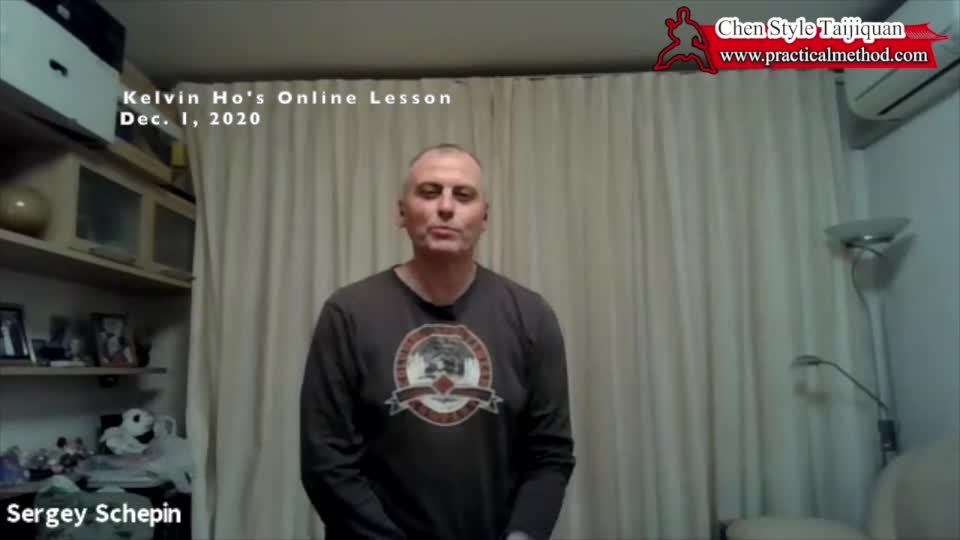
– Once you learn the choreography, your ability is highly dependent on the rhythm.
– Whenever you are doing a true rotation, there is no backward moves. It is like you are pushing a wheel barrel 45 degree up the hill. Every time you stop, you have to put a wedge to jam the wheel. So you can keep going. Whenever you let go or go back, you will roll down the hill. Example is Cloud Hands. You advance, jam and then advance and jam. We use the elbow to jam so the hand is free to do the next move.
My understanding is the jam is the anchor, every move there is an anchoring point. Elbow and kua are used to anchor. In this way you can keep coiling and never lose the power. It is like you have an anti-reversing lock. https://www.shiyongquanfa.cn/archives/118607
Read more
Presenter: Kelvin Ho Length: 54 min. In: English Year: 2020 Difficulty:1/5 At:Toronto Chen Zhonghua Academy
_2020-12-1.jpg)
Presenter: Chen Zhonghua Length: 10 min. In: English Year: 2020 Difficulty:1/5
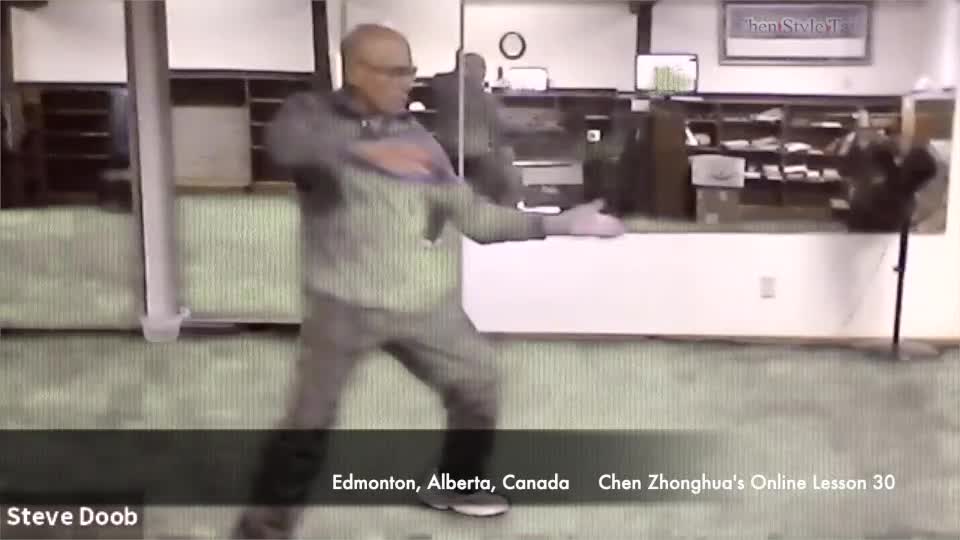
Practice Yi Lu segmented for 10 years. If not, you are moving all over. That is wrong. Every move must show exactly what you are doing. If you don’t finish the moves, you will not synchronize and it is as if you are speaking a different language from Practical Method Chen Taiji. Read more
Presenter: Chen Zhonghua Length: 54 min. In: English Year: 2020 Difficulty:3/5 At:Edmonton Chen Zhonghua Taiji Academy
_2020-11-30.jpg)
Presenter: Chen Zhonghua Length: 10 min. In: English Year: 2020 Difficulty:1/5
_2020-11-28.jpg)
Presenter: Chen Zhonghua Length: 10 min. In: English Year: 2020 Difficulty:1/5

Day one group photo of the first Zhu Ma Dian Practical Method Seminar on Nov. 28, 2020.
I started learning Chen Style Taijiquan Practical Method in 2005. I learned a rough version of the yilu within nine months. I am a persistent person that continuously seeks progress. As the years have gone by I have missed essential details that are in the form, even though many people would not recognize those missing pieces. Let face it, a form with 81 postures in which each posture has several movements/stretches/rotations in it is a huge undertaking!
Fetch Water
- Lock the front knee
- Lock the rear shoulder
- Push the front kua into the line between the front knee and rear shoulder
- Make sure that train the full range of motion
- At the tail end, nudge a little attempting to go beyond the current maximum Read more
_2020-11-27.jpg)
Presenter: Chen Zhonghua Length: 10 min. In: English Year: 2020 Difficulty:1/5
Three examples of Master Chen`s clarity of hands on explanation of certain types of dealing with energy taught me invaluable lessons. If the students follow instructions then all will be able to do things that will be amazing to themselves. By practice you build up not only martial skill but also health. From the beginning when we start to learn Practical Method we are trying to apply the most fundamental principle of taiji in partner exercises and push hands: the separation of yin and yang. Taijiquan is in my words in this context an effect on the opponent or partner by using taiji principles that spring from our understanding of the exact teachings of Master Chen Zhonghua and is defined by the stage of our practice.
What is the seam (缝 feng)?
- The place between two actions where it needs to change direction (such as, go back).
- Grandmaster Hong said that we needed to get to 天衣无缝 tian yi wu feng. Heavenly clothes have no seam.
- However, we can’t pretend that there is no seam in the first place, and hide it.
– Positive Circle.
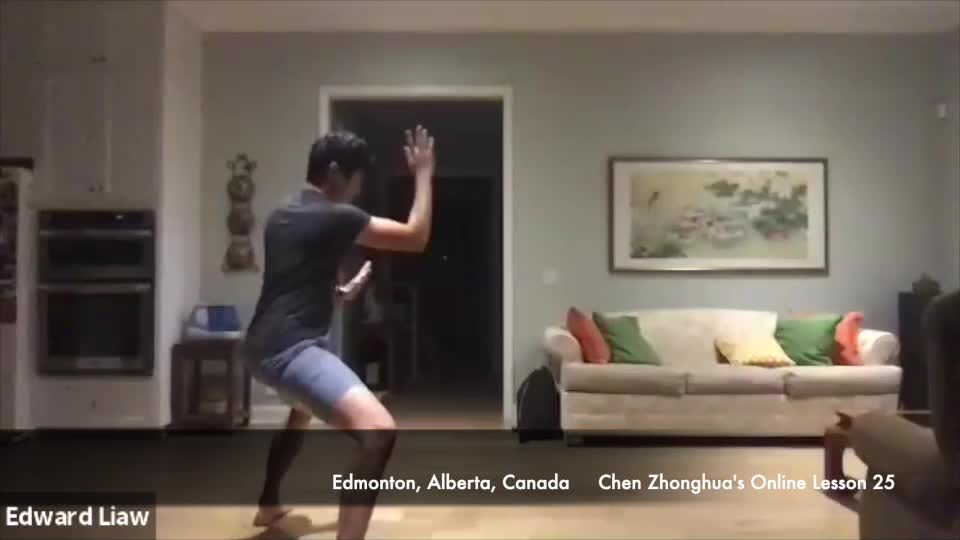
There are three sections. In each section, the lead needs to be clear. 1. In with elbow. Once the arm is in position, it does not move anymore. 2. Turn with the kua/waist. Only rotate the shoulder-kua line, do not move the arm on its own. Shoulder need stay in position without any displacement, no popping, no swaying sideways. 3. Out with hand. The power is on the back foot/kua. The kicking of the back foot into the ground propels the rest part of the body to go forward. Get onto your tippy toes to push, there will be a stretch through the inner thigh. The torso opens up. Read more
Presenter: Chen Zhonghua Length: 60 min. In: English Year: 2020 Difficulty:3/5 At:Edmonton Chen Zhonghua Taiji Academy
_2020-11-26.jpg)
Presenter: Chen Zhonghua Length: 10 min. In: English Year: 2020 Difficulty:1/5
No lifting – Don’t carry weight in your hand when moving.
When the hand is moving, it is inefficient.
Turn every push into a pull
- If we push with the hand, that is a push.
- If we use the elbow to pull the hand, that is a pull.
- The demarcation is how we consider if the elbow is behind the hand (push) or in front of the hand (pull). Read more
Positive circle – must stretch from rear side. Must open the inside. Has to be from crotch and back leg.
Feet look like tip-toe, but actually power is going down. This is the strongest.
3-part circle: 3 body parts: arm, torso (rotate from kua), foot (kua to rear foot)
The movement comes from 3 different sections – the opponent cannot catch or stop you. Read more
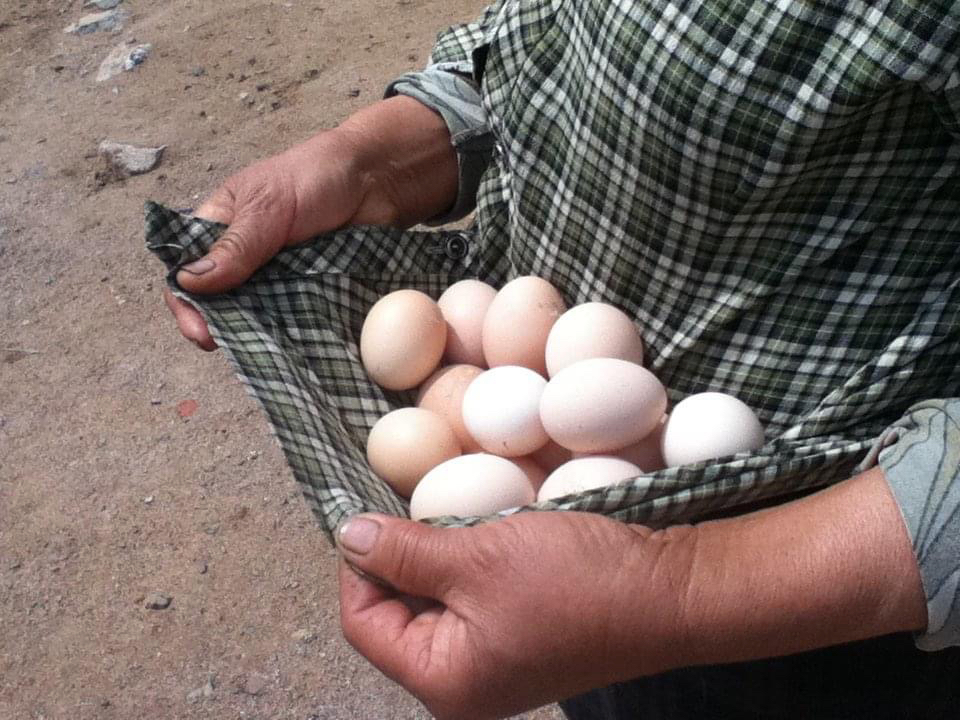
We raised 10,000 chickens in 2011. They are truly free-range. We had to look for their eggs in the hills.