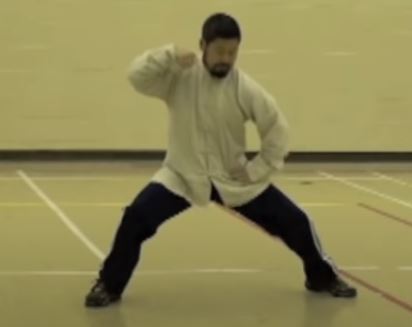
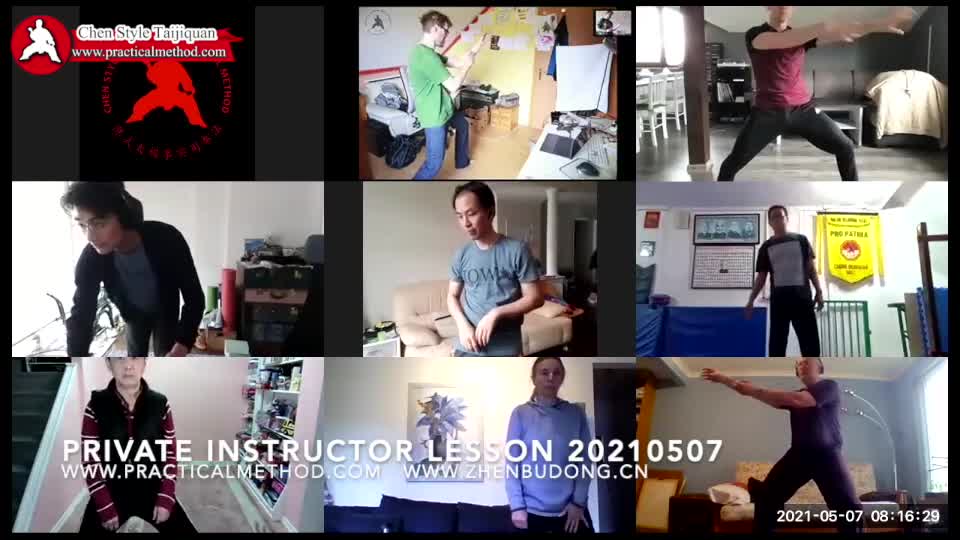
We focus on training one part (X). When we get that X right, Y may become wrong. We fix Y, X may become wrong again. We go and back forth until both X and Y are correct. Then we add Z on top of them.
3 parts: Fix two parts, move one part.
In the exercise of rotating horizontal, we must fix the middle (dantian). How to fix the dantian?
Use two parts (head and rear foot) to fix the dantian, move the front foot which is free to a new position.
Use head and front foot to fix the dantian, move the rear foot to a new position.
Switch between the two feet repeatedly.
The rotation is made of a series of little increments.
If we make the two side of a chest like two touching gears, we are using the central axis as the gap/space between them. it is the one of the 3 major choices for the gap. The other 2 choices will be the two shoulder-kua axes. The chest/torso can be one piece or two pieces.
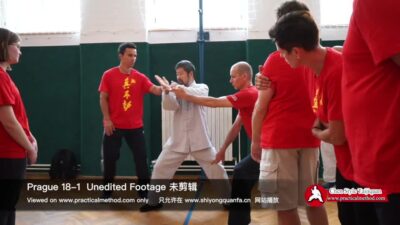
Master Chen Zhonghua always talks about the method of learning. The interaction of us asking and him answering is part of it. You have probably heard him say before, “Don’t ask that question”, but yet at a different time, he would ask students to ask questions. What kind of questions are indeed proper to ask? The questions that are on topic, something that does not interrupt or distract the learning of the very subject at the time. The format of an appropriate question itself should be about HOW, e.g. Could you please show me that move again?
This type of questions allows Master Chen to provide the correct information. Read more
Closed circuit. Ball bearing. Body part, passive/inactive like a sandbag not a basketball. Being charged.
Six sealing and four closing can explain everything. Training model (small element): kua drives the arm. Lock the shape of the arm, arm parallel to the floow, use kua to propel the elbow transferring to the hand. Push into the front foot or back foot, the arm is positive circle or negative circle. Hand elbow shoulder is on a table, no turning of the hand. Arm is like the bifolding door. Clear one on one transmission. Kua pumps upward to the shoulder, shoulder stays down, it goes to the elbow. T, vertical to horizontal. By passing the shoulder, kua is connected directly to the elbow then to the hand. Elbow is a dot. Hong chopped his shoulders off. Upper dantian needs be clear and light. Like a bridge, from a square, chop the corners off, form an arc. Transfer of energy, cannot get stuck on the shoulders. When done right, you are always with the flow and the opponent is always against the flow. Read more
My name is Paweł Maciejny. I work as a teacher, I am also a player and a trainer at the rugby club
in Bielsko-Biała and a volunteer firefighter at the Volunteer Fire Department Żywiec – Sporysz. Read more
In taijiquan, there is a phrase that causes a lot of confusion. It is “Don’t use force”.
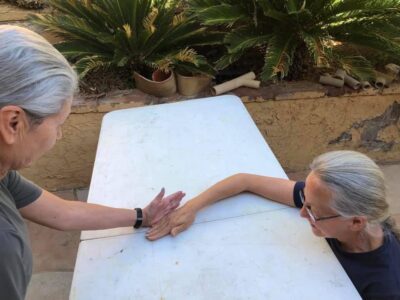
What this really says is that in taijiquan movements, we do not use direct power, instead, we use indirect power. Or in other words, the point of contact cannot issue power. Power comes from another place that reaches the point of contact. This means the point of contact only has passive power.
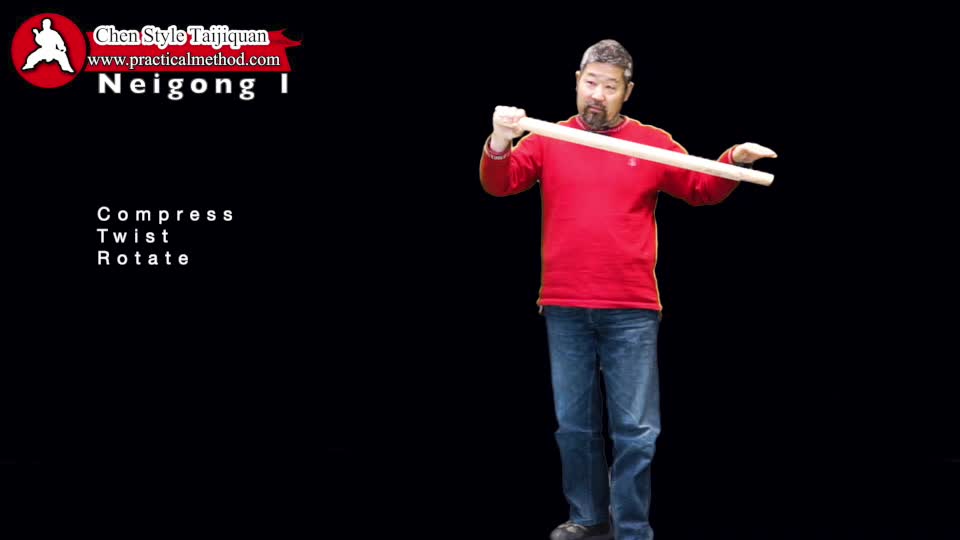
Neigong refers to the internal energy. It is the part of Taiji that is difficult to teach, to learn and to explain.
In this mini lesson, Master Chen Zhonghua tries to teach the most basic elements of Neigong training. He focuses on three basic physical ways of attaining internal strength. 1. Create compressed power. 2. Create twisting power. 3. Create rotational power while maintaining compression and twisting power. Presenter: Chen Zhonghua Length: 10 min. In: English Year: 2021 Difficulty:4/5 At:Edmonton Chen Zhonghua Taiji Academy
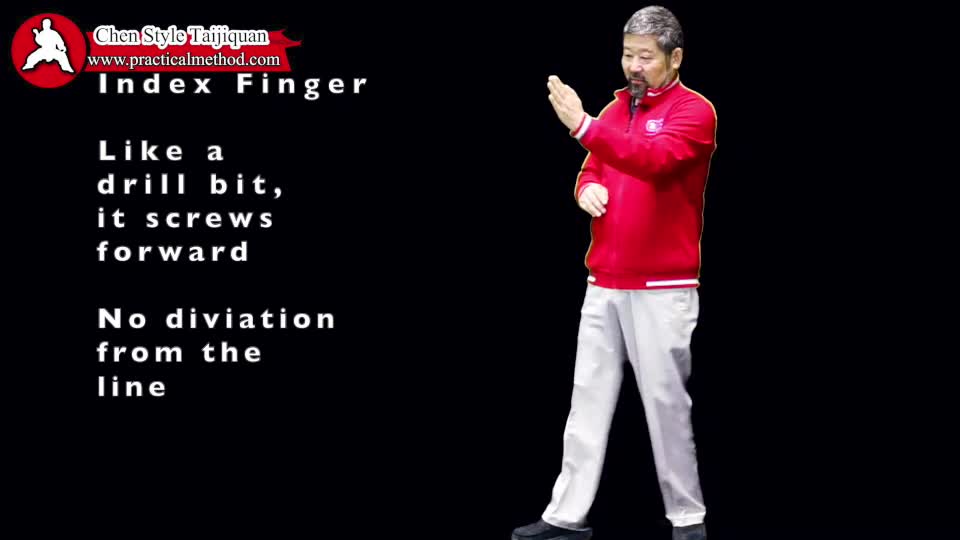
The Tile Hand is a specialty of the Chen Style Taijiquan Practical Method system. However, the index finger and the middle finger are the two most prominent fingers in the yin and yang of things.
In this mini lesson, Master Chen Zhonghua focuses his teachings on the direction and function of the index finger. Presenter: Chen Zhonghua Length: 4 min. In: English Year: 2021 Difficulty:1/5 At:Edmonton Chen Zhonghua Taiji Academy
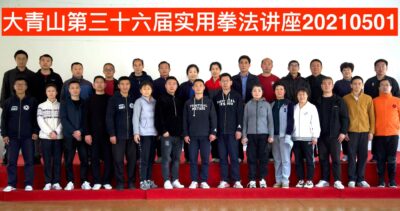
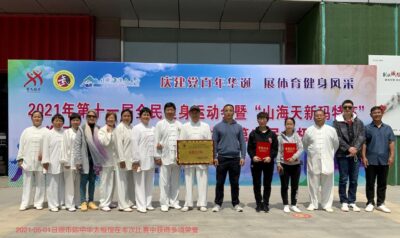
The Second Shanhaitian Taiji Competition was held at the Simart Center in Rizhao, Shandong Province on May 1, 2021. Rizhao Chen Zhonghua Taiji Academy students participated at the event. Pang Chaoli and Leo Song organized our team in this event.
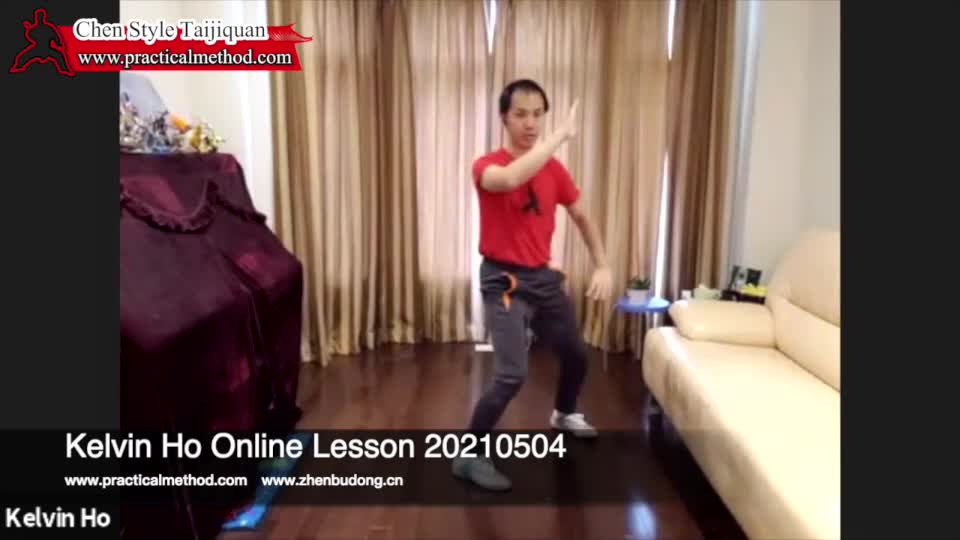
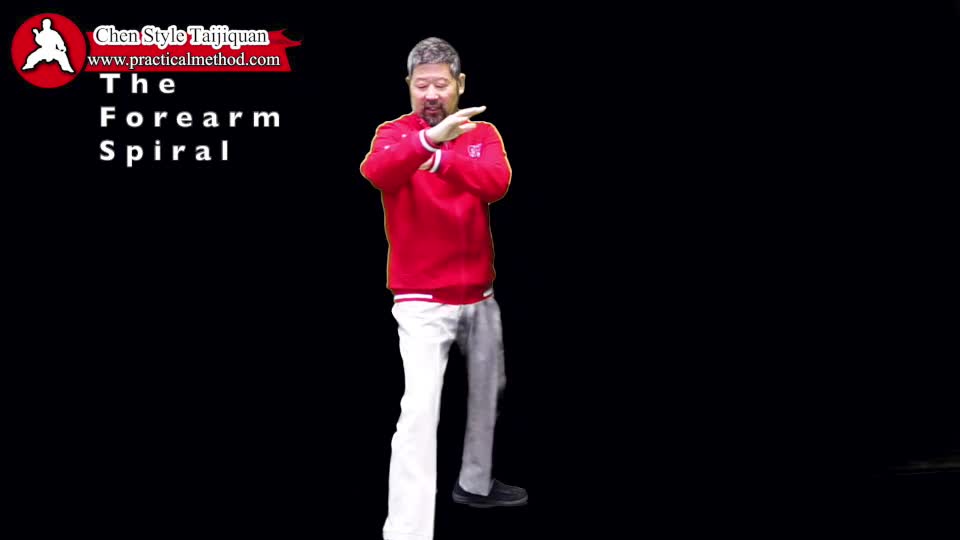
One of the basic foundations of the Chen Style Taijiquan Practical Method system is to treat the entire forearm, from the elbow to the finger tips as one piece. This piece is the basic building block for most of the upper body actions. In this mini instructional video, Master Chen Zhonghua shows how to do a spiral with the forearm as one piece. This seemingly simple act, will fundamentally change the way you use your body! Presenter: Chen Zhonghua Length: 2 min. In: English Year: 2021 Difficulty:1/5 At:Edmonton Chen Zhonghua Taiji Academy
Line up the dot underneath the front buttock and front heel, and pull them together.
The dantian needs to adjust to allow the rear foot to be pulled up.
Lock the head.
New Exercise
This is an exercise that Master Chen Zhonghua learned from Grandmaster Hong. They did it at the park on the gravel. After this, they would do foundations every morning.
Lie on the stomach, use the hands to pull up.
Lie on the stomach, use the elbows to pull up.
Lie on the stomach, use the shoulders to pull up.
Only use one part to pull up, the rest of the body is just like sandbag being dragged.
Need 3 ways to do the same looking move to be versatile, so the opponent can’t figure it out.

_2021-05-11.jpg)
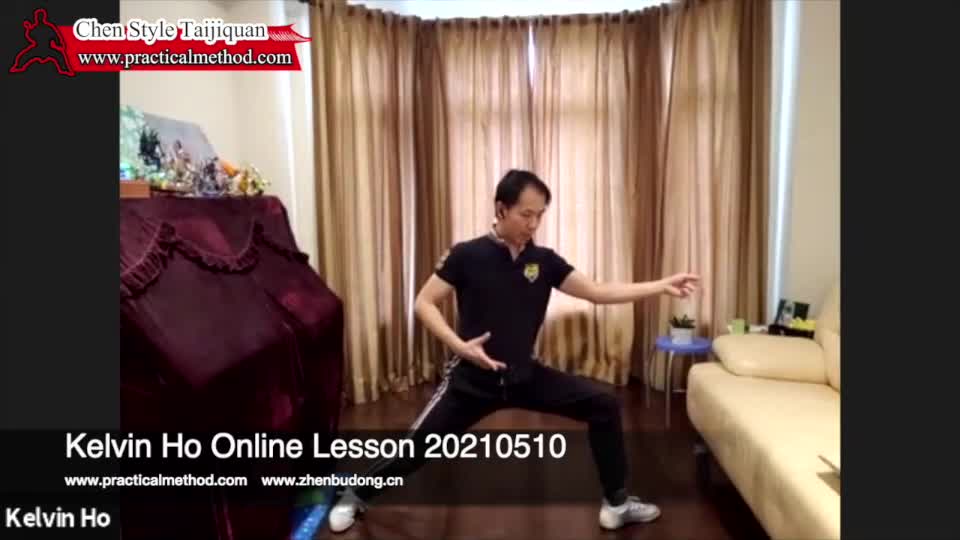
_2021-05-10.jpg)
_2021-05-09.jpg)
_2021-05-08.jpg)
_2021-05-07.jpg)

_2021-05-06.jpg)
_2021-05-05.jpg)
_2021-05-04.jpg)
_2021-05-03.jpg)
_2021-05-02.jpg)
_2021-05-01.jpg)