greetings from Australia…fantastic site!…just wondering if the routines you teach are old frame or Chen Fake’s new frame?…thanx…peace
****************
A: I would like to avoid the confusion (becomes more and more confusing later on) by saying that what I teach is what Hong Junsheng learned from Chen Fake from 1930 to 1944. Whatever that means without a name is more accurate than putting it under a category.
**This is a short piece I wrote in the mid-90s about a way to define martial arts ** The martial arts are systems of combat developed for the purpose of either offense, defense or mass combat. However, these arts also have many goals beyond combative ones. There are countless reasons to decide to study the martial arts.
[singlepic id=4102 w=320 h=240 float=center] Read more
In the last few months, I have been trying to follow the rule of “elbow in, hand out”. In my practice and teaching I have observed something that needs further verification, but that seems correct. “Elbow in” means: initiate the arm rotation from the upper arm. Conversely, “hand out” means: initiate the arm rotation from the hand. There are a few possible explanations for this. First, I will say a few words about the “elbow in” part of rule, then I will suggest an explanation of the “hand out” part of the rule. Read more
There is nothing better than a real personal, hands-on experience with Master Chen Zhonghua but this comes very close to it.
Presenter: Chen Zhonghua Length: 67 min. In: English Year: 2011 Difficulty:2/5 At:Germany
For those who attended Master Chen’s workshops, we all have this experience. When Master Chen demonstrated any push hand technique, he executed it crisply clean and looked so simple. Then, everybody tried to copy the technique, but didn’t work. In my recent classes, I start to realize the techniques are only valid (or more efficient) when you have the split of Yin and Yang.
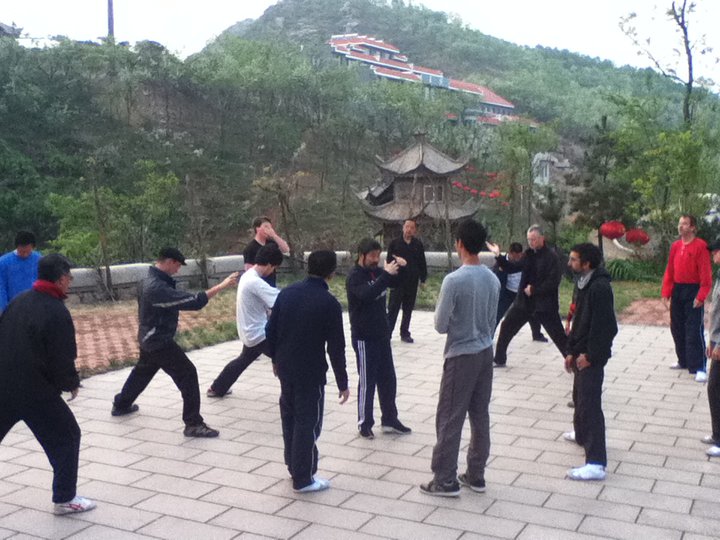
Full Time Session
This will be my third full time course. Why am I going again after 2010 and 2011? Let me list the reasons:
You are on the right learning path. The path is very long and at different stages you have to do different things. Usually a person goes through three stages/plateaus. Each one is longer than the previous one. Read more
有道是“学拳容易改拳难”,与其学错了再改,不如一上手就学对的。练太极,尤其是在初期,要把自己的非太极动作改掉,改就是提高。 Read more
There is nothing better than a real personal, hands-on experience with Master Chen Zhonghua but this comes very close to it. Presenter: Chen Zhonghua Length: 69 min. In: English Year: 2011 Difficulty:2/5 At:Germany
We are testing a new video hosting service that provide streaming support. This mean you can jump ahead in the video without having to wait for the video to download to that point. Let me know in the comments if you have problem viewing it.
 Using the technique of Six Sealing and Four Closing to find the connection point between the front hand and the rear elbow. Presenter: Chen Zhonghua Length: 4 min. In: English Year: 2011 Difficulty:4/5 At:Edmonton, Alberta, Canada
 When the body becomes accustomed to moving through the forms in a connected way, the structure of the body will naturally begin to tighten up. As a result, the over exaggerated stretching movements previously used to open up and recondition the body should be adjusted and made smaller and tighter. Read more
Twisting the towel is one of the basic foundation exercises of the Chen Style Taijiquan Practical Method system. it is also called the four-cardinal yin yang split.
Sometimes you move, sometimes you don’t. Some parts of the body should move while other parts must be tranquil. The correct application of these is taiji. Read more
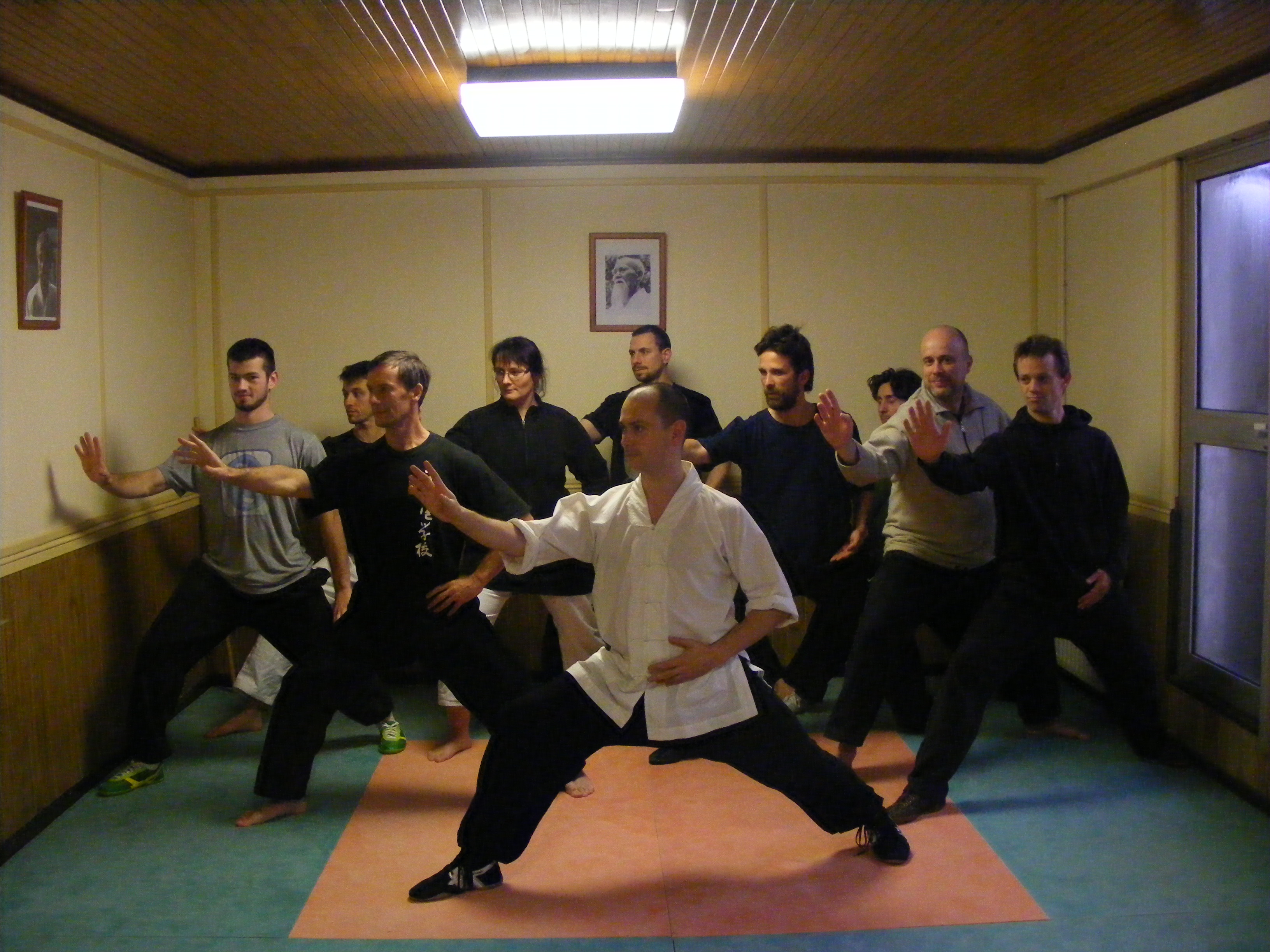
This December I had the honour of being invited to teach an introductory workshop on the Chen Style Taijiquan Practical Method. I’d been to Brittany twice before to work with the theatre company Teatr Piba and this time my friend and colleague Erwan Cloarec asked me to also teach Taijiquan.
Body movement principle is that the upper and lower parts of the body must not be synchronized. When the upper body moves, the lower body must not move. When the left side of the body moves, the right side of the body cannot move. When the hands move, the waist cannot move.
 Standing atop a mountain in China’s Shandong province, Tai Chi master SENSEI SANDEEP DESAI finds himself.
When my trip to Daqingshan, a mountain in the Shandong province of China came through, I was delirious with joy. It not only gave me an opportunity to further my development in the art but also fulfilled my ultimate fantasy to dissolve into T’ai Chi while experiencing the fresh chi of the mountain. I was seized by an overwhelming urge to realise my full potential while soaking in tranquility and serenity. Read more
No Trailer, sorry
Master Chen Zhonghua corrected Kham Serk’s “Fetch Water” move. He also used “Six Sealing and Four Closing” to teach how to make a yin yang split.
Presenter: Chen Zhonghua Length: 20 min. In: English Year: 2011 Difficulty:3/5 At:Edmonton, Alberta, Canada
Learn from Chen Zhonghua online as though you were at his private workshops.
Presenter: Chen Zhonghua Length: 65 min. In: English Year: 2011 Difficulty:2/5 At:Germany
Singapore, 15th Jan 2012. Lawrence Koh (16 years old) took 1 month to learn the entire form of Erlu.
1. “To occupy strategic position you must fight for the meridian”. Read more
When issuing power, the shoulder must stay stable, not popping up or moving, in order to transmit power from hand to foot, or vice versa.
The hand is the most used part of the body. It is also the focus of taijiquan activities. This video clips shows how the power of the entire body can be focused onto the hands and even fingers to fight again an opponent.
Pulling energy is also called “Pull back”, or “Roll Back”. In general it is an energy pulling the opponent towards yourself. The key is that your pulling power must originate from your own dantian. It cannot originate from your hand. Here is a video clip to illustrate this point.
Being able to “stack the joints” is an important skill in Practical Method. It means not only that all joints have to be aligned to be able to receive the oncoming force, it also means that they have to react in sequence.
Nothing is as good as personal instruction. This is close to it.
Presenter: Chen Zhonghua Length: 76 min. In: English Year: 2011 Difficulty:2/5 At:Germany
|
We had a great time this past weekend. A lot of sweat was shed but no blood. Everyone gained a lot in understanding and ability. A special “Thank You” goes to John Upshaw and his family for hosting us. Here for your delight and critique is our group doing the 1st 13. Midwest Practical Method Yilu
The energy on the body must sometimes be connected and other times disconnected. Here is a video example of how the energy can be connected.
The body must be trained to have multiple axis and they must be in multiple dimensions. One of them is the VERTICAL AXIS. Vertical axis acts exactly the same way as a door hinge. Read more
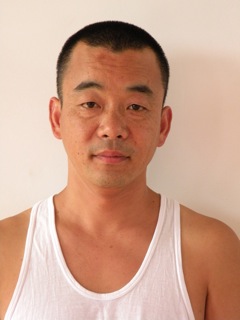
It is a fact that most modern people, especially westerners living in urbanized areas, are not as physically active as they once were. As society becomes more dependent on machines and electric tools to do the physical labour once done manually, the bodies of modern men seem to be changing accordingly. Read more
When I first started taiji training with my teacher Kee Hong, he would always say: if you want power, you have to sink your weight. In fact, I would observe his center of gravity sink whenever someone pushed him. I would also feel his push getting “under me” whenever I pushed on him.