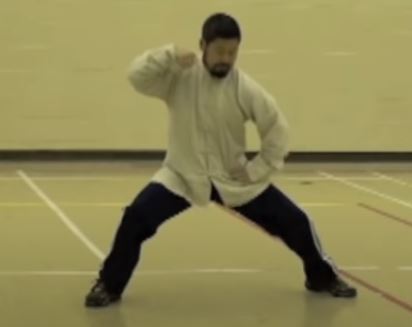
Here is a clip that shows how to use the energy on the outside of your body to counter.
How to Arch the Lower Body Video
While the complete workshop is still fresh in my memory I’ve immediately
started to put my experiences on paper. It is only a personal
description of my experience these are not my notes (I’ll will mail my
notes as soon as I’ve worked them out). Please keep in mind that my fellow
attendee’s will have had different experiences and probably different
opinions regarding the workshop. Read more
When your opponent is tight, you rotate to get out; when he is loose, you hit directly. The video clip was made at a workshop at the De Glind in Holland in April 2008. Master Chen Zhonghua was assisted by Pavel Codl.
You should always use what is outside of contacting point, not inside of it.
Taiji uses a type of energy generated through spiral movements. This energy is constantly powered. Momentum is a great energy source that is abundant in everyday life. Many other martial art forms use this energy. Taiji does not.
Present at the class: Clinton Jurke, Allan Belsheim, Trevor Juuti, Alex Nay, Scott Hess, Camille Lipford and Blake Norman.
- When you make contacts with your opponent, you must assume that this occurs at the 9 o’clock position. Your opponent is climbing when pushing on you.
- You must also climb up his hill till you reach the top. In this case the top is 12 o’clock and it is the point.
- You must find a way to move beyond this point, causing a fall down from 12 o’clock to 3 and then to 6 o’clock.
- This must be done by holding the front contacting point in position and then stretch what is behind it. Usually this means the spine and the back.
- So when you are pushed, you make sure that your spine is locked and only move the front part of your body.
- When you push back, you lock the front part of your body and only push/extend the back/spine.
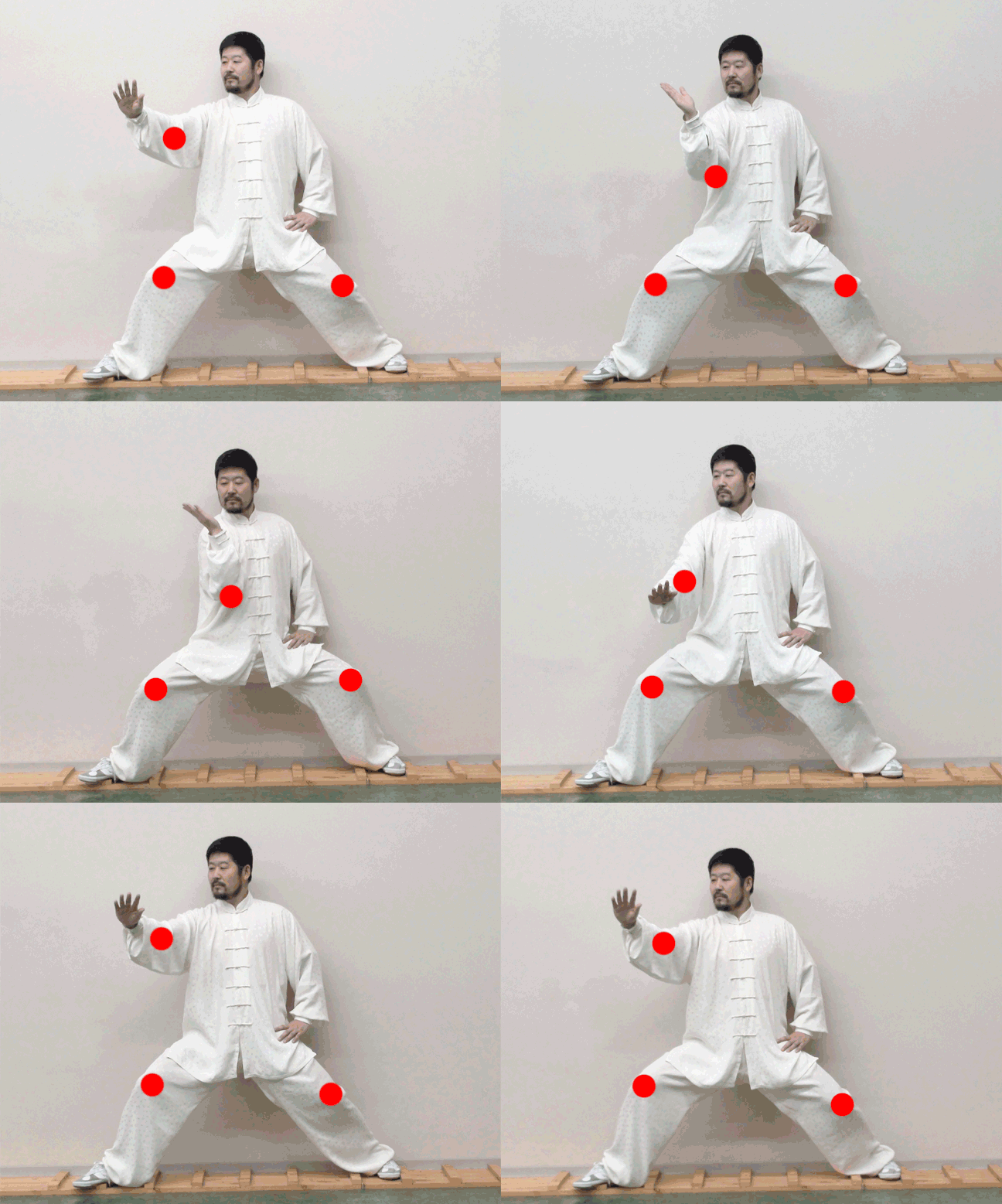
In this teaching animation model, Master Chen Zhonghua shows how the elbow interacts with the knee in a negative circle.
In relation to the viewer’s eyes, the elbow point moves more horizontally from left to right then the other point points. The two knee points move more in line with the eye vision’s depth. Essentially, you should try to understand that the three points don’t change relationships. Only the three dimensional perspectives cause the flat one planed photos to appear to have the changes.

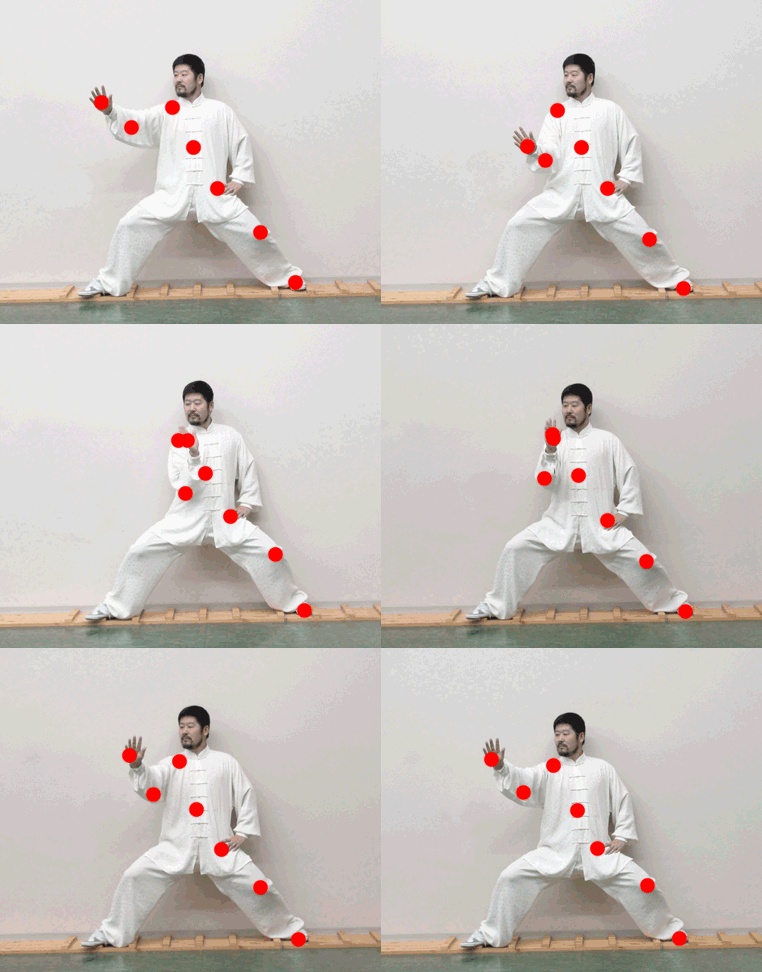
In this animation model, I tried to show how the energy moves in a line of energy from front hand to the rear foot. 在这个幻影里,我演示前手到后脚的劲路方向
Positive Circle S-Curve energy path 正圈S曲线劲路
Negative Circle Knee Elbow Relation 反圈膝肘关系
Negative Circle Hand Energy Movement 反圈手的劲路
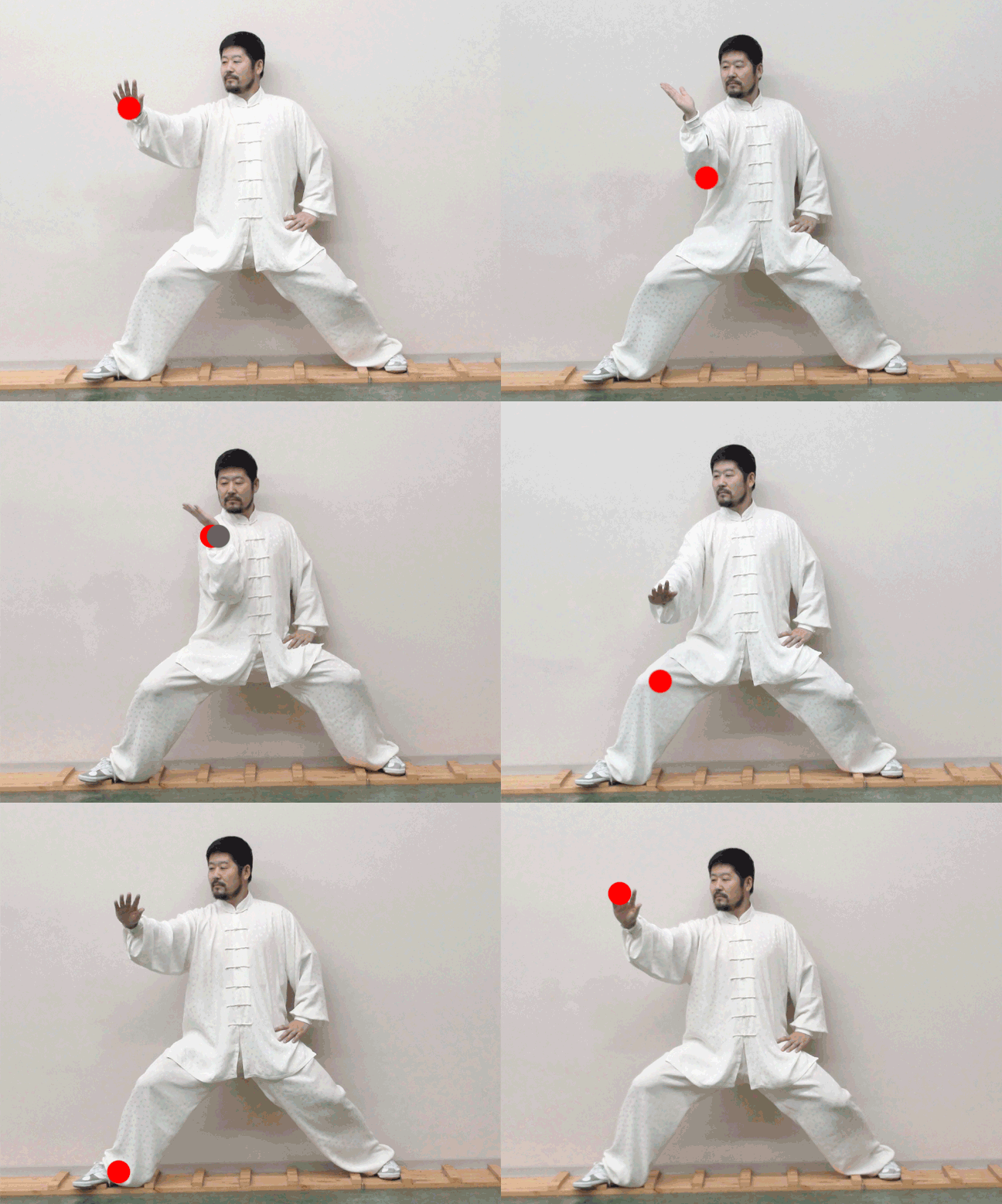
Negative Circle Lower Arc Energy Movement 反圈下拱形劲路
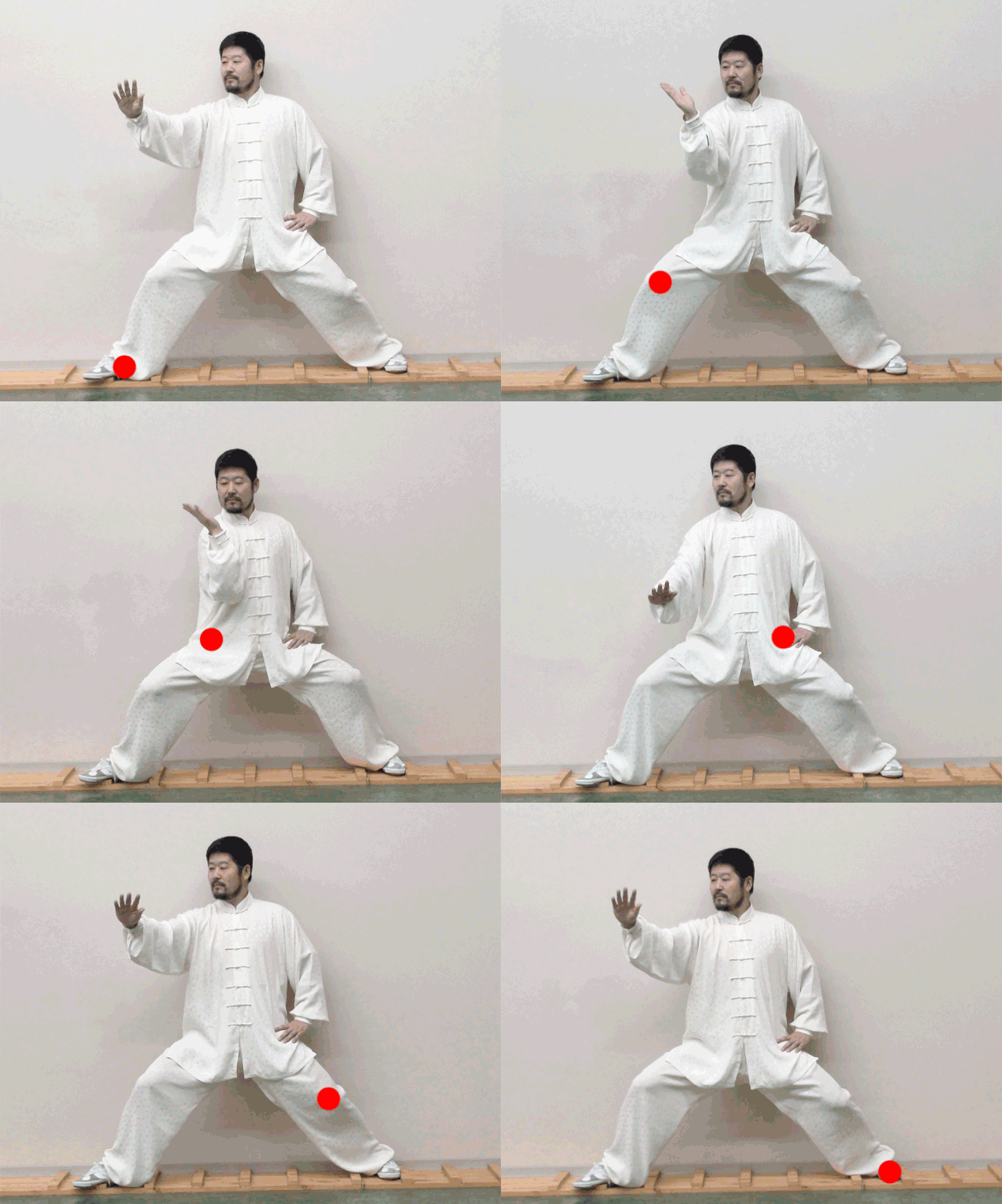
In this model, Master Chen Zhonghua shows the energy of the lower arch while in a negative circle. 
In this model, Master Chen Zhonghua shows how the energy (as one dot) moves on the lower body arch during a negative circle execution. 
This is a model to show how the energy moves on the right hand side of the body in a negative circle.

A common mistake is that after you have taken up the slack and are in and have an action on O, you then let go to attack somewhere else. Once you are on, and your attack is there, don’t retreat or change anything, just continue to apply that action, and then ad another element (most commonly a rotational action) – don’t push him here, and then let go to jerk him there. If your energy is going into O at point A, don’t stop and start putting energy in at point B, instead keep point A going and ad energy at point B. This avoids telegraphing your intention to O. When the first action remains smooth and you ad, your intention is hard to discern and he will be surprised by the addition of the new energy. Once you have two going, ad a third and so on.
What are the Three Pans of Taiji?
- Upper Pan: Shoulders and Head section.
- Shoulders down and Kua above.
- Below the Kua.
Originally written by: Chen Zhonghua and Ian Macrae
Based on Ian Macrae’s
Notes from the April 12th & 13th, 2008,
Workshop at Thornhill Hall, Maple Ridge Read more
This photo graph is designed to deal with knee problems in training.

In order to avoid injuries, the most important thing to avoid is the knee pushing outward away from the body, as illustrated in the picture above: the yellow dot cannot move towards the blue line. The blue line is an imagined wall that the knee cannot push against.
- Question: What about the principle of the knee going up and down?
The knee must act like a ball, it aims up and down but it does not physically move up and down at all. The aiming of the knee, one up and the other down, is called “intent” for the knee. - Question: What about the concept of the knee not exceeding the foot?
In general, that principle is a correct one. But as a matter of principle, it is more important to ensure that the kua pushes down towards the knee and the knee pushes towards the foot (floor). This principle ensures that the knee does not have a horizontal orientation, thus does not move sideways outside of the foot.
The following youtube clip shows the actions of the rear knee.
Lian : 炼
Taijiquan as self defense can be ruthless and lethal. The fighting method of Taijiquan is called Zhan Shou (Cut Hand). Read more
Main Points: Read more
The Victoria Workshop was held from March 29th to 30th. It was sponsored by Gord Muir and was held at Ted Truscott’s Karate Dojo in Langford, Victoria. Read more
Another excellent workshop! We concentrated on the”Martial” & striking aspects of Chen Taiji. Master Chen worked us very hard on Saturday, a GREAT workout.
Thanks to Master Chen, Brother Gord & Sister Barb and their Victoria school sibblings  had a great time.
Regards,
Jay
The topics will include:
- Chen Style Taijiquan Practical Method Advanced Foundations.
Moving step exercises. - Chen Style Taijiquan Practical Method Yilu Applications.
- Taiji Free Applications: Sanshou.
- Cannon Fist 1
Originally written by: Zhang Zhaoping
On the chapter on Taijiquan being agile and connected, Zhang Zhaoping quoted Zheng Manqing as saying that it is like “Swimming on land.” -Zhang Zhaoping. On Taijiquan. p. 25. Grandmaster Feng Zhiqiang said taijiquan is like “Swimming in the air.” -Chen Zhonghua
Originally written by: Zhang Zhaoping “Internal skill” is achieved within slow actions. “Effective result” must be enhanced in slow training. -Zhang Zhaoping. On Taijiquan. p. 23.
“Why do we require that the eyes follow the index finger? I.E. wherever the index finger goes, the eyes go. Simply put, this is the nurturing of the heart. -Zhang Zhaoping, On Taijiquan. p. 20.
“Zhogn Ding, to put it simply, is the placement of the center of gravity. It is also the kungfu of Sinking the Qi to the Dantian. This placement of the center of gravity of the Dantian, is eternally not easy. It is not gain or lost at an instant.”
-Liu Xiheng. On Taijiquan. p. 17.
“Center of gravity is the Zhong Ding of Taijiquan” -Zheng Manqing, On Taijiquan. p. 17.
Yang Chengpu said, “When dealing with an opponent, there are only two possible outcomes: win or lose”. -On Taijiquan p. 15.
“One mother gives birth to nine children. The nine children have nine different hearts”
p. 187, On Taijiquan; Lun Taijiquan, by Zhang Zhaoping and Du Feihu
Comments:
This quote was used in this book to reinforce the commonly held idea that “the outer appearances or forms can change but not the principles behind them”.
In my opinion based on learning and teaching experience, this is neither right nor wrong. This is irrelevant! This is irrelevant because it is not the job of persons living to talk about the separation of physical appearance and principles behind them. That job is better left to the “immortals” who can live long enough to reach that level. Normal humans (like us) have no part of that idealistic degree of competence.
As to the meaning of the direct quote above, if the nine children do not resemble in appearance neither their father nor their mother, a DNA test is required to find out the REAL reason behind that!