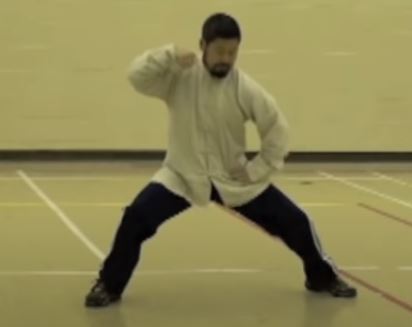
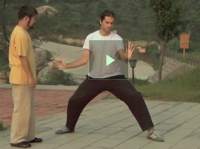
Author: Chen Zhonghua Location: New York Year: 2009 Language: English Length: 1:20 minutes Focus: Push Hands.
Author: Chen Zhonghua Location: New York Year: 2009 Language: English Length: 1:20 minutes Focus: Push Hands.
This term refers to the attempt to engage in rotation without the ability to maintain one’s center. This flaw results in destabilization of structure and balance, and loss of power as a consequence. In Chen Style Taijiquan Practical Method “tossing” is considered one of the ills of the practice, a weakness to be overcome if progress is to occur.
http://practicalmethod.com/2010/11/tossing-online-video-trailer/
http://www.kungfumagazine.com/magazine/article.php?article=681
I find this article interesting.
Author: Chen Zhonghua Length: 60 minutes Language: English Chapters: 1 Year: 2010 Location: Edmonton
In 60 minutes, Master Chen Zhonghua clearly demonstrated the hand-foot relationships in every move of the entire Chen Style Taijiquan Practical Method Yilu routine. Demonstrating the principles of stick energy to push, and rope energy to pull.
Why does a robotic arm have so much power that it can kill you? Because it’s attached to something that doesn’t move.
Master Yang Yingjian is a senior disciple of Grandmaster Feng Zhiqiang. He is the president of the Zhaoyuan Taijiquan Association in Shandong, China.
Author: Yang Yingjian Length: 83 minutes Contents: 1-2 of the Qigong set Language: Mandarin with English Interpretation by Nicholas Fung. Master Yang speaks with a very heavy Zhaoyuan, Shandong dialect. Year: 2010 Location: filmed on Daqingshan, China
Though Taijiquan belongs to the realm of traditional sport, it is a perfect art form with precise theory and complex methodology. It is also a suitable method for people’s health. Students of this art should follow the rules strictly and go for the difficulties. They should carefully seek the regularities. In doing so, the first requirement is “solemn.” Read more
Author: Chen Zhonghua Language: English Year: 2010 Location: Edmonton Length: 10:12 minute key words: zhuo, adherence, bite, circle
Author: Chen Zhonghua Year: 2009 Length: 2 hour:07 minutes Language: English with Italian interpretation Chapters: 12
By: Chen Zhonghua 陈中华. Length: 82 minutes 分钟. Language: Mandarin Chinese 中文. Date: Dec. 2008 年 Location: Daqingshan, China.大青山
One day at lunch I pointed out a deficiency of our training to Master Chen. Read more
Coming soon to www.practicalmethod.com a documentary by Paul Janssens of a day in the life of Jinan, Shandong, China.
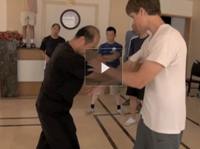
Author: Ni Yuanhai Year: 2010 Language: Chinese with some English Translation Length: 52 minutes Chapters: 7
William: Master Chen, I have noticed that my hands get warm when I do a part of the Yilu (First Routine) correctly. What is happening ?
Zhonghua Chen: Nothing is happening. It’s just part of the progress. Stay on track. Ignore what is happening and continue to train correctly. This is where some people will start seeking the sensations that will eventually cause the practice to deviate.
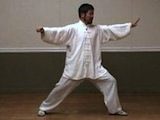
The human energy flows in the body in an organized way which we cannot see with the naked eye or feel by ourselves. The way the energy flows is defined in Taiji as Energy Alignment. This is a video series based on instructions of Chen Style Taijiquan Practical Method Yilu Routine. There are four DVDs in this series. In terms of depth of knowledge, the instructions of this video series belongs to level three (one is basic choreographic learning, two is details of instruction). Please see Energy Alignment 2, 3, 4 for trailers Author: Chen Zhonghua. Length: 1:00 hour long Language: English Postures: 1-28 (sections 1 and 2)
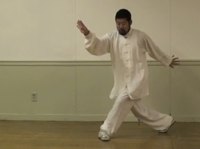
Energy Alignment is a video series based on instructions of Chen Style Taijiquan Practical Method Yilu Routine. There are four DVDs in this series. In terms of depth of knowledge, the instructions of this video series belongs to level three (one is basic choreographic learning, two is details of instruction).
Author作者:Chen Zhonghua 陈中华 Length: 1:09 hours 小时 Language: English 英文 Postures: 29-49 (sections 3 and half of 4)动作
The Canadian Chinese Kuo Shu (Martial Art) Federation had its annual Canadian Kungfu Championships on October 16th 2010 in Markham Ontario. Three of Master Chen Zhonghua’s students entered various divisions of the Tai Chi competitions. Read more
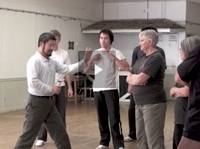
Author: Chen Zhonghua Length: 31 minutes Language: English Location: Maple Ridge, Canada Year: 2010 Chapters: 1) Two Lines of Energy. 2) Yin Yang Separation 3) Shoulder-Foot Connection 4) Sword Practice. 5) Details of Twisting the Towel
Master Chen happened to be in the studio while I was taking a break from doing yilu. I had done thirty forms that day, and I had in mind to do ten more in the hour left of class. Naturally, I was looking around for distractions before continuing. Read more
[singlepic id=1466 w=120 h=80 float=right]
First comment Master Chen has for me is to make my stance larger when we started with circles.
We went over the details of twist towel foundation:
Read more
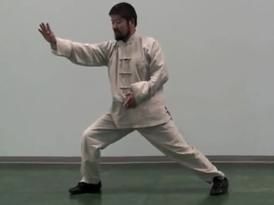
Energy Alignment is a video series based on instructions of Chen Style Taijiquan Practical Method Yilu Routine. There are four DVDs in this series. In terms of depth of knowledge, the instructions of this video series belongs to level three (one is basic choreographic learning, two is details of instruction). By: Chen Zhonghua 陈中华 Language: English 英文 Length: 43:41 Minutes分钟 Postures: 50-68 (finish section 6) 动作
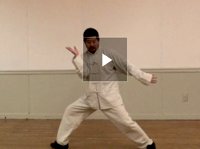
Energy Alignment is a video series based on instructions of Chen Style Taijiquan Practical Method Yilu Routine. There are four DVDs in this series. In terms of depth of knowledge, the instructions of this video series belongs to level three (one is basic choreographic learning, two is details of instruction).
By: Chen Zhonghua 陈中华 Language: English 英文 Length: 39:45 Minutes分钟 Postures: 68-81 动作
Instruction in Chen Style Practical Method is by appointment only.
Please call Kim Allbritain at 813.503.6249 in Tampa or visit Tampa Bay Taijiquan (tampabaytaiji.org)
This is Lee’s Yilu after three months on Daqingshan. Video was made at his participation at the Yiyuan Taiji Competition.