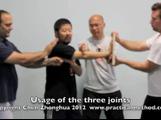
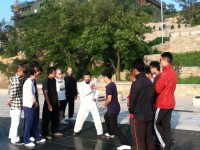
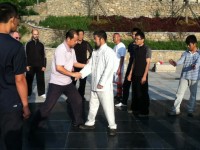
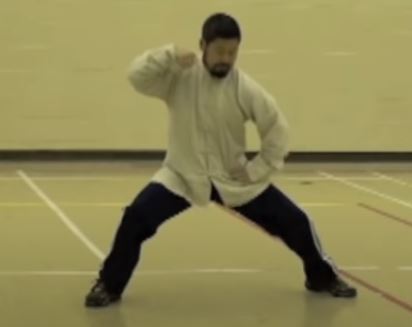
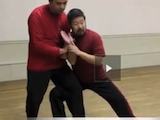
Lecture and demonstration of the working of the Three Joints principle. Arm is an example of three joints which is made of three points with only the middle point that is moving. This basic principle applies to many configuration, for example leg – torso – arm can also work as the three joints as demonstrated in the video
Due to camera error, this video is out of focus, you can tilt your display backward to improve the viewing experience. Audio sync problem only in trailer video
Presenter: Chen Zhonghua Length: 28 min. In: English Year: 2012 Difficulty:3/5 At:Edmonton
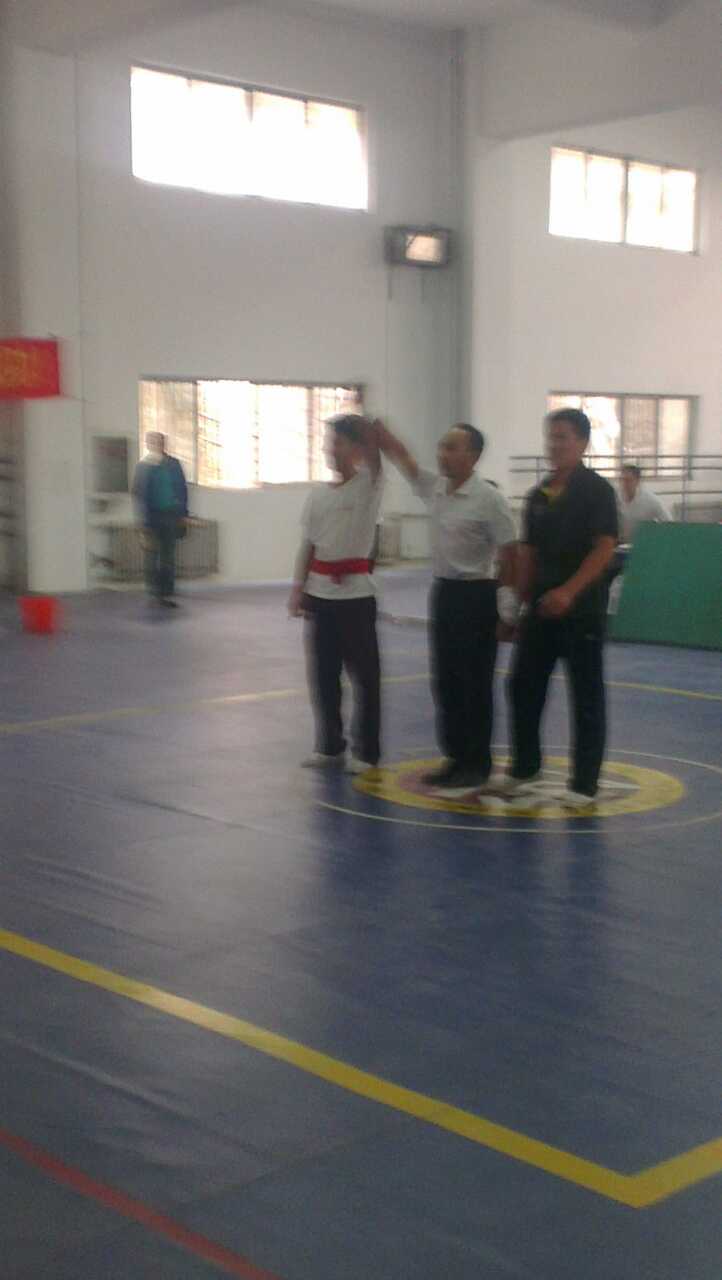
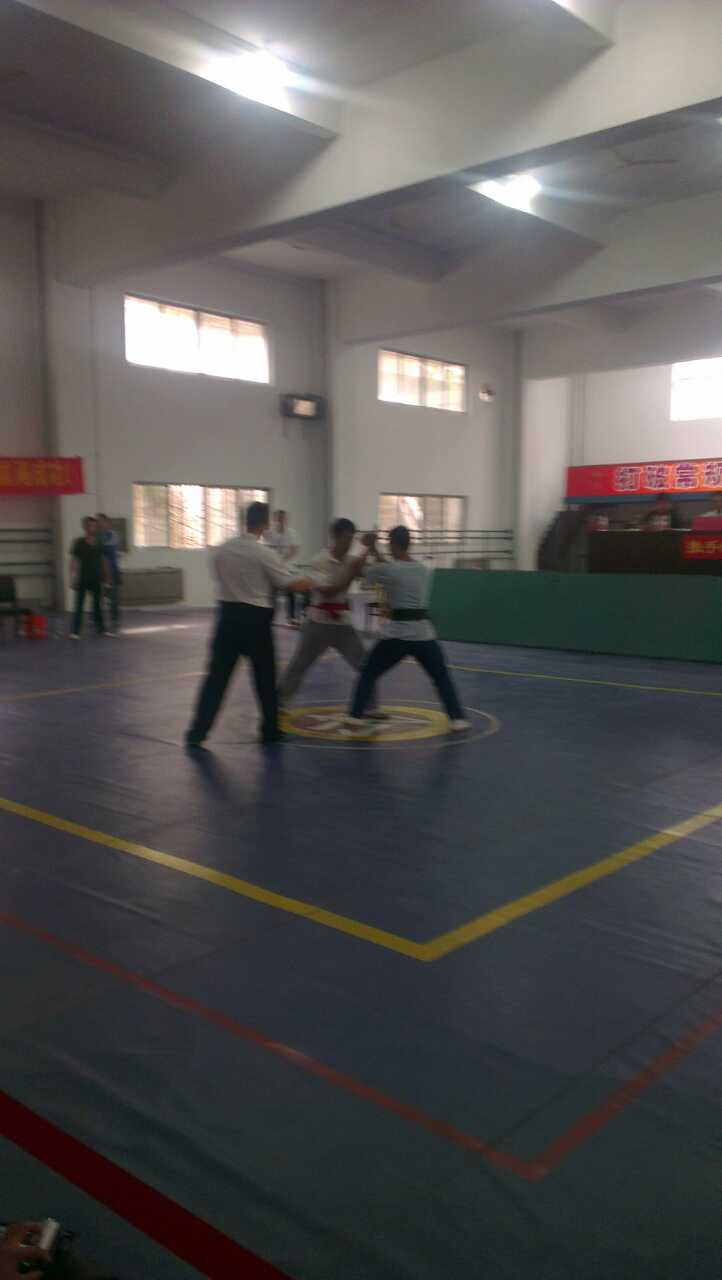
Chen Xu of Daqingshan is the new 2013 First Annual Global Health Care Cup Hong Junsheng Taijiquan Exchange Competition held in Jinan, Shandong, China from Oct. 1-2, 2013.
Zili Ling of Daqingshan won second place. Both of them won the push hands division.
 Any serious Taijiquan practitioner should develop the ability to listen and observe. Read more
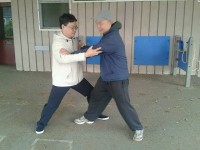 Practiced with Fleming on Sunday. he started 6 months ago uses his upper body too much. I told him to do more moving foundation to get the feel of generating power from the leg. His legs are weaker proportionally, so this is something he has to work on, to even out his body power potential.
Generating power from the leg is an elusive feeling, especially when pushing another person. My light bulb moment happen when pushing the big fridge and realizing the mistakes I was doing
In order to reach the level of taiji practice that integrates body and mind connection, you need to declare war against your own body. A dialogue between the mind and your own body must be initiated. After that, most of the work must be done by the body, not the mind.
—Master Chen Zhonghua at the New Hampshire workshop in Sept. 2013.
Do not believe your body does what you think it is doing! Your body has a mind of its own and is quite independent of you. It does what it wants and what it is used to.
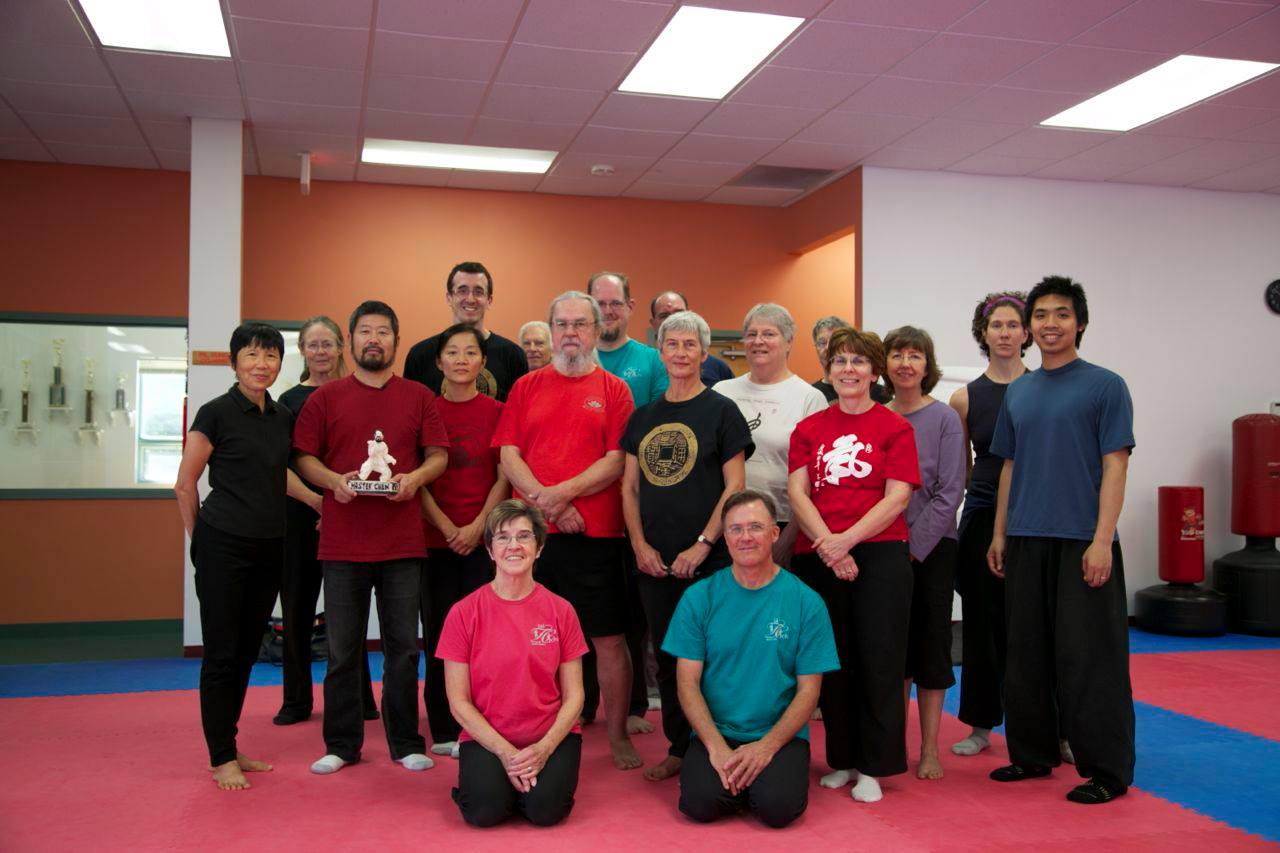
Photos of the workshop can be found on Facebook.

The following are my raw notes from the workshop:
- Create the arch in different segments of the body from hand to foot
- Don’t move the hand, stretch the elbow from the hand.
- Always aim at the largest part of the body since we shoot all over the place, and it’s useless. For now, the torso, later the spine, even later something smaller. Read more
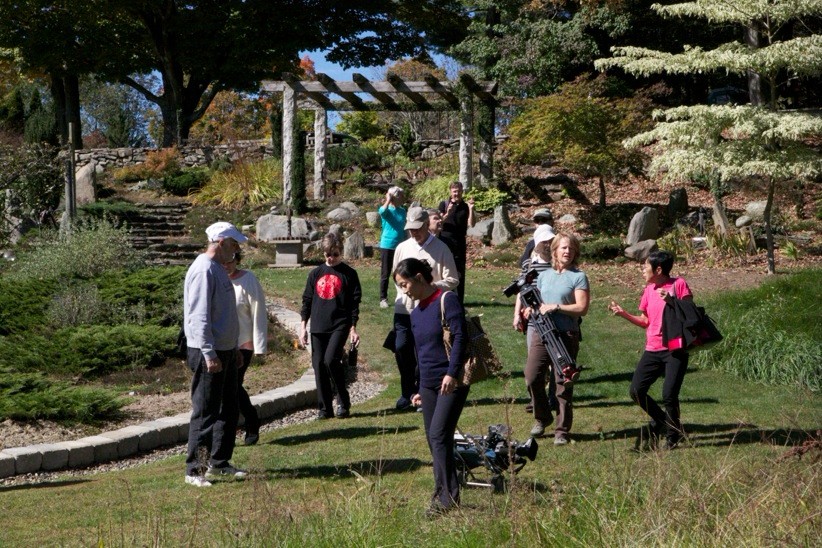
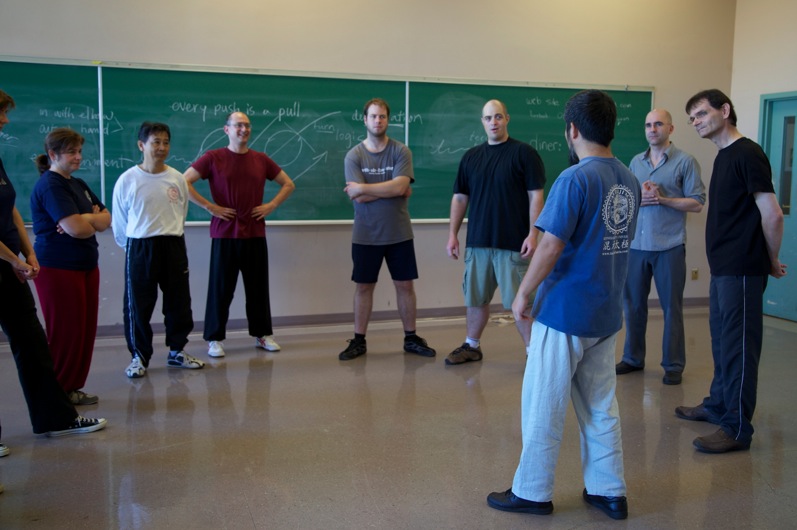
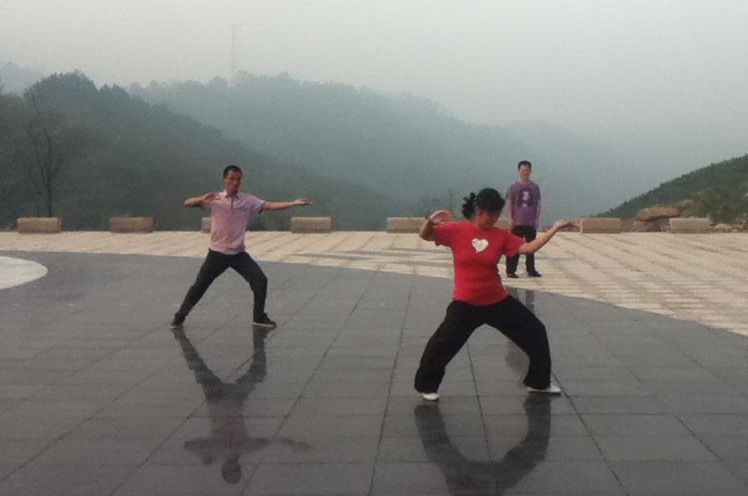
Just arrived last night. Ready for the workshop today. Here are some photos taken this morning:
[wowslider id=”30″]
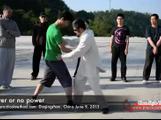
Shot during private session in Germany, this video goes through several basic principles in generating different forces to unbalance opponent during push hand.
Presenter: Chen Zhonghua Length: 10 min. In: English Year: 2013 Difficulty:2/5 At:Germany
In this video Master Chen went through detailed nuances of the circle via student corrections. This is the definite video for details in circle, the mother move for Chen Style Taijiquan. Presenter: Chen Zhonghua Length: 41 min. In: English Year: 2013 Difficulty:3/5 At:Vancouver
Bruce Schaub Push Hands Learning with Chen Zhonghua 2013 in Toronto, Canada.
[wowslider id=”28″]
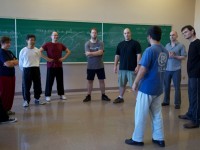
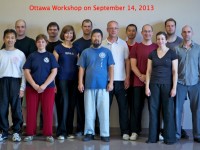
For those who went. please leave comments
Still Water is a coded term used in old Taiji manual on how tremendous power can be likened like a flow of water. Master Chen show how to train for this and its application.
Presenter: Chen Zhonghua Length: 15 min. In: English Year: 2013 Difficulty:4/5 At:Daqingshan
Tuesdays from 6:00 – 7:30 pm
Content of Classes:
- Fundamentals of Chen Taiji Practical Method Read more
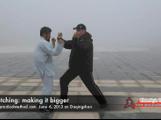
In the context of the first move of yilu, Master Chen taught various students how to do it with stretch and power.
Presenter: Chen Zhonghua Length: 12 min. In: English Year: 2013 Difficulty:2/5 At:Daqingshan
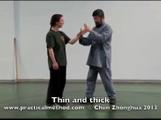
Demonstration how thick and thin shape relate to power
Presenter: Chen Zhonghua Length: 10 min. In: English Year: 2013 Difficulty:2/5 At:Edmonton
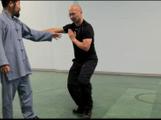
Correction from step back to jade shuttle and few more moves. Focusing on common error on elbow-hand relationship.
Presenter: Chen Zhonghua Length: 6 min. In: English Year: 2013 Difficulty:1/5 At:Edmonton
Theory and demonstration of relationship between power and movement.
Presenter: Chen Zhonghua Length: 16 min. In: English Year: 2013 Difficulty:2/5 At:Daqingshan
Read more
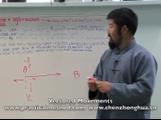
Theory & demonstration of how to create additional dimension to generate a vectored power
Presenter: Chen Zhonghua Length: 3:29 In: English Year: 2013 Difficulty:3/5 At:Edmonton
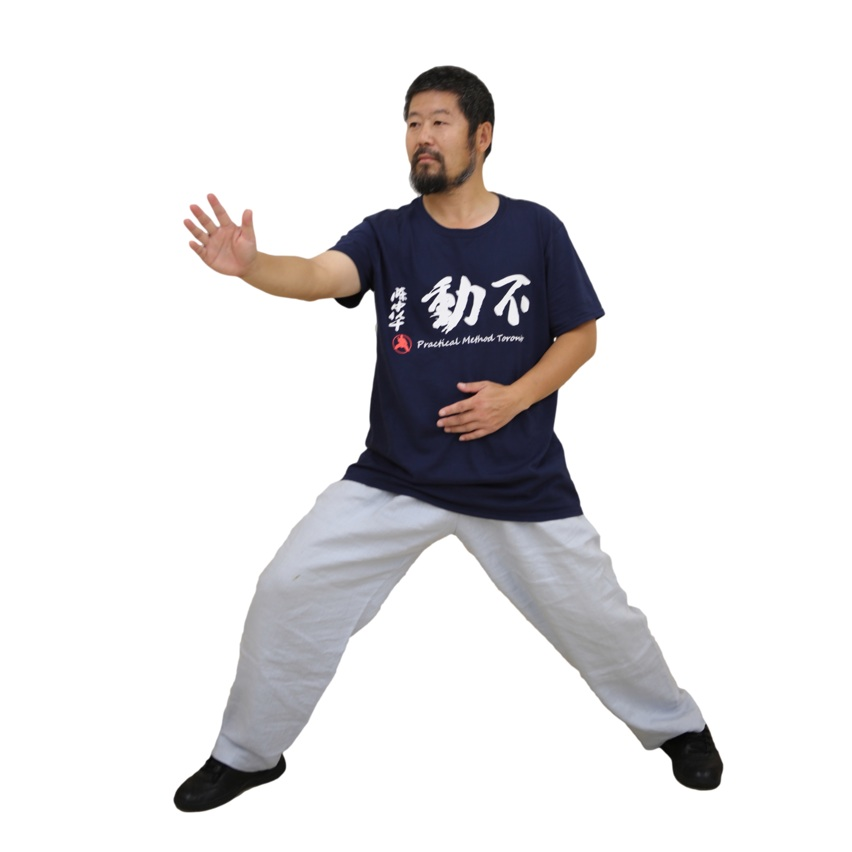
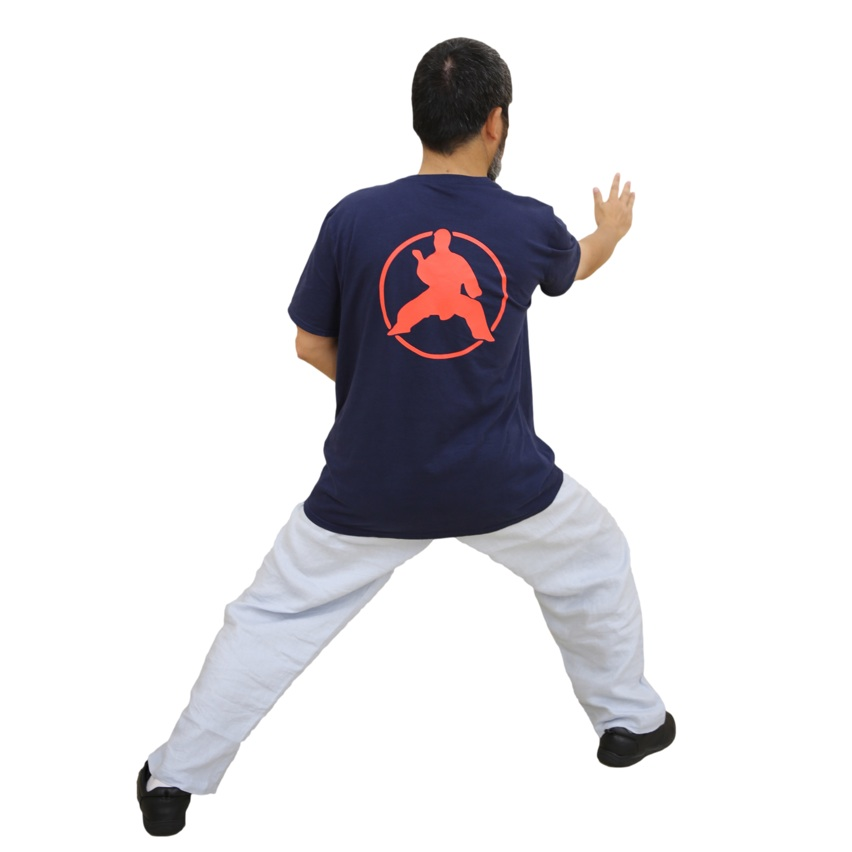
Name: Don’t Move The Original

The front graphic features Master Chen’s own calligraphy of 不動 meaning “Don’t Move”.
Read more
If I were asked what I thought the key to learning Taijiquan was, I would have to say that it is the ability to break and change old habits, both physical and mental. Because habits are usually formed at a very young age and have gone unnoticed for so many years, most people are slaves to their habits. Bad habits are usually very difficult to identify and in most cases, nearly impossible to break. Like everything else, I feel that in order to be able to understand and deal with a certain issue, one needs to go deep into the mind and explore its roots and how it actually functions in the human psyche. Read more
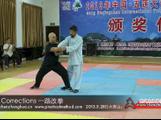
A series of yilu corrections of different students during May competition, it is a good video to see how different each students do the Yilu portion and common mistakes.
Presenter: Chen Zhonghua Length: 40 min. In: English & Chinese Year: 2013 Difficulty:1/5 At:Daqingshan
Tai Chi skills are acquired accumulatively (through hard working). If you don’t have a solid foundation, it’s hard for you to advance. Even if you can do foundations very well, you still have to be able to implement them into yilu practice. Push hand skills/abilities are rooted in yilu. Master Chen has presented us an overwhelming amount of knowledge. What we need to do is to digest and piece together his teaching into our own unified body of knowledge. One skill leads to another skill. Through practice, we are getting better. The criteria of “better” is not how “fine” you can do an specific form. It is how many skills you can relate and execute at one point. To learn is to synthesize.
Once the student is more advanced and the process of opening up the body is well under way, the body will naturally start adopting many of the fundamental principles of Taijiquan. When the practitioner is able to demonstrate that his mind and body both have a good grasp of such things as connectivity, separation, differential in movement and spiraling, the body will be able to move in such a way that the limbs will be powered by rotations occurring in different parts of the body, much like a gearbox. Once this has been achieved, the next step is for the student to meticulously go through each move in the form and learn its applications. In this step of the systematic process, the student will be required to experiment with and refine all of his knowledge and understanding and start applying it to real situations. This will help consolidate and solidify the practitioner’s overall understanding of the different movements of the form as their function and purpose will progressively become clearer. This is the point where everything starts to finally make sense. Read more
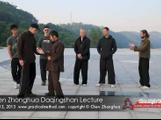
Demonstration on how to use the hand to create a ‘catch’ on opponent
Presenter: Chen Zhonghua Length: 21 min. In: English Year: 2013 Difficulty:2/5
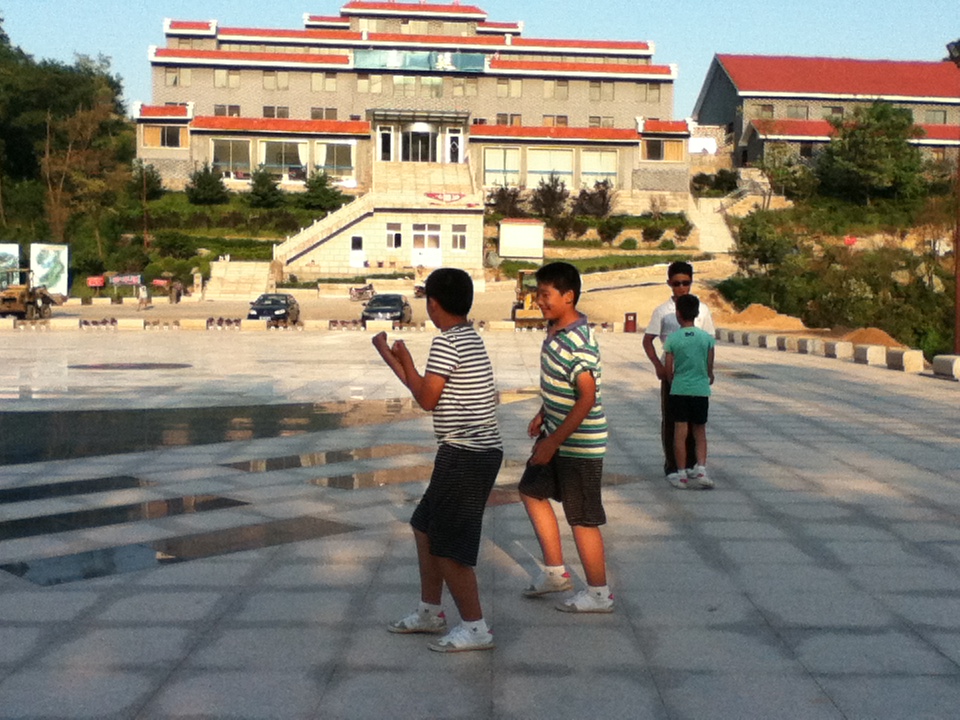
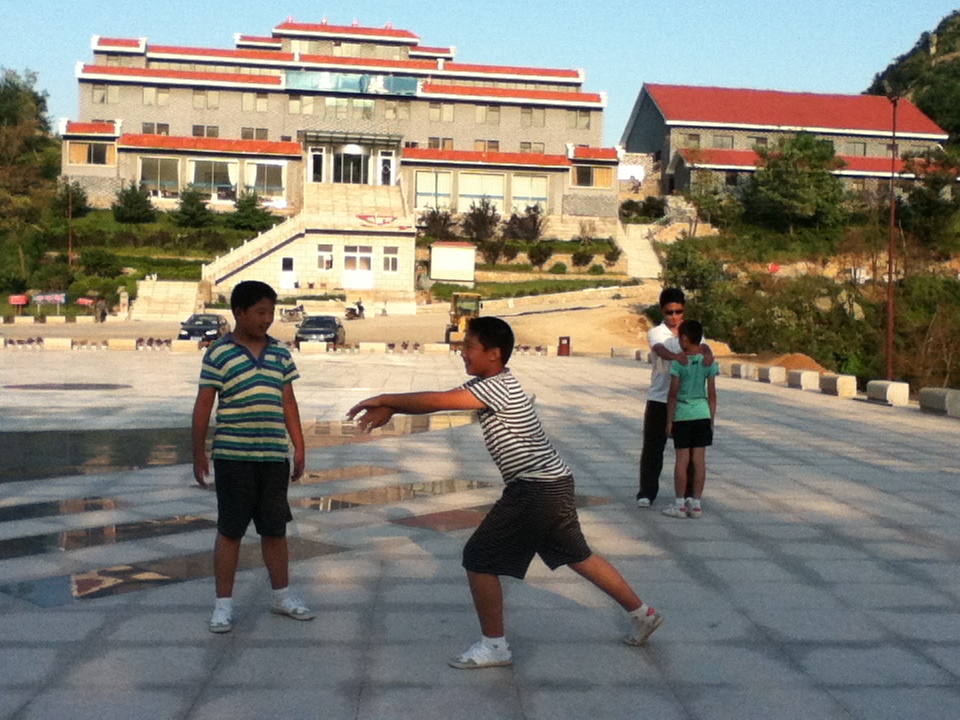
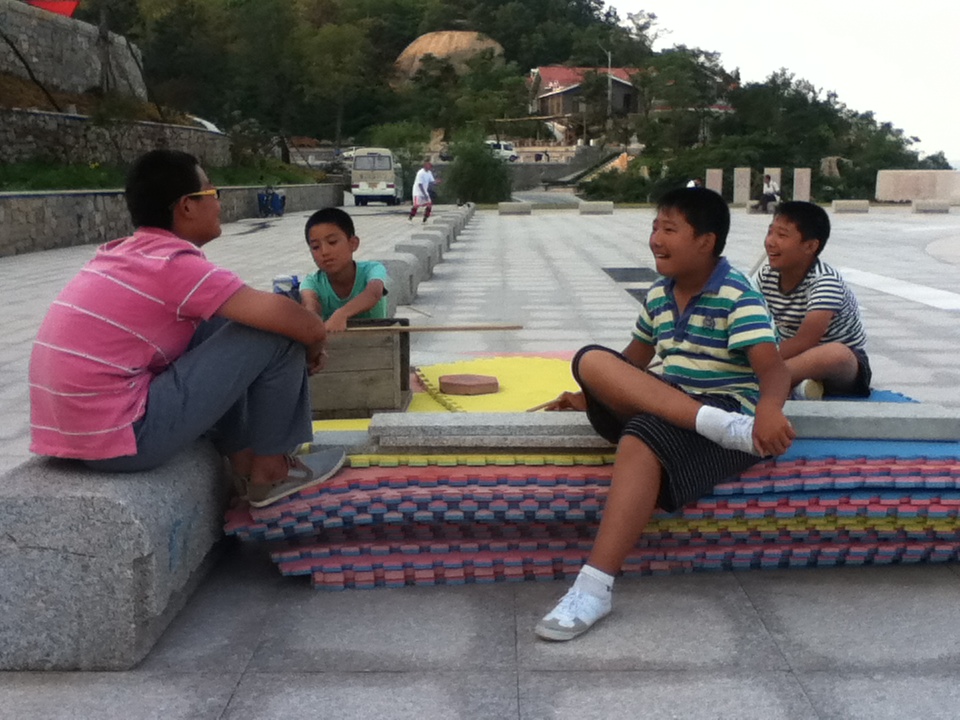
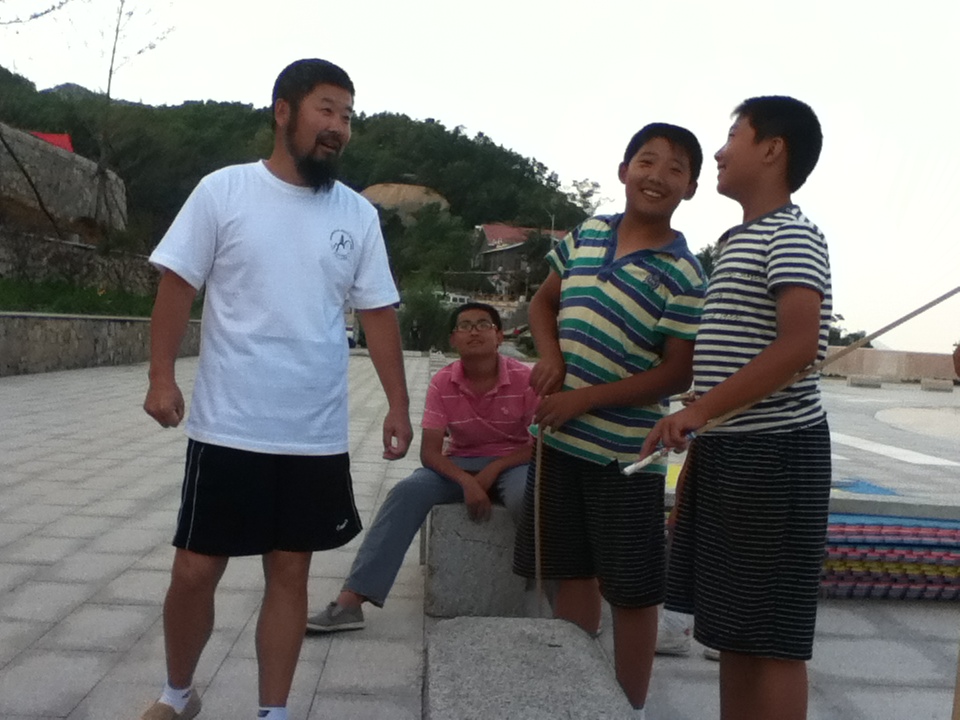
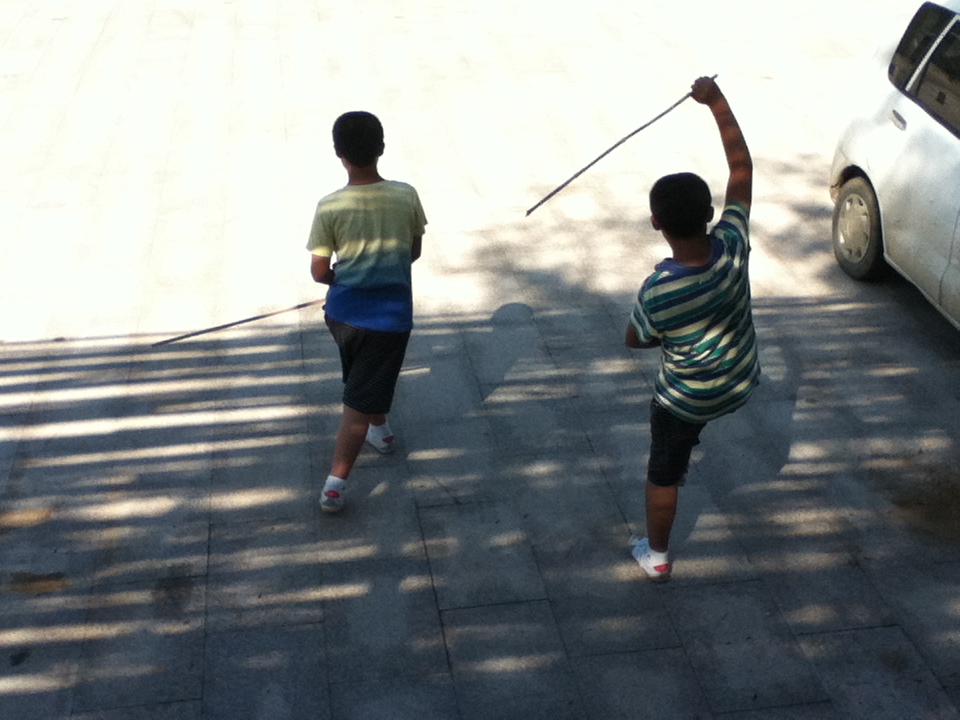
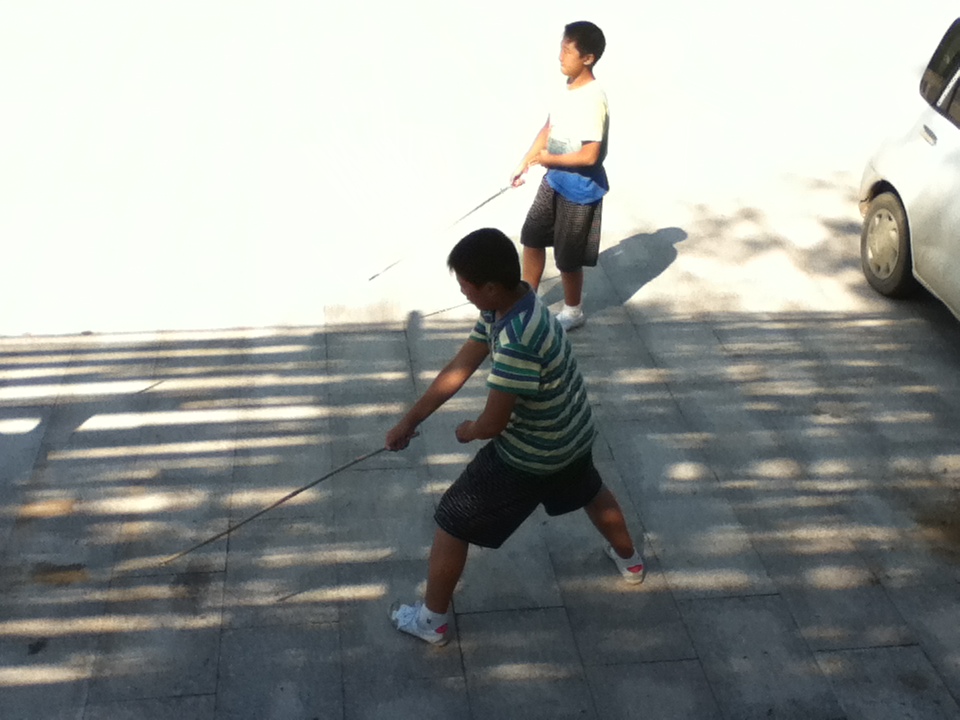
I am impressed with how much work these boys put into practice everyday, and I can see their progress. They have finished learning
Yilu and sword choreography and now learning the details
Around 4 pm there is some shaded area where we practice before dinner. Video below
Read more
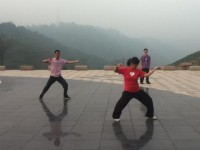 We did part horse mane stepping foundation, we just do these along a line. Master Chen said this move require rotation so the body move in a straight line and the arms movement need to keep elbow in.
Another moving foundation is synchronized double negative circle hand opening, during closing we turn the body 180 degree to face the other side, step, then open the arm again. Master Chen pointer is to not open the hand out until you have sure footing, you can not do action during stepping, need to be ’empty’. This is a common error when student step in during push hand, as the tendency is force oneself in. If the opponent feel force then he will immediately resist