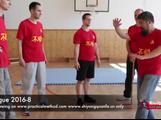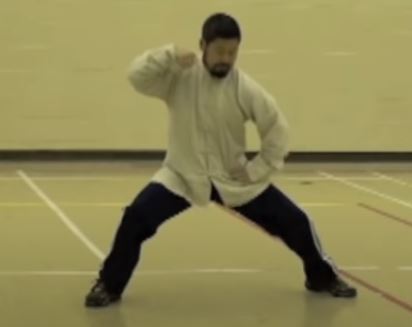
stepping exercise, 2 kua turning of the joint
Presenter: Chen Zhonghua Length: 10 min. In: English Year: 2016 Difficulty:1/5
stepping exercise, 2 kua turning of the joint
Presenter: Chen Zhonghua Length: 10 min. In: English Year: 2016 Difficulty:1/5

Location: Vine Cliff Park – Vine Cliff Blvd and Hazelton Ave.
Date: Apr 9, 2017
Time: 8 am – 10:30 am
Instructor: Kelvin Ho
Fee: Free and open to public
If it rains that day, the event location will be moved to:
Bayview Hill Community Centre (open area near the pool)
114 Spadina Rd, Richmond Hill, ON L4B 2Y9
This open class is an event to pre-celebrate World Taiji Day, which will be on Apr 29, 2017. It welcomes anyone interested in learning tai chi. It will let participants experience a typical class, which includes foundations, form and push hands.
See you there!
Registration is recommended, please contact Kelvin Ho by emailing kelvin.ho@practicalmethod.ca or texting 647-738-8384.
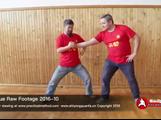
foundation exercise to develop three way power
Presenter: Chen Zhonghua Length: 10 min. In: English Year: 2016 Difficulty:1/5
fetching water,
– you must be in front bow stance with weight on front
– back hand open on belly
– front arm down open hand to thigh
– move front KWA out as the only movement – when front arm moves bring elbow to body
Kelvin ho had us doing this foundation exercise today. Issues I had around the move that I experienced
1. Moving shoulders ( I needed to press down first, move the kwa and capture the internal movement to go across my belly rather than up to my back shoulder)
Kelvin indicated that once stretched I should hold it for a minute or two to help loosen the kwa.
2. Moving front hands and arms independently ( the kwa works like a lever attached to the rope and pail gathering well water; when the rope moves back and forth so does the pail) the hands and arm cannot move independently
3. stance too high , I needed to perform the above in a lower stance
Master Chen’s disciple Ping Wei will again teach Practical Method foundations, Yilu and Cannon Fist on June 4th (Sunday, 9:30am-1pm and 2-5pm) in Irvine, California. Registration for the workshop is required for all newcomers; the deadline is 5/26/2017. For location, details and all inquiries, please contact Al Yu at 949-331-2735, or via email: mralyu@yahoo.com.
Watching the teacher during practice sessions
In the beginning I used to observer my teacher’s external form. Where is his hands, the right or left moves first, what’s the next move, how high is his hands. Then I learned to observe beyond the physical form. Where is the weight, his focus, which parts of his body he is locking and releasing, path of movement and connection, parts that are strong and relaxed. How the weight is counterbalanced with hands out stretched, or leaning forward/backward.
Then Self-reflection and assessment is key. Understanding how the body works and moves. Physical appearance: grounding, stretching out, grounding more while expending to maintain balance.
Why we shift weight and settle into posture by dropping weight. – My observation of my teacher- dropping weight grounds the body and creates effectiveness. I.e. stepping into opponent’s space- weight forward – settling into pose, structure and weight drop to create effectiveness.
Toronto North York Taiji Class on March 30, 2017
3 steps
Half horse stance posture
Bring right hand 45 degree palm up – Just above the left thigh
Bring left hand near right hand 45 degree palm up, elbows touching in a straight line Pull elbows to dantian at the same time bringing left foot (with toes) in beside the right foot. Rest the heel of the foot. All should be one action, like a bullet.
Things to check.
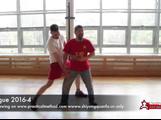
yilu stepping moves with yin yang in legs structure
Presenter: Chen Zhonghua Length: 10 min. In: English Year: 2016 Difficulty:1/5
Review of negative circle
– elbow in hand on outside
– drop hand strait down
– hand out once at elbow torqueing forearm keeping elbow down
starting in front bow stance after bringing in my elbow hand on outside, I found that bringing the hand down helped keep my elbow aligned when the hand went out kelvin Ho reminded me to keep my elbow down. We also performed cross hands draping over the body. Kelvin showed me how the end position had stability by aligning the elbow with the back foot with the fist out like a punch. Kelvin’s hand wrapped my punch and pushed.
Review of Positive circle
-elbow in do not move hand or wrist
– twist waist without moving hips
– hand out do not move elbow
– do not move off the finger line to the exact spot on the opponent
starting in front bow stance after bringing in my elbow, I found that when I twisted my waist my weight moved off the front foot. Kelvin Ho corrected this by calling out when my weight incorrectly changed from my front foot. The twisting of the waist helps bring the elbow to the centerline. It requires a lot of focus to keep the fingers leading when going out torqueing the arm while not letting the elbow get away and keeping it down.
Kelvin Ho was invited to perform taijiquan during multi-cultural week at Sir Wilfrid Laurier Public School on Mar. 23, 2017.
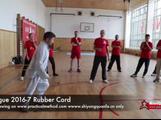
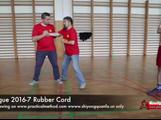
rubber cord practice for stance switching
Presenter: Chen Zhonghua Length: 10 min. In: English Year: 2016 Difficulty:1/5
Things to remember
6 steps
While still weight on right leg and left resting on toes
Right had negative circle (elbow from above), left hand negative circle – (stretching back)
Left leg open forward with heel
Step down (toes should be straight pointing straight forward)
Left hand negative circle and make a fingers “ring” (thumb touching middle finger)
Right hand positive circle
Things to check.
Elbows should be above left thigh
When arms stretched elbows should be pointing to the earth
Center always locked and stretched
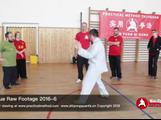
Introduction, Taijiquan push practice
Presenter: Chen Zhonghua Length: 20 min. In: English Year: 2016 Difficulty:1/5
‘ Behind Enemy Lines ‘
This is an expression Master Chen uses that I find particularly helpful in understanding the procedure for utilizing the method of fighting taught in the recent video ‘ Move into empty space ‘.
Engage the opponent
… this creates a ‘ front line ‘ like on a battlefield, causing the opponent to commit his troops to maintain that line. This is the same as the demarcation line. The key seems to be to cause the opponent to commit enough of his ‘ forces ‘ and attention to preoccupy him, while you move to step 2
Move into empty space ( Go behind enemy lines )
…. while maintaining the front line, you must use stealth to maneuver, another force to take up a position behind enemy lines, ( beyond the demarcation ( front line ) by moving into the empty space. The keys are, you must maintain the front line, the movement of the secondary forces must neither disturb the front line, nor should they be construed as a threat. In keeping with taiji threory, if the two ends are locked ( non moving ) this requires we move whats in the middle, ideally getting the kua in, (kua to kua)
Move the inside
Presenter: Chen Zhonghua Length: 11 min. In: English Year: 2016 Difficulty:1/5
1) Today we practiced not moving the knee forward during movements involving steping forward. Think of “stretching” hamstring and calf muscle as if knee pushing those 2 points apart (like a triangle )
Corrections in first movement when arms leads out to right after foot shovels forward-should be a positive circle leading with hand.
Also in first move as arms sweeps through to front, lead with elbow and don’t let arm or elbow drop lower.
In second movement correction was to make sure I never see my palm. Don’t turn wrist.
2) White Crane Spreads its Wings
Block Touching the Coat (Lan Ca Yi)
6 moves
Wrist cross (Like X) right hand on top of left, fingers pointing downwards.
Lower right elbow open
right hand positive circle, left hand close to left hip.
Shift weight on left foot, right arm positive circle and left negative right, leg stretch to horse stance (all same time) landing on heel
Rest the right feet
Stretch right arm positive circle
Six Sealing and Four Closing (Liu Feng Si Bi)
6 moves
Right hand positive circle twice (move 1, 2 and 3)
4 – Bring left hand middle of the right arm, both hands at the front of torso, left arm elbow touching left ribcage.
5- Pull left leg to rest toes near right leg – same direction and right feet
6- Rest both palms face down – fingers stretched – elbows slightly bend and tucked in
Single Whip (Dan Bian)
7 moves
1, 2, 3 twisting towel
4- Right hand thumb touches middle finger (making a circle) – right foot toes turns inside
5- left legs opens with heel horse stance
6- Rest the toes of left leg
7- Left hand positive circle
Adjust posture so elbows and knees are slightly bend and hands are stretched (Like T). Drop shoulders “resting” wrists stretched. Keep the right hand thumb touching middle finger (circle).
Turn Left and Buddha’s Warrior Attendant Pounds Mortar (Zuo Zhuan Shen Dao Dui)
6 moves
1- Left hand negative circle – right positive circle same time – both elbow in the middle of torso close to the body. Right fingers still holding the “circle”
2- Left opens negative circle stretched right hand near left elbow.
3- Standing Buddha’s Warrior– stretch arms, keep wrists straight and open the chest by stretching , tummy tucked in, left shoulder backwards
4- Open left feet from heel to left
5- Turn left while dragging right leg and resting on the toes of right foot (same as last moves of golden warrior – Pull right leg in front of you together with right arm resting on toes / elbow in – raise leg – knee should touch the elbow. Rest of the body shouldn’t move.
6- Last move of golden warrior except rather than fist in palm, left hand palm open rests on left hand (fist posture) (Legs same as starting position, elbows touching body.)
White Crane Spreads its Wings (Bai He Liang Chi)
4 moves
1- Hands cross X fingers down and stretched
2- Stretch your arms forward while right leg with toes only stretch backward, slightly right side, knee straight. Curve and lower the back.
3- Land the heel of the right foot – put your weight on right leg and lock your right side
4- Pull your left leg and land on your toes, while hands in positive circle stance. Left hand palm above left knee
Just recently we had the honor to serve as a story in one magazine in China “Women of China”. They have a print version beside their online platform at www.womenofchina.com.cn.
Here the two pages, thanks to Sarah Wang for the allowance to publish it.
At this point I also want to remind on our living project on the mountain. We still need some people who might be interested. Within the next season there are some candidates among our full-time students already. We are looking forward. All related information can be found … here
So here the article:
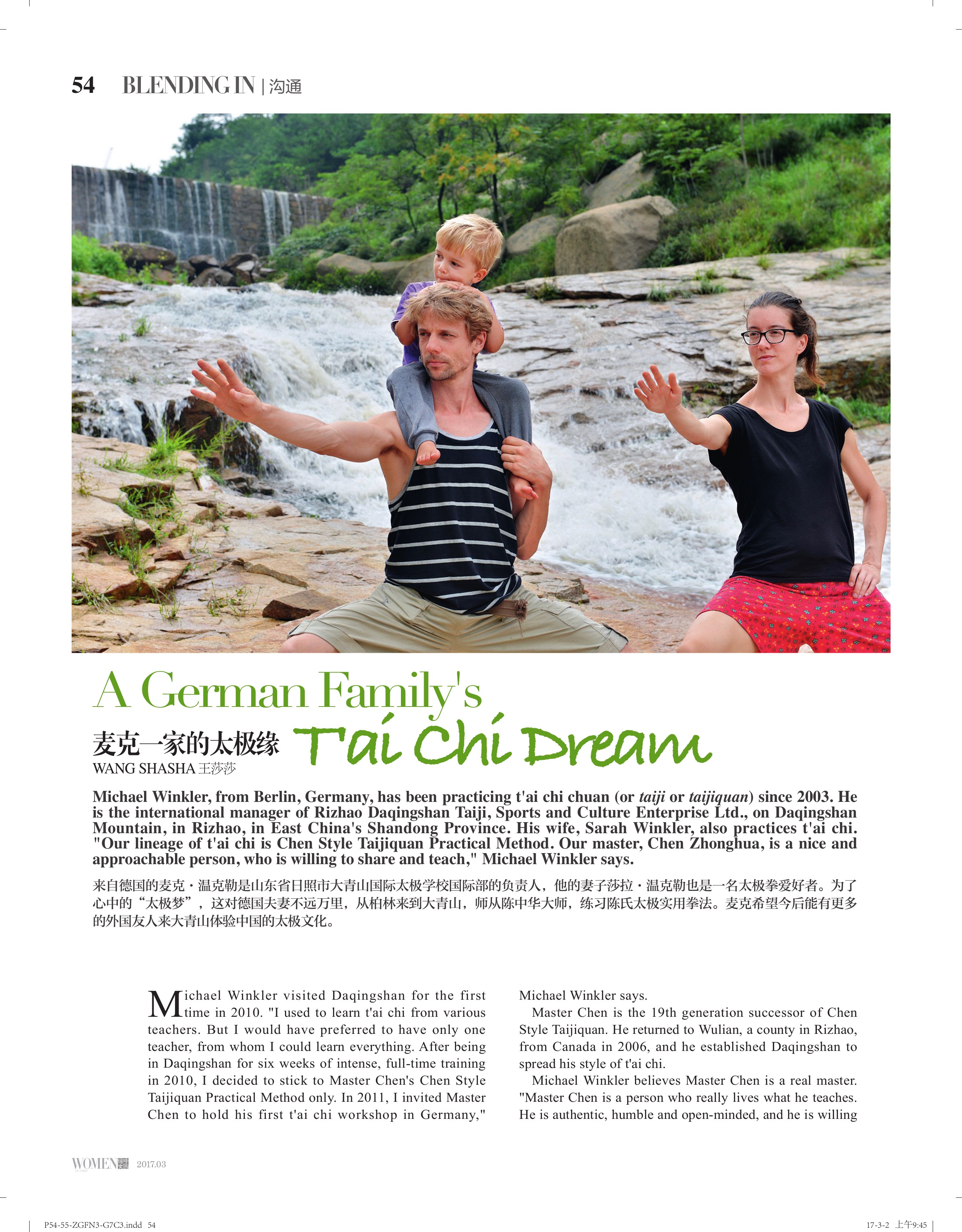
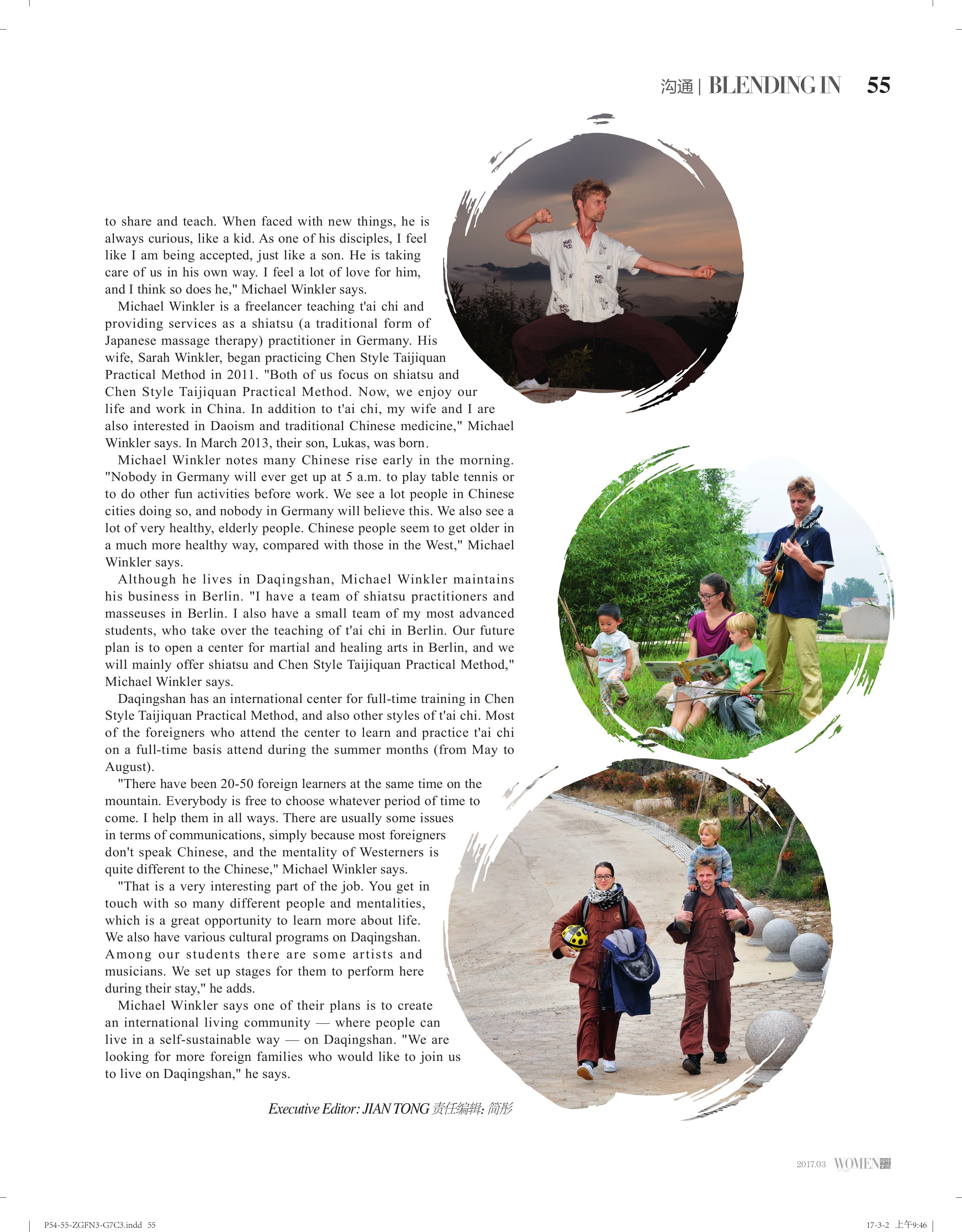
Presenter: Chen Zhonghua Length: 14 min. In: English Year: 2016 Difficulty:1/5
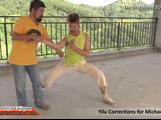
Presenter: Chen Zhonghua Length: 14 min. In: English Year: 2016 Difficulty:1/5
Like one drink sets an alcoholic back after 50 years of abstaining – so it is if we add a move (like move the hand)
Bigger from the kua
If you need to move the knee, fix the hip. If you need to move the hip, fix the knee.
Read more
Hello everybody,
I have a question about the shoulders or more specific the shoulder blades in these exercises.
Fetch water:
When you practice fetch water, does the (front) shoulder blade rotate/move up or down (the back)? As for the other shoulder, does it Always do the reverse?
My experience is that it rotates up and “over the shoulder”
Positive circle:
In the first part, rotates the (front) blade up or down and what about the second part?
My experience is that the blade in the first part rotates up “and over” the shoulder and in de second part it drops/rotates down the back.
Negetive circle:
idem, I can imagine it is the same as the positive circle.
Futher I feel a very distinctive flip when you transfer from the first part of the circle to the second part of the circle. I can remember master Chen talking about it in some videos.
Greetings,
Richard
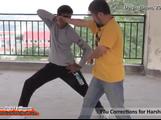
Presenter: Chen Zhonghua Length: 15 min. In: English Year: 2016 Difficulty:1/5
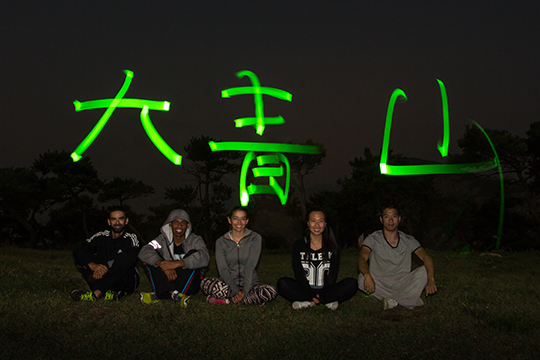 This week it’s been 2 years, since my magical journey in Practical Method Taiji started on Daqingshan Mountain.
Weather has already gotten warmer here in Greece, so last night I went on the balcony to do some Yilus. There is something special in practicing Yilu under the stars! A light breeze from the north, made the stars to shine bright in the dark night. As soon as I started doing the Yilu, immediately my first thought went to Daqingshan!
Having spent almost 7 moths on the mountain, we passed many nights under the sky, since we had almost every night training sessions at 20:00, which included mostly Yilus, foundations, push-hands from time to time and various events, mostly in the summer. Read more
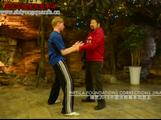
Intermediate Correction and Lessons for positive circle, twist towel, fetch water, double negative
Presenter: Chen Zhonghua Length: 14 min. In: English Year: 2015 Difficulty:1/5