Name: Don’t Move The Original

The front graphic features Master Chen’s own calligraphy of 不動 meaning “Don’t Move”.
Read more
Chen Style Taijiquan and Hunyuan Taiji email: practicalmethod@qq.com
Name: Don’t Move The Original
The front graphic features Master Chen’s own calligraphy of 不動 meaning “Don’t Move”.
Read more
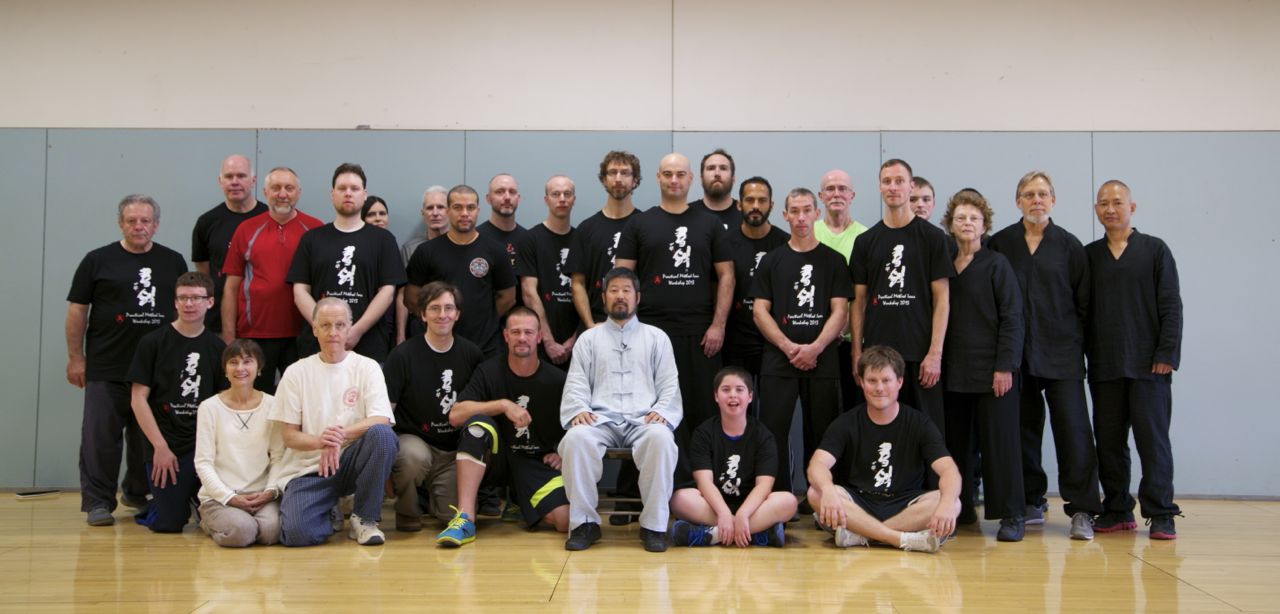 We are pleased to announce the return of Master Chen Zhonghua to the Upper Midwest, specifically Iowa, for a weekend workshop. We will cover foundations, form corrections, applications and push hands. These workshops are for everyone interested in learning taijiquan. No experience is necessary, just a willingness to learn. Hope to see you there.
Iowa Pratical Method Poster 2013.ai
[wowslider id=”38″]
Master Chen Zhonghua’s Phoenix Workshop
October 15 (Tuesday) to 18 (Friday)
Read more

Facebook Event: https://www.facebook.com/groups/practical.method.toronto/permalink/513006922096561
Feb. 9, 2014:
Agenda:
6:30 am – 10 Yilus
8:00 am – Examine our negative circles
 |
Chen Style Taijiquan Practical Method Toronto |
I am very impressed with Steve’s demos, he is able to explain his actions exactly like Master Chen with no deviation. It’s like deja-vu. I have heard the same explanations from Master Chen in a different place at a different time. I can learn so much from him.
 Ming’s post below captures most of the material Master Chen shared on the weekend. Here are a few things I wrote down or was told directly over the course of the weekend.
Main Theme: “Taiji movement must be Differentiated and Sequenced; in order to move like this, repetitive practice of Yi Lu is needed to habituate the body”, Read more
Below are the students authorized by Master Chen to teach Practical Method
Read more
Breaking a move to separate body parts.
1) push (hand extend to make the lever long)
2) turn (waist rotate to catch)
3) drop (use leg to generate downward force to cut)

Learning taiji online is impossible, but not impractical. The key to getting the most benefit outside of the classroom involves understanding what can be achieved and what can not be achieved and through this understanding develop goals that are obtainable. Read more
1. “To occupy strategic position you must fight for the meridian”. Read more
Raw notes and review by Calvin Chow
1. Foundation
A. Posture Training
Static posture of first form in Positive Circle. Horse stance – about 2 shoulder wide, rear foot point straight to the front. Front foot pointing 45 degree out and front foot heel is on the horizontal line of the rear foot toes. Rear hand rests on waist. Keep both kuas open, front hand stretches out with elbow vertical line not exceeding the top of thigh. Elbows always kept inside between thighs. Only hands can reach outside. Read more
Recently Master Chen was in Ottawa again to teach another three day seminar. On the last day I had the pleasure of attending. It began with some push hands, interspersed with Yilu practice and several exercises. During the course of his instruction Master Chen recounted many interesting stories and examples. Quite a number of concepts and principles were discussed, with the following notes summarizing elements of what I took away from this eventful day. Read more
一、关于基本功
单手圈:手臂放松,身体保持不动,坐腕(手腕伸直),肘顶肋,力落在后脚;出手不出肘,收肘不收手;手要高于肩,头不动手不抬肩下沉
正圈手在肘之上;反圈肘在手之上 Read more
This time is the third time I went to DaQingshan. I feel excited. I was lucky to have attended the first Daqingshan Chen style taijiquan practical method training course by Master Chen and Hong Sen, my father.
These notes were compiled by myself throughout the workshop held July 2-3. I have done my best to recapture important topics, therefore any inaccuracies are entirely on my behalf. The notes are presented as they were written – chronological and point form. Read more
Below are all the notes I took during this workshop, although they do not cover every day. Thank you so very much Master Chen and Allan, as well as everyone who attended. It was another excellent workshop, and was great to meet Ronnie, Charles, Lee, Drew, and Carlos. Read more
This is a lengthy review of how I came to know Master Chen, make it to DaQingShan(DQS), and what it was like on the mountain while I was there. At the end, I will post some of my raw notes from the many days on the mountain and some pictures. Read more
10:00 am-1:00 pm and then 5:00 pm to 8:00 pm. This is the only place I have a schedule like this but it actually is quite good with a long break in the middle.
Day one March 26, 2011. Foundations in the morning we only worked on positive circle. Lots of explanations and drills. In the evening we worked on the 13 moves of Yilu. Didn’t quite finish it yet but people were able to follow through it. A bit a adjustment for now and I am pretty sure tomorrow we will learn a bit faster.
Day two on March 27, 2011. During the foundations session this morning, we reviewed the positive circle and added negative circle and double positive circle. Lots of explanations. During the forms session in the evening we reviewed 13 moves.
Day 3, March 28, 2011. Morning finished all Basic Foundation exercises. Reviewed Yilu 13 moves. Evening 13 moves explanations. Applications and paired exercises.
Day 4, March 29, 2011. Morning. Foundations review. Theory. TV Station Interview. Afternoon Yilu 13 moves. More applications. In with Elbow and out with hand exercise. Block Touching Coat Application.
[nggallery id=97]
“Nobody has the patience to wait and spin. If I am reacting and someone is pushing, and I wait until he has enough friction, I spin and it works. But if I’m too impatient, he pushes and I move forward or backward instead of spin; it becomes a toss, because I go too early. That’s why you have to be patient, and you have to follow the rules. Following the rules is very difficult because when we see an opportunity we want to fight. And in taiji, the rules say you can’t. Even if he’s not blocking […] you have to wait until he comes in and then you can spin him.”
Original article: https://practicalmethod.com/2011/08/chen-zhonghua-on-peng-energy-on-chen-style-taijiquan/
I like this paragraph very much.
Nona
Perrie
James Tam
During this last weekend Feb 12-13 we were honored to have in San Juan, Puerto Rico an awesome Chen Style Practical Method Tai Chi Chuan seminar conducted by Master Chen Zhonghua and assisted by his disciple Todd Elihu. Read more
Corrections given to me were to do my movements bigger. Small movements at the beginning will cause you to make many mistakes in your movements. Read more
As master Chen requested, I am posting my raw notes from the Bentonville workshop. This was 4 days worth of notes. Read more
Fill it in, then add one.
Old analogies – Taiji is like a rolling log (in water).
Theory Method
Back silk knot Silk reeling Read more