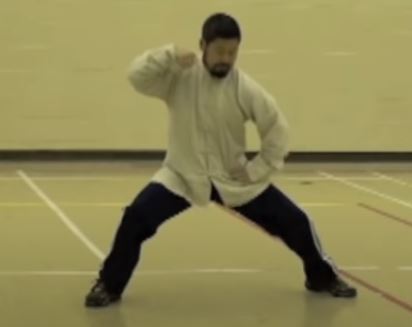
In taijiquan, there are only two basic movements: pull and push. When pushing, one needs to make the body behave like a stick so that the energy transmits through. When pulling, one needs to make the body act like a rope in order to transmit power. Different actions require different body shape and movements.
Master Chen Zhonghua will conduct a Chen Style Taijiquan Practical Method workshop in Ottawa, Canada from March 11-13, 2011. Read more
I had to make an emergency visit to Daqingshan. True to my tradition this year, I brought cold whether. Daqingshan had an ice and snow storm. Read more
Photo of porcelain from Longquan, Zhejiang, China
 With Mr. Shen Peixin, THE sword maker in China!
Longquan is about 4 hours south west of Hangzhou. I managed to fly to Hangzhou via Beijing on Feb. 26, 2011 after my flight from Vancouver. After spending the morning in Hangzhou, my friend Zhao and I started our drive to Longquan. As I do not have a driver’s license in China, the burden of driving fell squarely on Zhao. Read more
Author: Chen Zhonghua Length: 57 min. In: Mixed English & Chinese Year: 2010 Difficulty:2/5 At:Daqingshan, China Read more
I have increased the size of the video player in the individual post page. Click the post title from the home page to see the bigger video size.
Also, the listing for MyFolder is now titles only, to speed up loading time for those that has lots of videos in ‘MyFolder’.
Please let me know what you think in the comments.
Hangzhou stop-over on my way to Longquan.
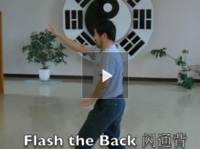
1. Step up to Kao (Whole Body Hit). 2. Step up to Squeeze. 3. Flash the Back. 4. Rubbing Exercise. 5.Direct Block and Enter. 6. The fourth move of Brush the Knee in Oblique Stance. 7. Same side (with Foot) Elbow Strike.
Author: Chen Zhonghua; Gavin Sandeman Length: 3 min. In: English Year: 2010 Difficulty:1/5 At:Ottawa, Canada
Arrived in Vancouver in the evening. Had supper with Gary, Jody and Wilkin. It was cold outside. We came to Wilkin’s for a practice. Showed how to create a “Stick” in the torso. This is a vertical stick that must be present at all times. It “awaits” the opportunity to act. It is half of the applications puzzle. The other half a similar “stick” in the arms. The arm stick works in the open while the torso stick works in the background. Read more
Vancouver tonight. Dinner and practice. Chen Style Taijiquan Practical Method in the park in Vancouver.
I am going to Longquan to source some nice custom-made swords. I will make some for Daqingshan and some for my school in Canada. Any one with suggestions? I decided to make a whole bunch because the swords they make are getting really high quality now.
I am going to Longquan to source some nice custom-made swords. I will make some for Daqingshan and some for my school in Canada. Any one with suggestions? I decided to make a whole bunch because the swords they make are getting really high quality now.
17 chapters of instruction on taiji push hands and applications. This is part of the 2010 Daqingshan full time course taught by Master Chen Zhonghua. While there are many applications and techniques taught in this video, the focus was on the differentiation of movement and tranquility (Don’t move) on corresponding parts of the body. Author: Chen Zhonghua Length: 48 min. In: English Year: 2010 Difficulty:3/5 At:Daqingshan Mountain Resort for Taiji
This is the private section of Chen Zhonghua’s Feb. 2011 Workshop in New York. It was meant to be a private teaching session for Michael Calandra and Dean Mayo. This video showed some higher level taiji skills and techniques and lots of training tips for students.
Author: Chen Zhonghua Length: 30 min. In: English Year: 2011 Difficulty:4/5 At:New York
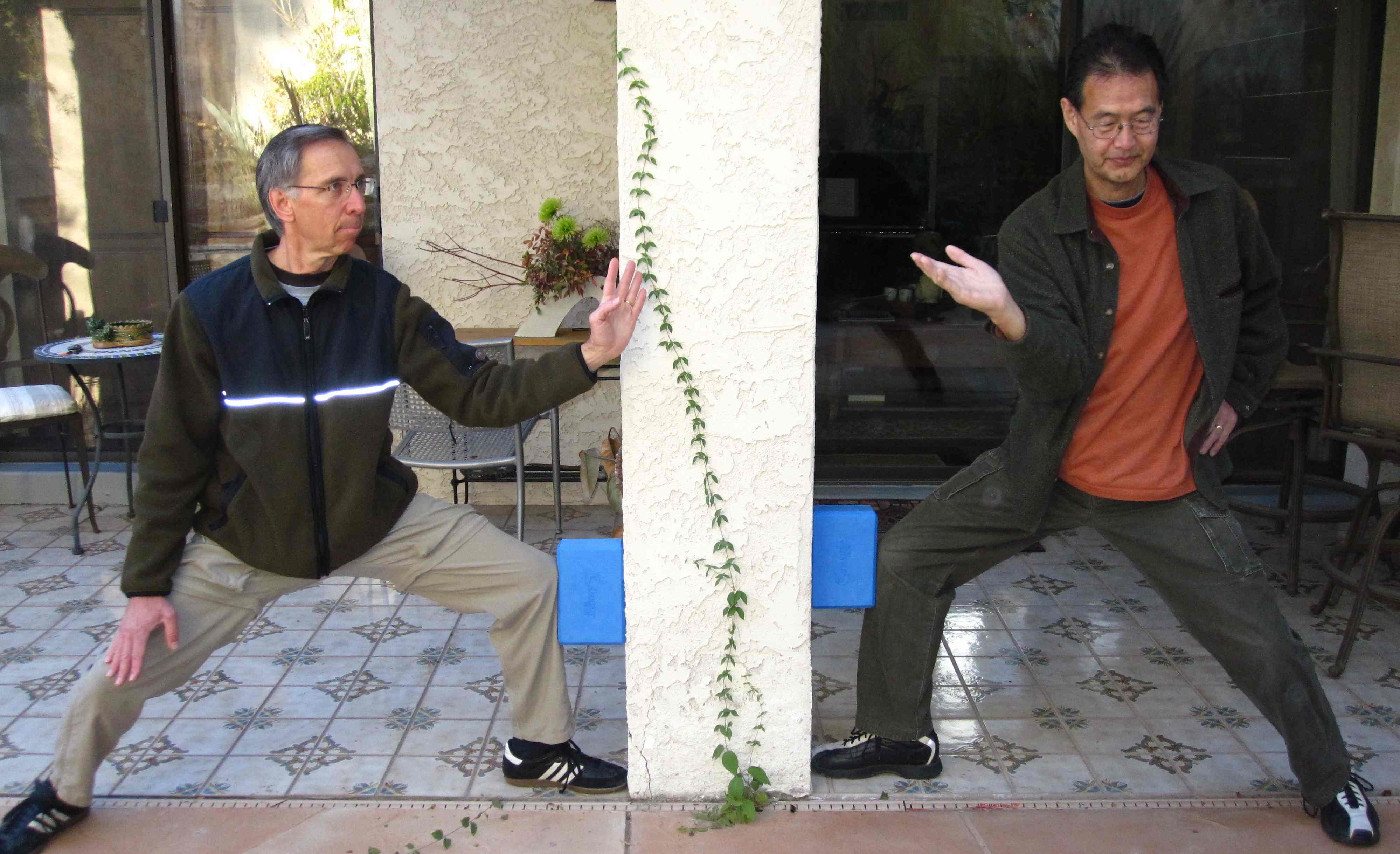
Gerry (left) and Ron (right)
When Master Chen visited Phoenix from Jan 31 to Feb 3, 2011, he introduced this new exercise to me. When you do the circles, put a yoga block between your knee and the wall, and use your knee to push very hard against the block. So, when you start to do circles, your knee is stationary. Your kua opens! Try it with the block, try it without. Eventually, you can do the circles without moving your front knee.The function of this block is that it allows free push of the body and kua forward and yet, the force transmits to the ground from the knee. Without it, the force applied forward will go out from the knee and not into the ground. Read more

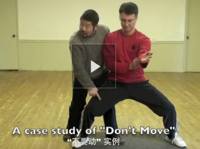
Push Hands practice, the meaning of “Don’t Move”
Presenter: Chen Zhonghua Length: 23min. In: English Year: 2011 Difficulty:1/5 At: Maple Ridge
It was a great workshop with tons of push hands. Thanks very much for all the hard work!
It was a great workshop with tons of push hands. Thanks very much for all the hard work!
[nggallery id=84]
I treasure every learning opportunity if I go to see Master Chen or he comes to stay with me (in Phoenix, Arizona). Unfortunately, I am such a slow learner, I won’t get sudden enlightenment. My goal of attending workshops is to learn one thing at a time. Read more
Thank you so much Master Chen and Allan for your time and patient, dedicated teaching over the last two days.
Of the scheduled full week seminar, I was able to attend just the final two days and they were excellent. We worked on foundations with an extra amount of stepping practice. Along with this were Yilu corrections. So much to work on, and really it boils down to how much time is put in practicing the given corrections…
Thank you again!
I am very pleased with all materials from Master Chen. I am checking regularly the website and Thank you for making available to a huge audience lots of valuable information, I greatly enjoy all the posts on the Practical Method website. Read more
During this last weekend Feb 12-13 we were honored to have in San Juan, Puerto Rico an awesome Chen Style Practical Method Tai Chi Chuan seminar conducted by Master Chen Zhonghua and assisted by his disciple Todd Elihu. Read more