Detailed Yilu corrections, Sticks and dot
Presenter: Chen Zhonghua Length: 69 min. In: English Year: 2013 Difficulty:2/5 At:Arizona
Detailed Yilu corrections, Sticks and dot
Presenter: Chen Zhonghua Length: 69 min. In: English Year: 2013 Difficulty:2/5 At:Arizona
There are 5 stages of practice. We can also call them five stages of learning.
Note: This is not the 5 levels of gongfu in Taiji. This is just the chronological stages of learning.
Leaking out of energy is a general error among Taiji learners. It occurs in many places and happens quite often.
This is quite difficult to explain. Let me use an example and imagine the following scenario:. Read more
 Correction of the entire Yilu. Presenter: Chen Zhonghua Length: 14 min. In: English Year: 2013 Difficulty:2/5 At:Toronto, Canada
Presenter: Chen Zhonghua Length: 48 min. In: English Year: 2012 Difficulty:3/5 At:Phoenix, AZ. USA
Xu (1)虚: Empty.
Shi (2) 实: Solid.
One is empty while the other one must be solid. Taijiquan is the art of Empty rooted in the Solid and vice versa.
Empty and Solid must be equal. Use the feet as an example. One cannot stand on one foot and then the other. One must be on both feet at all times. But one foot is used to work while the other is used to support.
This is the overall way of action in Taijiquan.
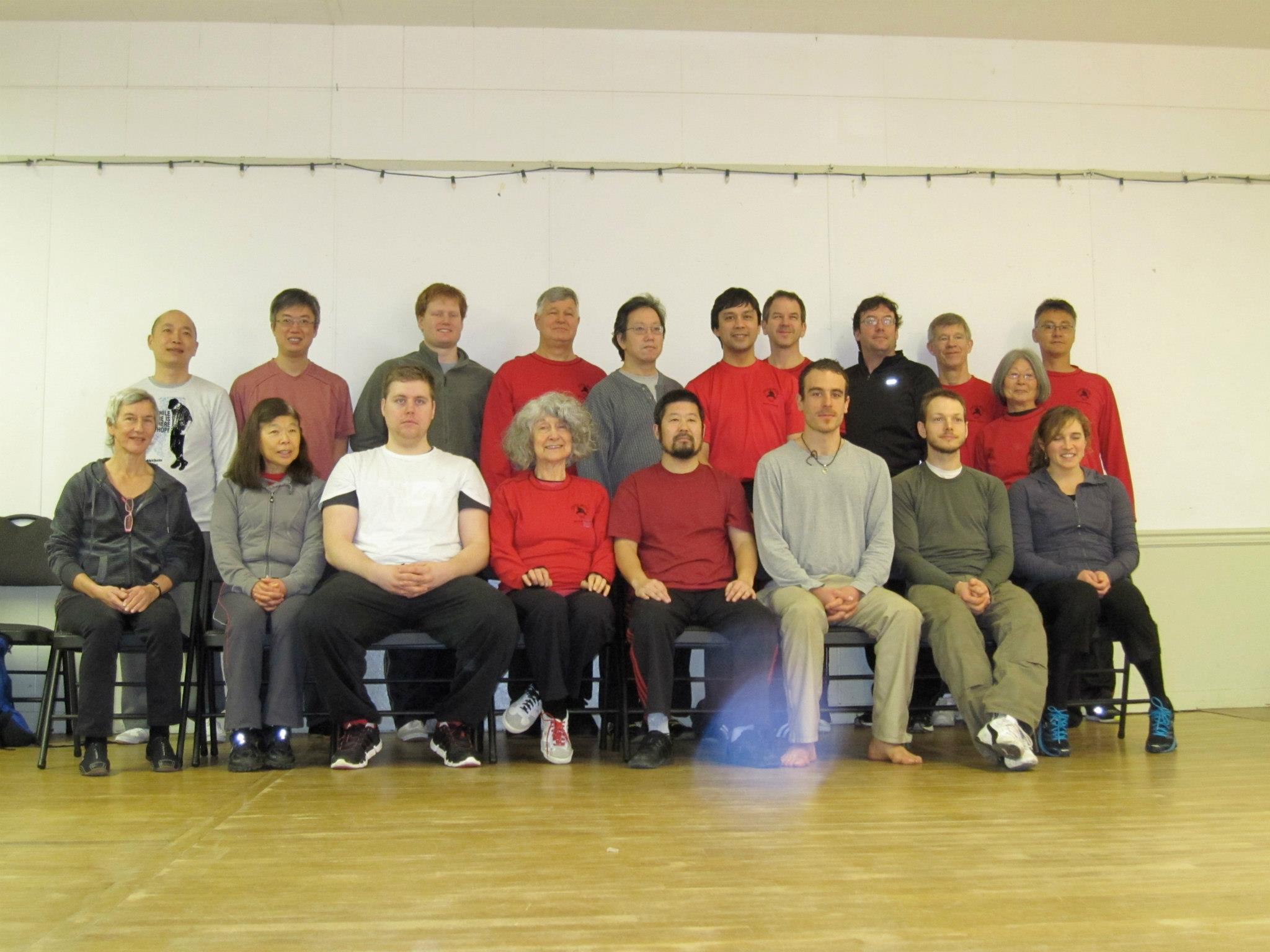
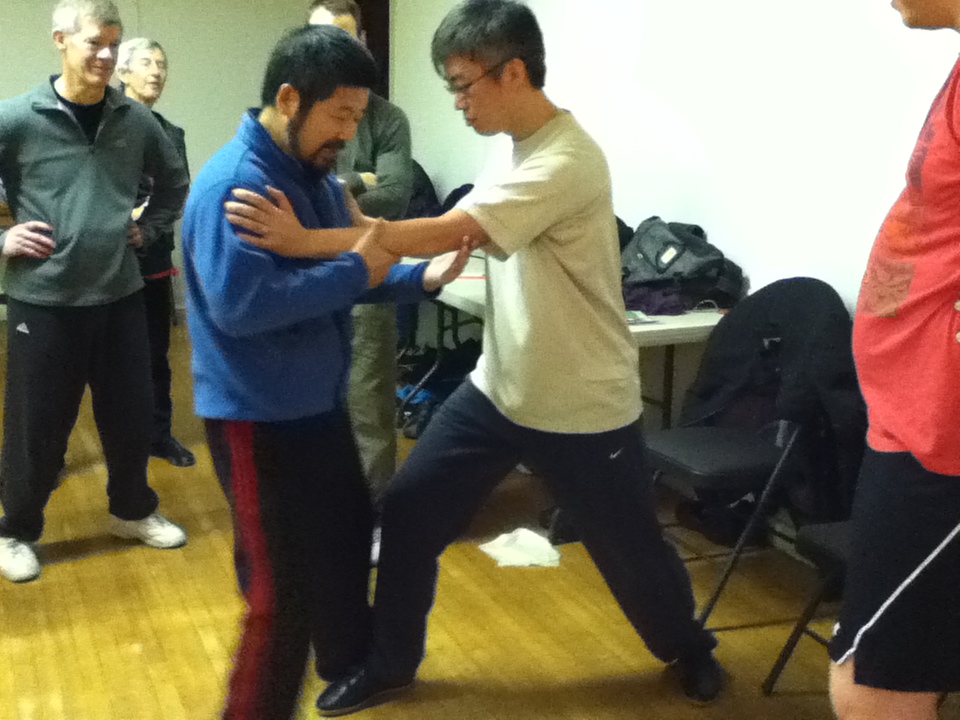
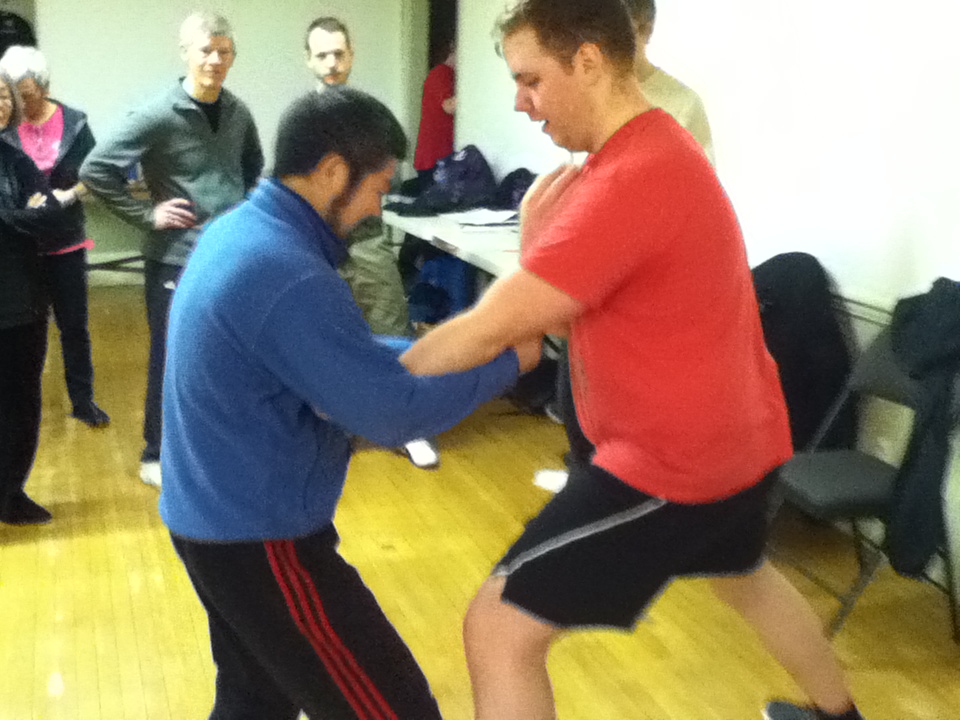
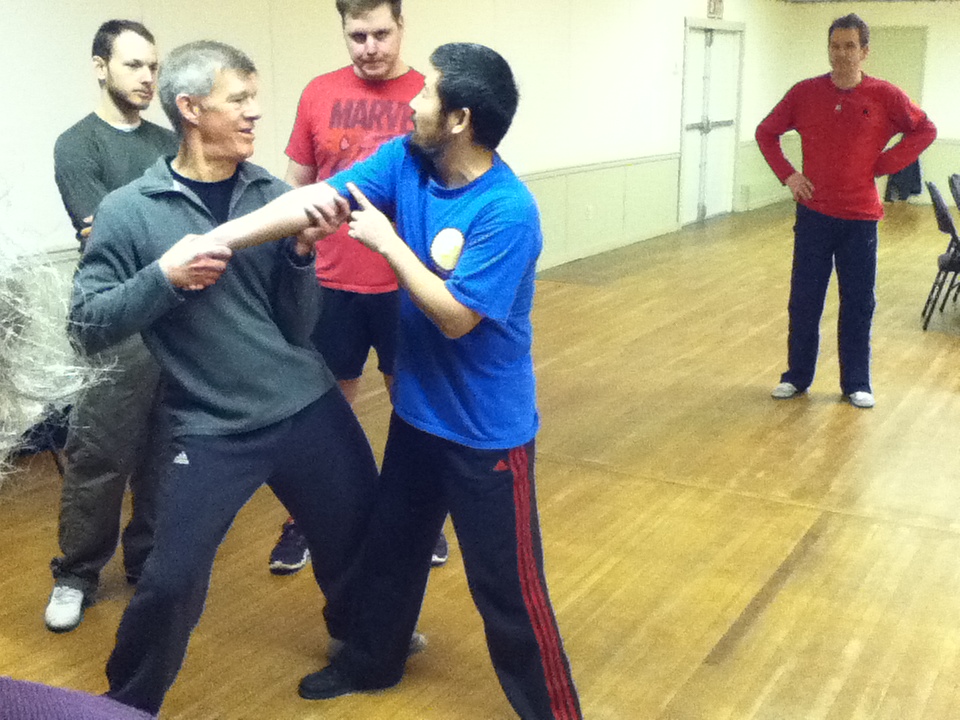

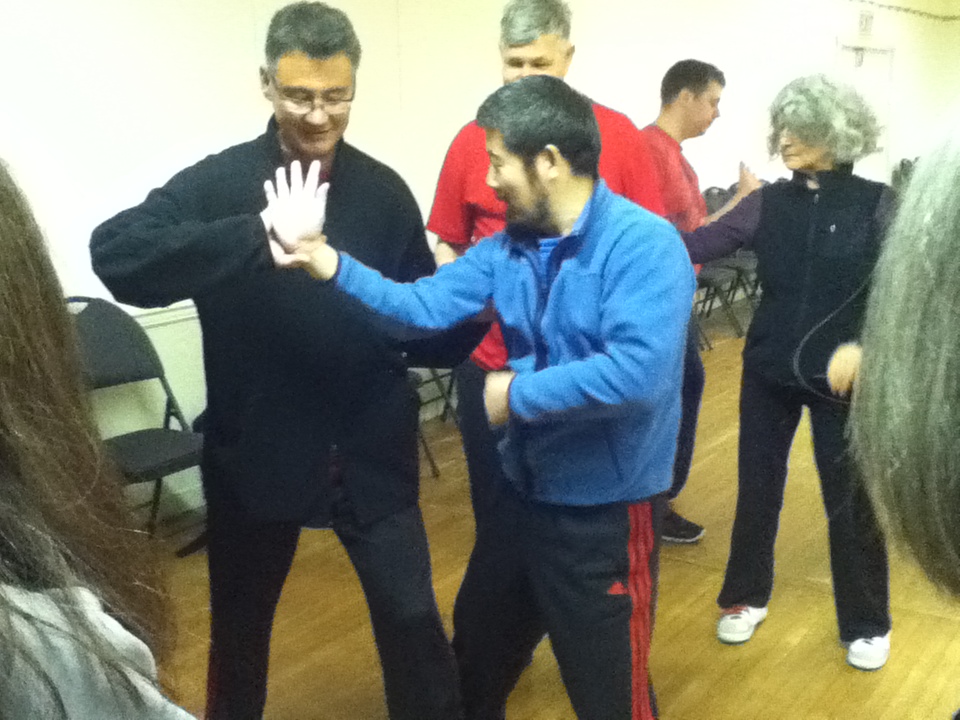
Did a lot of push hand this workshop. Master Chen gave us training tips to get ready for competition in May at Daqingshan. One thing I have to keep in mind is to be willing to fall down then try to get away or shove back. Always get in!
 February 23/24th Maple Ridge workshop.
Well first of all, this was my first time meeting Sifu Chen and I meant to write this as soon as I got back from the workshop and everything was fresh in my head. I say that only because the sheer amount of information taught in this weekend seminar is astounding. In almost every other case you could never hope to learn quite so much on many diverse subjects in this short time for such a low cost. It’s very clear that Sifu Chen is very passionate about just teaching the real deal. Read more
Taijiquan practice requires that the body must possess five bows in order to have power. There are different versions of what the five bows are. In the Chen Style Taijiquan Practical Method system the five bows are defined as:
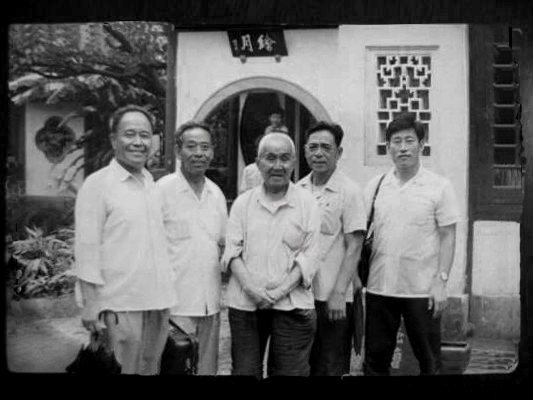
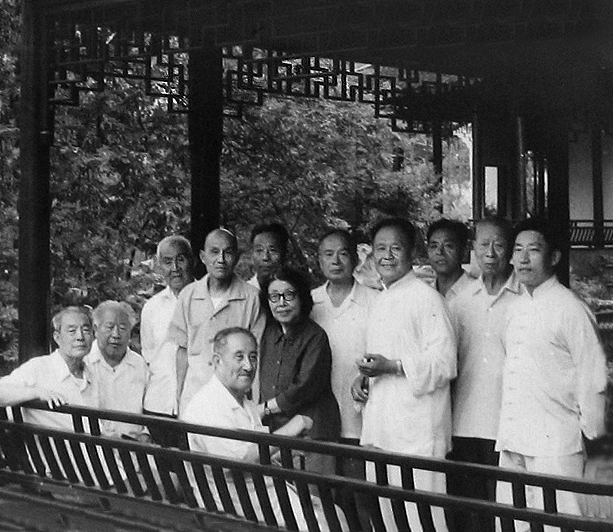
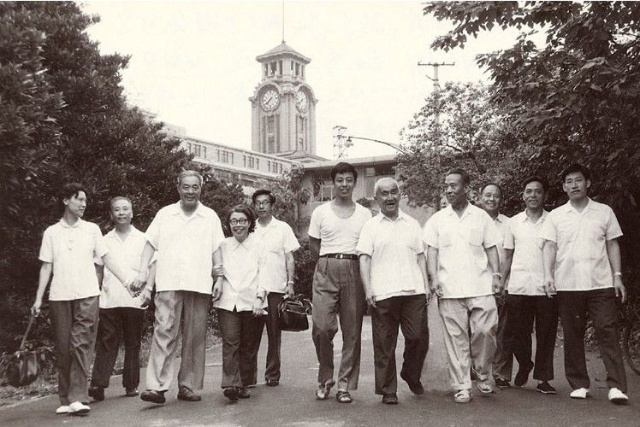
1982 Shanghai
One part of the body always likes to follow the direction of movements of other parts of the body. This will cause tossing and collapsing. If you observe people practice Taijiquan, you will notice that this is a very prevalent problem.
When one’s own body parts follow each other, there will be no possibility for rotation in the body.
The cloud-like moves usually are the result of the mistake. It is something to be circumvented, not something to be desired.
Originally published Nov 2007
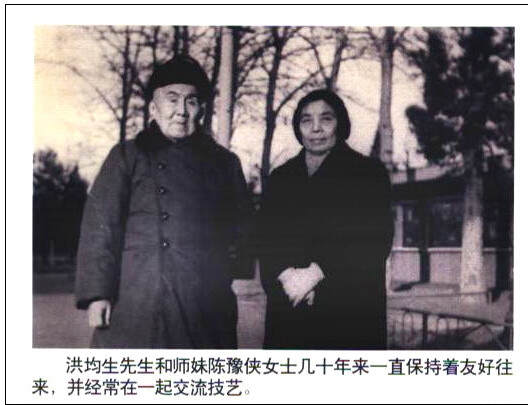
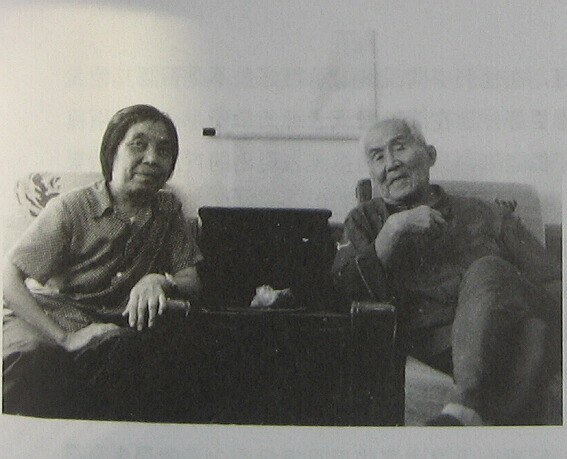
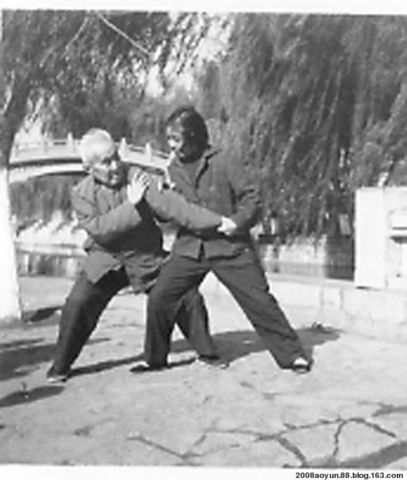
Chen Yu Xia 陈豫侠 is Chen Fake daughter
Paramount in human behavior is habit. Habit is the hidden addiction that controls every human. The human learning curve is a downward line as we age.
 Also known as KT, KT Lin. Male. Born in 1953. Now live in Hong Kong.
Studies Wu Style Taijiquan briefly from Grandmaster Ma Changxun in early 1980s.
Started to learn Practical Method from Master Chen Zhonghua since October 2009 and became an indoor disciple of Master Chen in May 2011.
Visited Daqingshan once a year since 2009. Wrote LEARNING PRACTICAL METHOD ON DAQINGSHAN (1), (2) and (3) to record his experience in learning Practical Method.
Adding one power is a technique to transmit power. It is broken to two steps, first to bite or catch opponent, second action is to add power to finish it. Introduction, Explanations, Key Points, Applications, Student Practices
Presenter: Chen Zhonghua Length: 42 min. In: English Year: 2010 Difficulty:3/5 At:Edmonton
Dear Master Chen,
If I listened correctly you don’t move but rotate to change angles. I have a question about the positive circle. In the first half if you lead with the elbow it seems the angle in the elbow gets sharper. Is that a move or does that happen through rotation? As far as know a rotation isn’t considered a movement. Also what happens when you keep “pushing” the elbow in the line of the shoulder and hand to create power? It look likes the elbow is dropping away from the line which should make the structure weak. I can’t seem to unite these directions although I think I understand them separately.
Greetings,
Richard
To experience “two ceilings”, wedge your thigh under a picnic table, push upward against the table, then, you have the “waist ceiling.” If you don’t have the “waist ceiling,” you don’t have the “crown ceiling” either.
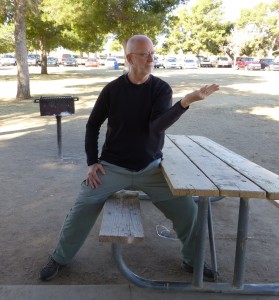
(In the photo: Marvin Glotfelty)
Yi Lu is one of two forms in the Chen style Taijiquan lineage of Chen Chanxin who condensed the postures of the 7 barehand forms of Chen Wanting into 2 forms; Yi Lu and Er Lu. Yi Lu is the training form of Chen style Taijiquan.
1. Rotation and movements. 2. Fetch water exercise. 3. Loose and tight. 3. Breathing. 4. Connected spiral. 5. How to touch. 6. Alignment and energy movement. 7. Chen Zhonghua demo of Yilu 13-21. 8. In with elbow. 9. Sinking involves a stretch. 10. Taiji movements are not normal. Read more
One of the most important tasks of Hunyuan Qigong practice is to “calm down the mind of the monkey and the intent of the horse.”
Read more
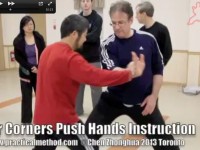 In this ten-minute mini video, Master Chen Zhonghua taught the essentials of the basic single hand push hand pattern: four corners push hand drills. Important push hands principles were given and the drill was designed to bring out the principles of using power in the practitioner’s body. Presenter: Chen Zhonghua Length: 10 min. In: English Year: 2013 Difficulty:2/5 At:Toronto, Canada
” … the problem is not speed, but timing. Rather than moving too slowly, most students of taijiquan will in fact move too soon. This point stresses the importance of push-hands training which develops the kind movement and timing necessary to be able to receive the energy of your opponent and then to send it back out like a spinning tire.” A quote from Master Chen
 Presenter: Chen Zhonghua Length: 7 min. In: English Year: 2010 Difficulty:1/5 At:Edmonton
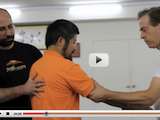
1. Moving without movements. 2. Add one. 3. Full movements. 4. Stretches of the legs. 5. Revolution with rotation. 6. Hand and foot connection in circles. 7. foundations exercises. 8. Dot coming out. Presenter: Chen Zhonghua Length: 44 min. In: English Year: 2012 Difficulty:4/5 At: Toronto, Canada
Happy Chinese New Year to Master Chen and everyone!
 |
Chen Style Taijiquan Practical Method Toronto |
 When doing the bare-hand form and pushing hands with an opponent, one must keep the power constant. This is one of the characteristics of Chen Style Taijiquan Practical Method. By keeping to this principle, one will gradually gain more internal abilities.
This is a simply application of “Front Trick”.
Chen Zhonghua: checkered shirt.
Daniel Mroz: black pants.
Photography: Allan Belsheim.
Read more
Chen Style Taijiquan Practical Method classes in the Durham area by Lin Lin Choy: linlinchoy@gmail.com
Concord: The Forest Society on Tue. 5.45 to 7.15 pm
When you are stepping, which is a global move called revolution, you are free to move your knee.
Once you finish this move, in which case, you have landed your foot and fixed your foot as an anchor, your knee should also be fixed. Read more
Open House March 3rd 2-5 pm Weekly classes start March 6th
Schedule, details, contact, click here
or contact us: warriors.place@yahoo.co.uk
Also we would be happy to meet other UK practioners
[wowslider id=”13″]