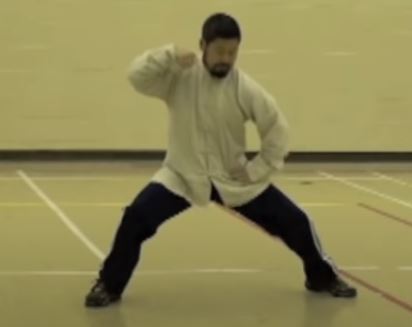
Presenter: Chen Zhonghua Length: 1 mins Difficulty: 3/5 Language: English Year: 2021 Location: Edmonton, Canada
OK. We all know Rotation is important in Practical Method. We also know that every move comes as a result of the rotation of the torso, stemming from the opening of the Kua. What we don't know is that if we try to rotation with our normal body mechanics, we are not rotating. We are, in fact, tossing.
Master Chen Zhonghua gives several instances of how to recalibrate the body to accomplish a Rotation!
Circle: the circle drawn by the shoulder must be bigger than the circle drawn by the hand.
Exercise: use a support for the front wrist, like a chair. The wrist cannot move (but it rotates). Do a negative circle with the rest of the body going up and down. The middle today is the shoulder, the two not moving ends are the rear foot and the front hand.
Going down is physical at the beginning, later on is how we connect to the foot.
Every move in Yilu is to tie and untie a knot, to lock and unlock the body. We need a lot of torque and twisting.
Training process. We go from a unary system (based on one) to a binary system (based on two) to a ternary system (based on three). Three is stable, but not usable. So we go to a quaternary system (based on four) and we’re in chaos again and come back to stability in a quinary system (based on five). Five, like the five elements, means stable. Three is structural stable, five is rotation. To have stability in space, we need to rotate, we need to have five.
The interaction between the five elements, based on Dantian/centre, means stability. Chinese value the colour yellow, like yellow earth. It represents stability and for this reason is the colour of the Emperor.
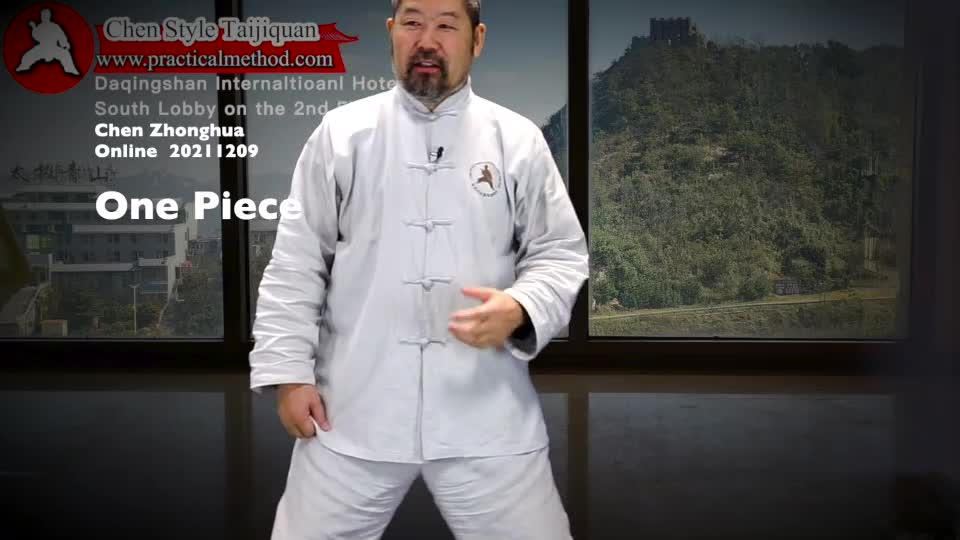
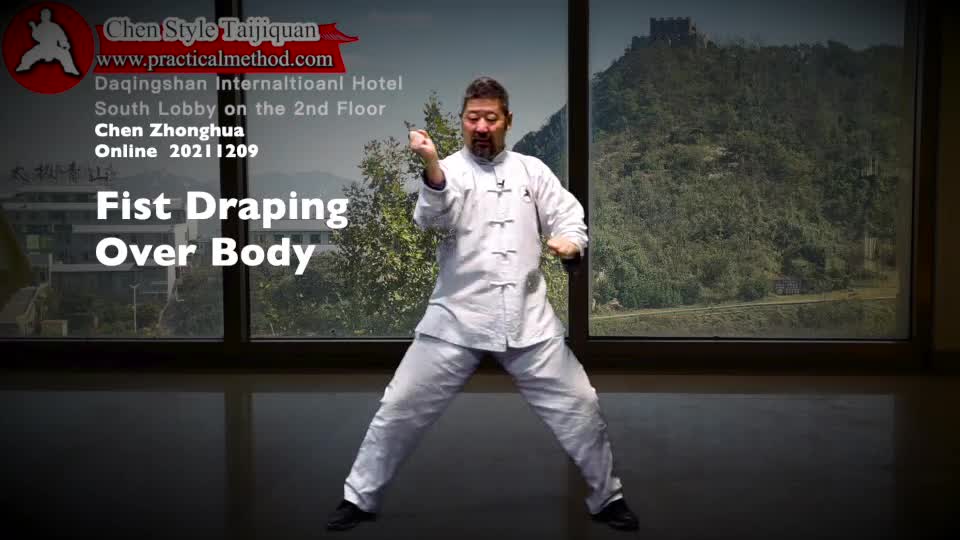
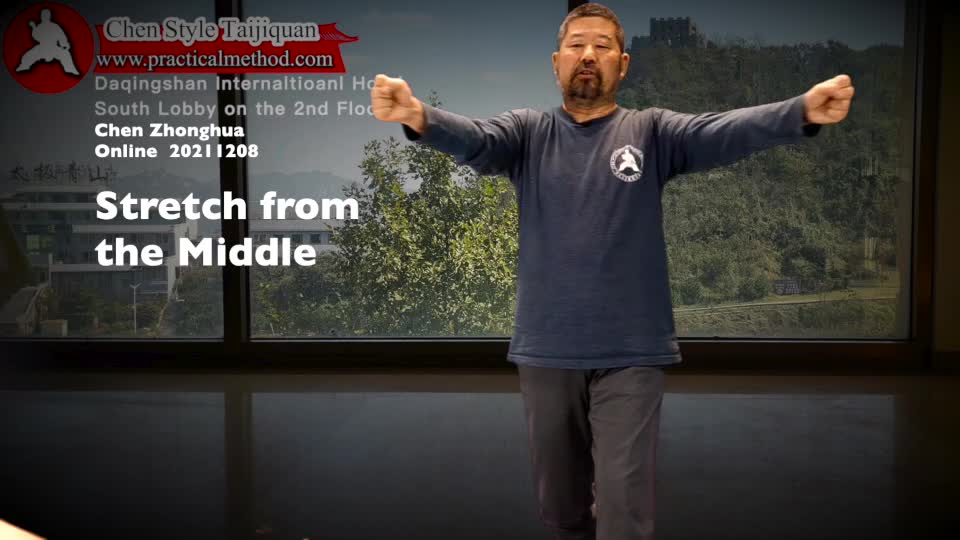
Training exercise: “Fist draping over body”, “Lean with back”, “Fist covering hand downwards” with power. The intent: we have to throw something out of the body. At the beginning don’t worry about the structure, later on we can control it.
In fighting we need to be in a position where our opponent can only see our fist, not the body. (Can somebody please write the Chinese word for it? I recall the sound, but not the spelling). The ni position is the opposite, the body is exposed to our opponent.
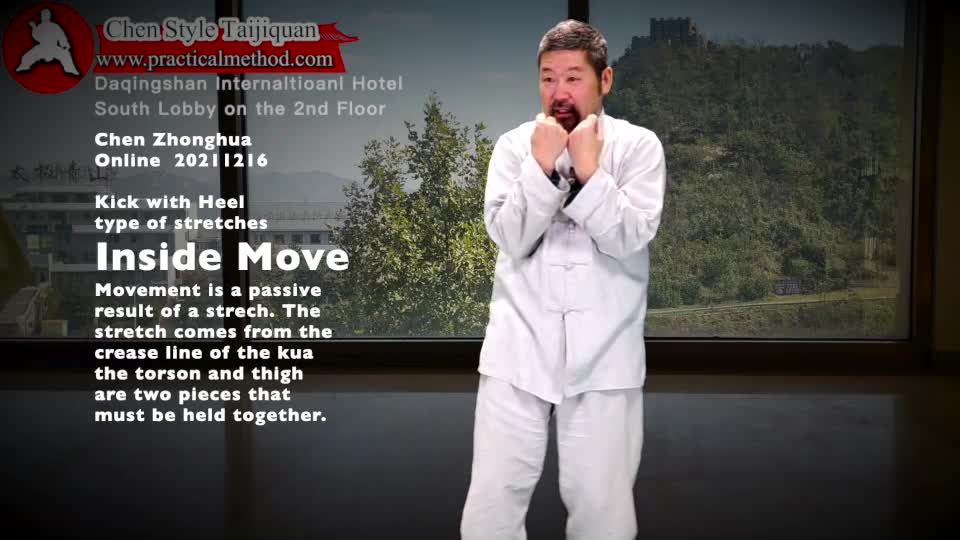
Kick with the heel: as we extend one leg ,the body has to go down for the kick to result in a straight extension. It has to remain on the track.
Generally we have to remember: the pivot must be anchored (stability=dot), the movement must be on the track. In doing the Form we cannot add these things too early.
Learn to listen to the sounds. Clothes, stepping, breathing… it gives us a wider view of the system. The ability of replicate the sound relates to the ability of replicate the move. “Body breaking wind” sound.
To dig/scoop (chinese wa includes both concepts). We used “cloud hands” for training the digging. Lock the front hand and foot and use the middle (elbow-shoulder-kua) to dig. Lots of power on the kua, because of the kua cannot move, the resulting action is a rotation.
To dig properly we cannot move the rear shoulder. Two body parts not moving, only move the middle. It is humanly not possible, we have two but we need three. If we can do a little bit of it, we already have uncommon abilities.
In learning the count is one-two-three, in the real move everything is performed at the same time
Increase differential: capacity to move the body without moving the outside.
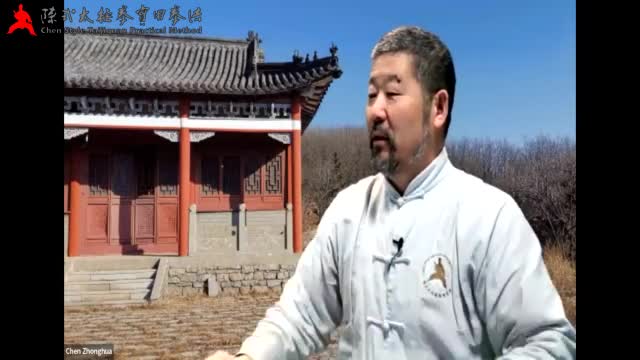
Presenter: Chen Zhonghua Length: 3 mins Difficulty: 3/5 Language: English Year: 2022 Location: Edmonton, Canada
In this lesson, Master Chen Zhonghua used several examples to show how to draw the circle with the inside of the body, i.e. Kua based, instead of waving the arms.
Presenter: Chen Zhonghua Length: 0 mins Difficulty: 3/5 Language: English Year: 2021 Location: Edmonton, Canada
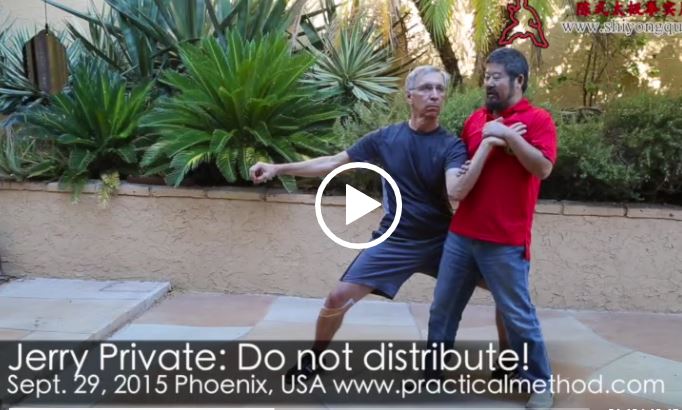
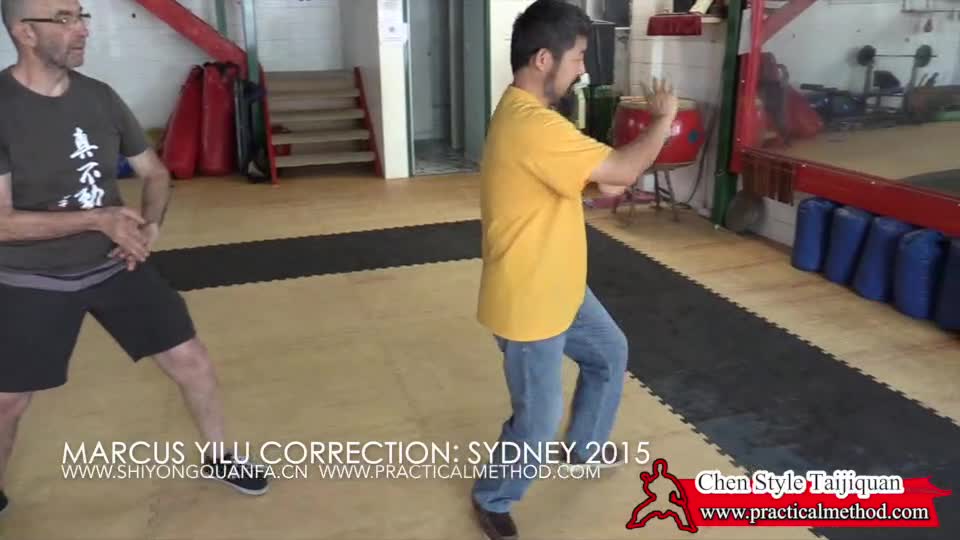
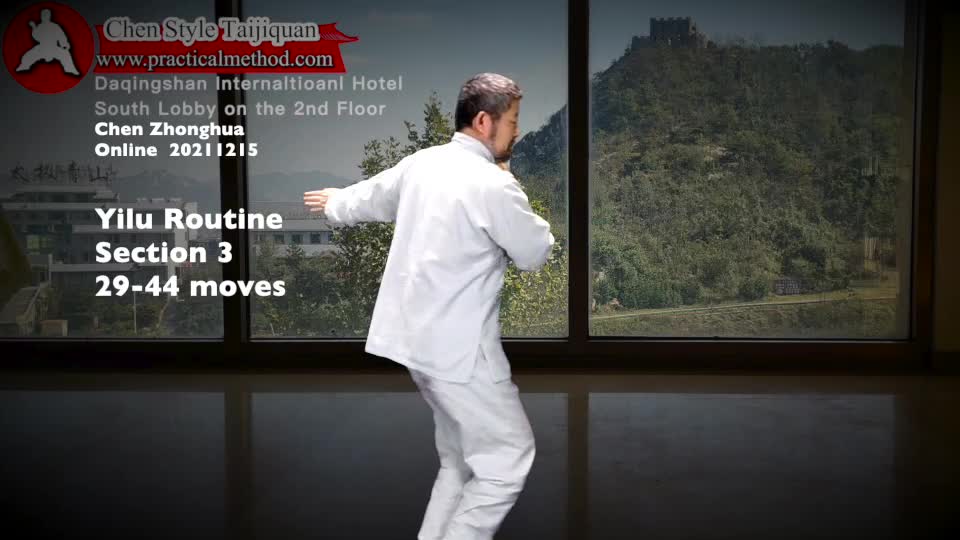
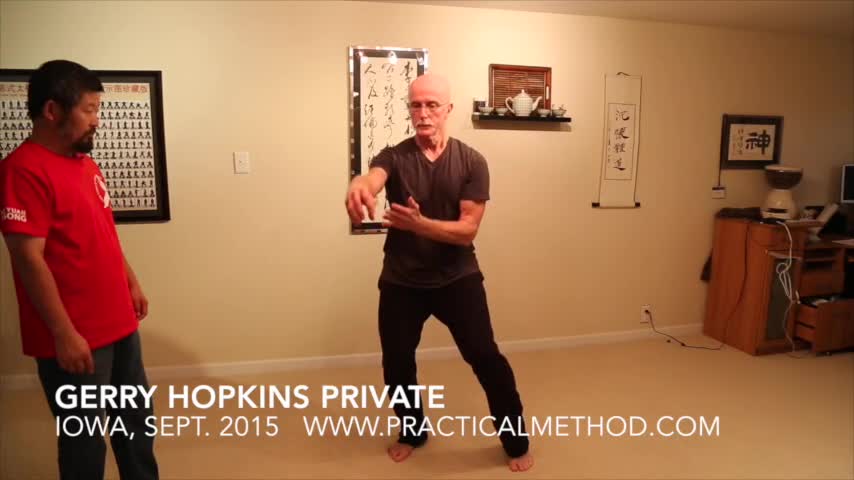
Through-Chen Zhonghua Online 20211209. The fist goes out on a straight line as if a stick. This is very difficult to execute because the body has many parts that are in the way. Watch how Master Chen Zhonghua demonstrates and teaches it.

_2022-01-08.jpg)
_2022-01-07.jpg)
_2022-01-06.jpg)

_2022-01-05.jpg)
_2022-01-04.jpg)
_2022-01-03.jpg)