Knowledge : Workshop and Class Notes

Preface
I would like to express my sincere gratitude to Master Chen Zhonghua for his dedication to promoting Chen Taiji in the Ottawa (渥太华) area. For more than a decade, Master Chen has made regular visits to Canada’s capital, ensuring that his disciples, students, and other Taiji enthusiasts receive proper training, grasp the principles of the Practical Method, and deepen their understanding of Taoist philosophy and Chinese culture.

Read more

Having just arrived home from the frozen tundra of Edmonton, it’s nice to be back in Tampa. The seminar was just what I needed. If any of you have spent time refinishing wooden furniture you may appreciate this. Start with an old scratched up painted and confused piece of wood like a bookcase and strip it all the way down to it’s base, sand out the scratches  smooth so the original grain shows clearly. Then oil & polish it. Read more

At the Maple Ridge workshop last weekend, Master Chen went over again the mini lessons he covered in his Edmonton Full Time videos.

Master Chen demonstrated that tossing and double heavy is the same mistake. I used to think that double heavy is only applied when doing a linear move, pushing and pulling.
Read more

Master Yang Yingjian is a senior disciple of Grandmaster Feng Zhiqiang. He is the president of the Zhaoyuan Taijiquan Association in Shandong, China.

Author: Yang Yingjian     Length: 83 minutes     Contents: 1-2 of the Qigong set      Language: Mandarin with English Interpretation by Nicholas Fung. Master Yang speaks with a very heavy Zhaoyuan, Shandong dialect.     Year: 2010     Location: filmed on Daqingshan, China

Yang Yingjian Hunyuan Qigong Lecture 1
Access is keyed to your user account. You need to be logged in to buy access.
Please register or log in.

[singlepic id=1466 w=120 h=80 float=right]

First comment Master Chen has for me is to make my stance larger when we started with circles.

We went over the details of twist towel foundation:
Read more

It is now a few weeks since my return from Daqingshan.

Read more

Master Chen’s workshop this Saturday focused on the theme of ‘division of labour’ amongst the different parts of the body; he emphasized yet again that in order for movements to become functional under pressure, one part of the body must be perfectly still while the other part rotates. We looked at this rule through a variety of examples. Read more

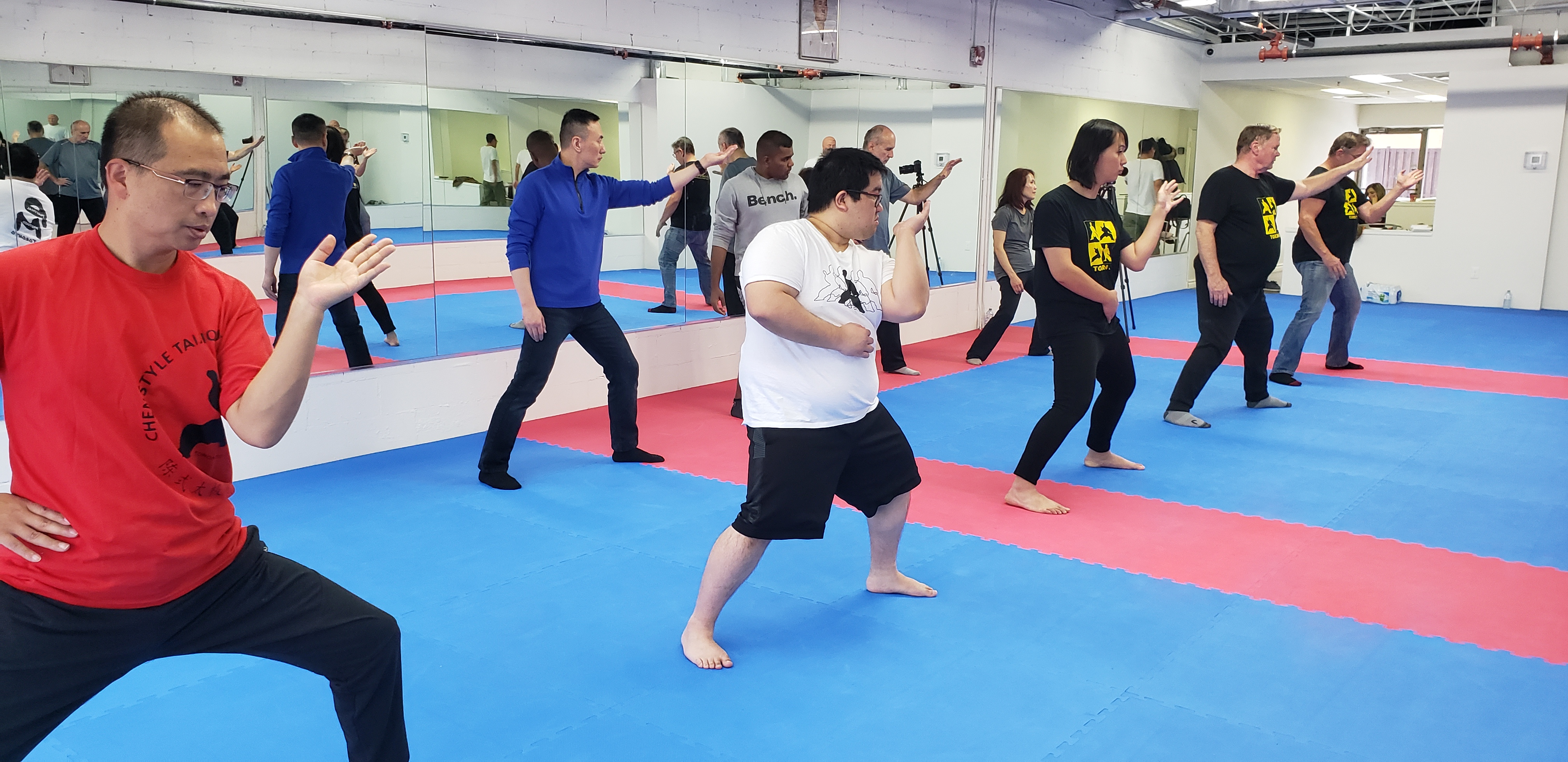
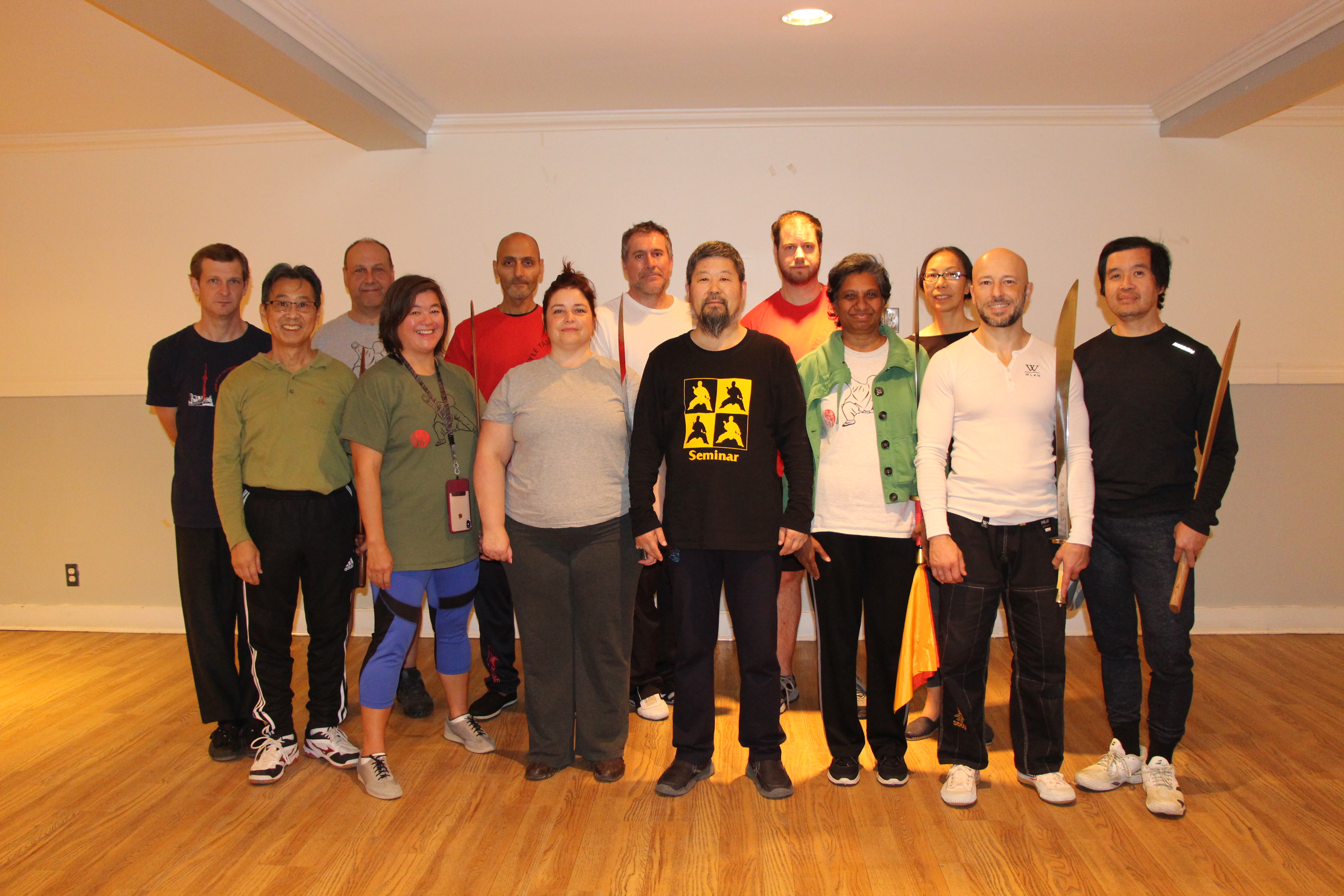
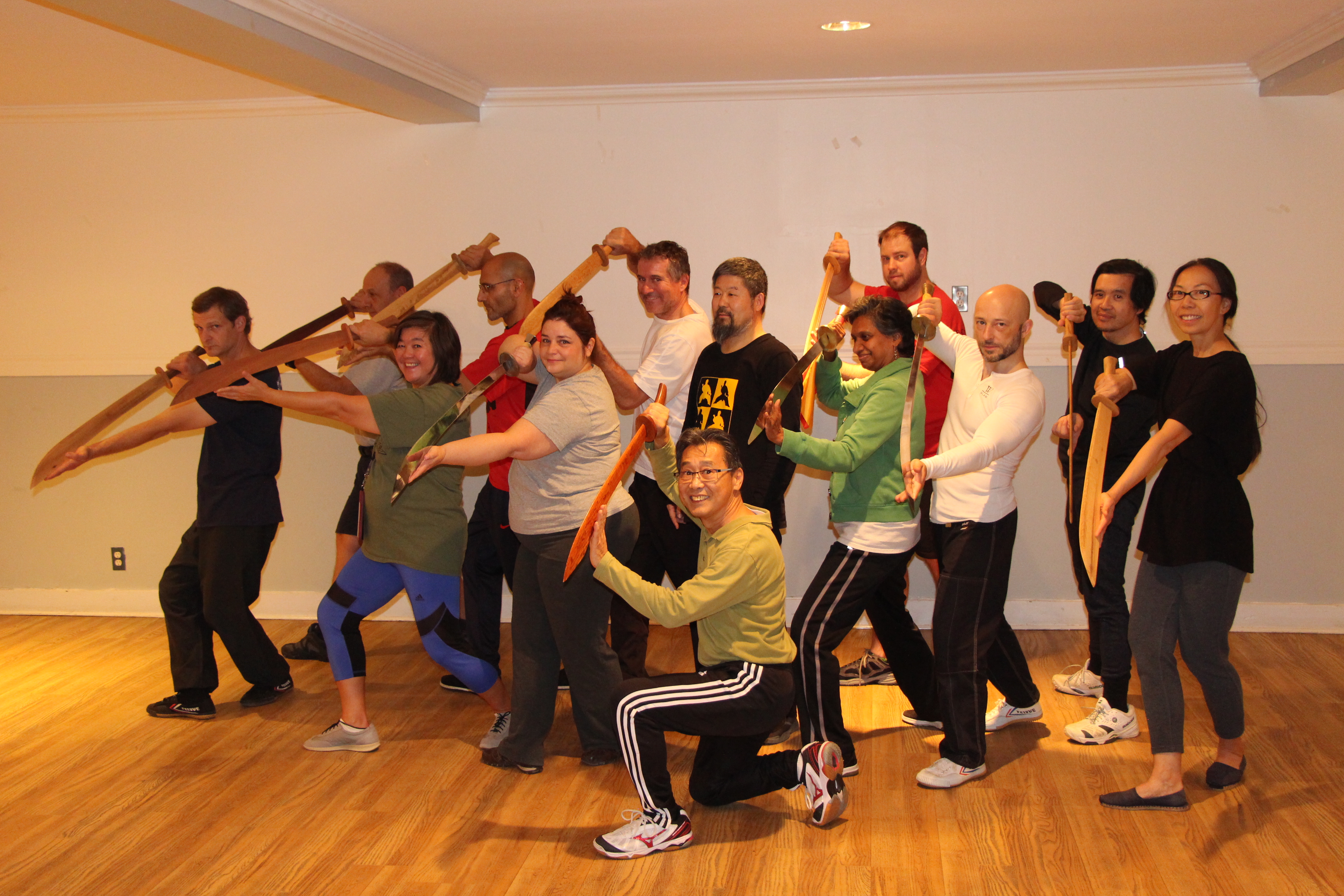
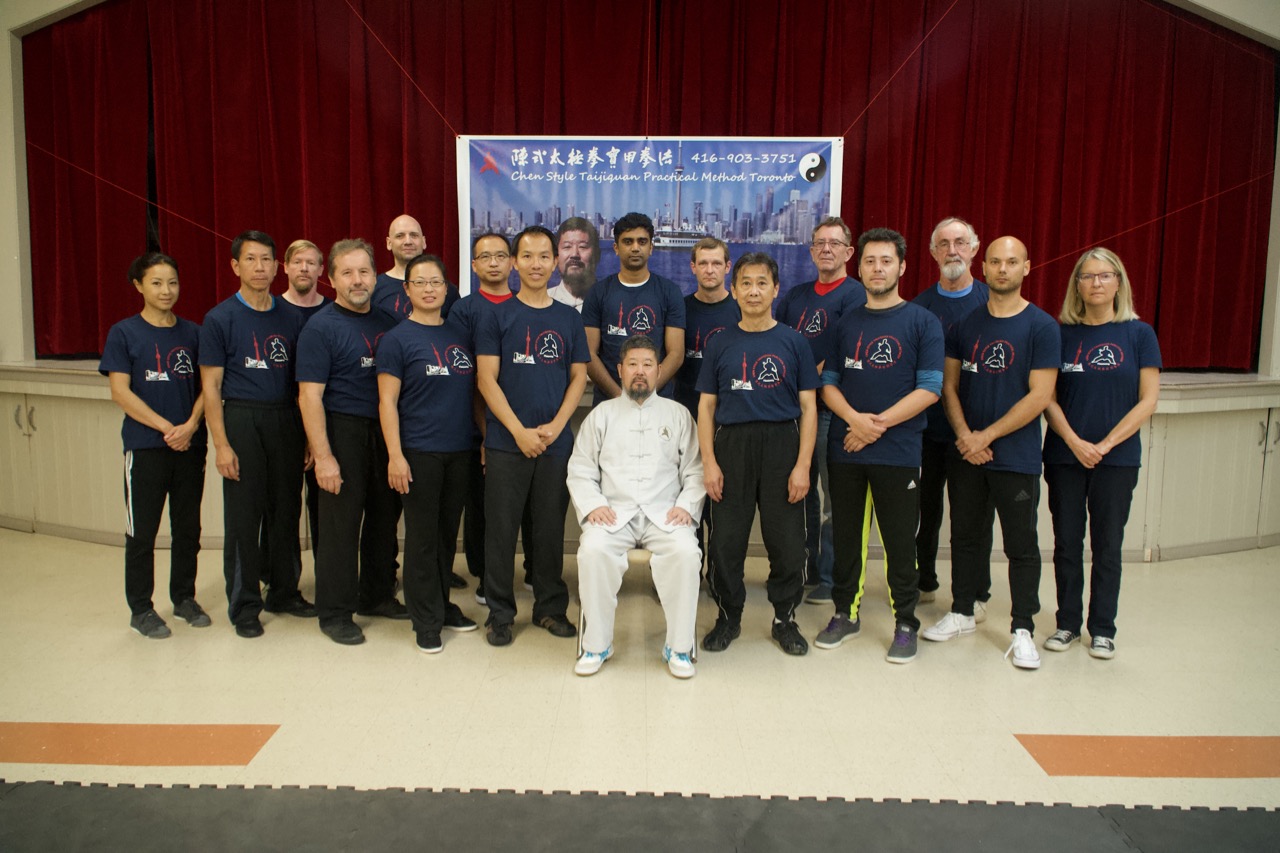
Toronto Sept. 2010 workshop group photo

Here are my notes:

  • Anchor the hands, pull from the front foot, mid section, shoulder, and elbow. On the way out, hand leads the elbow, shoulder, front kua, rear kua, rear knee, and rear foot. Extend the hand fully to the maximum, and then somehow the energy will reverse itself.
  • Everything comes from the foot.
  • Find the fixed spot on the opponent or point in space, then rotate around it.
  • Peg the rope 9 times, each section needs to be tight (with tension).
  • Read more

private lessons i

by webmaster on 2010/09/25

Sept. 24, 2010: Toronto.
Giuseppe Bon and Massimo Seresini of Italy. Second private lesson. Checked entire form again. Worked in the yard in the beautiful sun and breeze. Worked on the foundation drills also. Main correction is on the chest position.

Read more

Below are my notes from all the remaining days of the seminar:

lower body = earth Read more

Notes:

-Talking about stretching to attain proper structure: Chemicals/toxins deposit in your ‘corners’. Eliminate all corners/creases and create the arch. No power. Structure! Read more

July 26, 27. Cannon Fist Workshop.

Thank you Master Chen and Allan for your time and excellent teaching so far. The first two days have been great! Read more

While drawing the circle there must be no moving of the body.  However, the body must not move.  The arm must not be flimsy and must always be constantly pushing down.  However, half the energy that goes down must go up.  There is an invisible horizontal wall preventing the arm from going down to the ground.  This is an abstract wall, and it’s placement is of your own decision and position.  The head must be suspended by a string.  The head pushes upwards, however, there is an invisible ceiling on top of your head preventing your head from going up.  This gives you peng energy. Read more

Rion Swanson

Thank you again Master Chen and Allan for your time, energy, and patience this weekend at the seminar! It was excellent as always.
Below are a few brief notes. These are but a few key points and are as I remember so therefore may need correction! Read more

  1. Worked on Yilu form to half mark.
  2. Completed basic foundations.
  3. Push hands.
  4. Master Ai Shenghua from Weifang came to visit. He is currently in Toronto on a work permit.
  5. We welcomed Allan Haddad to our workshop.
  6. Worked on how to find the exact opposite and stretch on it.
  7. Worked on using your opponent’s pushing force as a point of anchor to get in/close to the opponent.
  8. Made individual corrections.

Taiji: First private class with Master Chen.

Master Chen mentioned in the last workshop about the concept of 45 degrees. He was referring if there was an incoming energy directing at you at 45 degrees, one way to react would be to push at 45 degrees w.r.t to your body. Doing a rotation would be the same thing.

Here is my understanding after thinking about it:
The outgoing energy will be perpendicular to the incoming force. For the rotation part, a tangent of a circle is always perpendicular to the centre, so it is the same thing.

Earlier today, I was doing some gardening at my backyard. I had to create a flower bed, so I needed to remove some existing grass. I was using this half-circular flat shovel usually used to create a nice edge. At first I was using it perpendicular to the ground, trying to cut through the grass and its roots by hammering it or stepping onto it. It didn’t really work. The shovel wasn’t sharp, and a fair amount of the force going down to the ground was bounced straight up back to my hand. By accident, one of the hits landed at 45 degrees to the ground, and on impact, the shovel slided across horizontally, and it worked much better like a knife this way, and my hand didn’t feel any rebounding force. I believed that this could be explained in physics, however, the more important point was that Master Chen demonstrated something quite similar before.

You push on something in one direction, and since the hand couldn’t get advancement, it went to a different place.

I found this taiji thought during gardening interesting.

Discipleshi Applicants’ List

Current Disciples:
Read more

The hand must have two functions in Chen Style Taijiquan Practical Method.

  1. Fixer. The hand is used to catch the opponent. In this sense it functions as a hook, rope, or vice. It only needs to apply enough strength to affix the hand on the opponent.
  2. The hand acts as a CV joint to deliver the power from the body. This power can be a push or a pull.

Common mistakes:

  1. The hand moves after contacting the opponent, resulting in inability to affix to opponent.
  2. The hand applies power in an attempt to fight the opponent. This will result in not having enough power. This stops the power from the whole body from going to the opponent.

Three aspects are important.

  1. The stick/staff must be strong. If it bends, it can not bend in a way that energy stops.
  2. There must be a pivoting point. The pivoting point must not move.
  3. The level should be longer than the load.

Read more

There have been countless works published on the species of martial art, their variety of incarnations and attitudes. It seems pointless to tear a single page from the encyclopaedia of combatives in order to repeat what a hundred authors have repeated before. Often, a lesson hard-learned in life is that what is not the highest question, but rather, why. Why, then, study the martial arts, taijiquan specifically? Read more

What does it mean by not moving the hand?

Here is my understanding:

If I would like change the location of the hand relative to my body, e.g. the current location of the right hand is at the level of my belly button, and the destination is at my eye level in front of the right shoulder, how can I achieve that without moving the hand?

  1. Don’t move the hand, but I can move any other part of the body to achieve the same result.
  2. Keep the hand at the same coordinates in this three-dimensional space, and sink my body down, which in turn causes my elbow to go from above the hand to below the hand. Then perform the 2nd half of the positive circle.

2010-1-2
1、(腰胯)拉直后,无腰、无跨,此时可以保持腰不断劲。(沉肩、坠纣、头顶、双腿与丹田形成中轴——中正?)。 Read more

As every time I receive instructions from my Shifu, Chen Zhonghua, I understand more that what he has always talked about is one principle that is applied in countless ways.   Read more

Originally written by: Ian Macrae

Maple Ridge Workshop July 25th and 26th, 2009

(A loose transcription of notes, not an organized article)

This month our workshop was in Pitt Meadows Heritage Hall. Our regular use of Thornhill Hall was preempted by the Disabled Games. What a nice big clean beautiful hall this was, notwithstanding that the A/C wasn’t working and it was almost too hot to do YiLu. Well, actually, it was too hot, so we didn’t work quite as hard as we usually do. Read more

1. 出手不出肘;收肘不收手。 Read more

Originally written by: Richard Johnson
I just spent  a long time posting my notes from the workshop.  They disappered into cyberspace when I tried to save them.  I’ll have to re-post later.

Most of the following relate to Tai Chi principles and form, but some are just general comments. All the comments below were either heard directly from Master Chen, or conveyed from another person who heard the lesson directly from him, or is based on my personal observation or experience. – Marvin Glotfelty Read more

Originally written by: Chen Zhonghua and Ian Macrae

Based on Ian Macrae’s
Notes from the April 12th & 13th, 2008,
Workshop at Thornhill Hall, Maple Ridge Read more

Main Points: Read more

Here is a brief summary of the notes I made in Hunyuan World. I hope I was able to have some understanding from Master Chen´s teachings in the seminar. I am open to any corrections on these notes. Read more

These are notes from a recent trip to Edmonton learning from Master Chen Zhonghua. Question based off torso movements I was shown

To recap:

My understanding of the “2 points” motion within the torso. Read more

Date: 11/26/2005 0:00
Title: Chen Zhonghua Workshop in Ottawa Nov 26, 2005
Reviewer: Daniel Mroz
Organizer: James Chan
Location: Ottawa, Ontario, Canada

On November 26 and 27, 2005, I took part in a two-day workshop on Hong Junsheng’s Practical Method of Chen style taijiquan, offered by Mr. Chen Zhong Hua in Ottawa, Canada. The workshop was arranged by Mr. Chen’s students and attracted about a dozen participants. Read more

Originally written by: Ed Zolpis
Date: 11/26/2005 0:00
Title: Return to the Basics: Stepping in Chen Style Taijiquan
Reviewer: Ed Zolpis
Organizer: James Chan
Location: Ottawa

Comments: Notes: Master Joseph Chen’s Workshop –
Ottawa – November 26-27, 2005
Ed Zolpis

Points to remember re: Circle exercise-
-position of feet is so that when step to the side the feet are approximately 4.5 foot lengths apart with the back of the forward heel on the same line as the front of the toes of the back foot.
-the back foot is slightly turned out from being perpendicular while the front foot is at approximately 45 degrees outwardly
-kua is open with knees stretched out and body low
-open the body so that it feels as if the energy of the body on the inside is struggling against the form of the body
-the energy of the knees go in opposite directions to each other, i.e. front knee energy goes upward while back knee energy goes downward, without the knee actually moving
-try to keep movements inside the body not allowing them to become predominantly outward, i.e. involving body peripherals(limbs) dominating the movement – another demonstration of this is using upper limbs to hold opponent while move him with lower limbs
-to increase stability, everytime you move, drop body by 5%
-“Double Heavy” is when 2 body section lines are on the same line (parallel). This is unstable. Instead one should try to have these body lines at an angle to each other to increase stability.
-bounce energy in body from foot to foot to top of head
-when stepping use a slipping action so as to insure energy is going outwards
-3 concepts to remember are: 1)withdraw elbow, push hand
2)sink the “dang” (groin)
3)hand grinds out
-training check method – if want to check if a particular move/technique is following principles of body dynamics, multiply its force by 10 to see if it works without overstraining the body