Presenter: Chen Zhonghua Length: 10 min. In: English Year: 2018 Difficulty:1/5
Presenter: Chen Zhonghua Length: 10 min. In: English Year: 2018 Difficulty:1/5
I just attended Chen Zhonghua’s Phoenix workshop last weekend. As usual, I thought I was pretty good thanks to all the practicing I had done since last year in Iowa, and as usual, Zhonghua threw my confidence into the toilet.
It was a great workshop, although overwhelming. At least I’m more comfortable with what I think is the most important thing that was taught, namely don’t think. Just follow the directions and don’t question them. This is a big thing for me, someone who is always up in his head comparing and questioning. Turns out that thinking is just a distraction from practicing, which is the only way to learn what is being taught. How to get out of my head? I think the answer is to practice as intently as I can. When I do that, I notice interesting things and have occasional exciting insights. It’s that excitement that keeps me going and that keeps practicing tai chi from becoming like a diet, where it takes willpower to force me to do it.
The second biggie I came away with is the need to segregate all the parts within each movement. I learned that when two parts within a movement go at the same time they are double heavy. I had not been separating the parts, which made for a prettier form, but was not leading me in a good direction. So far, I’m just working on the part up to the pound mortar of the first section of yilu. It is so hard! But it’s starting to feel right, especially if I practice it with stalking power. With that power, each segment of each movement seems to slip into place.
These two things are enough for me to practice right now. I’m already starting to feel human again and it’s a given that my confidence will be back by this summer in Iowa, just in time to be destroyed by the master again!
Presenter: Chen Zhonghua Length: 20 min. In: English Year: 2018 Difficulty:1/5
Presenter: Chen Zhonghua Length: 20 min. In: English Year: 2018 Difficulty:1/5
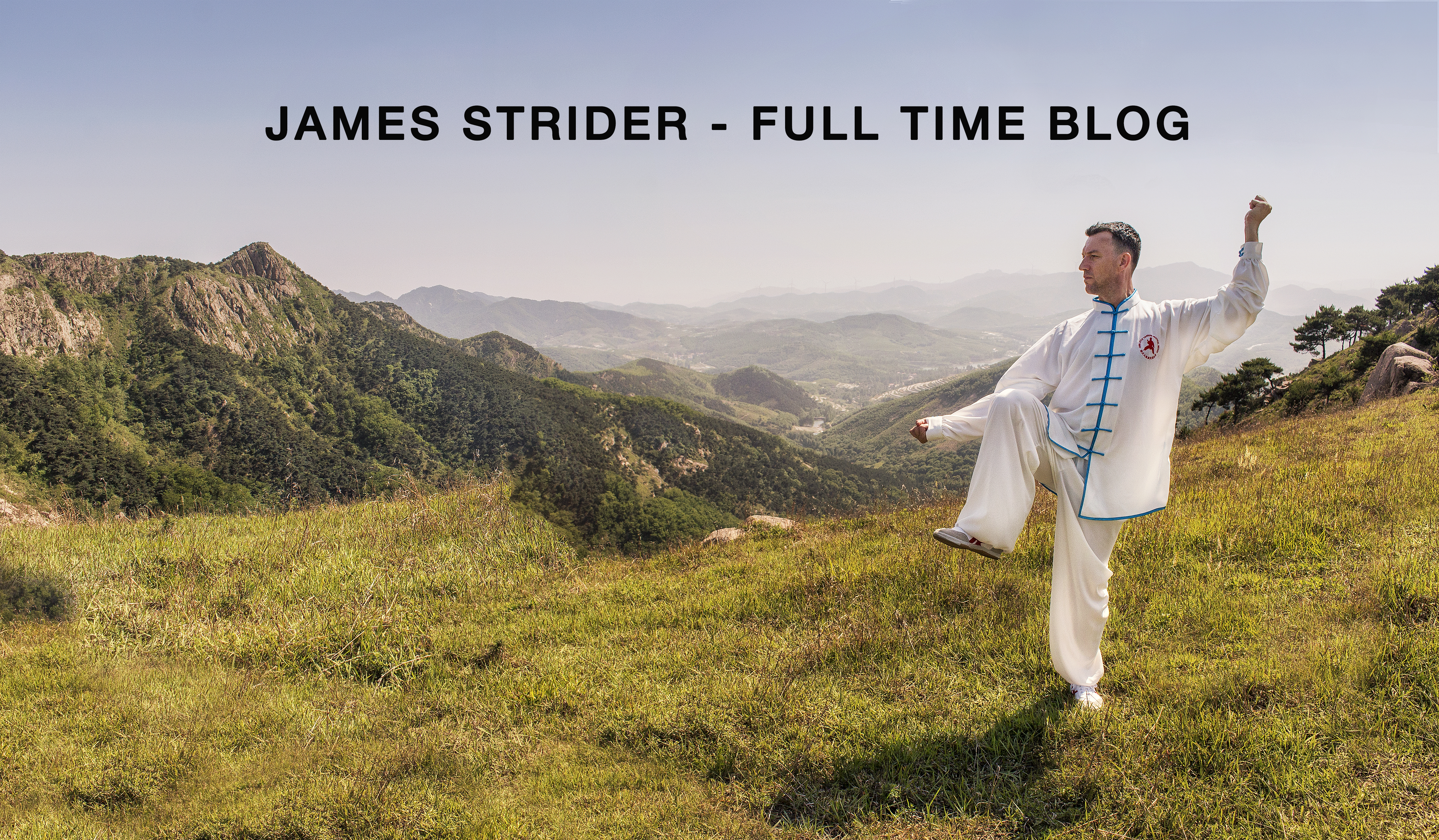
Over the past 12 years of training under Master Chen, I can safely say that his emphasis on how to train correctly to obtain true “ability” (ie. being able to demonstrate effective martial/physical application of the movement(s) in question) through the Practical Method are a combination of Consistency, strict Adherence to the Rules of “Not Moving” (or Rotation) and, last but not least, getting used to “Eating Bitter” (or as Master Chen would say “You must become comfortable in your uncomfortableness!”) every day.
Read more
陈中华老师曰:《手上要松,脚下要攻。》
Master Chen Zhonghua said, “Don’t power up the top, attack from the bottom.”
Presenter: Chen Zhonghua Length: 10 min. In: English Year: 2018 Difficulty:1/5
I would like to give some impressions of the PM-Taiji-Training camp that took place in Italy this September.

From the 17th till the 22nd September 2018 we have had the joyful experience to live and train together in a beautiful Villa at the Bolsena lake in Italy. It is a place which is located around 100km north of the city of Rome.
Read more
Presenter: Chen Zhonghua Length: 10 min. In: English Year: 2018 Difficulty:1/5

In Kelvin Ho’s article “Opponents stop moving when I move” written Dec 24 2018; I was one of the opponent’s who was not moving when he came in. I agree with his statement ‘there was no feedback/trigger’. I felt like a deer in the headlights when he came in. The definition says:
“Someone caught in a state of paralyzing surprise, fear, or bewilderment. Likened to the tendency of deer to freeze in place in front of an oncoming vehicle”.
Read more
It was not until I tried to follow the first of the essential videos of Master Chen when I saw the difference, and practically feel the changes in the body.
Precise instructions, every time!
Read more
In 2015 I stayed one month at the Daqinshan Practical Method training centre of Master Chen’s. One evening training session Master Chen was explaining one of the facets of the importance of the Chen Style Tall Hand Posture during all your exercises (yilu, push hands and foundations unless stated otherwise). This account is my subjective view on what he explained and invite everyone to add their thoughts or to correct me, please.
Read more
Presenter: Chen Zhonghua Length: 10 min. In: English Year: 2018 Difficulty:1/5
Presenter: Chen Zhonghua Length: 10 min. In: English Year: 2018 Difficulty:1/5
James Strider – Fulltime Training Blog Wk1 2019

Having been living in Rizhao for the past 7 of the 9 months since leaving Perth, it’s high time I started my blog again!
Read more
Presenter: Chen Zhonghua Length: 10 min. In: English Year: 2018 Difficulty:1/5
Presenter: Chen Zhonghua Length: 30 min. In: English Year: 2018 Difficulty:1/5
Presenter: Chen Zhonghua Length: 10 min. In: English Year: 2018 Difficulty:1/5
Presenter: Chen Zhonghua Length: 10 min. In: English Year: 2018 Difficulty:1/5
low audio in second video
Presenter: Chen Zhonghua Length: 20 min. In: English Year: 2018 Difficulty:1/5
Presenter: Chen Zhonghua Length: 20 min. In: English Year: 2018 Difficulty:1/5
|
|
Practical Method Sydney 澳洲悉尼實用拳法Chen Style Taijiquan Practical Method 陈氏太极拳实用拳法 |
| Classes: | Sunday 8:00am to 9:30am – Brian Chung No classes on all public holidays or long weekends |
| Curriculum: | Chen Stye Taijiquan Practical Method Foundations, Yilu (First Routine), Erlu (Second Routine), Theory, Push Hands |
| Location Details: | Bradfield Plaza, Broughton St at Pitt St, Kirribilli NSW 2061 |
| Instructor: | Brian Chung |
| Fee: | $310 per term.
Payment link: https://square.link/u/TXWAcYsF Schedule 2026: Term 1: 11 Jan to 29 Mar Term 2: 12 Apr to 5 Jul Term 3: 12 Jul to 27 Sep Term 4: 11 Oct to 20 Dec Privates are also available. |
| Contact: | For more information and registration, please contact: Brian Chung practicalmethodau@gmail.com +61 423 035 857 |
| Facebook Page: https://www.facebook.com/practicalmethodsydney |
It is not opening/closing but rather coiling/uncoiling and compressing/releasing.
It is not about using no force but using enormous amount of forces to maintain the rigidity of the structure, the integrity of the core and the efficiency of the move.
It is not about balance but balanced forces.
It is not about flexibility but the ability to stretch to produce a split or separation
Presenter: Chen Zhonghua Length: 10 min. In: English Year: 2018 Difficulty:1/5
Hi,
I wonder if someone can help me out: all the videos carry a classification “x/5”
what exactly does “level x” mean?
I asked once but I forgot all except the first … grumble.
level 1 = structure (meaning the clip is mostly about structural issues)
Thanks in advance!
 Back in 2011, I wrote about how my taiji journey got started: http://practicalmethod.com/2011/10/how-did-my-taiji-journey-get-started/. 7 more years passed by quickly on this journey, and it is now 2018. Much of the time was spent learning how to learn. In this article, rather than talking about taiji principles or concepts, let me share Master Chen Zhonghua’s teachings on learning.
Read more
Presenter: Chen Zhonghua Length: 10 min. In: English Year: 2018 Difficulty:1/5
Presenter: Chen Zhonghua Length: 10 min. In: English Year: 2018 Difficulty:1/5
About learning
1. Give it enough time. The secret is time.
2. Give yourself enough time to find the shortcuts.
3. Progress comes from holding yourself. Don’t overshoot yourself. Don’t use power.
4. Train the rail – first, you will not get the line. 3-months later, the trajectory is imprinted on the body [with practice]. You’ll see the line.
Read more
 Today, I trained with John Dahms. We discussed about creating a shell around ourselves to prevent ourselves from moving. Creating such a shell is only half of the equation, the other half is that we must stretch/expand the inside as much as possible. This is like a fight between containment and breakout. It is a conflict that we must find a resolution. I think of it as building up a bomb, and then doing a controlled release of the energy through a narrow tube aimed at the target. For this to work, the person doing the containment should be different from the person trying to break out, so that each person is not affected by the other person when performing the desired function. The difficulty comes when in reality there are no two people, but just myself. Ideally, I would be required to split myself into two. In actual practice, we need to use different body parts to perform these separate functions, so they don’t interfere with each other. These actions must be clear. Read more
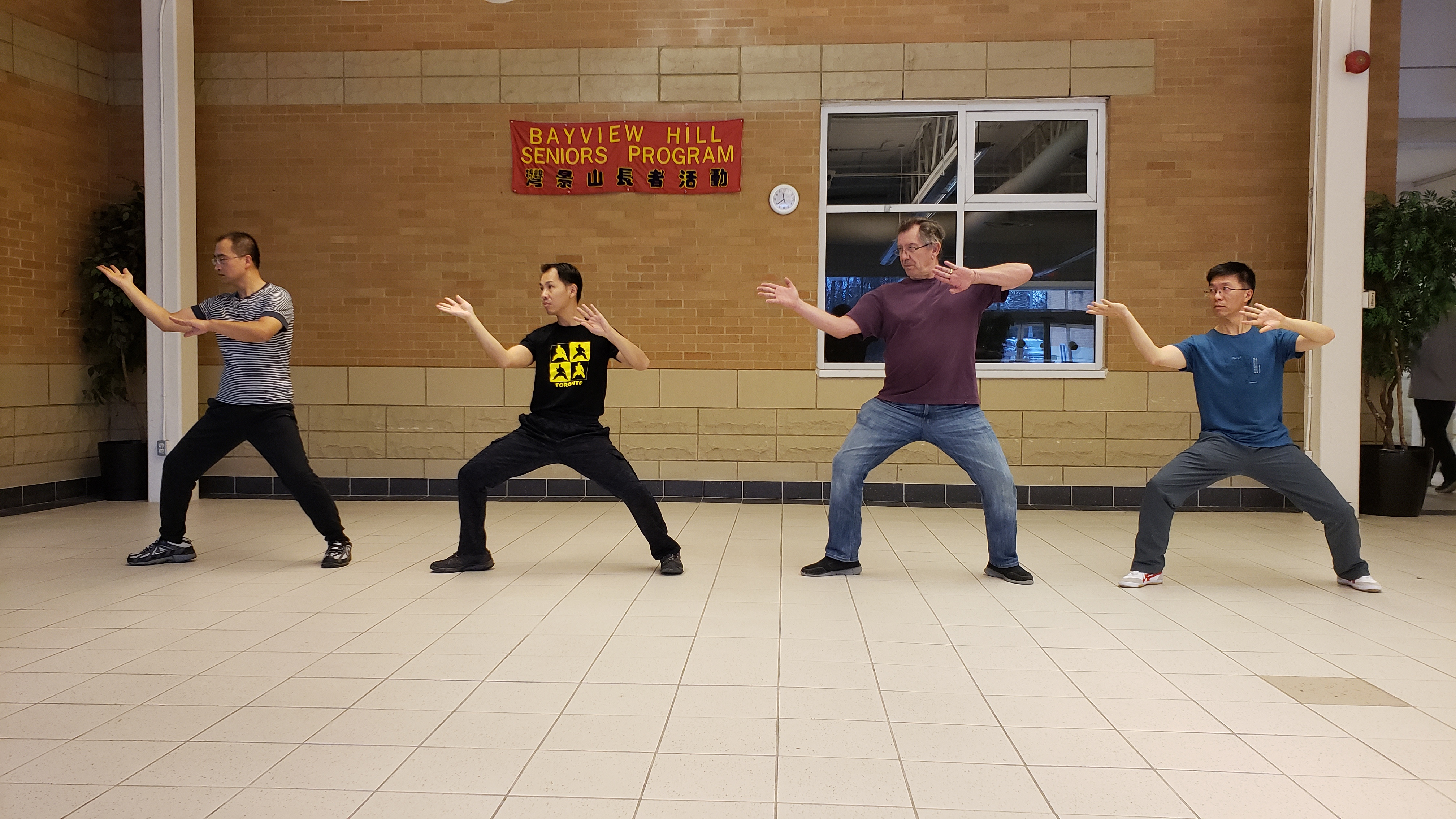 During practice on Dec. 23, 2018, we were practicing how to move in after making contact with the opponent. The particular exercise involved the two right forearms touching at one point. One person attempted his best to prevent the opponent from coming in, including moving his arm around. Everyone did this exercise against the others one by one. One student observed that when I showed how to move in, the opponent always appeared to have stopped his arm movement as soon as I started to move in. Others would struggle to fight at the upper body or the arm with the opponent. I found that being an interesting observation. Another student commented that he didn’t react or do any subsequent action when I moved in because there was no feedback/trigger to tell him to do anything, and he would just “watch” me coming in. I further demonstrated what they tended to do, which was to push his hand/arm forwarded as they moved the body forward, in which case, the opponent would respond immediately and stop me from coming in possibly using different methods. There should be no push at any time. Read more
 2018 China Sports and Tourism Exposition Award of Excellence for A Sport Event
Awarded to:
Shandong Daqingshan International Taiji Competition
China National Sport Commission Sport and Cultural Development Center
December 2018
2018中国体育旅游博览会体育旅游精品赛事
山东大青山国际太极拳大赛
国际体育总局体育文化发展中心
2018年12月
About learning
1. “The teacher teaches the principle. You go home and practice.”
2. Follow the principle. Don’t deviate.
Read more