Kelvin Ho
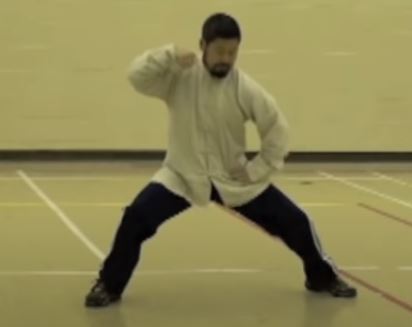
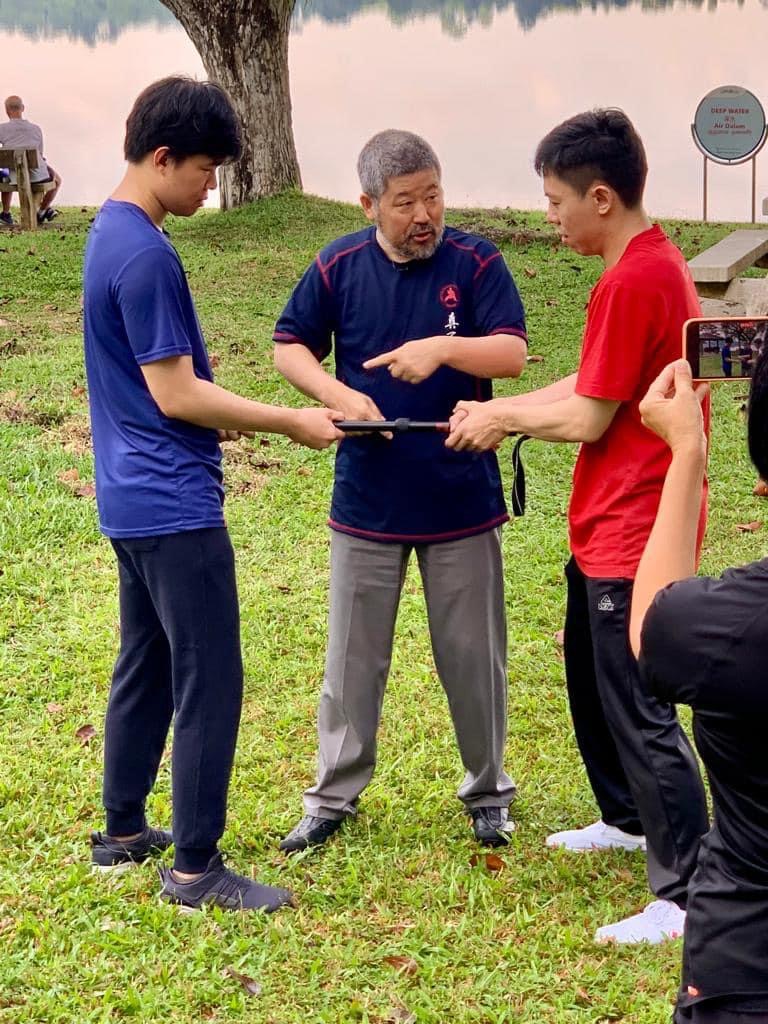
On May 31, 2026 in my Toronto class, I taught to use bie to lock the opponent, and then issue with a different body part not involved in the lock. I recorded the following video at the end of the class:
I later had an interesting discussion with John Upshaw on this video, and it went as follows:
Kelvin: The isolated movement is how to send energy from my dantian to opponent’s dantian through my hand. It also requires me to make the opponent like a board in order to bounce him.
John: So they have to stiffen up before you exectue your move?
Kelvin: I had to make him that way. He was not threatened when I put my hand there, then something else had to hit him at the right place. It is like shooting something out from a gun as my body did not move forward.
John: The second move you had him stiffen up before executing your move.
Kelvin: It is basically the same thing on the reverse direction. For the 2nd one, I also showed a wrong way of doing it.
John: I assume you aim your datien at his when doing both moves? I’ve done the 1st one…it’s like having a stick between your dantians, and you push as if the stick is real…with dantian locked…
Kelvin: The aim is to his dantian so that it pulls the rest of his body backwards when hit. If he holds a stick vertically with two hands at the two ends of the stick, I have to hit the middle. That is the idea, but the difficulty is that I only have one hand on him.
John: Like a hammer? The dantien is the head of the hammer?
Kelvin: So I only make contact with the top end of the stick and yet it needs to be the same as hitting the middle without tilting the stick. I was imitating Shifu’s demostration in https://channels.weixin.qq.com/finder-preview/pages/sph?id=Apvo9ZLX0r.
John: You do a good job replicating both moves.
Kelvin: My students are recently saying that on the touch, they just freeze up, they don’t know why.
It is the Bie that I do, in combination with the wall behind me.
John: I am going to try that out!
Kelvin: When something starts to work, it really requires a number of different aspects.
John: So you do a bie, add the wall? The bie in any combination?
Kelvin: The most amazing part is being able to send the opponent both feet off the ground without a low to high motion. The Bie is to lock the opponent. The Bie is a concept or a type of action. The wall is me not moving. You can see that I did not move towards the opponent. There is nothing new itself. It is made of everything you have heard of before. The most important part is indeed about not moving. Long time ago, shifu told me at some point, we need to separate the physical action and the energy. That is also an expression of yin yang separation. It is like pulling the trigger on the gun. The bullet is separated from the gun. The gun powder energy is transferred to the bullet. The bouncing of opponent is like making the basketball bouncing up from the ground when it is just sitting on the ground. There is compression on the opponent.
John: Much like a trampoline? But tighter and less movement.
Kelvin: Not quite the same analogy as the ground is hard but the trampoline is not. If you put a basketball on the trampoline, and press on the basketball, it will jump because of the trampoline. I want to compress the basketball onto the ground to make it jump.
John: Gotcha.
Kelvin: So it is a bit different. I can just use a paddle to hit a pickleball off the ground. It is the same in this analogy.
John: The wall you produce is like the ground in your analogy.
Kelvin: Yes from the horizontal dimension to send the opponent backwards. To make him bounce off the ground, I press him against the ground. We need to produce more than one vector. These are things that shifu talks about, but I realize that it is very difficult to teach exactly how to do it.
John: So you pull them into the wall (the bie) to create the compression?
Kelvin: No, the Bie part is different. The Bie part is the general idea that he just feels stuck. I will give a counter example. Imagine that you are just pushing on his chest with a lot of force. His upper body may just tilt backwards and fall backwards. Normally, it would require bending your arm to issue. If he is agile and flexible, he may just bend backwards and not fall though. In this case, your force only affects his upper body, but his entire body is not locked. In our actions, we must first lock their body and then add one, right?
John: Yes.
Kelvin: The Bie is used to lock their body, and then you add one to hit the centre for example. This is what we learned. If the entire body is locked, he will fall backwards. To make him bounce upwards, you need to hit him evenly, without him able to really distinguish how you hit him.
John: That is very clear.
Kelvin: At all times, he is locked during the bounce.
John: So he is locked until the release?
Kelvin: If you can make him bounce, it means you can control how to hit him, and he won’t get hurt. For someone to bounce, his structure must remain in tack in the air. For 1st demo, his body structure did not change shape. For the 2nd one, the opponent looked very stiff, I pulled him in a way that kept his body structure. The pull was very sharp, and I had no extra motion in my body. Nothing deviates.
John: So by locking the opponent up, the compression is contained.
Kelvin: The locking (Bie) part is difficult. In our drills, we often ask the opponent to lock for us so we can do the drill.
John: Yes.
Kelvin: In my analogy, I need to create and keep the wall. My students when they do the drills by themselves, they don’t have the expected effect. They feel that something is off or not right, but they often can’t figure what the difference is by themselves.
John: I have difficulties with lose opponents…for that reason.
Kelvin: I talked about Bie again in the last class, I think that they are starting to get it. One student mentioned about remembering the lesson in this video that I did two years ago:
John: That is an excellent demonstration and explanation!
In with elbow – through the tube by bouncing off the tube wall
Once you are logged in, click the link below:
http://practicalmethod.com/category/online-classes/zoom-links/
To purchase admission to zoom classes, please go to: https://en.zhenbudong.cn
 |
| The Toronto Practical Method workshop will be back on Jan 15 to 18, 2025. If you have not yet attended one, you will be amazed by the magical taiji skills of Master Chen Zhonghua, and his insightful guidance in your taiji journey. He has the missing piece that many people are looking for. If you have been here before, we are looking forward to training with you again. |
Exercise:
- Lock the bottom, move only the top.
- Lock the upper arm, move only the forearm.
- Lock the forearm, move only the finger.
- Move the front finger, at the same time move the rear heel.
Single Whip
The right hand beak must be strong.
Line up the beak with the left shoulder.
As the left shoulder goes backward, it drives into the right peak.
Once it is connected, we can further use the left elbow to drive into the right beak.
Read more
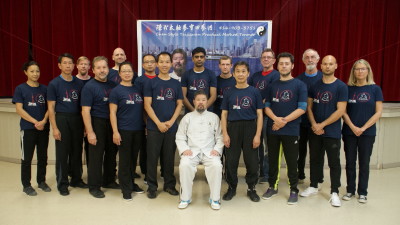
The Toronto Practical Method workshop will be back on Jan 11 to 14, 2024. If you have not yet attended one, you will be amazed by the magical taiji skills of Master Chen Zhonghua, and his insightful guidance in your taiji journey. He has the missing piece that many people are looking for. If you have been here before, we are looking forward to training with you again.
Read more
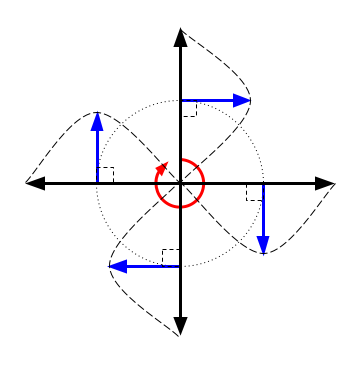
When the satellite orbits around the earth, it does not leave the earth nor fall back onto the the earth. It follows a certain track known as an orbit. How is this track created? It is created by one force pulling the satellite towards the earth, and another force moving the satellite perpendicular to the earth. The two forces must be balancing each other out. If the perdendicular one is too large, the satellite will leave the earth, and if the other force is too large, the satellite will fall back down to the earth. The gap/orbit/track is the one that separates the two forces, in other words, allows the two forces to harmoniously co-exist at the same time. When you are running on that track, you will not feel either force, but they both exist.
When we push hands, we must find this gap. One way to find the gap is to rub/grind 搓/碾 to cause a rotation. We must continue to find the next gap once the one is used up (or we run to the end of the gap). The gap disappears when the opponent changes the posture, the way they apply force, or the timing. We must always match these things with the opponent before we can find the gap.
出一个 Something comes out of nothing
Read more
New beginner’s Taiji (Tai Chi) class in Sep.
Open House
Date: Sunday, Sep 10, 2023
Time: 9 am to 10 am
Location: 716 Gordon Baker Road, Toronto
This provides an opportunity for people interested in taiji to get a taste of a regular Practical Method class. No prior taiji experience is required.
If interested, please register at https://practicalmethod.ca, click on “Open House Registration”.

Level 3 Chinese Instructor Class
- Exercise for conversion from rotation to linear movement (based on Six Sealing Four Closing movement)
- Think of 2 balls enclosed tightly within a container. When we rotate, rotate only one of the 2 balls, and not both. If we only have one ball, the rotation we attempt tends to toss the ball.
- When doing the exercise, the front kua needs to rotate, but the typical mistake is that both kuas are tied together, when the front kua moves, the rear kua is moved as well.
- When doing the exercise, the waist turns to the left carrying the elbow but the forearm and hand stay on the curve track going forward while the front kua will stretch and rotate on the opposite curve at the bottom.
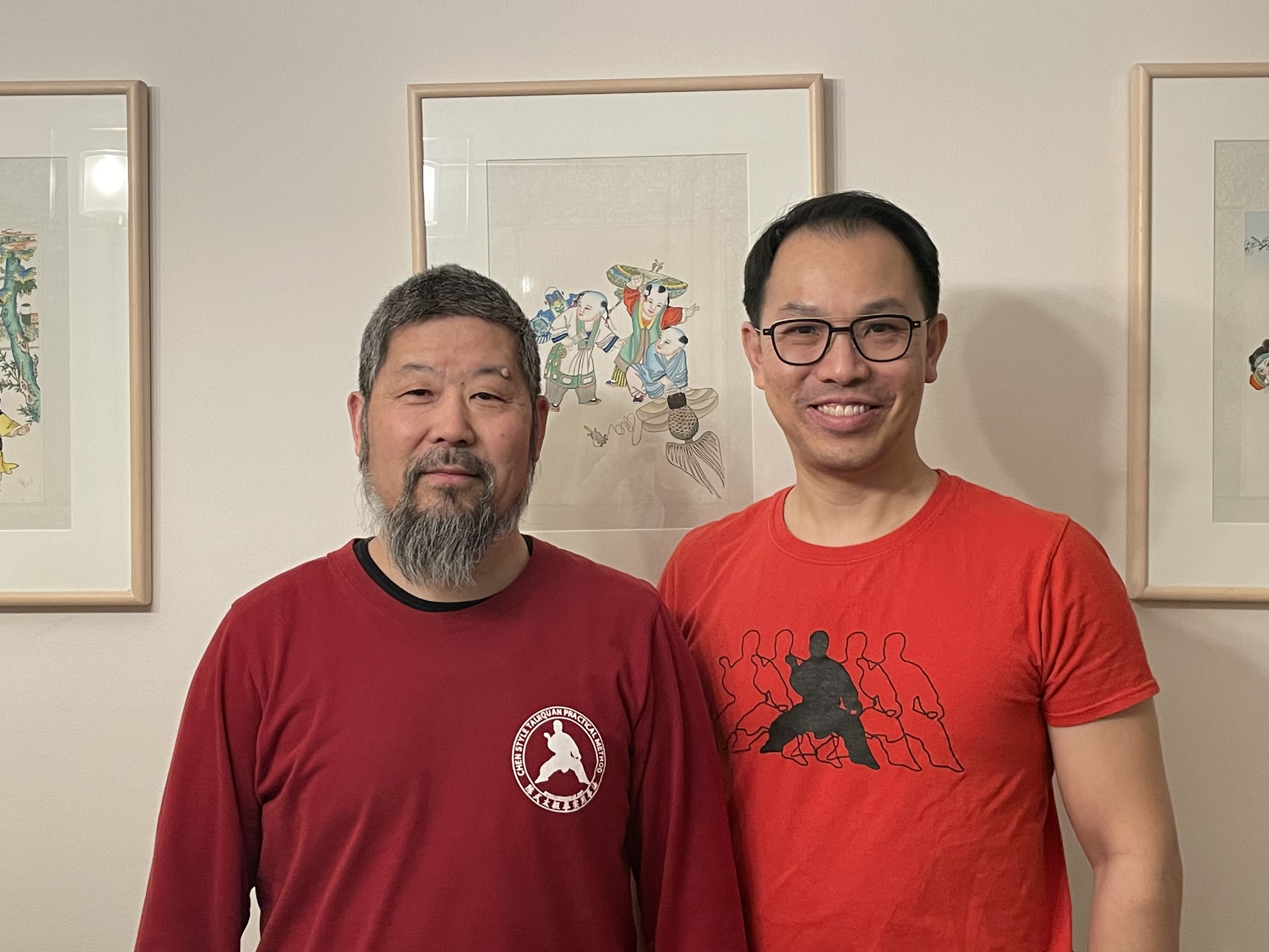

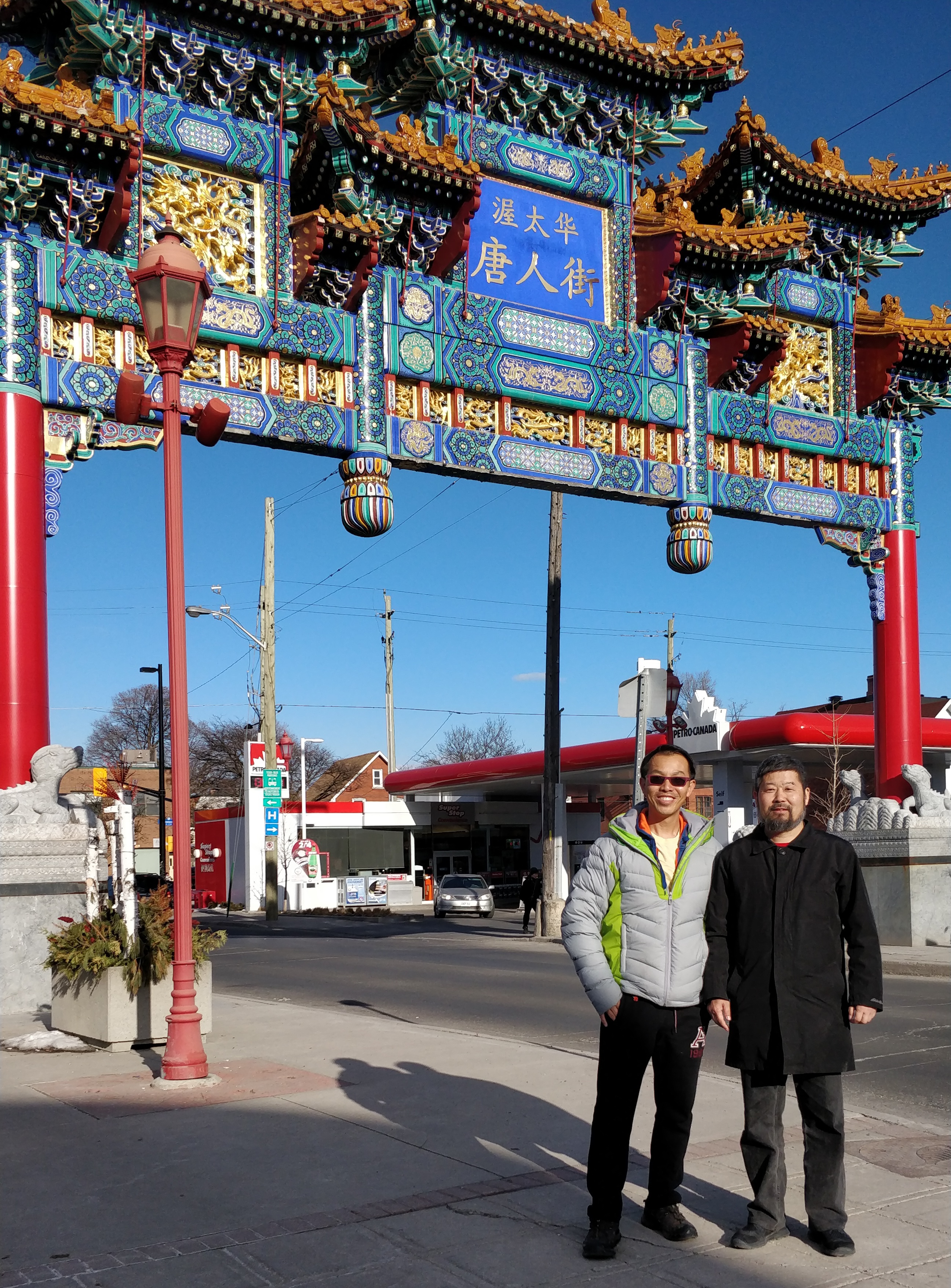 Doing taiji is like riding on a closed loop train. One can talk about the beautiful sceneries one read from a brochure, but those are just imaginations. One must get on the train to really experience it. There are multiple trains running on the same track. Different people may get on the different trains from different stations. What people may see and experience from their respective trains may be different. People who started the journey first on the same train would know what the later passengers talk about. People who started the ride at the same time but from different stations may think they are not riding on the same track when they exchange information. There may be people who never look outside of the window and still wonder what the views are like. The longer you ride on the train, the more track you have covered, and you will be able to share more common experience with more people, yet you don’t really know where you are heading and what you may see the next day. On the train, you may go back and forth among different cabins, but overall the train is always moving forward. It is not easy to stay on the train, there is limited space on the train, and there are many things you cannot do. It gets lonely sometimes, but it helps when you have friends taking the ride with you. People, who can’t bear with it, may get off and never get back on. There are people who may take a break at one station, and then continue on the journey. If you are able to treat the train as your home, you will always come back to it. One may ask how to get on the train in the first place, one will need to follow the instructions of the people who are already on the train. People will give you instructions to one of the stations. At the beginning you won’t really know if the instructions are correct as you have no experience, and so you may as well try. Some people may doubt the instructions as the instructions make no sense to them or they can’t see the road or how the road may lead to the station. The worst thing you can do is to modify the instructions yourself, and those are the people who get lost and will never find the station. Whether one has the fortune to receive the correct instructions is a matter of fate. Hope you enjoy your scenery.
On to the next yilu…

Push hands is an exercise that examines your understanding of the Taiji principle: Separation of Yin and Yang. While form training transforms your body, push hands provides an opportunity for you to apply your Taiji knowledge and skill. It has also become a popular sporting event both in China and abroad. This workshop is suitable for beginners as well as people at different levels of their training. If you have never tried it before, this is a great opportunity for you to do it in a friendly and safe environment.
推手是一种让人检查对太极原理(分阴阳)理解的练习。 套路训练可以改变人的身体结构,而推手则提供了运用太极拳知识和技能的机会。 它已成为国内外流行的体育赛事。 这训练班适合推手初学者及不同程度培训的太极爱好者。 如果您以前从未尝试过推手,那么这是个让你在友好与安全的环境中初次尝试的绝佳机会。

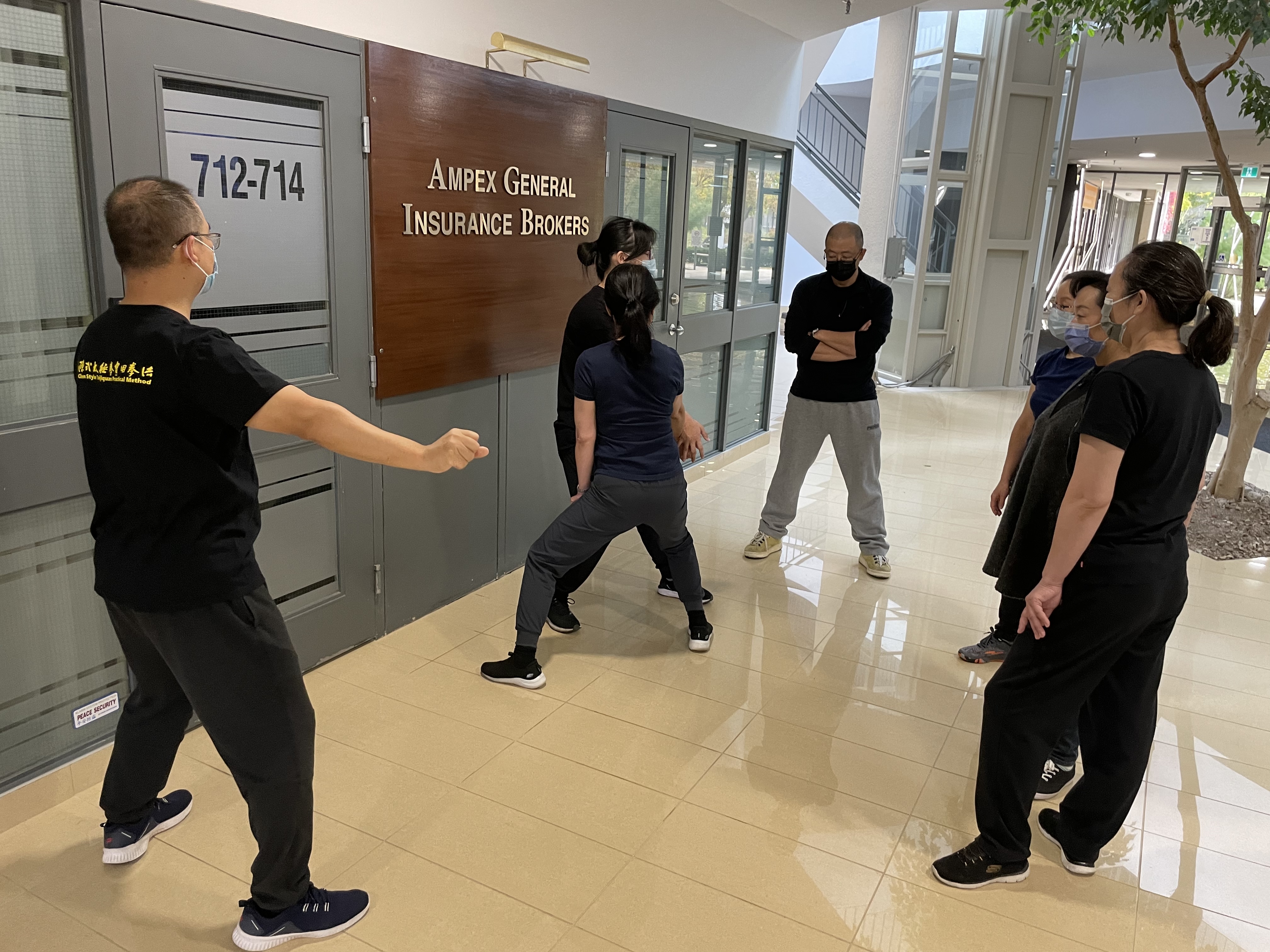
For more information about this class, please see:
https://practicalmethod.com/2020/01/practical-method-yilu-class/
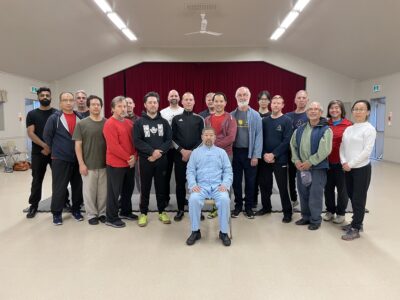
Ben Phillips of Toronto became Chen Zhonghua’s 379th disciple in a brief ceremony at the Annual Toronto Practical Method Seminar
This is the first Toronto Practical Method workshop by Master Chen Zhonghua since covid-19 started. We had a very good turnout, 25 people attended over the 4 days of the workshop. Participants came from Toronto, Markham, Aurora, Newmarket, Oakville, Georgetown, Ottawa, Michigan, Iowa, Arizona, California. One of the participants commented:
“Everyone here expressed and interacted freely and deeply, just like a big family.”
In this workshop, we focussed on training with drills, solo and partnered. The drills allowed us to develop gong, and techniques that would be useful in push hands. Many of the drills were video-recorded and will be available for purchase. We also included one lesson of Hunyuan Qi Gong, and Master Chen said he would begin to integrate more energy work into Practical Method through some Hunyuan Qi Gong training.
The following were intended to remind myself of what happened at the workshop, and they were not to be instructional. However, if you have any questions and need clarification for any part, please feel free to make a comment below.
Day 0
Power or No power? Read more
- The forearm and rear calf can on the same line, but separate into two sections.
- The forearm and rear calf can also be on two parallel tracks.
The Toronto Practical Method workshop will be back on Oct 8 to 11, 2022. If you have not yet attended one, you will be amazed by the magical taiji skills of Master Chen Zhonghua, and his insightful guidance in your taiji journey. He has the missing piece that many people are looking for. If you have been here before, we are looking forward to training with you again.
Read more
Day 3
Lock the opponent at the top, break the opponent middle using my kua. The opponent collapses down like a building demolition.
Face the opponent (chest to chest), my front kua touches his front kua, make my front kua go to the other side.
Read more
Chinese Class
In Six Sealing Four Closing, there must be a stick that does not change direction between the two hands. In Practical Method, there are rotation and resolution. Rotation is not considered a move. Resolution is considered a move as it causes something to change position with respective to the ground. The result is 螺旋缠丝 luo xuan chan si.
This is moving a rotating saw to cut a piece of board. As the saw makes contact of the board, the rotation does not slow down, the saw blade does not change shape as someone pushes the saw through the board (or the board through the blade). The common problem is that we change shape or direction as we move.
Kelvin Ho is organizing a free Chen Style Taijiquan Practical Method online (zoom) introductory class (1 session/week for 4 weeks) in July 2022. If you are interested in finding out what Practical Method is about and would like to give this a try. To register, please send an email to kelvin.ho@practicalmethod.ca or wechat to kelvinkwho with your practicalmethod.com account.
Dates:
- Saturday, July 2, 2022 Toronto Time 9 am – 10 am Done
- Saturday, July 9, 2022 Toronto Time 9 am – 10 am Done
- Saturday, July 23, 2022 Toronto Time 9 am – 10 am Done
- Saturday, July 30, 2022 Toronto Time 9 am – 10 am Done
To join the zoom class, click the following link:
https://us02web.zoom.us/j/87304810317?pwd=CNcC1IsbFges4zthZtT0z3b8eTA1gO.1
The following video is a sample of how a Practical Method online class is like.
Today we did an exercise to rotate the torso horizontally from left to right (first gear), while the arm with the elbow straight as a stick rotated in Ni Chan (second gear). The second gear’s rotation was driven by the first gear. The result was like how the train wheel turned, and the rod attached to the wheels moved along the rotation without changing direction.
Read more

If you are interested in joining this class, please purchase the June package at:
Push hands is an exercise that examines your understanding of the Taiji principle: Separation of Yin and Yang. While form training transforms your body, push hands provides an opportunity for you to apply your Taiji knowledge and skill. It has also become a popular sporting event both in China and abroad. This workshop is suitable for beginners as well as people at different levels of their training. If you have never tried it before, this is a great opportunity for you to do it in a friendly and safe environment.
推手是一种让人检查对太极原理(分阴阳)理解的练习。 套路训练可以改变人的身体结构,而推手则提供了运用太极拳知识和技能的机会。 它已成为国内外流行的体育赛事。 这训练班适合推手初学者及不同程度培训的太极爱好者。 如果您以前从未尝试过推手,那么这是个让你在友好与安全的环境中初次尝试的绝佳机会。

The one-way rocking motion of the ink blotter is exactly the way how our front foot grabs the floor after shovelling out, in order to pull the rest of the body forward. Read more
- Heavy head tied to the ground
- Push the kua out to extend to the line between the head and the ground
- Need to make sure the kua shoot towards the hand while the torso rotates, otherwise the hand is too light.
- Need to do 40% of movement with the front kua, and 60% of movement with the rear kua.
- We need to produce a stop (which is the switch between 40% and 60%).
Note: Homework submission is best done through the mobile interface as most people will record a video through a smartphone. Each video can be no larger than 7MB, which should allow a video shot at 720P with 30 frames per seconds for about 15 seconds.
Master Chen Zhonghua’s choice of language is straight forward and literal. However, I find myself like many others having a difficult time understanding his instructions at the beginning of the Practical Method journey. It’s not that I didn’t want to follow the instructions. Whatever I did just seemed not matching what he meant. Instructions such as putting the left hand in front of the right hand gave me a hard time. The reason was that what I thought was front was not the same as what Master Chen intended front to be. Let’s say setting up the hand positions is the first step, and other things are built on top of it. If this step was not done correctly, everything else would also be wrong. Therefore, it was utmost important to get the first step correctly.