Presenter: Chen Zhonghua Length: 10 min. In: English Year: 2017 Difficulty:1/5
Presenter: Chen Zhonghua Length: 10 min. In: English Year: 2017 Difficulty:1/5
During the last Toronto workshop, Master Chen mentioned some common sense guidelines for asking questions at live workshops with him. He said there are only really three valid questions while he is instructing:
At another previous workshop he instructed not to rephrase his words, (e.g. “so you’re saying…”). He uses very specific words and they should not be changed.
Presenter: Chen Zhonghua Length: 10 min. In: English Year: 2017 Difficulty:1/5
Dear Tai Chi – enthusiasts and those interested!
Master Chen Zhonghua is coming for the third time to Vienna to show and share his skill in Tai Chi. The workshop is made for those without any knowledge about the art as well as advanced students of Tai Chi and will grant deep insights in the art. Also practitioners of other martial arts are welcome to participate at this workshop.
The workshop will be held in english, translation into german will be provided when needed.
Read more
James Strider – Fulltime Training Blog Wk4 2019

PRACTICAL METHOD IS AN INTERNATIONAL COMMUNITY!
As part of my new role as the International Liaison Officer for Master Chen here in China, I’ve already had the pleasure of meeting and greeting Massimo Giorgianni from Toulouse as he arrived in Beijing for an 8 day stay in Rizhao, Read more
Presenter: Chen Zhonghua Length: 10 min. In: English Year: 2017 Difficulty:1/5
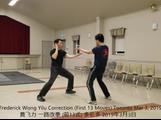
The following are highlights of my workshop notes workshop March 2 to 5th. I have tried to organize them into categories so I could better relate them. I did not capture everything
Workshop notes:
All Questions Should be asked in order to bring clarity: Hear It , See it, Feel It – the 3 questions you want answered
Principle – Yin and Yang separation life – I want to be good
Concept – all moves are indirect education
Action – convert into action use
Read more
Presenter: Kelvin Ho Length: 13 min. In: English Year: 2018 Difficulty:1/5 At:Toronto
Presenter: Chen Zhonghua Length: 10 min. In: English Year: 2017 Difficulty:1/5
HK 2017 18 and HK 2017 20 (practice)
Presenter: Chen Zhonghua Length: 20 min. In: English Year: 2017 Difficulty:1/5
I will be in Hong Kong March 29th to April 2nd, 2019 for private and one day of group class at the www.tclub.cafe:
觀塘成業街6號泓富廣場23樓2306-09室 Read more
-I missed the first hour.
To manipulate and opponent requires gradually altering the “friction” of the contact points. We need to be able to go from 10 units of friction to 8 units to 6 to 4 to 2 as we do a move, and we need to be able to do this more quickly than the opponent can adapt to us. This is very difficult to do, it requires a lot of foundations. When someone is pushing us, if we have too much yang we will lose, too much yin and we will also lose.
The universe was nothing, and then was created through a rotational force. Therefore, a rotational force cannot be countered. This does not mean a rotational force can do everything. However, the progress of a rotational force is unlimited; 360 degrees. An external straight line has an end.
Read more
We are here because we’re humans, not animals.
Everything is like loose sand. Among the sand, some things might have a spark. There’s nothing wrong with sand, and nothing wrong with other ways of moving, such as other forms of martial arts or football. It just depends on what you want. Master Chen is looking for the sparks in the sand.
Read more
关于学习方法:
1、假设你处在婴儿的学习阶段。只需要听和看就够了。
2、忽略你自己的想法。
3、反复复制师傅的动作。
4、如何提问:针对刚讲解的部分,询问需要重复的动作和再次解释没听清楚的部分。
I will attempt to recount what Master Chen shared about learning the morning of 3/2/19 at the Toronto workshop.
Read more
My attempt to recount what Master Chen said the morning of 3/2/2019 at the Toronto workshop
Read more
#Foundation instructions
3 count positive circle
-maintain equal size in all 3 counts
-initially how you feel and shape doesn’t matter
-count 1 & 3 is easy, 2nd is difficult
Read more
Q&A video

Presenter: Chen Zhonghua Length: 13 min. In: English Year: 2017 Difficulty:1/5
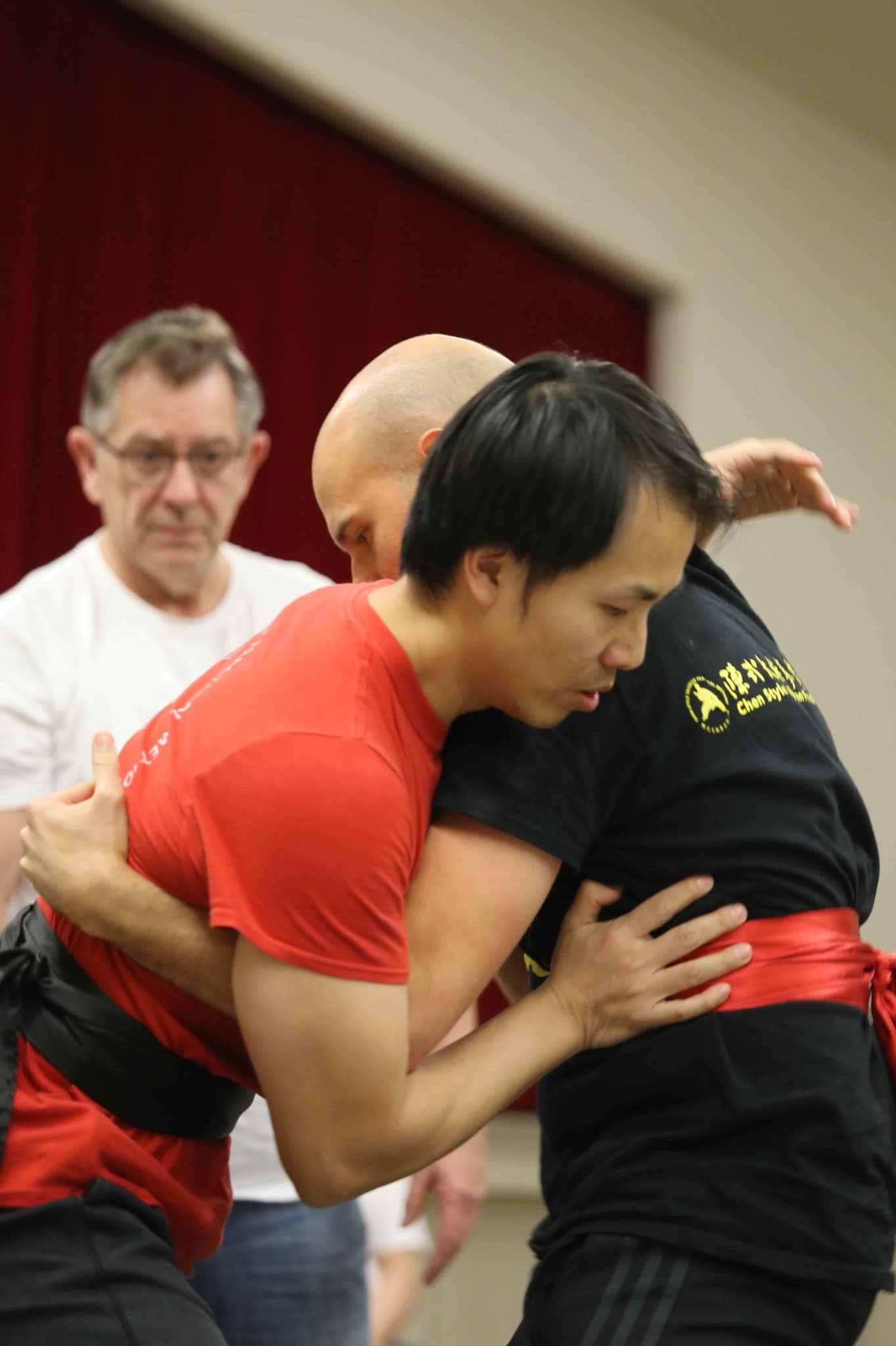
Fetch Water
Foundations corrections
Positive circle correction (3-count):
Brian has been practicing seriously for a few years, many detailed correction in the video
Presenter: Chen Zhonghua Length: 50 min. In: English Year: 2017 Difficulty:1/5
James Strider – Fulltime Training Blog Wk3 2019
“You are all so clever, you’re stupid!”
These words, uttered by Master Chen (with his usual impish grin and mischievous glint in his eyes!) at his premier European workshop way back in 2006 when he came to Holland, have since been heard by many others around the globe. As the room was full of grown Dutch men in this instance, a nation that prides itself on being pragmatic, logical and individualistic, they did not go down well! Read more
Presenter: Chen Zhonghua Length: 20 min. In: English Year: 2018 Difficulty:1/5
Sun Yang wins Muay Thai Gold Belt 20190222
Top New:News just came from Thailand that Sun Yang has won the 67 kg Golden Belt after many rounds of hard fights at the Golden Belt Finals under the auspice of the Thailand Muay Thai Federation. Sun Yang is a disciple of Master Chen Zhonghua, International Standard Bearer of the Chen Style Taijiquan Practical Method system and Dean of the Qingshan Taijiquan and Cultural Research Institute of the Rizhao Politechnic. Read more
Presenter: Chen Zhonghua Length: 30 min. In: English Year: 2018 Difficulty:1/5
Presenter: Chen Zhonghua Length: 40 min. In: English Year: 2018 Difficulty:1/5
Night of Push Hands is an event for push hands enthusiasts to improve their skills. Matches will be run in a tournament format with different weight divisions, and winners from the weight divisions will compete in the grand championship round. There will be a referee for each match with two 2-minute rounds with a 1-minute break in between.
Anyone interested are welcome to join. Spectators are also welcome.
On Sunday, February 10, I had the good fortune of attending the Taiji Tournament that is always held as part of the annual Phoenix Chinese Week. This festival celebrates many aspects of Chinese culture, including history, food, art, opera performances, and- of course- martial arts. I have attended the tournament several times in the past as a spectator. As a newer disciple, I decided that it would be good for both myself and the promotion of Practical Method to finally participate. Read more
Presenter: Chen Zhonghua Length: 40 min. In: English Year: 2018 Difficulty:1/5
Kelvin Ho was invited to perform at Yee Hong Chinese New Year Celebration on Feb. 12, 2019.
Presenter: Chen Zhonghua Length: 28 min. In: English Year: 2018 Difficulty:1/5
Presenter: Chen Zhonghua Length: 40 min. In: English Year: 2018 Difficulty:1/5
To anyone who’s interested in participating in this year’s Berlin workshop with Master Chen, please click here for further information and sign up:
http://www.practicalmethod.de/angebote/anmeldung-czh-in-berlin/
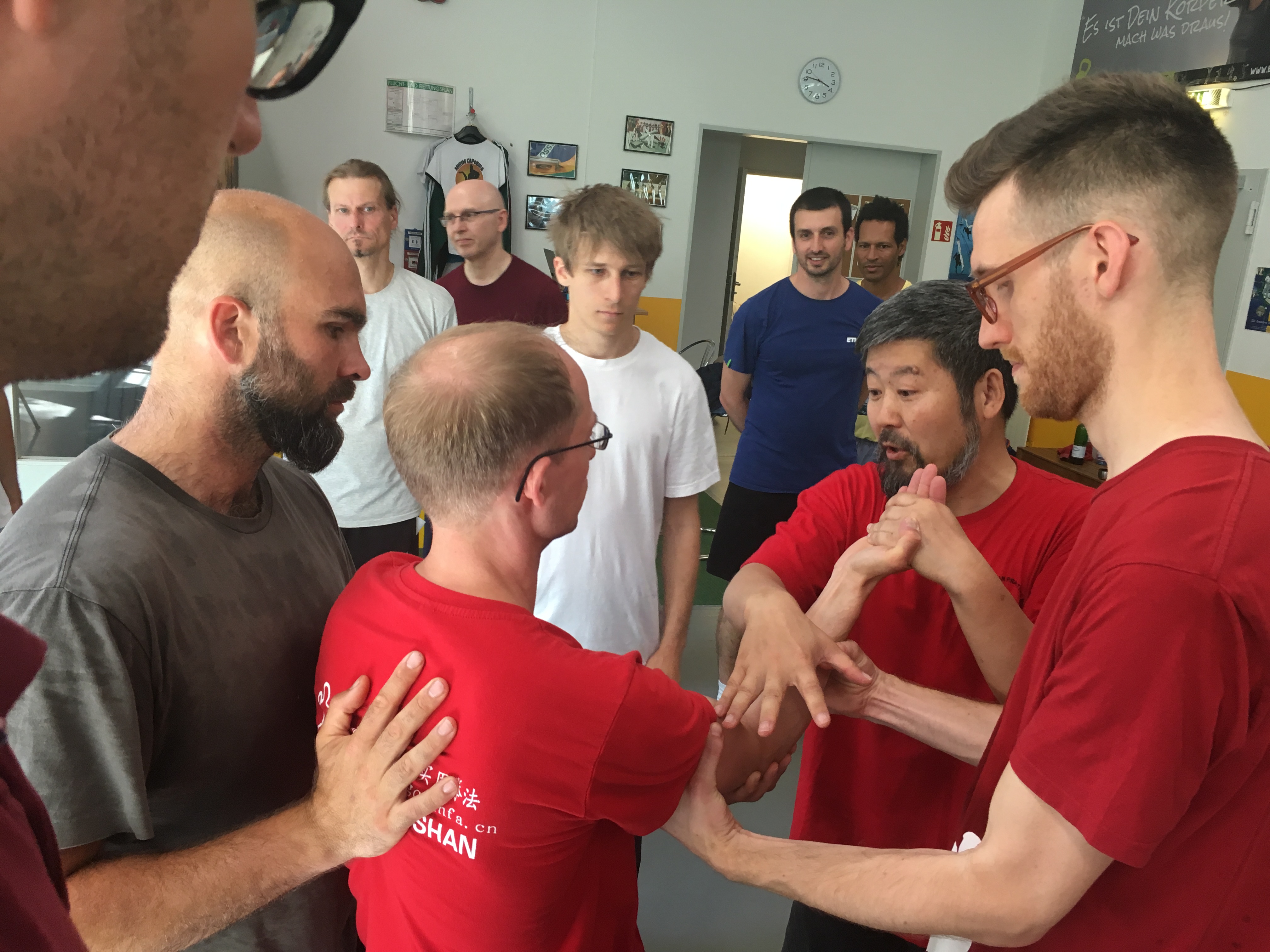
Looking forward to seeing you there 😀
Best,
Sven