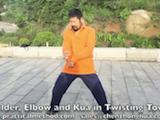
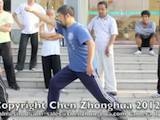
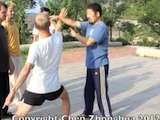
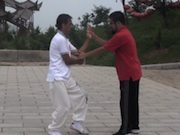
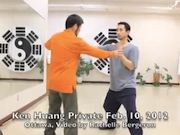
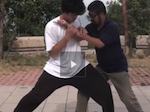
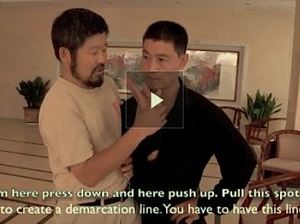
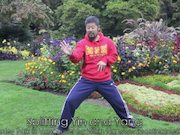
 On the way from China to Vancouver workshop, Master Chen has a free day to talk and demonstrate basic principle often misunderstood in Taijiquan. Using “Six Sealing and Four Closing” to show how to split of yin and yang. Presenter: Chen Zhonghua Length: 3 min. In: English Year: 2012 Difficulty:2/5 At:Stanley Park Vancouver, Canada
Figure 1.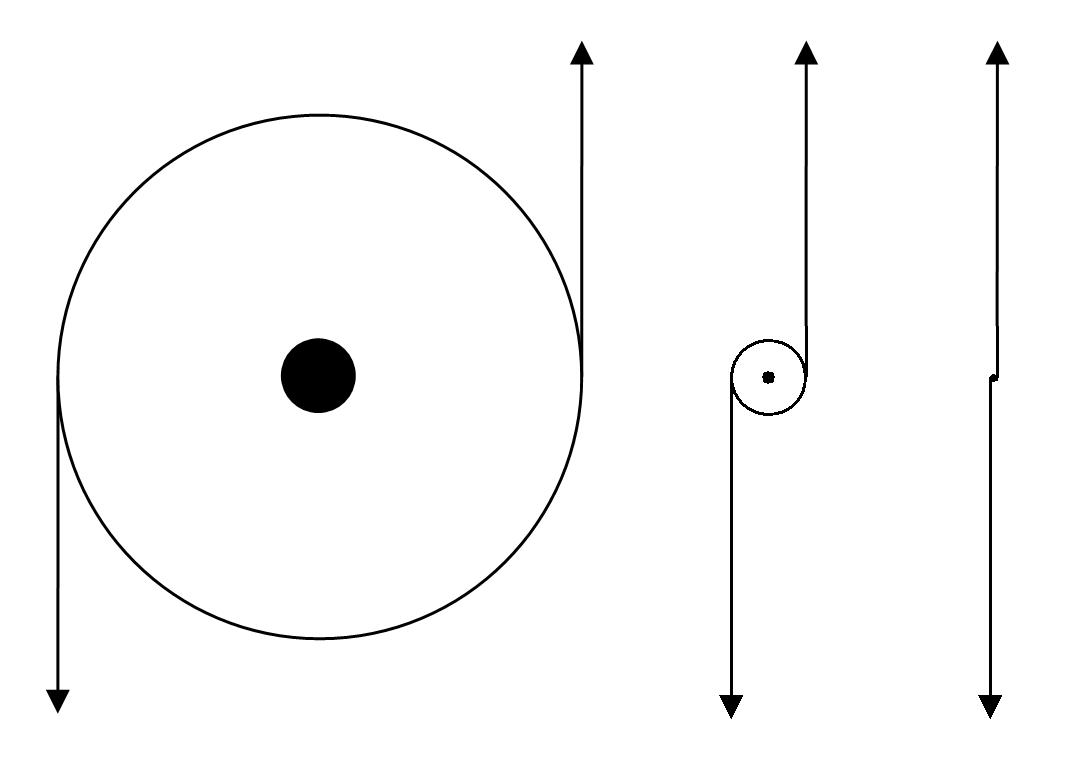 |
Figure 2.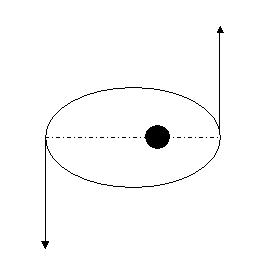 |

Master Chen says that separation of yin and yang is rotation in today’s terms. He also mentions that stretching is an instance of separation of yin and yang. Today, I came to a realization that when the circle becomes infinitely small, rotation and stretching are really one and the same. The key is that the setup needs 3 points, and one action, which is the rotation, at the centre or the pivoting point or the fixed point. The rotation at the centre is the only thing I can do to ensure that the other 2 points are opposites but of the exact same size. For example, if I just move the hands in opposite directions, since there is no relationship between them (no 3rd point linking the two together), there is no guarantee that their actions are the same in size. At the beginning, I can visualize how the dantian acts the centre and modulates the other 2 points (hand and foot). Hopefully in the future, I can place the centre/fixed point anywhere inside or outside of the body as desired like Master Chen said.
In order to materialize this theory in practice, more training in foundation and yilu will be the way to go.
http://practicalmethod.com/2012/10/yin-yang-split-online-video-trailer/
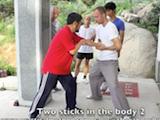
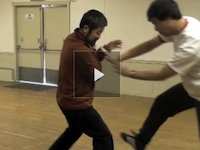
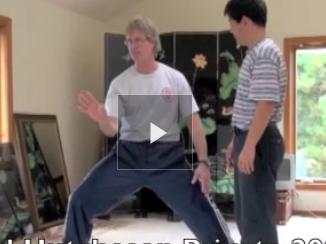
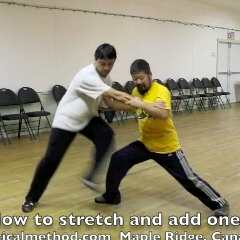 A mini lesson on push hand application during workshop. Stretch to match incoming push, then add one to unbalance opponent. Presenter: Chen Zhonghua Length: 8 min. In: English Year: 2012 Difficulty:3/5 At:Maple Ridge, B.C. Canada
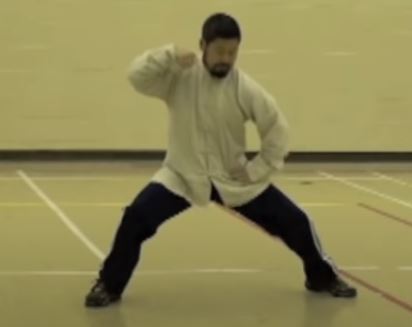
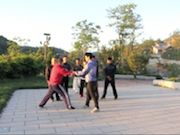 Clip of Master Chen instructing chinese student and explanation of importance of having stretch in yilu
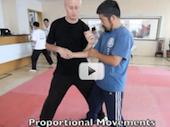 Proportional Movement lesson in Chinese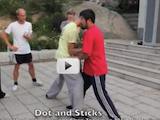
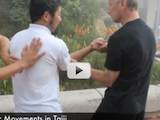 Shoulder joint connection is a complicated one, in this mini lesson, Master Chen demonstrate the correct principle and correct student’s shoulder movement
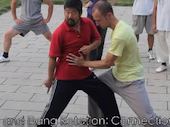 How to connect the energy of the waist and dang to the feet. Legs are the support of waist, and waist provide power to arms. Master Chen show a method to train this with partner, and switching this support to either leg depending on situation.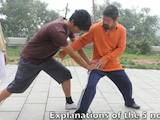
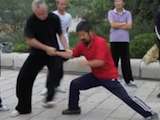 In Taijiquan power must be generated from a point removed from the point of action. This clip show the difference of local power vs
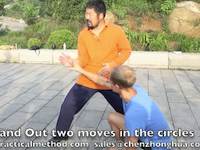
 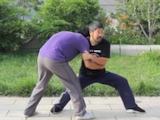 In preparation for Push Hand competition, Master Chen taught full time students a technique using Li (Rollback) energy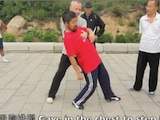
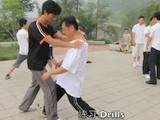 In this mini lesson, Master Chen taught a method to redirect push on the chest to the feet.