 |
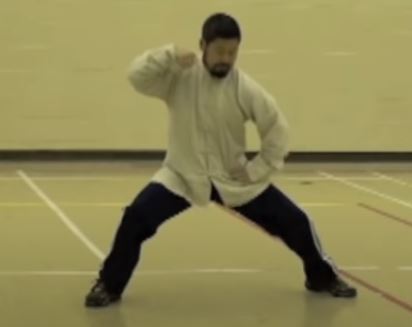
Master Chen often uses the phrase, “Not using force is a magic trick” (不用力呢,是个魔术, Bùyòng lì ne, shìgè móshù), a teaching directly attributed to his teacher, Master Hong Junsheng (洪均生). This captures the wonder and mystery of Taijiquan while leading directly to the pursuit of indirect force—the core of a system defined not by mysticism, but by sophisticated applied mechanics and strategic geometry. To the spectator, the art appears effortless, yet it solves the ultimate martial conundrum: achieving superior power and speed by moving in ways diametrically opposite to instinctive human behavior. |
| The foundation of this “trick” lies in the total separation of the Place of Engagement from the Source of Power. By treating the contact point as the end of a “passive wire” that exerts zero active force, the practitioner is able to transmit power generated from distant anchors like the dantian, the kua, and the rear foot, which represent the other end of the wire. | |
| (Part II: Adapted from the video transcripts of Wang Jinyi (王金宜) for the “Indirect Force” Video Highlights “ (间接力”视频花絮) filmed in Daqingshan (大青山), China 2012.) |
|
 |
Part 1. Don’t Eat with Your Hands
Part 3. Learning How to Fish
Part 4. Yang Actions
Part 5. Yin Actions
Part 7. Not using force is a magic trick
|
Part 7. Not using force is a magic trick
By maintaining zero movement at this point of contact, force “passes through” like a needle, leaving the opponent unable to find a point of resistance to push back against. This mechanical efficiency is further refined through a rigorous system of Taijiquan Arithmetic. Through Addition, the practitioner integrates the strength of the entire body—hand, elbow, shoulder, waist, and foot—into a single, unified vector. This is perfected by Subtraction, the deliberate elimination of all non-essential external movements and structural “leaks” that would otherwise dissipate that energy. The body is then organized via Division into distinct, functional sections with each section moving as unified blocks, ensuring that every part of the structure supports the intent. Finally, Multiplication occurs as this perfectly subtracted structure concentrates the integrated strength of the whole body into a singular, exponential point of pressure.
By mastering this internal geometry, the practitioner employs the Strategy of the Shortcut, utilizing “motionless speed” to occupy the direct path and neutralize an opponent’s momentum before it can fully manifest. Ultimately, the “force-less” ideal is a calculated illusion; it is actually Taiji with superior, hidden force. By replacing clumsy, direct struggle with an integrated power, the practitioner operates with an efficiency where the opponent is defeated by a structural reality they can feel but never locate.
The Conundrum of Force in Taiji
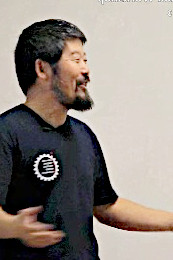 |
Master Chen addresses the central mystery of the art:
|
Force vs. Effort
Physics defines force as the agent that changes an object’s motion. Most people instinctively push or pull only from the point of contact, relying on raw muscle rather than body mechanics. This focus on localized effort creates a struggle, making the task harder than it needs to be. In Taiji, the source of change is distant, avoiding this conflict. Master Chen points out: “If he uses force [at the point of contact], the force [on the opponent actually] becomes smaller” (他一用力这个力变小了; Tā yī yònglì zhège lì biàn xiǎole).
Consistency with Other Martial Arts
Master Chen notes that Taiji is not “magical” in its goal, but unique in its method:
|
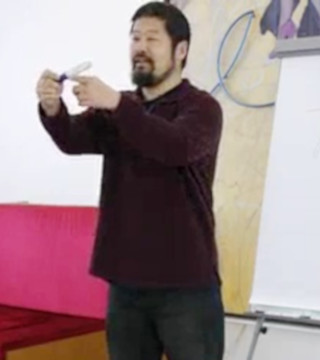 |
The key difference is that “the methods of creating [the agent of change] are completely opposite” (在用力方法完全相反的; Zài yònglì fāngfǎ wánquán xiāngfǎn de). This is a principle that “can be applied across the four seas and will hold true everywhere” (放之四海而皆准; Fàng zhī sì hǎi ér jiē zhǔn).
The Invisibility of Taiji Power
Master Chen asks rhetorically: “Remember this [fundamental] principle: where does the consistency lie?” (你记住这个原则就是一致在什么地方?; Nǐ jì zhù zhège yuánzé jiùshì yīzhì zài shénme dìfāng?).
He reminds his students: “It is to use great force against small force, and fast force against slow force” (就是大力打小力,快打慢; Jiùshì dàlì dǎ xiǎo lì, kuài dǎ màn).
But the “how” remains the secret: “But why do we say that the methods are different? It’s because we [Taiji practitioners] generate our great force in a way that makes the opponent unaware” (那但是呢为什么说在方法不一样?就是我们的这个大力是怎么出来的,让对方不知道; Nà dànshì ne wèishéme shuō zài fāngfǎ bù yīyàng? Jiùshì wǒmen de zhège dàlì shì zěnme chūlái de, ràng duìfāng bù zhīdào).
Unlike external arts: “It is not like the training methods of external martial arts that generate a lot of [visible] force” (不是外家拳那种训练方法出来很大的力; Bùshì wài jiā quán nà zhǒng xùnliàn fāngfǎ chūlái hěn dà de lì).
Master Chen concludes: “In fact, our adjustment of force is very great. You [the opponent] can feel it, but a spectator cannot” (咱其实这一调整力量非常大。但是,你是感觉到了,他看的人,他是感觉不到; Zán qíshí zhè yī tiáozhěng lìliàng fēicháng dà. Dànshì, nǐ shì gǎnjué dàole, tā kàn de rén, tā shì gǎnjué bù dào).
Conclusion: The Internal “Tool”
The answer to this puzzle lies in the concept of indirect force. This implies the internal use of a “tool“—such as a hook for pulling or a stick for pushing. Because the opponent does not realize the tool is present, they cannot understand or counter the resulting consequences.
The Illusion of “No Force“: The Magic of Taiji
In a practical demonstration, a student gives Master Chen a strong push. Master Chen remarks: “You’ll see it comes with force—such a significant force” (你看他来了力了,这么大个力; Nǐ kàn tā láile lìle, zhème dà gè lì).
Master Chen matches this incoming force, stating: “I [also] put in a lot of effort here” (我这儿也使了劲儿; Wǒ zhè’er yě shǐle jìn er). This creates the Place of Engagement, establishing a momentary balance. Master Chen observes: “He is [still] very strong [at this point]” (他的力很大; Tā de lì hěn dà).
While a practitioner might instinctively add direct power to seek an advantage, Master Chen explains the Taiji approach: “I stopped using force; I relaxed, and used this spot to push” (我不使劲儿了,我一松,用这个地方来推; Wǒ bù shǐjìn erle, wǒ yī sōng, yòng zhège dìfāng lái tuī).
Defining “Relaxation” and “No Force”
In this context, “not using force” does not mean collapsing. It means maintaining the balance while ceasing any attempt to change the position at the point of contact. This adheres to the principle of zero movement at the point of contact. Once achieved, Master Chen executes indirect force through subtle structural realignments—opening the kua or pivoting the foot.
The opponent feels the result: “So you can feel that the force is very strong” (所以这个力你是感觉到是很大的; Suǒyǐ zhège lì nǐ shì gǎnjué dào shì hěn dà de). However, because they cannot see the source, they are confused: “But it’s just that the other person can’t see it, and so they say you don’t need to use force” (但是,只不过是对方看不见,说不用力; Dànshì, zhǐ bùguò shì duìfāng kàn bùjiàn, shuō bù yòng lì).
The “Magic Trick”
Master Chen summarizes this with a phrase from Master Hong: “Not using force is a magic trick” (不用力呢,是个魔术; Bùyòng lì ne, shìgè móshù).
He asks rhetorically: “What does that mean? It’s fake” (什么意思?就是假的; Shénme yìsi? Jiùshì jiǎ de). He explains the illusion:
| “I’m not going to tell you the real situation. The truth is, you didn’t see what happened, but our strength is [already] greater than yours [after the adjustment]” (就是不告诉你那个真实的情况。真实的情况,一出手你没看见,但是咱的力比你大; Jiùshì bù gàosù nǐ nàgè zhēnshí de qíngkuàng. Zhēnshí de qíngkuàng, yī chūshǒu nǐ mèi kànjiàn, dànshì zán de lì bǐ nǐ dà).Combat physics still apply: “It’s always about using strength to defeat weakness, and speed to defeat slowness” (一定是大力打小力,快打慢; Yīdìng shì dàlì dǎ xiǎo lì, kuài dǎ màn). |
 |
The difference is in effectiveness: “No matter how fast your [opponent’s] movements are, they are ineffective… while our [Taiji] movements may look slow, but they are actually effective” (就是你的动作,你再快你无效… 咱的动作看上去很慢,实际是有效的; Jiùshì nǐ de dòngzuò, nǐ zài kuài nǐ wúxiào… Zán de dòngzuò kàn shàngqù hěn màn, shíjì shì yǒuxiào de).
Taiji Concept: Speed vs. Slowness (快打慢)
Master Chen addresses the issue of speed: “So, regarding the issue of speed defeating slowness” (所以说这个快打慢的问题; Suǒyǐ shuō zhège kuài dǎ màn de wèntí). He demonstrates by having a student stand still with an extended fist. Master Chen then runs into the fist at high speed and falls back: “This is what happens when the fast hits the slow” (这就是快打慢; Zhè jiùshì kuài dǎ màn).
The Paradox of Motionless Speed
 |
“Even though he wasn’t moving, his speed was incredibly fast. Why? Because he hit right here! I think it’s pretty impressive. He could hit me without even moving, while I moved very fast and missed” (他虽然不动,他的速度相当快,为什么?他正好你看打这儿了?我觉得是挺厉害的,就是他这个不动就能打着我,我这动的很快,没打着他; Tā suīrán bù dòng, tā de sùdù xiāngdāng kuài, wèishéme? Tā zhènghǎo nǐ kàn dǎ zhè’erle? Wǒ juédé shì tǐng lìhài de, jiùshì tā zhège bù dòng jiù néng dǎzhe wǒ, wǒ zhè dòng de hěn kuài, méi dǎzhe tā). |
He adds: “You see, all the force and speed came here, and I absorbed it all” (你看这个力全到了这儿来了,速度全到这儿来,全吃掉了; Nǐ kàn zhège lì quán dàole zhè’er láile, sùdù quán dào zhè’er lái, quán chī diàole).
The Irony of External Power
Master Chen notes: “I think it’s amazing. If he weren’t here, I would think [my movement] was pretty impressive. But his fist was right here, and I ran right into it” (觉得很厉害,他要不在这的话,我自己觉得挺厉害的,你看吧,结果他这个拳就放在这方,一下就给撞上了; Juédé hěn lìhài, tā yào bùzài zhè dehuà, wǒ zìjǐ juédé tǐng lìhài de, nǐ kàn ba, jiéguǒ tā zhège quán jiù fàng zài zhè fāng, yīxià jiù gěi zhuàng shàngle). He concludes: “That’s the way Taiji works” (咱太极走的就这么个路; Zán tàijí zǒu de jiù zhème gè lù).
The Shortcut: Efficiency Through Directness
Master Chen contrasts Taiji speed with external speed. Touching a student instantly as they prepare a punch, he says: “Hey, look again. It’s just a touch, and I’m already past him. That is speed” (哎,你再来你看,就是一碰,我已经过去了,所以这是快; Āi, nǐ zàilái nǐ kàn, jiùshì yī pèng, wǒ yǐjīng guòqùle, suǒyǐ zhè shì kuài).
The advantage comes from timing: “Why? Because I didn’t waste time setting up a position” (为什么呢?就是我没摆这个、这个……; Wèishéme ne? Jiùshì wǒ méi bǎi zhège, zhège…). He captures the opponent before they can act: “The moment you touch him, he is already there. Look, he is right here” (就是一碰的时候他已经过来了,你看,他这全在这个地方; Jiùshì yī pèng de shíhòu tā yǐjīng guòláile, nǐ kàn, tā zhè quán zài zhège dìfāng).
The Geometry of Speed
Master Chen calls this a shortcut: “This approach saves effort. What does it save? It takes a shortcut” (所以这东西他是省了个力,省的是什么呢?走了个捷径; Suǒyǐ zhè dōngxī tā shì shěngle gè lì, shěng de shì shénme ne? Zǒule gè jiéjìng).
“It is the fastest part—and the fastest part is the shortest path” (就是最快的那地方,最快的地方就是最短的地方; Jiùshì zuì kuài dì nà dìfāng, zuì kuài dì dìfāng jiùshì zuìduǎn dì dìfāng).
Psychological Hesitation
Master Chen explains that without training, humans fear the direct route: “Without training, you wouldn’t dare take the shortest path, would you?” (这个东西不通过训练,最短的地方你是不敢过去的,是吧?; Zhège dōngxī bù tōngguò xùnliàn, zuìduǎn dì dìfāng nǐ shì bù gǎn guòqù de, shì ba?).
Using the analogy of a burglar avoiding a light:
|
 |
In combat, people detour out of fear: “In real life, when someone throws a punch, they often avoid the direct spot because your eyes are fixed on them… They think if they take the roundabout way, you won’t notice” (我们实际生活中他出去拳,他都绕着往那走,因为你眼睛在这… 他以为从那边走,你看不见; Wǒmen shíjì shēnghuó zhōng tā chūqù quán, tā dōu ràozhe wǎng nà zǒu, yīnwèi nǐ yǎnjīng zài zhè… Tā yǐwéi cóng nà biān zǒu, nǐ kàn bùjiàn).
Master Chen concludes: “But these judgments are all wrong. Do you understand this principle?” (但是这些判断都是错误的。明白这个道理吧?; Dànshì zhèxiē pànduàn dōu shì cuòwù de. Míngbái zhège dàolǐ ba?).
Summary: The Strategic Advantage
 |
If martial arts is viewed not as a desperate struggle but as a strategic game, Taijiquan operates on a different level. Master Chen’s “shortcut” represents the ultimate strategic pivot; while an opponent might attempt to play chess, the Taiji practitioner plays checkers and crowns their piece. If the opponent switches to checkers, the practitioner utilizes the complex maneuvers of a knight to capture their king, and if the opponent masters both, the practitioner already owns the real estate and the hotels—they are playing Monopoly. This hierarchy of strategy illustrates that Taiji is less about matching an opponent’s movement and more about occupying the space they intended to take before they even arrive. |
As Master Chen suggests, fighting is ultimately a “game of chicken” rooted in psychological hesitation and physical detours. By understanding the shortcut—the shortest, most direct path that others are too afraid to take—the practitioner gains a structural and temporal advantage so complete that the opponent’s power becomes irrelevant. In this state of “motionless speed,” you don’t even need to duck; you simply exist at the destination while the opponent is still struggling with the journey.
The Arithmetic of Taijiquan
Addition of Force (加法)
Master Chen returns to the principle of generating and applying force: “Today we are still discussing a principle of generating and applying force.” (今天咱讲的还是一个,这个发力的和用力的一个原则; Jīntiān zán jiǎng de háishì yīgè, zhège fā lì de hé yònglì de yīgè yuánzé).
He introduces Taijiquan arithmetic by noting that power must be backed by structural depth: “Any force [you use] must come from behind [the point of contact]” (任何的力得从后面加过来; Rènhé de lì dé cóng hòumiàn jiā guòlái).
Attributing this concept to his teacher, he explains: “Master Hong said that the force in boxing is additive” (洪老师说我们拳的这个力呀,拳的这个力是加法; Hóng lǎoshī shuō wǒmen quán de zhège lì ya, quán de zhège lì shì jiāfǎ).
| Master Chen elaborates that this is about increasing the source of the force rather than the tension at the hand:“It is about increasing [the source of the force]. When practicing boxing, the initial contact with the hand is zero [direct power], but when the elbow pushes forward, it’s one” (这个力是越… 动作在练拳的时候用动作的时候一碰是个零,他这个人手一碰是个零,肘往前一挤,这个咱就说是个一; Zhège lì shì yuè… dòngzuò zài liàn quán de shíhòu yòng dòngzuò de shíhòu yī pèng shìgè líng, tā zhège rénshǒu yī pèng shìgè líng, zhǒu wǎng qián yī jǐ, zhège zán jiù shuō shìgè yī). |
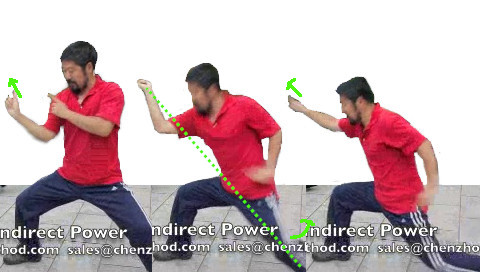 |
The sequence continues through the body: “However, at the same time, when you squeeze your shoulder [into the elbow], it’s 2, 3, 4, which is addition” (但是呢,在这个同时,肩一挤他就是2,3,4,他是加法; Dànshì ne, zài zhège tóngshí, jiān yī jǐ tā jiùshì 2, 3, 4, tā shì jiāfǎ).
Subtraction of Movement (减法)
While power is added internally, external movement must be reduced. Master Chen explains: “But when practicing boxing, the structure and movements are subtraction” (但是练拳的时候在结构在动作是减法; Dànshì liàn quán de shíhòu zài jiégòu zài dòngzuò shì jiǎnfǎ).
He contrasts the Taiji practitioner with beginners: “You see beginners shaking their heads and making a lot of movements, which looks very beautiful” (初练的的人你看他浑身摇头晃脑,动作很多,非常漂亮; Chū liàn de de rén nǐ kàn tā húnshēn yáotóuhuàngnǎo, dòngzuò hěnduō, fēicháng piàoliang).
True Taiji requires removing these non-essential motions: “What is subtraction?” (减法是什么?; Jiǎnfǎ shì shénme?). Demonstrating a move, he notes: “You see, now it’s done” (你看,现在这就完成了; Nǐ kàn, xiànzài zhè jiù wánchéngle).
“The [Taiji] movements are very few. [Since] Your goal is to get from here to here. You see [for the non-Taiji practitioner], at the beginning, they did so much to get here, and we got here, it’s done” (就是动作非常少了,你目的就是从这个地方到这儿来,那一开始你看他搞了这么多过来了,咱这个地方过来了,完成了; Jiùshì dòngzuò fēicháng shǎole, nǐ mùdì jiùshì cóng zhège dìfāng dào zhè’er lái, nà yī kāishǐ nǐ kàn tā gǎole zhème duō guòláile, zán zhège dìfāng過來了, wánchéngle).
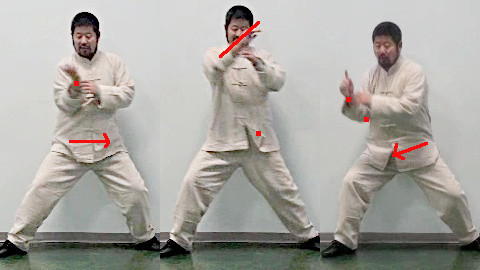 |
Subtraction means transitioning between strong structures without non-essential “wobble.” or “toss” Master Chen summarizes: “So practicing boxing is subtraction. Through subtraction, your strength becomes addition” (所以练着个拳呢,是个减法,通过减法你的力变成加法了; Suǒyǐ liànzhe gè quán ne, shìgè jiǎnfǎ, tōngguò jiǎnfǎ nǐ de lì biàn chéng jiāfǎle). Consequently, “the more you practice, the greater the strength becomes” (越练那个力越大; Yuè liàn nàgè lì yuè dà). |
Division into Sections (分截)
Master Chen restates a core tenet: “It is a principle of force application: never use local force. Do not apply force at the point of intersection; instead, apply it directly from a source away from that contact area” (就是用力原则,用力原则,永远不用当地的力,相交那个地方不用力,用它直接,他离开那块去发力; Jiùshì yònglì yuánzé, yònglì yuánzé, yǒngyuǎn bùyòng dāngdì de lì, xiàngjiāo nàgè dìfāng bùyòng lì, yòng tā zhíjiē, tā líkāi nà kuài qù fā lì).
To achieve this, the body is divided into functional units: “Apply force to increase force. Once you understand this, it becomes a section” (用力加力,这个会了之后,这又算是一截; Yònglì jiā lì, zhège huì liǎo zhīhòu, zhè yòu suànshì yī jié).
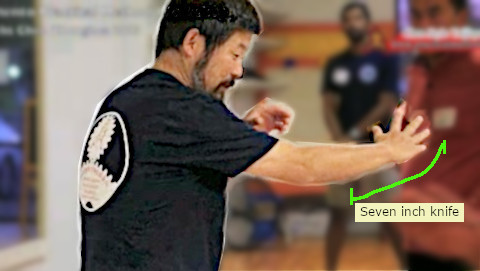 |
He illustrates this with the arm: “When you touch it, the hand and elbow become a section. It no longer moves independently” (就是你会了,他一碰他,这个手和这个肘肘成了一截了,他不在单独的做动作了; Jiùshì nǐ huìle, tā yī pèng tā, zhège shǒu hé zhège zhǒu zhǒu chéngle yī jiéliǎo, tā bùzài dāndú de zuò dòngzuòle). In the Practical Method system, the training of this section is known as forging the “Seven Inch Knife“. |
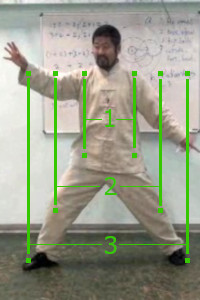
The process continues by using one section to drive the next. This process is governed by specific rules as described in the theory of Three Rings of Taiji (太極三環):
|
 |
Finally, the whole body unites: “Finally, his whole body becomes one section, only using his back foot to push off” (到最后,全身是一截,只用后脚一蹬他; Dào zuìhòu, quánshēn shì yī jié, zhǐ yòng hòujiǎo yī dēng tā). This results in a massive advantage: “This section [connection the hand to the feet] alone is very long” (就这一截就很长了; Jiù zhè yī jié jiù hěn zhǎngle).
Multiplication of Power (乘法)
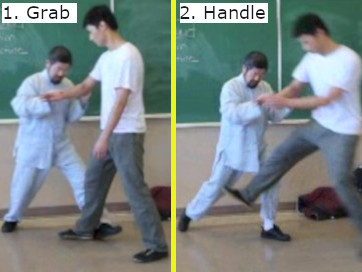
| Multiplication occurs when the unified body generates power exceeding the sum of its parts. Master Chen uses the stick analogy: “It involves taking a large, long stick, with one end being your hand, and using your hand to strike [one end of] the stick, transferring the force through the stick [to the other end]” (就是拿一个大棍子很长的棍子,另外一截就你的手,用手来打那个棍子,通过那个棍子把力传到过去; Jiùshì ná yīgè dà gùnzǐ hěn zhǎng de gùnzǐ, lìngwài yī jié jiù nǐ de shǒu, yòng lǐ sǐ nàgè gùnzǐ, tōngguò nàgè gùnzǐ bǎ lì chuán dào guòqù). |
 |
While Addition brings strength and Division organizes sections, Multiplication happens when Subtraction has removed all “leaks.” The force is concentrated into a singular point, resulting in exponential pressure.
The Difficulty of Indirect Force
Master Chen admits the challenge: “It [the principle] sounds very simple, but it’s very difficult to practice. Why? Because the force has to travel” (说上去非常简单,练上去非常难,为什么呢?就是这个力他要跑; Shuō shàngqù fēicháng jiǎndān, liàn shàngqù fēicháng nán, wèishéme ne? Jiùshì zhège lì tā yào pǎo).
In a demonstration, he explains: “When he exerts force like this, you see it travels from his shoulder, right? You can’t see the force from the shoulder, [yet] it’s gone to the fingertips” (他这样的时候一使劲,你看他从肩跑了吧?这个肩的力你看不见,他到手指头上去了; Tā zhèyàng de shíhòu yī shǐjìn, nǐ kàn tā cóng jiān pǎole ba? Zhège jiān de lì nǐ kàn bùjiàn, tā dào shǒuzhǐ tou shàngqùle).
The danger is swaying: “If you sway slightly … You feel the force isn’t on you [anymore]” (所以一般的你微微的晃一下 … 感觉到力没在你身上; Suǒyǐ yībān de nǐ wéiwéi de huǎng yīxià … Gǎnjué dào lì méi zài nǐ shēnshang).
He concludes that the mastery is internal: “This principle of applying force in the opposite direction is all on you” (这个反向的用力的原则,全在你身上; Zhège fǎn xiàng de yònglì de yuánzé, quán zài nǐ shēnshang). When correct: “With a slight movement, it’s gone. So that’s indirect [force]” (微微的一动,他跑了,所以那就是你间接的; Wéiwéi de yīdòng, tā pǎole, suǒyǐ nà jiùshì nǐ jiànjiē de).
Avoiding Clumsy Force
Practitioners often fail by reverting to direct force: “If you’re [using] indirect [force], you’re always afraid the force will go away, so you always want to be direct” (间接的话,你就老怕他跑力,所以老想直接; Jiànjiē dehuà, nǐ jiù lǎo pà tā pǎo lì, suǒyǐ lǎo xiǎng zhíjiē).
“Direct means grabbing that spot and applying force” (直接就是抓着那个地方用力了; Zhíjiē jiùshì zhuāzhe nàgè dìfāng yònglìle). Master Chen warns: “That force is clumsy, rigid, and useless. That’s the kind of force that we in Tai Chi need to avoid” (这个力就是笨拙的,就是僵 de,就是没有用的,就是咱太极要避开的的那个力; Zhège lì jiùshì bènzhuō de, jiùshì jiāng de, jiùshì méiyǒu yòng de, jiùshì zán tàijí yào bì kāi de dì nàgè lì).
Principles of Internal Structure
The Symptom of Incorrect Force
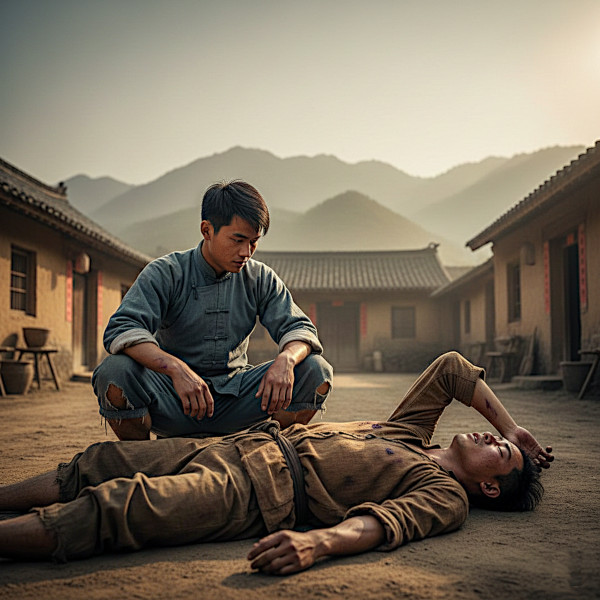 |
Master Chen observes that bruising is often a sign of poor mechanics: “When you practice push hands… your arms are covered in bruises. They are all black and blue” (所以呢你看,你们推手的时候,等推完手… 全部都是青一块紫一块的; Suǒyǐ ne nǐ kàn, nǐmen tuīshǒu de shíhòu, děng tuī wán shǒu… quánbù dōu shì qīng yīkuài zǐ yīkuài de).He traces this to the misuse of force: “That is because you are using force incorrectly. You aren’t utilizing proper structure to move the person” (这就是用力用错了,你不是去用这个结构来推人; Zhè jiùshì yònglì yòng cuòle, nǐ bùshì qù yòng zhège jiégòu lái tuī rén). |
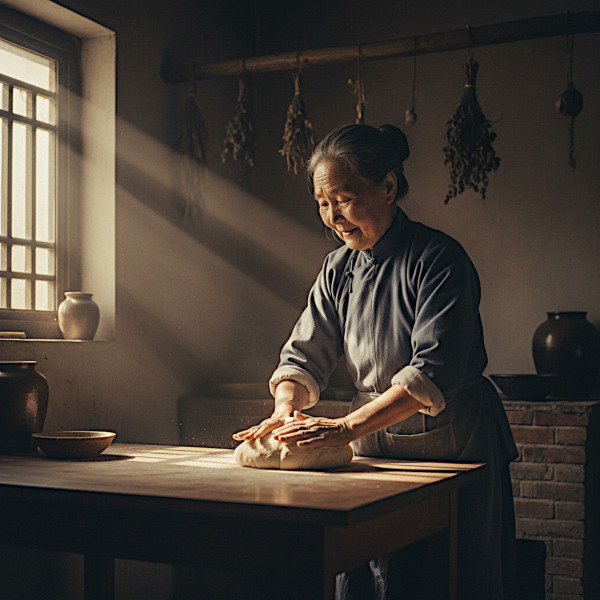
The Analogy of the Baker
| To illustrate integrated power, Master Chen uses the baker analogy: “A person who truly knows how to knead dough doesn’t just use their fingers to pinch it. But that is what you are doing, right?” (人家真的那个会揉面的,他也不是用手指头,就这么捏个面,你是这么样的,是吧?; Rénjiā zhēn de nàge huì róu miàn de, tā yě bùshì yòng shǒuzhǐtou, jiù zhème niē gè miàn, nǐ shì zhème yàng de, shì ba?).An expert uses their entire body weight and leverage, not just the hand muscles. |
 |
Avoiding Chaos in the Form
Master Chen emphasizes control: “In our style of boxing, we cannot allow the movement to become chaotic” (但在咱这个拳里面呢,不能让他乱; Dàn zài zán zhège quán lǐmiàn ne, bùnéng ràng tā luàn). Relying on raw effort is a dead end: “It is like this: you cannot use that kind of strength. It is extremely difficult for force to penetrate past that specific point using effort alone” (就是这么样吧,你不能这么使劲儿,从这个地方过去……就是过去这一点很难很难; Jiùshì zhème yàng ba, nǐ bùnéng zhème shǐjìner, cóng zhège dìfāng guòqù… jiùshì guòqù zhè yīdiǎn hěn nán hěn nán).
The Principle of Integrated Power
The process is systematic: stable contact, connection to a distant section, and using that section as the source. This creates a unified internal energy: “The force of this stretching and pulling penetrates as a whole; everything is interconnected” (这一伸一拉那个力是整体的穿透了,就是都连在一起了; Zhè yī shēn yī lā nàge lì shì zhěngtǐ de chuāntòu le, jiùshì dōu lián zài yīqǐ le).
Summary: The Grand Calculation
The genius of Taijiquan lies in this counter-intuitive logic. We do not seek power through muscular tension, but through a rigorous internal “calculation.” We add the sources of our body’s mass, subtract every unnecessary movement that causes force to leak, and divide our structure into functional sections. When these operations are performed correctly, the result is a multiplication of power that transcends physical size.