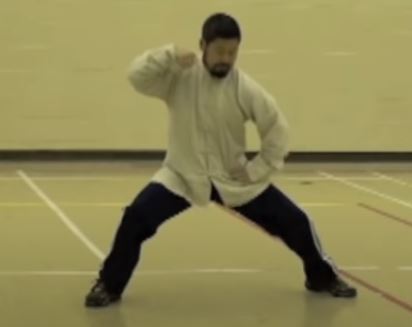
To link movements together is to become double heavy. Instead of moving together, each body part must complete its’ designated role to complete a function. Desynchronized synchronization – first we must learn how to take our body apart before we can put it back together. Like a machine, the power only comes from every piece doing it’s job. One thing can only do one thing. The piston in an engine only moves up and down; it does not try to turn the wheel or to move the car forward. Within taijiquan, the machine does not fight. None of the actions of the body relate to fighting the opponent, only completing its’ designated job.
Within a one dimensional movement everything is connected. For example, as the hand moves forward in a push, the torso also moves forward, typically followed by the rear knee. In this way, everything moves together in order to generate power, this power is generated by strength and expressed through speed.
A two dimensional movement compounds the power of each body part by creating a non-moving piece. Each piece is able to successively ground off the last piece by creating a ‘wall’ to push off of. To create fewer or an unstable wall is to merge pieces together, resulting in power leaking out of the body or rebounding back. Power is dependent on the stability of the last piece. While we are learning to create this separation, our power is often not consistent enough to maintain the stretch. As we encounter power we revert back to a single dimensional push. A true two dimensional stretch is to maintain the separation despite obstacles.
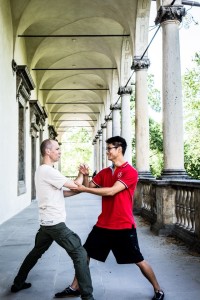
The creation of the non-moving part is a stretch by definition. Power is a differential; most commonly it is a differential of space by using speed. Within taiji we are creating a differential using stability, with each piece not merging. To merge powers is to create an unstable wall
In the previous example of a push, a two dimensional movement would separate the arm from the body. As the arm pulls or pushes, the torso remains unaffected. The torso not moving creates a ‘wall’ that the arm is able to push off of.
To be able to move in this manner is to move like a rotary saw. With a rotary saw the blade does not move on its’ own. The blade only rotates and spins, while the saw is pushed onto the wood. The cutting of the wood does not have to do with the blade rotating, it has to do with the wood being pushed onto the blade, or the saw being pushed onto the wood. The saw must move independent of the blade rotation – if the blade moves forward it is unable to rotate. Similarly, the torso does not move, only remains upright and rotates. The legs move the body forward/backwards, while the arms cut.
Therefore we must find a method to define the separation of our movements. Separation of the body applies on both a macro and micro scale. Not only must we separate in the cardinal directions (top/bottom, left/right, front/back), but also differentiate the role of the hand from the role of the elbow; what the purpose of the front shoulder is vs. the rear shoulder, etc.
Relevant videos:
http://practicalmethod.com/2015/01/no-tossing-separated-movements-online-video-trailer/
http://practicalmethod.com/2014/06/dimensions-5-points-online-video-trailer/
Presenter: Chen Zhonghua Length: 10 min. In: English Year: 2016 Difficulty:1/5

Presenter: Chen Zhonghua Length: 10 min. In: English Year: 2016 Difficulty:1/5
Fist Draping Over Body (Pi Shen Chui) and Lean with Back (Bei Zhe Kao) Toronto North York Taiji Class on July 13, 2017 i
Fist Draping Over Body (Pi Shen Chui) and Lean with Back (Bei Zhe Kao)
Double negative circle: Left hand negative circle, right hand elbow in place hand in punch form just above the left knee, right hand negative elbow in place hand in punch form just above the left knee. Repeat twice.
Right arm turn clockwise and raise the arm to crown. Hand in punch form. Left hand rests on the Kua and stretch open. The line and the stretches should be from left heel to right
Cross Hands (Shi Zi Shou)
Double negative circle, left arm stretched on left side and right arm stretched on the right side higher than left arm, Continue the negative brining arms in a cross position, right above the left, hands in punch form, opposite to the chest, elbows tucked and facing the ground, same time slide right foot heel first to the right and land.

Presenter: Chen Zhonghua Length: 30 min. In: English Year: 2016 Difficulty:1/5
Hello Master Chen
I have a question about kua, shoulder and shun/ni.
My question is when you are doing say, cloud hands. You show this on one of your videos here called How To Keep The Center from 3.25. You are on left leg and kua opens on left side and the left hand looks like Ni. Does this mean that the kua opening always coincides with Ni chan and closing of kua is shun chan.
Also in one of your videos I remember you say that when hip opens then same side shoulder kua closes and vice versa. What does this mean exactly with the shoulder kua closing or opening. Does opening of shouldre kua mean that shoulder is not sunk and closed shoulder kua means shoulder is not sunk?
Thanks
Becka

You can also see a few pictures here.
Presenter: Chen Zhonghua Length: 20 min. In: English Year: 2016 Difficulty:1/5
Presenter: Chen Zhonghua Length: 30 min. In: English Year: 2016 Difficulty:1/5

Presenter: Chen Zhonghua Length: 10 min. In: English Year: 2016 Difficulty:1/5

Presenter: Chen Zhonghua Length: 10 min. In: English Year: 2016 Difficulty:1/5
Presenter: Chen Zhonghua Length: 10 min. In: English Year: 2016 Difficulty:1/5
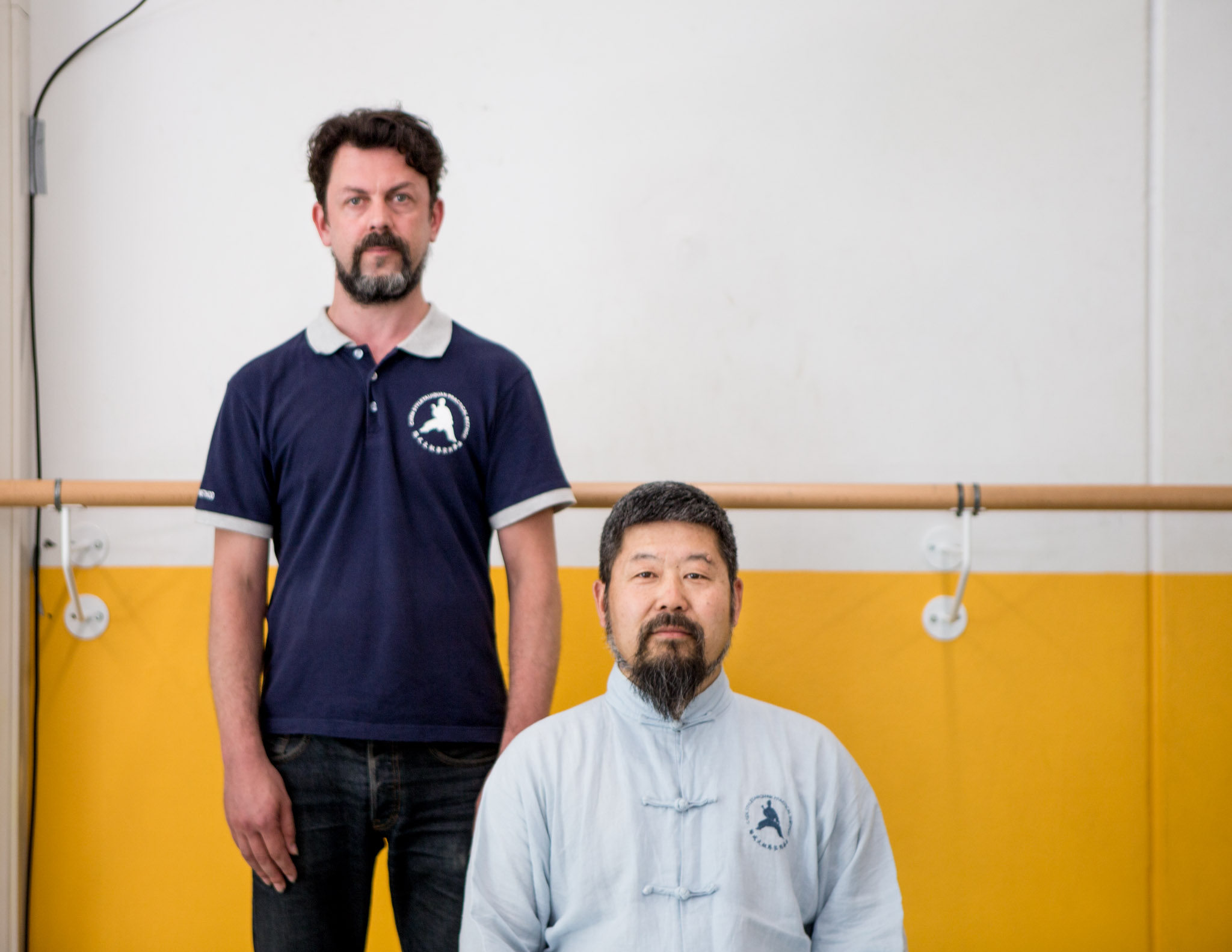 Dear All!
Close to the completion of my 43rd year in life, Master Chen Zhonghua kindly accepted me as one of his disciples, during the 6th Berlin workshop on 17./18. June 2017.
I am very grateful and like to say thank you especially to Michael Winkler, who encouraged me to keep up the training and who handed over the Berlin/Germany business to me in 2016.
I’d also like to thank Brennan and Pawel, as well as the Berlin Team Carlotta, Kerstin and Lutz. I am looking forward to promote the practical method system in Berlin, Germany and Europe.
Kind regards,
Sven
Presenter: Chen Zhonghua Length: 10 min. In: English Year: 2016 Difficulty:1/5
Presenter: Chen Zhonghua Length: 10 min. In: English Year: 2016 Difficulty:1/5
First part is on Daqingshan mountain, second part is in the new Rizhao Practical Method center near the beach.
Presenter: Chen Zhonghua Length: 10 min. In: English Year: 2016 Difficulty:1/5
Presenter: Chen Zhonghua Length: 10 min. In: English Year: 2016 Difficulty:1/5
Presenter: Chen Zhonghua Length: 10 min. In: English Year: 2016 Difficulty:1/5
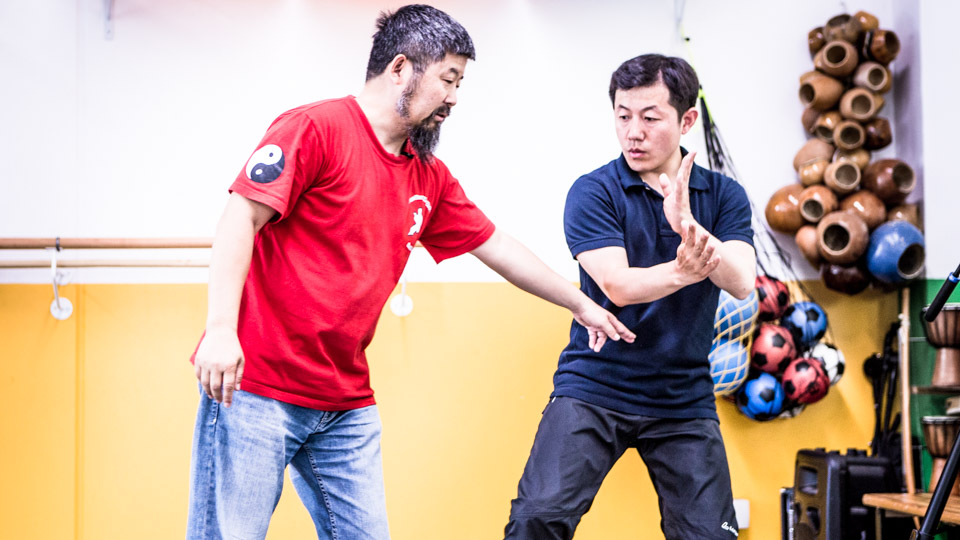
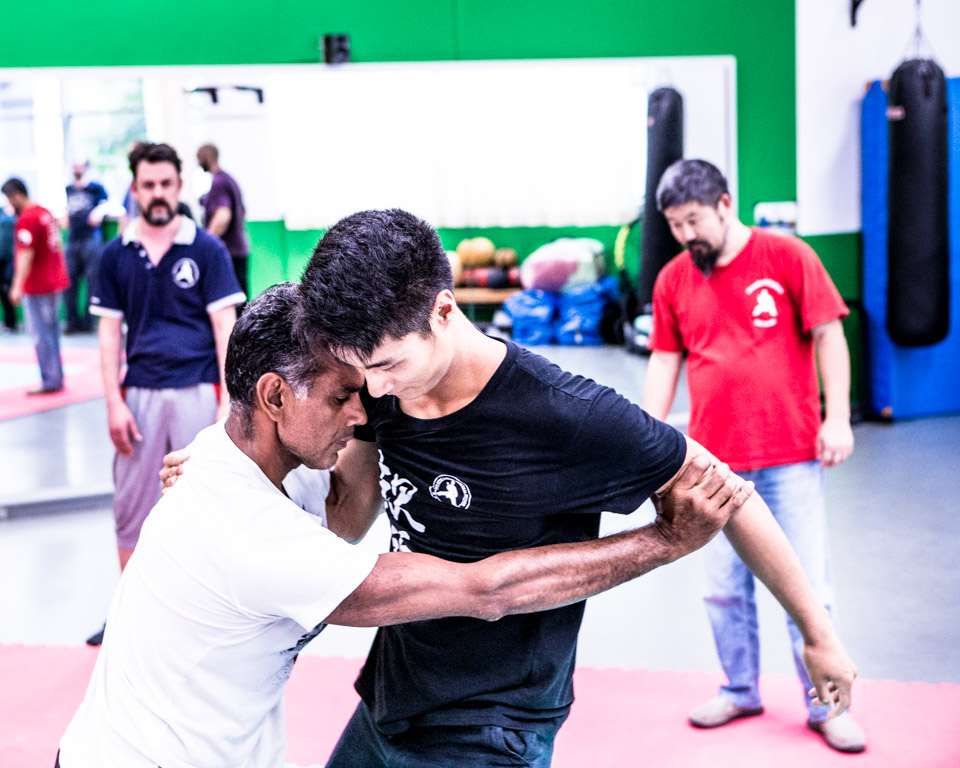


Presenter: Chen Zhonghua Length: 20 min. In: English Year: 2016 Difficulty:1/5

Presenter: Chen Zhonghua Length: 10 min. In: English Year: 2015 Difficulty:1/5


Presenter: Chen Zhonghua Length: 10 min. In: English Year: 2015 Difficulty:1/5
Looking for experienced English as a second language teacher for the 2017-2018 school year.
School: Qingshan High School. Wulian, Shandong, China.
Read more
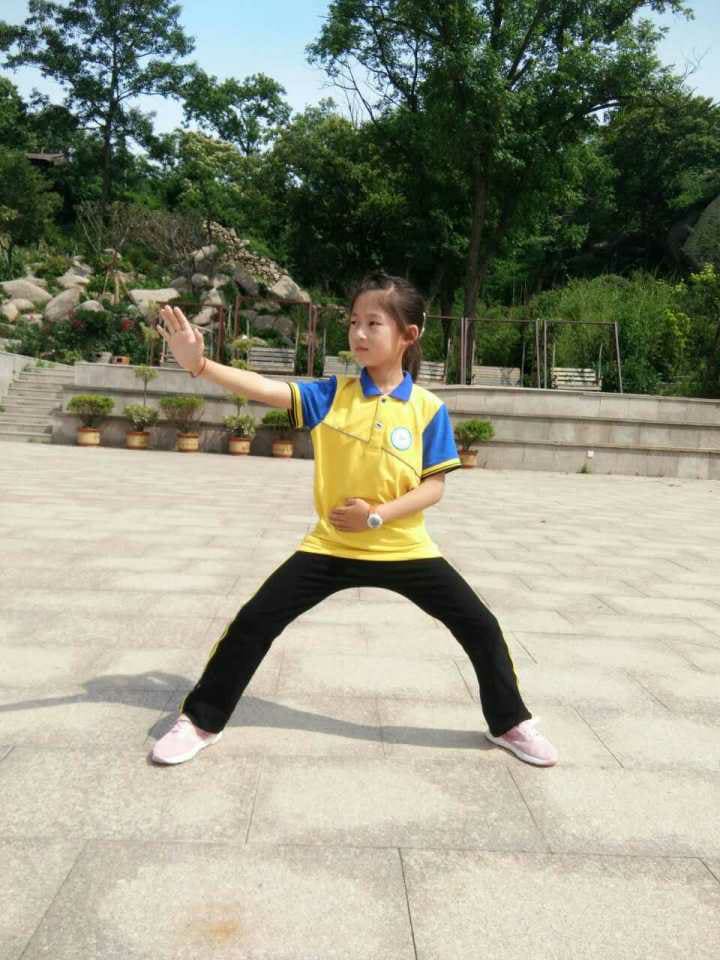
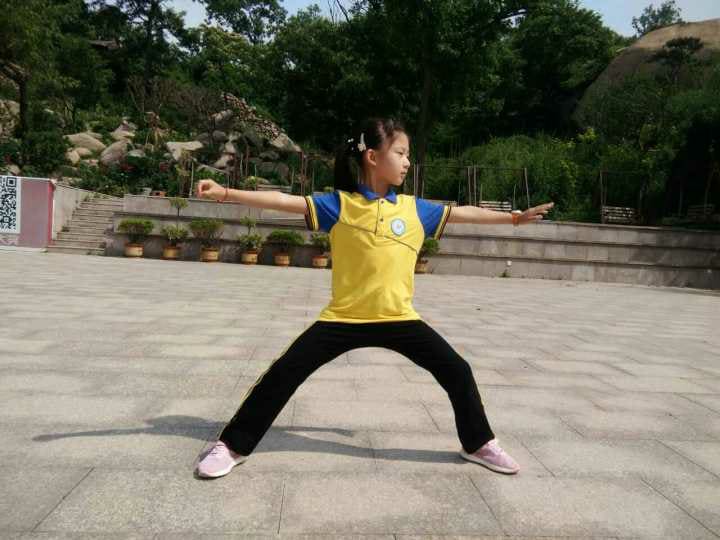
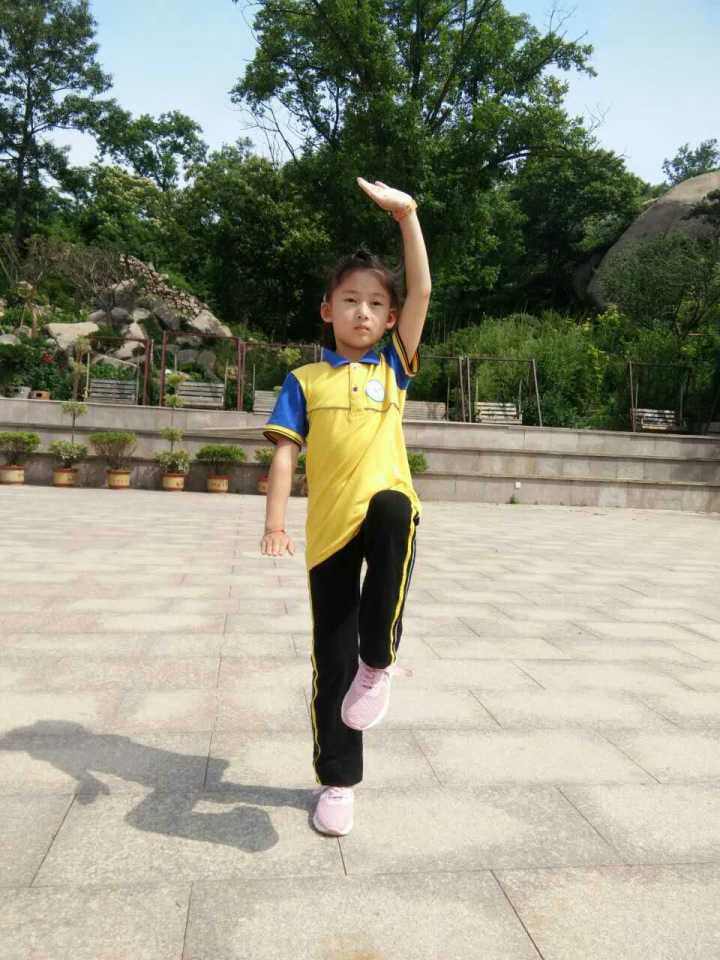
Application Demonstration
Presenter: Chen Zhonghua Length: 20 min. In: English Year: 2015 Difficulty:1/5
Presenter: Chen Zhonghua Length: 10+10 min. In: English Year: 2015 Difficulty:1/5
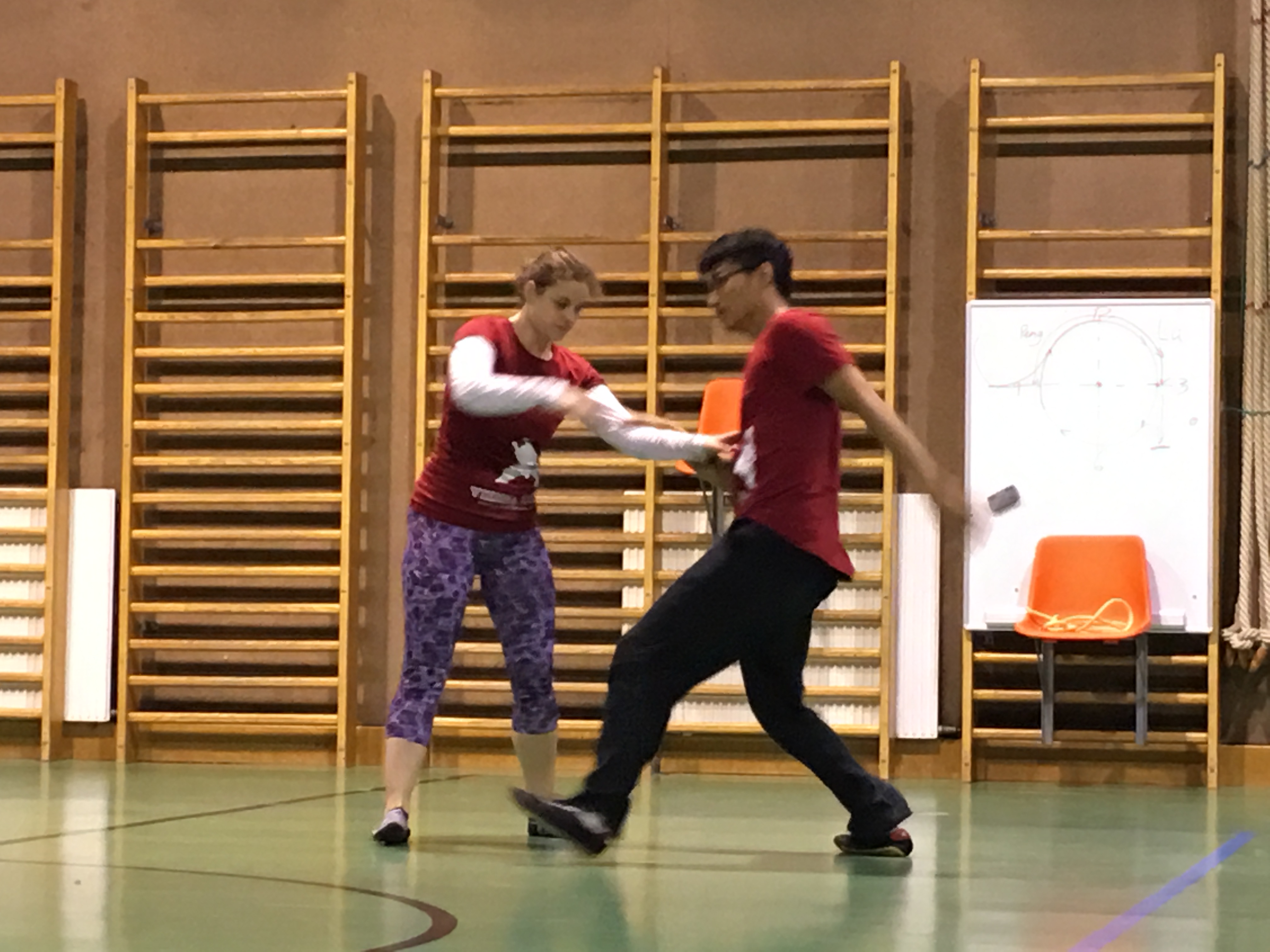
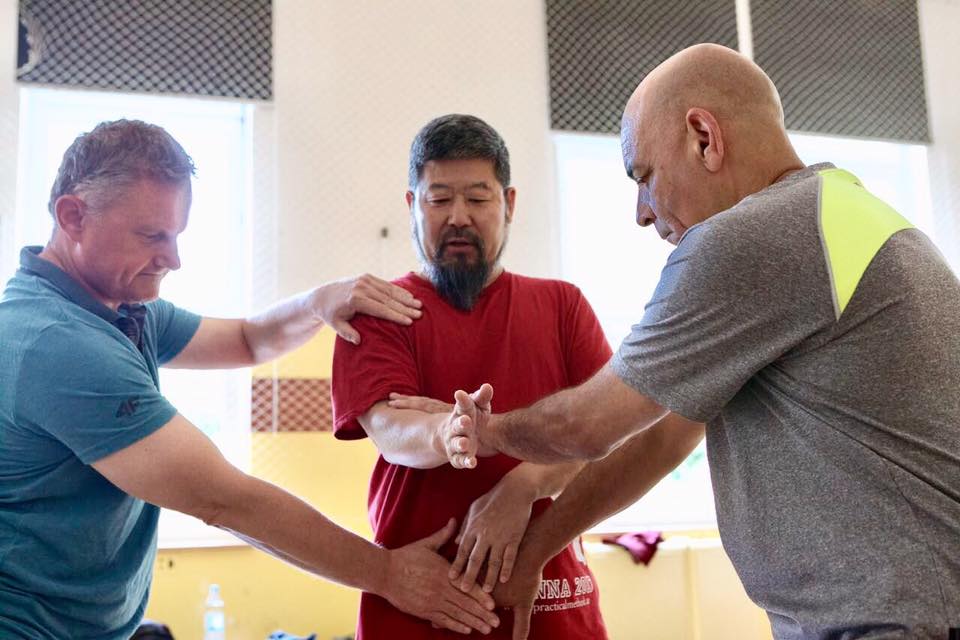
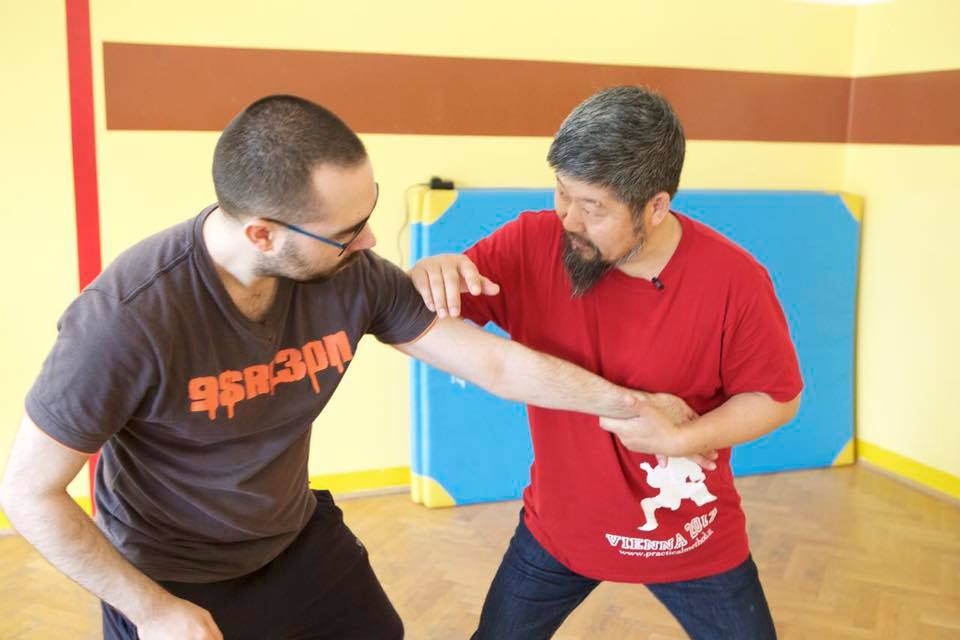
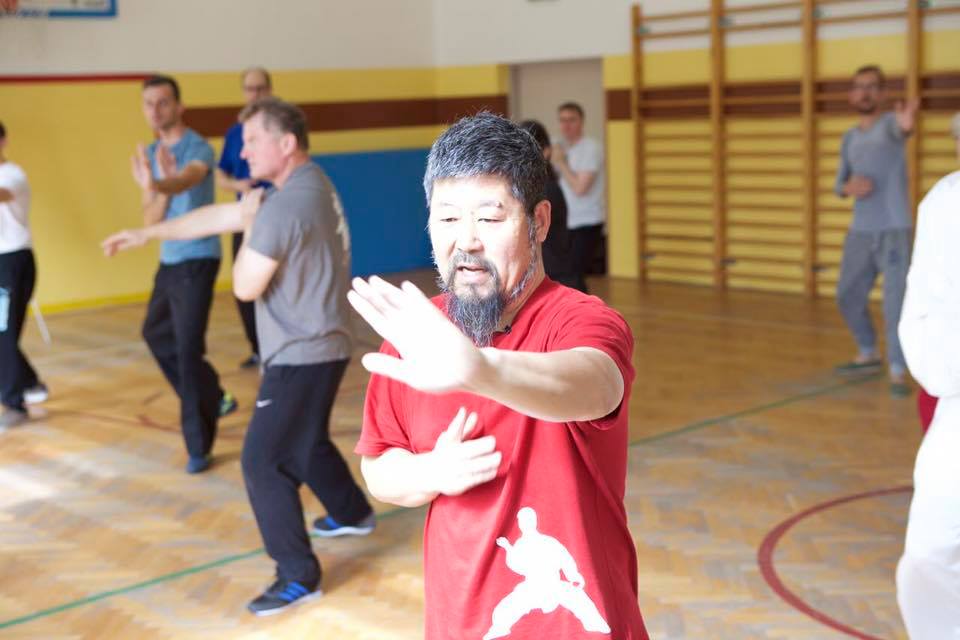
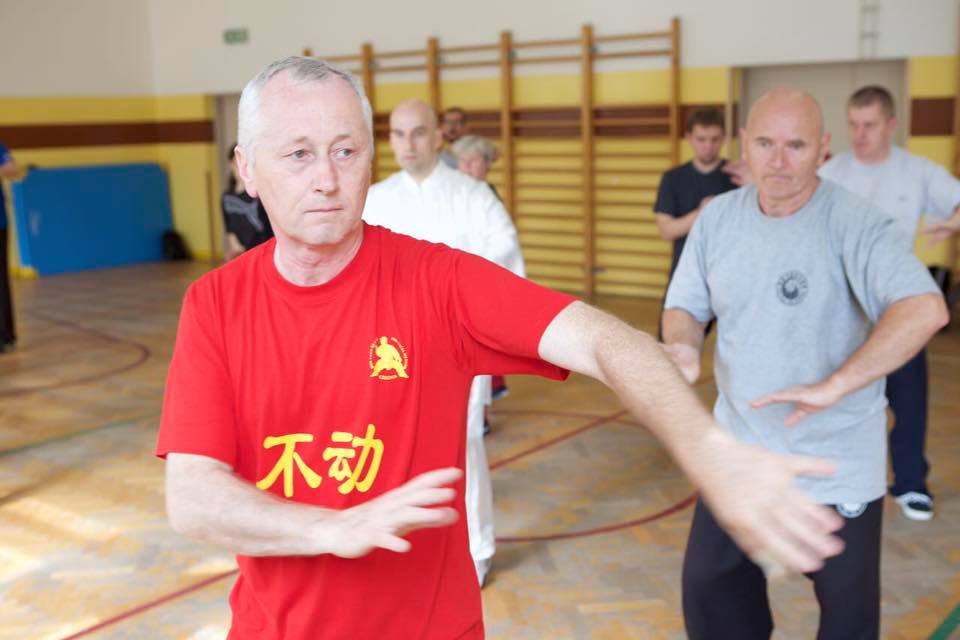
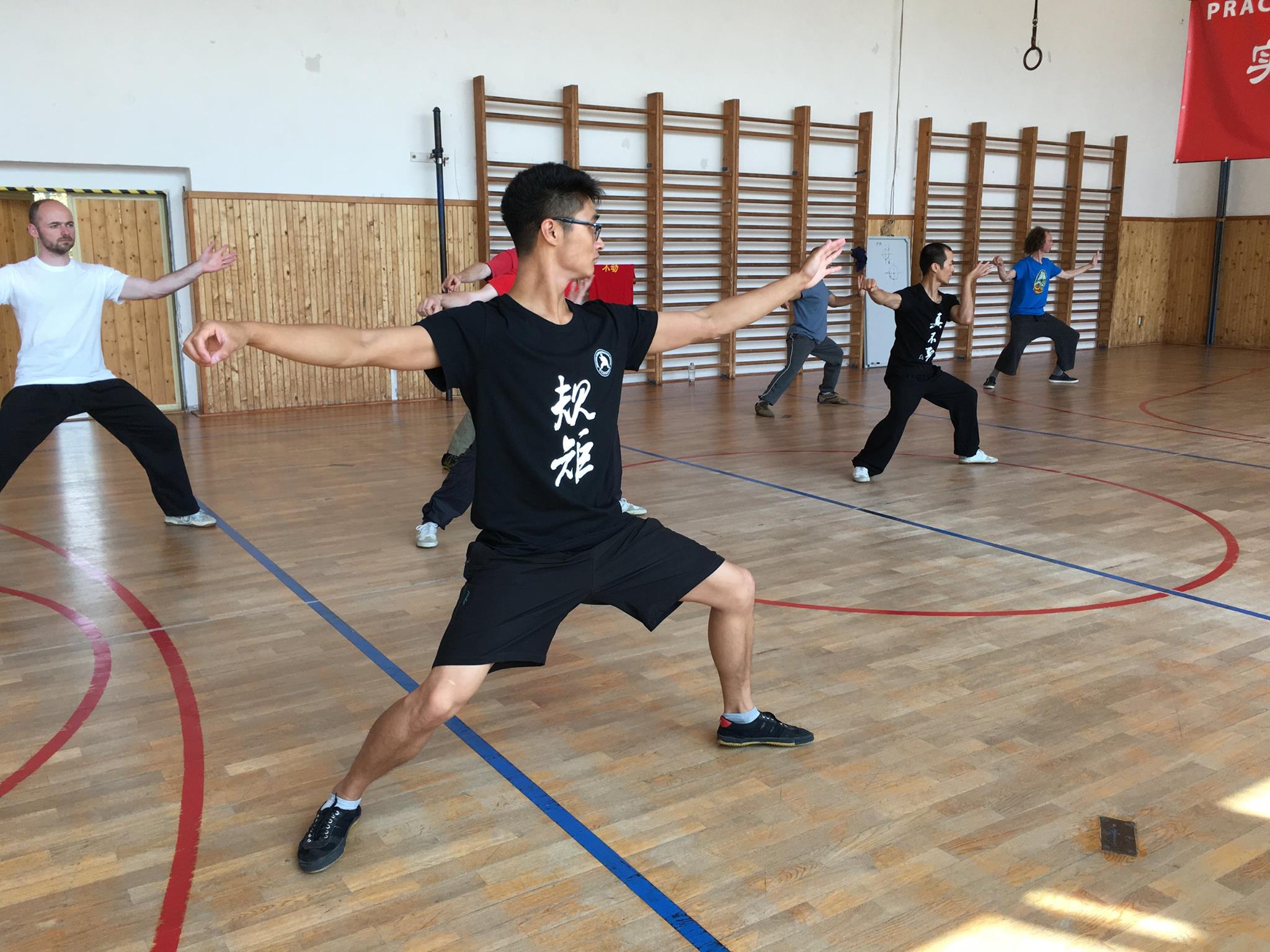
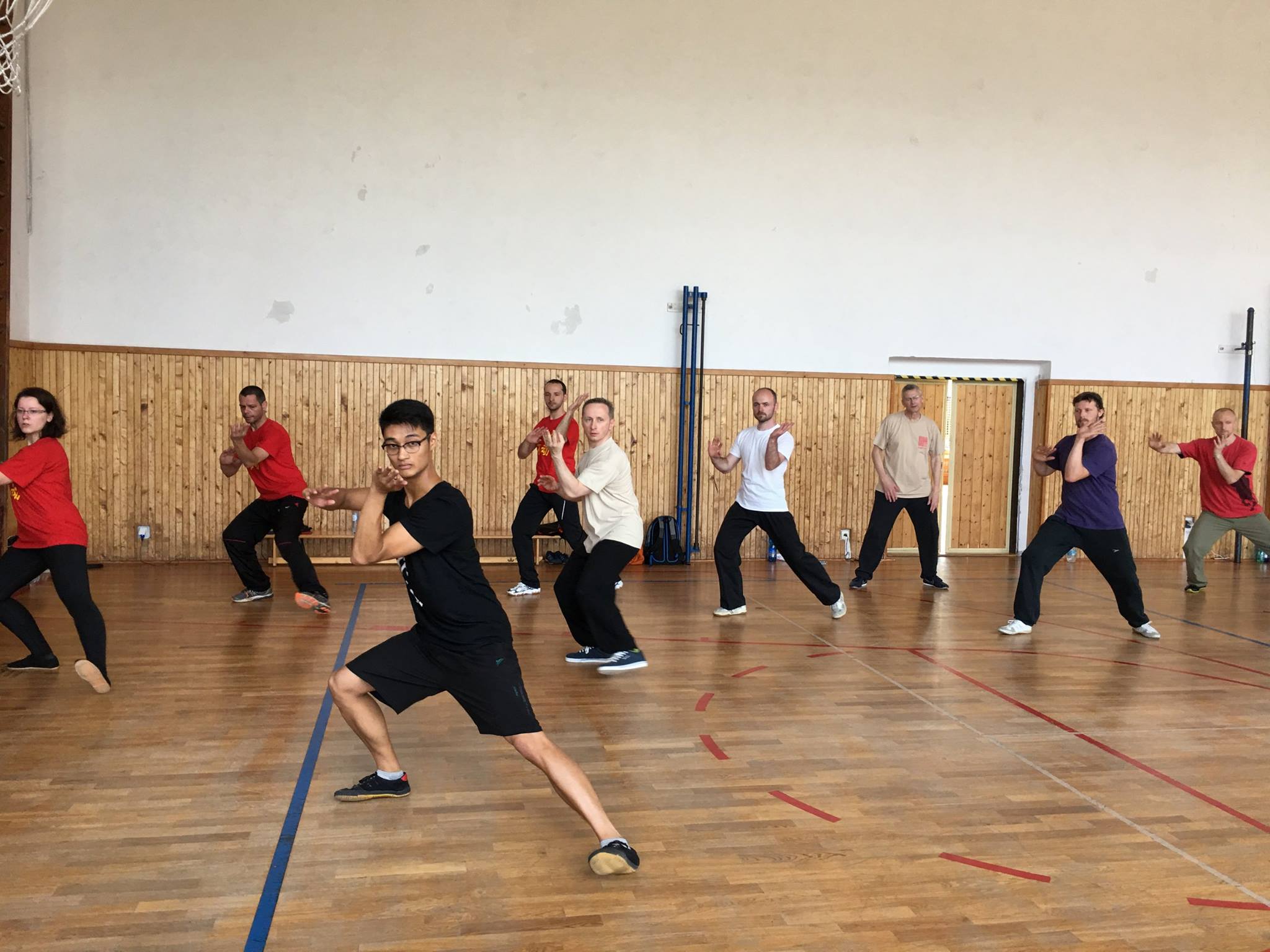
Brennan Toh at the Vienna Workshop 2017
Within Chen Style Taijiquan, an important aspect is that all our movements must be our own movements. We never move as a result of an external stimuli. This requires we bring extreme awareness to every body part – those which are moving and especially those which are non-moving. When we go out with the hand, we must not forget about the elbow; as the torso closes the distance, the hands can’t also be moving forward, etc. As soon as we engage with our opponent, we naturally want to fight power with power. This immediate response is something we must eliminate through our training. Learning to create a stretch within our body in the form and foundations, is to learn how to move past the point of contact.
To never lose control of our body, even when engaging with an opponent, is to change our responses from a reactionary response to an active response.
A reactionary response is to retreat back, and then move in; or to match their push directly with your own push. A push from the opponent does not result in a fight, or a retreat backwards. An active response it to decide where to move, and to go their of your own choice – not from the initiation of the opponent. If we are pushed and the shoulder moves back, we move not because we are pushed, but because we decide to move there.
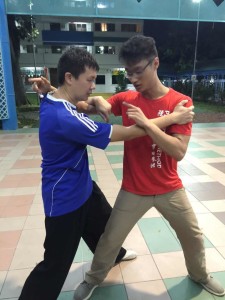
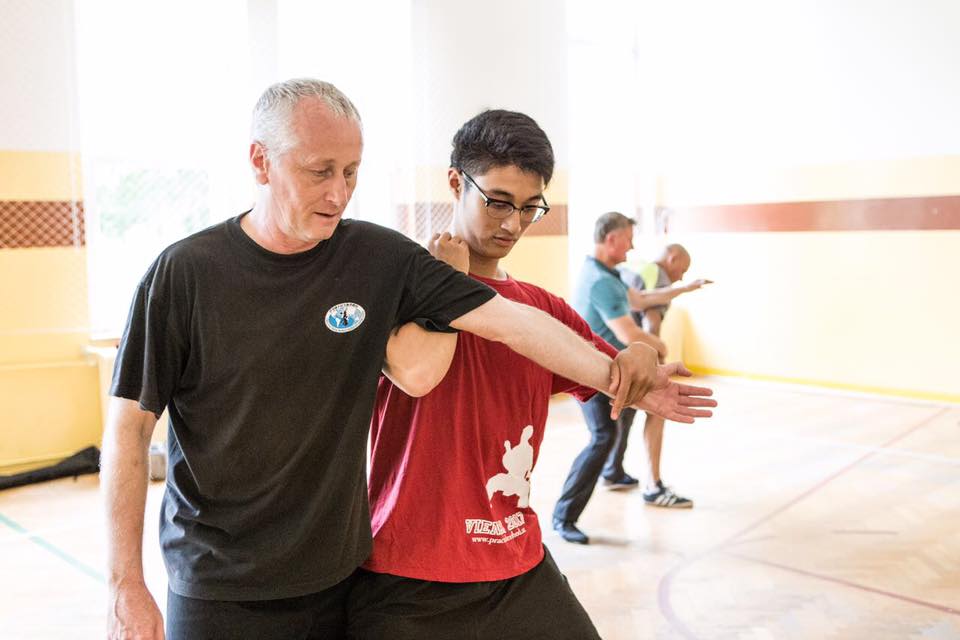
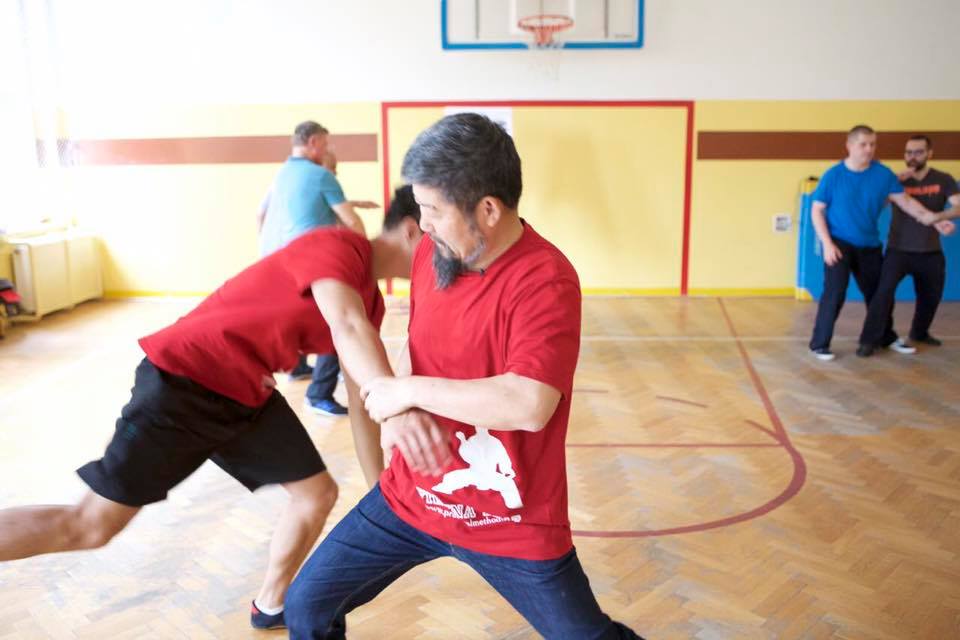
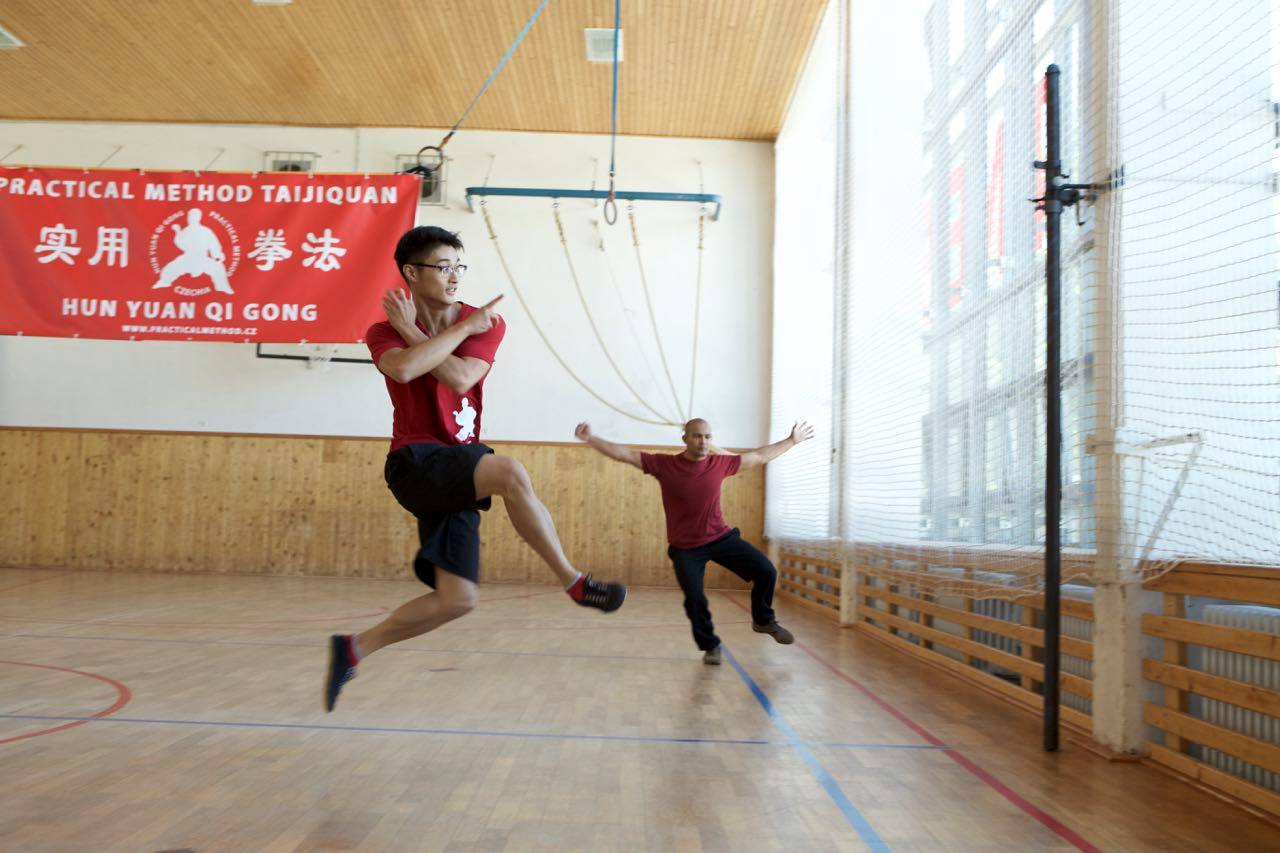
Brennan Toh with Shawn Lee
We must change from following the pace of the opponent, to leading our own movements. Within the rhythm of a fight, when you are able to dictate your own moves, the opponent will then follow (fall into rhythm). Movement is not a non-pressured release, but a pressured release like a hydraulic press where it must be evenly matched and paced (led). The intent of the movement is therefore only indirectly related to the opponent, and the decided movement is not at all resultant from what the opponent chooses to do – they are only an obstacle in place to overcome. This is a change from passive control over our body to active movement.
To train this, we must train to never close, and to continue to stretch and expand in every movement of the form. As our understanding of Yilu deepens, body mechanics and details that we were previously unaware of become more and more important. But before we can focus on the small details, our understanding of positioning of the ‘big pieces’ must be precise – which is why consistent training of the full form is required. As we continue to train to open our joints, positions and movements that we were previously incapable of will allow us to improve our structure and power.
Video references:
http://practicalmethod.com/2011/07/shoulder-movements-in-positive-circle-online-video-trailer/
http://practicalmethod.com/2014/11/pressure-and-release-indirect-power-online-video-trailer/
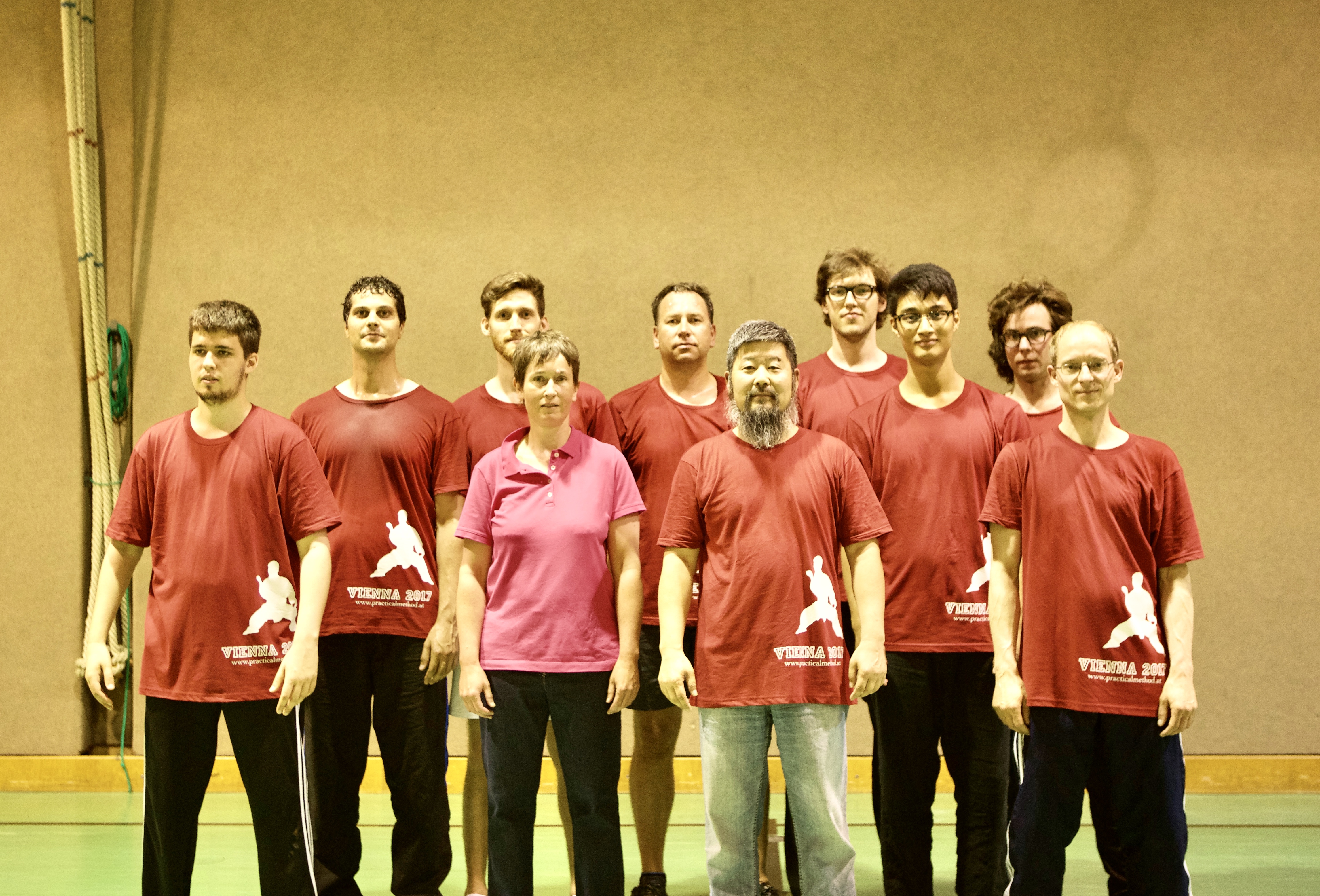
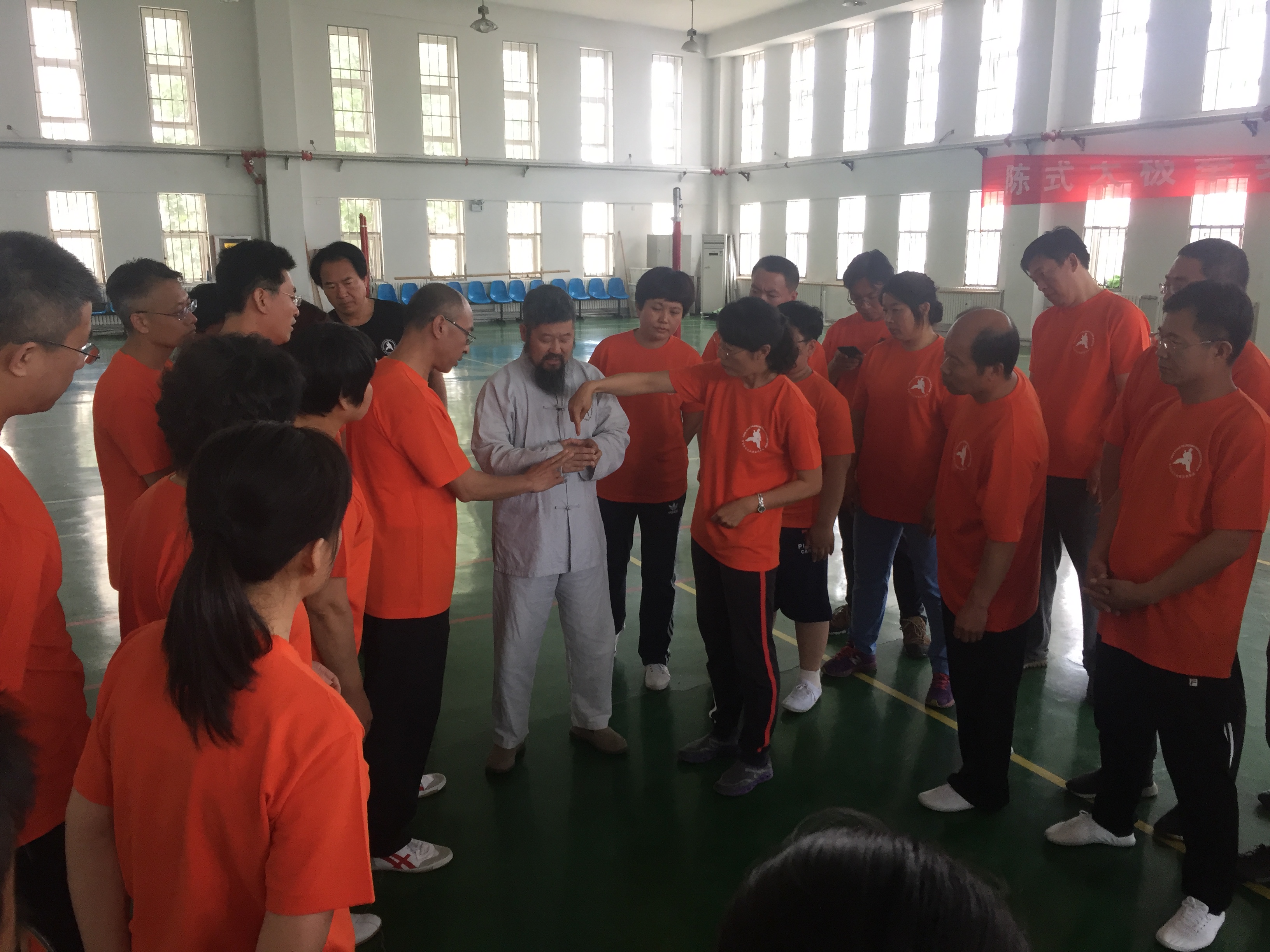
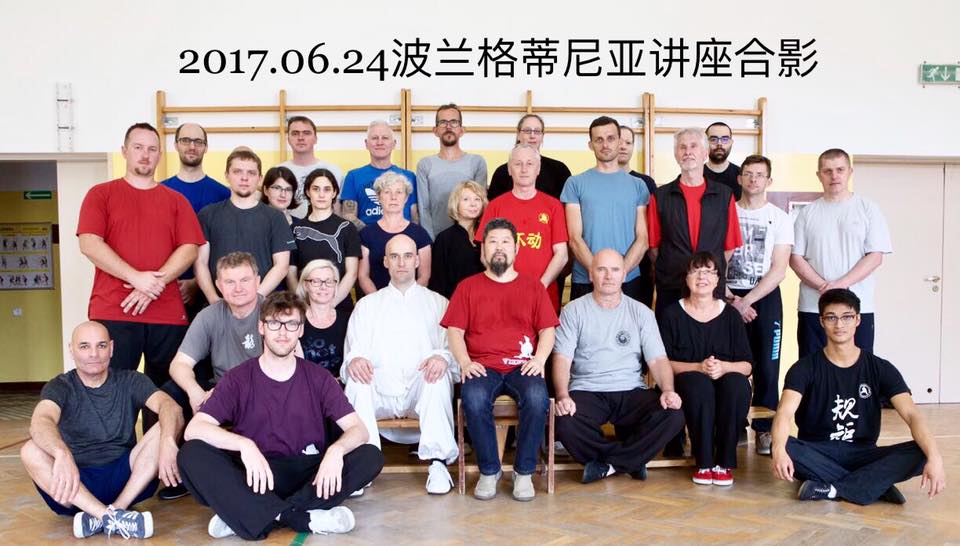
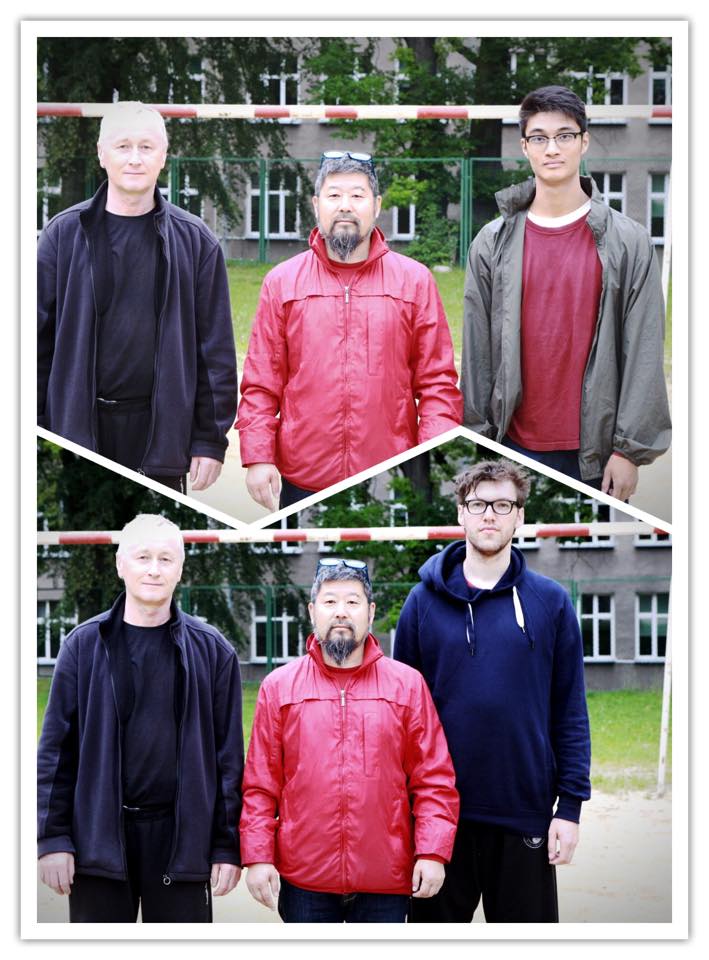
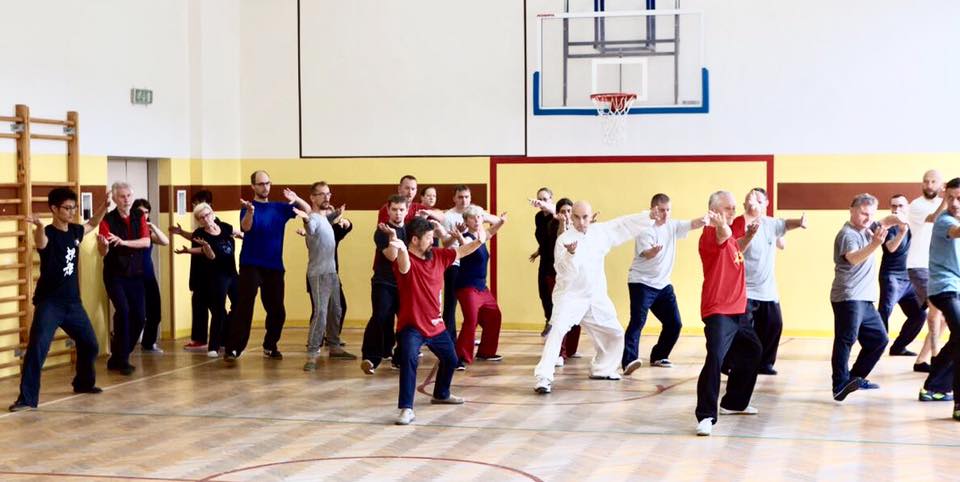
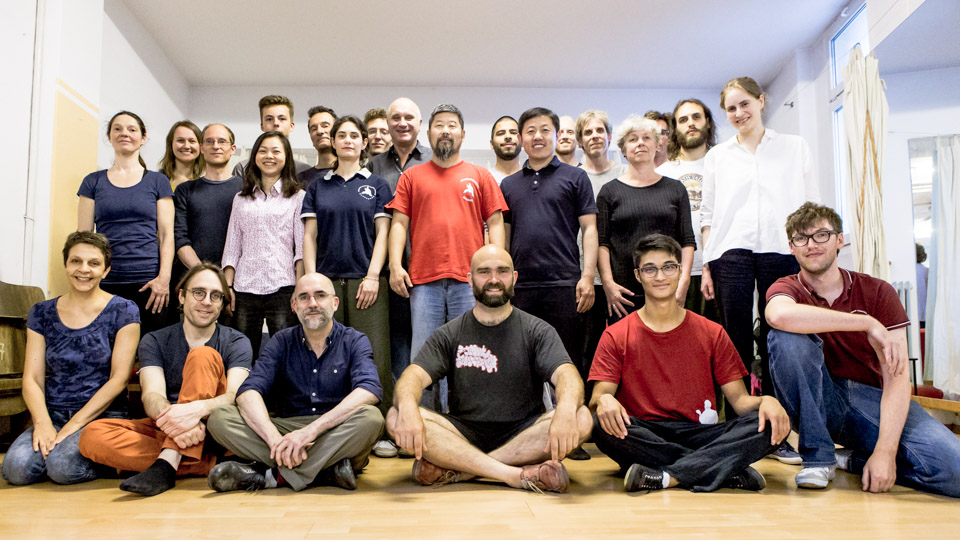
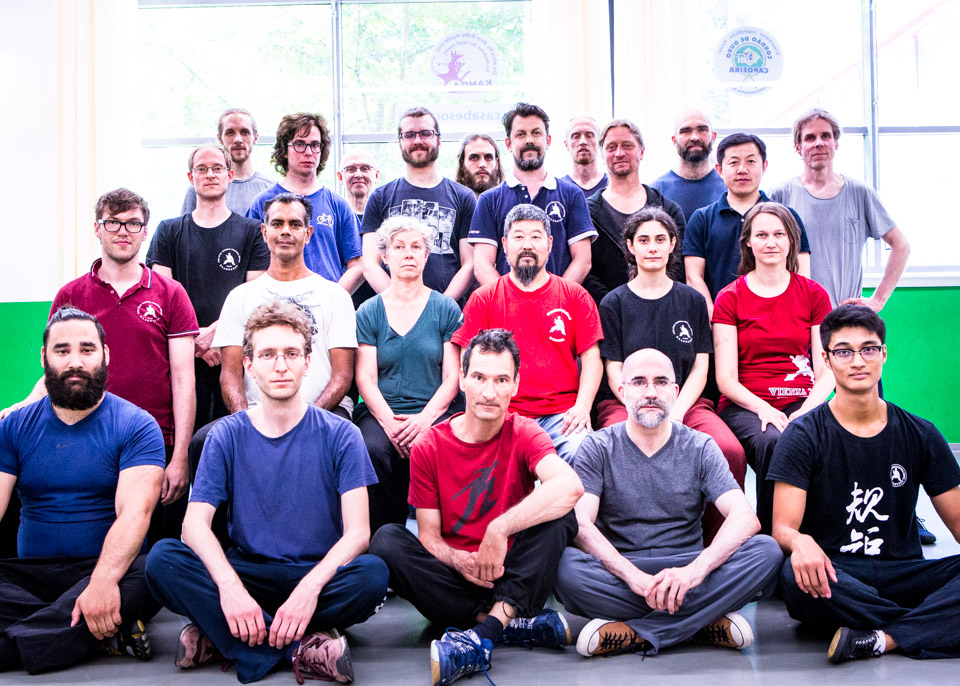
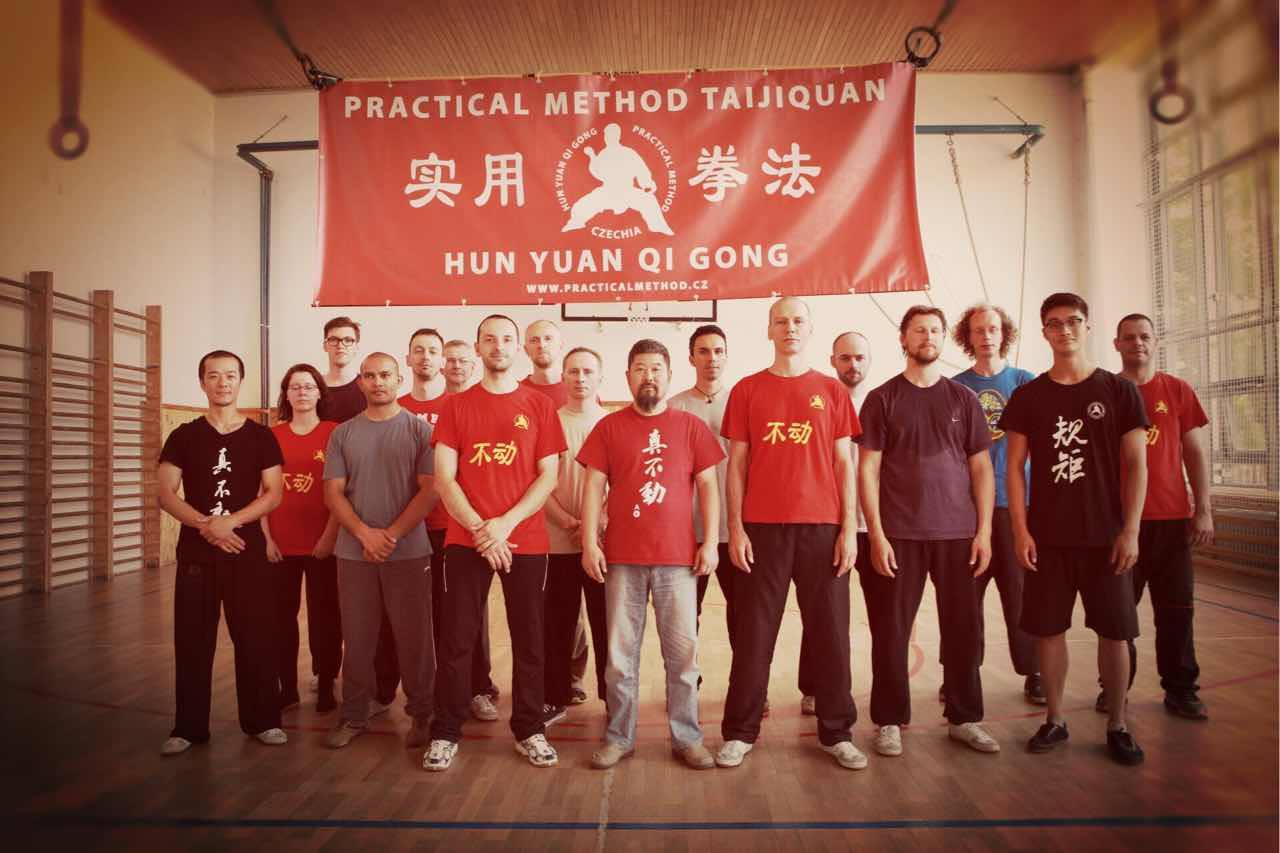
Vienna Workshop Group Photo 2017 Day One
Vienna, June 3-4, 2017
Host: Pawel Muller.
Assistant: Brennan Toh Read more

Presenter: Chen Zhonghua Length: 10 min. In: English Year: 2015 Difficulty:1/5
Presenter: Chen Zhonghua Length: 10 min. In: English Year: 2015 Difficulty:1/5
Presenter: Chen Zhonghua Length: 10 min. In: English Year: 2015 Difficulty:1/5
The Fist of Covering Hand (Yan Shou Gong Chui) Toronto North York Taiji Class April 27, 2017
Double half negative circle open stretch. Over the top full double negative
Left hand palm up stretch forward. Right palm protect face
Right hand fist. Slide on top of left arm while pulling left arm in a fist position on side of torso
Buddha’s Warrior Attendant Pounds Mortar (Jin Gang Dao Dui) Toronto North York Taiji Class on April 20, 2017 i
Buddha’s Warrior Attendant Pounds Mortar (Jin Gang Dao Dui) Toronto North York Taiji Class on April 20, 2017
Right turn palm motor. Positive and negative circle at the same time. Close left feet. Finish with left turn palm motor