_2021-08-19.jpg)
Presenter: Chen Zhonghua Length: 10 min. In: English Year: 2018 Difficulty:1/5
Presenter: Chen Zhonghua Length: 10 min. In: English Year: 2018 Difficulty:1/5
The final thing of learning, one piece of puzzle making the difference. 99% leaving on your own to learn, one piece from the teacher. Master Chen went through everyone to find one thing to improve.
Read more
_2021-08-18.jpg)
Presenter: Chen Zhonghua Length: 10 min. In: English Year: 2018 Difficulty:1/5
_2021-08-17.jpg)
Presenter: Chen Zhonghua Length: 10 min. In: English Year: 2018 Difficulty:1/5
Teaching Scene 7-Front and Back Separation-16th DQS Practical Method Seminar Trailer.
What this video clip and discuss what you see in terms of Practical Method techniques, movements and principles.
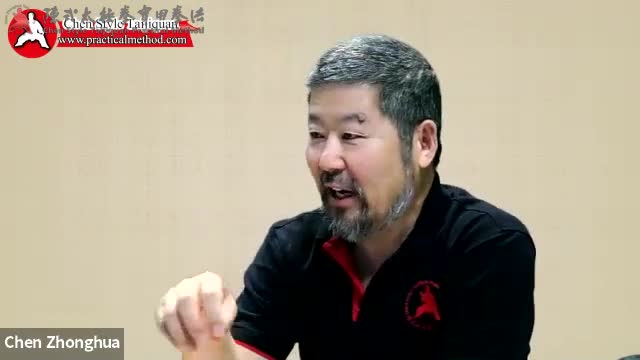
This class was taught by Chen Zhonghua on general Practical Method contents.
_2021-08-16.jpg)
Presenter: Chen Zhonghua Length: 10 min. In: English Year: 2018 Difficulty:1/5
_2021-08-15.jpg)
Presenter: Chen Zhonghua Length: 10 min. In: English Year: 2018 Difficulty:1/5
Today I heard one person repeating for three times: “When we focus on something, that something keeps expanding”.
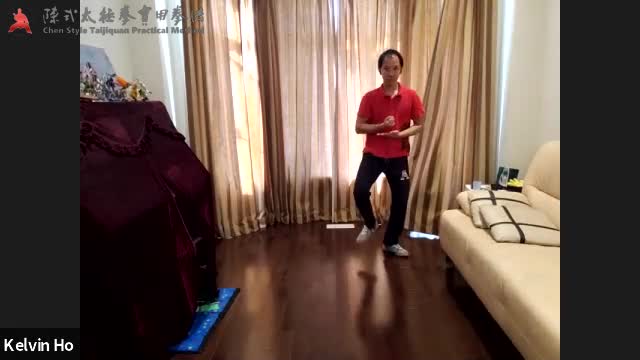
I smiled remembering the exercise we were practising on Thursday: Make the front shoulder disappear. How do we do that? By focusing our intention on something else, exaggerating the motion of the rear shoulder (it should touch the ear).
Taking for example fetch water, by stretching the two ends – rear shoulder and front hand – , the middle – front shoulder- disappears.
When the intention is on something else, the front shoulder is relaxed.
The very same person suggested an exercise for the evening, that we thank for everything. Also for the difficulties because they let us improve. I remember what Master Chen said a couple of months ago: “Things we cannot do are the things that let us improve.” What a gift that there are so many things in Practical Method we cannot do!
Since I was not able to do the exercise on Thursday and be corrected, I put myself in front of the mirror and did the exercise trying to copy what I observed from Master Chen and some of you. If the only instructions we should follow are them that don’t make any sense to us, this is definitely the case. I’ve come to enjoy a lot the happiness of ‘being stupid’. I hope I learn to trust it more and judge myself less.
Thanks for the exercise! Buon lavoro to everybody:)
Train the shoulders to disappear. Target training with exaggerated moves. Positive circle, make sure the front shoulder does not pop. In with elbow, rear shoulder goes up;out with hand, sink the front shoulder and cave in the chest. Eventually, in with elbow is connected to the kua/dantian/foot, not the shoulders.When your mind is not on the shoulder, when you forget about it, it is relaxed.
Read more
_2021-08-14.jpg)
Presenter: Chen Zhonghua Length: 10 min. In: English Year: 2018 Difficulty:1/5
_2021-08-13.jpg)
Presenter: Chen Zhonghua Length: 10 min. In: English Year: 2018 Difficulty:1/5
_2021-08-12.jpg)
Presenter: Chen Zhonghua Length: 10 min. In: English Year: 2018 Difficulty:1/5
_2021-08-11.jpg)
Presenter: Chen Zhonghua Length: 10 min. In: English Year: 2018 Difficulty:1/5
_2021-08-10.jpg)
Presenter: Chen Zhonghua Length: 10 min. In: English Year: 2018 Difficulty:1/5
_2021-08-09.jpg)
Presenter: Chen Zhonghua Length: 10 min. In: English Year: 2018 Difficulty:1/5
_2021-08-08.jpg)
Presenter: Chen Zhonghua Length: 10 min. In: English Year: 2018 Difficulty:1/5
Avoid tossing. One way is to do moves as if you are fighting and use power in it. Going over in the joints makes the noise of gedeng(咯噔),two metal with rubber on it.
Avoid injuries in the joints. Whenever issue power, it is a stretch, not a squeeze/compress. The only compression is the hand to the opponent and the foot to the floor, others only stretch. Like the spring or a shaft. Damage will happen because it is leaking sideways or there is no consistency. Example: the Japanese sword made with seven pieces welted together. Each part has its specialized cutting skill ie. how and what kind of material to cut. The joints work the same way. Each bone has different functions. The joints need open up to issue power, which may cause compression in other joints. Taiji has specific crooked body positions. The eight techniques: four cardinals and four diagonals. The four diagonals are not on the same plane but three dimensional crossed on different angles in space, which is what we train. It is crooked. Like when you cut veggies, and there is a type that you have to adjust the knife into different angles all the time to cut. The diagonals are the corners/45 degrees in application, power goes to the joints and it is crooked. You train the twist, in use it is a flow, but causing the opponents’ joints to be crooked.
Read more
Find and feel a line in the body. Produce a stick,can be long or short. At the beginning find the longest and then you can use part of it. In positive circle, sink the front shoulder towards the rear foot. Change the angle and make the shoulder disappear. Exaggerate. We are not doing it and we think we are doing it. It should be obvious that the teacher can see. To feel what going down means. When the kids fight, how do they go down? Read more
_2021-08-07.jpg)
Presenter: Chen Zhonghua Length: 10 min. In: English Year: 2018 Difficulty:1/5
All joints between the two ends must be open. Only the hand against the opponent, and the foot against the floor compress.
At the beginning, when opening one joint, it forces a compression to the next joint. We must continue to open each of them until it reaches the end.
When doing fajin, only go to 80% extension.
The kua goes up to the inside towards the elbow.
Elbow, shoulder, kua are 1/3, 1/3, 1/3.
First half of the circle, push into the front foot, but the foot does not move.
Compass: one needle does not move at all, the 2nd needle is pinned to the paper but to the table. When moving the compass, the 2nd needle will move around the first needle dragging the paper. The 2nd needle moves on a track (specifically around the first needle).
Those are the 3 kinds of not moving:
First move of yilu: Vertical rotation inside a cylinder

_2021-08-06.jpg)
Presenter: Chen Zhonghua Length: 10 min. In: English Year: 2018 Difficulty:1/5

_2021-08-05.jpg)
Presenter: Chen Zhonghua Length: 10 min. In: English Year: 2018 Difficulty:1/5
Presenter: Chen Zhonghua Length: 10 min. In: English Year: 2018 Difficulty:1/5