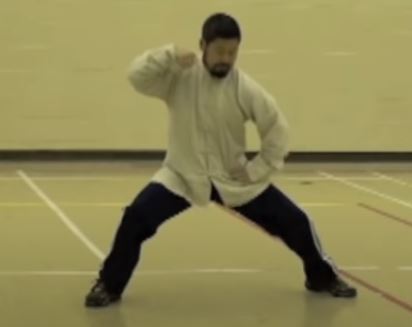
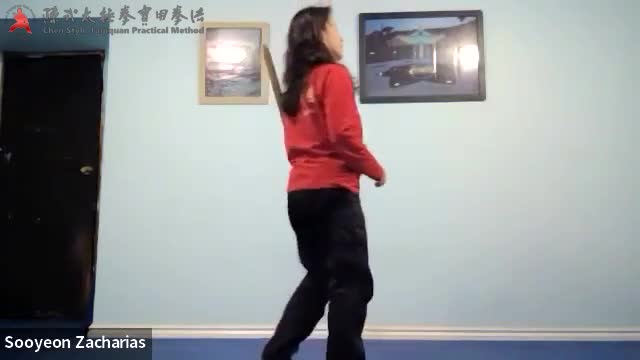
On 1 Dec 2021 during Master Chen Zhonghua’s Chinese Instructor 3 class we were asked to record a video of the first 13 moves of Yilu initiating all moves from the dantian and to ignore the upper body.
Presenter: Chen Zhonghua Length: 3 mins Difficulty: 3/5 Language: English Year: 2021 Location: Edmonton, Canada
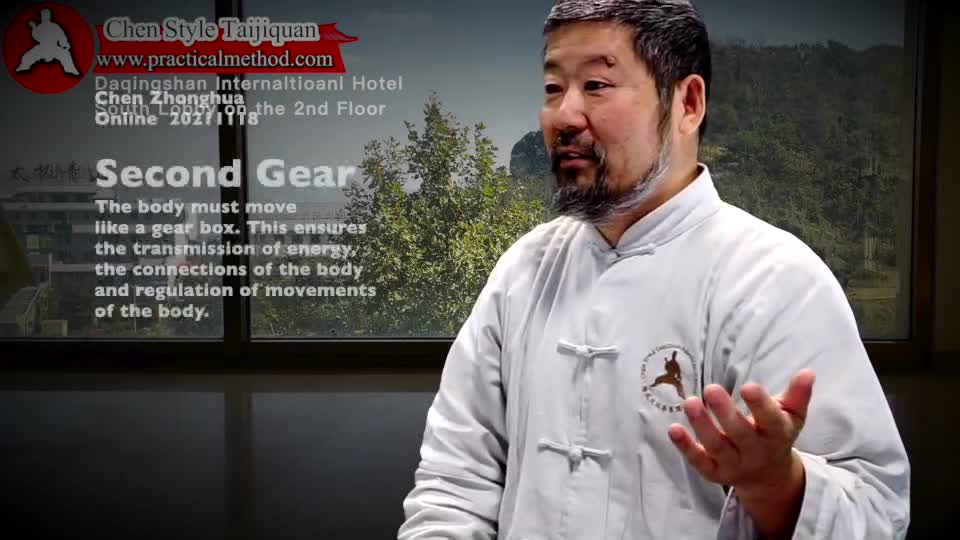
In Practical Method, we say there are no movements, only rotations. Rotation creates movements. This is the fundamental basis of everything in Practical Method. Gears are therefore primary ways of movements in Practical Method.
Presenter: Chen Zhonghua Length: 0 mins Difficulty: 3/5 Language: English Year: 2021 Location: Edmonton, Canada
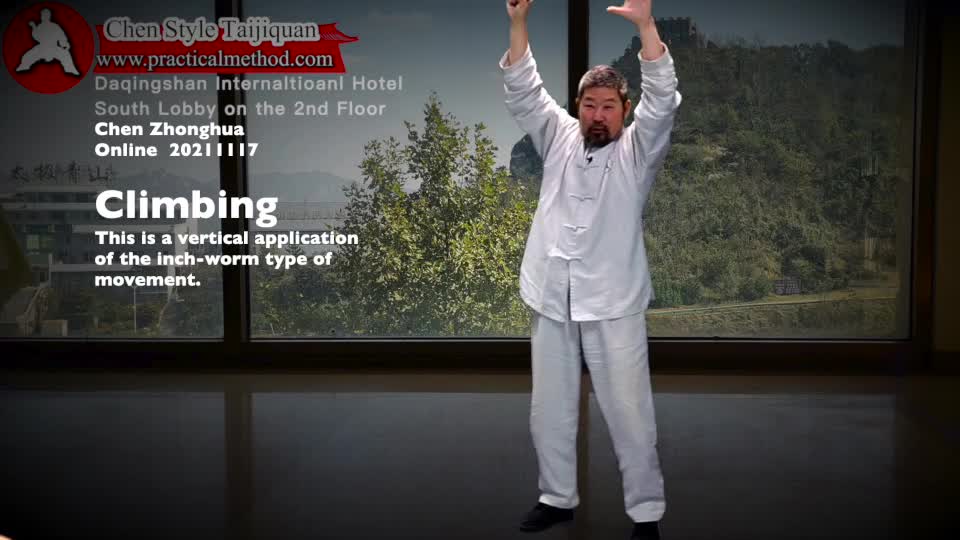
The word climbing here refers to the action of finding a solid grip for the foot, stretch the body against the feet till the hand/hands find another solid spot to hold on to, and then pull the body up with the hand till the feet find another solid spot.
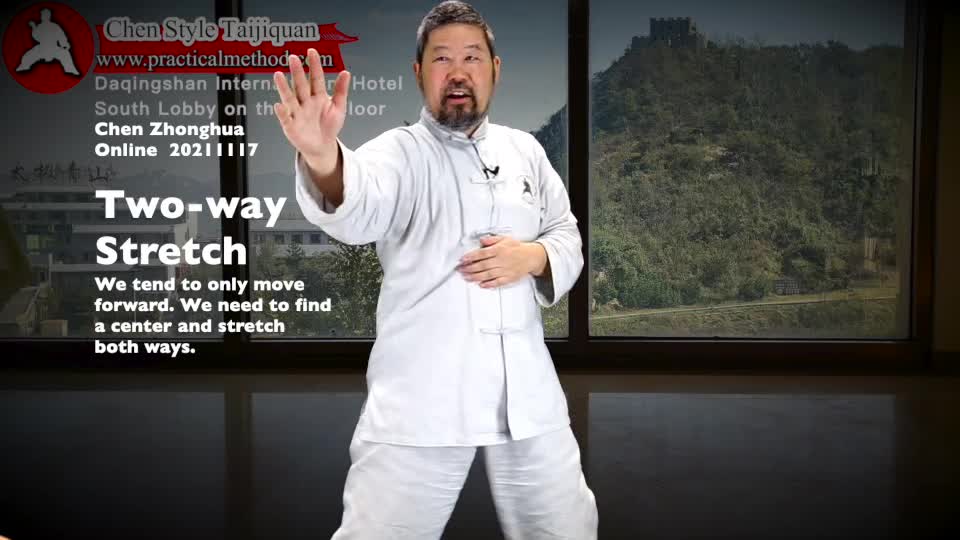
All taiji movements in a segmented view is like this (in a smooth way and in a changed direction it is viewed as rotations). This type of movements are called stretching moves.
Two-way stretch is a special Practical Method way of stretching.
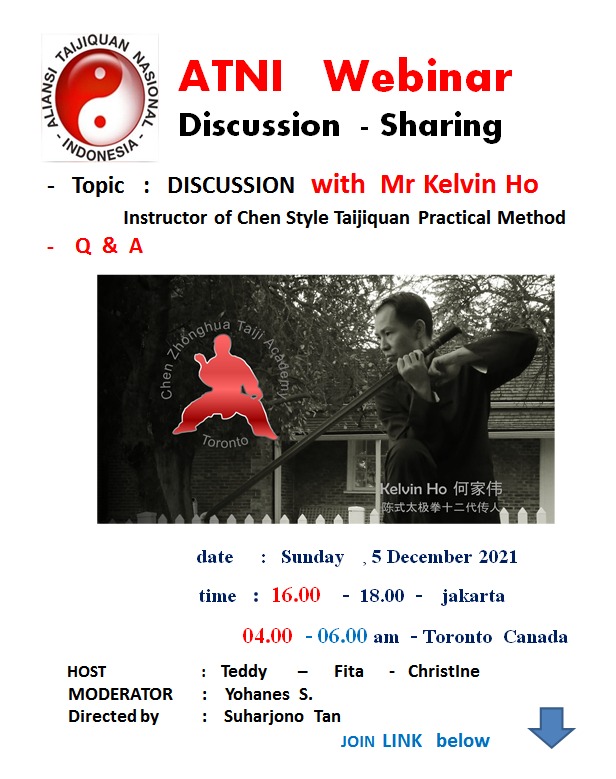
Presenter: Kelvin Ho Length: 73 mins Difficulty: 3/5 Language: English Year: 2021 Location: Toronto, Canada
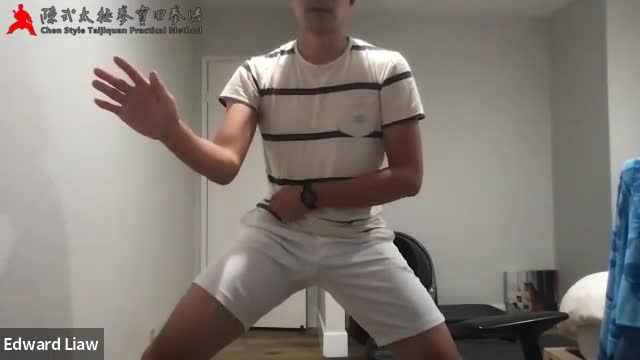
In this lesson, we covered the requirements of the half horse stance. We discussed in depth about triangle, single lock and double lock, how to find the triangle in the body, and the triangle concept governs our movement.
Presenter: Chen Zhonghua Length: 0 mins Difficulty: 3/5 Language: English Year: 2021 Location: Edmonton, Canada
The word climbing here refers to the action of finding a solid grip for the foot, stretch the body against the feet till the hand/hands find another solid spot to hold on to, and then pull the body up with the hand till the feet find another solid spot.
All taiji movements in a segmented view is like this (in a smooth way and in a changed direction it is viewed as rotations). This type of movements are called stretching moves.
Presenter: Chen Zhonghua Length: 1 mins Difficulty: 3/5 Language: English Year: 2021 Location: Edmonton, Canada
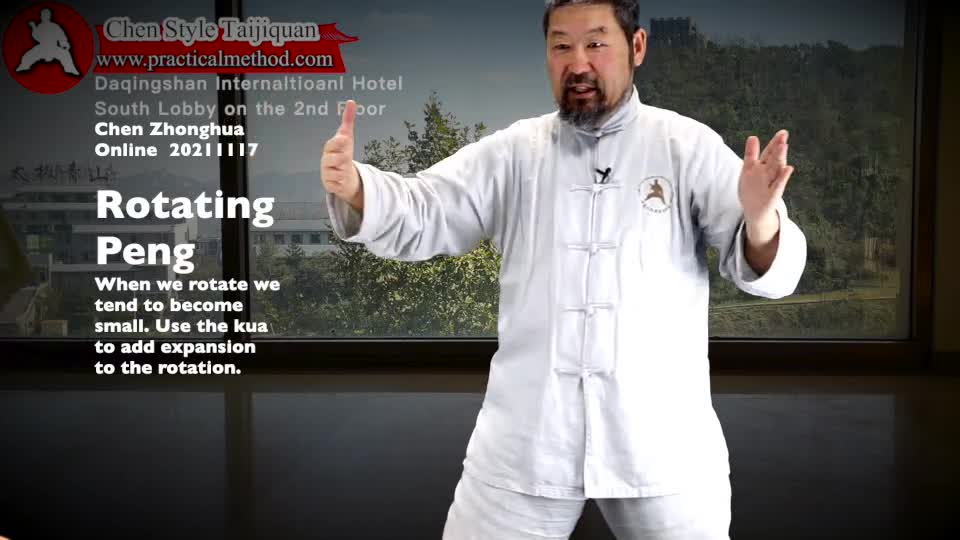
In Practical Method, we say there are no movements, only rotations. Rotation creates movements. This is the fundamental basis of everything in Practical Method. In practice, rotation can cause two things. One is when rotation is too slow, it causes the body to collapse inward, thus losing power. The other is more positive. At the right speed, a rotation will create centrifugal force that is in taiji viewed as Peng.
Presenter: Chen Zhonghua Length: 0 mins Difficulty: 3/5 Language: English Year: 2021 Location: Edmonton, Canada
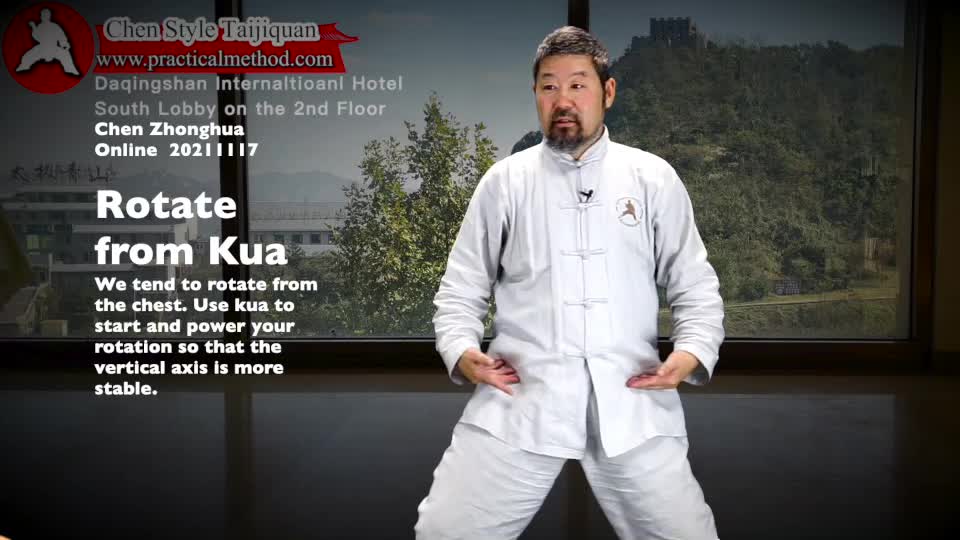
In Practical Method, we say there are no movements, only rotations. Rotation creates movements. This is the fundamental basis of everything in Practical Method. There are two general way to rotate. One is to hold the outer rim of the circle/ball and rotate it. The second is in the case of a set of gears that bit into one another. You can initiate a rotation from the biting teeth to cause the two gears to rotate evenly. This is a high level action. In this video, Master Chen Zhonghua demonstrated how to rotate the torso and the Dang (crotch area that includes the thight and the waist) from the kua line.
Presenter: Chen Zhonghua Length: 0 mins Difficulty: 3/5 Language: English Year: 2021 Location: Edmonton, Canada
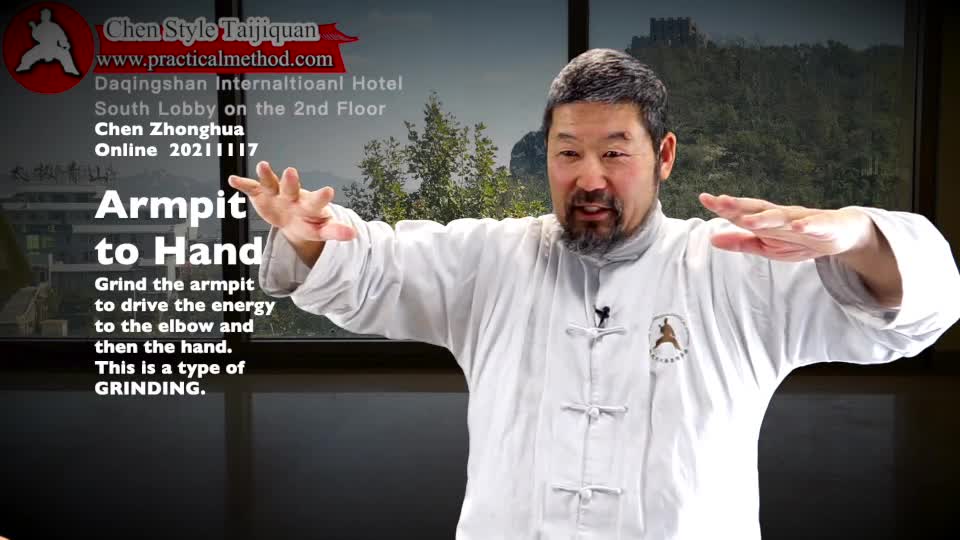
In Practical Method, we say there are no movements, only rotations. Rotation creates movements. This is the fundamental basis of everything in Practical Method. We normally just push energy from the shoulder to the hand, causing a lot of disconnect while doing so. In this video, Master Chen Zhonghua shows how to use a rotational/pumping method to push energy from the shoulder to the hand via the elbow. This is one of the most common actions in Taiji that one must learn and training in order to make it a habitual move.
Presenter: Chen Zhonghua Length: 1 mins Difficulty: 3/5 Language: English Year: 2021 Location: Edmonton, Canada
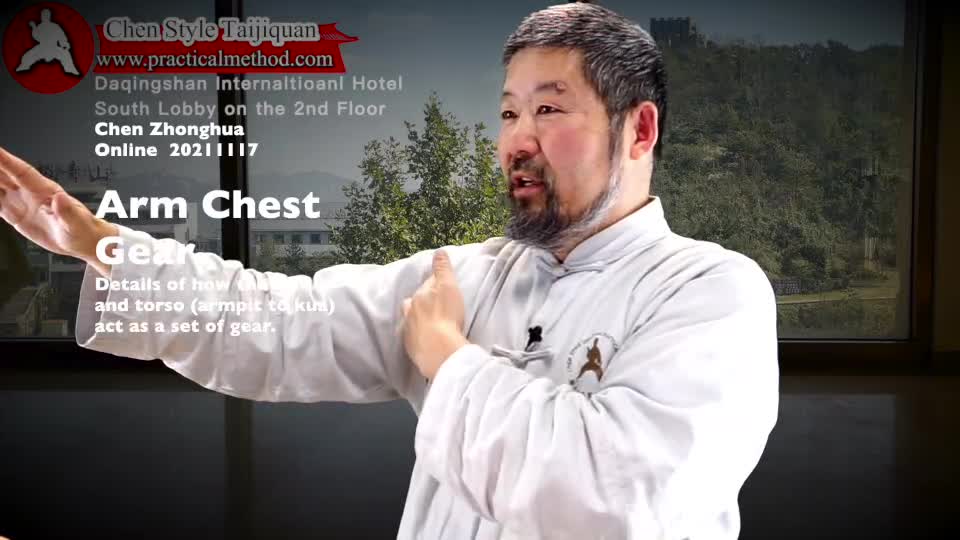
In Practical Method, we say there are no movements, only rotations. Rotation creates movements. This is the fundamental basis of everything in Practical Method. If you want further movements and variations of movements, you need to link two rotational body parts, thus a set of simple gears. In this video, Master Chen Zhonghua the arm-chest gear. In this gear set, the arm moves as one rotational disk and chest another. They bit at the shoulder/armpit point. This is the upper gear that is used for catching and holding.
In this ATNI (Aliansi Taijiquan Nasional Indonesia) episode series #27, the Chairman (Mr Suharjono Tan 陈存统) himself did a thorough recap of the main points that Master Chen covered during the Exclusive interview (21 Nov 2021).
Presenter: Chen Zhonghua Length: 2 mins Difficulty: 3/5 Language: English Year: 2021 Location: Edmonton, Canada
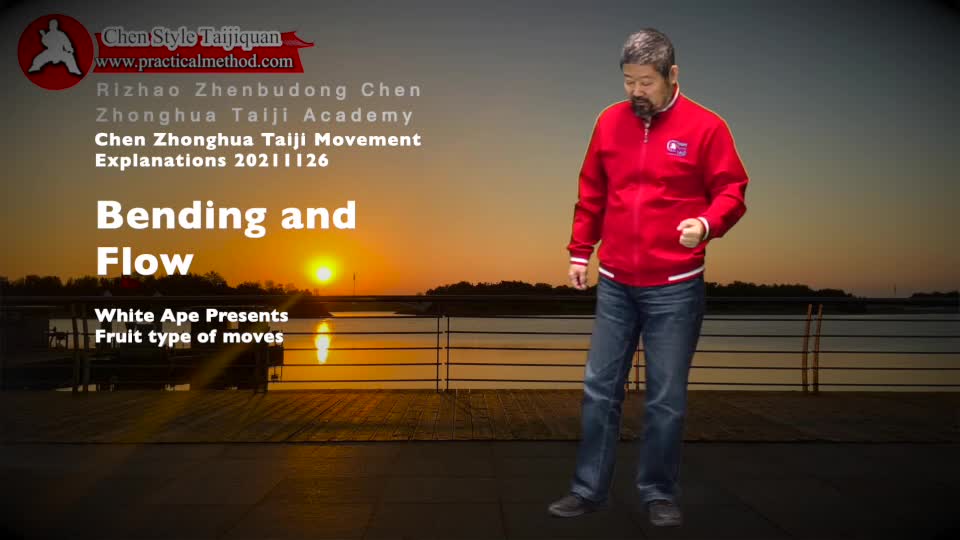
At the beginning level, we seek large movements to encourage flow of energy in the form. Later on as we progress, we shift to an application drive approach to training. At this point, our movements can contain twisting and bending. This, in effect, restricts energy flow. It becomes a problem to be dealt with. In this mini video, Master Chen Zhonghua gives his approach to solving this problem.
Presenter: Chen Zhonghua Length: 3 mins Difficulty: 3/5 Language: English Year: 2021 Location: Edmonton, Canada
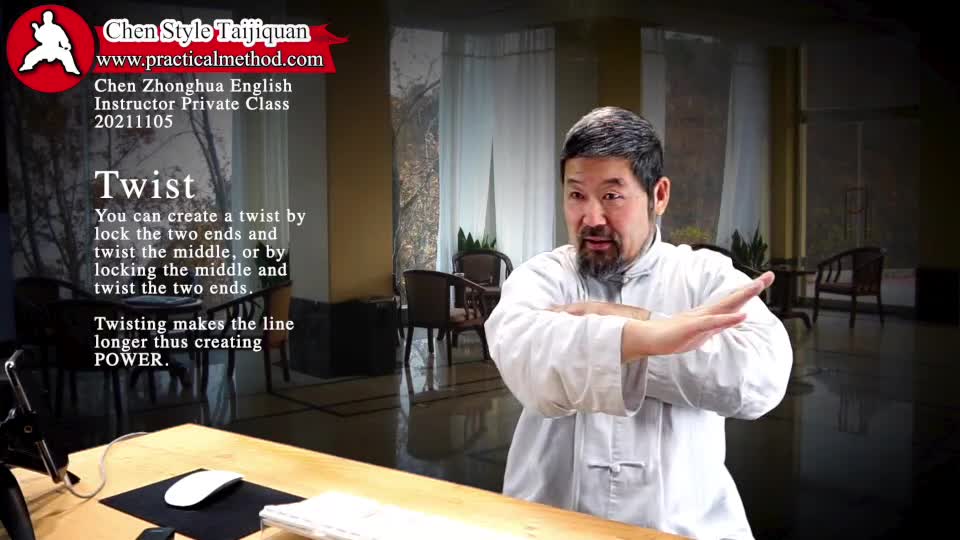
A twist is part of the Taiji concept of spiral. There are two ways to twist. Lock the two ends and twist the middle. Lock the middle and twist the two ends.
Presenter: Chen Zhonghua Length: 7 mins Difficulty: 3/5 Language: English Year: 2021 Location: Edmonton, Canada
To get into the taiji mode, you must first accept some (strange) taiji concepts.
We all know that taiji comes from Wuji. Taiji is the result of Wuji splitting into two. And then two is further developed into three. This is the basic Heaven (wuji), earth (taiji) and man (everthing else).
We can use a basic lever to illustrate this.
When you push one end of the lever down, the other end moves up.
The original lever set is wuji before you use it.
When you push one end down, you are splitting the lever rod into two because the pivot in the middle is a demarcation.
Although this splits into two, the two sides of the lever are not the same. They still are the same as there still is only one lever rod.
So in the instance of the lever set, we have zero, one, two and three and yet we consider all of them as the same.
Confused? Get the video to hear how Master Chen Zhonghua explains this.
Presenter: Chen Zhonghua Length: 3 mins Difficulty: 3/5 Language: English Year: 2021 Location: Edmonton, Canada
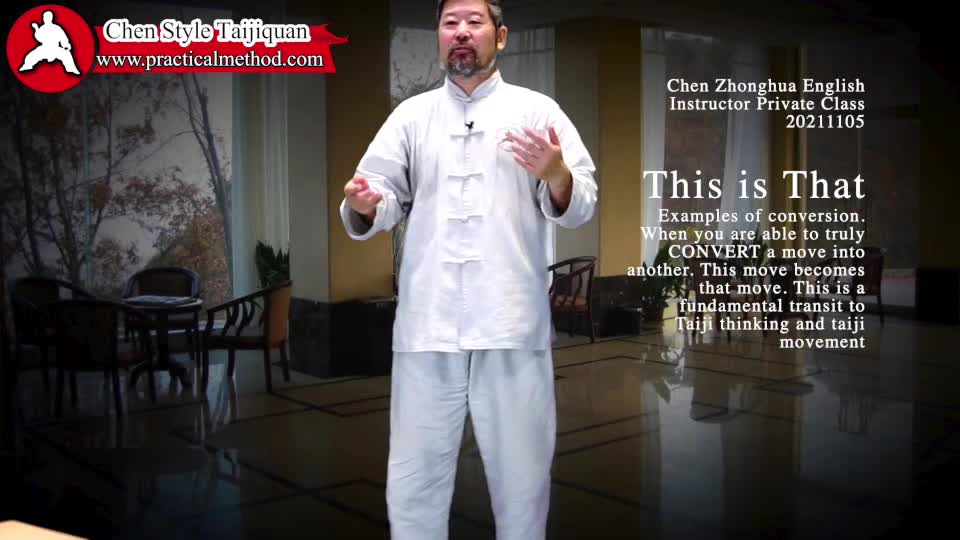
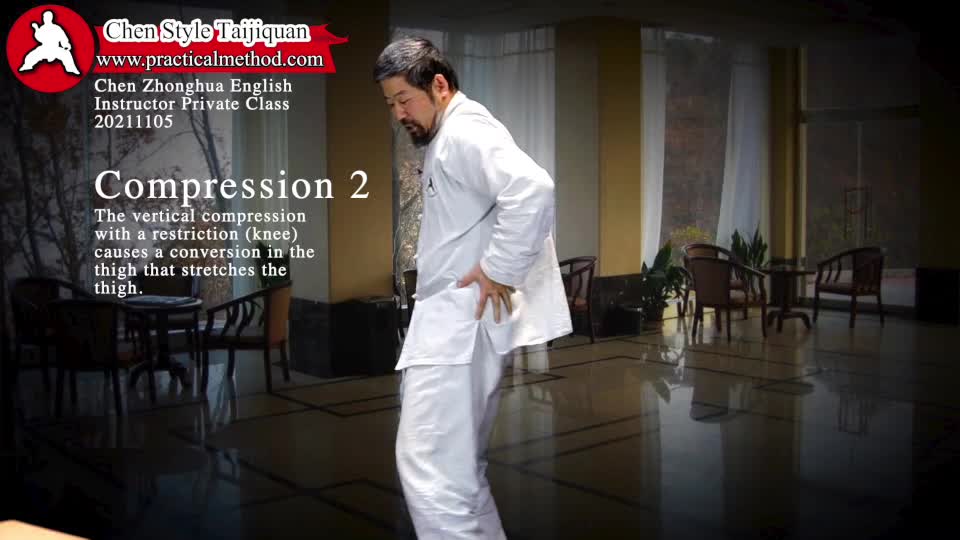
This is part of the conversion concept of Practical Method. When you compress vertically, you will get a horizontal move. In this mini video, Master Chen demonstrates how a taiji compression is achieved.
Presenter: Chen Zhonghua Length: 3 mins Difficulty: 3/5 Language: English Year: 2021 Location: Edmonton, Canada
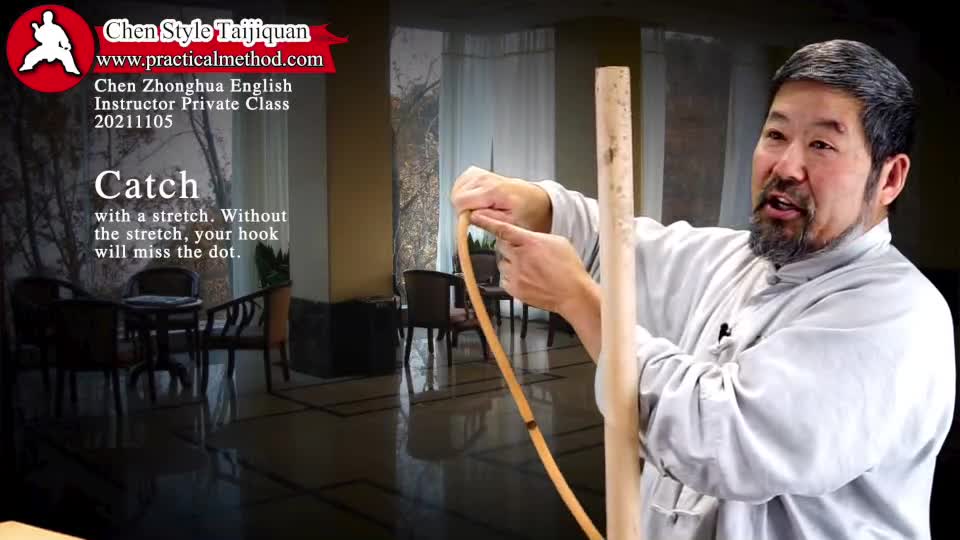
After training for a long time, the body becomes quite even. Almost everything has reached a level that measurements are automatically proportional. At this point, when you make a move, you need to stretch a bit to ensure that your movement is larger than the target of your movement. For example, you want to put a ring on a hook. Your body will just miss it as the ring distance will just match the distance from the hook. So when making the move, you stretch a bit to make your ring just land on the hook.
At this point you will look like every time you move you are stretching something. This something usually is your elbow, armpit, kua and knees.

_2021-12-05.jpg)
_2021-12-04.jpg)
_2021-12-03.jpg)
_2021-12-03.jpg)
_2021-12-02.jpg)
_2021-12-01.jpg)
_2021-11-30.jpg)
_2021-11-29.jpg)
_2021-11-28.jpg)
_2021-11-27.jpg)
_2021-11-26.jpg)
_2021-11-25.jpg)