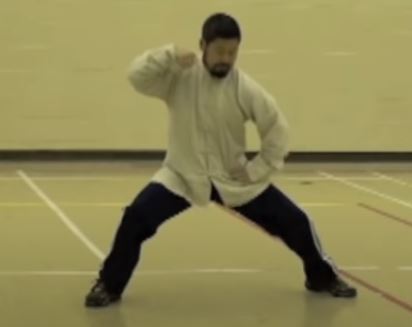
These are pictures (taken by Xavier Santiago) of the 2 week full-time training with Master Chen Zhonghua in Edmonton and Vancouver.
[nggallery id=149]
These are pictures (taken by Xavier Santiago) of the 2 week full-time training with Master Chen Zhonghua in Edmonton and Vancouver.
[nggallery id=149]
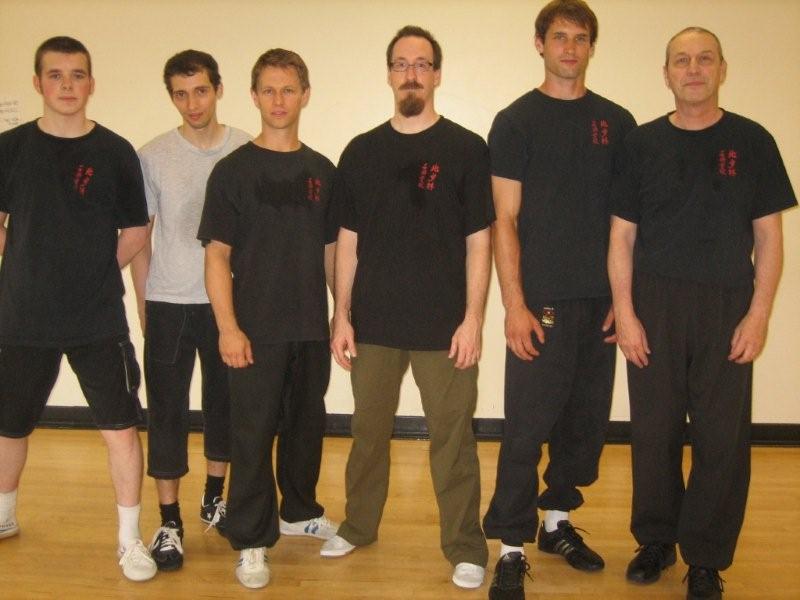
Here are a few photos of the group of Stonelion Shaolin students who participated in the Introduction to Chen Taiji class on July 12 2008.
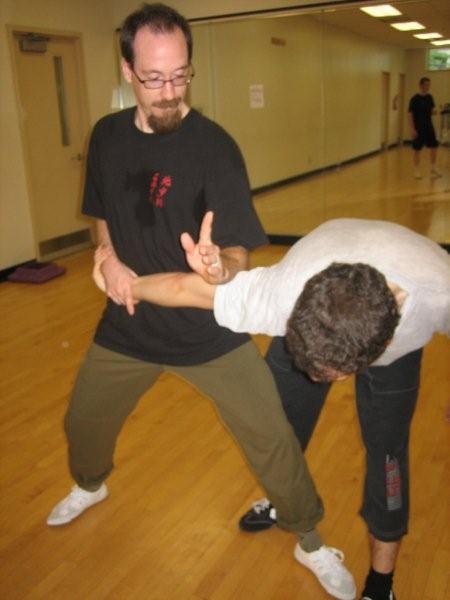
Most of the following relate to Tai Chi principles and form, but some are just general comments. All the comments below were either heard directly from Master Chen, or conveyed from another person who heard the lesson directly from him, or is based on my personal observation or experience. – Marvin Glotfelty Read more
There is a difference between being on and off. On refers to that point where everything is aligned. When your opponent pushes against that point there is power against the push. Read more
You hear a lot these days about the effective teacher. It is the subject of many books and countless journal articles. Television documentaries and radio talk shows bounce the topic around with great frequency.
The Washington Post has headlines on a regular basis proclaiming they have the secret to what makes an effective teacher. So does the Los Angeles Times. And, ASCD sells a set of video tapes entitled, “The Effective Teacher.” With the exception of the latter, none of these who write or talk about effective teachers are teachers. They had teachers, of course, in their own lives and, sometimes, they have children who have teachers. Some even have children who are teachers, but these are few and far between. Most do not have a relationship that close. But, hey, whoever said you had to know anything about a topic to talk about it? And, I had to admit it was a subject of some interest. I wanted to find out the answer—just what is an effective teacher anyway?
I carefully read and listened to all the above sources but an answer to the question was not forthcoming. Everyone had a different idea. Lots of attributes of effective teachers were discussed, but I never heard the same attribute mentioned more than once. There certainly was no agreement on this issue—at least 500 different qualities of effective teachers have been mentioned just in this last year! No one seems to actually know. I decided to approach teachers—real teachers—with the question. Guess what? They don’t know, either. They’d never thought about it, so they said. Well, neither had I, but I decided that maybe it was time. Seems to me, this topic needs to be nailed down. Just what is an effective teacher? What are their characteristics? I started a list. I have 14, so far. See what you think.
My list is not intended to be either exhaustive or conclusive. But, it is a beginning. Will it change? Absolutely. As I learn more about teaching, the list will need to be updated. I see it as a perpetual first draft. But, if I ever expect to be effective at this thing called teaching, I’d better start figuring out what the heck I am supposed to do!
Here is a clip that shows how to use the energy on the outside of your body to counter.
How to Arch the Lower Body Video
While the complete workshop is still fresh in my memory I’ve immediately
started to put my experiences on paper. It is only a personal
description of my experience these are not my notes (I’ll will mail my
notes as soon as I’ve worked them out). Please keep in mind that my fellow
attendee’s will have had different experiences and probably different
opinions regarding the workshop. Read more
When your opponent is tight, you rotate to get out; when he is loose, you hit directly. The video clip was made at a workshop at the De Glind in Holland in April 2008. Master Chen Zhonghua was assisted by Pavel Codl.
You should always use what is outside of contacting point, not inside of it.
Taiji uses a type of energy generated through spiral movements. This energy is constantly powered. Momentum is a great energy source that is abundant in everyday life. Many other martial art forms use this energy. Taiji does not.
Present at the class: Clinton Jurke, Allan Belsheim, Trevor Juuti, Alex Nay, Scott Hess, Camille Lipford and Blake Norman.
In this teaching animation model, Master Chen Zhonghua shows how the elbow interacts with the knee in a negative circle.
In relation to the viewer’s eyes, the elbow point moves more horizontally from left to right then the other point points. The two knee points move more in line with the eye vision’s depth. Essentially, you should try to understand that the three points don’t change relationships. Only the three dimensional perspectives cause the flat one planed photos to appear to have the changes.

In this animation model, I tried to show how the energy moves in a line of energy from front hand to the rear foot. 在这个幻影里,我演示前手到后脚的劲路方向
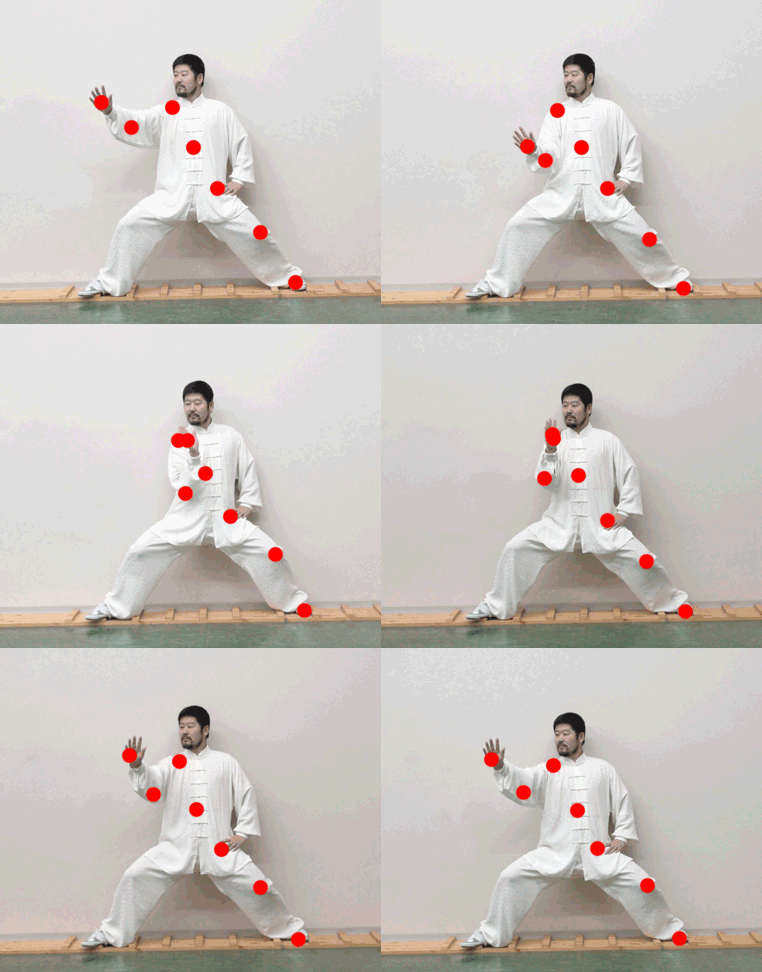
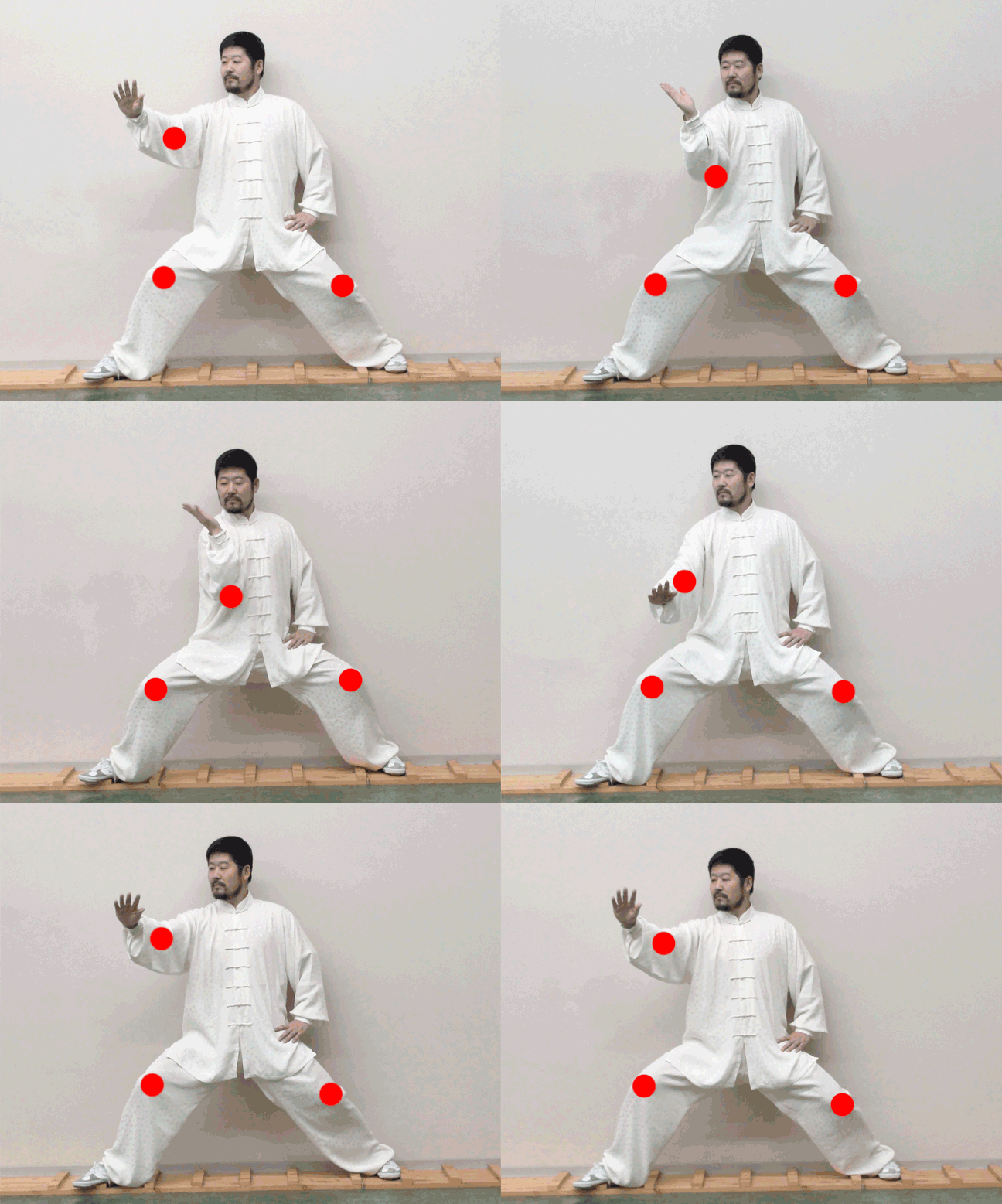
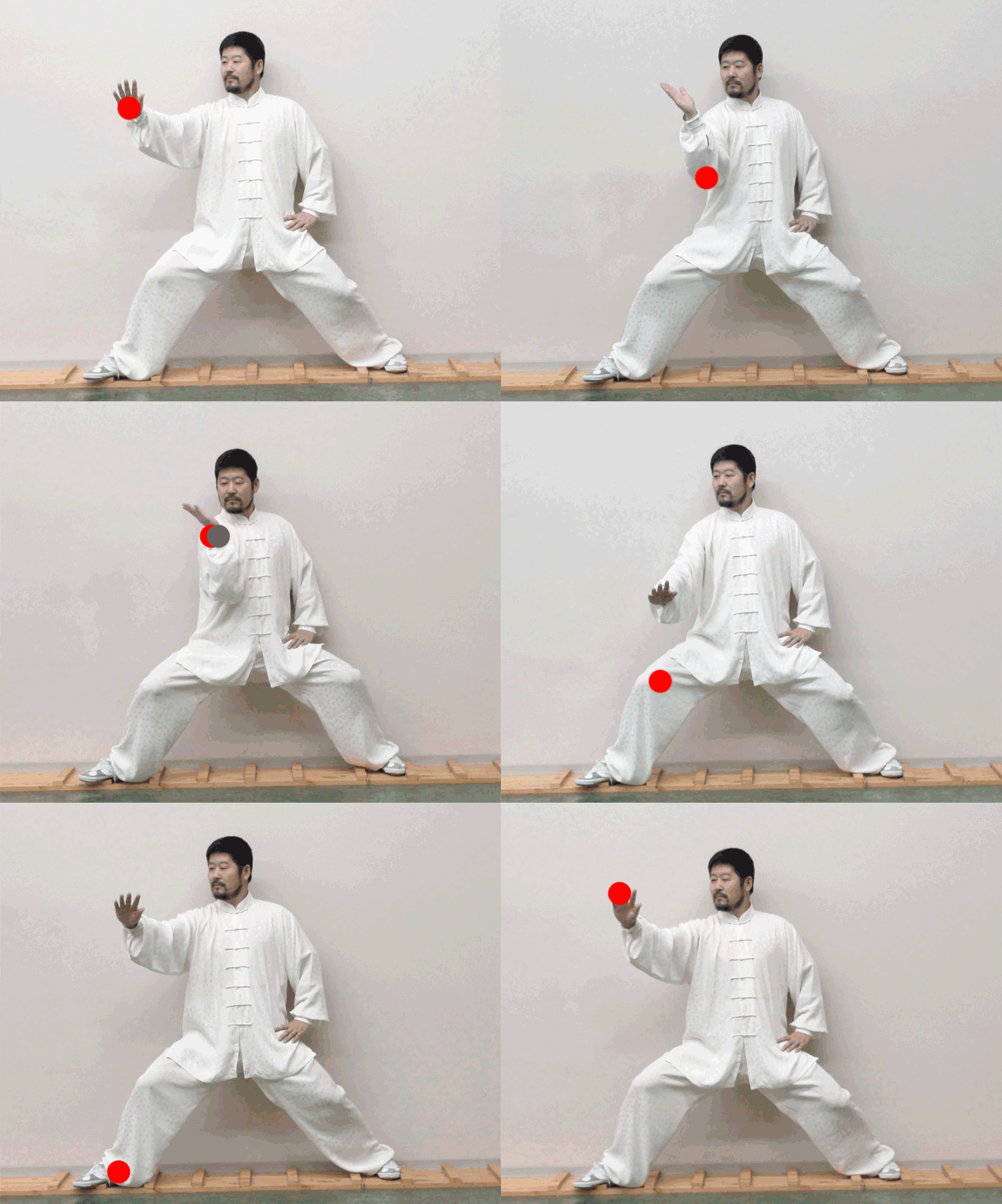
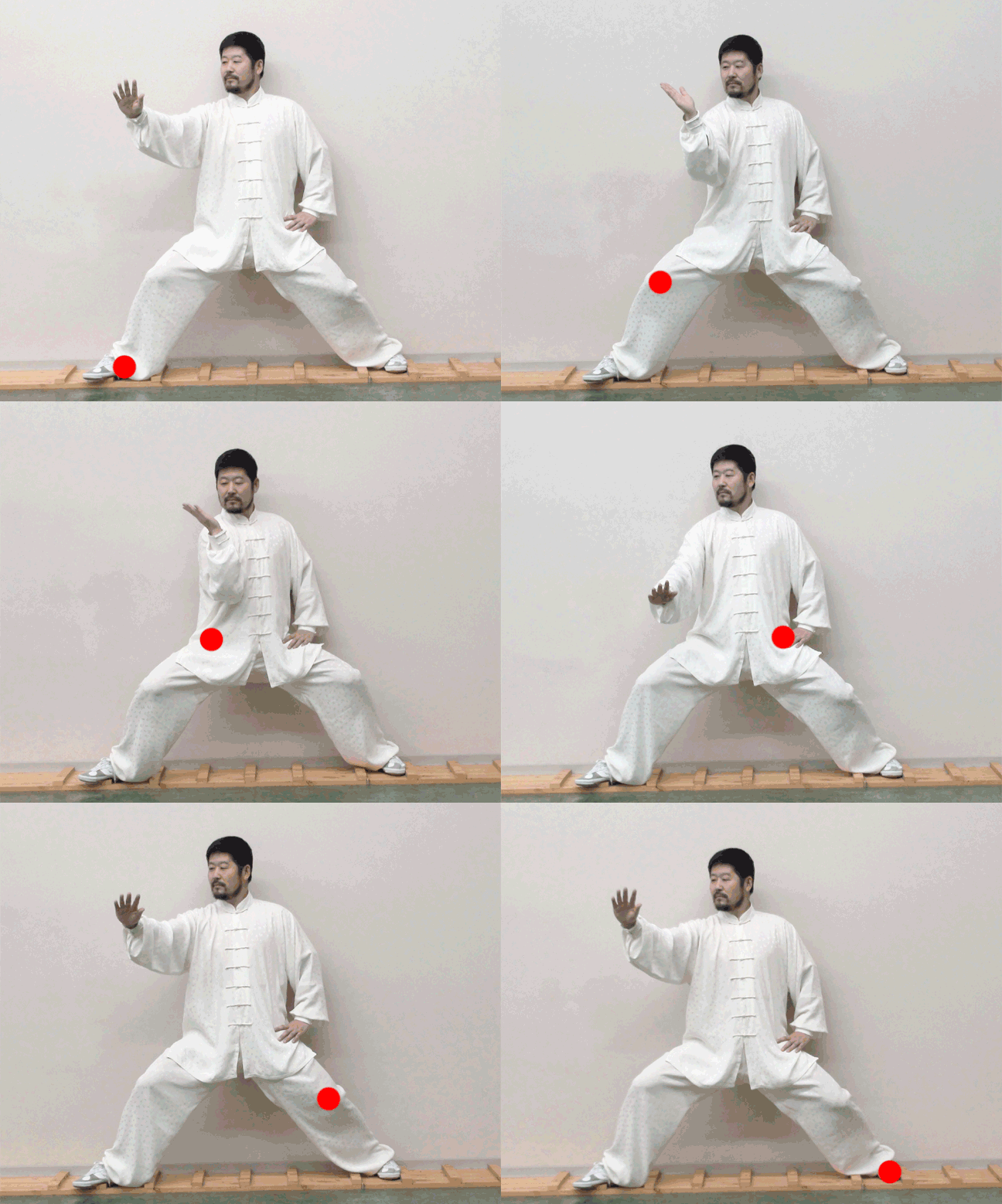
In this model, Master Chen Zhonghua shows the energy of the lower arch while in a negative circle. 
In this model, Master Chen Zhonghua shows how the energy (as one dot) moves on the lower body arch during a negative circle execution. 
This is a model to show how the energy moves on the right hand side of the body in a negative circle.

A common mistake is that after you have taken up the slack and are in and have an action on O, you then let go to attack somewhere else. Once you are on, and your attack is there, don’t retreat or change anything, just continue to apply that action, and then ad another element (most commonly a rotational action) – don’t push him here, and then let go to jerk him there. If your energy is going into O at point A, don’t stop and start putting energy in at point B, instead keep point A going and ad energy at point B. This avoids telegraphing your intention to O. When the first action remains smooth and you ad, your intention is hard to discern and he will be surprised by the addition of the new energy. Once you have two going, ad a third and so on.
What are the Three Pans of Taiji?
Originally written by: Chen Zhonghua and Ian Macrae
Based on Ian Macrae’s
Notes from the April 12th & 13th, 2008,
Workshop at Thornhill Hall, Maple Ridge Read more
This photo graph is designed to deal with knee problems in training.

In order to avoid injuries, the most important thing to avoid is the knee pushing outward away from the body, as illustrated in the picture above: the yellow dot cannot move towards the blue line. The blue line is an imagined wall that the knee cannot push against.
The following youtube clip shows the actions of the rear knee.
Lian : 炼
Taijiquan as self defense can be ruthless and lethal. The fighting method of Taijiquan is called Zhan Shou (Cut Hand). Read more
Main Points: Read more