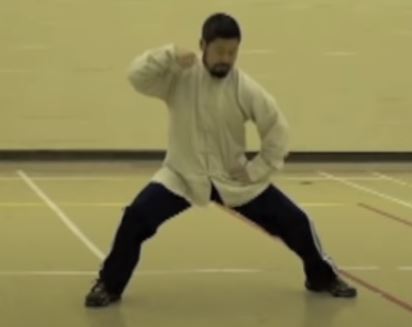
“空山不见人,但闻人语响。
返景入深林,复照青苔上。”
On the empty mountain, persons unseen;
Sound of voices, faintly echoes.
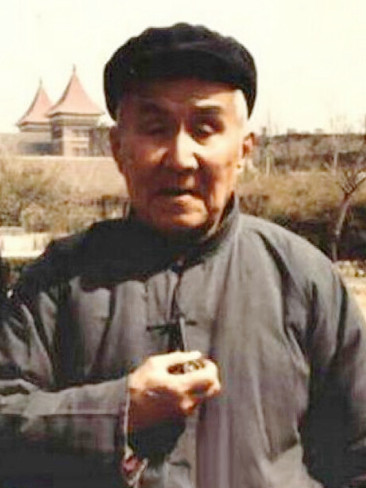
In these quiet lines by Wang Wei, absence is not emptiness, but presence concealed. An unseen figure stands within vast stillness; though the eye finds nothing, the ear perceives life. The poem becomes a lens through which we glimpse the life of Master Hong: a man outwardly obscured by history, yet inwardly resonant beyond measure.
Living in deliberate obscurity, Master Hong was a labeled “historical counter-revolutionary” confined to a seventy-square-foot shack, his body partially paralyzed in later years and his name absent from public acclaim. Poverty narrowed his circumstances; politics erased his status. Yet from that apparent void, his voice carried.
Students crossed military lines. They traveled thousands of miles. They risked interrogation, denunciation, even imprisonment. They were drawn not by fame, as there was none, but by a force they felt but could not easily explain. He left no estate and no institution bearing his name. What he left was rarer: a tenacious spirit and a living cartography of Chen-style Taiji.
Sunlight peeks through the deep woods;
Green moss sparkles once more.
The light, when it broke through, was sudden and unmistakable.
- A karate master hurled backward without visible contact.
- A bicycle caught mid-flight, its clay pot unbroken.
- A hardwood bedframe split with a turn of the wrist.
- An unwitting translator sent airborne by reflex alone.
These were not spectacles staged for admiration. They were sudden flashes: brief apertures in the forest canopy through which one glimpsed the architecture beneath the art.
Drops, as he would have insisted, in an immeasurable ocean.
As in Wang Wei’s mountain, where silence conceals structure and stillness contains life, so too did Master Hong’s quiet exterior shelter a discipline governed not by mysticism, but by exacting principle.
His true radiance lay elsewhere.
It lived in the “foolishly persistent” students who stayed.
He distilled Chen Fake’s principles into clear mechanics: revolution and rotation, the steelyard principle, and seizing the pulse while shifting the gates. These were rendered not as mysticism, but as method.
In a martial ethic that corrected without humiliation, that shared steamed buns in hardship, that answered betrayal with restraint.
Master Hong was the empty mountain: silent, enduring, containing vastness within apparent barrenness.
The figure unseen, whose echoes continue to sound long after the voice itself has fallen.
Hong Junsheng’s TaiJi Life
洪均生的太极人生
By Chen Zhonghua (陈中华) and Meng Yalun (孟亚伦)
He didn’t just practice Taiji; he *became* it. How a life of tragedy, poverty, and grace gave birth to the Practical Method.
• 7. A Diverse and Intellectual Lineage: The Crucible of the ‘Foolishly Persistent‘:
High Minds and Hard Truths: The Global Resilience of the Practical Method
• 8. The Martial Ethics of Master Hong:
A legacy of scientific combat governed by a gentleman’s heart—where genuine power is measured by mercy, not violence.
6. The Universe in Seventy-Two Square Feet
What was Master Hong’s life like outside of martial arts?
“A room of seventy square feet holds the universe;
A heart of noble virtue spans the ages.”
 |
From a modern perspective, the life of Master Hong Junsheng (洪均生) was one defined by tragedy, poverty, and unrelenting hardship. Yet, he met every trial with an unwavering optimism, never once succumbing to bitterness. No matter how dire his circumstances became, he remained a man who loved life, guided by a rigorous personal philosophy and the highest moral standards. |
The Shock of the Imperial Collapse (1907–1920s)
The End of the Imperial Order
| The year 1911 marked a definitive rupture in the Chinese psyche with the Xinhai Gémìng (辛亥革命), the revolution that brought about the collapse of the Qing Dynasty and terminated two millennia of imperial rule. As the absolute authority of the Emperor evaporated, it was replaced by the fragmentation of the Warlord Era. While the initial revolution was marked by relatively low casualties, the resulting power vacuum plunged the nation into decades of localized conflict, famine, and displacement. |
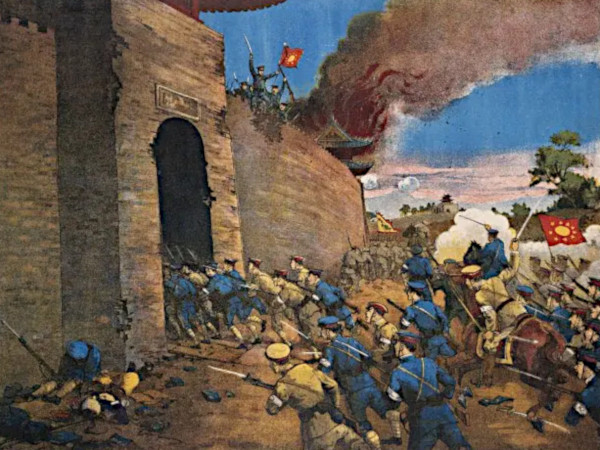 |
Although the Hong family possessed sufficient wealth to remain sheltered from the immediate physical dangers of this chaos, they could not escape the cultural displacement that followed. The abolition of the Imperial Examination system meant that the Confucian education Master Hong received was suddenly rendered “outdated” by a Republic striving for a new identity.
A Fragile Youth in a Changing Republic
Marriage and the Burden of Leadership
The Genesis of a Martial Legacy
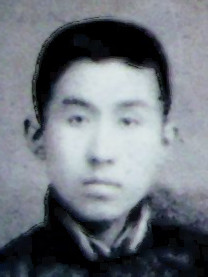 |
The convergence of his failing health and his relocation to Beijing eventually led to the most significant turning point of his life. In the winter of 1929, Master Hong contacted “Winter Plague” (冬瘟; a severe seasonal illness) which left him bed ridden for three months. In 1930 a neighbor named Zhou Huaibin (周怀斌) introduced Master Hong to Liu Musan (刘慕三), a noted practitioner of Wu-style Taijiquan (吴式太极拳), in the hope that martial arts might succeed where medicine had failed. |
After several months of diligent practice, Liu Musan recognized a unique potential in his student and arranged for the entire group to begin training under a master who had recently arrived from the Chen family village: Chen Fake (陈发科). Later that same year, Master Hong formally became a disciple of the Chen family standard-bearer.
| At the time, Grandmaster Chen Fake was living in the meager conditions of the Zhongzhou Guild Hall (中州会馆). Out of deep respect, Master Hong invited his mentor to live in the family’s home, hosting him for months at a time. This apprenticeship marked the beginning of fifteen years of exhaustive, daily study that would not only restore Master Hong’s health but also provide the crucible for the development of the Practical Method. While his body was finally healing through the rigors of Grandmaster Chen Fake’s instruction, the world around him was beginning to fracture. |
 |
Survival and Mastery Amidst Total War (1930s–1944)
| The fifteen years following Master Hong’s discipleship coincided with the most traumatic epoch in modern Chinese memory: the War of Resistance against Japanese Aggression (Kàngrì Zhànzhēng; 抗日战争) and the subsequent War of Liberation (解放战争). |
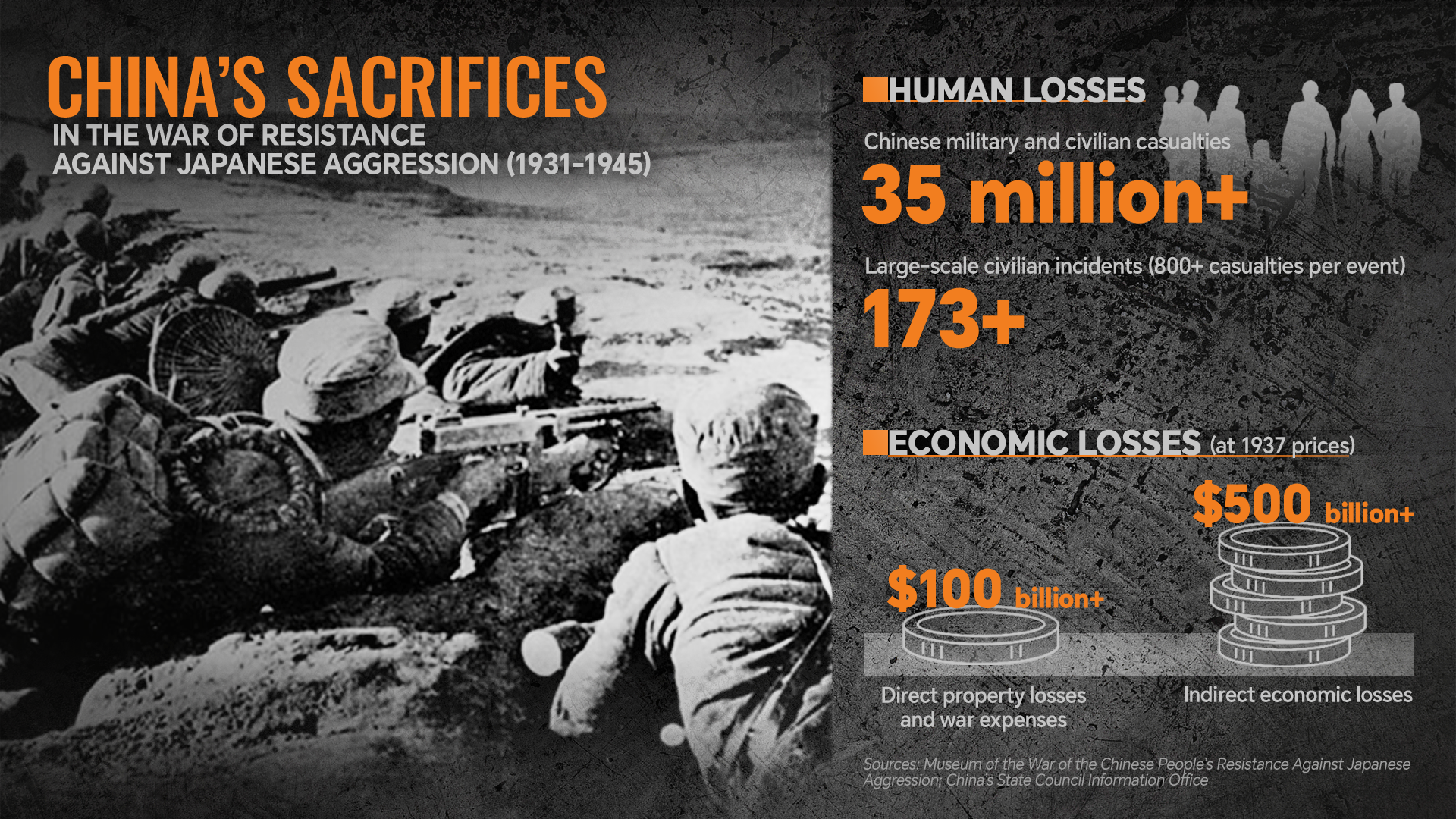 |
This era began with the seizure of Manchuria and escalated into a full-scale conflagration in 1937, resulting in an estimated 14 to 20 million deaths. For Master Hong, this external devastation forced a retreat into the internal rigors of his art.
Life Under Occupation
During the War of Resistance, Master Hong remained in Japanese-occupied Beijing. The family’s once-distinguished status offered little protection against the crushing economic stagnation and hyperinflation of the occupation. As the “external” world was consumed by conflict and poverty, Master Hong’s dedication to Chen-style Taijiquan only intensified.It was amidst the hunger and scarcity of 1944 (the waning years of the world war) that he achieved his deepest technical and philosophical breakthroughs. The meticulous geometries of the martial art became a sanctuary of order against the chaos of a crumbling society.
The Bond of Master and Disciple
The relationship between Master Hong and Grandmaster Chen Fake transcended the typical boundaries of teacher and student, evolving into a bond frequently described as that of father and son. Master Hong was noted for a profound sense of loyalty and honesty, treating the Chen family as his own kin. In the early years of Master Chen Fake’s arrival in Beijing, when the master lacked a permanent residence, he was often a guest in the then-affluent Hong household for months at a time.
However, as the fortunes of the Hong family declined following the end of the imperial era and the onset of war, the roles of provider and dependent began to blur. During the most desperate periods of the occupation, Master Hong was unemployed and burdened with feeding six children, often finding himself at Master Chen Fake’s table when his own home was devoid of food. This mutual support during a time of national starvation solidified a spiritual and technical lineage that would survive the fires of the mid-century.
The Departure to Jinan
The hardships of the late war years made life in Beijing increasingly difficult to sustain. In 1944, Master Hong faced a painful decision: to leave his beloved teacher’s side and seek his livelihood elsewhere. He settled in Jinan (济南), taking up a position at the Shandong Provincial Salt Bureau (山东省盐务局), a city that held deep personal roots. His father had served there as a high-ranking official, and through his 1926 marriage to Cai Jinglan, Master Hong had long been regarded as a “son-in-law of Jinan.” Yet the return carried a shadow. His prior service in the Kuomintang government would later be turned against him, and in the years following liberation, he was branded a counter-revolutionary: a label that would cast a long and difficult cloud over his life.
This departure marked the end of his formal, daily apprenticeship under Chen Fake, but it signaled the beginning of his journey as an independent master. He carried with him fifteen years of transmission that he would eventually refine into the Practical Method, transplanting the seeds of the Chen family’s art into the soil of Shandong Province.
The New China and the Final Transmission (1949–1957)
The conclusion of the Civil War and the subsequent Founding of New China (Xīn Zhōngguó Chénglì; 新中国成立) in 1949 brought a radical transformation to the social fabric of the nation. For Master Hong, this new era was fraught with complexity. As a member of the literati class,the traditional Confucian scholar-officials, and a practitioner of “traditional” martial arts as well as previous association with the Kuomintang government, he was often viewed with ideological suspicion by the emerging Marxist-Leninist state. During these early years of the Republic, he lived in a state of extreme poverty, frequently lacking the basic necessities of life. Yet, it was within this deprivation that his role as a public educator began to crystallize.
The “Immortal” of the Seventy-Two Square Feet
| While the founding of New China brought stability to the nation, the early 1950s found Master Hong at his most vulnerable. Stripped of the traditional safety nets of his class and family, he was reduced to abject destitution: a condition the old saying captures with cruel precision: “not a tile above to cover his head, nor a needle’s space below to call his own” (上无片瓦,下无插针之地). |
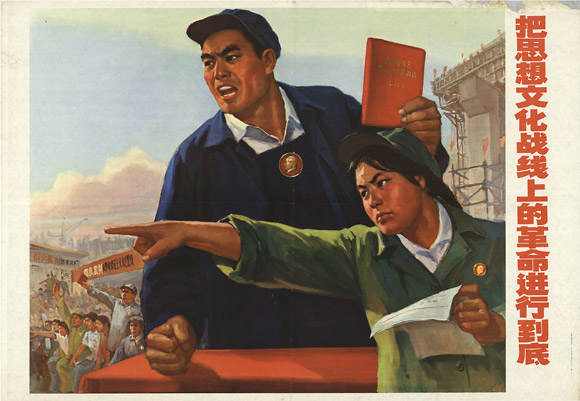 |
The decades that followed brought little relief. When the Cultural Revolution swept the country, the pressure of extreme leftist policies reached into even the most private bonds of family. Unable to bear the political consequences of association, his own son severed all ties with him, a wound no amount of martial fortitude could easily bear.
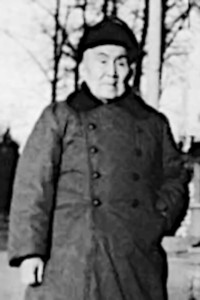
And yet, Master Hong endured. Near the shores of Daming Lake (大明湖) in Jinan, he built a humble shack with his own hands: a modest shelter of merely seventy-two square feet (72平方英尺). The vast world had, it seemed, no place for him. But within those four cramped walls, he found what the world could not take away: the carefree peace of one who has moved beyond its reach, living, as the old expression goes, with the ease of an immortal (神仙,世外高人).
The Mission Takes Root
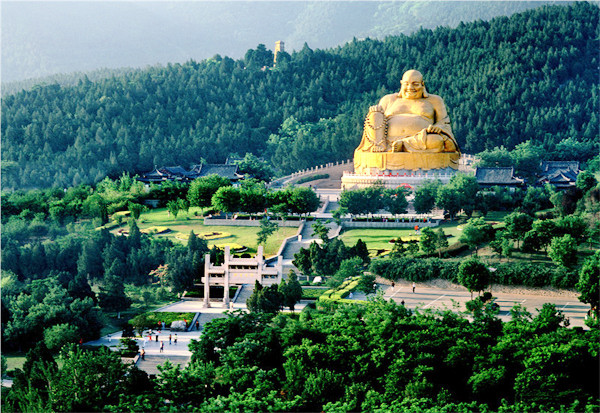 |
It was in this tiny space that his life’s mission took root: preserving and spreading the Taijiquan of his master, Chen Fake (陈发科). In 1951, Master Hong began teaching quietly to small groups, first at Huiquan Hall (汇泉堂) near Daming Lake and later in public spaces such as Black Tiger Spring (黑虎泉) and the foothills of Qianfo Mountain (千佛山). |
Despite his own dire financial straits, he maintained a rigorous ethical standard that defined his entire career: he famously taught for free. Adhering to a strict “Three Refusals” principle, he refused to accept money from his students, specifically shielding those in financial difficulty or those suffering from illness from any economic burden. This altruism transformed his teaching from a mere vocation into a form of social service, preserving the dignity of the art in an era of material scarcity.
A City of Taiji
His “career” grew not through marketing, but through the genuine skill and sincerity he offered every student. The small seed planted in his 72-square-foot shack eventually grew into a forest; by 1982, his influence had blossomed into many teaching locations across Jinan. In a poem to a friend, he captured the bold ambition that had sustained him through decades of poverty:
|
 |
This era of exhaustive study and selfless teaching provided the ultimate crucible for the development of the Practical Method. What began as a desperate search for health in the 1930s had evolved into a lifelong mastery that would eventually restore not only his own vitality but the cultural heritage of the Chen family legacy.
The 1956 Pilgrimage and Personal Tragedy
In 1956, Master Hong made a deliberate pilgrimage back to Beijing to sit once more at the feet of Grandmaster Chen Fake.This four-month residency was no ordinary visit, but a focused quest for what practitioners call the “late-life essence” of a master’s art: the subtle, sophisticated expression of power that only reveals itself after a lifetime of refinement. Master Hong later described what unfolded as a “qualitative leap,” the moment when decades of accumulated theory finally dissolved into living, embodied reality.
When the time came to part, Grandmaster Chen Fake offered words that were few, but carried the full weight of a lifetime’s judgment. “Your kung fu has reached the level I had hoped for,” he said. “Go home. You may now teach.” (你的功夫已经达到了我所期望的水平,回去后,你可以教拳了。) For a man who had followed his teacher across decades through poverty and upheaval, those two simple permissions, you have arrived; now go and give, were the quietest and most profound benediction a student could receive.
Yet the same year that brought his greatest triumph also delivered one of his deepest sorrows. His wife, Cai Jinglan, the woman who had stood beside him through destitution, political persecution, and the estrangement of his own son, passed away. The pillar that had quietly held his personal world upright was gone.
Another man might have been broken. Instead, Master Hong turned inward and forward. With grief as his companion rather than his captor, he retreated further into his art, channeling his loss into a final, total dedication to the Chen family legacy. What remained of his life would be given completely to the work, dedicated to preserving, refining, and transmitting what his teacher had entrusted to him.
The Passing of a Giant
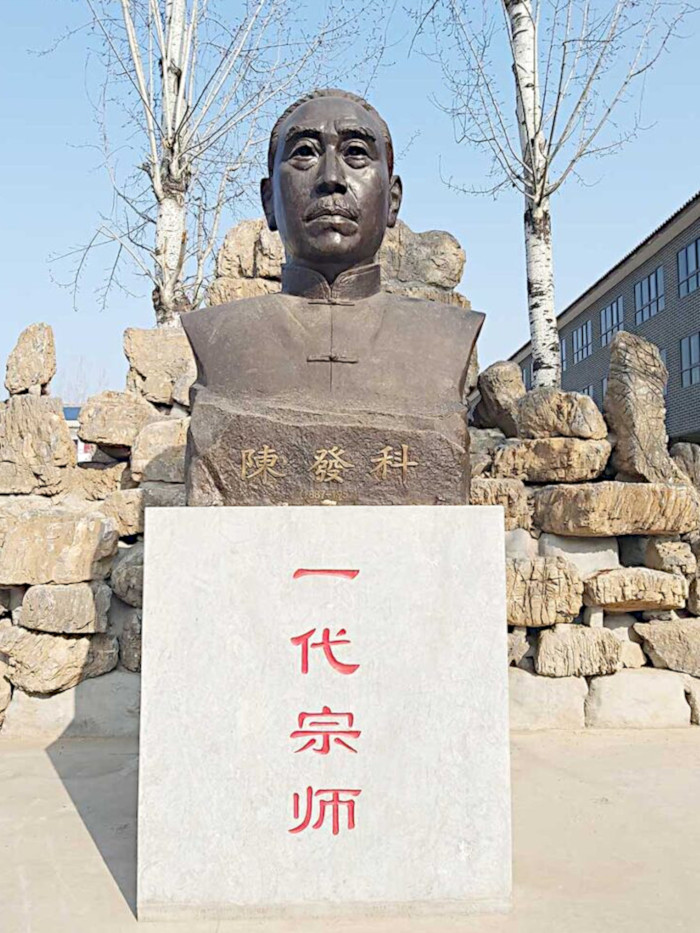
| The timing of this final transmission proved providential. In 1957, only a year after their intensive collaboration, Grandmaster Chen Fake passed away. The loss of his mentor left Master Hong as one of the primary custodians of the lineage’s highest level of skill. Now established in Jinan and armed with the final insights of his teacher, Master Hong stood as a bridge between the old world of imperial martial arts and the uncertain 20th century. He was no longer just a disciple; he was a master in his own right, tasked with ensuring the “true meaning” of Taijiquan survived the coming decades of upheaval. |
 |
A Legacy of Spirit
The Silver Lining and the Silent Bond
As the old saying goes, “The bitterness ends; the sweetness comes” (苦尽甘来). For Master Hong, the hardships of his later years were gradually softened by a quiet domestic grace. Following the passing of his first wife, he found a devoted companion in Jin Xiuyu (靳秀玉). Having lost her hearing at the age of three, she navigated the world in a quietude that Hong found deeply moving. She was the “Yin” to his “Yang.” Her stillness and his movement created a “unified duality” that sustained him through seasons of sickness and recovery. In his poem “Not Worrying” (《不忧》), he affectionately referred to her as his “silent wife” (哑妇), capturing a relationship built not on noise, but on presence.
Despite their meager circumstances, the two shared a bond of exceptional resilience. Master Hong reflected on this harmony with poetic simplicity:
“In this frugal life we share, no word of discontent; our hearts in mutual warmth unite.”
This emotional anchor proved vital as his physical health faltered.
| In 1961, Hong was bedridden for months, battling hemiplegia (偏瘫). Where such a debilitating setback might have broken a lesser spirit, Master Hong found strength in two sources: his wife’s devoted care, and the intellectual encouragement of an unlikely friend: a scholar named Liu Ziheng (刘子衡). Liu was no ordinary academic. Known throughout China as the “the Commoner Master” (布衣大师) , he had risen from a tenant farming family to become one of the most extraordinary figures of his era . |
 |
A renowned expert on the I Ching, he had spent the War of Resistance lecturing to Chiang Kai-shek’s top generals, men like Hu Zongnan and Wang Yaowu, using the ancient text to argue for national unity against Japan . After the war, he published “Nine Reasons Why Civil War Must Not Be Fought” (打不得九论) , a document so powerful it drew praise from Communist leader Dong Biwu and assassination attempts from Nationalist agents . By 1949, he was shuttling between Zhou Enlai (周恩来) and Li Zongren (李宗仁) as a back channel peace negotiator .
Now retired and living quietly near Daming Lake in Jinan, Liu had found a kindred spirit in Master Hong. Watching Master Hong practice Taiji, Liu recognized something profound: the movements were not merely physical, but a living embodiment of the I Ching’s principles, a martial interpretation of the very texts Liu had spent his life decoding. The scholar and the martial artist became close friends, their conversations bridging the worlds of classical philosophy and practical movement.
It was Liu’s quiet, steadfast encouragement that proved the turning point. Bedridden and unable to practice, Master Hong channeled what remained of his strength into his brush rather than his body. In 1964, he published a theoretical article on the silk-reeling energy of Taiji (太极拳缠丝) in the Sports Daily (《体育报》): a sign that even in confinement, his mind was still reaching. It was during this same period that he embarked on the far more monumental task of drafting what would eventually become the Chen-style Taiji Practical Method: his seminal contribution to the art, begun in hardship and built one painstaking page at a time.
Liu’s intellectual companionship deepened the work, reminding Master Hong that Taijiquan was never merely a physical discipline. It was a vessel for something far more enduring: a living philosophy that had carried both men through war, poverty, and persecution, and that would outlast them both.
And yet, for all the richness of the inner life they shared, their daily existence remained dangerously fragile. On the night of December 5, 1980, that fragility nearly proved fatal. The couple was overcome by carbon monoxide poisoning in their home: the bitter irony of poverty, where even the most basic warmth carried a mortal risk. They lay unconscious for nine hours before vigilant disciples discovered them in time.
It was a stark and sobering reminder that the man quietly building one of Taijiquan‘s most important written legacies was doing so on the very edge of survival.
A Living Legacy
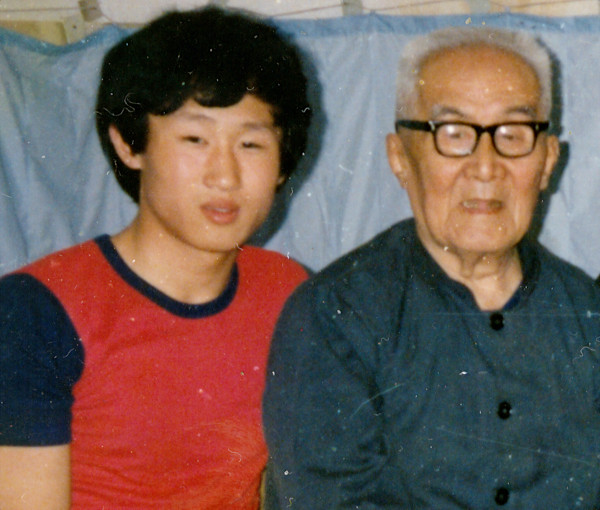 |
While Master Hong had multiple children, it was his sixth son, Hong Youyi (洪友义), who notably recorded his personal experiences with his father. Today, the family legacy is carried forward by his descendants and dedicated disciples. His direct paternal grandson, Hong Sen (洪森), serves as the Executive Vice President of the Hong-style Taijiquan Federation and Head Coach of the Daqingshan International Taiji Training Center. |
Another grandson, Hong Jiqun (洪继群), remains active in promoting the family’s martial arts philosophy through academic seminars. Additionally, his adopted grandson (义孙), Hong Weiguo (洪卫国), continues to spread the art in New Zealand.
The Light of Recognition: The Reform and Opening-Up
For most of his life, Master Hong lived and taught in obscurity. In a small room in Jinan, a giant of Taiji practiced quietly, known only to a circle of loyal students. Illness, poverty, and political suspicion had shadowed his life for decades. Yet in the twilight of his years, the world finally turned its gaze toward him. As the old expression goes, the eastern sky was beginning to lighten (东方将白 , the dawn approaches).
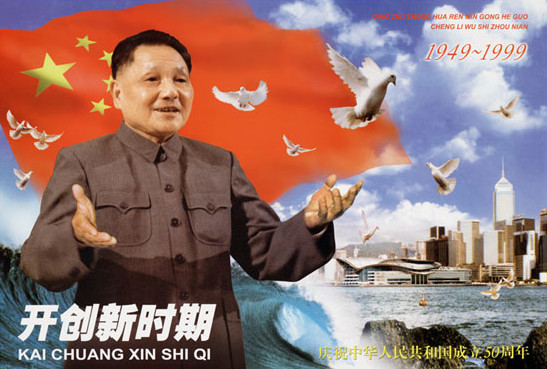 |
The turning point arrived with the era of Reform and Opening-Up (Gǎigé Kāifàng 改革开放), beginning in 1978. After the long darkness of the Cultural Revolution, years of ideological rigidity that had forced an entire nation to turn against its own heritage, China began slowly and cautiously reopening to the world. It was as if the seasons themselves had finally turned: the desolate winter of isolation giving way, at last, to the hopeful spring of renewal. Traditions that had been suppressed, dismissed, or driven into obscurity began to stir again. And the men who had quietly kept them alive through the coldest years were about to step back into the light. |
Master Hong’s emergence onto the broader martial arts stage began quietly, through the eyes of a single observer. In May 1981, his student Li Enjiu (李恩久) traveled to Shenyang (沈阳) to participate in the National Martial Arts Demonstration Competition (全国武术观摩表演赛). One morning, while practicing Tai Chi alone on a basketball court, Li Enjiu’s solid foundation and unmistakably distinctive style drew the attention of Professor Men Huifeng (门惠丰) of the Beijing Institute of Physical Education (北京体育学院). Curious, Men Huifeng approached him, and through that chance encounter, first heard the name Hong Junsheng.
Li Enjiu later recalled the significance of that gathering: “At the competition, I met renowned Tai Chi masters such as Gu Liuxin (顾留馨), Li Jingwu (李经梧), and Zhang Jixiu (张继修), and every one of them asked about Master Hong.” Professor Men Huifeng subsequently made several visits to Jinan, and word spread quietly but surely through the inner circles of Chinese martial arts. Master Hong’s superb skill and profound cultural refinement were spoken of with increasing admiration.
His reputation did not remain within China’s borders for long. Around this time, Japanese martial artists had begun arriving in China in growing numbers, eager to trace the historical roots of Samurai Budo (日本武道) and its connections to classical Chinese martial traditions. Their search led them to Chen Village and the surrounding regions, only to find that decades of political upheaval had devastated much of the living tradition they had hoped to find.
Recognizing both the cultural significance and the diplomatic opportunity, local authorities began organizing formal meetings between Chinese martial artists and visiting Japanese delegations. At one such state-sponsored banquet held in Jinan, many of the city’s most distinguished martial artists gathered to receive the guests. Master Hong, who rarely sought the attention of public occasions, was persuaded, with some effort, to attend.
In the bustling banquet hall, amid the loud boasting of famous practitioners, the elderly master sat quietly smoking his pipe.
During dinner, one Japanese martial artist noticed something unusual. Even while reaching for food with his chopsticks, Master Hong kept his elbows drawn firmly inward. Curious, he approached Master Hong afterward and asked about this peculiar manner of eating.
Master Hong smiled and replied that it was simply his training. He was applying the Practical Method principle of “In with the elbow, out with the hand” even while dining.
| Intrigued, the visitor sought him out the next morning. When he learned that Master Hong was not among the official instructors in the government-arranged training sessions, he rose early and went instead to observe Master Hong’s informal morning class at Black Tiger Spring (黑虎泉). After experiencing the instruction firsthand, he was convinced he had finally encountered genuine Taijiquan. Soon other members of the delegation followed. One by one, they quietly slipped away from the official training program and gathered around the old teacher by the spring, drawn not by ceremony or credential, but by something they could feel in their hands and could not explain away. |
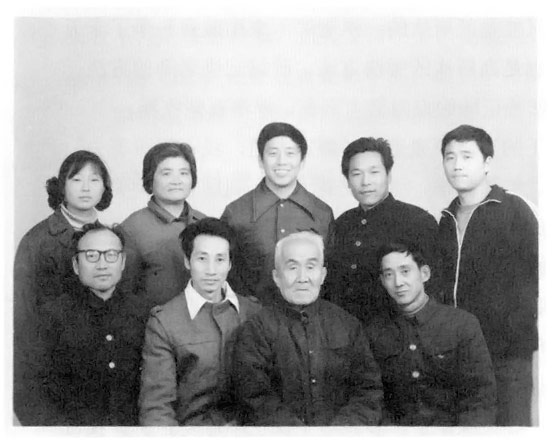 |
Thus, slowly and almost unintentionally, Master Hong’s light began reaching the world.
Encounters with the Japanese Delegations
One particularly well-documented encounter took place in the summer of 1983, when a delegation of elite martial artists including Soga Tadahiro (曾我忠弘) visited Jinan. Though the visitors were masters of ‘hard’ styles, they were stunned by the seventy-six-year-old Master Hong’s vitality. Soga later recalled that Hong moved with the agility of a cat, describing his hands as feeling like ‘animal paws’, deceptively soft and relaxed, yet capable of collapsing an opponent’s center the moment contact was made.
During these visits, Japanese practitioners frequently requested Push Hands (Tuīshǒu 推手) to test the reality of the art. In one memorable exchange, a visitor asked politely:
The Jinan Hotel Era
As the number of foreign practitioners seeking out Master Hong continued to grow, a practical problem emerged: his home was far too small and modest to accommodate them. Recognizing the growing diplomatic and cultural value of these martial arts exchanges, local authorities began arranging meetings at the Jinan Hotel instead, a setting that reflected just how dramatically his fortunes had changed.
The irony was not lost on those who knew his history. For decades, officials had monitored him as a relic of “feudal culture.” Now the same institutions provided assistants and promoted his Practical Method to visiting delegations.
Foreign visitors approached Master Hong with a respect he hadn’t seen from local practitioners in years. This was especially true of the Japanese, represented by the Japanese Martial Arts Associations and the Japan Chen Family Taijiquan Association (JCTA). They were particularly drawn to his analytical teaching style; unlike many masters of the era, Master Hong avoided mystical explanations of Qi — his refusal to rely on “internal energy” as a catch-all explanation was not a lack of spirituality, but a commitment to transparency and logic. He described Taijiquan through clear physical principles: leverage, rotational mechanics, and geometric alignment.
This technical clarity resonated deeply with the Japanese martial mindset, earning him the title “Taiji’s Magic Hand” (太极魔手), a tribute to his uncanny ability to neutralize any attack the moment an opponent touched his skin. As the 1980s tourism boom took hold, his reputation reached such heights that visitors affectionately nicknamed him the “Taiji Super Star” (太极巨星), a reflection of his newfound international celebrity.
Yet this recognition had not come without friction. As early as August 1981, when Professor Men Huifeng introduced Ms. Nakano Harumi (中野春美), Head Instructor of the Japan Taijiquan Association, to Jinan, the local Sports Committee had initially prevented foreign students from visiting Master Hong’s home, embarrassed by the poverty in which he lived, as if humble surroundings might diminish what they had come so far to find. But Nakano Harumi would not be turned away. What she encountered surpassed all expectation. She returned again and again, each visit deepening her conviction that she had found something rare and irreplaceable. In time, she asked Master Hong to become her godfather, a request that carried, in the Chinese tradition, the full weight of filial devotion and lifelong allegiance. He accepted. She later founded the Hong Junsheng Taijiquan Research Association in Japan, ensuring that his legacy would take root far beyond the modest walls where it had nearly been extinguished.
Soon afterward, the authorities arranged for Master Hong to move into a more suitable apartment in Caishi New Village (财石新村) , a quiet, practical acknowledgment that the man they had once marginalized was now an asset worth protecting.
For the citizens of Jinan, the transformation was astonishing. A man who had once been labeled a “class enemy” was now being respectfully bowed to by wealthy foreign visitors. Where the state had once tried to erase him, it now sought to present him.
In the language of Taiji, this was the ultimate expression of “Neutralize and Redirect.” The state had attempted to destroy the old culture with direct force. Master Hong had endured quietly, yielding, surviving, waiting. When the momentum of Reform finally arrived, he did not resist or retaliate. He simply redirected that force and, in doing so, became a living symbol of China’s cultural depth, proof that what cannot be broken by pressure may yet, in time, illuminate the world.
The Unfettered Spirit: Legacy of a Common Citizen
Despite his burgeoning international stature and improved surroundings, Master Hong remained an exemplar of simplicity. He continued to walk daily to the training grounds at Black Tiger Spring (黑虎泉), moving through the world not as a distant grandmaster, but as a common citizen. He eschewed banquets and extravagance, finding greater fulfillment in the quietude of his home, where his wife continued to raise chickens, and the familiar comfort of his traditional “Han Tobacco” pipe.
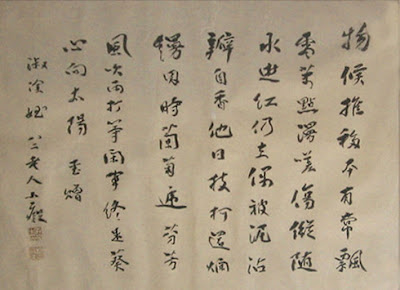 |
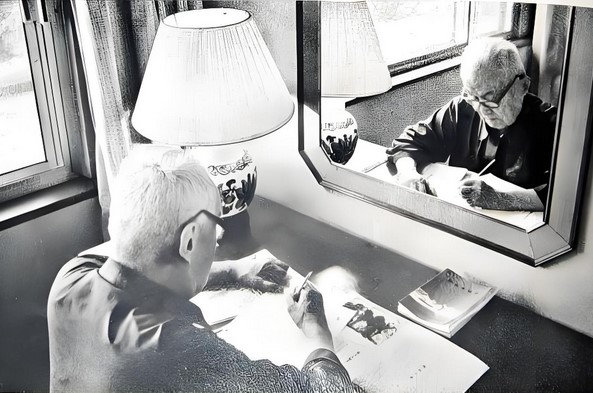
With a more stable living environment, Master Hong returned to the cultural passions of his youth: Peking Opera, Literature, and Poetry. He possessed a profound devotion to Calligraphy and Rubbings (书法与碑帖), particularly the study of ancient steele inscriptions. His discipline was legendary; he spent twenty years copying and analyzing the “Zhang Qian Stele” (《张迁碑》). |
This intellectual breadth was a hallmark of his character; described as exceptionally intelligent with a formidable memory, he utilized his mastery of music and verse to distill complex martial theories into accessible forms. This is immortalized in works such as the “Three Negations Song” (《三不歌》) and the “Three-Character Classic of Hong-style Taiji” (《洪式太极拳三字经》).
The culmination of his life’s work arrived in 1988 with the publication of his magnum opus, “Chen-style Taiji Practical Method” (《陈式太极拳实用拳法》) by the Shandong Science and Technology Press. The text was not merely a technical manual but a cultural artifact, interspersed with his original poetry.
Even as age confined him to a wheelchair, his martial passion remained undimmed. At his 90th birthday celebration in 1995, he famously insisted on rising from his seat to practice push hands with his “grand-disciples,” demonstrating a spirit that refused to be bound by physical frailty.
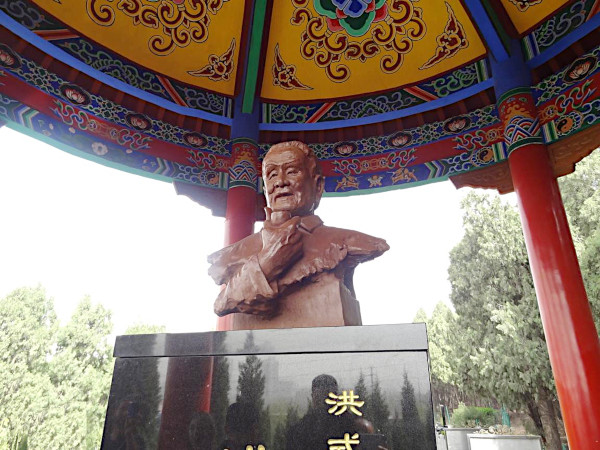
Master Hong passed away in Jinan, Shandong, on January 23, 1996, at the age of 89. He left no material wealth or property to his descendants; his “estate” consisted of a few books, his calligraphy brushes, and his traditional pipe. Instead, he bequeathed a tenacious spirit (顽强的生命精神) and a profound, living map of Chen-style Taijiquan that continues to guide practitioners across the globe.
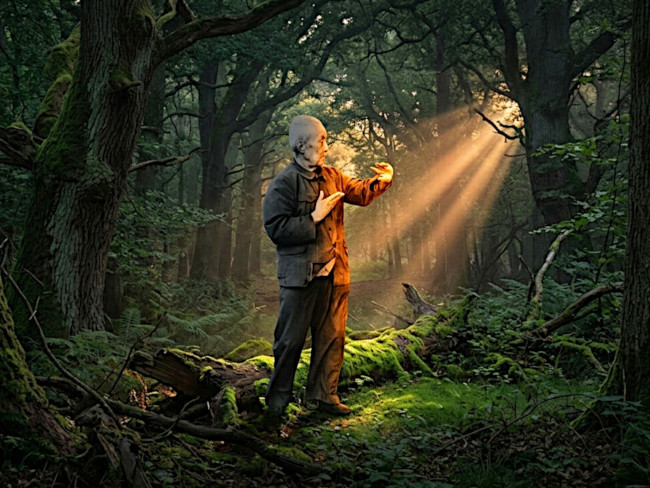 |
Ultimately, Master Hong’s life “outside” of Taiji was not separate from the art, but was the very soil in which it grew. His mastery of the “fist” was simply the physical manifestation of a man who found beauty in a line of calligraphy, harmony in a verse of poetry, and dignity in the face of crushing poverty. |
For him, every aspect of his life was a reflection of his passion for the art of Taiji; yet, every trial of the world, every hunger, every illness, and every friendship, was the force that shaped and refined his Taiji journey. He did not just practice the art; he lived it until the two were indistinguishable.
7. A Diverse and Intellectual Lineage: The Crucible of the ‘Foolishly Persistent’
What kind of people study Master Hong’s boxing?
“Great mastery resides in persistence;
the “foolish” heart finds the way.”
Master Hong’s school was a vibrant microcosm of Chinese society, drawing disciples from every imaginable corner of life. His classes formed a living tapestry where eight-year-old beginners practiced alongside elders in their seventies and eighties. This vast professional and social spectrum included elite athletes like Li Enjiu, dedicated laborers such as Liu Chengde, and soldiers like Xiao Mingkui. The mats saw a constant exchange between the academic and the practical, from university students like Cai Shengye and Chen Zhonghua to distinguished professors like He Shugan. Even national borders could not contain the school’s reputation, attracting a dedicated cohort of international seekers: from Japanese practitioners like Nakano Harumi and Takaya Hiroshi to students from Canada, Australia, and beyond.
| Yet, despite this open and diverse door, the Hong Junsheng school of Chen Style Taijiquan Practical Method was never a sanctuary for the casually curious; it was a crucible that forged only the most disciplined practitioners. This reputation for rigor was so formidable that it once humbled a seasoned master named Zhao. Having traveled from eastern Shandong specifically to seek out Master Hong’s expertise, Zhao spent three days observing the training at Daming Lake, only to find himself hesitant to commit. |
 |
He was struck by the uncompromising dedication of the disciples and the staggering physical demands of their curriculum. Years later, Zhao would vividly recall his awe at seeing even the eldest students holding impossibly low, powerful stances, a display of mastery so intense that, despite his own experience, he chose to walk away rather than step into the circle.
The Philosophy of the “Foolishly Persistent”
Regarding the specific temperament required to succeed in the art, Master Hong offered a counterintuitive insight. He believed that neither raw brilliance nor total simplicity was the key. He famously noted:
“Intelligent people cannot learn it; they think they understand and have mastered it, but it is not that simple. True fools cannot learn it either; they lack the capacity to comprehend. Only ordinary people, possessing a ‘foolishly persistent‘ perseverance (傻劲/恒心), can truly master this boxing.”
(“聪明人不能学,他们会自己觉得已经明白了、会了,其实没有那么简单。真正的傻子也不能学,他们没有具备学习和理解的能力。只有那普通的人,又有一种傻乎乎的持之以恒的毅力,能将这套拳学好。”)
Faith Under Fire: The Political Toll
For those who studied with him before the 1980s, the “perseverance” Master Hong spoke of was tested by more than just physical fatigue. At the time, Master Hong was officially labeled a “historical counter-revolutionary” (历史反革命), an outcast within the political system. To be seen with him was to risk one’s livelihood; students faced the threat of losing their jobs, being politically blacklisted, or facing imprisonment.Xu Guicheng (徐贵成), one of Master Hong’s earliest disciples in Jinan, was interrogated repeatedly by the authorities. Despite the pressure, “Brother Xu” remained steadfast, ignoring the obstacles to become Master Hong’s longest-serving student.
He Shugan (何淑淦), a professor at Heze Normal University and Master Hong’s first disciple, endured a path of extraordinary hardship that tested the very core of his practice. As a student of both Master Hong and Grandmaster Chen Fake, he carried a prestigious lineage, yet he was labeled a “rightist” and a “counter-revolutionary” during a period of intense political upheaval.
Sentenced to prison for eighteen years, He Shugan remarkably continued his practice behind bars. In the cramped and hostile environment of his confinement, he found the art to be more than just a physical discipline; it became a profound source of internal resilience that sustained him through his darkest decades.
Boundless Dedication
Xiao Mingkui (肖明奎), a revolutionary soldier stationed in Sichuan, exemplified the magnetic pull of Master Hong’s teachings, which drew practitioners across vast distances and through the most rigid boundaries. In the 1970s, Xiao traveled thousands of miles to Jinan for the sole purpose of seeking out Master Hong. Despite the strictures of military law (军令/军规) governing his daily life, his commitment to the art never wavered. Through this persistent dedication, he earned a place as one of Master Hong’s most cherished disciples.
Li Enjiu (李恩久), already a renowned martial artist and gold medalist, represented the high caliber of practitioners drawn to the lineage. Despite his prominent status and administrative responsibilities, most notably as the Director of the Jinan Martial Arts Hall (济南武术馆馆长), Li approached the school with the “foolish persistence” that Master Hong so deeply prized. This humility and unwavering dedication eventually led him to be named Master Hong’s successor, formalizing his role as the second-generation head of the school (学派第二代掌门人).
Nakano Harumi (中野春美) served as the Head Instructor of the Japan Taijiquan Association and stands as one of the most prominent early figures in the international transmission of the Practical Method. As one of the first Japanese practitioners to seek out Master Hong Junsheng in Jinan, she made numerous pilgrimages to receive direct, personal instruction at the art’s source.
Her extensive study under Master Hong provided the technical foundation for her role as a primary gateway for his teachings in Japan. She was instrumental in the establishment of the Hong Junsheng Taijiquan Research Association (洪均生太极拳研究会), a dedicated body committed to the rigorous study and dissemination of the Practical Method. Through her leadership, she ensured that Master Hong’s scientific refinements were not only introduced to the Japanese martial arts community but preserved with the highest level of integrity.
Takaya Hiroshi (高谷宽) served as the Deputy Head Instructor of the Japan Taijiquan Association, working alongside Nakano Harumi to establish a vital link between Japan and Jinan. One of the core practitioners who sought out Master Hong Junsheng’s guidance in the 1980s, Takaya made numerous pilgrimages to China to study the art at its source.
His dedication was instrumental in the founding of the Hong Junsheng Taijiquan Research Association in Japan. Through his leadership and consistent training, he became a primary force in propagating the Practical Method across the Japanese martial arts community, ensuring that Master Hong’s technical refinements were preserved and disseminated with precision abroad.
Soga Tadahiro (曾我忠弘) emerged as the most influential figure in the global expansion of the Practical Method. One of the early “martial pilgrims” to visit Jinan in the 1980s, Soga was already a highly skilled martial artist when he became a dedicated disciple of Master Hong. Upon returning to Japan, he worked tirelessly to translate Master Hong’s complex theories and organize international tours. His efforts culminated in the establishment of Japanese Practical Method study groups that continue to flourish today.
Soga documented his personal observations of Hong’s skill with remarkable clarity, capturing the specific mechanical and philosophical depth that defines the lineage. He wrote:
“Watching Master Hong’s demonstration, I truly saw what we had admired. I felt in him an incredibly elegant martial arts temperament that was hard to believe, and he was like an outstanding philosopher, containing the mysteries of humanity… Master Hong has a genius-level reaction, speed, and precision. Someone tried to push his body, but the moment they attempted to push, their power suddenly seemed taken away by something, and they themselves were thrown far. Master Hong’s body seemed equipped with a mechanical device—it automatically reacted the instant he himself was not yet aware of it. Moreover, when Master Hong broke through an opponent’s center, the precision of his hand could be measured in millimeters. We called his hand ‘Magic Hand’…”
(“观看了洪老师的师范表演,真正看到了我们所倾慕的东西,感到在他身上有着令人难以置信的极高雅的武术气质,而他就象一位杰出的哲人,蕴藏着人类的奥秘…洪老师具有天才般的反应、速度和精确度,有人曾试图推动他的身体,但在欲推的瞬间,突然力量好象被什么东西给带走了,自己反而被弹出甚远。洪老师的身体就象装有机械装置,在本人尚未意识到的一刹那,就自动作出反应。再者,洪老师在击溃对方中心时,其手的精确度可以毫米计,我们称他的手为’魔手’…”)
He also recounted a profound experience watching Hong correct a fellow student with minimal contact, concluding: “Only then did I personally experience that the skill of internal martial arts is accumulated day by day, obtained through unremitting effort…” (“我这才亲身体会到内家拳的功夫是日积月累、不懈努力得来的…”)
8. The Martial Ethics of Master Hong: A Legacy of Virtue
Could you talk about Master Hong’s martial ethics?
Sharing bread to feed the hunger of youth,
Blunting conflict with kindness,
Dignity is the lasting legacy.
推手引化存仁厚,留得尊严付后生。”)
In my view, Master Hong’s martial ethics (Wude ; 武德) surpassed even his extraordinary physical skills. His virtue was not a set of rigid rules to be recited, but the very marrow of his character: a living synthesis of humility, integrity, and an unwavering dedication to the truth.Master Hong’s entire philosophy of martial ethics is distilled into his most famous maxim:
“A person possesses character, and so too does their martial art. Ultimately, the quality of the art is dictated by the quality of the person.”
“人有品,拳亦有品,拳品高低实以人品为主。”
For Master Hong, the “fist” was a mirror. He believed that no amount of technical brilliance could mask a deficiency in spirit; conversely, a practitioner of high character would naturally infuse their movements with a sense of dignity and purpose. This belief was the lens through which he viewed every aspect of his life, guiding how he refined the art, how he nurtured his students, and how he navigated a world that often challenged his quiet resolve.
Humility and Respect
Respect for All
He taught that one must show respect to any practitioner, regardless of their skill level. His principle was:
|
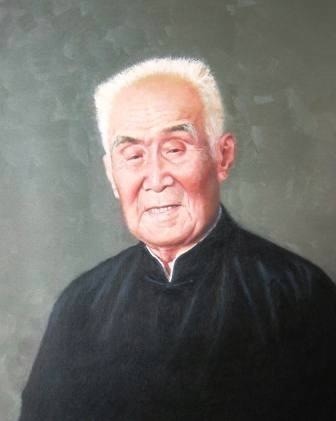 |
Intellectual Humility
He openly acknowledged learning from others, no matter their status. He referred to Li Xiaodong (李小东) from his hometown of Henan as his “one-word teacher” (一字师), because Li once suggested a single character change in a poem, which Hong gratefully accepted.
Integrity in Teaching and Conduct
In a world often driven by the pursuit of profit and status, Master Hong remained remarkably indifferent to power and wealth (淡泊名利) and maintains contentment in his poverty (安贫乐道). Despite having thousands of disciples across Jinan and Shandong Province, a following that could have easily made him a millionaire, he chose a life of simplicity. During my own years of study, I never paid a cent of tuition. More often than not, rather than providing for him, I was the one being fed at his table. I fondly remember my last meal there on March 26, 1994, prepared by his wife, whom he affectionately called “Mute Flower” (哑花).
Cai Shengye, a senior student, recalls that for decades, Master Hong taught Taiji for free, refusing to accept money from his students. He adhered to a strict “The Three Refusals” (三不要) principle:
|
|
Jiang Jiajun, one of Master Hong’s disciple, in his book “Discourses at the Taiji Master’s Door“, captures a poignant morning at Black Tiger Spring on October 10, 1983. It highlights Master Hong’s tireless dedication as an educator; he observed Jiang’s performance of the First and Second Forms for over an hour, providing hands-on, “hand-over-hand” corrections without a hint of exhaustion or impatience. The account serves as a testament to Master Hong’s Wude (武德), as Jiang recalls not just the technical guidance, but a profound sense of “sincere camaraderie and brotherly affection” that defined their relationship.
The Weight of Understanding
Master Chen Zhonghua often looked back on a particular morning in the courtyard, just as the heat of class was settling into the pavement. A man had appeared, briefcase in hand, trailing a scent of ink and institutional self-assurance. In an era when the state approved barely twenty books a year, this editor didn’t just walk; he arrived. He held the keys to the kind of immortality most scholars would have traded their lives for.His proposal was blunt. Master Hong had been refining a manuscript in the shadows for years. The editor offered to bring it into the light, lending the full weight of his authority to the project. The catch? The editor’s name would sit above Master Hong’s on the cover. It was a cynical trade, the Master’s knowledge for the bureaucrat’s gatekeeping, but in that time and place, it was a miracle of an offer.
Master Hong asked the editor whether he knew Taiji. He did not. Hong asked how the man intended to edit material he could not understand. The editor replied that understanding was not required of him: his role was authority, not knowledge. The name on the cover would open the door. The rest was Master Hong’s problem.
Master Hong declined.
Master Chen, a young University student at that time, who had witnessed the exchange, pressed him afterward. The opportunity had been genuine. The scarcity was real. Why turn away something so difficult to come by that can instantly bring him fame and fortune? It would also provide Master Hong with what he crave most in the world, the recognition of Chen Taijiquan.
Master Hong’s answer moved past the question of publishing entirely. He explained that there were mornings when he woke with a deeper understanding than he had carried the day before, and on those mornings, what he had written previously already needed revision. This was not doubt or restlessness. It was the nature of true learning, advancing quietly and continuously, always a step ahead of whatever he had last committed to paper. To publish in such a state, he felt, would be to hand the world a flawed map and then disappear, leaving readers to treat its errors as gospel.
He understood the danger of that intimately. A book, once loved, becomes difficult to question. People hold it the way they hold scripture. And a master who publishes too soon may spend the remainder of his life not deepening his art, but issuing corrections no one wants to hear.
So Master Hong waited. He revised across seventeen years. And when he finally published, near the end of a life that stretched to ninety years, he did so not because the book had become perfect, but because he had simply run out of time to make it better. He acknowledged its flaws openly and accepted full responsibility for them. The regret he carried was not shame but honesty: the clear-eyed admission of a man who had seen how far his younger understanding fell short, and who had refused, for as long as he possibly could, to let that lesser version speak for him.
What the editor had offered was rare. What Hong chose to protect was rarer still.
Generosity and the “Steamed Bun” Philosophy
His disciple Wu Shizeng (吴仕增), now residing in Australia, recalls a similar experience from 1984. When Wu attempted to offer money as a token of gratitude, Master Hong refused. When Wu insisted, the Master simply donated the entire sum to charity in Wu’s name.
Master Hong lived by the maxim: “Doing good deeds doesn’t result in loss; it benefits oneself” (“做好事不吃亏,对自己有好处”). He often illustrated this with a simple anecdote:
|
 |
The Spirit of “Elevating Others”
Compassion in the Face of Betrayal
Master Hong lived by the Confucian golden rule: “Do not do to others what you would not have them do to you” (己所不欲,勿施于人). This principle was put to its ultimate test in the early 1970s.
During this period, Master Hong suffered from paralysis: a lingering consequence of the severe hunger he endured during the late 1950s and early 1960s. Doctors advised that he required long-term care and observation; they predicted a recovery would take at least a year, perhaps three to five, and warned that a full, permanent recovery was unlikely. To ease the burden on his students, Master Hong decided to return to his hometown in Hebei Province to recuperate, under the care of his eldest son, Hong Youren (洪诱仁).
Before leaving, Master Hong entrusted two disciples with the responsibility of teaching at the Daming Lake (大明湖) school. While Master Hong had never charged tuition, the students, recognizing the poverty of the time, negotiated a modest fee of one yuan per month to help the new teachers make ends meet. With eighty students, the collection totaled eighty yuan. At first, the two disciples acted with integrity, sending half the money to Master Hong’s son for his care and splitting the rest. However, as the months passed, the temptation of wealth began to erode their consciences. They became obsessed with the income, their moral compasses slowly consumed by greed.
Contrary to their expectations, Master Hong made a remarkable recovery and returned to Jinan in the third month. Upon his return to the Daming Lake training location, the two disciples, now unwilling to relinquish their newfound status and income, began plotting to usurp him.
One morning, under the guise of a technical inquiry, they staged a challenge. While Master Hong was explaining a technique, they asked how one should deal with two people attacking simultaneously. It was a “foolproof” plan: if they failed, they could claim they were merely asking a question; if Master Hong was defeated, he would be too shamed to continue teaching, allowing them to naturally take his place.
The moment they struck, Master Hong discerned their true intent through the quality of their strength. He understood that human movements are guided by intention, that at a higher level, combat is not a contest of physical force, but a “battle of wills” (心志的较量). Sensing their malice, Master Hong neutralized them with ease, subduing both men instantly.
In the exchange, both disciples suffered minor internal injuries. Master Hong did this deliberately to signal that their intentions had been exposed and that they had received an appropriate punishment. Yet, his method was so subtle and refined that none of the other students present realized a “battle” had even taken place; to them, it appeared as nothing more than a seamless demonstration of the art.
When I heard this story, I asked Teacher Hong about it. At first, he denied it, saying that such stories only brought misfortune. Later, when discussing how to deal with injustice, he said,
|
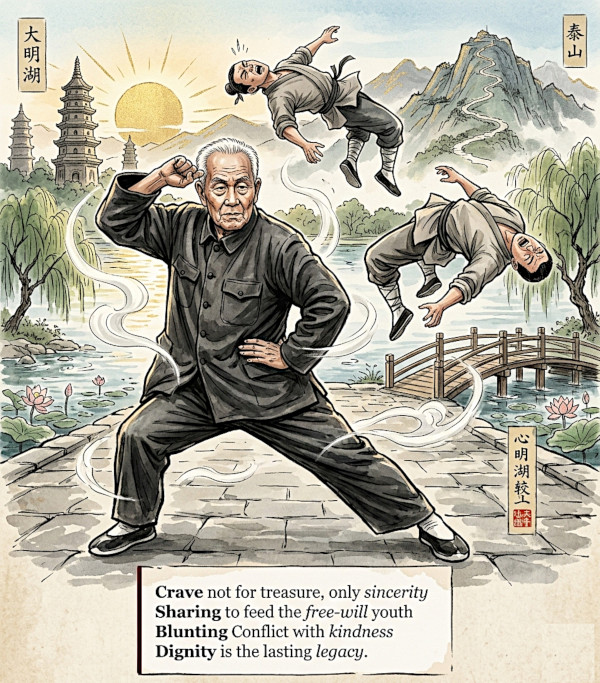 |
By subduing them with “mercy in strength,” he allowed them to keep their dignity. Consequently, the two remained loyal followers for the rest of their lives.
Pay No Heed to a Rabid Dog
On one occasion, a group of disciples approached Master Hong, their faces clouded with indignation. They had come across an article by a martial artist who was loudly broadcasting his “fame”: claiming he had soundly defeated a renowned Taiji master from Jinan. The students, eager to defend their lineage’s honor, expected a sharp rebuttal or a call to action.
Master Hong, however, remained entirely unruffled. He dismissed the provocation with a single, biting idiom:
“Pay no heed to a rabid dog barking at the sun” (不睬他狂犬吠日).
With those words, he let the matter drop into the silence. His lack of concern was not born of indifference, but of an unshakeable confidence in his foundation. He calmly remarked that he had yet to fail the teachings of his own master, Chen Fake.
Just as Chen Fake had met every challenge throughout his life without ever faltering, Master Hong understood that true mastery does not need to shout to be heard. To him, the integrity of the art was proven through practice, not through the empty noise of those seeking a reputation at the expense of others.
There are no Counters Moves
Master Hong consistently emphasized that Taiji is, first and foremost, a martial art: one that should never be taken lightly. At the heart of his teaching was the principle of mutual practice: a foundation built on mutual respect between training partners. However, he often cautioned that one can never fully rely on the civility of an opponent; therefore, every challenge must be met with somber seriousness.
He frequently admonished junior students who spent their energy seeking specific “counters” or escapes. In the Practical Method, he maintained, there are no counters. This philosophy was famously illustrated when a student described the difficulty of escaping a Judo choke hold and asked how Master Hong would react in that same position.
Master Hong simply laughed and replied, “Just don’t get into that position.”
To drive the point home, he shared a sobering anecdote: “If someone points a gun to your head, would you still ask for a counter?”
His message was clear: all martial arts reach a point of lethality. If you accept your opponent’s rules and allow yourself to be placed at a disadvantage, the battle is already lost. Success in Taiji lies in prevention and positioning, not in seeking a “magic” escape once the trap has already closed.
No Secret Doors
This powerful exchange from the autumn of 1982 perfectly captures Master Hong’s rejection of the “secretive” martial arts tradition. As recorded by Zhang Guanglun (张广伦) in his article “The Fist Character and Human Character of a Generation Grandmaster Hong Junsheng” (《一代宗师洪均生的拳品与人品》), a message was once relayed to the Master suggesting: “When teaching foreigners, you should hold back a couple of moves.” (“教外国人时,要留两手。”)The Master’s response was not a lecture, but a physical and philosophical demonstration. He simply said, “Come over and try” (“你过来试试”). After being instantly controlled and disoriented by a few subtle turns, Zhang was then asked a series of pointed questions:
|
Master Hong “How many moves was that?” (“这是几招?”)
Zhang“I don’t know.” (“不知道。”)
Master Hong“What is greater, a thousand or ten thousand?” (“千大万大?”)
Zhang“Ten thousand.” (“万大。”)
Master Hong“What is greater, ten thousand or a hundred million?” (“万大亿大?”)
Zhang“A hundred million.” (“亿大。”)
Master Hong“Is there a number beyond measure?” (“无量衡有数吗?”)
Zhang“There is not.” (“没有。”)
|
 |
As Master Hong looked deeply at him, Zhang realized the futility of the original suggestion. Zhang Guanglun later reflected:
“The teacher’s skill had reached a state of transcendence. Talk of ‘how many moves’ or ‘holding back moves’ was simply the talk of those who did not understand Taiji.”
“老师的功夫已到了出神入化的境界,什么‘多少手’、‘留一手’,都是不懂太极拳的外行话。”
Through this interaction, Master Hong proved that his art was not a finite collection of “tricks” to be guarded, but a limitless science. He lived by the conviction that
it belongs to all of humanity.
Gentleness with Challengers
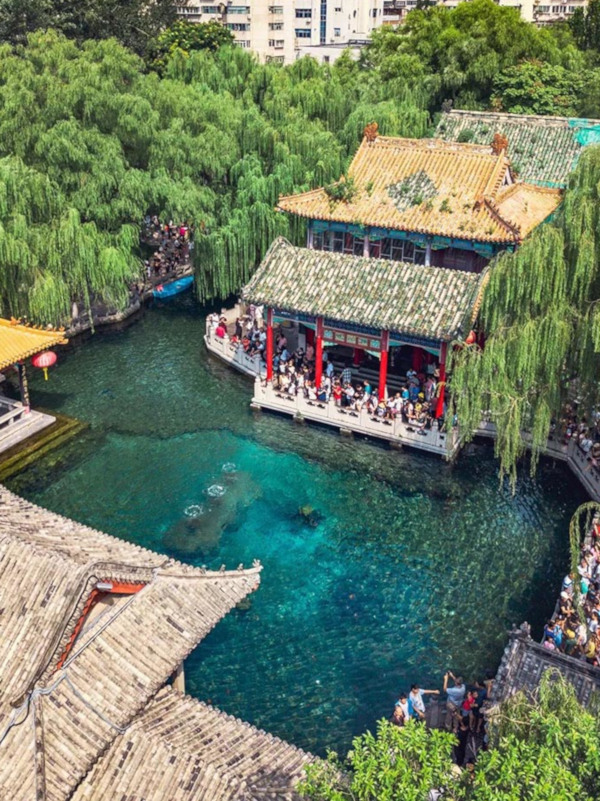
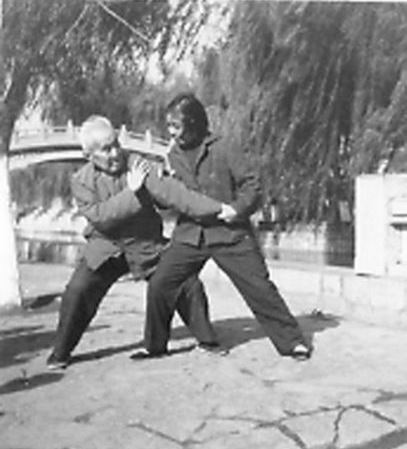
| When challenged or attacked by strangers in public places like Baotu Spring (趵突泉) or Black Tiger Spring (黑虎泉), he would effortlessly neutralize the attack and throw the person without injuring them. He would even ask, “Did that hurt?” (“摔疼了吗?”) and laugh it off, using the moment to teach a lesson without malice or revenge. |
 |
Moral Courage and Truth-Seeking
Opposing Falsehoods
He was a fierce opponent of the fraud and self-aggrandizement that can appear in the martial arts world. He satirized a famous contemporary who falsely claimed to be 100 years old (when he was actually 82) by sarcastically remarking on the “kindness” of Chinese culture for not exposing such lies. He believed a person who would lie about their age could not be trusted as a master.
Intellectual Honesty
He was “not a follower of blind faith” (不盲从) and “not a follower of trends” (不跟风). He approached all theories, even those from authoritative works (权威论著), with a scientific and seek truth from facts (实事求是) attitude. He would only propose a new idea after rigorous verification.
Academic Integrity and Reverence for the Source
Master Hong’s ethics were deeply rooted in the traditional principle of “Respecting the teacher and valuing the Way” (尊师重道). Because Chen Fake was his only master, he maintained a lifelong attitude of absolute reverence toward him.
This respect manifested in two distinct ways:
He often told his students:
|
 |
This devotion extended to Chen Fake’s daughter, Chen Yuxia (陈豫侠), whom he treated as a sister. When she visited Jinan, he would enthusiastically accompany her to climb Mount Tai (泰山). She, in turn, remarked that watching Master Hong practice was like seeing the “heroic figure” (英姿) of her father reappear.
The Integration of Combat Efficacy and Martial Virtue
The legacy of Master Hong is defined by his rigorous insistence that Taijiquan is a complete and sophisticated system of combat. His seminal work, Chen-style Taijiquan Practical Method, serves as a testament to this focus, emphasizing that the “practical” nature of the art is its primary defining characteristic. Central to his pedagogy was the principle inherited from his teacher, Chen Fake:
|
 Practical Method V1 |
This philosophy dictates that every posture within the form possesses a precise, calculated application for either offense or defense, leaving no room for ornamental or “empty” movement (“没有一个动作是空的”).
This commitment to functionality was further codified in Master Hong’s mandate for training:
“Practice it the way you would use it, and use it the way you practice it”
(“怎么用就怎么练,怎么练就怎么用”).
By pursuing this absolute unity between form and application, Hong ensured that the aesthetic beauty of the art never compromised its combative integrity. Historical accounts of his life in Jinan, whether teaching at Baotu Spring or engaging with Japanese martial arts enthusiasts in the 1980s, consistently highlight his ability to neutralize aggressive force and “issue” power with effortless precision. Witnessing him deflect opponents using only the subtle rotation of his chest or torso often astonished observers, providing empirical proof of his refined mechanical skill.
Unlike many contemporary martial arts that rely on the concepts of blocking, intercepting, or dodging, Master Hong’s methodology was rooted in scientific principles. He utilized theories of “Revolution and Rotation” and “Adaptive Equilibrium” to explain the spiral movements and shifts in the center of gravity essential to the art. This allowed for the realization of the classic Taiji ideal: “Four ounces deflecting a thousand pounds.” Whether the intent was defensive (neutralizing) or offensive (issuing), the underlying mechanical physics remained constant, distinguishing his method from more linear combat systems.
However, Master Hong’s focus on efficacy was always governed by a profound sense of martial ethics. He famously argued:
“Practicing boxing is not for fighting, but mastering it can stop fighting and allow one to act courageously for justice”
(“练拳不是为了打人,但练好了可以制止打人的行为,做到见义勇为”).
For Master Hong, superior combat skill was not an invitation to violence but an ethical constraint. This paradox is beautifully captured in his poem, “On Chen Style Taijiquan” (洪式太極拳品並序), where he describes the practitioner’s demeanor as:
|
 |
This external elegance often led the uninformed public to underestimate the art’s lethality. Master Chen Zhonghua recounts an anecdote in which a group of Master Hong’s students were involved in an altercation; the authorities released them while detaining their opponents, under the mistaken assumption that Master Hong’s “gentle” exercises could not possibly cause harm. This misunderstanding serves as a tribute to Master Hong’s ultimate standard for martial power:
Through this lens, the Practical Method is revealed not merely as a set of techniques, but as a disciplined path toward a refined, non-violent strength.
A Life of Integrity
Perhaps the most powerful testament to his martial ethics is the life he led. He lived in extreme poverty for much of his life, yet refused to commercialize his art. His goal was never personal gain, but the betterment of others through Taiji. He famously said:
|
 |
This statement perfectly summarizes how he lived his life, making him not just a master of Taiji, but a true master of its spirit.