
 |
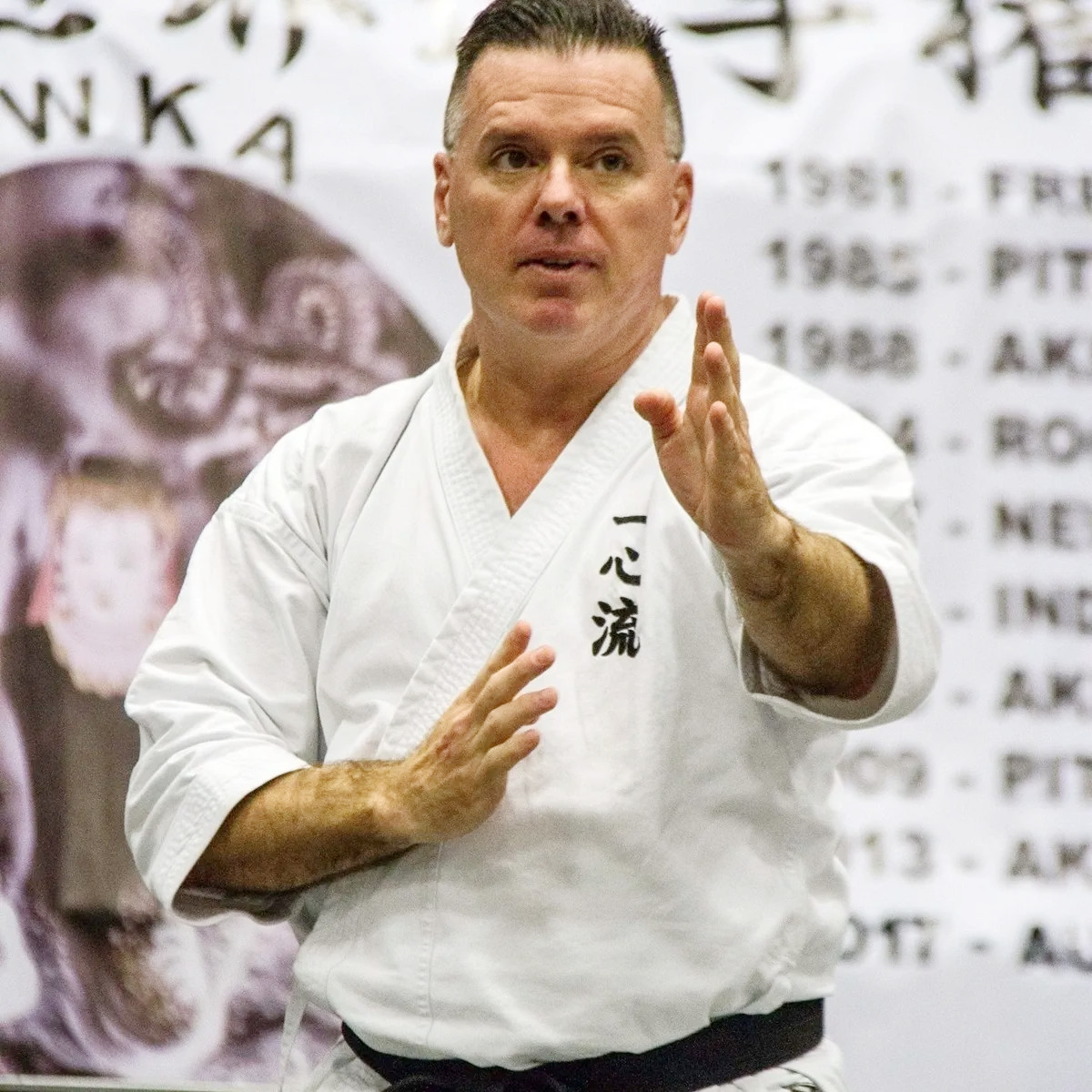
Michael Calandra’s martial arts journey is defined by a rare intersection of traditional discipline and real-world application. A veteran of the NYPD, Michael retired in 2010 as a Detective in the Intelligence Division following a distinguished 22-year career. His extensive experience as both a Transit and Police Officer provided him with a gritty, realistic lens through which he views combat and self-defense, a perspective he has shared as a dojo owner for over 35 years. In 2022, he relocated from New York to Wittmann, Arizona, where he opened Seishinkan West to continue his legacy as an internationally recognized instructor who has taught seminars across China, India, Europe, South America, and the United States. |
| His formal pedigree is rooted in deep lineage, holding the rank of 10th Dan Hanshi in Isshin-Ryu Karate under Master Kichiro Shimabuku, a 6th Dan in Matayoshi Kobudo under Master Yoshiaki Gakiya, and a 1st Dan in Tenshin Shoden Katori Shinto-Ryu under Master Yukihiro Sugino. In addition to his mastery of Japanese arts, Michael was inducted as the 24th Indoor Disciple under Master Chen Zhonghua. He has dedicated himself to the study and promotion of Chen Style Taijiquan Practical Method, hosting annual workshops to preserve the system’s mechanical integrity and technical depth.In this podcast, Michael reflects on his 25-year relationship with Master Chen Zhonghua and the nuances of the Practical Method. Drawing directly from his years of fighting experience on the streets of New York, he discusses the vital necessity of realistic training. His unique background allows him to bridge the gap between ancient tradition and modern survival, offering listeners a profound look at the “martial truth” of why practitioners must prioritize functional application over mere form. | |
|
Adapted from a Podcast Transcript:
“The Martial Truth Podcast EP2” When the Student is Ready the Teacher will Appear broadcasted Feb 11, 2023 |
|
The Search for the Way
Meeting Master Chen Zhonghua
By Michael Calandra
The Myth of the “Ready” Student
Commentary:As it happens, the familiar phrase “When the student is ready, the teacher will appear” does not originate in classical Chinese sources. It is often associated instead with currents of the late 19th-century Theosophical Society. Yet the saying endures because it reflects a recognizable psychological pattern: once a person genuinely commits to learning, perception itself changes. Modern psychology might describe this as selective attention—the mind begins to register what previously went unnoticed. The “teacher” may not suddenly materialize; rather, one becomes capable of recognizing what was already present.Master Chen describes a related principle as “Seeing Without Looking”—the concept that “when there is no intent, it is the true intent.”—the idea that when deliberate seeking relaxes, perception becomes clearer. In this sense, the teacher is not found through grasping, but through alignment.
This resonates with the traditional idea of Yuánfèn (緣份), often expressed in the Buddhist saying: Fó dù yǒuyuán rén (佛渡有缘人), or “The Buddha ferries only those with whom he has affinity.”) The Buddha, in this metaphor, does not withhold teaching; rather, connection depends on readiness. Without the necessary conditions, even the most accomplished guide cannot transmit understanding. When those conditions mature, instruction feels less like coincidence and more like inevitability.
The Reality of the New York Dojo
Most of the time, I never experienced the ‘teacher appearing’—instead, I had to seek them out, whether it was here in the States, in Japan, or anywhere else. Running a school in New York all those years, the rent was obviously very expensive. To help pay the bills and keep the dojo going, I would sublease my space to different people. I had a yoga instructor, some dancers, and several Taiji instructors renting the space. To be honest, I wasn’t overly impressed with the martial ability of the Taiji instructors who initially rented from me.
In the early ’90s, I traveled to Japan to train in the Jodo school. While there, I met a senior Japanese teacher of Chinese martial arts named Hoshino Minoru. He introduced me to Qigong and gave me a small glimpse into Chen Style Taiji. He was kind enough to come to the States and stay at my dojo for ten days to teach—you can actually see some of those videos on this channel.
The Arrival of “Joseph”
After a few months, this tenant came to me and said, “Listen, my teacher is up in Canada. His name is Chen Zhonghua. He’s incredibly skilled—he truly understands the fighting applications. I want to bring him in, but you’re my only student so far. Maybe you could have your karate students come to a seminar?”I discussed the idea with my students, and they said, “Sure, let’s try it out.” I had never spoken to Chen Zhonghua. I’d never met him, seen him move, or even heard of him. This individual just brought him into the school.
When he arrived, he introduced himself by walking straight up to me, shaking my hand, and saying, “Hi, I’m Joseph.” Right off the bat, I was struck by that. There was no ‘I am Master so-and-so’ or ‘I am Sifu.’ Just, ‘Hi, I’m Joseph.’ I responded, ‘Great to meet you, I’m Mike.’
He looked around the room at about thirty of my ‘karate goons‘ standing there and said, ‘Okay, well, I guess let’s do something that you guys will appreciate a little more.’ He began by teaching us the Five Fists of Xingyi, which he had studied seriously for quite a while before dedicating himself to Taiji Quan.
I’m not lying when I say that within five minutes, I knew I would do my best to train with him for the rest of my life.
By that point, my karate had gone down a path where I had seen and trained with very senior masters in Okinawa and the States. I kept hearing these concepts—hard and soft, contraction and expansion, power generation—but nobody was explaining exactly how to train them. Someone would talk about ‘vibration,’ for example, and then they’d just sort of shake their body. Even though I didn’t know any better at the time, it just didn’t seem like the vibration I had read about in ancient texts like the Bubishi.
Then Chen Zhonghua starts demonstrating. It wasn’t the slow, ‘wave your arms in the park’ Taiji you see from elderly people. He was issuing power with incredible speed and force. The way his body moved… I was stunned. All the karate guys were looking at each other like, ‘What just walked into this school?’ Here was a man standing in front of me, literally embodying all those ancient concepts in his physical movement.” Mike was so impressed, he posted the following recommendations in 2003 “In my 16 years as a NYC police officer, I have seen it all. As a long time Karate Sensei, I have never seen martial skill like Master Chen.” (“16年做为纽约警察,我什么都见过。做为多年的空手道老师,我从来没有见过陈中华老师这么高的功夫!” 美国哟纽约 马克克兰德拉。)
Commentary: This meeting may be described in terms of fate or (Yuánfèn), yet it also required humility on both sides. In Chinese martial culture, there is a principle known as Xū huái ruò gǔ (虚怀若谷)—“to hold the mind as open as a valley.” Just as a valley must remain low to receive the waters from the mountains, a practitioner must remain receptive in order to receive instruction.By that time, Michael Calandra was already an established professional instructor within his own discipline. Yet he demonstrated this “open valley” by setting aside position and returning to the role of student. Such transitions are not always easy; they require a willingness to be reshaped.
Master Chen’s demeanor reflected a similar ease. In an arena that can often be guarded or competitive, he presented himself simply and without pretense. Standing before practitioners from a different martial arts, , he did not rely on titles or formality. His manner suggested a quiet assurance—confidence grounded not in assertion, but in substance. This disposition aligns with the traditional ideal of wǔdé (武德 — Martial Virtue), which tempers skill with humility.
As an old saying reminds us: “Beyond this person, there is another person; beyond this heaven, there is another heaven.” (人外有人,天外有天 ; Rén wài yǒu rén, tiān wài yǒu tiān). However accomplished one may become, there is always further depth.
Training with the Teacher
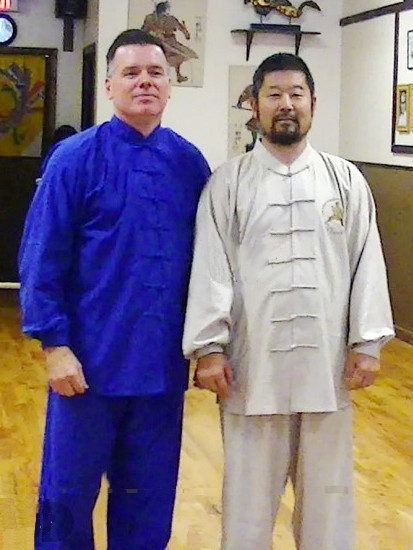 |
From that point on, we continued training. Initially, I studied Hunyuan Taiji with him, which comes from Master Feng Zhiqiang. Eventually, I began traveling back and forth to Canada to train more deeply with Master Chen Zhonghua.Very early into our relationship—probably within the first two years—he said to me, ‘You should learn the Yilu.’ At the time, I didn’t even know what the Yilu was; I assumed it was just another part of the Hunyuan system. I didn’t realize yet that it was a completely separate Taiji system. |
As I began learning it, I struggled to apply the concepts he was instructing me in. It was incredibly difficult, but I started to notice something profound: there was a real method to it. That is precisely why we call it Chen Style Taijiquan Practical Method. The system is practical, yes, but more importantly, there is a distinct teaching method designed to move you from understanding a concept to actually physically executing it.
It’s not easy. The first thing you need to understand when you train in Practical Method is that the ‘Method‘ is the key to everything.
Commentary:
| It is important to understand that Master Chen was shaped by two legendary figures in the Chen Style lineage. His first teacher was Master Hong Junsheng, the founder of the Practical Method. When Master Hong passed away, his senior student recommended that Master Chen continue his studies with Master Feng Zhiqiang, who was one of the final students of the great Chen Fake. |
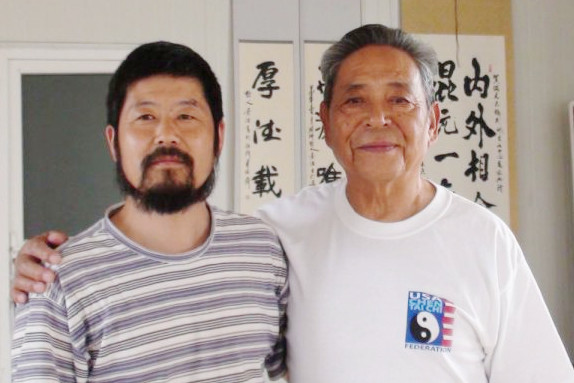 Master Feng. |
Master Feng had used his extensive experience to develop the Hunyuan system. At that time, Hunyuan was much more widely recognized in the West than the Practical Method. This explains why Mike’s journey with Master Chen began with Hunyuan—it was the ‘known‘ gateway that eventually led him to the specialized, rigorous ‘Method‘ of Master Hong Junsheng.”
The Practical Method
When you train in the Practical Method, it is difficult. It is a high-level martial art that requires supreme body control and a total rewiring of the relationship between your brain and your body.You often hear people say, ‘Taiji is internal, Karate is external.’ Frankly, I don’t believe in those terms. I have a tendency to use them myself because it’s an easy label, but the reality is that anything performed at a high level must become internalized. In the Karate world, frankly, that is a level I’m just not seeing. There are reasons for that which I won’t get into in this video, but let’s just say the Practical Method has a specific training system designed to develop and internalize that ability.
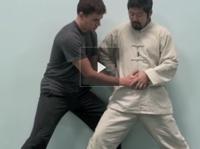
In those early days, Master Chen would say, ‘Mike, throw a punch at me,’ or ‘Mike, grab me.’ I was consistently amazed at the amount of power he could generate with such a small amount of movement. Being on the receiving end of it was truly eye-opening.”
Commentary:
 |
This reflects the uncompromising premise of Master Hong Junsheng. He famously stated: ‘Chen Taiji, as the name specifies, is a martial art.’ By this, he meant that if a movement doesn’t have a functional, martial application, it isn’t truly Taiji. This focus on functionality is what prevents the art from becoming just ‘exercise‘ and ensures the ‘internal‘ power remains grounded in physical reality. This is also why for Master Hong, he named his system “Practical Method” because he maintains all his teachings must in the end be useful. |
Total Commitment
There is a video on my channel where you can see my discipleship ceremony from 2003. I have been an indoor disciple of Master Chen Zhonghua since then, and frankly, it was the best martial arts decision I ever made.Being an indoor disciple is akin to a father-son relationship. It means you are held to a much higher standard than someone who simply attends a seminar or comes to class occasionally without taking that serious step of applying for discipleship.
I want to be clear: there is no religious connotation to this. It is simply a serious, direct relationship between you and the Master. The Master takes that commitment just as seriously; he agrees to teach you everything he possibly can, leaving nothing hidden. From that point on, everything is taught openly. That was the beginning of a lifelong commitment.
This represents one of the biggest differences between traditional martial arts and modern combat sports: the nature of the social and personal bonds that are created and maintained. In this tradition, you aren’t simply signing a gym contract or chasing a specific belt level; you are committing to a philosophy and a lineage. This is the Martial Way (武道 — Wǔdào). It is a journey where the teacher and student are bound by mutual respect and a shared responsibility to the art itself.In Chinese martial arts, an indoor disciple is known as a Rùmén Dìzǐ (入门弟子), which literally means “a disciple who has entered the gate.” While many students stay “outside the gate” (learning only the surface), the disciple is brought into the inner circle of the family. This relationship is built on Tóutáo-bàolǐ (投桃报李)—the principle of mutual reciprocity: “I give you a peach, you give me a plum.” The student offers their loyalty and hard work, and in return, the Master offers the “true transmission.” This level of commitment is what allows a system like the Practical Method to survive with its integrity intact from one generation to the next.
Body Mechanics
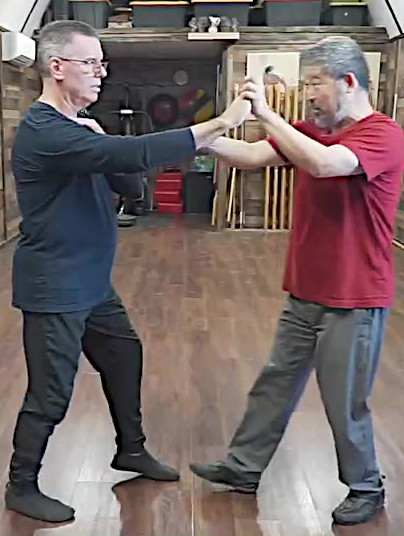 with Master Chen Zhonghua |
At the time, I couldn’t even understand what he was doing with his body. The best way to describe it—though I don’t like using the term—is that it almost seemed like some supernatural ability I couldn’t put my finger on. Now, over twenty years later, having achieved some of that ability myself, I understand there is nothing supernatural about it.It is high-level body mechanics and coordination. When you possess that and understand how the body is truly supposed to move, it can look amazing—there’s a big ‘wow factor’ there. However, there is no mystical force. In Practical Method, we never talk about Qi. We never talk about that. Everything is grounded in reality, science, and mechanics. |
In Karate, for example, when I would ask my instructor how to generate more power, the response was usually, ‘Use your hip.’ So, I’d try using my hip, and then he’d say, ‘Well, hit the heavy bag or the makiwara.’ But he never talked about the connection from the hip to the end of the fist, or the connection from the hip down to the feet. In Practical Method, you are given literal, specific instructions on how to utilize the body to generate tremendous power. And that power isn’t ‘long’ power; it’s a very short-distance power that is literally like an explosion.
Purely Defensive
In Chen Style Practical Method, one of the primary concepts we discuss is that once initial contact is made with an opponent, the fight should be over. In other words: at the touch, the opponent is finished.We begin this training with the Yilu, which we also call the ’81’ because of its 81 movements. It is a very long form that typically takes the average person six months to a year just to learn the sequence. It is incredibly physical and is often referred to as the ‘Structure Form’ because its primary purpose is to train the body to maintain its structural integrity.
Then there is the Erlu, known as Cannon Fist. This form is entirely about fighting; every technique is designed with a singular, uncompromising purpose: to maim or kill the opponent. While the Yilu contains these same applications, its deeper purpose is to teach you how to maintain your own structure. Our philosophy is simple: if you can maintain your structural integrity under pressure, it becomes impossible for your opponent to maintain theirs.
The idea that the fight is over upon contact explains why Chen Taijiquan is often described as ‘purely defensive.’ If your opponent attacks, he is lost; however, if you are the one to initiate the attack, you lose your structural advantage. Master Chen explains that fighting is essentially a ‘game of chicken.’ The moment he gets a hold of you, it means you also have a hold of him. At that point, the struggle is over; the victory belongs to whoever understands the physical reality of the situation and can maintain their structure while the other collapses.
Addressing the Skeptics
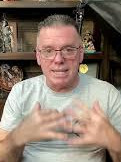 |
I often see comments on Master Chen’s videos claiming, ‘This is nonsense,’ or ‘This is fake.’ For those who know my background as a police officer and a lifelong martial artist, I find those comments extremely insulting. Usually, the people making these claims are those who have never actually attended a seminar. It is very easy to sit behind a screen and call something ‘BS’ when you’ve never experienced it in person. |
Master Chen travels all over the world. He’s starting a European tour in a few weeks, and you can find his full schedule at his website: practicalmethod.com. I can tell you from experience: we have brought him to New York twice a year for the last twenty years. Every single time, new people walk in feeling skeptical—which I completely understand. But the moment Master Chen says, ‘Come here, let me show you,’ and performs a technique on them, that skepticism vanishes instantly. It’s immediately replaced by one question: ‘What did I just experience?’
Commentary:
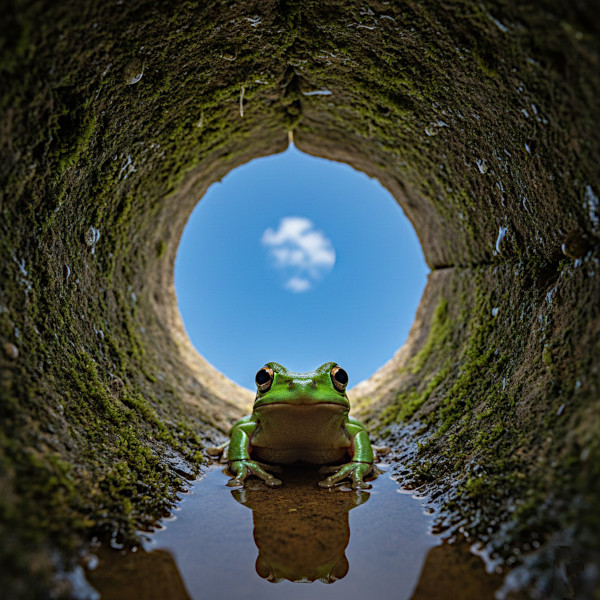 |
In Chinese thought, there is a well-known image from the Zhuangzi: “A frog at the bottom of a well cannot conceive of the ocean” (井底之蛙 — Jǐng dǐ zhī wā). The story is not an insult, but a reminder of how naturally perspective narrows when experience is confined. What we have not yet encountered often lies beyond the boundaries of our imagination. |
In an age shaped by swift judgment and instant commentary, the older virtue of “careful words, cautious deeds” (谨言慎行 — Jǐn yán shèn xíng) feels especially relevant. Subtle arts rarely reveal themselves at first glance. Before forming conclusions about a refined practice, it is wiser to step beyond the edge of the well and quietly explore the wider horizon for oneself. Only through direct experience can the scale of the ocean be understood.
The Expert’s Conundrum
To give you an idea of the impact Master Chen has, I’ve had three senior Karate Senseis attend his workshops. The first called me a week later and said, ‘I’m still trying to wrap my head around what I experienced.’ That is a very common initial response.The second, an older Sensei, told me, ‘This is amazing. I can’t believe what he’s doing, but I understand the principles. I see there’s nothing mystical; it’s all right there. But Mike, I think I’m too old to start over and try to get this. You’d be crazy not to be training with this man.’
The third person ran a school filled with Karate and Judo practitioners. After the seminar, he gave me a hug and said, ‘Mike, finally… this is the guy. He can actually do everything we read about in the books. He’s not just talking; he can do it with his body. I want him here every year.’
However, when I called the following year, he didn’t want Master Chen back. I completely understand why. If you take the plunge into the Practical Method, it is hard. It is a much more difficult study than Karate. Before anyone takes offense, remember: I am a 9th Dan in Okinawan Karate. I love Karate; I think it’s fantastic. But the ceiling for the Practical Method is much higher, and the ability you can achieve is far greater—it is just much more difficult to get there.”
Commentary: This anecdote reflects a familiar challenge in training. Guiding a beginner can feel like painting on a blank sheet of paper (Yī zhāng bái zhǐ — 一张白纸), while guiding someone already accomplished often requires gently loosening what has become fixed (Xiān rù wéi zhǔ — 先入为主). Habits formed through years of practice do not disappear easily; they must be understood before they can be refined.
| The enduring influence of Bruce Lee has shaped how many approach martial arts today. His well-known advice—“’Absorb what is useful, discard what is useless, and add what is specifically your own.’—encourages independence and personal expression. Yet for those at the beginning of the path, discernment is still immature. Without long immersion, it can be difficult to know what is truly “useful” and what only appears so. What seems unnecessary at first may, with time, reveal itself as foundational. |
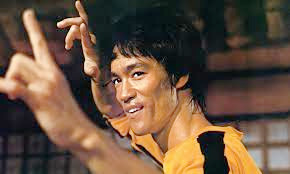 |
In traditional training, depth precedes selection. Only after one has fully embodied a method can refinement occur naturally. If elements are set aside too quickly, the underlying structure—the gōng (功), the cultivated foundation that allows the fǎ (法), the method, to function—may never fully take root.
In the Practical Method, the emphasis is not on adding or subtracting, but on entering deeply. Even the difficult aspects are preserved, for they are often the most transformative. Rather than modifying the art to suit immediate preference, the practitioner allows the art to reshape the body and perception over time. In this way, continuity is maintained—not through rigidity, but through patient and thorough practice.
The Blueprint: 365 Movements
Therein lies the difficulty. Initially, my training in the Practical Method was entirely form-based—learning the Yilu. Once I had the sequence, Master Chen began introducing the concepts: the idea that there must be a ‘rod’ through the body around which everything rotates, the principles of contraction and expansion, and the deep study of Yin-Yang separation. This separation allows you to isolate one side of the body while the other moves freely. There are very specific, strict rules—for instance, a hand never travels across the midline; it is the responsibility of each hand to manage its own side. Everything is built on a circular foundation.In most of the Taiji I had seen previously, I never saw a clear application for the movements. With Master Chen, that changed immediately. He would show a move and then demonstrate its application—not just one, but ten or fifteen different applications for a single movement. This is something we strive for in Karate with Bunkai and Oyo, but here was a system older than Karate, demonstrating an incredible depth of functional usage.
The ’81’ form is actually much more complex than the number suggests. Many of those 81 movements are actually composed of seven or eight distinct sub-movements. In reality, you are looking at roughly 365 moves. If you learn one move a day, it takes a full year just to learn the sequence. It is the most complex form I have ever learned, across any discipline. If you make the attempt to perform it as correctly as possible, it will change you—it will rewire your body, your mind, and the relationship between the two.
Commentary: In the Practical Method, the form is not a “dance”—it is a high-precision blueprint. We often use the expression “Fix the body to find the application”. If the structure is off by even an inch, the “rod” is broken and the application fails. This is why we say the Yilu is a “structural form.” It is the process of building a machine so precise that the martial usage becomes a natural byproduct of its geometry.In Master Hong’s seminal book, “Chen-style Taijiquan Practical Method” (陈式太极拳实用拳法), he quotes his teacher, Chen Fake: “Not a single movement in Chen-style Taijiquan is empty; every single one is useful.” (“陈式太极拳没有一个动作是空的,都是有用的。”).
A story from Hong Junsheng’s later life perfectly illustrates this: after recovering from paralysis, he instinctively defended an attack with a movement exactly like the first move of the form. He realized he had achieved the state where “there are no techniques, because all moves are techniques.” Every part of the form had become a spontaneous, usable response.
The “Mysterious” Power
| I often get asked to do an introduction to Taiji at Karate seminars. I’ll do a little Push Hands with everyone, and as they begin to lose their balance and fall, the comment I hear every time is: ‘I don’t know how you’re doing that.’I recently posted a video from a barbecue in Argentina where some Karate practitioners asked for an explanation. As we started fixed-step Push Hands, the response was the same—total incomprehension. We jokingly call this the ‘mysterious power‘ of Taiji. It isn’t something you can easily explain; it is something you have to feel. Once you feel it in your own body and learn to reproduce it, that is when you begin to understand. |
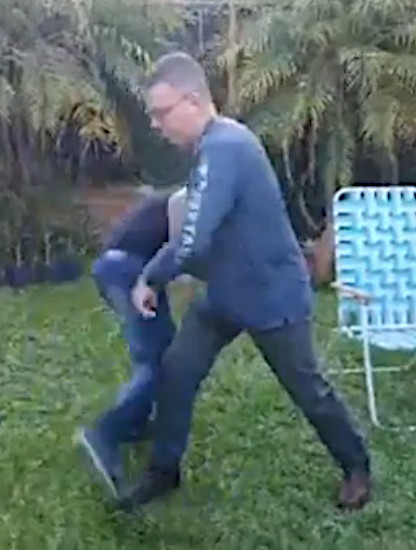 |
In the beginning, you are struggling physically. It’s all muscle. But eventually, as you master the body mechanics, you stop using that kind of strength. This is why I can manipulate someone much larger or stronger than me. There is a real ‘shock value’ to it. I remember Master Chen working with Karate and Judo guys on Long Island. He’d tell them, ‘Do anything—punch, grab, whatever.’ A second later, they’d be on the floor. They would always jump up with a smile and say, ‘Could you do that again?’ because it was unlike anything they had ever experienced.
In over twenty-five years of training, I have almost never heard Master Chen utter the word Qi. It is never about ‘my energy is stronger than yours.’ It is always a pure physical skill based on scientific principles. It is not an easy skill to attain, but once I discovered Master Chen, I knew I had found something special. Many other ‘high-level’ Taiji instructors I see are still just using external power; they don’t truly understand 100% how to use the body this way.
This “mysterious power” is the physical manifestation of the classic Taiji principle: “Four ounces deflects a thousand pounds” (Sì liǎng bō qiān jīn — 四两拨千斤). To the observer, it looks like magic, but to the practitioner, it is simply the result of superior leverage and structural alignment. By not fighting force with force (muscle), but instead using the body’s internal “gears,” a smaller person can easily bypass the strength of a larger opponent. This is why the “shock value” is so high—it defies our normal expectations of how a fight should feel.Master Chen Fake was once asked about a seemingly “magical” feat of breaking a brick with his strike. He did not attribute it to Qi. Instead, he gave a purely mechanical explanation:
|
 |
This anecdote crucially shows that the foundation of Hong Junsheng’s thinking came directly from Chen Fake, who himself explained his art in concrete, physical terms (weight, speed, concentration of force) rather than through the lens of “internal energy.” Hong Junsheng, being a highly educated and logical man, naturally adopted and expanded upon this rational framework. This preference for mechanical explanation did not mean Hong Junsheng’s Taiji was devoid of depth; rather, he reinterpreted classical concepts in a practical way.
In his A Brief Explanation of the Tai Chi Classics (《太极拳论》浅释), he discusses the concept of Yì (意), often translated as “intention.” He gives it a very grounded definition:
|
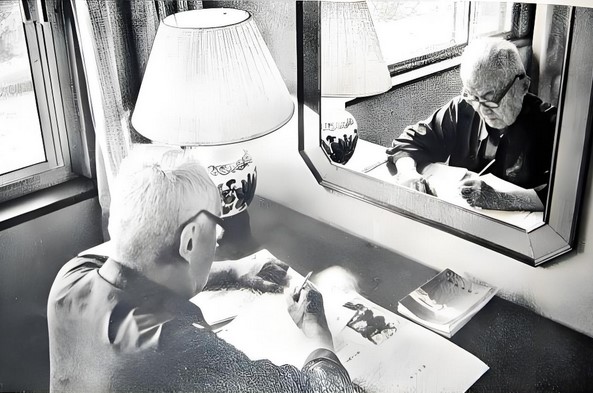 |
This is a key insight. For Hong Junsheng, the “internal” work of the mind is not about visualizing energy flows, but about holding a clear intellectual understanding of the mechanical principles—leverage, spiraling force (Chán jìn — 缠劲), and whole-body coordination—and then applying that understanding to one’s movements. This is why he could explain complex actions using analogies like a machine’s wheels and axles.
Practical Method Curriculum
 |
Master Chen Zhonghua serves as the International Standard Bearer for Chen Style Taijiquan Practical Method. As such, he carries a heavy responsibility in representing and preserving this art around the world.One of the key distinctions we make in Practical Method is that Push Hands is a training device—it is not a real fight, nor is it meant to look like one. We treat more serious combat scenarios through ‘Applications,’ much like any other martial art. |
This involves an opponent throwing a punch or a grab, which we counter using specific techniques from the Yilu or Erlu. However, one must be extremely careful; many of these movements are designed to be devastating, and applying them with full power can lead to serious injury.
Our curriculum is comprehensive. We utilize body conditioning and ‘Foundations,’ which are our basic movements. There are two primary empty-hand forms: the Yilu and the Erlu. We also practice two weapons forms—the Straight Sword and the Broadsword. While the sword forms are not technically part of the original Practical Method core, they have become an integral part of our practice. They are highly athletic and, to be honest, a lot of fun. As I get older, swinging the weapons helps me maintain my physical conditioning and stay in shape.
The exclusion of weapons from the core “Practical Method” curriculum historically stems from Master Hong’s specific focus on the mechanics of the human body as the ultimate machine. Master Hong did not originally learn the sword forms from Chen Fake, an omission he often recalled with a touch of poetic regret: “Returned empty-handed from a mountain of treasures” (Bǎoshān kōngshǒu ér guī — 宝山空手而归).To rectify this for future generations, Master Hong invited his junior sister-apprentice, Chen Yuxia (陈豫侠; Chen Fake’s daughter), to Jinan in October 1983 to teach the Chen-style Taiji Sword to his senior students. Master Hong’s admiration for her skill was profound. In the preface to her book, he wrote:
|
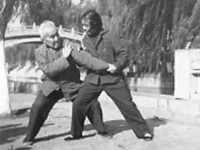 |
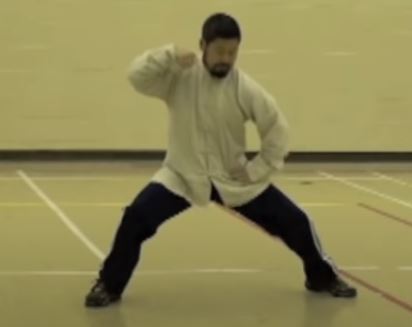
While the Broadsword (Dāo — 刀) was also not part of Master Hong’s original curriculum, it was later integrated to ensure the continuation of a complete system. Today, the inclusion of the Straight Sword (Jiàn — 剑) and Broadsword serves a dual purpose: it tests the practitioner’s ability to extend their structural integrity into an external object and provides a high level of athletic conditioning that complements the internal precision of the empty-hand forms.
Taiji for Health?
I once asked Master Chen, ‘Is Taiji for health?’ His response was characteristically direct: ‘There are only two ways to do Taiji: right and wrong. If you do it right, you gain high-level fighting ability and high-level health benefits. If you do it wrong, you gain no martial ability, and the health benefits are no different than going for a walk.’
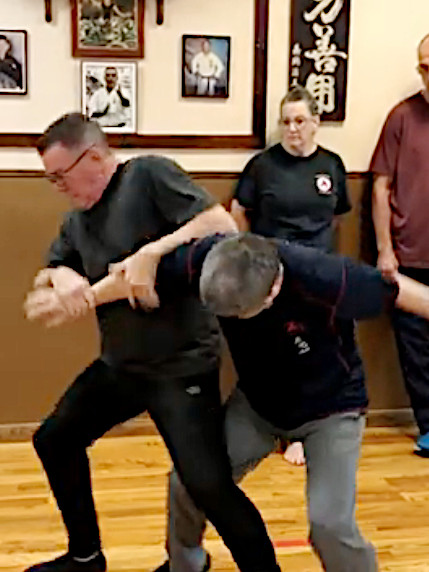 and Master Chen |
In the Practical Method, ‘high-level Health’ means the ability to generate explosive power even at an advanced age. Much of the Taiji seen in modern times is marketed strictly for health, where people simply wave their arms around slowly. That’s fine if that’s what you want, but real Taiji training requires the form to be executed with full power.You can see this on my YouTube channel or on Master Chen’s site—the form is executed with immense physical intensity. Our general rule is ‘ten times slow, one time fast.’ While I personally might do the fast sets a bit more often, the principle remains: you must train the body to handle the speed and power if you want the true benefits of the art. |
In the internal arts, health and combat are not separate pursuits, but different expressions of the same underlying principle. This is sometimes described as Nèi qiáng wài zhuàng (内强外壮 — “strong within, robust without“). When structure is sufficiently aligned to issue power (Fǎjìn — 发劲), it is also aligned to support the body’s most efficient natural functioning. From this perspective, martial precision and physiological health arise from the same root.It is sometimes observed that contemporary interpretations of “Health Taiji” emphasize relaxation while overlooking the demanding internal work from which the art originally emerged. The deeper transformative processes—what earlier generations might have called internal cultivation—develop gradually through disciplined attention to detail and structure. As Master Hong would often remind students, the quality of the result reflects the quality of the gōng (功), the work invested over time.One of the paradoxes of Taiji is that what appears extraordinary is built upon what is thoroughly ordinary. Concepts such as sòng (松, release or relaxation) are subtle and easily simplified. Relaxation in this context does not mean the absence of strength, but the absence of unnecessary tension. In the Practical Method, strength and intention are not rejected; they are refined and organized through method and theory. What may seem mysterious from the outside gradually reveals itself, through sustained practice, as the consistent application of structure and natural principles.
A Teacher Found
I will end with this: I am never disappointed when I train with Master Chen. Whether it is in person or through our weekly Zoom classes, I gain something valuable from every single interaction. To me, that is phenomenal.
Earlier in my martial arts journey, training with various senior Senseis, I often felt I had seen the whole ‘playbook’ after four or five seminars. By the sixth, there was nothing new—no fresh insight to struggle with or master. I have never experienced that stagnation with Chen Zhonghua. Every interaction provides something new to work on, which is vital for someone whose life is centered on training.
I tell people all the time: Master Chen is the ‘complete package.’ In my forty-five years of martial arts, I’ve met many great practitioners who weren’t great teachers, and I’ve met skilled artists who weren’t necessarily good people. With Master Chen, you have a master whose physical ability is unparalleled, the pedagogical skill to actually teach you how to achieve it, and a character defined by kindness rather than ego. I feel privileged to have such a close, phenomenal relationship with him.
Beyond Martial Arts
I’ll finish with a story from about twenty years ago. Master Chen was staying at my house for a seminar weekend. As the host, I was frantic—on the phone, running errands, making sure everything was perfect. Meanwhile, Master Chen sat in the living room with my wife, talking for over two hours.That night, after he had retired to his room, my wife turned to me and said, ‘You know, he’s the only true one.’ I asked her what she meant. She said, ‘He’s the only true Master that has ever stayed here. With many of your other teachers, at some point in the conversation, their ego would come out. They felt they had to show me how smart they were or how much they knew. I just sat with him for hours and we talked about everything—raising kids, education, the medical field. Not once did his ego appear. He was just matter-of-fact about everything.’
She told me, ‘If you say he can fight, I take that as a given. But to speak with someone for hours on a myriad of topics and never see an ego? That tells me he is a true Master.’
 |
I hope you enjoyed this episode of The Martial Truth. If you are interested in Master Chen Zhonghua’s workshops, he travels globally; you can find his schedule at practicalmethod.com. If you are interested in training with me, I host eight Zoom classes a week and teach in Whitman, Arizona. Please like, subscribe, and share—your comments give me the ideas that drive this show. I’ll see you next time. |
Commentary:In Chinese tradition, the highest level of mastery is often described as Dà qiǎo ruò zhuō (大巧若拙 — “Great skill appears clumsy” or “Great sophistication appears simple“), a phrase from the Tao Te Ching attributed to Laozi. It suggests that the more profound a person’s ability, the less they feel compelled to display it. True refinement does not announce itself; it functions quietly.Master Chen’s lack of ego during an extended conversation on seemingly ordinary matters serves as living evidence of this principle. In the Practical Method, we strive for a body that is “hollow,” so that force may pass through it without obstruction. In the same way, a true master cultivates a mind hollowed of ego, able to meet the world without friction. The internal work is invisible precisely because it is complete.
This spirit is captured in a well-known proverb often repeated in martial arts and traditional apprenticeships:
“The master leads you through the door, but the practice is up to the individual.”
(师傅领进门,修行在个人 — Shīfu lǐng jìnmén, xiūxíng zài gèrén.)
A master may open the door, but transformation arises only through the student’s own persistence. The threshold stands before you. Whether you step through it—and continue walking—is your responsibility alone.
{ 1 comment… read it below or add one }
Chinese Version 中文版:https://www.zhenbudong.cn/archives/332947