Presenter: Chen Zhonghua Length: 1 mins Difficulty: 3/5 Language: English Year: 2022 Location: Edmonton, Canada
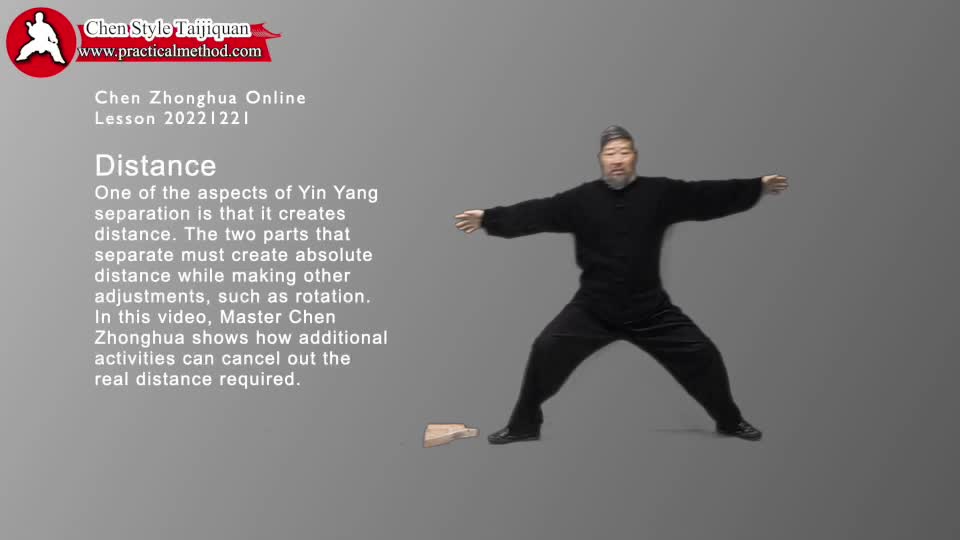
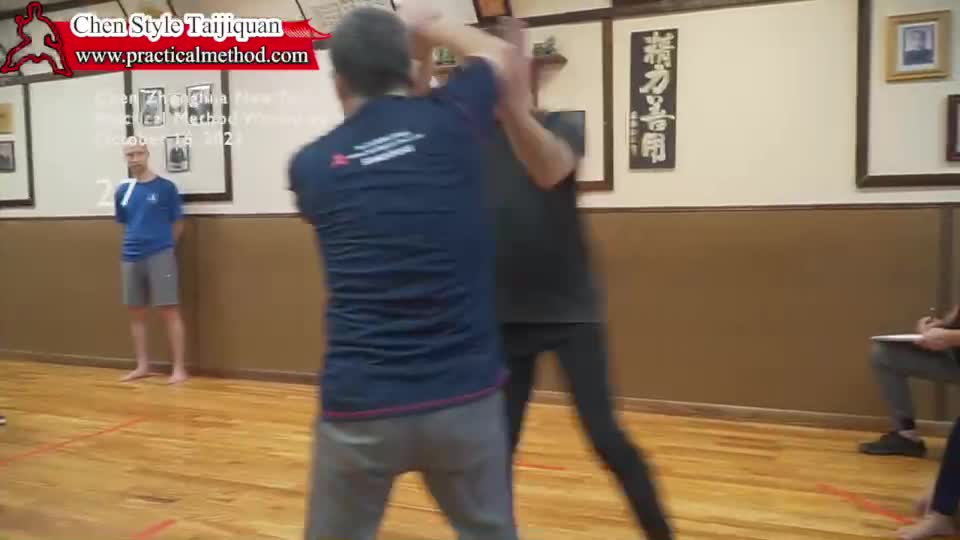
Distance-Chen Zhonghua Online Lesson 20221221. One of the aspects of Yin Yang separation is that it creates distance. The two parts that separate must create absolute distance while making other adjustments, such as rotation. In this video, Master Chen Zhonghua shows how additional activities can cancel out the real distance required.
During a brief practice before breakfast, Shifu commented on my six sealing four closing. He said in this move the front arm is creating space as we open the kua. When we create space, we must take that space over, filling it in. This is our advantage over our opponent. If the opponent fills the space in before us, it becomes his advantage. So, there is a subtle move of the torso on that side to fill in that space. If we move too much, we are moving the center. If we move too little, we leave an opening for our opponent. For many of us, including me, we often tend to move slightly back when we open the front kua, back loading. This gives even more space for our opponent to fill in. So, it will take some hours of practice to make the proper move automatic.
Presenter: Chen Zhonghua Length: 0 mins Difficulty: 3/5 Language: English Year: 2022 Location: Edmonton, Canada
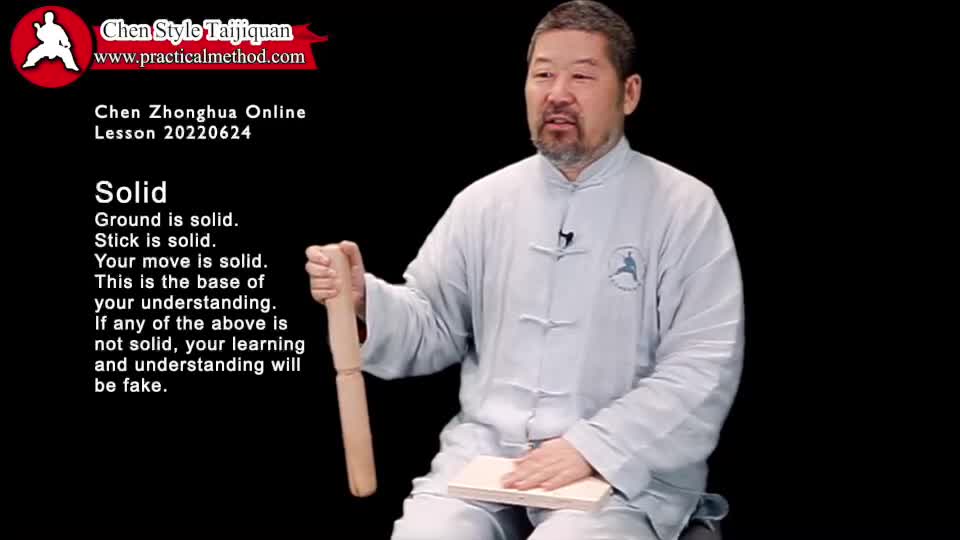
Solid -Chen Zhonghua Online Lesson 20220624.Ground is solid. Stick is solid. Your move is solid. This is the base of your understanding. If any of the above is not solid, your learning and understanding will be fake.
Presenter: Chen Zhonghua Length: 3 mins Difficulty: 3/5 Language: English Year: 2022 Location: Edmonton, Canada
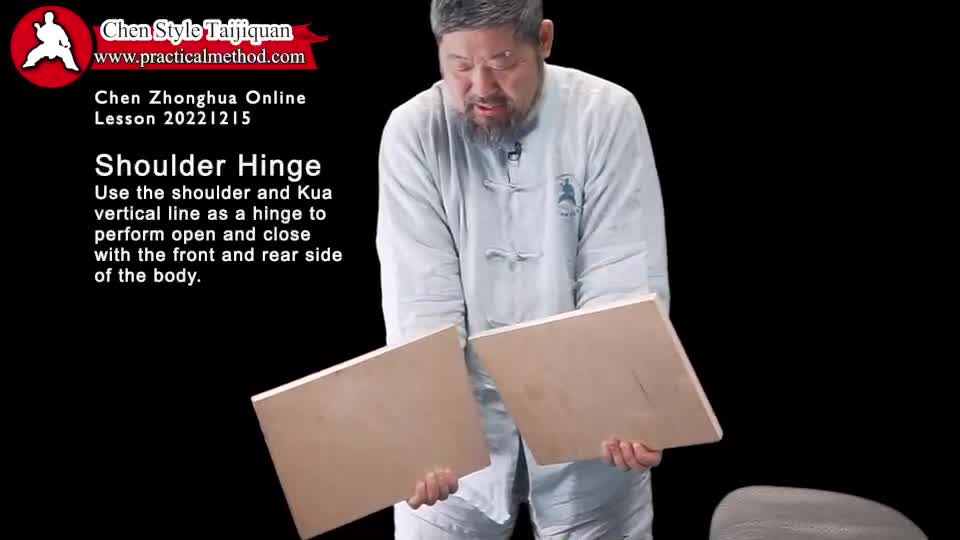
Shoulder Hinge -Chen Zhonghua Online Lesson 20221215. Use the shoulder and Kua vertical line as a hinge to perform open and close with the front and rear side of the body.
Presenter: Chen Zhonghua Length: 1 mins Difficulty: 3/5 Language: English Year: 2022 Location: Edmonton, Canada
How to Listen-Chen Zhonghua Online Lesson 20220624. Directly listen to instructions. Then listen to changes to the instructions. Now listen to new instructions. All these are confusing, might be contradictory and appear to be wrong. The procedure must be followed.
Presenter: Chen Zhonghua Length: 1 mins Difficulty: 3/5 Language: English Year: 2022 Location: Edmonton, Canada
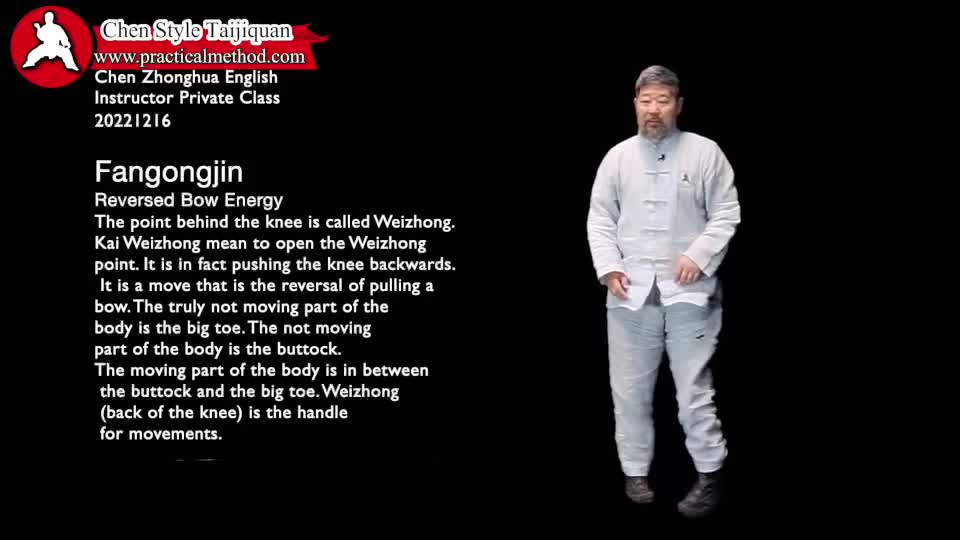
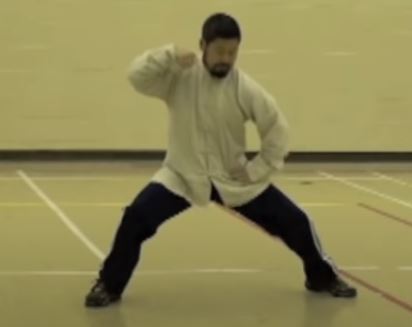
fangongjin-Chen Zhonghua English Instructor Class 20221216.Reversed Bow Energy. The point behind the knee is called Weizhong. Kai Weizhong mean to open the Weizhong point. It is in fact pushing the knee backwards. It is a move that is the reversal of pulling a bow. The truly not moving part of the body is the big toe. The not moving part of the body is the buttock. The moving part of the body is in between the buttock and the big toe. Weizhong (back of the knee) is the handle for movements. In the normal bow action, we pull the string on the bow. The point where the arrow and fingers touch is the middle of the string. On the human body it is the Weizhong point. Pulling a bow on the body is to bend the knee forward, a grave mistake in taiji terms. On the contrary, in taiji actions we set the knee a bit forward and the action is to push it back ward, with the back of the knee (weizhong) as the handle, focal point. In shooting an arrow, the power is on the pulling and releasing shoots the arrow forward. In Taiji, the power is on the releasing (in bow terms and directions), the release is actually done by the opponent. The action of pushing the knee backward is called dengxi. This is the main power of taiji. All others are supplimentary actions and powers.
Presenter: Chen Zhonghua Length: 11 mins Difficulty: 3/5 Language: English Year: 2022 Location: Edmonton, Canada
fangongjin-Chen Zhonghua English Instructor Class 20221216.Reversed Bow Energy. The point behind the knee is called Weizhong. Kai Weizhong mean to open the Weizhong point. It is in fact pushing the knee backwards. It is a move that is the reversal of pulling a bow. The truly not moving part of the body is the big toe. The not moving part of the body is the buttock. The moving part of the body is in between the buttock and the big toe. Weizhong (back of the knee) is the handle for movements. In the normal bow action, we pull the string on the bow. The point where the arrow and fingers touch is the middle of the string. On the human body it is the Weizhong point. Pulling a bow on the body is to bend the knee forward, a grave mistake in taiji terms. On the contrary, in taiji actions we set the knee a bit forward and the action is to push it back ward, with the back of the knee (weizhong) as the handle, focal point. In shooting an arrow, the power is on the pulling and releasing shoots the arrow forward. In Taiji, the power is on the releasing (in bow terms and directions), the release is actually done by the opponent. The action of pushing the knee backward is called dengxi. This is the main power of taiji. All others are supplimentary actions and powers.
Presenter: Chen Zhonghua Length: 1 mins Difficulty: 3/5 Language: English Year: 2022 Location: Edmonton, Canada
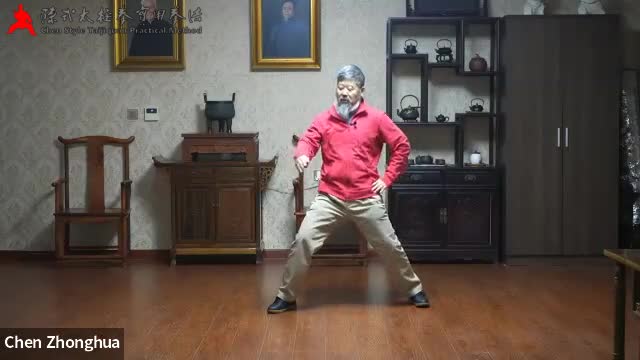
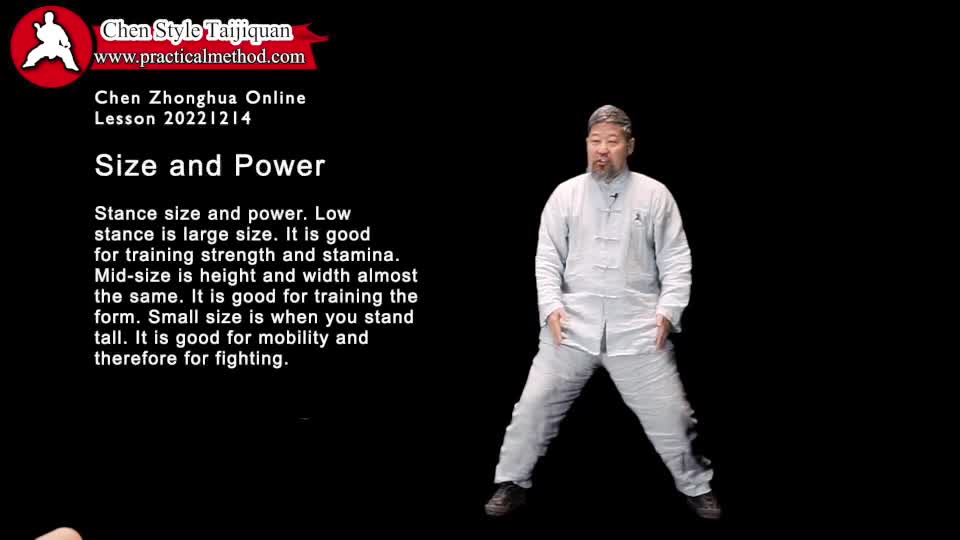
Size and Power-Chen Zhonghua Online Lesson 20221214. Stance size and power. Low stance is large size. It is good for training strength and stamina. Mid-size is height and width almost the same. It is good for training the form. Small size is when you stand tall. It is good for mobility and therefore for fighting.