 |
|
|
An unseen thread brought Hong Junsheng, a frail young Confucian scholar, to the doorstep of Chen Fake, then a little-known master from rural Henan. Years later, in a quiet park, circumstance placed a university freshman before an elderly man whose modest bearing concealed a lifetime of depth. The meeting itself may have been chance.
What followed was not. The young student returned. He listened. He practiced. In doing so, Chen Zhonghua stepped onto a path that would gradually define the course of his life. From his early years with Hong to his later studies with Feng Zhiqiang—the last disciple of his grandmaster—Chen’s journey unfolded within a living chain of transmission. Yet lineage alone explains nothing. At each stage he had to decide: whether to endure, whether to continue, whether to accept the weight that accompanied genuine instruction. This article seeks the person inside those decisions. We follow Chen Zhonghua across countries and cultures, watching how a Chinese-Canadian martial artist confronts uncertainty, opportunity, and moments of real danger—including a journey marked by a once-in-a-lifetime volcanic eruption. Again and again, the same question emerged: how should he honor what he had been given? The answer was never automatic. It took shape through long practice, private doubt, sacrifice, and persistence. Ultimately, it led to a turning point that would redirect his entire future—the choice to devote himself fully to preserving and advancing Hong Junsheng’s Practical Method, and through it, a living current of Chinese history. |
|
|
Adapted and translated from the article:
“Chen Zhonghua’s World Tai Chi Road.” by Xu Jiaqiang and Xie Yan 太极天下 — 许家强 谢岩 published in 2019年5月17日 |
|
Bridging Worlds through Taiji:
The Way of Chen Zhonghua
陈中华的世界太极路
Part 1. Stillness in the Storm (动中求静)
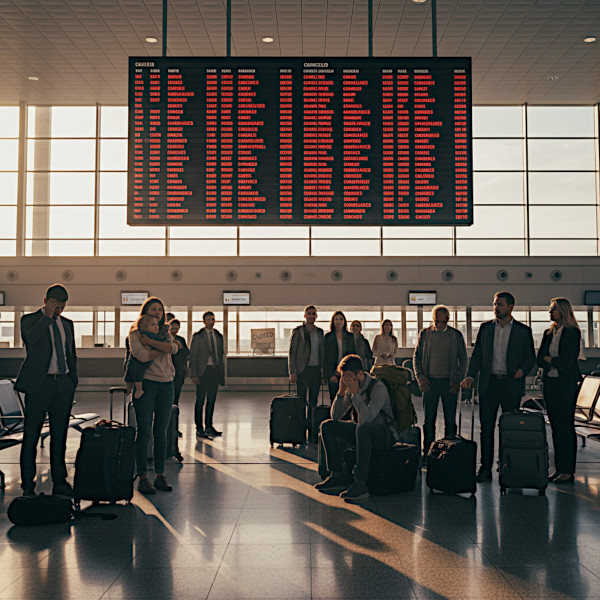 |
People—there were people everywhere.
|
|
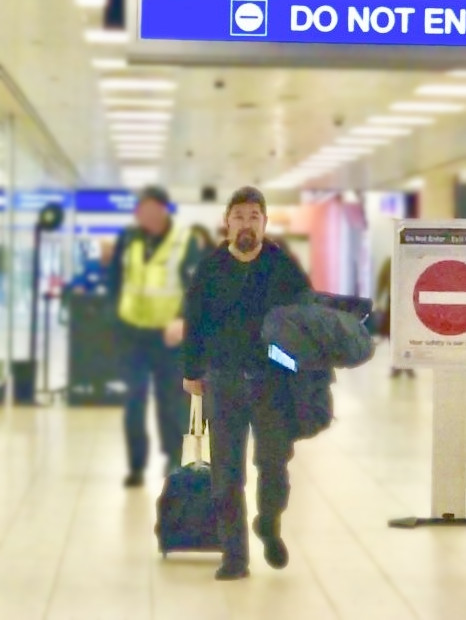
The airport loudspeakers continuously broadcast news of flight cancellations across other European cities, alongside the latest updates on the eruption of the Eyjafjallajökull volcano (埃亞菲亞德拉冰蓋火山) in nearby Iceland (冰島). The date was April 15, 2010. Just the day before, the volcano had erupted.
According to later statistics from relevant authorities, this volcanic eruption left approximately 6.8 million people stranded at over 300 airports across more than 30 countries. Eurocontrol stated that in just five days, from April 15 to April 19, European airlines canceled more than 70,000 flights in total. |
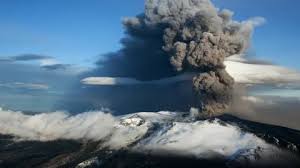 to 70,000 flight cancellation |
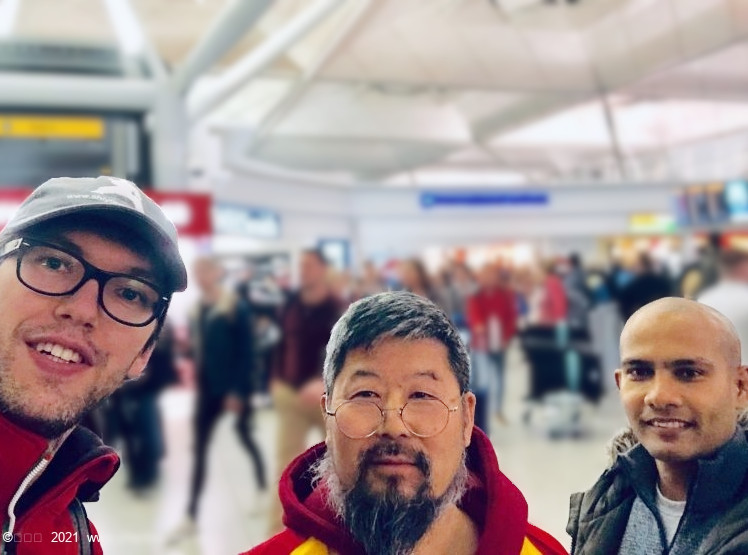 |
Behind him, the young Caucasian man, Tomek, carried two massive backpacks and pulled a suitcase. Though he didn’t seem to be struggling with the physical weight, his face was a mask of panic. As soon as they came to a halt, he stepped forward and asked in English: “Master Chen, what do we do now?”
Chen Zhonghua looked up at him and smiled slightly. Lightly patting the young man’s arm, he replied in fluent American English, “Tomek (汤米克), don’t worry. We will definitely find a way out!” |
|
A few hours later, one of Chen Zhonghua’s European students drove them to Riga International Airport (裡加國際機場) in Latvia (拉脫維亞) —the closest major hub to Helsinki—only to find, to their disappointment, that all flights there had also been canceled. With no other options, they were forced back toward the north. The student then drove them all the way to the Port of Kemi (凱米港) on Finland’s west coast, bringing the total distance of their journey—from Helsinki-Vantaa to Riga and finally to Kemi—to approximately 1,546 km (960 miles).
|
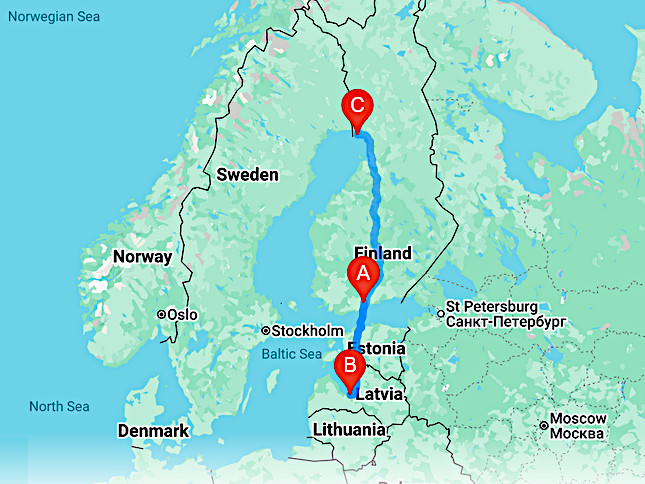 Helsinki-Riga-Kemi |
Kemi is one of Northern Finland’s major ports and a primary hub for timber exports rather than travelers. The air at the docks was thick with the scent of pine and salt, and the wind off the Gulf of Bothnia carried a piercing, sub-arctic chill. With no passenger liners available, Chen Zhonghua, Tomek, and three Germans struck a deal with the crew of a cargo ship bound for Stockholm (斯德哥爾摩), Sweden (瑞典).
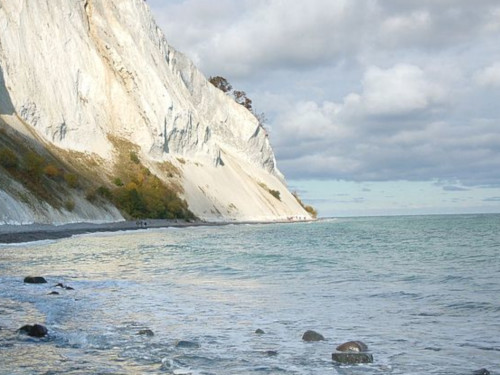 |
It was a desperate move that would add another 945 km (510 nautical miles) of Baltic sea-crossing to their already grueling adventure.
This stretch of the Northern Baltic Sea is barely a hundred kilometers from the Arctic Circle. The cargo ship crunched through the ice as it moved forward, leaving behind a trail of broken and refrozen shards. As the wind swept the snow across the water, countless fragments of ice arranged themselves like infinite tangram puzzles. Chen Zhonghua couldn’t help but pick up his camera to capture the breathtaking scenery of this ice-breaking journey. |
Chen Zhonghua watched the ice break against the hull, his expression as steady as the horizon. He met the young man’s frantic gaze with a calm, anchoring smile, his voice cutting through the sub-arctic wind:
|
 |
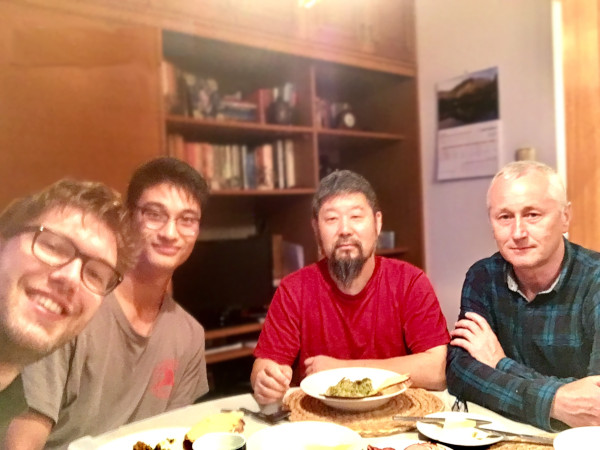 |
Tomek recalled the seminar in Helsinki the day before. Before he could even register how Chen Zhonghua applied his power, several challengers had already been defeated. Having experienced that efficiency firsthand, Tomek was filled with utter admiration. He had been respectfully hauling Chen’s luggage throughout the journey, but now, at the thought of the martial arts he had loved since childhood, his travel anxieties vanished. With eyes shining, he leaned forward in his chair and asked eagerly:
“Master Chen, how exactly do you do it?” |
|
How do I do it? Chen Zhonghua looked at the young man—who had only recently begun his journey into the Chen Style Taijiquan Practical Method—and a slight, knowing smile touched his lips. It was the smile of a man who recognized that look: the desperate hunger for a secret formula and the belief that there was a “shortcut” to the power witnessed in Helsinki.
He didn’t answer immediately. Instead, he let the silence of the ship hang between them, realizing that even here, on a cold cargo vessel amidst a global travel collapse, his role had not changed. Whether in a prestigious martial arts hall or on the rusted deck of a freighter, he was, first and foremost, a guide. It was a grounding thought: this was now Chen Zhonghua’s tenth year as a full-time Taijiquan teacher. |
 |
致师者:德艺双修
一粥一饭一敝履,弘扬国粹志不移。
自古习拳先修德,德艺双修得真谛。
若无感同与身受,何信天下有此师?
Honoring virtue and martial skill as his foundation and guide.
Content with simple meals and worn-out shoes,
His resolve to promote the national treasure never wavers or hues.
Since ancient times, one cultivates virtue before the fist,
Only through dual mastery of heart and art does the true essence exist.
If one had not experienced his power firsthand,
Who would believe such a master walks this land?
Part 2. The Formless Years (大象无形)
The energy from the seminar was electric.
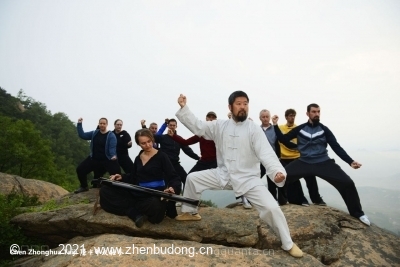 |
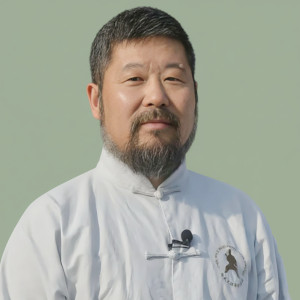
This was the life Chen had built—one of constant motion and global influence. To those watching him move, he was more than just a teacher; he was a 19th-generation lineage holder (十九代传人) of Chen Style Taijiquan (陈式太极拳) and the Overseas Gatekeeper (海外掌门人) of the Practical Method. His authority was rooted in decades of discipline, stretching back to his birth in Wulian County, Shandong Province(山东省五莲县人), and his later recognition as a 2nd-generation lineage holder of Chen Style Hunyuan Taijiquan (陈式混元太极拳).
|
As the Helsinki session wrapped, the next gears were already turning. Chen was due to rush to the Czech Republic and then Italy for his upcoming seminars, while Tomek had already arranged to meet his girlfriend at the venue in Prague. In Chen’s eyes, this frantic pace and the occasional “interlude” (小插曲)normal” parameters of his existence.
He had no way of knowing that over the next thirty-plus hours, his rhythm would be shattered. He would miss the Prague seminar and endure a series of increasingly convoluted trials.
|
Yet, for a man who had reached the half-century mark (年至半百), such setbacks were trivial. Having immigrated to Canada in 1985 and spent every year since 2001 traveling the world like a wandering ascetic (苦行) to spread the art of Taiji—what did these minor frustrations matter?
In truth, Chen’s ability to remain unshakeable amidst the chaos of the road was a temperament forged decades earlier, in the presence of his own master. To understand the “Gatekeeper” of today, one must look back to the legendary composure of the man who started it all: Hong Junsheng (洪均生). The setting was different then—not a modern airport, but a modest space where the air was thick with the scent of tobacco and the weight of true mastery.
|
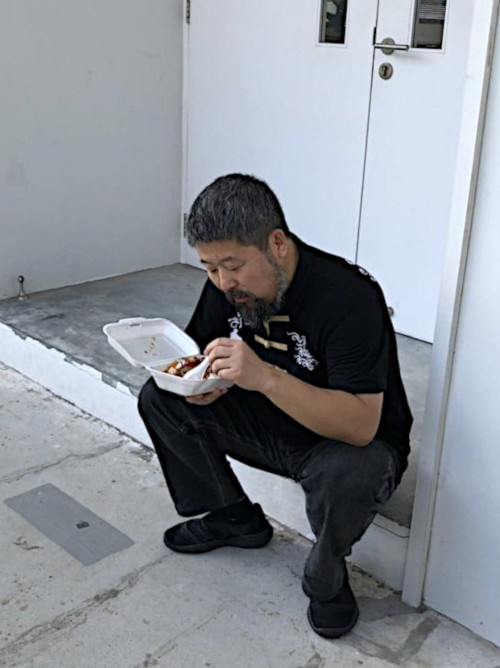 |
Jinan, 1979. The Original Sound
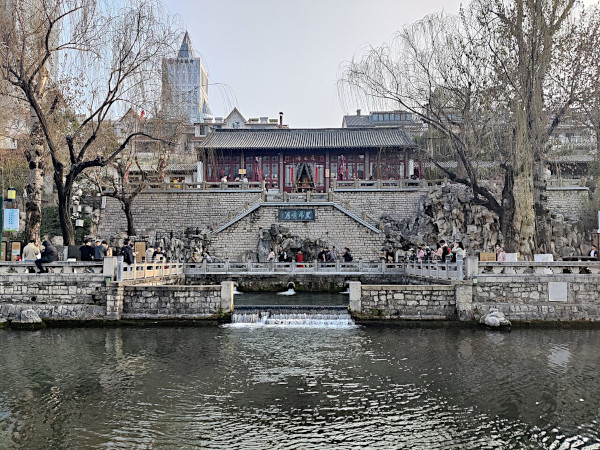 The Source of the Flow |
By the late 1970s, China was a nation slowly exhaling. The long, turbulent years of the Cultural Revolution had finally drawn to a close, and the country was tentatively unbolting its doors to the outside world. This era sparked a profound cultural homecoming, particularly for martial arts. Delegations from Japan began arriving in waves, filled with practitioners eager to trace the roots of their own traditions back to the source. It was against this backdrop of rediscovery that a group of martial artists traveled to the Lixia District of Jinan, Shandong Province (中国山东省济南市历下区). They came seeking the old ways, but at Black Tiger Spring (黑虎泉), they found something far more immovable than the ancient stone from which the water flowed.
|
“So, after all that talk, you still want to challenge me?” The old man, dressed in plain cotton clothes and cloth shoes (布衣布鞋), took a puff from his long pipe (烟袋), his eyelids barely lifted.
“No. Our delegation from Yamaguchi Prefecture (山口县代表团) has studied with you for some time now, and we return to Japan tomorrow,” a burly man in black replied. After a string of rapid-fire Japanese, a young translator beside him bowed with the utmost respect. “However, we would like to ask: how exactly are these techniques used?”
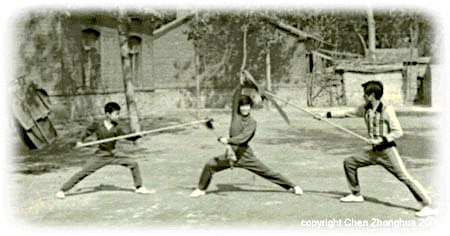 The Beginning of the Path, 1980 |
The onlookers began to whisper. The challenger cupped his fist in salute. His eyes were lowered, though occasionally he looked up to stare at the elder with a gaze as sharp as a hawk’s.
“No matter how you phrase it, you still want to test me,” the elder replied, as calm as still water. “Come then.” “Then, what moves should I use?” the man asked, his tone respectful yet stiff. |
|
The burly man lunged. The onlookers held their breath. Yet, before a single blow seemed to land, those watching closely noticed only one thing: the elder’s shoulder seemed to sink, just a fraction.
The challenger was instantly sent flying backward. The crowd erupted. Unwilling to yield, the man leapt up and tried a second time, then a third—the result was identical. To the young man, watching from the sidelines, this was more than a mere display of strength; it was “其声如雷:发声之源”—a thunderous beginning and the original source of a sound that would resonate for the rest of his life.
|
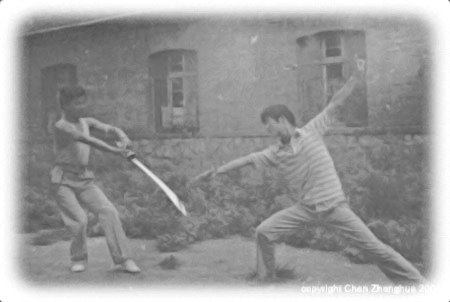 |
A clean-cut, slender young man saw the elder slipping away through the crowd and immediately followed. He trailed the master’s measured pace for over half a mile before the elder suddenly turned.
|
“You there, young man—why do you keep following me?”
“I saw you defeat that Japanese man. I want to learn Kung Fu from you!” “Who? What Japanese man? Who defeated him? You’ve got the wrong person!” “I just saw you…” “Young man, stop following me. Such a thing may have happened, but it wasn’t me.” “I want to study Taiji with you, is that alright?” |
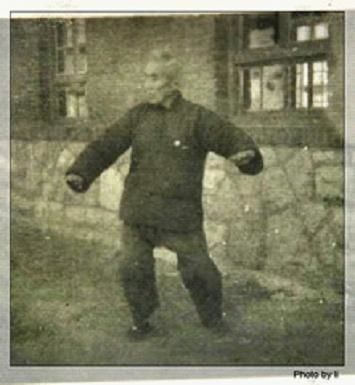 |
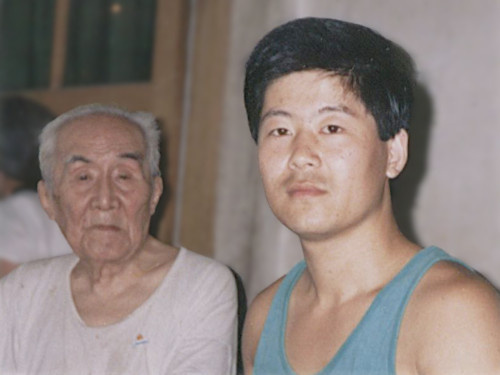
For several days, Chen Zhonghua—then a freshman in the Foreign Languages Department (外语系) at Shandong University (山东大学)—returned every morning to Black Tiger Spring Park. He soon discovered that this unremarkable elderly gentleman was none other than the 18th-generation lineage holder of Chen Style Taijiquan, Hong Junsheng (陈式太极拳第十八代传人洪均生).
Autumn had set in. Master Hong’s teaching sessions usually ended just as the sun rose. Chen Zhonghua pushed his wake-up time earlier and earlier, standing at a distance outside the Black Tiger Spring Teahouse to eavesdrop (旁听) on the instructions.
“Young man (小伙子), what are you doing?” Master Hong finally asked one morning.
“Master, I am tracing circles (我划圈呢).”
“Stop! Don’t call me ‘Master.’ I haven’t accepted you—and besides, we don’t trace circles like that.” Occasionally, Hong would leave the crowd to test the boy. “Don’t move the hands, don’t move the shoulders, don’t move the head…” (手不动,肩不动,头不动……)
|
Trying to obey, Chen Zhonghua found it nearly impossible to “trace the circle” at all. Four months passed: the master teaching the inner circle, the student tracing the perimeter.
“Young man,” Master Hong approached him as the winter chill set in. “Have you learned how to trace a circle yet?” “I can do twenty now.” “These people have practiced for years and can’t even do one, yet you can do twenty?” (这些人练这么多年,都划不了1个,你能划20个了?) For the first time, a hint of something flickered in the elder’s calm eyes. He turned around, hands behind his back. “Follow me, young man.” That was December 1979. At Black Tiger Spring (黑虎泉), the apprenticeship of Chen Zhonghua had finally begun. |
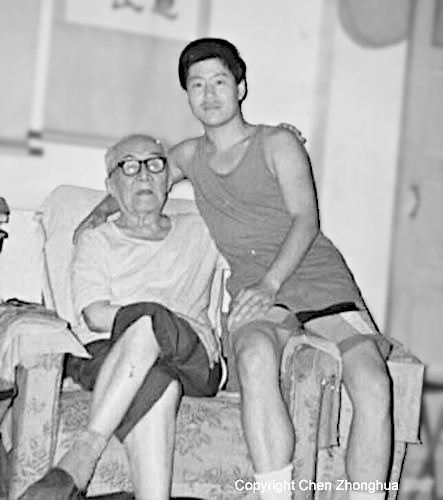 The Heart of the Lineage. |
Edmonton, 2009. Thirty Years Later: The Echo
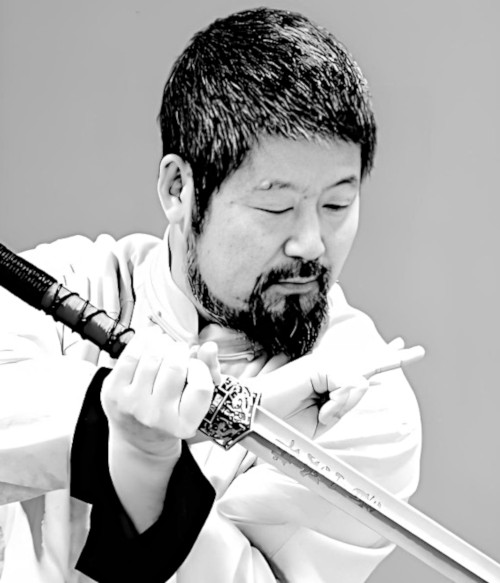
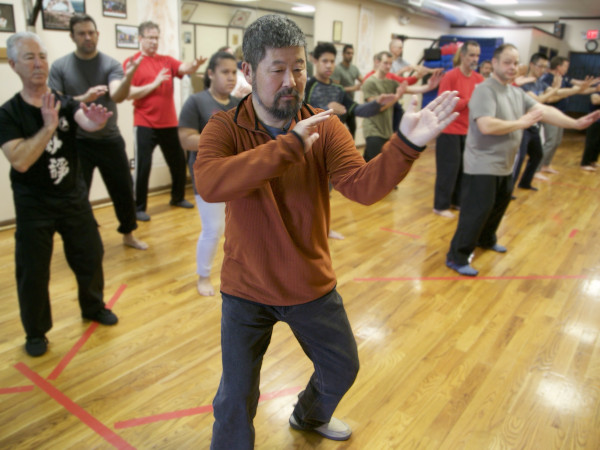 Master Chen Zhonghua. 2018 |
Fast forward thirty years. It was 2009, at the Camp Harris Gymnasium in the suburbs of Edmonton, Canada. A Taiji seminar held by Chen Zhonghua had filled the stadium to capacity. When abroad, Chen lectured in English to an audience composed almost entirely of international students. At the audience’s request, Chen performed an 81-form Taijiquan set and demonstrated applications with a disciple.
Just as he finished the closing form, a man stepped onto the stage. Chen smiled slightly and cupped his fists in salute. |
|
“You can—” Chen started to speak, but Mike cut him off.
“Don’t tell me I haven’t practiced Chinese Kung Fu so I can’t spar with you, and don’t tell me you’re afraid of hurting me. I’ve encountered too much of that kind of Chinese ‘lip service’ Kung Fu. Let’s just fight.”(这样的中国口上功夫,我遇到太多了,直接打吧。) Mike’s bluntness drew a wave of laughter from the audience. The contrast was stark: Mike’s massive, modern physique stood against the small, almost frail-looking Easterner (瘦小甚至羸弱). Some in the crowd leaned in for a spectacle; others felt a surge of worry for Chen. |
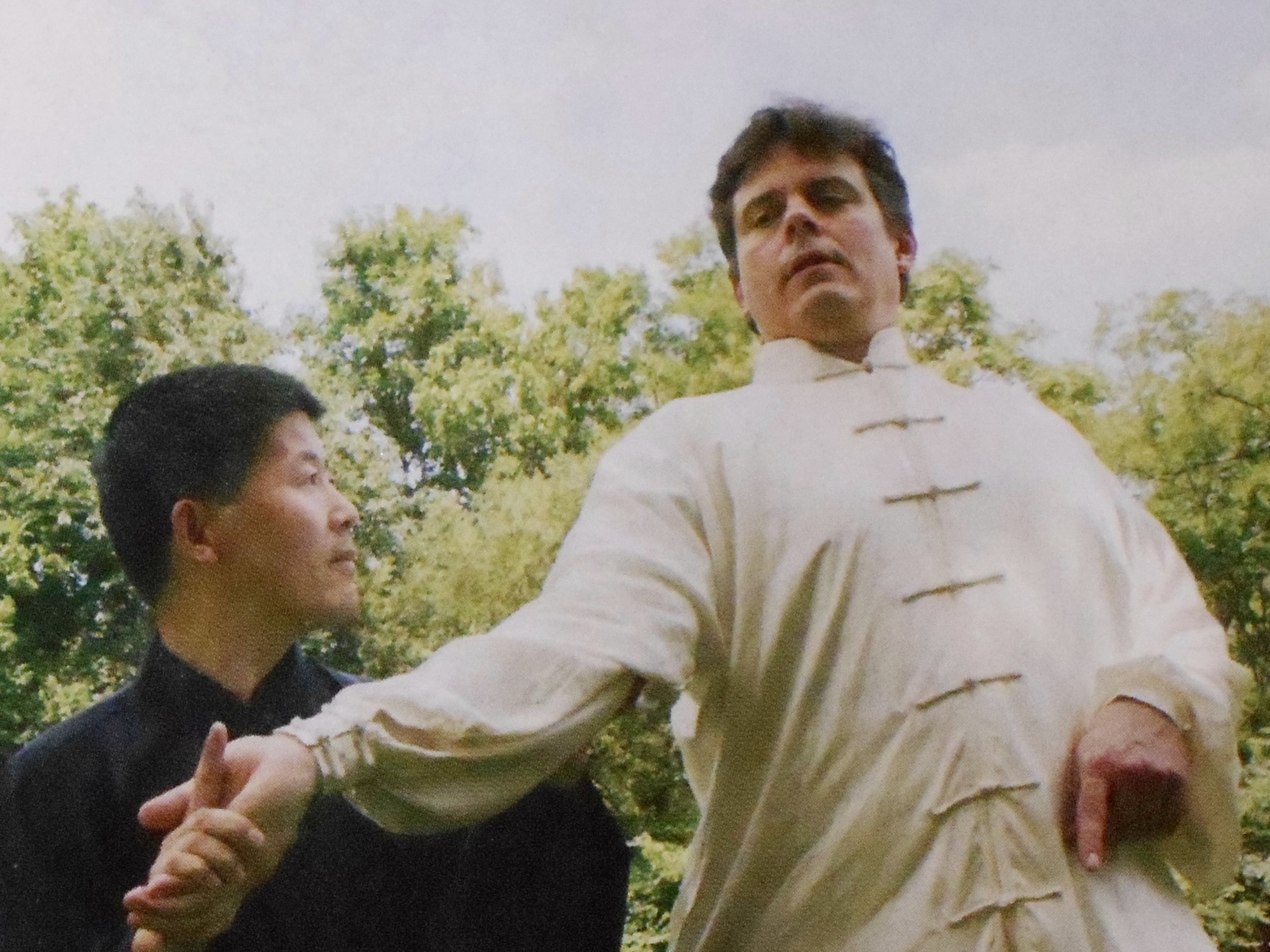 clarity: Master Chen in action. |
|
As Mike approached, Chen felt a profound sense of déjà vu, remembering the first time he had encountered that elderly man at Black Tiger Spring thirty years ago. The same cloth clothes, the same calm demeanor, the same expectant crowd. To the audience, this was a new performance, but to Chen, it was the Echo—the long-awaited vibration of the “Original Sound” finally returning to its source.
The roar of the circular stadium felt, in Chen’s heart, like the rustle of weeping willows from years long past. In this moment, the distance of three decades and the thousands of miles between Canada and Jinan vanished. |
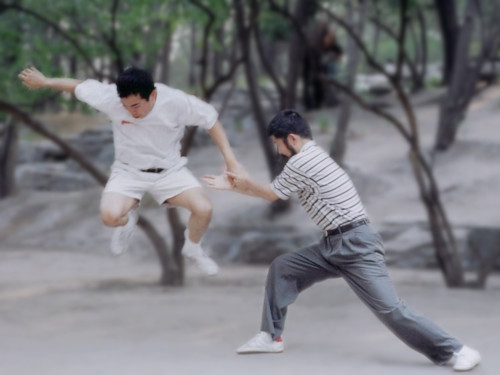 |
in the moment of reflection.
Chen remained as calm as still water, eventually disengaging with a gentle, steady strength. As he walked away, his mind didn’t linger on the victory; instead, he was pulled back to 1979—remembering his own initial euphoria upon finally finding a teacher, and the decades of arduous, silent toil that followed. He knew that for Mike, the excitement was the end of a challenge, but for a true student, it was only the grueling beginning of a lifelong road.
|
Challenges like this were a daily occurrence while teaching abroad. Some were as open and direct as Mike’s; others were more subtle—a simple touch of the hands where both men knew the score instantly, followed by a silent, knowing smile (这样的挑战,在国外开馆教授太极拳的每一天,都会遇到。有的如麦克一般,开诚布公。更多的是暗的,一上手,他和对方就心知肚明,较量后,不言而喻的会心一笑).
In the martial arts arenas of the West, only real skill has the right to speak (在国外的武场,真功夫,才有话语权).
|
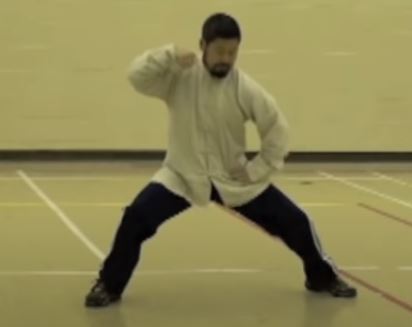
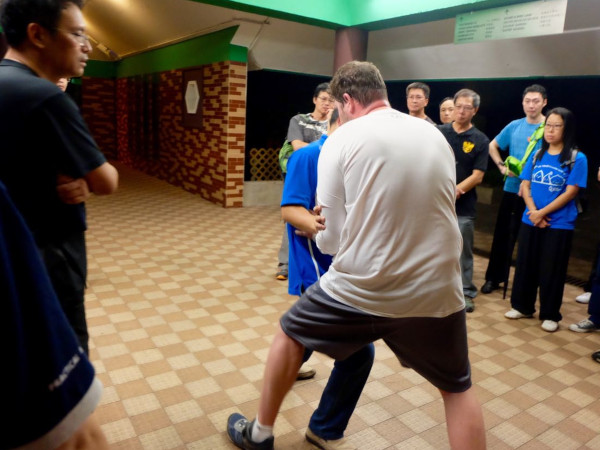 Master Chen in Push Hands. |
For over twenty years, he has never forgotten the final words Master Hong Junsheng spoke from his deathbed in 1996. It was a command that became Chen’s life mission:
 |
Do not change the choreography.
You must pass down the Chen Style Taijiquan Practical Method!
(不要改拳,要把陈式太极拳实用拳法
传承下去!) |
Transplanting the Ancient Tree, Binding the Fate
移木结缘
Resounding through the icy plains under a snow-filled sky.
The thousand-year-old tree leaves behind a single seed,
To take root and bear fruit in a distant land.
古木千年留一种,他乡异土结良缘。
Regina, 1985. Fēnghuá zhī Dì
(枫华之地)
Land of Maple and Splendor
 |
When Chen Zhonghua departed China, he carried with him the profound weight of Master Hong Junsheng’s teachings and the sorrow of leaving his lineage behind, yet he recognized that the unique opportunity for his professional and academic development made this sacrifice a necessity. Driven by the adage “A man of character should have his ambitions set upon the wide world” (“大丈夫当志在四方”)—he stepped onto Canadian soil.
Yet, as he faced the vast, empty prairies of Saskatchewan, he felt the truth of the ancient line: “The sun sets in the west; a traveler stands heartbroken at the edge of the world.” (“夕阳西下,断肠人在天涯”) He was a man torn between the mastery he had cultivated at home and the daunting, solitary struggle of an immigrant, forced to navigate an unknown world alone, without friends or a home of his own. |
|
At twenty-four, having just arrived in Canada, Chen Zhonghua was overflowing with energy (意气风发). His days were a disciplined marathon of ambition: he attended university classes in the mornings and worked as a tour guide at the Saskatchewan Legislative Building in Regina in the afternoons. Even with a 4:30 AM wake-up call, he often felt there weren’t enough hours in the clock to satisfy his drive. No matter how tight his schedule became, his morning practice remained sacred. Following his training, he would prepare a simple meal and pack his lunch before mounting an 18-speed bicycle—bought for a mere 25 Canadian dollars—and heading out with high spirits and a heavy backpack.
|
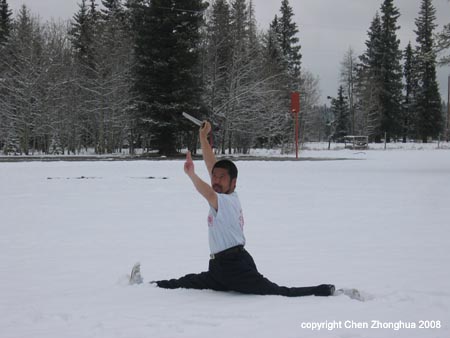 Chen Zhonghua in the winter silence |
|
It was during this time, while pursuing his Master’s degree in Education at the University of Regina, that his personal practice began to draw significant attention. On the athletic field of Campion College, Chen—known to his classmates as Joseph—would lead a growing group of martial arts enthusiasts. Among those who joined him was Professor Brian Dalsin, a professor in the History department (now Professor Emeritus of Medieval Studies) and then-Dean of the Faculty of Education. One afternoon, a classmate shouted from the sidelines: “Joseph Chen! Professor Dalsin wants you to go to his office!”
|
 |
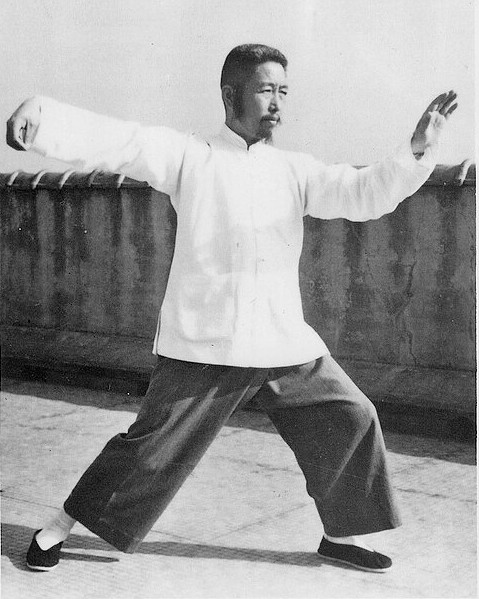 Zheng Manqing (郑曼清) |
Chen felt a flash of anxiety, wondering if he was in trouble for teaching on campus. Instead, he was met with a broad smile. The professor modestly asked Chen to identify a routine he had learned years prior from a Taiwanese student. After watching Professor Dalsin perform with meticulous care, Chen immediately recognized it as Zhengzi Taijiquan (郑子太极拳). This was created by Zheng Manqing, a disciple of Yang Chengfu, the third-generation successor of Yang-style Tai Chi. (这是杨式太极拳第三代传人杨澄浦的徒弟郑曼清所创,); The professor was deeply impressed by Chen’s encyclopedic knowledge. “Master Chen, your explanation has been a real eye-opener (大长见识),”Professor Dalsin said sincerely. Though the title “Master” made the young student bashful, the professor had more than just praise in mind.
|
|
This certification proved essential, as Chen Style Taijiquan was still largely a legend in 1980s North America. While over fifty people enrolled in his classes at MacNeill School, he still faced the sting of cultural misunderstanding. He once rented space in a church, but after the very first class, the landlord abruptly evicted him, claiming the slow, deliberate gestures (比划) were “some kind of bad religion.” Chen could only offer a helpless smile in the face of such ignorance, eventually moving his students to public park lawns. It was there, during a rainstorm, that the head of a nearby Chinese martial arts school offered him shelter. Touched by the feeling of “finding an old friend in a foreign land,” (他乡遇故知) Chen insisted on paying rent, turning a moment of hardship into a bond of mutual respect.
|
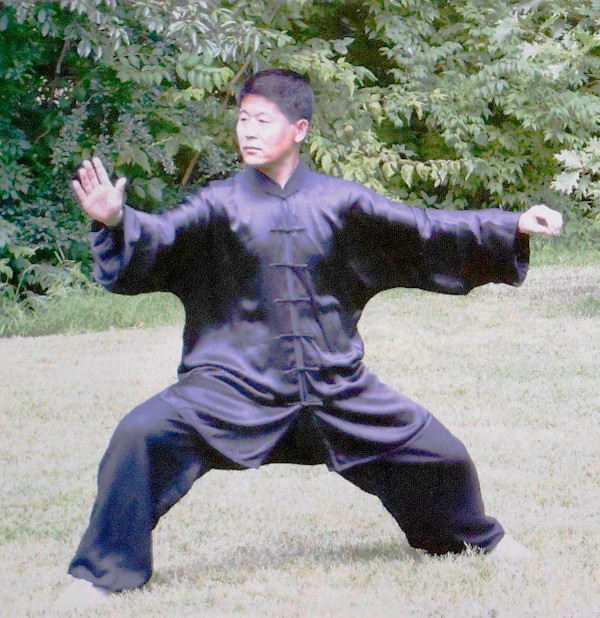 |
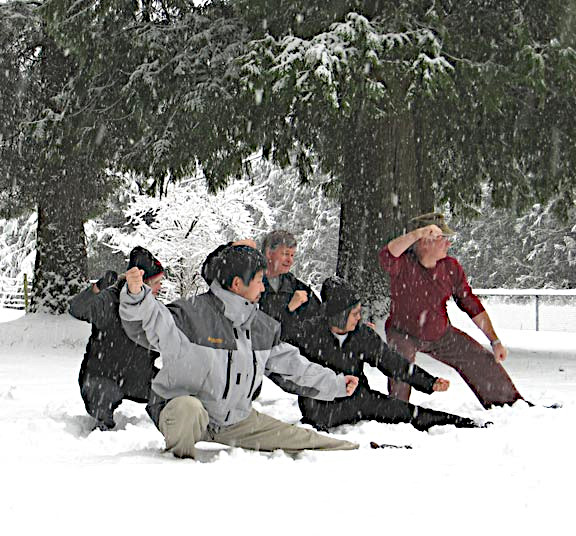 in the Great White North |
By the late 1980s, his influence spanned both language and diplomacy. He joined the Saskatchewan Translators’ Association in 1987, and by 1988, he had qualified as a Chinese-English translator for the Translation Bureau of the Department of State of Canada. As ties between sister provinces like Heilongjiang and Alberta grew, Chen became a vital bridge, serving as Vice President of the Edmonton-Harbin and Edmonton-Shenyang Friendship Associations. This trajectory culminated in a historic appointment: as China’s Reform and Opening-up progressed, Chen Zhonghua was chosen as the very first authorized representative for the State Administration of Foreign Experts Affairs (SAFEA) in North America.
|
Part 3. The Crucible of Doubt (真金百炼)
Maple Ridge, 2001. Guī qù lái xī, fǎn pú guī zhēn
(归去来兮,返璞归真)
Returning Home, Returning to the Essence
|
By 2001, Chen Zhonghua seemed to have mastered the art of ‘having it all.’ As the Chairman (董事长) of Sinoling Trading Company (西诺灵贸易公司)—an empire he had spent a decade building—he stood at the helm of a globally recognized tire recycling firm. His success was undeniable: his industrial footprint reached as far as Johannesburg, and his trading fleet moved containers across the oceans with the steady rhythm of a heartbeat.
|
 |
Yet, beneath the veneer of this “perfect” life, a sudden, inexplicable sense of bewilderment began to take hold. Like the ancient poet Tao Yuanming (陶渊明), he began to feel the call of Guī qù lái xī (归去来兮) —that profound urge to cast off the ‘dusty world’ and return to his roots.
Even while managing the weight of a complex business, Chen remained devoted to the Tao and the quan. He navigated two worlds in constant tension: a Monday-to-Friday grind that demanded his presence in the ‘now,’ and a deep devotion to his family that kept him rooted. Though these responsibilities led him to decline many prestigious international invitations to demonstrate his martial skills, his spirit remained tethered to the ethereal realm.
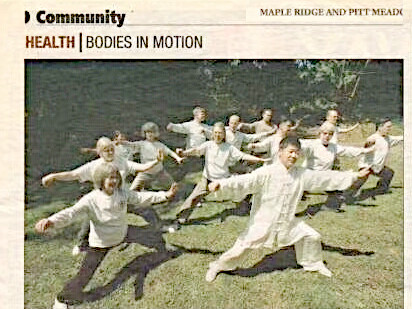 with Master Chen Zhonghua |
To honor Master Hong’s rigorous requirements, he rose every morning at 5:00 AM to complete ten rounds of the form—a sacred ritual performed before the business day could pull him back into the chénshì (尘世), or “dusty world.” His weekends offered no reprieve from these worldly demands, transforming into a whirlwind of travel across the continent. From Vancouver and Ottawa to Winnipeg and Saskatoon, he oversaw his three Taiji schools and stood his ground against local challengers. It was a life of heavy physical presence, yet he moved through it with the heart of a man already listening for a distant, celestial call.
|
(“Master陈,我发现你是个‘虚伪者’!”)
As the weight of his hypocrisy settled in his chest, a different voice began to stir—not his own, but the rhythmic, ancient echoes of the classics he had memorized as a boy, surfacing now like a lifeline:
“All things that disperse must have a unifying principle; all things that divide must have a union. Between heaven and earth, in every direction, all that is chaotic belongs to a source…
“夫物散必有统,分必有合,天地间四面八方,纷纷者各有所属……)Winter goes and summer comes—who can discern the beginning? A thousand years pass like a single day; the ultimate truth cycles on… Discarding the external form to achieve the essence, how is it anything but the full moon? When practice reaches its peak, even the smallest point is a circle…
(寒往暑来,谁识其端?千古一日,至理循环……离形得似,何非月圆?精练已极,极小亦圈……)”
 |
These traditional truths had always been there, flickering like a candle behind the rhythmic cadences of his English-speaking life. He realized now that his early education was “etched like lacquer” (幼学如漆)—permanent and indelible. Even amidst the clinking glasses and social clamor of his business life, the principles of the “I Ching” (易經) and the “Doctrine of the Mean” (中庸之道) had lived in his joints and marrow.
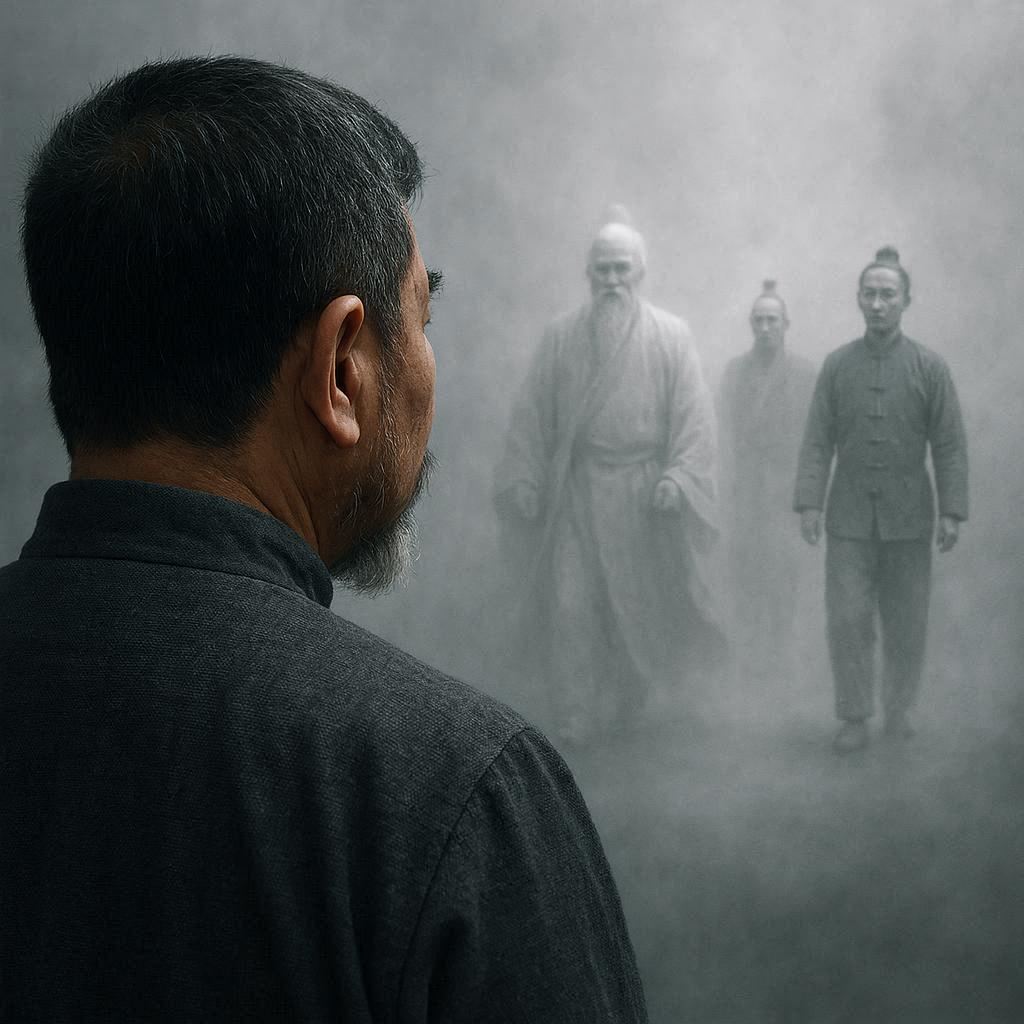
Chen Zhonghua felt the world dissolve into a waking dream. Through a dense, silver mist, blurry figures emerged from the depths of time: Chen Wangting (陈王廷), Zhang Sanfeng (张三丰), and Chen Changxing (陈长兴). |
“My dear, have you noticed? Ever since I’ve known you, whenever you mention Taiji, you become absolutely radiant—your eyes sparkle and you never utter a single word of complaint.”
|
Her voice was the bright moon piercing the thick haze of the red dust.
“But when you talk about your other work, the light goes out. If these jobs make you unhappy, why keep pushing yourself? Now, my salary is enough to support us. It’s time for you to stop building everyone else’s world and start living in your own.”
|
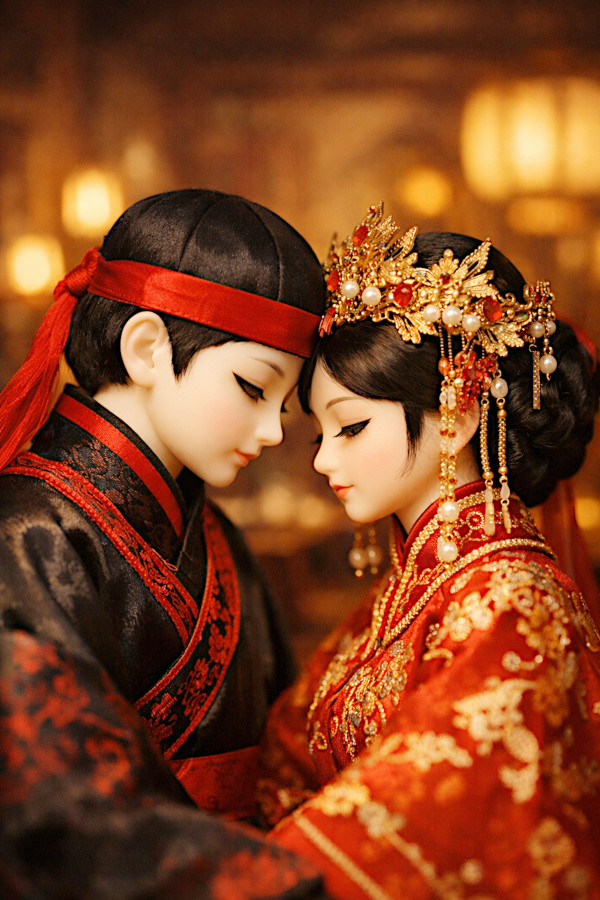 情无反顾,风霜雨雪共撑伞 |
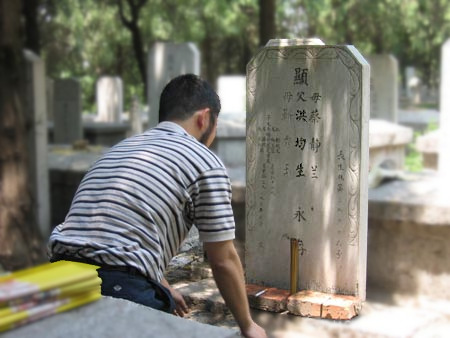 the resting place of Grandmaster Hong. |
It was no longer a distant memory, but a living command. The Master’s voice surged through him, resonant and clear:
“Pass down the Chen Style Taijiquan Practical Method!”
(“把陈式太极拳实用拳法传承下去”)
He remembered how Master Hong would stand beside him during his forms, “nudging the frame” (拨架子) whenever a limb was even a hair’s breadth out of alignment. In that moment of clarity, the metaphor became his reality: he realized that his own life’s direction had drifted. If a posture is crooked, the power is lost; if a life is misaligned, the soul withers.
|
This was not a mere career change, but a return to the source—a living embodiment of the Tao Te Ching: “Attain the ultimate emptiness; maintain the steadfast stillness. While all things flourish, I observe their return.” (“至虚极,守静笃。万物并作,吾以观其复”!)
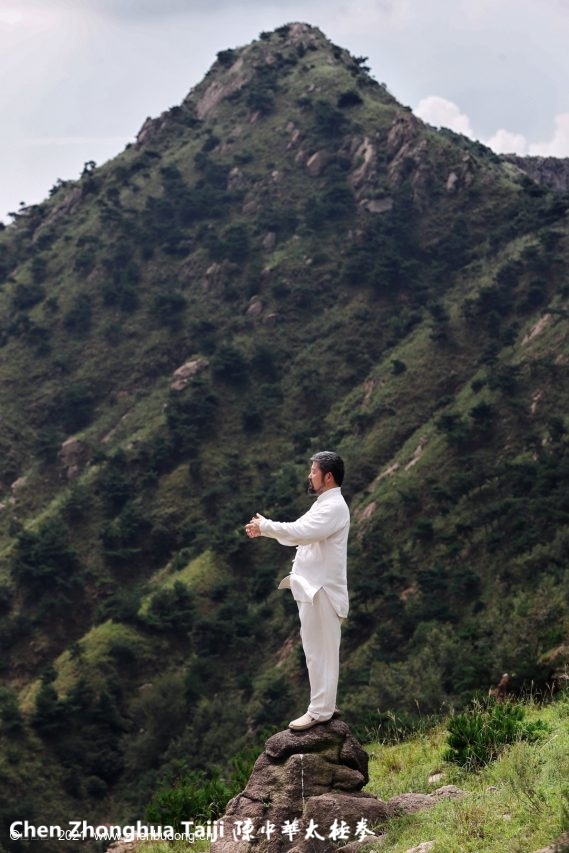
With a finality that stunned those around him, Chen Zhonghua stepped out of the “red dust.” He cast aside his business empire and professional ties as easily as one sheds a heavy coat at the door of a temple. Diving headfirst into the world of Taiji, he retreated to the quiet of Edmonton. There, the man of trade became a scientist of the body; he began to use the laws of mechanics to deconstruct and rebuild the ancient techniques he had inherited, ensuring every pivot and strike sat in perfect alignment. (他利用力学,把师父教给他的拳法重新架构……)
|
As the sun rose and fell over the Edmonton river valley, joggers would pass a solitary figure lost in slow, deliberate movement. To the casual observer, he was merely a martial artist; in truth, he was a man returning to his roots. That summer, amidst the quiet rustle of the leaves, the martial arts prodigy was gone—replaced by a “Taiji Obsessive.” (这个武学天才,在这个专注的夏天,真正成为“太极痴人”!) This internal shift soon demanded an external reckoning.
◈
In June 2001, Chen Zhonghua officially resigned.
|
 |
He had discarded the jade and the silk of the corporate world to find the uncarved block of his own spirit.
He had bridged the “final mile” for traditional Chinese culture
(“最后一公里”),
but more importantly, he had finally returned to his true self:
返璞归真
Returning to Truth, Beholding the Way
归真见道
He leaves only a simple heart to face the spirit’s altar.
The nation’s ancient pulse is finally reconnected,
Returning to the source, the Great Way opens wide.
千秋国脉终衔接,返璞归真大道开。