 |
|
|
Beyond its modern reputation as a meditative exercise, Taijiquan endures as a rigorous martial discipline grounded in structure, mechanics, and sustained effort. This study examines the life and work of Master Hong Junsheng, a pivotal figure who devoted more than seventy years to refining the art into what is now known as the Practical Method.
What followed was not. Through patient analysis and uncompromising practice, Master Hong removed the decorative elements that had accumulated around traditional forms. He revealed a system organized around fixed-axis rotation and the precise regulation of positive and negative circles: mechanical principles that allow a practitioner to neutralize greater force with less.
His life bridges inherited tradition and disciplined inquiry. Training under Master Chen Fake for fifteen years, Master Hong absorbed the depth of the family lineage. Decades later, while practicing in the public spaces of Jinan, he subjected that inheritance to relentless testing. What emerged was clarification rather than novelty. He insisted that every movement withstand scrutiny and that every circle serve an absolute structural need.
This record traces the technical pillars of his method, the competitive achievements of his lineage, and the perseverance that sustained his training through personal hardship and physical infirmity. Master Hong’s life gives living form to a principle articulated in the Xunzi: to begin and abandon is to fail even against rotten wood; to persist without ceasing is to leave one’s mark upon metal and stone.
Deprived of recognition, burdened by circumstance, and tested by frailty, he did not relinquish the work. Day after day, year upon year, he returned to the circle—measuring, correcting, refining. What endures as the Practical Method is therefore not an invention of brilliance, but the residue of decades of uninterrupted carving. Through sustained discipline, a seemingly fragile body became precise; through precision, it became powerful. In this way, his life stands as proof that when effort is not abandoned, even the hardest substance yields.
|
|
|
Adapted and translated from the article:
“Hong Junsheng’s Taiji Life” by Chen Zhonghua (陈中华) and Meng Yalun (孟亚伦) 洪均生的太极人生 published in 2012年9月21日 |
|
Hong Junsheng’s Taiji Life
洪均生的太极人生
By Chen Zhonghua (陈中华) and Meng Yalun (孟亚伦)
The Medicine Pot who Preserved the Core.
How a fifteen-year apprenticeship led to a bow for a watermelon rind.
Authenticity, Martial Skill, and Health. A master Medicine Pot shows knees never lie.
Teaching physics with chopsticks and turn a Medicine Pot into a spinning sphere.
1. The Hidden Master: A Life of Extraordinary Simplicity
Who was Teacher Hong?
Should melt into silk, and round the finger flow?”
 The Heart of the Lineage. |
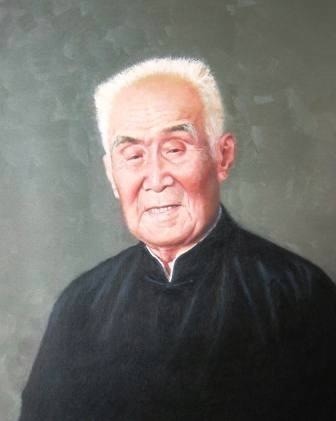
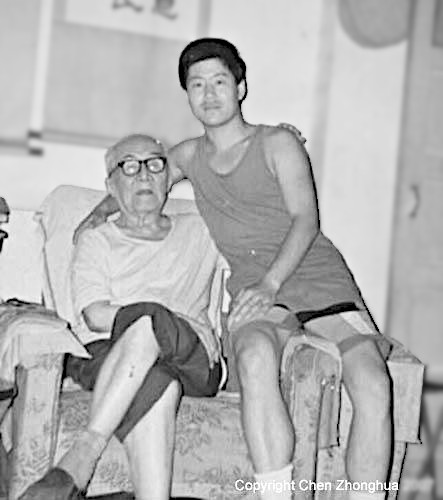
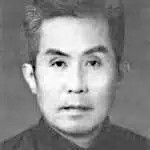
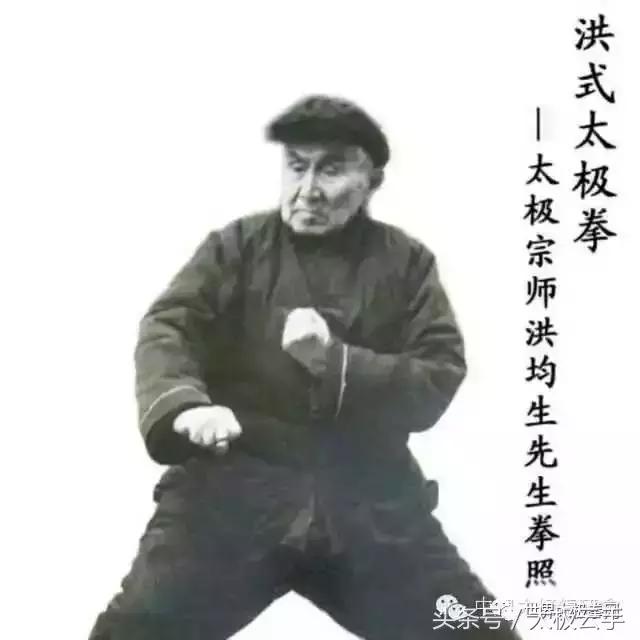
My teacher, Master Hong Junsheng (洪均生; 1907–1996), was one of the earliest and most prominent disciples of Master Chen Fake (陈发科; 1887-1957), the 17th-generation direct descendant and grandmaster of Chen-style Taijiquan [陈氏太极拳十七代嫡传宗师].
Born on March 30, 1907, in Yu County, Henan Province (河南省禹县), a location formerly known as Jun County (钧县). His given name, Junsheng (均生), literally translates to “Born in Jun,” and according to the traditional Chinese lunar calendar, his birth occurred on the 17th day of the second lunar month in the year of the Dingwei (丁未; Goat). |
While his ancestral roots trace back to Yin County, Ningbo, Zhejiang Province (浙江省宁波鄞县), he later established himself in Jinan, Shandong Province (山东省济南市), where he resided until his passing on January 23, 1996. By the traditional Chinese reckoning of age (虚岁), he lived to be 90 years old (九十岁).
Throughout his life, he was a pillar of the martial arts community, holding several prestigious leadership and advisory roles, including:
|
 |
The True Transmission: Fifteen Years Under Chen Fake
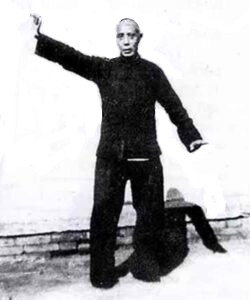 |
From a young age, Master Hong suffered from poor health, so sickly he was often referred to as an “ordinary medicine pot” (药罐子). Seeking strength, he began his study of Chen-style Taijiquan (陈氏太极拳) under Master Chen Fake in Beijing. This dedicated discipleship lasted from 1930 to 1944, making him the only student to study under Master Chen Fake’s personal guidance for a full fifteen years (十五年). Through this commitment, he truly mastered the “true transmission” and core essence (真传与核心精华) of the art. |
A Life of Disciplined Simplicity
Master Hong’s life was marked by significant hardships (历经磨难), yet he remained a quiet, unassuming elder (平易近人、深藏不露的老人) who lived with modest seclusion (清贫淡泊的生活). For four decades (1945–1985), he resided in a tiny room in Jinan measuring only 72 square feet (七十二平方尺的小书斋). Within these humble walls, he spent 66 years researching the depths of the art (研习与钻研).
His existence was defined by a rhythmic, disciplined devotion (日复一日的规律生活). Every day followed a sacred pattern: rising at dawn (黎明即起) to teach in the park, returning home for a simple lunch, and opening his door to students seeking instruction (登门求教) well into the evening. He walked a path of absolute sincerity (平实无华的道路), devoid of worldly markers of success: he held no official rank (没有官位), accumulated no wealth (没有财富), and sought no fame (不图名声).
An Intangible Legacy
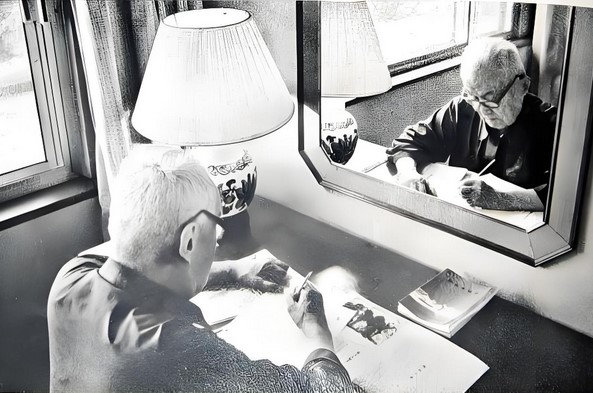
| While his life appeared outwardly ordinary (平凡), this very simplicity is what rendered his legacy so legendary (传奇与卓越). For nearly thirty years, he dedicated himself to his monumental work, Chen-style Taiji Practical Method (陈式太极拳实用拳法). Living with a virtue that did not compete (不争之德), Master Hong remained a faithful guardian of the past. |
 |
He strictly adhered to the rules established by the ancient sages (恪守先贤遗规) and eschewed grand lectures, choosing instead to guide his students through the power of his own conduct and physical example (言传身教). Such purity (淳朴) is a rarity in the modern world.
Mastery of the Way
Ultimately, Master Hong’s genius lay in his ability to “know the difficult but do the easy” (知难行易) and “simplify the complex” (化繁为简). By stripping away the superfluous, he reached the highest realms of the Dao (道法自然). His martial skills reached the absolute pinnacle (登峰造极), achieving a state of consummate mastery (炉火纯青) that transcended the reach of the common practitioner.
Though he lived in quiet obscurity (默默无闻), his influence eventually spread from Jinan (济南市) across China and into nearly thirty regions worldwide. It stands as a final testament to a life that was anything but ordinary.
2. Fifteen Years, One Fall, Endless Teachers
Who taught Master Hong Chen-style Taiji?
“Grasp Silk-Reeling from the Past,
Refine to a Method True.
Revealed by a fall,
the Axis of Heaven
Speechless,
All things are teachers.”
胡同一跌开天理,万物无言尽是师。”)
The Grandmaster and the Disciple: Beijing (1928–1944)
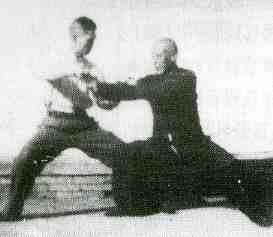 |
Master Hong Junsheng (洪均生) studied under the legendary Grandmaster Chen Fake (陈发科; 1887–1957), the 17th-generation direct descendant and standard-bearer of Chen-style Taijiquan (陈氏太极拳十七代嫡传宗师) Known also by his courtesy name Chen Zhaoxuan (陈照选), Chen Fake was the grandson of the renowned Chen Changxing (陈长兴), the fourteenth-generation master who famously transmitted his art to Yang Luchan (杨露禅), founder of Yang-style Taijiquan. |
In 1928, Chen Fake journeyed from Chenjiagou (陈家沟) to Beijing. There, his skill astonished the capital’s martial arts circles. Through a series of challenge matches and demonstrations, he earned the formidable reputation of “First in Taiji” (太极一人). More significantly, he became the first to formally bring Chen-style Taijiquan beyond its rural birthplace, introducing it to the wider world.
Fifteen Years of Refinement
Two years later, in 1930, the young and physically frail Hong Junsheng was introduced to Grandmaster Chen due to persistent health problems. What began as a search for healing became a fifteen-year apprenticeship (十五载言传身教) of extraordinary depth. As an “indoor disciple” (入室弟子), Master Hong was granted access not merely to the outward choreography of forms, but to the internal mechanics, structural principles, and combat applications that formed the living core of the art.
During these years in Beijing, Chen Fake personally corrected Master Hong’s posture and movement, refining his structure with uncompromising precision. He transmitted to him the subtle spirals of “Silk Reeling” (缠丝劲) and the exacting mechanical requirements that would later crystallize into what Master Hong called the Practical Method (实用拳法).
Among Chen Fake’s early disciples (早期弟子), Master Hong followed his teacher for fifteen uninterrupted years (十五年之久). No other student spent so long under Chen’s direct guidance. This prolonged tutelage forged in him not only technical mastery, but also the intellectual rigor that defined his later teaching.
The Wisdom of the Watermelon Rind
Yet Master Hong was not only exacting and analytical; he was also disarmingly humorous.
He often shared a story (幽默的故事) about a most “mysterious” teacher.
One summer evening, while walking home through a quiet alley (僻静的胡同), he was suddenly and decisively knocked to the ground by what seemed to be a hidden “Taiji master” (太极高手). Startled but composed, Hong rose and called respectfully into the darkness:
| “May I ask your esteemed name, sir? Your skill is second only to my master, Chen Fake, and no less!”Receiving no answer, he began to feel around (摸索) the ground where he had fallen. After some searching, his hand discovered the true culprit, a slick, wet watermelon rind (一块西瓜皮).
Immediately, he straightened himself, bowed solemnly to the rind, and declared: “Teacher Watermelon Rind (西瓜皮老师), I will diligently practice the falling techniques (摔法) you taught me today, and strive not to disappoint your instruction!” |
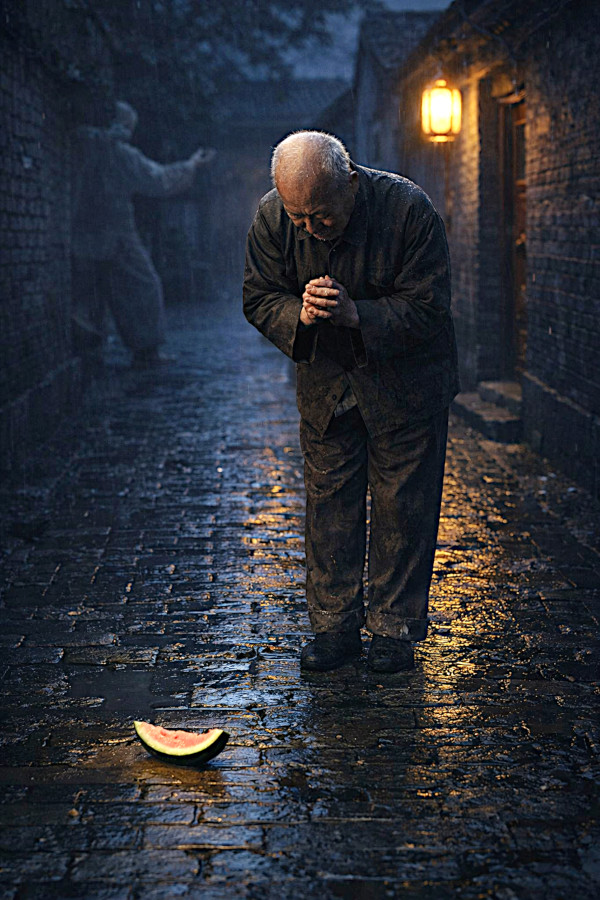 Teacher Watermelon Rind |
Nature as the Ultimate Teacher
The story invariably drew laughter from his students. But beneath the humor lay a penetrating insight into Taiji theory (太极哲理).
If one lightly steps upon a watermelon rind, nothing happens; both rind and person remain undisturbed. But if one commits full weight and speed (重心与速度) onto it, a fall is inevitable. The greater the force applied (用力愈大), the harsher the fall (摔得愈狠). The rind itself does nothing. It does not attack, resist, or scheme. It merely reveals the consequences of misplaced force.
 |
In this simple accident, Hong perceived a universal principle: imbalance is self-created; force defeats itself.
The anecdote offers a revealing glimpse into Master Hong’s approach to research and learning (钻研与学习的方法). Though he acknowledged that Taijiquan was said to have been created by the ancestors of Chenjiagou (陈家沟), he often emphasized that this was a metaphor (比喻), not an absolute claim. |
An art as profound and intricate as Chen-style Taijiquan could not have emerged fully formed from a single mind. Rather, it is the cumulative wisdom of countless individuals across generations—people who observed nature, tested principles through lived experience, and gradually distilled those experiences into method. It originates from life itself (源于生活).
For this reason, Master Hong believed that everything in the world could serve as a teacher (以万物为师). Whether learning from a great master, a passing stranger, or even a discarded watermelon rind, anyone willing to observe could discover the principles of Taiji.
3. The Three Pillars of the Practical Method: Authenticity, Martial Skill, and Health
What is the practical significance of learning Master Hong’s Chen-style Taiji practical techniques?
The plum’s scent blooms from bitter cold. ”
The Architecture of Clarity
Master Hong’s teachings stand out for their absolute clarity and relentless focus on practical application.
Unlike many internal styles that rely on vague or overly poetic metaphors, the Practical Method (实用拳法) is a precise and logically structured system of body mechanics. Master Hong stripped away obscurity to reveal the underlying physics of Taiji. Through this method, practitioners move beyond “blind practice” and come to understand exactly how and why each technique functions.
Interlocking Gears: The Mechanics of the Body
Adhering to the principles of “Rotation and Revolution” (公转与自转) teaches students to coordinate the body as an integrated mechanical system, similar to interlocking gears working in harmony. This training serves a dual purpose. It provides a reliable path to advanced martial skill through repeatable mechanics while promoting lasting health through efficient, anatomically sound movement.
In Master Hong’s system, every hand method, step, and weight shift has a clear and practical purpose (每一招, 每一式, 都有其实际用途). Nothing is ornamental. Nothing is empty.
The Pillar of Authenticity: Preserving the Original Features
Studying this method helps preserve the authentic tradition of Chen-style Taiji (继承陈式太极拳的传统). As a treasure of China’s cultural heritage, it is our responsibility as modern practitioners to transmit and develop it faithfully. Master Hong’s teachings allow us to glimpse the original features (本来面目) of Grandmaster Chen Fake’s art. For the serious student, there is profound satisfaction in connecting directly with this authentic source.
The Pillar of Martial Skill: The Science of Combat
Master Hong’s teaching provides a methodical journey toward high-level martial skill (高超的武术技艺). The “Practical Method” represents the complete inheritance of Chen Fake’s transmission, refined through fifteen years of apprenticeship and sixty-six years of tireless research and practice (六十六年如一日的刻苦钻研). It integrates the philosophical depth of the I-Ching (易经哲理/易理) with concrete combat application. Through disciplined study, one may gradually “enter the hall” (登堂入室) of elite Taiji and approach true mastery.
The Pillar of Health: Transforming the Medicine Pot
The art leads to genuine health and longevity (健身长寿). It is worth remembering that Master Hong first sought Taiji for health rather than combat. Through dedicated practice, his health was fully restored, and he lived vigorously into his nineties. This was no small achievement given his era and severe hardships. Prolonged hunger even left him partially paralyzed. Yet he persisted, and the art sustained him.
I myself stand as living testimony. I began studying with Master Hong in 1979. As a child, I was so frail that I was not expected to live beyond thirteen. Through this art, my health was transformed, and by the age of forty-three I had entered deeply into the profound world of Taiji.
Anatomical Safety and Global Legacy
Even as a competitive discipline (竞技运动), Master Hong’s Practical Method possesses a remarkable characteristic: practitioners rarely suffer injuries (练者极少受伤). In Jinan, where thousands practice this system, both the forms and Push Hands (推手) training may appear intense, even dangerous, yet I have never witnessed a single injury caused by technical error, nor have I seen a practitioner suffer a knee injury (膝盖受伤).
For nearly twenty years, I have taught this art in Canada and the United States. Throughout that time, I have maintained a record of zero injuries among my students.
In short, learning the practical techniques of Chen-style Taiijquan is profoundly beneficial to both body and mind. It holds the transformative power to change a person “from a sickly individual into a renowned master” (由“药罐子”变成一代宗师).
What I have shared here is merely a superficial introduction (肤浅的介绍) and cannot fully express the depth of Master Hong’s martial skill and moral cultivation (武功与武德). I offer these reflections with humility and welcome correction (指正) from fellow practitioners should I have spoken imperfectly.
4. The Logic of the Practical Method
What influence did Master Hong have on the development of Chen-style Taiji?
the Dao is found;
From practiced form to inner truth,
the spirit is bound.”
由技入道,强身御侮乃通神。”)
I. Scientific Systematization
Master Hong’s primary contribution was the scientific systematization (系统化与科学化) of Chen-style Taiji. At a time when much instruction relied on poetic metaphor and vague notions of “feeling,” he articulated the art through principles of geometry, physics, and mechanics. Every movement was to be explicable, testable, and internally coherent.By introducing the precise concepts of “Rotation and Revolution” (公转与自转), he established a universal mechanical grammar for the style. This shifted the focus away from superficial imitation of external form and toward comprehension of internal structural requirements (身体法度).
Through this clarity, high-level skill was no longer treated as mystical knowledge reserved for a chosen few. Instead, it became a verifiable body of knowledge—accessible through correct method and disciplined practice.
He further refined the Chen-style forms (拳架), ensuring that every transition and posture adhered strictly to the requirements of Silk Reeling (缠丝劲). In doing so, he effectively bridged the traditional Old Frame (老架) with modern practical application. The result was a system that preserved classical integrity while remaining viable as a combative art in the 20th century and beyond.
II. Lineage Inheritance and Principled Development
First and foremost, Master Hong directly inherited the authentic lineage (继承脉络) of Chen-style Taiji from Chen Fake (陈发科).
This fact is historically significant.
| Chen Fake left Chenjiagou (陈家沟) in 1928 at the age of 43 and taught in Beijing until his passing in 1957; a period of 29 years. Based on available records and oral traditions, only Chen Zhaopi (陈照丕) briefly studied with him in Chenjiagou; no other individual from the village claims direct study with him during his Beijing years.Despite nearly three decades of teaching in the capital, by 1980 only a small group could be identified as true indoor disciples (入室弟子) who continued to practice or transmit the art. |
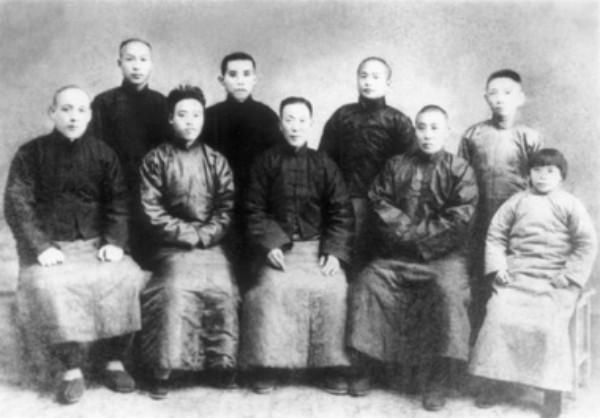 Back row, (L-R): Zhang Yifan (张一帆), Hong Junsheng (洪均生), Yang Yichen (杨益臣), Niu Liang (牛亮). |
Chen Zhaoxu (陈照旭), Chen Zhaokui (陈照奎), and daughter Chen Yuxia (陈豫侠).
That a master of Chen Fake’s stature produced so few genuine successors over thirty years shows how difficult this art is to master (极难掌握). . Some disciples studied for only four months, leaving them no chance to grasp the essential “keys” (诀窍) of the system.
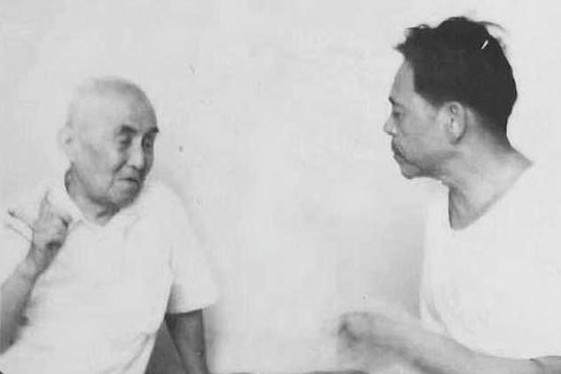 |
Historically speaking, Master Hong, Chen Zhaokui, and Feng Zhiqiang stand as truly representative inheritors of Chen Fake’s boxing. After Chen Zhaokui’s untimely passing, Master Hong became the principal representative of Chen Fake’s early boxing style (早期拳风; 1930–1945), while Feng Zhiqiang embodied the later style (后期拳风; 1950–1957). |
To learn Master Hong’s boxing, therefore, is to inherit the specific Chen-style Taijiquan transmitted by Chen Fake. While it would be inaccurate to claim exclusivity for this branch, it can be stated with confidence that Chen Fake’s lineage constitutes a major and vital branch (重要支脉) within the orthodox tradition (正统传统).
III. Development Through Principle, Not Deviation
Master Hong did not merely preserve what he inherited. He developed it, always within the same underlying principles (拳理). He often stated:
“Differences caused by lack of study are mistakes; true development consists of making modifications in practice according to the same principles after one has truly learned.”
(“没有学会引起的差异是错误,学会之后按照同一道理在实际中有所改动就叫发展。”)
His development unfolded in two major ways.
First, he sought to unify practice (练法) and application (用法). Chen Fake would sometimes explain: “This movement is practiced like this, but in application it must be done that way.” (“这个动作是这样练,但用 的时候就要如此这般。”) When Master Hong asked why the two differed, Chen Fake replied that he did not know.
Master Hong then asked if the form could be practiced exactly as applied: a method that would let students achieve results “in one step” (一步到位) rather than doubling their effort on a single technique. Chen Fake agreed.
From this, Master Hong inferred that historical discrepancies between form and application were not due to ignorance, but were likely a deliberate method of guarding secrets (保守秘密). Students might learn the outward choreography, yet remain unable to deduce its true function without direct instruction: an ancient method of protecting what we might now call intellectual property (知识产权).
By removing this separation, Master Hong restored unity between form and function.
Second, he corrected movements he considered mechanically “unreasonable” (不合理), always according to the principles articulated by Chen Fake himself.
He explained his philosophy succinctly:
|
 |
For example, Chen Fake emphasized that during circular movement the elbow should remain lower than the hand (坠肘). Yet in practice he occasionally deviated. In 1956, when Master Hong returned to refine his skills, he respectfully raised this issue. Chen Fake acknowledged the oversight and encouraged him to continue practicing strictly according to principle.
In doing so, Master Hong demonstrated both fidelity and intellectual independence—an exceedingly rare combination in traditional martial culture.
IV. Institutional and Competitive Impact
Master Hong’s influence extends beyond personal transmission into the institutions and competitive structures of modern Taijiquan. In 1988, his principal student Li Enjiu led the Shandong Tai Chi Push Hands team to victory at the National Taiji Push Hands Championship. This landmark achievement announced the Practical Method’s arrival on China’s competitive stage. To mark the occasion, Master Hong inscribed a phrase that carried the weight of both triumph and autobiography:
“Ten years of silence, then a stunning performance.” (十年不鸣,一鸣惊人。)
The words were as much a reflection of his own life as they were a celebration of his students.
The legacy did not stop there. The competitive achievements of his grand-disciples (徒孙) propelled them into leadership roles at China’s most prestigious sports institutions. Huang Kanghui (黄康辉), a student of Li Enjiu, earned exceptional admission to Beijing Sport University (北京体育大学) after winning six consecutive National Taiji Push Hands Championships and now serves as a leading Taiji lecturer there. Xie Yelei (谢业雷) went on to teach at the Shanghai University of Sport (上海体育学院), further embedding the Practical Method within China’s academic mainstream.
Perhaps most significantly, Li Enjiu drafted the national rules governing Taiji Push Hands competition (国家太极拳推手竞赛规则). As a result, Master Hong’s principles did not merely compete within the system. They helped define it.
Through competition, education, and codified standards, Master Hong’s method has left an indelible mark on the development of Taijiquan across contemporary China. What began as one quiet man’s art is now written into the rules by which a nation trains.
Conclusion
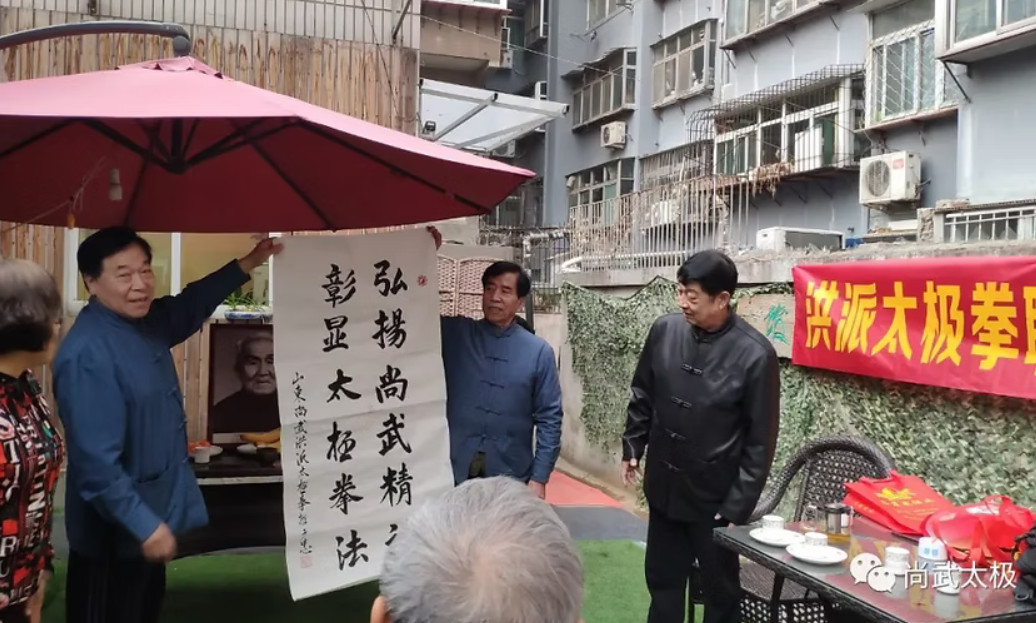 Master Hong Junsheng’s legacy in his home of Jinan, Shandong. |
Master Hong did more than preserve Chen-style Taijiquan. He clarified its principles, systematized its transmission, and held its integrity intact through decades of poverty, persecution, and isolation, preserving the art at a time when it might otherwise have been lost. He stands as the principal representative of Grandmaster Chen Fake’s early boxing, the architect of its scientific articulation, and one of the most consequential figures in Taijiquan‘s twentieth-century evolution.
|
5. The Geometry of the Soul: Master Hong’s Art of Instruction
Could you give me some examples of how Master Hong taught Taiji?
Rotation and Revolution reveal the Way;
Upholding the true line, teaching the soul,
the legacy takes root.”
守真传正,因材严教立宗风。”)
The Architecture of Logic
Master Hong was renowned for a teaching style marked by exceptional clarity and an uncompromising rejection of mystical jargon. He believed that if a student failed to understand a movement, the responsibility lay with the teacher not the student. Every posture, every transition, had to be explained through logic and physics, not obscurity.
|
One of his most distinctive methods was the use of geometry and mechanics (几何与力学) to explain body alignment and force. Rather than relying on the vague invocation of “Qi” he articulated the concrete principles of “Rotation and Revolution” (公转与自转). The human body, he taught, functions as a system of interconnected levers and axes. When an opponent applies force, one does not resist it head-on. Instead, altering the angle of rotation causes the force to glide away, like a spinning sphere deflecting an incoming strike. In this way, abstract internal principles became visible, measurable, and repeatable.
|
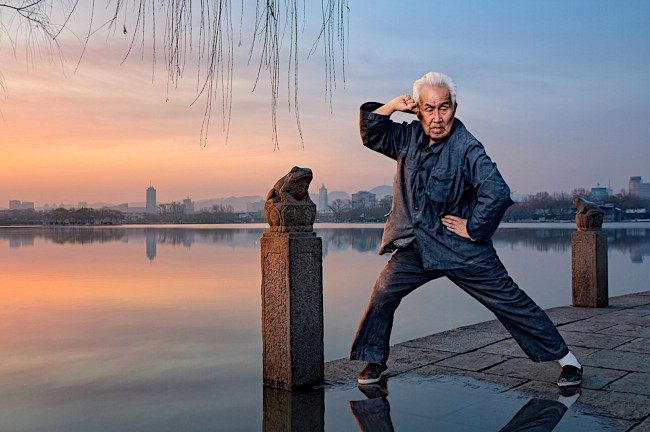 |
At the same time, he made profound theories accessible through homely metaphors (生活化的比喻). He likened the waist to the axle of a wheel, the precision of issuing force to “threading a needle,” and Taijiquan itself to “the art of circles.” With his hands, he would demonstrate how a large external circle could be neutralized by a smaller, faster internal one. What seemed mysterious became practical.
Master Hong was equally known for his patience and hands-on correction (言传身教). He did not merely lecture from the front of the room; he personally adjusted a student’s elbow by a fraction of an inch, explaining precisely how that minute alteration changed the transmission of force from the ground to the fingertips. Under his guidance, the “invisible” mechanics of Taijiquan became tangible and exact.
Having taught for over fifty years, his methods may be summarized in five interrelated principles.
I. The Heirloom: Strict Adherence to Tradition
Master Hong followed the teachings of Master Chen Fake with absolute fidelity. In his view, Chen-style Taijiquan was a complete system already perfected through generations of refinement. Even shortly before his passing, he admonished students never to alter the form (拳架) according to personal preference. The form was a “family heirloom” (传家宝); rich in technique and philosophy. The practitioner’s task was to discover its essence, not to revise it.Accordingly, he maintained a consistent model (单一模式) throughout his life. His First and Second Forms remained unchanged for more than sixty years, each movement a direct continuation of Chen Fake’s transmission.
This unwavering consistency ensured systemic coherence (体系的连贯性)—both vertically, across generations, and horizontally, among peers. Because teachers and students practiced the same method, they shared a common language (共同语言), enabling precise communication and steady progress. In many ways, this resembled the teaching and research environment of a modern university (现代大学的教学科研环境), where clarity replaces mystification and shared standards foster genuine advancement.
II. The Tailored Method: Individualized Instruction
Despite his insistence on structural consistency, Master Hong never adopted a “one-size-fits-all” approach. Regardless of class size, he personally corrected each student one-on-one. Beginners might initially learn routines from senior classmates, but Master Hong always refined their movements himself. He tailored his adjustments to each student’s actual situation (实际情况): physical condition, available practice time, educational background, and learning temperament. The outer framework remained consistent, but the explanation shifted to suit the individual.
This adaptability was not always obvious to casual observers. Many assume a teacher repeats the same instruction to everyone. Only those who followed Master Hong across varied environments understood the subtlety of his adjustments.
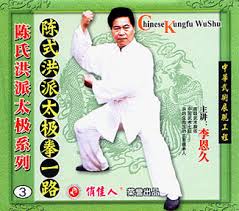 |
My fellow student Li Enjiu (李恩久) once recounted an illustrative episode. After giving a lecture based on Master Hong’s teachings, another senior disciple expressed confusion, claiming he had never heard such material despite years of close study. Li confirmed that these were Master Hong’s teachings, adapted to suit students from diverse regions and cultural backgrounds. Having frequently accompanied the Master to meet visitors from across China and abroad, Li witnessed firsthand how he tailored his explanations without ever compromising principle. |
III. The Twenty Categories: Systematic Progression
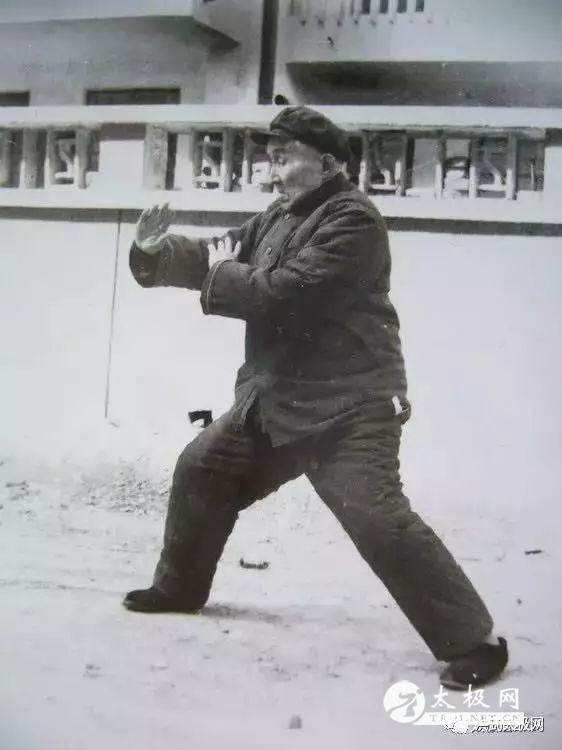
Master Hong’s curriculum followed a clear progression: first, establishing basic skills (基本功); second, learning the routines (套路); and third, after mastering the routines, advancing to Push Hands (推手). The structure moved naturally from simple to complex, from foundational mechanics to applied interaction.To ensure theoretical clarity, he divided the First and Second Forms into twenty categories (二十类), grouping movements according to shared mechanics and strategic function. By doing so, he revealed the inherent rules and logic (内在规律) underlying the art. Learning became purposeful; practice became methodical.
For example, he identified a category emphasizing hand coordination (手法配合) with minimal direct reliance on the legs. This category includes:
|
 |
Through such classification, complexity was distilled into intelligible structure.
IV. Chopsticks and Well-Buckets: Heuristic Teaching
Master Hong avoided rote memorization. Instead, he relied on vivid, real-life analogies (生活中的类比) to awaken intuitive understanding.
|
 |
These comparisons were not superficial; they encoded mechanical truth in familiar experience.
His associative thinking extended beyond formal instruction. When my wife, Huang Suzhen (黄素珍), began studying with him, many students struggled to remember her name. Master Hong joked, “When you see her, think of injecting berberine (黄连素, Huángliánsù) with a needle.” Because her name resembled the medicine, the association fixed it in everyone’s memory. This playful example of associative learning (联想学习法) reflected the same mental clarity he brought to martial instruction. At home, he affectionately referred to his deaf and mute wife as “Mute Flower” (哑花), revealing a tenderness beneath his rigorous exterior.
V. The Uncompromising Standard: Drawing Circles
If his explanations were patient, his standards were uncompromising. Master Hong made it clear from the outset: his purpose was to preserve and inherit (传承) the art, not to accumulate followers.He corrected errors directly and without sentimentality. Under his guidance, students could not settle for “good enough.” Progress required humility and endurance; those seeking shortcuts (捷径) rarely remained.
In 2001, I met two practitioners in Zhaoyuan who had visited Master Hong in Jinan. After witnessing the demanding postures maintained by his disciples, even those in their sixties and seventies, they chose not to continue.
|
I recall another student from Qingdao who studied with him during university. When asked why he did not persist, he replied: “Master Hong made me stand to the side and practice drawing circles (磨圈). I drew circles for months before he even began teaching the form. I stood there all day like an idiot. Eventually, I couldn’t endure it.”I understood that feeling well. |
 |
For Master Hong, fundamentals were not preliminary exercises to be rushed through, but the very foundation upon which everything else depended. Without circles, there was no Taiji.