 |
|
|
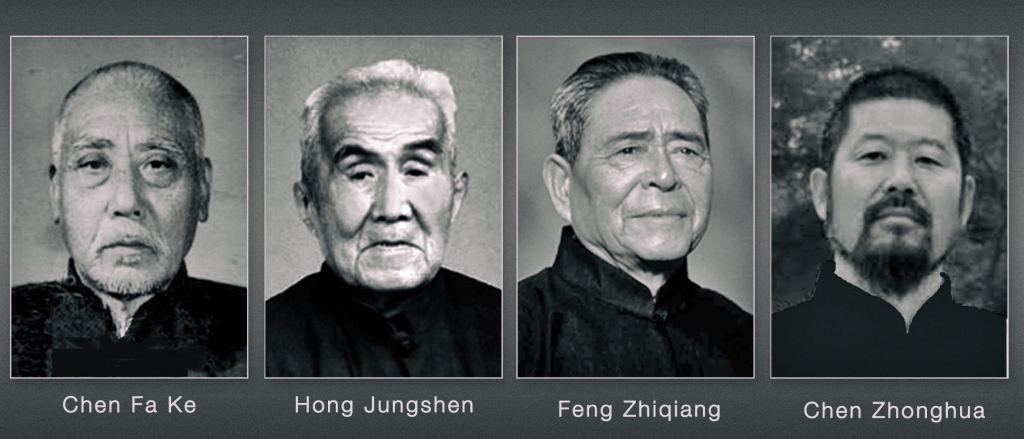
What is this Wuxia (武俠) play we are watching? In the life of Chen Zhonghua, the ‘knight-errantry‘ of the martial hero (俠義) feels less like theatrical flourish and more like the steady unfolding of responsibility. One role gives way to another; one teacher’s voice continues long after the lesson has ended.He comes from a lineage often spoken of in reverent tones. Chen Fake rose from village life to leave a deep mark on the Wulin (武林). Hong Junsheng, Confucian scholar and inheritor, weathered years of hardship yet held fast to his quan(拳) , practicing, refining, and teaching even when circumstances offered little comfort. For those who met him, the tradition was not abstract. It lived in the way he stood, the way he explained, the way he endured.
Chen Zhonghua inherited not only method, but obligation. |
|
|
Adapted and translated from the article:
“Chen Zhonghua’s World Tai Chi Road.” by Xu Jiaqiang and Xie Yan 太极天下 — 许家强 谢岩 published in 2019年5月17日 |
|
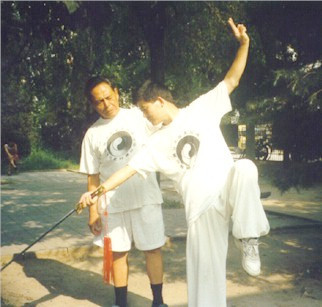 Chen Zhonghua refining the sword under the watchful eye of Feng Zhiqiang. |
We have already seen several chapters of his journey. As a young man he traveled, searched, and learned, including a formative encounter with an unusual elder at Black Tiger Spring in Jinan, the City of a Thousand Springs. Later, like many before him, he crossed oceans to the Great White North, carrying ambition, uncertainty, and the quiet weight of what had been entrusted to him. He worked relentlessly, built a career, raised a family, and fashioned a life that, from the outside, looked complete.Yet a teacher’s hope can be persistent. While professional success brought stability, the call to transmit the art never loosened its grip. The balance between worldly responsibility and daily cultivation became harder to maintain. Students gathered. Questions deepened. Time grew scarce.
|
What followed was far from certain. Devotion did not erase financial pressure, physical fatigue, or the loneliness that can accompany responsibility. There were risks in stepping away from a stable life, and no guarantee that students would come, or remain. The ideals handed down from teacher to disciple would now have to survive in the modern world, measured against rent, travel, doubt, and time.
Yet this is often where a path truly begins.
The story that follows is about trials, persistence, and gradual arrival. The Practical Method would demand everything he had, and then ask for more. Whether that offering would be enough—this was the question waiting at the edge of the next act.
Part 4. Ascending the Peak (登峰造极)
Winchester, Virginia Qián lóng wù yòng, yǐnrěn zìqiáng
(潜龙勿用,隐忍自强)
The dragon is hidden, do not act; endure in silence and strengthen oneself.
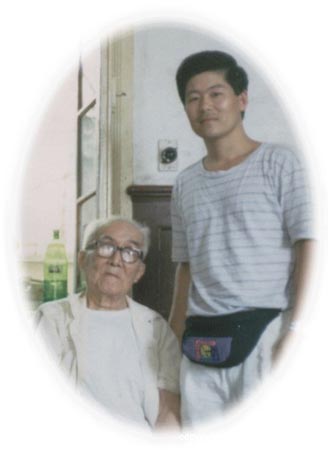 Hong Junsheng and Chen Zhonghua. |
Chen Zhonghua carried his master’s parting words like a sacred decree: “Go out—and sow the seeds of Taiji across the entire world as much as possible!”
(走出去,把太极的种子尽可能多地撒向全世界!)Even as he traveled beyond the familiar shores of home, for Chen, “going out” was not a final destination but a lifelong pilgrimage—an endless trek toward a receding horizon. He became a traveler between worlds, a man carrying a handful of ancient soil to plant in foreign gardens. (走出国门的陈中华,仍然在不停地“走出去”!) But the Dao teaches us that the path is never flat. How could the road leading to the ends of the earth always be bathed in golden sunshine? How could the sky remain forever cloudless and blue? (可是,走出去的路,怎么可能总是阳光灿烂、万里无云?) |
The Killing Frost
(肃杀之霜)
 |
The 28th “Taste of China” USA Tai Chi Championships (第28届中国之味美国太极锦标大赛) was descending upon Winchester, Virginia. To the uninitiated, it was a mere event, but to the martial world, it was a grand gathering of enthusiasts, luminaries and elders.His disciple, Xiong Jingguang (熊景光), came to him with eyes alight: “Master, you should go be a judge!” (“师父,你去当裁判吧!”)
|
|
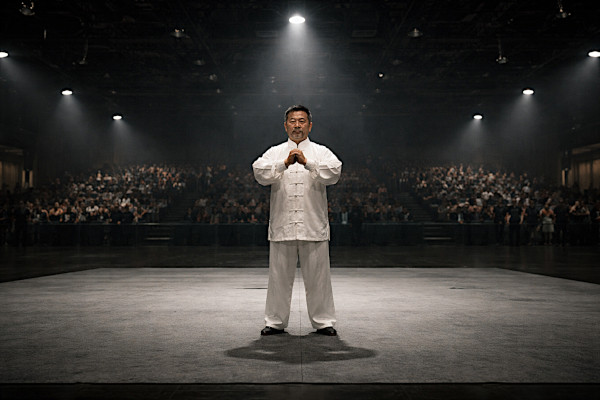
It was this “chance to perform” that burned in Chen Zhonghua’s heart. While a judge’s seat was a badge of honor, it was not enough. He didn’t want to just watch; he wanted to give. The following year, he humbled himself to request a performance slot. The organizers granted it, though with a subtle sting: he would not be part of the grand evening showcase. Instead, he was tucked away into a “gap” between matches.
|
 |
was quietly descending on the path ahead.”
But just as his heel struck the floor—a sound meant to resonate with the heartbeat of his lineage—the unexpected struck. It wasn’t a physical blow, but a jagged burst of impersonal static that tore through the speakers and shattered the dignity of the moment. Cold and dismissive, the announcer’s words arrived not as a human address, but as a high-decibel intrusion that bounced mockingly around the cavernous hall. The mechanical echo ensured that every soul in the furthest reaches of the arena felt the sharp, dismissive sting of the command, making the master’s presence feel suddenly small and unwanted against the cold, echoing void:
We can’t arrange the demonstration today. Please step down.”
|
The sound of the speakers died out, leaving a vacuum more painful than the interruption itself. A terrible, collective silence fell over the stands. It was the sound of a thousand people holding their breath, not in awe, but in a crushing wave of pity. In that vast arena, the silence became a spotlight of shame. He stood alone in the center of the ring, the echo of his first move still vibrating in the floorboards, now mocked by the stillness of a crowd that didn’t know where to look.
|
 |
Yet, even as he moved into the shadows, a sliver of defiant clarity remained: “This is my embarrassment, but it is also the organizers’ shame.” (这是我的难堪,也是主办方的难堪。)
He endured. As he reached the edge of the ring, he did not look away. He held the announcer’s gaze—a piercing, silent confrontation that forced the man to sink into the weight of his own disrespect. Within that agonizing half-minute of eye contact, the announcer’s dismissive mask finally faltered: “I am very sorry, Master Chen. Tomorrow morning, we will definitely arrange for you to perform first!” (“十分抱歉,陈老师,明天早上比赛前,我们一定安排您第一个表演”)
Chen Zhonghua turned back with a serene smile and saluted once more. But the darkness was not finished with him. Once off-stage, the announcer sought him out to discard his earlier promise; they didn’t want him to perform at all. Chen tried to reason with the man, his voice thick with a sincerity that bordered on heartbreak: “I am willing to follow the rules and regulations… if further study is required, I can learn!” (“我愿意服从你们大赛的规章制度,如果需要进修,我可以学!”)
Then came the final, killing frost—a dismissal that sought to erase his entire history:
whereas we are authentic Taijiquan”
At that moment, his spirit traveled back to his “Grand-Master,” the legendary Chen Fake (师爷陈发科).
|
But Chen Fake simply waved a hand, his presence as unmoving as a Great Peak.
“We practice our art for our own benefit and for the benefit of others,”he replied with a profound stillness. “What benefit is there in arguing with him? What we practice is our own; what they say is their own.” (“我们练我们的,自得益处,亦与人益处,但是与他分辩又有何益?我们练的是什么拳,与他怎么说有什么关系呢?”)
|
 |
|
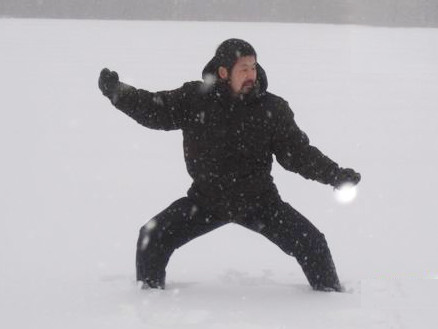
He walked out into the cool night air, the silence of the Virginia sky a balm to his spirit. He did not go home to nurse his pride; he went back to his training. He knew that a seed does not sprout the moment it is planted; it must first endure the dark weight of the earth. For Chen Zhonghua, the answer to humiliation was not argument, but deeper practice. In the quiet of his resolve, he became the very thing he practiced: a spirit as flexible as the bamboo, yet rooted as deeply as the rock in the broken cliff. He returned to these same arenas year after year, offering the same sincere smile, the same quiet bow, and the same uncompromising truth of the Practical Method.
|
 |
The Thaw and the Thunder
(化冻惊雷)
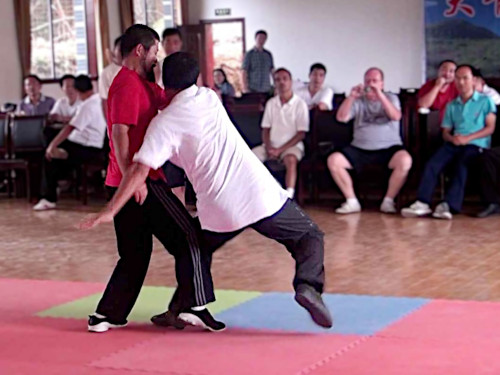 |
By the third year, the killing frost finally thawed. The invitation to perform arrived not as a favor, but as a mandate of respect. While many masters avoided physical contact to protect their mystery, Chen—like his masters before him—was open to anyone who approached. In the quiet of the dressing room, away from the noise of the crowds, he engaged in a silent dialogue with a fellow enthusiast: a Shǒu Tán (手谈), the conversation of hands. In that exchange, words were useless; the truth could only be felt and experienced through the very pulse of the art. Emerging from the touch, the man’s eyes held a new clarity, the look of one who had finally found the source.
|
As the venue doors swung open to the afternoon sun, a new path opened with them. A stranger approached, his gaze fixed on Chen with the intensity of a seeker.
“That sound… that power. I can tell you are a professional,” the man said. “Whose blood flows in your art? Who is your lineage?”
“My masters are Hong Junsheng (洪均生) and Feng Zhiqiang (冯志强),” Chen replied, the names carrying the weight of the mountains they represented.
The Parting of the Veils
(拨云见日)
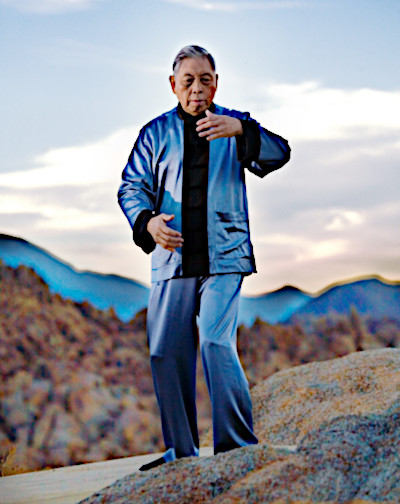 |
By the fourth year, the “True Gold” could no longer be ignored. His performance caught the eye of the venerable William C.C. Chen (威廉姆), a titan of the Yang Style, a fifth-generation holder of Yang Style Taijiquan (杨式太极拳), and a disciple of the legendary Cheng Man-ch’ing (郑曼青). From the presiding stage, they engaged in a two-hour discussion—a meeting of great rivers where the currents of tradition merged. With the endorsement of such a true elder, the “Shaolin” misidentification was finally washed away. The authenticity of the teachings of Chen Fake was being recognized; the monumental contributions of his Master, Hong Junsheng, were finally understood. Chen, as their representative, at last received the reverence due to a master.
|
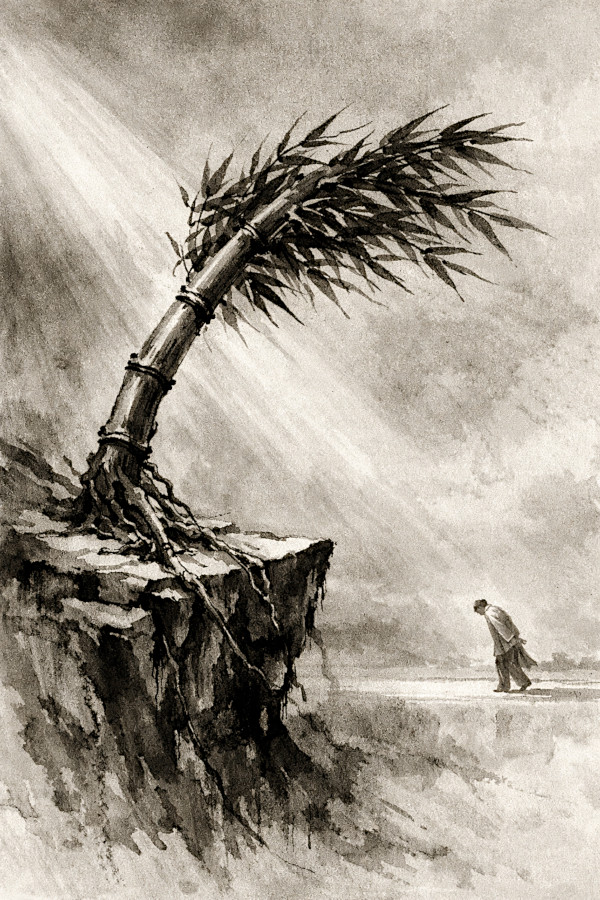 |
Bamboo and Rock 《竹石》
By Zheng Xie (郑燮)Biting the broken cliff, never letting go, Its roots anchored in the shattered seam. Honed by a thousand strikes, its strength remains, Unmoved, even as the four winds blow.
|
Epilogue: Effortless Action
(终章:无为而治)
—without striving, seeking, or expectation—
a whole new world reveals itself.
Dallas, Texas Xiàn lóng zài tián, tiān xià jiē zhāng
(见龙在田,天下皆章)
The dragon appears in the field; his brilliance is revealed to all.
As it was Chen’s debut at the event, his area began quietly. Yet, even with only five or six spectators, he remained meticulous, deconstructing the essential principles of the Practical Method with precision. Just a rope’s length away (一绳之隔), the contrast was sharp: a minor celebrity instructor and his assistant were holding court before a massive, captivated crowd.
As the neighboring instructor concluded his session, the crowd’s attention began to drift. Drawn by Chen Zhonghua’s fluent English and the rhythmic precision of his movements, spectators from the adjacent area began to migrate. Soon, the “buffet” shifted; people were buying tickets just to cross the rope and witness the Practical Method firsthand. In minutes, the entire crowd had transitioned to Chen’s side. Other concurrent sessions were left with an uncomfortable silence.
In the middle of Chen’s lecture, the atmosphere suddenly curdled. An imposing figure stepped forward, planting himself like a monolith directly in Chen’s path.
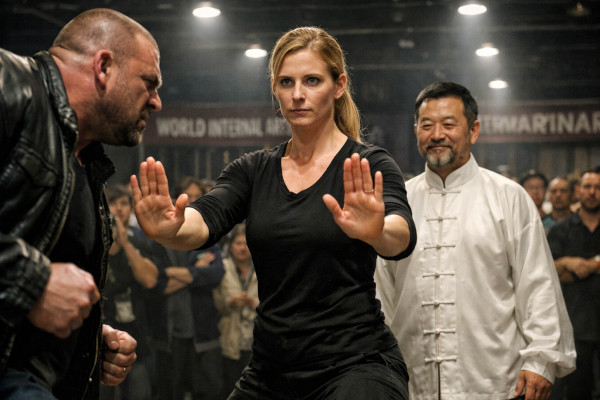
“Master Chen,” the man said, his voice carrying over the crowd. “I’ve heard your Dantian (丹田) is powerful. I’d like to test it.” It was the neighboring instructor’s assistant—a man standing over 1.9 meters tall, looming over Chen like a mountain.
Chen Zhonghua met the challenge with only a faint, knowing smile. Such unexpected challenges were a common occurrence (司空见惯) for those yet to be shielded by fame. But before he could react, a clear voice rang out.
That is the Chinese martial arts tradition.”
Chen’s voice cut through the tension—a calm, steady command to stop. Susan withdrew instantly with disciplined precision, stepping to the side but remaining alert: the perfect shadow of her master.
The commotion had turned the thousand-square-meter hall into a theater. The “scent of gunpowder” (药味) hung heavy in the air, drawing spectators from every corner of the convention center until the crowd stood five deep behind the floor tape. At the center of the ring, the visual contrast was jarring. The challenger was a towering figure, nearly two meters tall, his frame showing the rugged results of years of hard training. Opposite him stood Chen Zhonghua, slender and slight at 1.7 meters. Without visible musculature, Chen possessed the classical Taiji physique—deceptively soft in appearance, yet structurally profound. The audience watched, breathless, at the physical impossibility of the pairing.
For Chen, however, this was familiar ground. He was the bearer of a lineage forged in the fires of such challenges. His own teacher, Master Hong, had met countless provocations with effortless equanimity, never giving them a second thought. Even further back, Master Hong’s teacher, the legendary Chen Fake, had faced the most renowned fighters of his era, his skill becoming a pillar of the martial world.
Standing now in a convention center in Dallas, Chen felt the weight of that history behind him. How could a stranger in this strange land intimidate a man who carried the spirit of such giants?
|
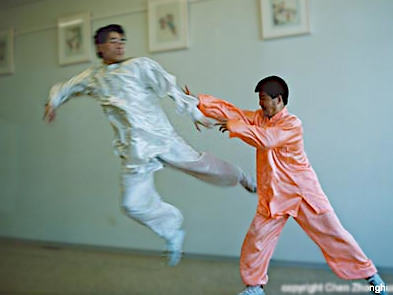
The challenger lunged, his right hand striking toward Chen’s Dantian. With a movement so brief it was almost invisible, Chen met the incoming limb. Using his elbow to “close” the line of force (出肘合住), he executed a sharp, centrifugal pull.
The effect was instantaneous. The man’s massive frame lost its center entirely; he was sent flying forward as if pulled by an invisible wire, crashing hard against the floor. He scrambled to his feet immediately, bracing himself with his elbow to spring back up. Chen stepped forward with a calm smile, but the follow-up never came.
|
 |
with one move, fame shakes the four directions.”
Guarding the Master
护师
The master, a mountain, stands calm and deep.
The martial world knows storms will brew,
True lineage rests in a heart ever true.
江湖惯见风波起,一脉真传在定中。
Dallas, Texas Diǎn zhǒng guī dì, huā kāi yǒu shí
(点种归地,花开有时)
The seed was planted; the flower awaited its time to bloom.
 |
The thunderous applause in the Plano Convention Center eventually faded, replaced by the hum of a hundred quiet conversations. Chen Zhonghua had “shaken the four directions,” but as the crowds began to disperse to their own hotels, the real work of fulfilling Master Hong’s mandate began. Fame was merely the wind that carried the scent of the blossom; the real labor was in the planting of the next generation.
|
This was Richard Johnson. A man with a Master’s degree in Biomechanics (身体力学硕士) working in Bentonville, Arkansas, Richard had driven five and a half hours to Dallas with a singular, burning obsession: to meet a well-publicized Chinese Taiji instructor he had contacted online. He was not a man of means; he had gathered his entire “fortune” of a few hundred dollars—money saved with great difficulty—to satisfy his desire for the art.
He had arrived at the hotel at 8:30 PM, exhausted and hollow with hunger, but fueled by the anticipation of his 9:00 PM lesson. He had knocked on the instructor’s door precisely as agreed, his teaching fee in hand.
The door had opened to reveal a man in a bathrobe, casually drying his hair. “I completely forgot,” the instructor had said with a nonchalant shrug. “I’m tired, and I’m going to rest now.”
“But I drove five and a half hours!” Richard had cried, frantic. “I have the money right here!”
“That’s your business; it has nothing to do with me,” the man replied, then shut the door.
Met with such a callous rejection (吃了闭门羹), Richard stood in the hallway, stunned. The investment of his time, his money, and his hope had been discarded in an instant. He wandered downstairs like a wooden statue (如木头人), standing in the lobby with a heart curdling into bitter regret. “I’m never learning Chinese martial arts again,” he cursed silently. “They are all frauds.”
It was in this moment of utter despondency that he saw them: a group of Westerners surrounding a dark-haired Chinese man walking into the lobby. It was Chen Zhonghua. Richard recognized him from online videos, but after his recent experience, he expected only more coldness. Yet, as their eyes met, Chen didn’t look away. He offered a polite smile, a nod, and a warm handshake.
In that instant, a beam of sunlight suddenly pierced through Richard’s gloom—a ray of “Chinese Sunshine.”
Still half-bewildered, Richard joined the wake of the crowd and followed them up to Chen’s room. There, the “Sunshine” only grew brighter. He listened in fascination as Chen articulated the art in flawless English, decoding the very biomechanics Richard had spent years studying. Most surprising of all was Chen’s transparency; he demonstrated everything himself, inviting the students to test the techniques on his own body to feel the structural reality of the art.
|
From 9:00 PM to 3:00 AM, Richard Johnson lived a beautiful dream. He practiced “Push Hands” in close quarters with a true master. When Chen’s miraculous force surged through him, the sharp pain didn’t bring suffering; it brought the electric jolt of reality and pure joy.Throughout the following days of competition, even as Chen took his seat at the judges’ table, Richard and a dedicated group hovered nearby, seizing every free moment to seek his guidance. When the event finally concluded, Richard insisted on being the one to drive Chen to the airport.
|
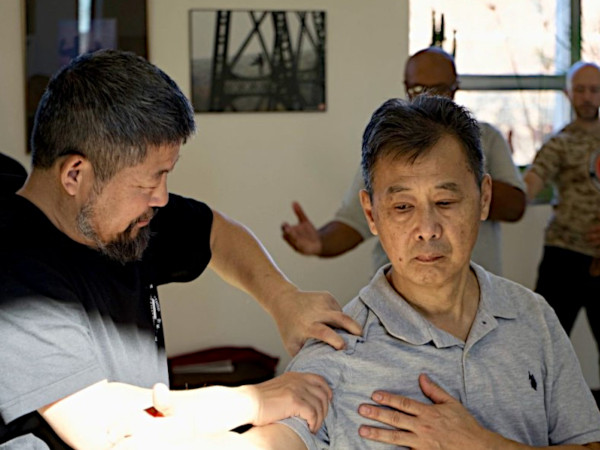 |
Richard took Chen’s hand, his voice thick with earnestness. “That night in your room, you gave me hours of your life. This money isn’t nearly enough. But aside from the gas money for my return trip, this is every cent I have. Please, you must eventually accept me as your disciple.”
“We can discuss discipleship later,” Chen insisted, firmly refusing the money (坚辞不受), “but I cannot take this.”
This was the essence of the path: The seed is sown. Chen had placed the truth of the system into a man who finally had the capacity to hold it. Richard did not need to be a master today; he only needed to be the earth that protected the treasure.
As Chen turned toward his gate, he felt a quiet certainty. Richard would return to Bentonville, but he would not return alone. He carried the “Sunshine” with him, and with it, the inevitable future of the art.
(点种归地);
now, the waiting began.
(武林),
the bloom always has its destined hour
Part 5. Another Step Higher (更进一步)
Italy Chén shì rú mí, wéi dào zhǐ yǐn
(尘世如迷,唯道指引)
The Mundane World is a Maze; Only the Tao Guides the Way.
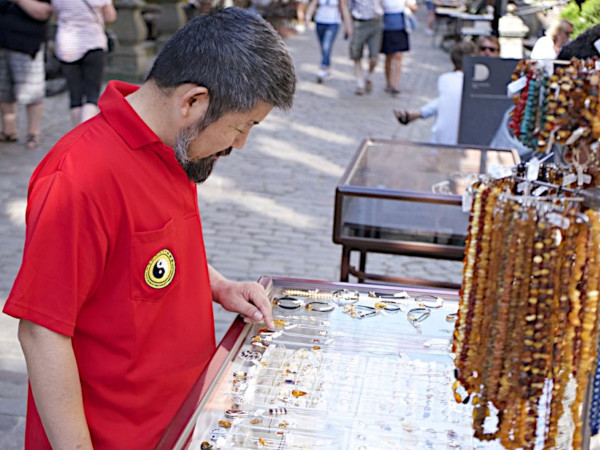 Just a traveler and his curiosity. |
The eruption of a distant volcano had transformed Europe into a vast, geographic puzzle, its ash clouds turning the continent’s orderly transit routes into a disjointed maze. Millions of lives were suddenly disrupted, caught in a gridlock where every familiar path led to a dead end. Having only just managed to escape the initial paralysis of Finland, a group of Taiji enthusiasts and Master Chen exhaled, allowing themselves to believe the worst was behind them. They watched with a sense of relief as their icebreaker continued its fearless journey through the Northern Baltic Sea, the sound of its hull crushing through the ice—a rhythmic crunch that sounded surprisingly cheerful. Caught in this rare moment of stillness amidst the global chaos, Tomek sat completely immersed in the exhilarating world of Master Chen’s martial arts stories, his admiration for this profound Eastern culture growing even deeper.
|
It had all started in the autumn of 2009, during the whirlwind of another international workshop season, when Master Chen posted a simple update on Facebook regarding his flight from Dublin to Amsterdam. Almost immediately, a comment appeared: “Master Chen, one hour is enough to get from Dublin to Amsterdam. We are Italians; we have a school and we study martial arts. We will pay to re-book your flight—please take a detour to Venice first and have a cup of Italian coffee!” Such serendipitous requests are the hallmark of Master Chen’s life. In a world obsessed with formal advertising and rigid strategic planning, he operates on a different frequency. He explains these random invitations not as mere luck, but as a natural alignment of intent and timing. He accepts every serious invitation with the same open heart, trusting that the Tao will guide the way.
the Way follows the course of nature.
The Maze of the North
(北地迷津)
|
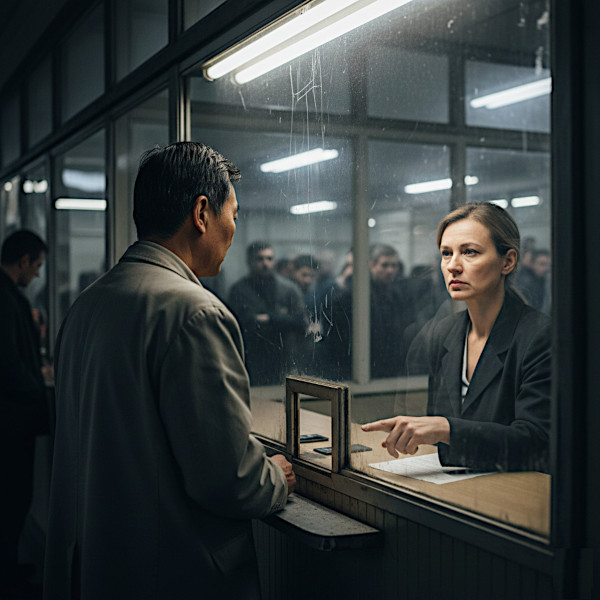
It took four full hours of shuffling through the corridor of waiting before Chen finally reached the ticket window—the gatekeeper of this bureaucratic maze. Behind the glass, the clerk didn’t even look up, her voice as flat and final as a stone wall.”To Prague,” Chen requested.
“No buses,” the clerk snapped, her finger already hovering over the ‘next’ button. “Vienna?” “No buses.” |
 |
through change, a way opens.”
“Ah, Copenhagen! At least we’re finding a way through,” Tomek said, his relief manifesting in a quiet, incessant prayer of thanks. For Chen Zhonghua, the maze was not something to be feared, but something to be navigated with a quiet mind. Stopping was not an option; in two days, he was due to teach Taiji in Italy, and the Way always provides a path for those who refuse to stand still.
Total Darkness: The Vanishing Path
(冥途晦迹)
The vast, dark lot was empty. On the April plains of Northern Europe, the late-night wind was bone-chilling, yet Chen felt a cold sweat (一头汗) break across his brow. He turned back to the shop, but the maze had shifted again; the passengers who had been queuing were gone, and the shop staff were closing up, their movements robotic and distant.
 |
He was trapped in a puzzle of silence. His luggage, his passport, his very identity was on that bus, now swallowed by the night. His phone, usually a compass in the modern world, showed ‘No Service‘—a digital dead end. The stars hung low over the vast, indifferent plains—a silent, celestial witness to his isolation (星垂四野), and the wind howled with a predatory edge. Standing on the frozen asphalt, he gazed around blankly. In this foreign land, geography had dissolved; there were no signs he could read, no voices he could understand. It felt as if he were the only person left in the entire world. He wasn’t just lost; he was erased. In that moment, the maze wasn’t made of walls, but of Absolute Void—the crushing isolation that descends when communication fails.
|
For the first time, Chen truly understood: in the maze of the mundane world, if you cannot speak, you are invisible. In the end, just like Taiji, life is not about the strength of your limbs, but the clarity of your communication. To be ‘blocked‘ is to be lost; to ‘connect‘ is to find the Way.
there is nothing that is blocked that is not a maze.
The Spectacle on the Platform
(众目昭彰)
|
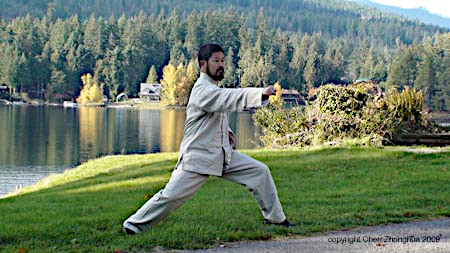
The tracks lay quietly beside the street as a crowd waited in weary silence. But beneath a rain shelter, the world’s frantic pace seemed to vanish. There, two figures—one East, one West—moved in perfect synchronicity, their bodies flowing in a slow, powerful dance. To a practitioner, the location is irrelevant; whether in a gilded hall or a rain-slicked station, the ‘Way‘ is always beneath one’s feet. They moved with a quiet poise, proving that when one is centered, the chaos of the world simply fades away. They drew the stunned attention of the passengers, and even the farm ducks waddled over to join the spectacle (鸭子凑热闹), as if drawn to a harmony that the humans had forgotten.
|
 |
we see the resilience of the pine;
Only when times are difficult do we see
the true heart of a man.
The Heart of the Labyrinth
(迷宫之心)
|
The moment the train reached Hamburg and Chen stepped off, the world began to tilt. He was hit by a crushing wave of dizziness (发懵) that made the concrete platform feel as unstable as a ship at sea. He was truly alone now. Without Tomek to act as his buffer, the sheer scale of the city pressed in on him. This was a massive, multi-leveled transit hub—a vertical labyrinth of intersecting steel tracks and echoing announcements in a German tongue that sounded like harsh, impenetrable static.
|
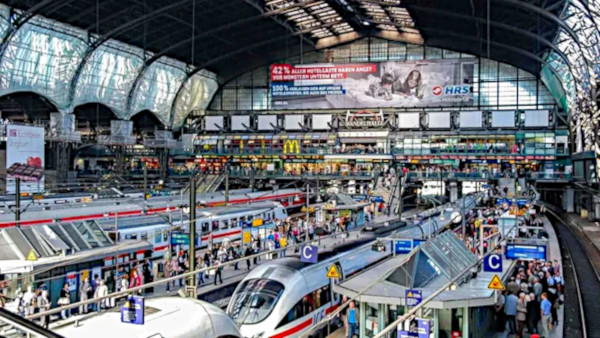 |
The word cut through the German static like a bell. It wasn’t just a voice; it was the unmistakable, melodic cadence of Chinese. Chen looked up to see a familiar face at the top of the stairs—one of his disciples from Prague. In that moment, the heavy weight of the backpacks seemed to vanish. The maze had not just opened—it had been shattered by a bond that transcended geography. This disciple was here to greet him.
|
Hours earlier, in a brief moment of flickering internet access, Chen had cast a single line into the digital void: “If you get this, find a way to ‘rescue‘ me in Hamburg.” That was all the student needed. He weaponized the German Autobahn by sustaining a blistering 180 km/h for hours, transforming the unrestricted highway into a high-velocity corridor of loyalty. For eight hours, he had been a streak of light across the map, proving the ancient weight of the bond: “一日为师,终身为父”—’Teacher for a day, Father for a lifetime‘. He had raced across international borders for the sole purpose of standing at this specific staircase at this exact second.
|
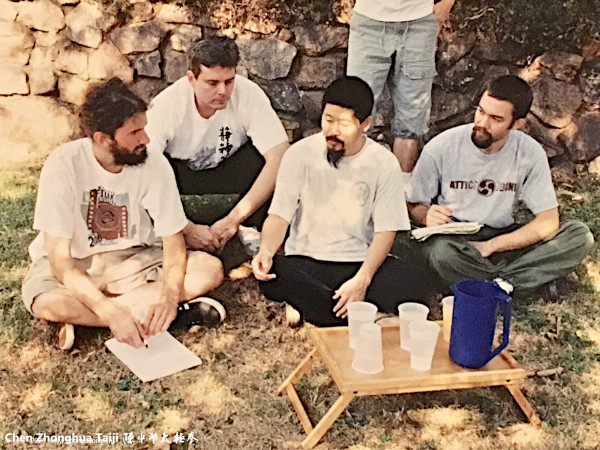 shared study |
The Emerald Path
(翠微古道)
|
“Master Chen!!”Chen Zhonghua spun around to find a face that looked vaguely familiar. “I know you!” Chen, who was famously good with faces, said with certainty.
“Yes! I’m here to pick you up!” “You’re Milan! You attended one of my seminars in Prague, didn’t you?” |
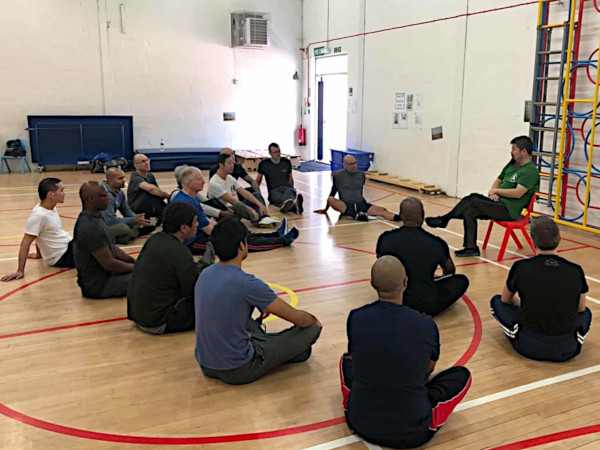 in the heart of the training hall. |
But Chen knew that if he stopped now, the momentum of the Tao would stall. He patiently and slowly explained: “I can’t eat. I have a very important seminar in Italy tomorrow. There is no time to waste. Take me to the train station.”
“There really are no trains,” the student insisted. Unable to win the argument, he drove Chen back to the station. After a fruitless inquiry at the ticket office, Milan tried to take Chen home once more, convinced the path was closed.
“Just translate for me; don’t make assumptions,” Chen said slowly and patiently. “Just see if there is any train departing.”
After a tense exchange with the clerk, Milan’s eyes widened. “Wait, there actually is one leaving. But it is going to Villach.”
Villach? Chen thought, mentally piecing together his knowledge of European history. I’ve never heard of it. Is it in Austria? Austria and Italy used to fight in wars—does that mean it’s close to Italy?* Betting on his geographical intuition, he boarded, leaving behind a concerned Milan.
The path became a “zigzag” through the borders of Central Europe—Germany, Austria, the Czech Republic, and back into Austria. Police in distinct uniforms boarded in rhythmic turns to check passports, the atmosphere thick with the tension of a World War II blockbuster.
Then, suddenly, the maze cleared.
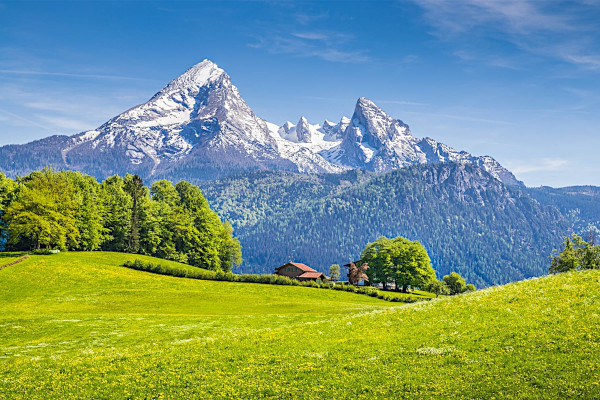 |
As the train traversed Austria, the grey ash and concrete of the stations vanished, replaced by the world of The Sound of Music. The afternoon sun stroked the Alps, and the rolling slopes were lush and green, like an emerald carpet (绿草如茵) unrolled just for him. Wildflowers and lakes flashed by like jewels; mountain ponies grazed leisurely in the golden light. It was a rare moment of grace in his long “ascetic pilgrimage” (苦行). He let out a satisfied smile, just as a “thunderous roar” (腹间“雷鸣”) echoed from his stomach—a reminder that his spirit was fed, even if his body was not.
|
|
At 11:30 PM, the train finally pulled into the Italian border. His host, the Italians, were waiting.The journey was finally over. From the volcanic ash of Finland to his final workshop in Venice (威尼斯) Italy, Chen had crossed seven borders and endured a final 26-hour marathon of sleepless travel. When measured against a map, the scale of his pilgrimage was staggering: he had covered more than 5,000 kilometers (3,140 miles)—a distance greater than a cross-country trek from New York to Los Angeles.
|
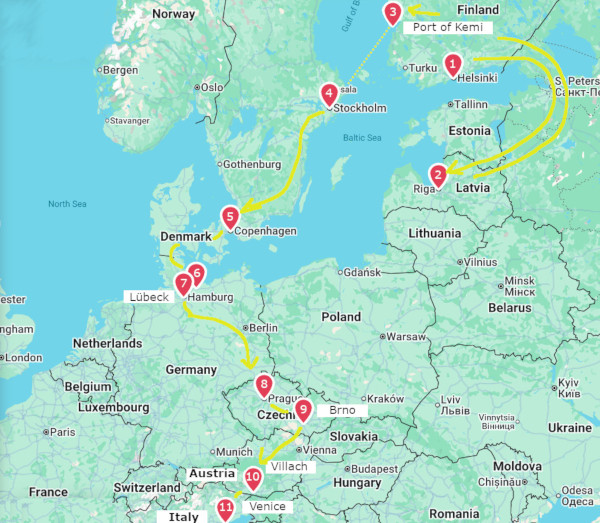 |
In a world functioning normally, a direct flight from Helsinki to Venice would have been a mere 1,850 kilometers, a brief passage above the clouds. But the “Maze” had demanded a different price. To honor his word, Chen had traveled nearly three times the necessary distance, navigating a continent in the throes of total collapse. He had traded the convenience of the sky for the grit of the road, the silence of the station, and the loyalty of his students.
Yet, the true miracle was not just the distance covered, but the spirit that remained when the wheels finally stopped. After only two sandwiches and a few hours of stolen sleep, Chen Zhonghua stood before his class at 9:30 AM sharp. His posture was upright, his mind was clear, and his lesson began.
The volcano had claimed the sky, but it could not claim his resolve. In a world paralyzed by fire and ash, utmost sincerity had become the compass. As he raised his hands to demonstrate the first move, the chaos of the last week vanished into the stillness of the form.
the mundane is transformed into the miraculous.
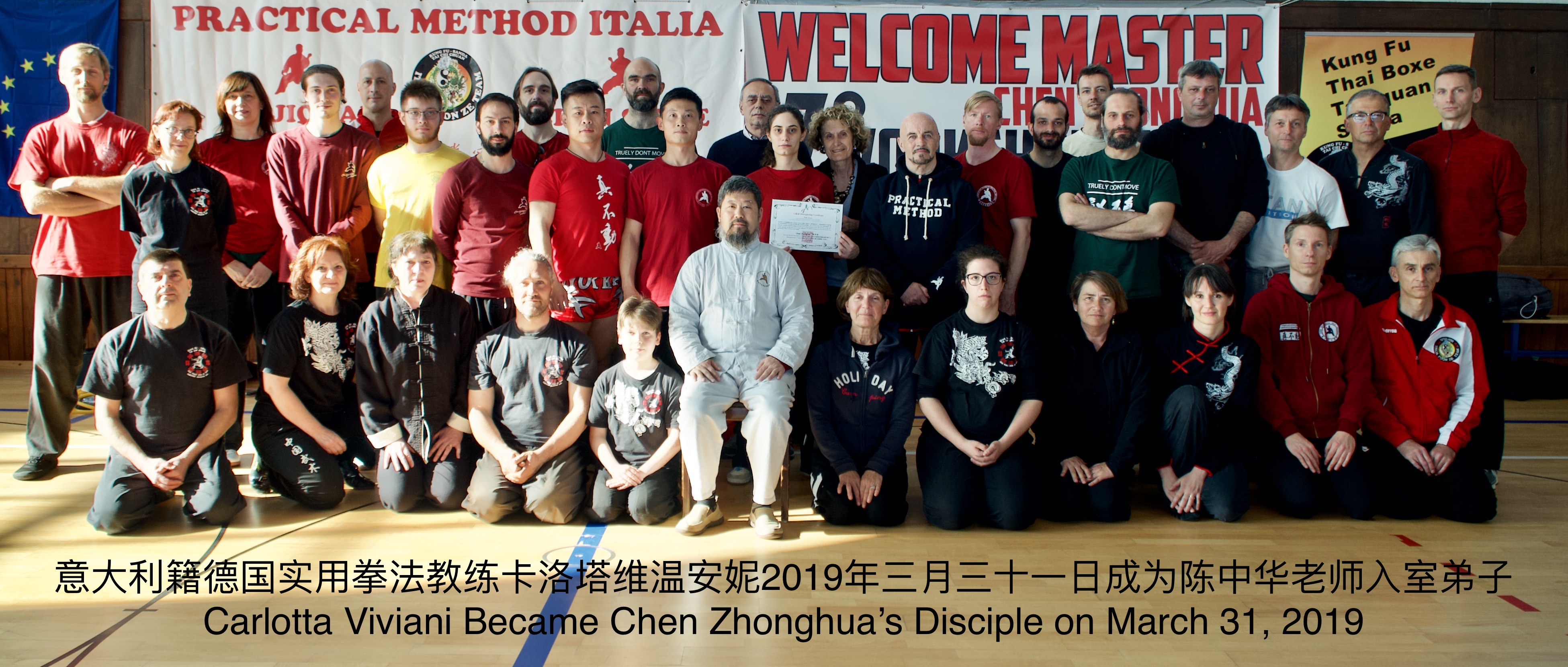 |
Utmost Sincerity Parts the Clouds
至诚拨云
But utmost sincerity acts as a guide, parting the clouded skies.
Turning the withered into wonders, the impossible into truth,
Another sacred seed is sown, far across a distant stream.
化开腐朽成奇迹,更撒灵根在他川。
Bentonville, Arkansas Gēn shēn mù mào, yuán yuǎn liú cháng
(根深木茂,源远流长)
Deep roots sustain lush growth; Distant sources feed a mighty flow.
The Taiji Nomad: Sowing Seeds in the Snow
(雪域播种)
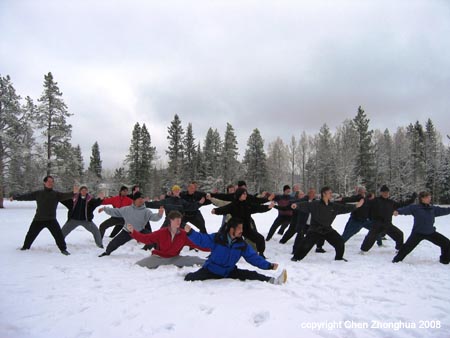 Master Chen finds the heat within the frost. |
The story shifts to the snowy landscapes of Bentonville, Arkansas, at the invitation of his disciple, Richard Johnson. Having just finished his lecture, Chen Zhonghua slung his backpack over his shoulder and headed out to catch his flight. He walked through a completely white world where even the trees were buried under snow; there was practically no way to move unless a snowplow had cleared the main road.Previously, it was dark volcanic ash that had disrupted his travels; now, it was a white blizzard. Chen Zhonghua is used to these natural obstacles, viewing them as nothing more than temporary delays on the long road of growing the flowers of Taiji.
|
Finding the Path
(循迹求真)
|
According to his memory, the airport should have been right there. But the world was a void of white, and no buildings were visible. After a phone call and a GPS check to pinpoint the location, he confirmed he had arrived. Chen shouldered his backpack and trudged through the drifts. In that vast, pale world, the usual noise of travel was muffled by the drifts; only his black silhouette remained, a lone point of ink on a blank canvas. After circling the area, he finally found the entrance. Pushing open the door, the familiar, unique atmosphere of the airport rushed toward him. He turned and waved before heading toward the passengers who had been stranded for days.
|
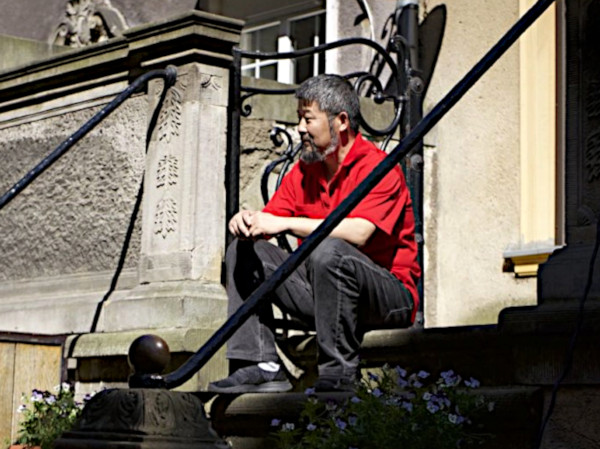 A rare moment of ease for the Master. |
The Life of a Taiji Ascetic
(苦修遗风)
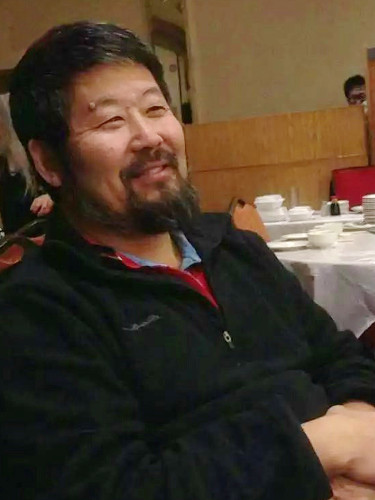 The philosophy of the flow, shared over dinner. |
Since making the decision to commit fully to the teaching of the Practical Method, Chen Zhonghua has become a Taiji ascetic—able to travel instantly to any location in the world as fate leads him. In his home, there are four identical travel bags, each containing the exact same items: a few clothes, toiletries, and a folding stick used for his unique, geometric explanations of quan fa. Whenever he receives a call, he packs his laptop, grabs a bag, and leaves. “I can leave anytime!” |
A Definition of Home
(安身之处)
|
“For the first seven years of our marriage, my wife and I were never apart. But gradually, we spent more and more time apart. When our two daughters were little, I generally didn’t go too far. Now that they’re adults, the four of us have our own lives. My wife even flew to Europe to visit me once!” Chen Zhonghua said with a smile.
(“结婚头七年,和太太一天也没离开过,后来慢慢地,不在一起的时间越来越多。两个女儿小的时候,我一般不会走太远,现在女儿成年了,我们一家四口都有各自的生活。我太太还曾专程飞到欧洲去看我!) |
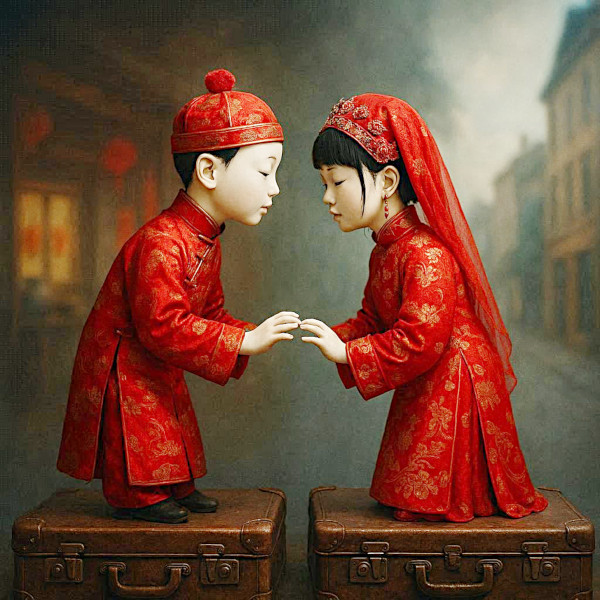 how far love can travel. |
Daqingshan 大青山 Wànwù yǒu zhōng, bǎijiā guī shè
(万物有中,百家归舍)
All things possess a center; The hundred schools of thought return home.
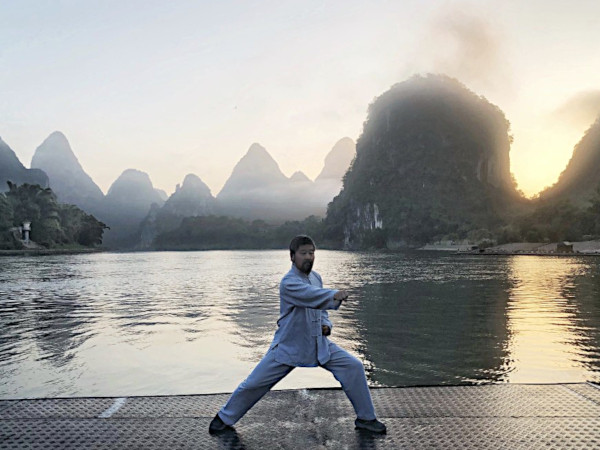 |
While most see Taiji as a practice of stillness, Chen Zhonghua’s life is defined by a relentless, fluid motion—a ‘Long Flow’ that spans continents. He is the Martial Arts Nomad, a man whose entire existence fits within the compass of a pre-packed bag. With four identical kits staged across the globe—each containing the same clothes and his signature folding staff—Chen exists in a state of perpetual readiness. To him, a flight delay is not a static interruption but a continuation of the flow. Even a blizzard on an airport carpet becomes an invitation to practice ‘Taiji equanimity,’ keeping the mind clear while the world rushes by.
|
The Flow: Planting Seeds Across the Map
(随方设教)
|
Chen’s mission is driven by a simple conviction: the “Long Flow” of Taiji must reach every parched land. “If a place lacks Taiji,” he often says, “I will plant a seed.” What began in 1985 with a single disciple has since swelled into a river that nourishes a global forest. From a modest group of sixty students in Canada, he has grown to guide over a quarter-million practitioners across the globe. For Chen, this expansion was never about the gravity of numbers, but about ensuring the “Living Source” of his lineage reached the modern world. His “Taiji Map” now encompasses more than 150 branches in 40 countries, all bound by a digital web of over a million users—a vast network ensuring the ancient waters of the Practical Method flow on, regardless of geography or distance.
|
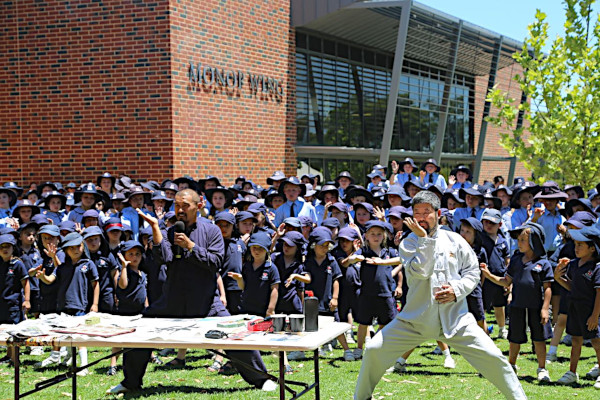 Master Chen leading the charge in Australia. |
This is the central question Chen Zhonghua has dedicated his life to answering. Ever since receiving the mandate from his late teacher, Grandmaster Hong Junsheng, to promote and preserve the legacy of the Practical Method, Chen has viewed himself as more than just a teacher of movements. He is a translator of a civilization, ensuring that as the art travels the globe, it never loses its connection to its ancestral home. His tireless journey across five continents does more than teach form; his workshops weave fascinating stories of lineage and cultural importance, skillfully contrasting ancient traditions with Western perspectives.
Drawing on his experience as an educator in the West, Chen understood clearly that engaging students in traditional Chinese martial arts requires more than just the transmission of technique; it requires immersing them in the deep cultural and historical context of the art.
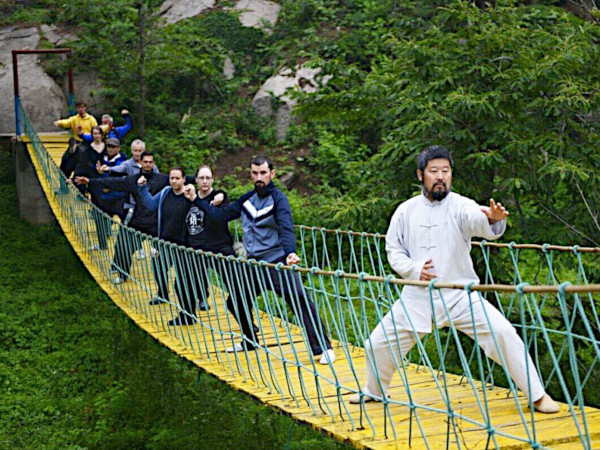 Master Chen bridging the wisdom of the East with the spirit of the West. |
Since the 1990s, Chen Zhonghua has continuously organized study pilgrimages, leading his Taiji students across the ocean to China. From the bustling streets of Beijing and Shanghai to the classical gardens of Suzhou and the martial heritage of Jinan, these journeys serve a dual purpose: exploring the true origins of Taiji culture and seeking out fellow disciples and masters. Through these encounters, his international students do more than just practice—they broaden their horizons and witness the living heart of the tradition.
|
|
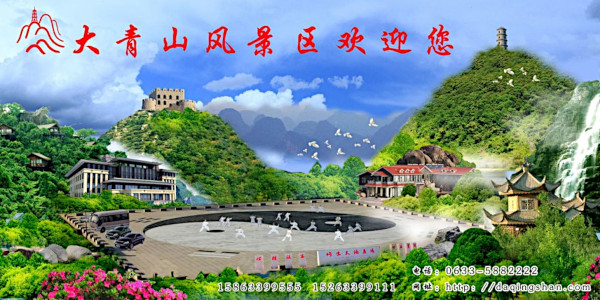
It was not until 2005 that Chen Zhonghua returned to his ancestral home in Rizhao, Wulian County. There, the lush, magnificent peaks of Daqingshan arrested his gaze, sparking a profound and resonant connection that felt less like a discovery and more like a homecoming.
He threw himself into the project with the same tireless intensity he brought to his travels. No longer a nomad, he became the architect of a sanctuary. With every brick laid and every tree planted, he manifested his dream upon the slopes, crafting the living landscape of Daqingshan Taiji (陈中华开始绘制青山太极的美景). The flow had finally returned to its source: the ‘Great Green Mountain.'”
|
 Great Green Mountain (大青山) |
Over the ensuing decade, Chen’s tireless efforts became the catalyst for a global movement. Through him, the practice of Taiji rippled outward to the furthest reaches of the earth; in return, practitioners from every continent were drawn back to the source—gathering in Rizhao, Wulian, and upon the heights of Daqingshan.
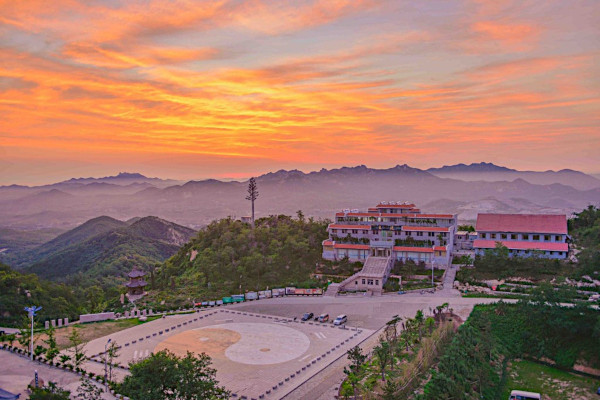 Daqingshan Taiji Center (青山太极) |
Taiji became more than a martial art; it became a diplomatic force. Through its practice, Rizhao, China, forged enduring bridges with dozens of nations. Within the gates of the academy, traditional Chinese culture ceased to be an abstract concept. It became something tangible—felt in the rhythmic flow of the routines and the balanced resistance of ‘push hands.’Through this living exchange, the ‘seeds’ Chen had sown in the snowy landscapes of the West finally returned to bloom in the mountain air of his homeland.
|
A Home for the World: The Rise of Daqingshan
(鼎立青山)
|
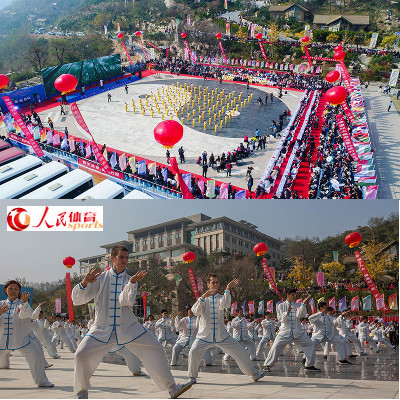
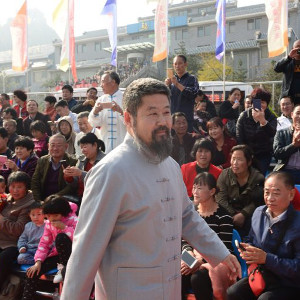
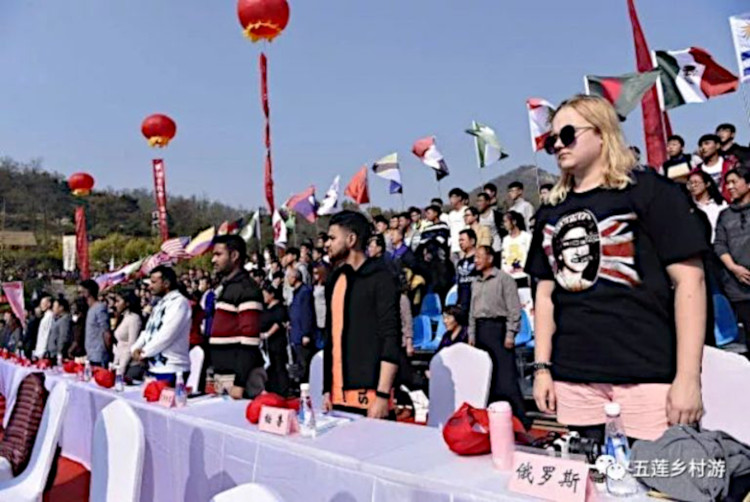
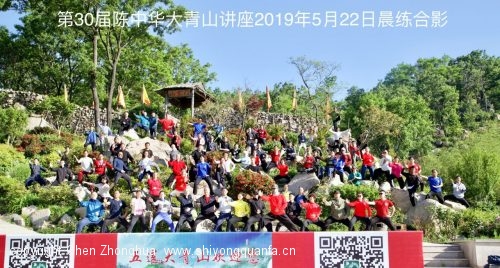
Chen Zhonghua understood that after establishing a physical home for the Practical Method, the next step was to elevate the community profile of Daqingshan. Guided by the Confucian mandate, “Is it not a pleasure to have friends visit from afar?” (有朋自远方来,不亦乐乎?), he established the annual Daqingshan International Taiji Competition (大青山国际太极拳比赛), extending an invitation to practitioners and enthusiasts from every corner of the globe.
|
 |
 |
Now a cornerstone of the Chinese martial arts calendar, the event has earned prestigious national recognition. It was selected as a “2014 China Sports Tourism Excellence Project” and honored as a “2015 China Cultural Industry Key Project.” The momentum culminated on December 11, 2018, at the China Sports Culture and Sports Tourism Expo, where the competition was officially awarded the “Excellent Event Award.” ( 在中国体育文化、体育旅游博览会上,日照市大青山国际太极拳大赛被授予“精品赛事奖”。)
|
|
By 2018, the scale of the event had been transformed. International participation surged from just over 100 attendees in its inaugural year to more than 1,200 participants representing 40 countries and 128 cities. Yet, for Chen, these numbers represent only the visible portion of a much larger movement.
|
 |
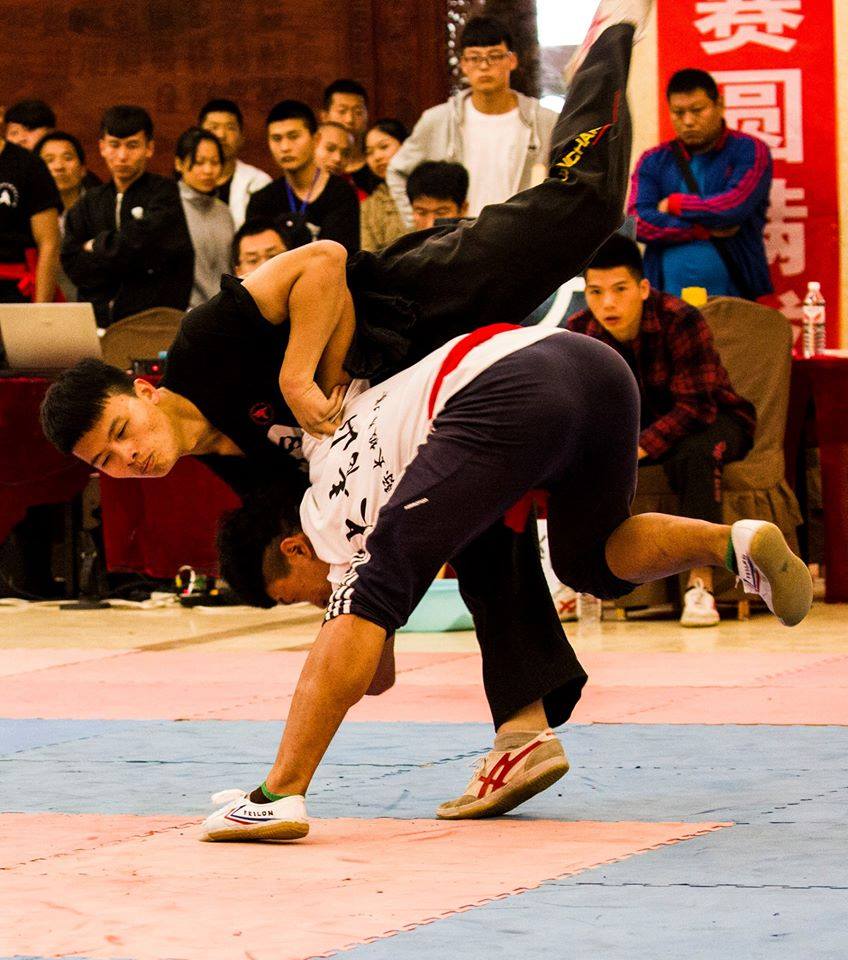 |
“Actually, the international participants at the competition make up less than 5% of my students abroad,” Chen explains. “Currently, I have over 280 direct disciples and over 60,000 students who have studied with me consistently. As for those who have attended my lectures since I first began teaching in 1986? I estimate that number is around 200,000.”Through these vast numbers and prestigious accolades, the ‘seed‘ planted years ago in the snow has grown into a global forest—with the heights of Daqingshan serving as its sturdy, enduring trunk.
|
Beyond Numbers: A Legacy for a Million Years
(万代芳华)
 |
|
Despite the staggering statistics, the sheer number of practitioners is not what truly drives Chen Zhonghua. For him, the mission is not about temporary popularity, but permanent presence. He views his work with a perspective that stretches far beyond the present day. He sows a seed of Taiji in a new land and then allows nature to take its course. While having a million people practicing on a single day is a wonderful achievement, it is not his primary concern. Rather, his intent is fixed on the horizon of history: the hope that a million years from now, there will still be people practicing Taiji in those same locations.(“在一个新地方撒下一颗太极的种子,然后,随缘。这一天,有一百万人在练太极拳,很好。但这不是我在意的;我在意的是,这个地方,一百万年之后,依然有人在练太极!”)
|
|
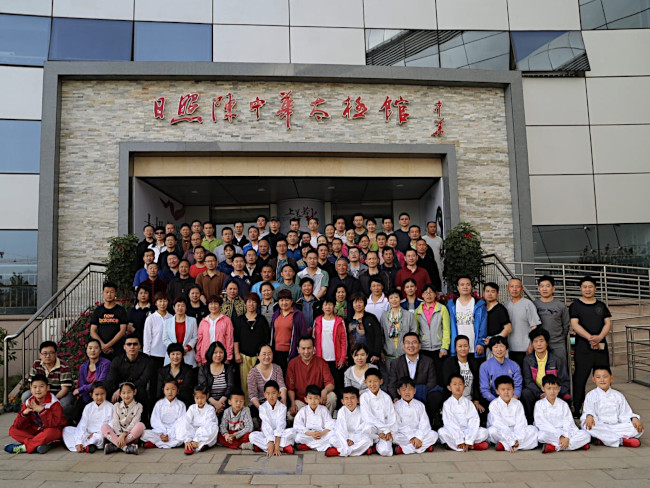
To ensure this eternal longevity, Chen has moved beyond the transmission of physical movements toward the institutionalization of knowledge. This vision was formalized on January 3, 2019, with the establishment of the Qingshan Taiji Culture Research Institute (青山太极拳文化研究院) at Rizhao Vocational and Technical College, where Chen Zhonghua was appointed as its inaugural president.
|
 |
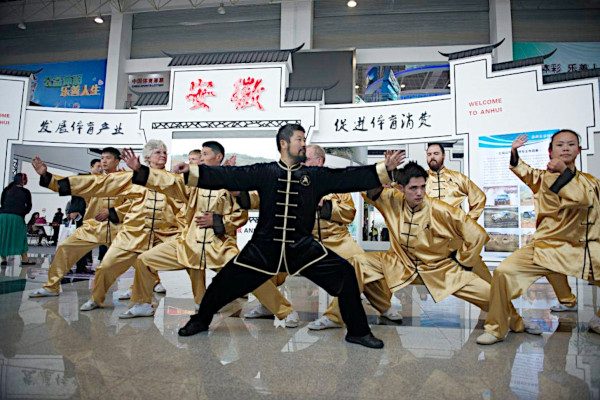 |
The Institute serves as a sophisticated engine for cultural preservation, striving to produce innovative research that links the promotion of Taiji to the broader revival of traditional Chinese culture. Its mandate extends to the strategic overseas dissemination of these traditions, with a particular focus on the “Belt and Road” regions, while simultaneously exploring the vital role of Taiji in national fitness and public health. By attracting and cultivating high-level talents dedicated to this inheritance, the Institute aims to transform Rizhao into a global model for research and practice, ensuring that the power of excellent traditional Chinese culture continues to radiate across the world for generations to come.
|
|
“I feel more and more keenly the rise of China’s international standing and the expanding influence of Chinese culture across the world,” (“我会利用我和大青山几十年来在世界各地教授和传播太极的基础和影响力,在‘走出去’和‘请进来’两个方向借势推动,培养出一批外语好、功夫精、会教学的专业国际太极教练,在国际和国内两个舞台打开局面!”)
|
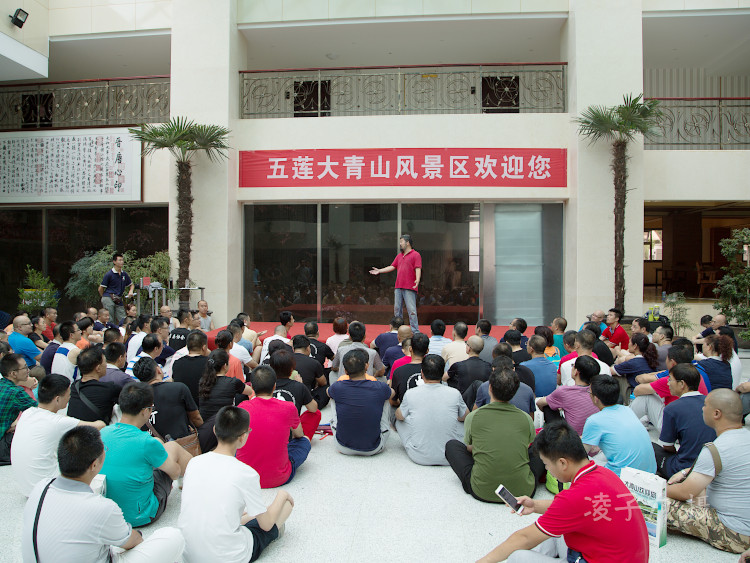 the Great Hall of Daqingshan |
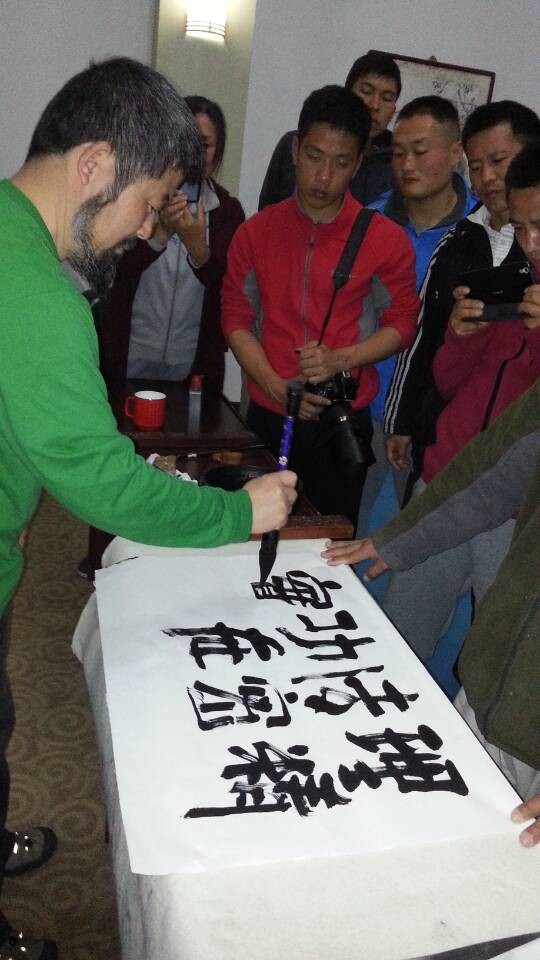 the disciplined lens of ‘Wu’ (武). |
Chen Zhonghua remarked earnestly, momentarily setting down his coffee. He spoke with a sense of growing urgency, noting that the promotion of Taiji must not only continue but accelerate. For Chen, this has evolved beyond a personal passion into a mission for the nation itself. He believes that practitioners must be the ones to answer the call to tell China’s story well, presenting a real, multi-dimensional, and comprehensive image of China to the global community.
“中国在国际上地位的提升,中华文化在世界影响力的扩大,我越来越真切地感受到了……‘讲好中国故事、传播好中国声音,向世界展现真实、立体、全面的中国’,我们得做实践者……” Through his tireless travels—from the snowy silence of North America to the vibrant peaks of Daqingshan—Chen remains the living embodiment of this vision. By bridging continents through the Practical Method, he ensures that the wisdom of the past remains a breathing dialogue for the future. |
|
To Chen, the “Deep Root” is the substance of the art, not the vanity of the image; he knows his students are there to witness the internal power of his Taiji, not his wardrobe. This lack of ego creates a quiet center, allowing him to master the art of “tactical sleeping“—dropping into a restorative slumber the moment the world slows down, only to wake with instant clarity the second he is needed. He is like a tree that remains undisturbed by the wind because its essence is buried deep within the earth.
|
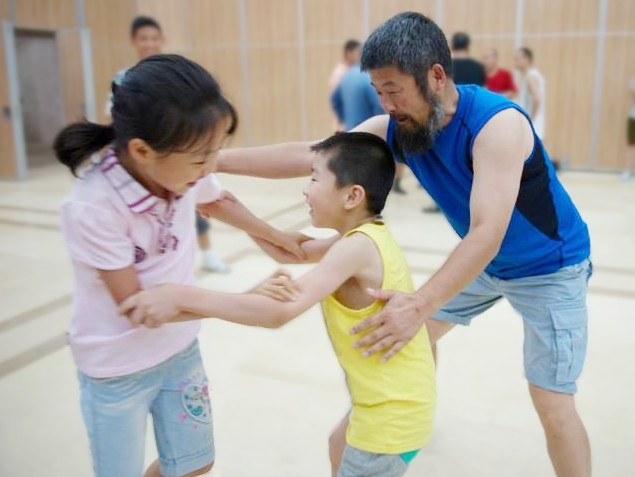 that balance begins with a laugh. |
Part 6. The Universe in a Brief Moment (片刻乾坤)
of Chen Zhonghua’s equipment as he traverses the world alone.”
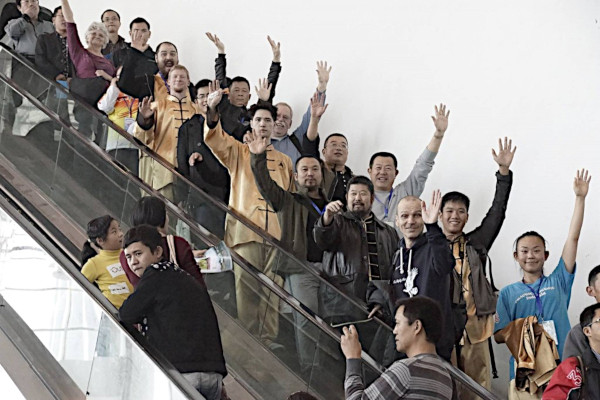 The march to mastery. |
By day, armed with only his hands and a folding staff, he brings the intricacies of Taiji to life through tireless explanation and demonstration. By night, those same hands turn to his laptop to organize lecture notes and edit instructional videos, ensuring that even those who cannot stand before him in person can experience the art online.
(白天,一双手,一根折叠棍,在讲述与演示间,让太极拳法与每一个爱好太极的人近距离接触;夜晚,一双手,一部手提电脑,整理讲课笔记,剪切授课视频,让每一个没有到现场的太极爱好者,通过网络感受太极拳。) |
The Master’s Two Secrets
(提神有道)
|
Despite a grueling schedule—ten hours of teaching by day and four hours of digital production by night—Chen survives on only four or five hours of sleep. Yet, at 5:30 every morning, he is the first to lead his students in practicing the form, his energy seemingly undiminished.“I have two secrets,” Chen says with a mysterious smile. His silver hair and neatly trimmed beard lend an air of ancient wisdom to this modern master, making the secret he is about to share feel all the more profound.
|
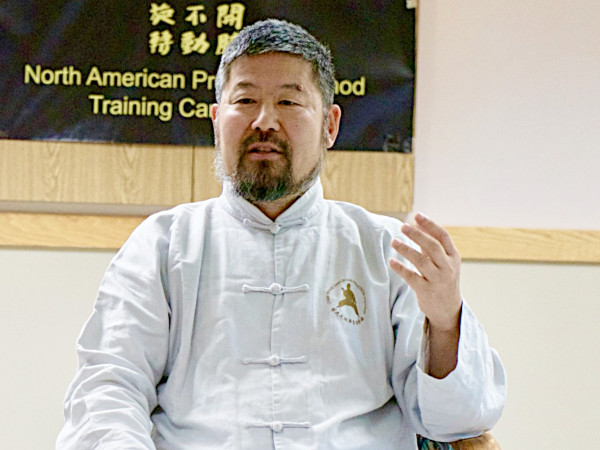 |
(白天十余个小时的授课、讲解,夜晚三四个小时的整理归纳,只有四五个小时睡眠呈现出的陈中华,每天早上五点半,仍然神采奕奕地领着学员盘架,“我有两个秘诀,”陈中华神秘地微微一笑,花白的头发和花白的短髯,让这位神奇的东方武术家更显神秘。)
“Second—and you wouldn’t believe it—but while you were talking just now, I actually took a nap right here by my computer. I am always hunting for moments to sleep. If a topic doesn’t concern me, I’m out; the moment I hear something that does, I’m wide awake! Haha! When you are truly exhausted, you learn the art of falling asleep anytime, anywhere.”
( “其一,咖啡!哈哈!”这位以幽默著称的武术家孩童般地笑了,虽然他在国外的太极馆里,每早必点一柱香,必煮一壶中国茶,但是论提神,他还是觉得咖啡更给力。“其二,你们想不到吧,就在你们说话的时候,我已经在电脑边睡了一觉了。我会时刻找时间睡觉,一听这个话题与我没关系,我就睡了;再一听这事与我有关,我又醒了。哈哈!人在很累的时候是可以随时睡着的!”)
A Profit of the Soul
(无形价值)
 |
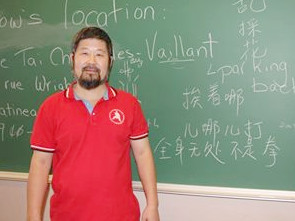
“None of what I do now is about making money.”
|
Chen Zhonghua, a man who once managed millions, speaks of wealth with a nonchalant, airy detachment (云淡风轻). “However, the spread of Taiji culture is something I must do. This isn’t a business; its value is intangible. On one hand, you could say my income is disproportionate to my efforts, as teaching alone could never replace my former earnings. But on the other hand, if you measure it by the mission itself, then I have made a staggering profit!”
|
 |
( “我现在做的,没有一件事情是挣钱的。”曾经坐拥百万的陈中华,提起钱来,云淡风轻。“但是,太极文化的传播我必须要做,这不是生意,它的价值是无形的。一方面,可以说我的收入与付出不成正比,因为靠教拳挣不出我之前的工资。可是另一方面,如果换算成要做的事,那我是赚了!曾经,我想拼命赚钱,然后再做自己喜欢的事。但现在,虽然赚不到很多钱,我却一直在做我最喜欢的事。而且这件事正在越来越有趣,越来越多的人关注并加入进来!”)
The Path of Simplicity
(行简专注)
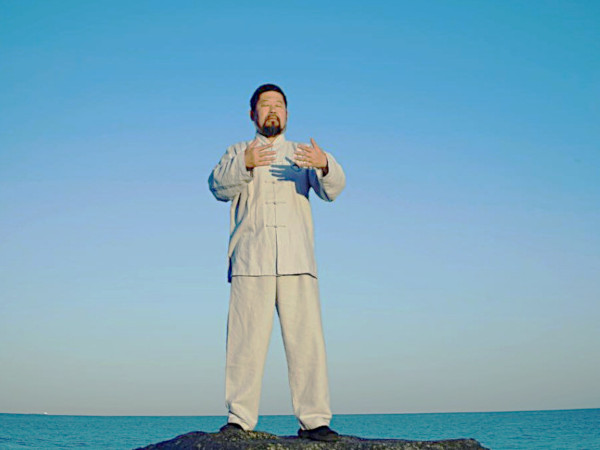 simplicity is the Master. |
In Chen Zhonghua’s view, the path of teaching should be the most direct route—a physical and spiritual map. For him, Taiji is the ultimate annotation to a life defined by focusing on one singular purpose.
(在陈中华看来,既是拳法教授的道路应该最简捷,又是对于人生道路专注一事的最好注解。) To honor this simplicity, Chen Zhonghua resigned from all outside positions to focus exclusively on the path of Taiji. (所以陈中华辞去所有职务,专心传授太极之道。) |
(所以陈中华生活至简,他的一顿饭或一件T恤从不超过14.99(加元)。那件1993年买的西装,还是他常穿的唯一一件正装。)
Sowing the Dandelion Seeds
(薪火相传)
|
For Chen, the transmission of Taiji is akin to the conservation of the Chinese Giant Salamander—a “living fossil” that has survived unchanged for millions of years, yet remains fragile and dependent on a pure environment. Much like this ancient creature, Taiji is a living masterpiece of evolution that requires a specific “habitat” of culture to survive.“I am simply bringing Chinese Taiji to the world,” Chen explains, “providing people with the opportunity to sow the seeds, to water them, and to fertilize them. Ultimately, what wins people over is the heart, not physical strength. What motivates them to continue is the depth and breadth of Chinese culture, not just the Taiji techniques themselves.”
|
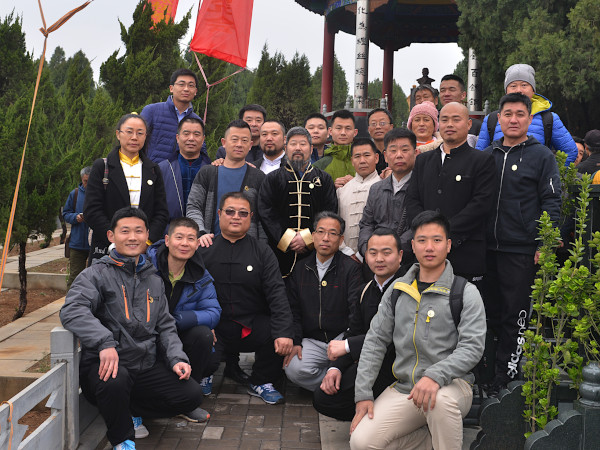 Wisdom found in the journey. |
(” 太极的传承,也像中华鲵的保护,“我只是把中国的太极拳带到世界各国,给人们提供一个机会,撒下种子,浇水施肥。最后赢人的,是心,而不是武力;最终促使他们学下去的,是中国博大精深的文化,而不仅仅是太极功夫。”)
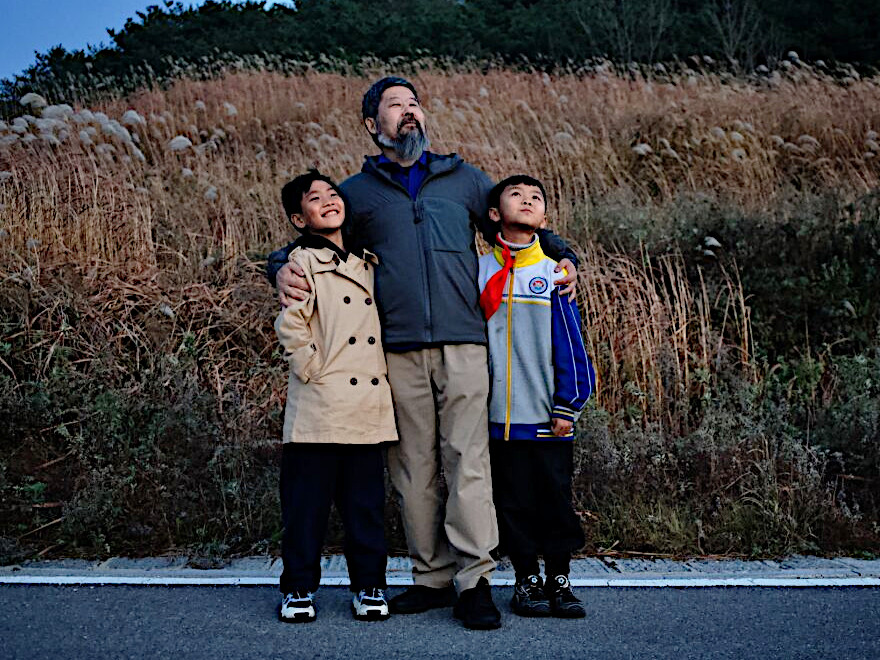 Carrying the light of Taiji forward. |
But today, he is no longer walking alone. Chen Xu (陈旭), a disciple from Yiyuan, Shandong, now teaches Taiji fluently in English across Singapore, Australia, and Nepal. Following the footsteps of his master, he meets the unspoken challenges of the global workshop circuit with the same quiet resolve. In the Middle East, his American disciple Rick Pietila carries out the same mission in Lebanon. And thousands of miles away in the Czech Republic, his disciple Pavel has become a ‘Taiji celebrity,’ bridging the gap between the digital world and the training hall.
|
|
Through Taiji, what is passed on is not only method, but care: corrections offered by steady hands, habits shaped through patient repetition, encouragement given at the moment someone is ready to give up. In city after city, these quiet exchanges accumulate in the lives of people who may never meet one another, yet are bound by the same touch.This is the hope entrusted to him by his teachers, Master Hong Junsheng and Master Feng Zhiqiang—that what they placed in his hands would continue to move outward, carried person to person, generation to generation, long after any single journey ends.
|
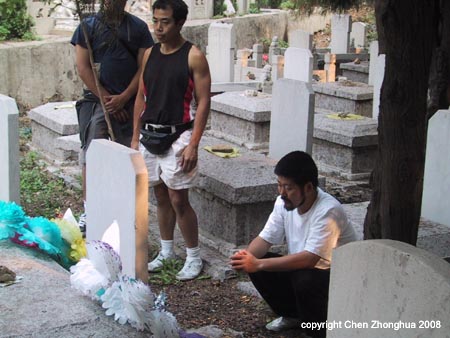 Behind the global ‘Long Flow’ lies a quiet, enduring debt of gratitude. |
The Flying Man
(万里流云)
Suddenly, his phone chirps. “Yes, yes! Beijing first, then Canada. Vancouver for the lecture, then Toronto for the inaugural competition…”
“Apologies, I must go!” He looks up, his eyes already on the horizon. “I’m heading to Qingdao with my senior, then straight to Beijing.” Without a second of hesitation, he snaps his laptop shut and slides it into his bag. He pulls a sports jacket over his $14.99 T-shirt and hoists his well-worn travel bag. To him, a journey of thousands of miles is no more daunting than a walk to visit a neighbor.
|
As he reaches for his bag, his disciple, Chen Xu, notices a small hole in Chen’s sock just above the ankle. “Teacher, please,” he whispers, “at least change your socks!”Chen Zhonghua offers a slight, knowing smile. “No need. I’ve worn these for years; they are the most comfortable pair I own.”
“But you are heading to the International Taiji Exchange!” “It’s alright,” Chen laughs, already halfway to the door. “They are coming to watch my Taiji. Who has time to look at my feet?” |
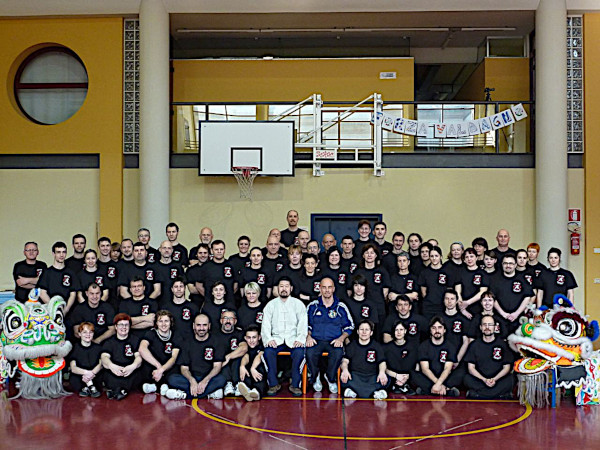 spoken through the Master’s movement. |
Into the Horizon
(道入乾坤)
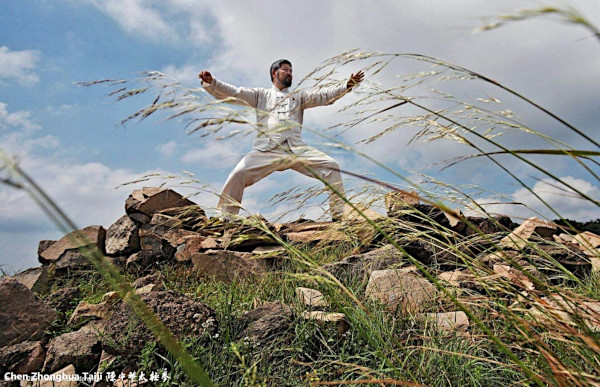 |
The golden light of early afternoon rests gently on the sea, warm without glare. Chen Zhonghua steps out of the studio, his gait small and agile—the walk of a man whose urgency rarely shows itself, yet never leaves him. A car waits at the corner. He turns back.For a moment he simply looks.
|
For two months he has swept across the cities of China like a restless wind. Now he settles again into the cadence of the “International Taiji Flying Man,” a name given half in admiration, half in disbelief at how a single human life can keep such a pace. His calendar has long since stopped being a list of days. It is a map that opens and closes, opens and closes, the years slipping past—2019… 2020… and onward. The car shrinks along the coastal road, already surrendering its shape to the thought of airports, departure gates, the long lift into cloud.
Behind him, the sea remains, breathing in its ancient rhythm. Before him, the world gathers itself—Canada, the United States, Australia, Indonesia, Germany—students he has met, students he has yet to meet, hands waiting to be corrected, lives waiting to be changed.
|
And the Long Flow of Chen Zhonghua continues—an old river moving through the hard edges of the modern age, carrying memory, discipline, devotion. Whatever rises before him, he steps forward in quiet accord with the Tao. In this way, mile after mile, farewell after farewell, he keeps faith with the man who once guided his own first steps.
|
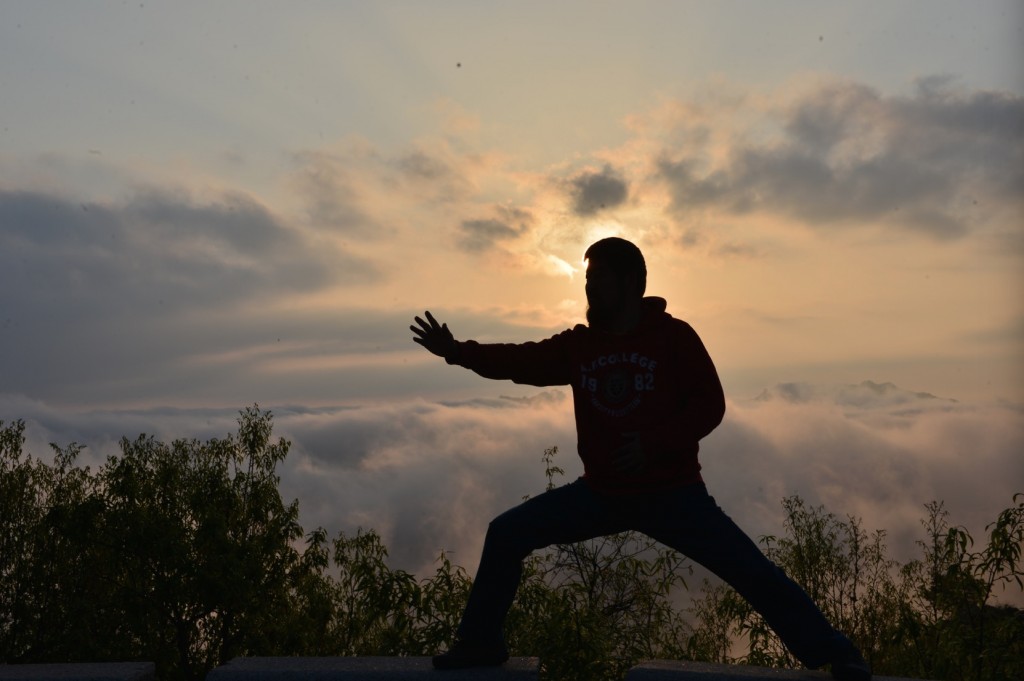 |
Epilogue: The Boundless Wayfarer
结语:行者无疆
Half-asleep, yet wide awake, he speaks the Taiji truth.
The Great Way is simple, found in worn-out socks,
The Long Flow winds ten thousand miles into the deep blue sea.
大道至简破补履,长流万里入沧海。
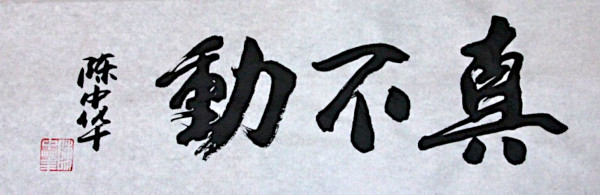
|
Previous Section |
上一节 |