 |
Michael Calandra, a retired veteran of the NYPD, 10th Dan Hanshi in Isshin-Ryu Karate, and owner of the Seishinkan West Dojo in Wittmann, Arizona, hosts The Martial Truth Podcast. In this wide-ranging conversation, Master Chen Zhonghua details his journey from a university student collecting Wushu forms to becoming the International Representative for the Chen Style Taijiquan Practical Method. The interview opens with the vivid story of his encounter with a “mystery master” in a public park. An experience that shattered his previous understanding of martial arts and led him to become a disciple of the legendary Hong Junsheng. |
| The discussion shifts to the physical manifestation of this art: Daqingshan. Master Chen describes the transformation of a barren, secluded mountain into a massive, 200,000-square-foot international training center and home to an annual International Taiji competition. He emphasizes the importance of integrity in his sponsored competition, explaining how he utilizes modern technology and international judges to eliminate the bias and corruption that often plague traditional martial arts tournaments.Finally, the dialogue tackles the controversial “Internal vs. External” debate. Master Chen rejects the notion of “internal” as a mysterious or magical shortcut, instead using the “Stealth Fighter” analogy to describe high-level engineering and hidden mechanics. He concludes by asserting that the legendary health benefits of Taiji are a direct byproduct of its martial structure; without the rigorous training and correct alignment required for combat, the art loses its inherent power to heal and prolong life. | |
|
Adapted from a Podcast Transcript:
“The Martial Truth Podcast EP20” Interview with Master Chen Zhonghua 1 broadcasted Jul 24, 2023 |
|
From Black Tiger Springs to Daqingshan
Grandmaster Hong Junsheng’s Legacy
and the Stealth of Internal Power
By Michael Calandra
1. The Turning Point at Black Tiger Springs
The Beginning
Master Chen: In terms of martial arts in general, I can’t really pinpoint a single start date because, in China, you just grow up with it.
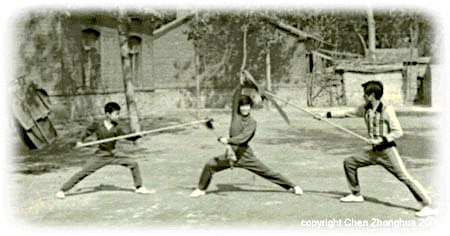
| For me, ‘formal’ training, the point where you actually consider yourself a student, began in high school. Before that, you’re always just playing with the other kids while people are training in their own groups. You’re around it, you’re doing the movements, but you aren’t really part of a class.
In high school, I finally joined a formal group. It was fairly large, but we didn’t have a particularly reputable master. |
 |
My real serious training didn’t happen until I reached university. Even though it was just a club, we were taught by a professor. I was 18 at the time, and that’s when I consider my real learning to have started. Before that? I was just fooling around—it was like playing with a ball in the yard.
Formal Training
Right around that time, in 1982, Jet Li’s Shaolin Temple hit the screens. We were all watching it, and I recognized what he was doing because I was also learning the Shaolin style. Shaolin is very technical with many, many forms, simply named Form One, Form Two, and so on. In Chinese, the word for ‘routine’ is Lu—which is why, in the Practical Method, we use the terms Yilu (first form) and Erlu (second form).The specific routine Jet Li performed in that movie was Shaolin Form Number Four, which I was studying at the time. Seeing him do it on screen was incredibly exciting, I ended up seeing that movie eleven times in a single week! Of course, back then, we didn’t have much other entertainment.In addition to Shaolin and Cha Chuan, I practiced Da Hong Chuan (Big Red Fist) and Xiao Hong Chuan (Small Red Fist). I must have collected 30 or 40 different forms in about a year. But it was all ‘external’—you learn the choreography, you get fast, and you make it look good so you don’t forget the moves. There wasn’t any real fighting or competition involved; that was the nature of my original training.
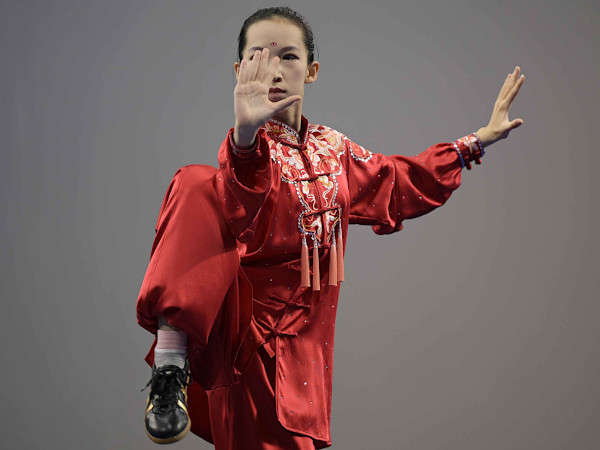
| Cháquán (查拳) is a distinct and historically significant Chinese martial art that originated within the Hui Muslim communities. Traced back to the late Ming Dynasty, the style is attributed to a warrior from Central Asia known as Zha Mi-Er (查密爾), who traveled through Shandong province. Traditionally passed down within China’s largest Muslim ethnic group, the name eventually evolved from its original Central Asian roots into the Chinese character and pronunciation “Cha.” Known for its graceful, extended movements and high-level athleticism, it remains one of the most influential Northern styles in existence. |
 |
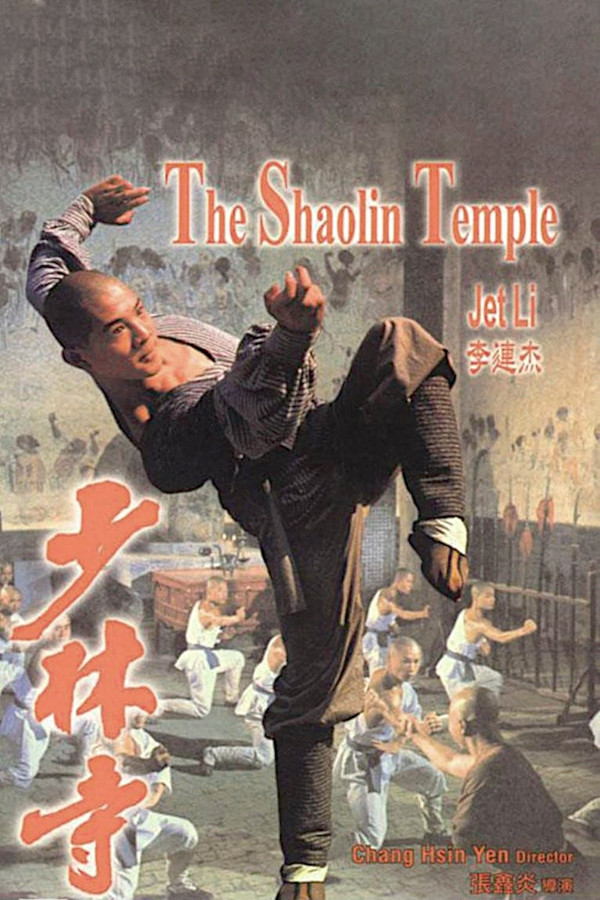 |
The 1982 film Shaolin Temple, starring Jet Li in his debut role, was a landmark cultural phenomenon that redefined the martial arts genre. By casting professional athletes and national Wushu champions, the film pivoted away from the stylized acrobatics of Chinese Opera-trained actors toward a new standard of “hard bridge, hard horse” realism. This shift to athletic authenticity not only launched Jet Li’s career as a global superstar but also established a new aesthetic for on-screen action that would influence cinema for decades. |
The Old Man at Black Tiger Springs
When we arrived at Black Tiger Springs, the public event was winding down. There was a delegation of about 27 Japanese students who had been training with Hong’s group for over a week and were scheduled to leave that afternoon. Before they left, the head of the delegation spoke up. ‘We have studied with you and we’ve been very patient,’ he said, ‘but now we want to know what this is actually for.’
| Hong replied simply, ‘That is a challenge.’The interpreter translated this, and the Japanese leader waved his hands dismissively. ‘No, no … not a challenge. We just want to see the application.’
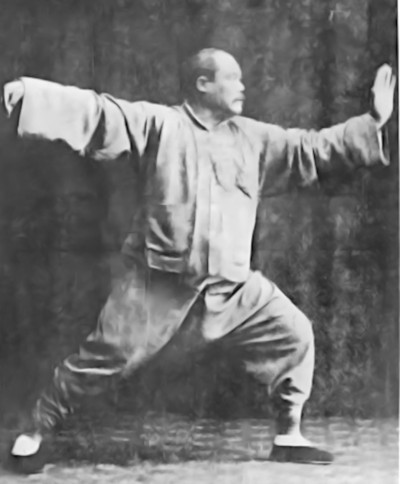
Hong didn’t budge. ‘Any way you phrase it, it’s a challenge.’ Once that was settled, the leader asked, ‘Then how do we start?’ Hong replied, ‘You are the one issuing the challenge. You start—no conditions.’ The Japanese man was very polite. He moved his shoulder and asked, ‘Can I do this?’ while imitating a heavy punch. Hong just said, ‘Suit yourself. At the time, Hong was standing there holding his pipe, as he always did. He tucked the pipe into his pocket but kept his hand raised in front of his body. Years later, I realized that his posture was a perfect defensive move, guarding his centerline. |
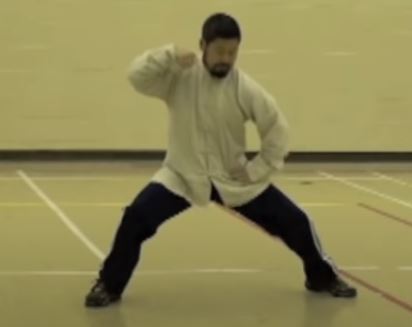
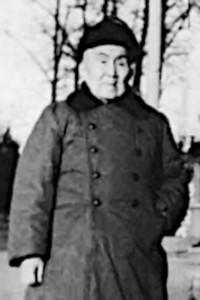
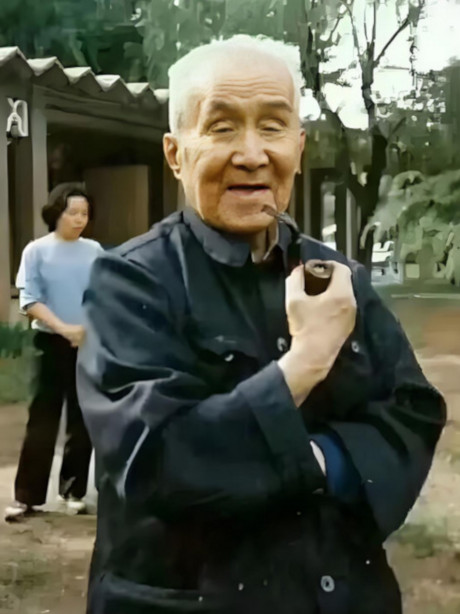 signature pose captures the perfect balance between ease and martial alertness. |
The challenger took a step forward and launched a straight punch aimed right at Hong’s left chest. Hong turned his body only slightly. Now, there were about 60 or 70 people gathered on this raised, flat area of the park, so everyone had a clear view. As the fist closed in, it never actually touched Hong’s chest. The moment it got close, the challenger was launched backward—airborne—for a good 15 to 20 feet.
He landed on the uneven, worn-out stone floor with a loud thud. To his credit, he didn’t fall; he landed in a solid stance. But he immediately cried out, ‘That’s not fair! I wasn’t ready! Can I try again?’
Hong just looked at him. ‘You attacked me, yet you weren’t ready?’ He paused, then said, ‘It’s okay.’
The challenger wanted to replicate the experience. ‘Can you throw me exactly like that again?’
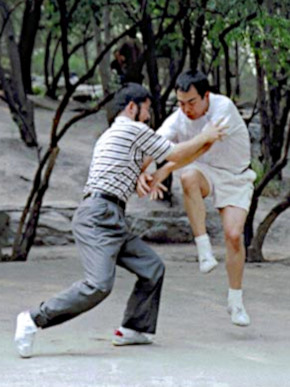 |
‘If you attack the same way,’ Hong said, ‘you will bounce back the same way.’
After that first strike, I started squeezing through the crowd. I had been about 15 feet away, but I pushed in until I was only three or four feet from them. In a challenge match, that’s a dangerous distance to be, but I had to see Hong’s reaction. On the second attempt, I was close enough to see it clearly: the same thing happened. The man bounced back before his fist ever reached Hong’s chest. To me, it was a complete mystery. Nobody else in the park that morning saw what I saw—they were just casual bystanders—but I was mesmerized. I didn’t just go home after that. I followed Hong all the way back to his house that day, and I have studied with him ever since. |
2. The Legacy of Hong Junsheng
Master Hong’s Training
Master Chen: The whole experience was incredibly confusing. You didn’t know if you were actually being taught, you didn’t know if you’d truly been accepted as a student, and you certainly didn’t know exactly what you were learning. Everything felt like a riddle.
But, you knew for sure there were a lot of people there, so clearly, training was happening. You’d look around and think, ‘He must be training the others in a way I don’t understand, and I’m the only one missing out.’
As time went by, though, you’d realize it was the same for everyone. Everyone felt like the other guy was getting the real secrets while they were getting nothing. No matter what you did, it always felt like he was talking about something else entirely.
This reinforces the belief that true understanding must be self-attained. A teacher’s guidance is most powerful when it meets a student’s genuine, hard-earned question. By holding back the immediate answer, Master Hong forced his students to wrestle with the art until their struggle turned into a genuine, burning need to know.To deduce those ‘remaining three corners,’ the student cannot be a passive recipient of information; they must actively engage with the method through a specific hierarchy of effort.
|
1. Watch (看; Kàn): Absorb the master’s precision visually.
2. Listen (聽; Tīng): Hear the subtle cues and principles.
3. Ask (問; Wèn): Seek clarity only after the “struggle” has begun.
4. Try (練; Liàn): Commit to physical experimentation and repetition.
5. Think (思; Sī): Internalize the logic and deduce the “other three corners.”
6. Continuity (恆; Héng): Maintain the practice until it becomes second nature.
|
 |
3. The Mountain: From Tourism to Daqingshan
Taiji Tourists
Master Chen: Since 1991, I’ve been taking my students from North America and other parts of the world back to China to train. In the beginning, we functioned like a tour group. We’d land in Beijing, head south to Jinan, then further south to Suzhou—the ‘Venice of China’—then on to Shanghai, Canton, and finally Hong Kong. We were sightseeing during the day, and I would teach Taiji every morning and evening.
We did that for years until one year, some of my students—you know Chuck and Roger—started questioning the format. They said, ‘Why are we even doing this? We’re not really getting enough time with you. We’d rather spend the whole day learning Taiji instead of visiting tourist sites. We can sight-see on our own; when we’re with you, we want to be training.’ They felt like they were losing me to tour guides during the day.
I was surprised. I asked, ‘You mean you don’t mind coming all the way to China and not seeing the sights?’
They said, ‘We couldn’t care less. As long as we get to train.’
I followed up: ‘So if I put you in one place and we just train for two or three weeks straight, you’d be happy?’ They said yes. So I started thinking—if that’s the case, I need to find a single location that has everything: fresh air, good weather, food, and lodging.
There was another factor, too. While we were traveling, I used to invite local masters at every stop to meet my students. I thought I was doing them a favor, but they told me, ‘Why are we meeting these people? We only see them once in a lifetime. It’s a good photo op, but we aren’t going to learn anything in an hour. We’d rather have serious, intensive training with you.’
Based on that feedback, I realized I had been wasting both my time and theirs. That was the spark for finding the mountain.”
Finding A Great Green Mountain
Master Chen: I started telling my martial arts brothers that I was looking for a training site. I told them, ‘I don’t care how rough it is. We just want a place where we won’t be disturbed. I want a mountain where we can hike, stay for two weeks, carry our own supplies, and just focus on the art.’It was actually very difficult to find, because every person I asked in China wanted to show me their ‘best’ side. They’d take me to a big city, find a shiny, modern hall, and say, ‘Here is your retreat!’ I’d have to tell them, ‘No, this is exactly what I don’t want.’
Then, one day, we were talking about this in a restaurant. A man at another table came over and said, ‘Sir, the place you are describing? I know exactly where it is.’I was skeptical. I asked, ‘What do you mean? How do you know what I’m looking for?’ He said, ‘You want a beautiful place that nobody can find. I know it, and if you want, I’ll show you tomorrow.’I immediately said, ‘Let’s go.’ My friends and my actual brother were upset; they said, ‘We’ve been trying to help you, and now you’re just going off with a stranger? You don’t even know this man!’ I told them I didn’t care. He knew the place I had envisioned, and that was enough for me.
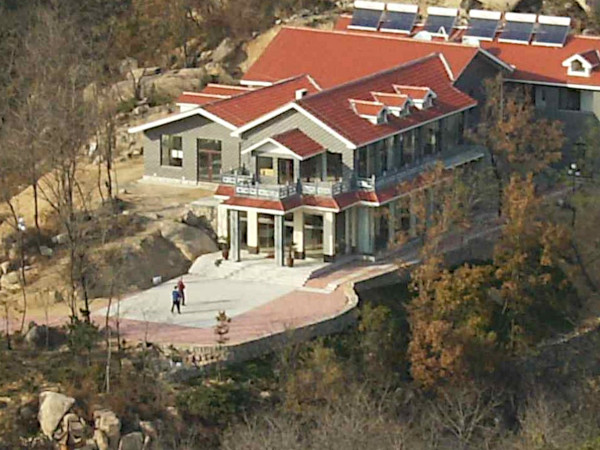
The next day, we went to find it, but we couldn’t even get in at first. Even the guide got lost because there was no road. Eventually, we found our way by hiking up a dry riverbed—following the trail the water leaves behind. When we reached the top, we found four courtyards. It looked abandoned, but it was actually meant to be used; people just couldn’t find it!
| It turned out the man from the restaurant was the owner. He had leased the place for a few years to set up a super-secluded retreat restaurant, but he’d had no customers because he couldn’t afford to build a road up the mountain. He told me, ‘If you want it, I’ll transfer my lease to you.’
I went to the government, and we ended up taking over the lease and extending it for 58 years. At the time, it was just a barren mountain with nothing but that one lodge. It covers about 28 square kilometers—roughly 12 square miles. It was exactly the large, secluded area I had been looking for. |
 |
First the Roots, Then the Tree
Master Chen: It was a massive area, but there was absolutely nothing there. We started by reinforcing and cleaning up the original courtyards—about 30 rooms in total. We converted some into living quarters and bedrooms, and turned the corner rooms into public bathrooms. We couldn’t change the actual physical structure of the historic buildings, but we combined rooms to create very nice, modern facilities.
In 2006, I hosted my first full-time class with ten students from North America. They stayed on the property with me for three months straight. Since then, we’ve had full-time training on the mountain every year.
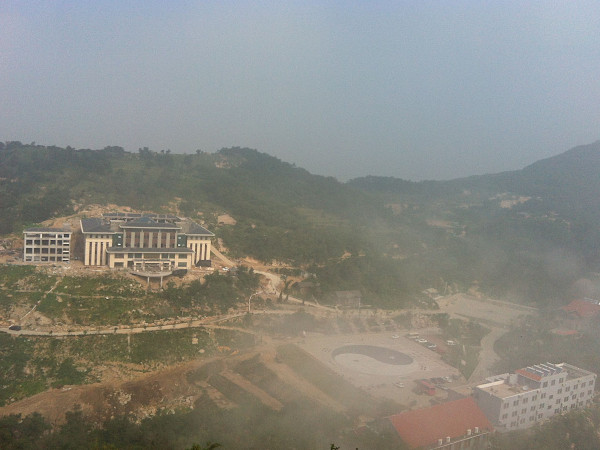
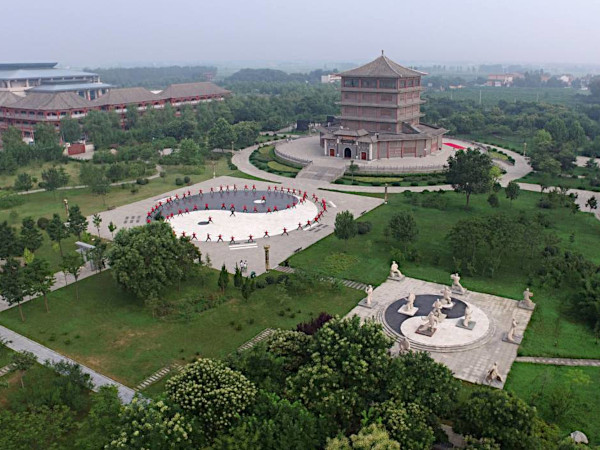
Today, the mountain has over 200,000 square feet of developed space. We have a massive training hall and a four-star hotel featuring two additional halls. Each of those halls covers 20,000 square feet with no pillars—completely open space. You can literally step out of your hotel room and you’re right on the training floor. It is, without question, the best Taiji training facility in the world.
I personally use the space for about five months out of the year for intensive training. The rest of the time, people from all over China use it for conferences or vacations when they want to escape the city. We have parks and play areas for children, but it’s all very grounded—no high-tech gadgets, just good, ‘homemade’ fun.
We even grow our own vegetables and raise our own animals. Back in 2011, we were 90% self-sufficient. Now, we’re down to about 30% because the restaurant has become so famous! Yesterday alone, we fed 800 people. In the summer, we average about 500 people a day. When we first opened for tourism, we had 250,000 visitors in the first year. Now? We don’t even keep track of the numbers anymore—it’s just too many people.
Michael Calandra: I was actually there about ten years ago, and one thing I noticed is how Master Chen supports the local community. He buys produce and various products from the locals, so for the people in the area, the mountain has been a massive addition to the economy. The government has even stepped in to build better roads, making it much easier to access now.
 |
I remember when we went—we did a fantastic hike. It was tough, with some high elevation, but we really enjoyed it. The training itself was world-class. Master Chen has full-time instructors there who are exceptionally good; they’ve been training for a long time and have an incredible ability to teach the system, which is a huge plus.For anyone interested in experiencing this, I highly recommend checking out Master Chen’s website at practicalmethod.com. It’s a incredibly peaceful place, and the food is just fantastic.
I brought a group of seven or eight of my own students, and every single one of them had a great time. I’m personally hoping to get back there again very soon. |
4. The Integrity of Competition
Spirit of Taiji Competition
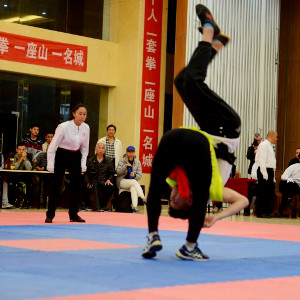
Master Chen: In 2011, I began organizing Taiji competitions on the mountain, specifically focusing on Push Hands. In China, Push Hands can be very disorganized—everyone tends to do their own thing. By 2018, our event was rated as the number one martial arts competition in the country, jointly recognized by the Sports and Tourism Commissions as the best-run event of the year. We had 1,300 competitors and over 4,500 attendees from all over the world.
| The key to our success is that I run a clean competition. In many places, competitions are fixed, but ours is free of corruption. My own students don’t even participate; we act strictly as the organizers. We provide an international platform for people to showcase their hard work. Young martial artists, in particular, hate training for months only to find that a judge has been bribed. They deserve to be rewarded for their effort.
To ensure neutrality, we work with respected judges from Singapore, the United States, Australia, and Europe. We don’t take sides, and we don’t know the competitors personally. We are strictly neutral. |
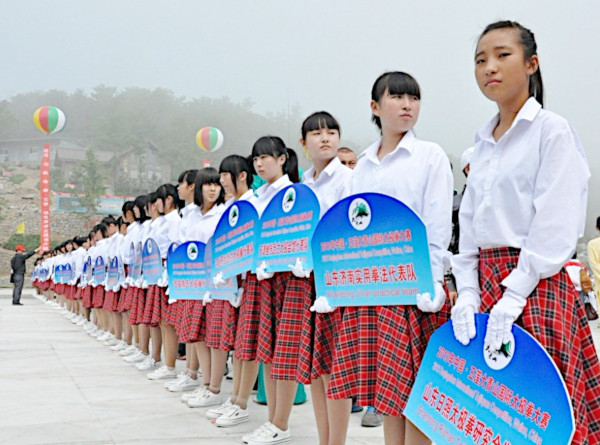 |
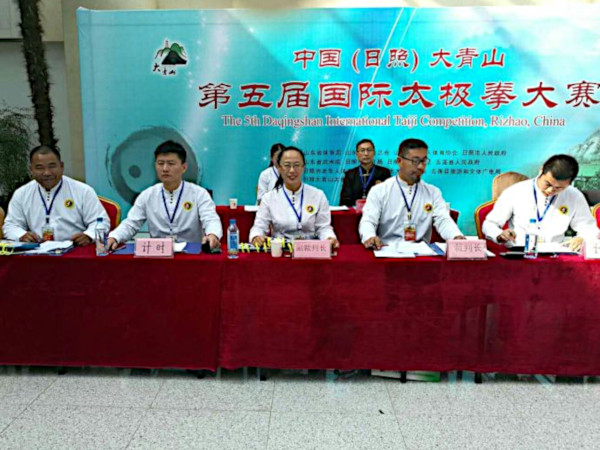 of excellence at Daqingshan. |
We had to pause during the pandemic, but we are back. This year, 2023, we are running preliminaries, and 2024 will see the return of our major event. Moving forward, my vision is to hold four preliminary competitions: one in North America, one in Europe, one in Southeast Asia/Australia, and one in China.
The winners from those four regions will then come to the mountain for the ‘Grand Finale.’ It will be a smaller, elite event with about 20 top-notch, professional competitors. In the past, we’d spend three full days—from early morning until 10:00 PM—watching everyone from beginners to masters. By moving to this preliminary system, the event on the mountain will be strictly for the best of the best |
Michael Calandra: I can actually speak to that point about corruption. When I was there, a dispute broke out over who had won a specific Push Hands match. Things got pretty heated, and everyone was waiting to see how it would be handled.To Master Chen’s credit, he kept everyone calm. He brought the complainants over to a video screen and walked them through a replay of the match. Once they saw the footage, it was undeniable—they could clearly see they had actually lost.
The best part was their reaction: they actually apologized. They apologized for their behavior and for thinking they’d been robbed, realizing that the call was fair and they had lost on the merits. Once they saw the truth on video, everything was settled and the atmosphere stayed positive. It just goes to show how important it is to run a clean event, and Master Chen really goes above and beyond to ensure that happens.
International Competition – Big Prizes
| Master Chen: I can’t speak for other martial arts, but in terms of Taiji, our last competition offered a first-place prize of 100,000 RMB—which is close to $20,000 USD. That is the largest prize in the world for a Taiji event.Even for a professional, that’s not too shabby. Consider the cost of travel; it might cost you $1,000 to get there, but the reward is substantial. To put it in perspective, in China, a 100,000 RMB prize can represent nearly five years’ worth of a typical salary. For a relatively ‘small’ sport like Taiji, that is a life-changing amount of money.
Michael Calandra: So, again, if you’re interested in competing or just learning more, go to practicalmethod.com. You can contact Master Chen directly there, and he can provide you with all the information you need. |
 |
5. The Stealth of Internal Power
Internal Means Stealthy
Master Chen: In China, we have these terms, but traditionally, the Old Masters would tell you there is simply ‘good’ martial arts and ‘bad’ martial arts—not necessarily internal versus external. There are arts that work and arts that do not. It’s a matter of quality versus appearance.
To be more direct about this idea of ‘Internal’: an internal art achieves the same results as an external one, but the mechanics aren’t visible on the surface.
| You cannot see exactly where the power is coming from. In today’s terms, I would call it a ‘stealthy’ style rather than an ‘internal’ one.The word ‘internal’ often carries a meaning unrelated to martial arts—people think of it as being about your thoughts, or something mysterious and hidden. But it’s not mysterious. Think of a stealth fighter jet: it’s a real machine, and it’s a top-quality machine; you just can’t detect it on radar. If you walk up to it, you can see it’s made of real parts, and every part is better engineered than a normal plane. |
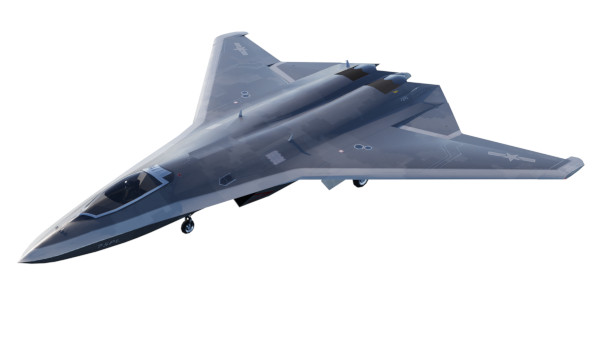 |
The difference between internal and external systems is like that. And more importantly, it comes down to how you train. Being labeled ‘Internal’ is not a shortcut to success; it requires just as much hard work and training as any other system.
Internal Training: Rebuilding the Body is Hard Work
Master Chen: Traditional Chinese internal masters trained incredibly hard—comparable to today’s professional boxers who use weights, heavy hitting, and resistance training. They simply kept that part of their training hidden from public view.
 |
There is a well-known story about the Yang family. Even if you don’t study Yang style, you know the slow forms people do in the parks today. But it’s said that a third-generation member of the Yang family tried to commit suicide three times because the training was so brutal. He felt he would rather die than endure another day of it.One of their methods involved ‘shaking the long pole.’ This wasn’t just any stick—the family pole was five meters long and very thick. You had to shake it 100 times in a single set, and you had to perform multiple sets until you literally collapsed.
By the third generation, the Yang family had become quite wealthy. When you are rich, you want to enjoy your life, not work that hard! Whether that specific story is true or a bit of a legend, it is based on a real reality: behind closed doors, the training was physically punishing. They hit, they threw, and they wrestled. Taiji is supposed to include hitting, kicking, joint-locking, twisting, wrestling, and jumping—all of it. But today, people have been sold the idea that it’s just a gentle exercise for the elderly. |
Michael Calandra: Running a school in New York all those years, I rented my space to three different Taiji masters. Whenever I watched them teach, I never felt like they were actually teaching a martial art; it just looked like they were waving their arms around. From a combat standpoint, it didn’t make any sense.
When I met Master Chen, my entire perspective on Taiji was upended. I thought, ‘Wait a second—this is real Taiji, so what was that other stuff those guys were doing?’
6. The Martial-Health Connection
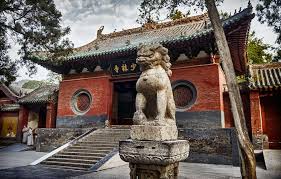
Master Chen: To understand this, you have to look at how Taiji developed. Before it was even called ‘Taiji,’ it was simply a martial art like any other. Many people have heard of the Shaolin Temple—well, Shaolin is on the south side of the Yellow River, and Chen Village, where Taiji was created, is on the north side. They are so close that if you stood on a high tower, you could practically see one from the other.
| Originally, it was the same martial art. For example, in the second set of Chen Style, called ‘Cannon Fist,’ 32 out of the 38 movements are identical to the Shaolin form. In the beginning, they were likely doing the exact same routines. But because of the river, the two groups didn’t meet every day, and over time, their styles began to diverge. One became what we now call ‘internal,’ while the other remained ‘external.’ Whatever those terms meant then, it simply meant they had started to look different. |
 |
But here is the interesting part: it turned out that the people who practiced the Taiji style lived much longer. They fought the same way as the Shaolin practitioners, but after they retired, these guys lived into their 80s. The Shaolin fighters lived much shorter lives; very few made it past 60. At the Shaolin Temple, the only ones who lived long lives were the monks who didn’t practice martial arts at all—they just spent their time chanting.
 |
In the last century, people realized that Taiji could significantly prolong your life. They found a better way to move that preserved the body while still being a martial art. However, if you change the movements too much—if you lose the martial structure—it’s actually no longer beneficial for your health. The problem today is that the ‘current version’ most people see is a watered-down, changed version. As you said, there is a right way and a wrong way to do it, but unless you’re a professional, it’s hard to tell the difference. |
Michael Calandra: Right, well, I think we’re going to end it there.
I want to thank Master Chen Zhonghua for consenting to be interviewed for the program. If you enjoyed this conversation, please click like, subscribe, and share it with your friends.
I’ll be putting a link in the description to Master Chen’s website where you can purchase his instructional videos and find his upcoming workshop schedule. I highly recommend attending one of his workshops—it will be an absolute eye-opener, even for my karate friends! If you want to see martial arts at a truly elite level, you need to be there.
I appreciate you all tuning in, and I’ll see you in the next episode.