 |
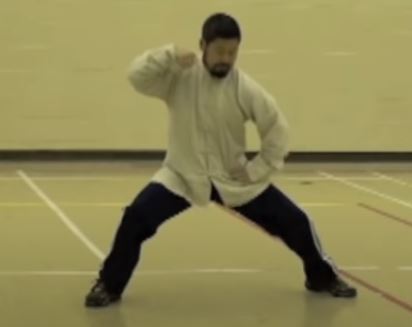
Comparing Taiji to MMA often leads to a false equivalence. Critics point to high-profile losses as proof that traditional claims are exaggerated—or even fraudulent—yet these comparisons ignore the differing objectives of each discipline. The legacy of Master Hong Junsheng (洪均生)’s Practical Method (陈式太极拳实用拳法) does not hide behind the philosophical or ethical justifications often used to shield traditional arts from scrutiny; rather, the system is based on Master Hong’s uncompromising premise: |
Taiji possesses a raw, mechanical efficiency that is as practical as it is profound. However, for those watching from the sidelines, the saying holds true: “A summer insect cannot be reasoned with about ice” (夏虫不可语冰). Until one moves from the distant shore of observation into the depths of dedicated practice, the true value of Taiji remains invisible. Sun Yang (孙洋) was once that observer on the shore. A veteran champion with gold in Bangkok (2019) and titles in the Beijing MMA League, Sun dismissed Taiji as impractical for the cage—until he attempted to take down a Practical Method practitioner. What followed was a total neutralization of his professional skill set that forced him to rethink the laws of combat physics. |
|
|
Adapted and translated from the article:
“Why a MMA Champion Studies Under Master Chen Zhonghua.” by Sun Yang 格斗选手为什么会拜陈中华老师为师 — 孙洋 published in 2018 |
|
I Thought Taiji Was Fake:
Why an MMA Champion Risked His Reputation
for Master Chen Zhonghua
by Sun Yang (孙洋)
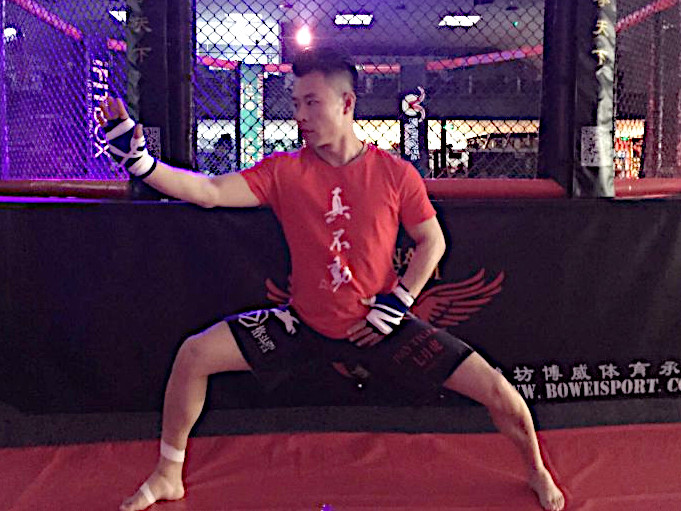 |
Born in the coastal city of Rizhao (海滨城市日照) southeastern part of Shandong Province, China. I built my life in the ring. As the city’s first professional MMA fighter, my world was defined by the clinical efficiency of Sanda, the bone-breaking power of Muay Thai, and the gritty leverage of MMA.
My competitive journey began on the Sanda mats, where I secured the 52kg championship at the 2003 “Jingyang Cup” in Yanggu (2003年,我获得山东阳谷“景阳杯”武术散打邀请赛52kg级冠军), followed quickly by a silver medal at the 2004 Shandong Provincial Championships in Binzhou (2004年,我夺得山东滨州“体育彩票杯”山东省武术散打锦标赛亚军). |
|
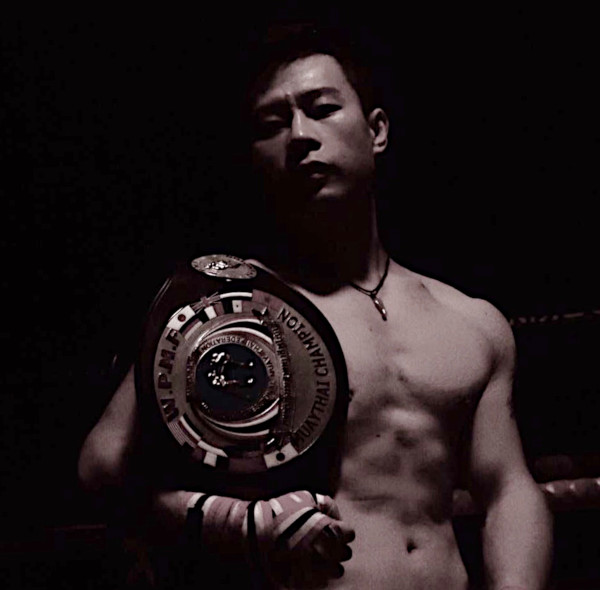
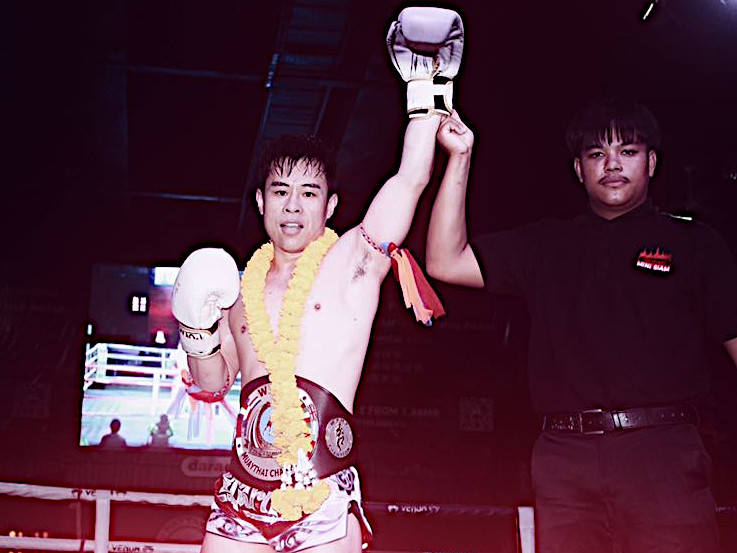
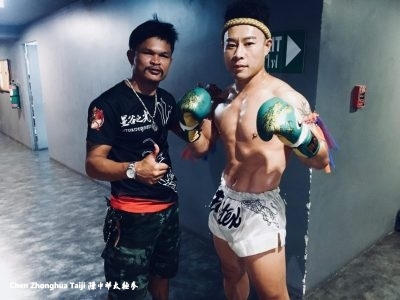
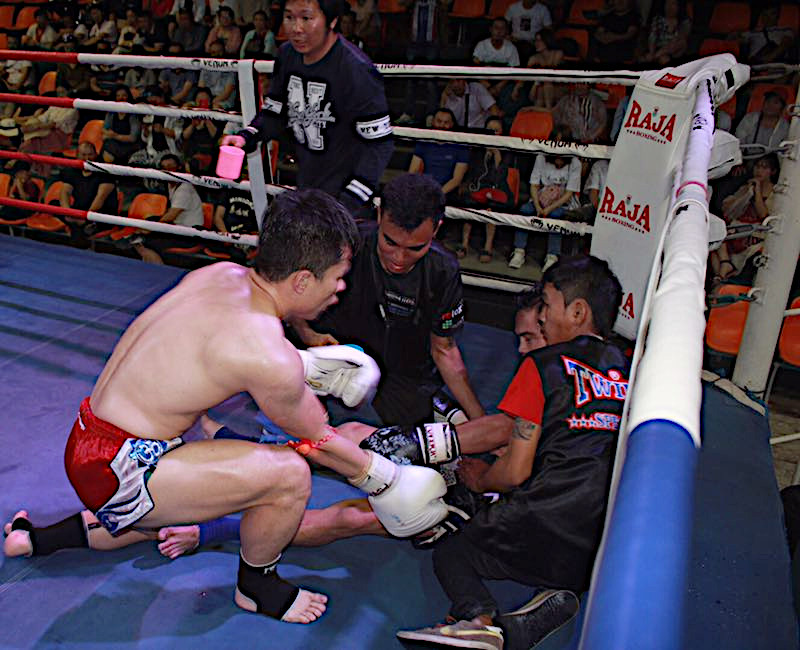
As I transitioned into the professional MMA circuit, my momentum only grew. By 2017, I had claimed the Wu Lin Feng (WLF) Rizhao Trials title and the 71kg championship in the Beijing MMA League (2017年,我斩获武林风日照站选拔赛总冠军,并夺得北京MMA联赛71kg级冠军). This decade of evolution culminated on the international stage in August 2018, when I won the WMC Gold Belt Qualification Challenge in Bangkok, Thailand—reaching the absolute peak of my professional career (2018年8月,我于泰国曼谷夺得世界泰拳理事会金腰带资格挑战赛冠军,登顶职业生涯巅峰). |
 |
 |
Yet, standing at the summit of my professional career, my understanding of combat began to shift. My experience and career demonstrate that I am no theorist; I am a fighter at heart. Initially, like many others in the modern combat community, I dismissed Taiji as a relic—a moving meditation with zero application in a real exchange. However, seeking a deeper efficiency that my years in the ring hadn’t yet revealed, curiosity eventually led me to Master Chen Zhonghua and his “Practical Method.” I wanted to see if there was any true substance behind the legend, and in doing so, I discovered a new dimension to the fighting arts I thought I already knew. |
The Failure of Traditional Leverage
|
My first reality check came during a session with my Senior Taji Brother (师兄) Chen Xu (陈旭). Despite my background in Sanda and MMA, the encounter was jarring. When we engaged in Push Hands (推手), my explosive power—honed by years of conditioning—simply vanished.
In MMA or wrestling, you look for a fulcrum; you look for something to push or pull against. With Chen Xu, there was nothing. When I tried to drive forward, his structure felt like a void. When I tried to recover, I hit a “plate” of solid iron.
|
 |
 |
My wrestling takedowns, usually my most reliable tools, were neutralized before I could even find a grip. I was grounded twice, not by a superior display of strength, but by a total lack of anything to hold onto. |
Beyond the Rules: The Sanshou Test
A friend’s skepticism mirrored my own. In the specialized world of combat sports, every discipline is protected by its own rules. I needed a test without the safety net of Push Hands. |
 |
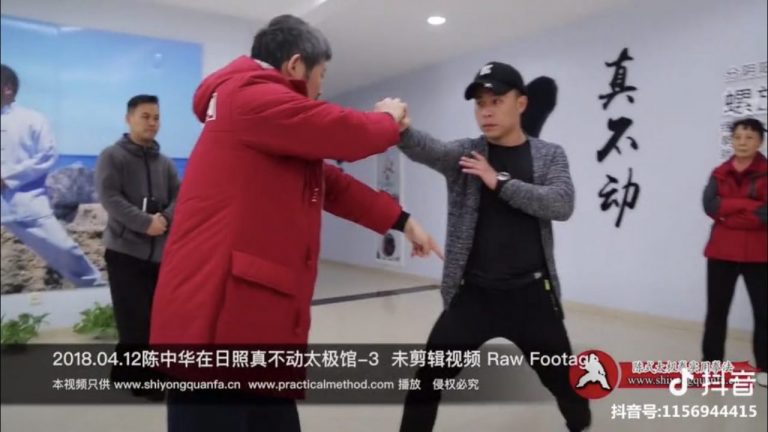 |
The answer came at the Zhenfudo Tai Chi Hall (真不动太极馆). Master Chen was explaining the concept of being “neither loose nor tight” (“不松不紧”) —a state of constant, pressurized readiness. We squared off in a standard Sanshou stance.
Then he moved. In the ring, you learn to read an opponent’s “tell.” But with Master Chen, there was no telegraph. It wasn’t just a move; it was a total collapse of the space between us.
|
Under the weight of his offensive aura, my elite-level instincts failed me. My only subconscious reaction was to retreat. It was the primal hesitation a child feels against a much stronger opponent. In that moment of total vulnerability, I realized the depth of this system.
A New Foundation
|
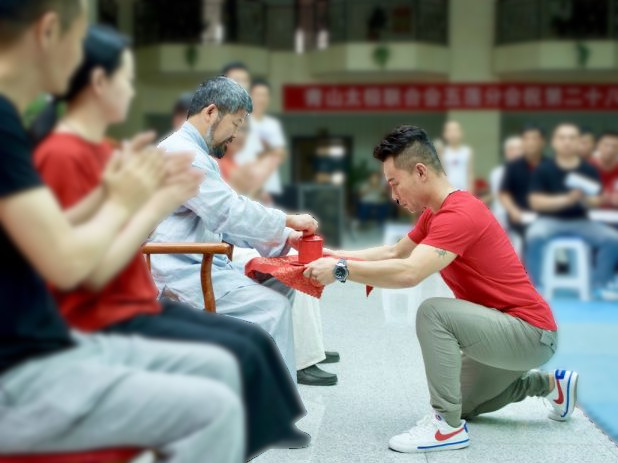
I realized that the Practical Method wasn’t about “mysticism.” It was about a superior understanding of physics, geometry, and skeletal structure. On August 12, 2018—the same month I secured a Muay Thai victory in Bangkok—I was honored to be accepted as a disciple of Master Chen Zhonghua. I am committed to honoring my teacher’s kindness through relentless practice and fulfilling my duty to spread the Practical Method to the world.
|
 |
About the Author
|
 |